2 November 2026
Product of the Month: Amari Floodlight range by Aurora Lighting
 
25 November 2026
Scolmore helps rejuvenate Tamworth Cancer Support Centre
 
25 November 2026
Leicester apprentice crowned 2026 SkillELECTRIC champion
 
24 November 2026
JTL celebrates opening of new Tyneside training centre
 
24 November 2026
LiGHT 26 welcomes record number of visitors to fifth event
 

Latest News


The top 10 tips for electrical safety in the workplace
Workplace safety is paramount in any industry, however, some workplaces harbour more serious health and safety risks than others. The electrical industry is one of many industries where safety hazards are rife, with electrical accidents often leading to life threatening injuries. Shocks and burns can occur as workers are dealing with electrical machinery, cables, and other hazards day to day. With that in mind, here are 10 tips to encourage safety when working in environments with electrical hazards. Ensure you complete a risk assessment A risk assessment should be completed on site before any workers enter the premises to identify the risks that are present. The risk assessment will highlight all risks to workers and visitors as well as the severity of the injury that could be caused and how to prevent harm. Risk assessments take into consideration the type of electrical equipment used, how it is used and the environment that it is used in. Complete the lockout tagout procedure For all equipment, lockout tagout is a key procedure that ensures the safety of fellow workers when a machine is being turned off and left alone or having maintenance repairs performed upon it. Lockout tagout ensures that re-energisation of a machine does not occur which could cause potential harm to workers in proximity. Equipment that is not correctly locked out can also cause electrical shocks and burns, so performing the lockout procedure is key for electrical safety. A formal lockout/tagout programme should be in place where industrial machinery is used, to ensure that employees are always working in a safe environment. All workers who use machinery should be thoroughly trained on the lockout tagout programme before beginning work, as well as being provided with the correct lock out tag out equipment from Reece Safety. This procedure has since developed into lockout tagout tryout (LOTOTO), with emphasis on trying to restart the equipment which checks that the lockout tagout procedure has been successful. Do not distract other workers Electrical work can be dangerous, even when the correct procedures, training and PPE are in place. With so many dangers and hazards with electrical projects and day to day work, it is vital not to distract other workers when completing any job, as live wires, dangerous equipment, and high voltages may cause life-threatening injury. Do not tamper with or adjust equipment Once a lockout tagout procedure has been performed, equipment will be safe to be left alone or have checks performed on it. This is the only time that is it safe to adjust equipment if it is need of maintenance. By tampering with someone else’s equipment or those which have not had a lockout procedure performed on it, you are at great risk of fatal injury. Do not overload your outlets For any workplace it is vital to not overload any outlets, as this can cause users to experience electric shocks. In a busy and crowded working environment, it can be difficult to know when an outlet has been overloaded. Ensure that the appliances or tools plugged into the outlets do not exceed the maximum current rating stated for the extension lead. If power outlets are overloaded, this could also lead to risk of fire. Ensure you use safety signage Safety signs are needed to help warn people of hazards and prohibit actions. They are very useful in preventing injury and for the benefit of workers and safety of visitors and contractors. There are four types of safety signs that should be included within your workplace’s health and safety programme: prohibition and fire (red), mandatory (blue), caution and safe condition. For electrical hazards and fire hazards, yellow ‘danger’ signs are used to identify electric shock risks, fire risks and hazards. Report issues or hazards immediately It is vital that any issues, malfunctions, or environmental hazards are reported to management immediately so that safety precautions can be put in place to prevent injury. Reporting safety issues saves lives and fixes issues that could exacerbate. Maintain your equipment This is essential for keeping machinery, tools, and equipment healthy for as long as possible without needing repair. Machinery and equipment should always be checked for wear and tear, with regular services and cleans being performed by qualified workers to keep them running smoothly. By checking for signs of wear as a machine is used, you are less likely to suffer any electrical issues and injury to workers without spotting the warning signs first. Wear the required PPE Each electrical job requires different PPE depending on hazards, but most will require a hard hat and insulating gloves and boots. If there is a risk from an arc flash then suitably rated PPE to provide body, hands and face protection must be worn. Follow the rules and regulations Each piece of equipment or machinery will have different regulations to adhere to, so ensure that you are fully trained before working on or with a piece of equipment. Do not use any equipment that you are not fully trained to operate.

Gira UK exhibit at first BSPOKE lighting event 2021
Gira is proud to be 1 of 30 lighting brands to be asked to exhibit at the first-ever BSPOKE Lighting. Part of Clerkenwell Design Week’s programme of events, this specially curated digital platform is invite-only and will connect key decision makers with influential lighting brands covering lighting control systems and architectural, bespoke, decorative, task, urban/rural landscape and exterior lighting. Hotly anticipated as the go-to forum for discovering the latest lighting innovations and a number of exclusive product launches before they hit the market, BSPOKE Lighting will take place on 2nd March 2021 using the platform Swapcard. Invite-only  to ensure that connections made are meaningful and valuable, BSPOKE Lighting‘s live programme will run from 9:30am-4pm, and provide unparalleled networking opportunities, as well as exciting new product launches, brand spotlight videos, topical discussions and editorially-led content in partnership with ICON and OnOffice. Gira will use the event to showcase its new and exclusive range of pioneering system solutions set to inspire the UK market in 2021, which meet the rising demand for intuitive lighting solutions that are user-firendly, enhance the quality of life and create modern, design-oriented living spaces. Free registration for all attendees Once registered, discover more about Gira UK – Take your time to network and arrange meetings as you can set up a 30 minute time slot and virtually talk on a one-to-one basis with a Gira expert Today, the system solutions for networked building control by Gira are setting new benchmarks, including the Gira smart home and Gira building systems, which are user-friendly and secure devices for controlling lighting, climate systems and blinds, door intercoms, multimedia and security technology. Mark Booth, Managing Director at Gira UK Ltd, comments “As the market continues to communicate via a virtual network, we as a company still need to be able to reach key decision makers and showcase our new range of intelligent build systems and solutions. We are therefore thrilled to be showcasing our range of luxury specification products and systems to an exclusive audience of architects, lighting specialists and designers with purchasing authority.” “As greener living becomes a critical part of the design conversation in 2021, we are proud that we can offer integrated, futureproof solutions for architectural, bespoke, decorative, task, urban/rural landscape and exterior lighting. Clean, green technology is fast becoming a pre-requisite for today’s super-premium developments with KNX giving end users endless lighting possibilities and opportunity for customisation“ says Mark.

Pollutive refrigerants pose sustainability risk to heat pump rollout
Heat pump suppliers are being urged to consider balancing an expected surge of installations in 2021 with long-term environmental targets concerning the global warming potential (GWP) of refrigerants used in the technology. Following the announcement from the Heat Pump Association that 67,000 heat pump installations are expected in the UK this year, Vert Technologies is concerned that meeting this surge in demand will mean growing numbers of installations using high global warming potential (GWP) refrigerant working fluid. Specifically, Nicol Low, COO at Vert Technologies, is highlighting the importance of moving away from using high GWP refrigerants as soon as possible, which contribute toward greenhouse gas emissions. He says: “The fact that demand for electrically driven heat pumps is increasing against the gas-burning competition is clearly good news for the environment, but attention should be paid to where there is potential for further pollution. The high GWP potential of refrigerants used in these installations is often overlooked. “The country is currently phasing out hydrofluorocarbons (HFC) used as refrigerants, such as R404A, R410A and R134A, as part of a larger effort to reduce HFC use by 79% by 2030. This is something heat pump manufacturers need to bring into greater focus if they are to futureproof their installations, as this phase-out will have long-term ramifications when it comes to ongoing performance.” The removal of these pollutive HFCs from circulation in favour of natural, low-GWP refrigerants presents new challenges for the traditional compressor models used in heat pumps. Specifically, while better for the environment, these more sustainable alternatives require high pressure ratios and absolute pressures in order to achieve good performance. Technologies such as Vert’s conical rotary compressor (CRC), could offer a solution. A scalable and inherently quiet technology, Vert compressors are able to achieve the high-pressure ratios and absolute pressures needed to get the best from natural refrigerants such as CO2 and ammonia. “Continuing with long-standing solutions such as scroll, screw and reciprocating compressors could potentially leave heat pump manufacturers between a rock and a hard place, needing to compromise on either sustainability or performance,” explains Nicol. “By contrast, the adaptable rotor geometry and optimised pressure ratios of the CRC can be tailored for use with low GWP media, creating performant heat pumps without incurring significant extra OpEx.” He concludes: “Sustainability has gone from a consideration to a necessity in all sectors, including the heating sector, and legislation is constantly moving to reduce emissions wherever possible. As such, while the phasing out of fossil fuel heat sources in favour of heat pumps is an excellent first step, installers and manufacturers must be vigilant of where future improvements can be found. By being aware of issues surrounding low GWP refrigerants and traditional compressor models, for instance, companies can react accordingly and ensure green, practical and futureproofed solutions.”

Safety in schools is a priority with Smart Technology
With pupils set to go back to school on 8 March, there are a number of safety measures schools need to implement to ensure the health and wellness of staff, students and school communities. The first lockdown and closure of schools brought on by the coronavirus pandemic fired a “warning shot” for education facilities managers, forcing headteachers to re-examine school safety standards. Now that a third lockdown is here and schools have been shut down for a second time, anyone behind the curve with the benefits of smart technology should get on board now before children return to the school environment. And with the ever-changing variants of the COVID-19 virus, schools can’t afford to be “late to class” when it comes to health and safety. Some schools in the US have been using smart technologies for a while to measure utility consumption and efficiency, streamline maintenance and enhance general school safety. Now, these technologies are playing a significant role in keeping school buildings healthy and preventing the spread of disease. So, let’s take a look at how smart technology can help schools to become safer, as well as more energy-efficient and cost-effective. Thermal detection cameras  Smart cameras placed at entry points of a school can remove the manual task of temperature testing. These cameras provide medically-accurate, real-time temperatures of individuals in real-time. If a high temperature is detected, the software sends an instant alert to the relevant party. It can also be set to deny access to those with high temperatures or to people not wearing masks. Safer water  As the coronavirus continues to sweep through the world’s population, healthcare providers should also be on heightened alert for Legionnaires’ disease, another potential cause of pneumonia with similar symptoms. Legionella are potentially deadly bacteria that can infect a school’s water supply and cause an outbreak of Legionnaire’s disease. It’s a school's duty of care to prevent Legionella infection by monitoring the risk of the bacteria proliferating. Particularly as schools reopen and previously stagnant plumbing and cooling systems return to use, additional Legionella cases could rear their ugly head to emergency departments in the coming months. Traces of Legionella were recently found at a Worcestershire school. The school was forced to remain shut while treatment and testing took place. The Health and Safety Executive advises: “If your building was closed or has reduced occupancy during the coronavirus (COVID-19) outbreak, water system stagnation can occur due to lack of use, increasing the risks of Legionnaires’ disease… If the water system is still used regularly, maintain the appropriate measures to prevent legionella growth.” Typically, managing the risk of Legionella includes running all outlets for two minutes, taking and recording the temperature of the water to ensure that it’s not conducive to Legionella growth. This is a time-consuming process, which is why schools are looking to automated water temperature monitoring systems. This smart system with automated flushing and temperature testing reports and records water temperature data in real time. Instant alerts will notify relevant staff if water temperatures fall within “Legionella-friendly” parameters. Cleaner air  Advisers say that improving air filtration and ventilation in schools can help mitigate the potential airborne transmission of COVID-19. Strategies include: - Increasing outdoor air ventilation - Filtering indoor air - Using portable air cleaners with HEPA filters Smart building technologies such as advanced HVAC controls can help facilities managers promote cleaner air with less hassle. For example, smart HVAC systems use sensors to remotely monitor and control variables such as: - Humidity - Temperature - Indoor air quality - The level of carbon dioxide and other pollutants While these solutions may be key to the reopening of schools in the era of COVID-19, they also bring long-term benefits. Although COVID-19 may have accelerated the adoption of smart technology, many of these solutions are focused on health, wellness and security in general; which have been needed in school systems for a long time.

Lighting and Circular Economy announce Recolight's webinar series
Recolight have announced a new Circular Economy webinar series for 2021. It will build on the events held in 2020, and the progress being made by the lighting industry. All webinars will be chaired by Ray Molony who said: “It’s vital that the industry continues this conversation if it’s to address its responsibility to the wider world. For too long the sector has been a rule-taker. These webinars are helping us come up with a strategy that’s built from the bottom up.” The first three webinars are; Luminaire design: The Circular Economy regulations you need to know - 30 March Return of the lamp: How the replaceable revolution will change lighting - 29 April How to go net zero: A lighting manufacturer’s guide to becoming carbon neutral - 27 May The Recolight webinar series in 2020 examined the Circular Economy for lighting. Discussions ranged from new regulations for lighting, through to extending the life of luminaires. A range of Lighting Producers, specifiers, and designers presented positive initiatives being undertaken to reduce the impact on the environment. One of the topics still up for debate is whether the return of replaceable light sources, drivers and other components is the best route to a Circular Economy in the lighting industry. Recolight CEO Nigel Harvey says, “I’m encouraged  to see the lighting industry taking steps to become more sustainable. It is a given that we produce light sources that are very energy efficient. Moving beyond that and adopting circular economy principles in how we manufacture those products will soon be a must do, and not just an ought to do.” More events will be announced for later in the year. All are free to join, head to the Recolight Events page for more information and to register.

CICV Forum welcomes three new members, supporting construction
After nearly a year of practical support and proactive guidance for Scotland’s building sector, the Construction Industry Coronavirus (CICV) Forum continues to attract new members, this week welcoming another three major organisations to its ranks. The campaigning collective, which was established in March last year as COVID-19 struck, has been at the vanguard of the battle to save the construction sector in Scotland during the first enforced shutdown and help it through the difficult conditions which have followed. As widespread interest in its work remains undiminished, the Forum has now welcomed the Association of Brickwork Contractors, the Chartered Institute of Plumbing and Heating Engineering and the National Federation of Demolition Contractors to its ranks. Their arrival means the Forum now has 30 full members from across Scotland and beyond, representing Government agencies, private companies, professional services and training bodies, plus more than 25 further organisations contributing advice to its sub-groups. Forum Chair and SELECT Managing Director Alan Wilson, says: “It is very gratifying that, after nearly a year of intensive campaigning, we are attracting the notice of still more prominent and powerful organisations. “We are delighted to welcome these new organisations and we greatly appreciate the contribution they will make to our ongoing efforts. “The Forum, in its daily activities and in its comprehensive provision of practical information and advice, has performed an unprecedented service to every part of our vital industry and each new member brings new strengths.” The Association of Brickwork Contractors (ABC) represents the largest specialist contractors across the UK and focuses on supporting the role of bricklayers as well as sustaining the influence that the contractor has at the design and build stages. Eve Livett, Chief Executive of ABC, says: “Working together in the common interest has proved to be an unprecedented success for the CICV Forum and our association is keen to contribute to its ongoing service to the industry.” The Chartered Institute of Plumbing and Heating Engineering (CIPHE) has a membership in excess of 7,500, made up of practitioners, consultants, specifiers, designers, public health engineers, lecturers, trainers and trainees. More than 1,600 members reside in Hong Kong. The National Federation of Demolition Contractors (NFDC) has championed the standards and professionalism of its members for more than 80 years. It counts some of the biggest names in the specialist sector among its more than 140 members. Since its creation in March last year, the Forum has drawn on the collective expertise of its members to maintain a steady supply of information and practical advice to the sector as well as carrying out surveys, hosting webinars and making appeals to Government Ministers. The manner in which it has co-ordinated this guidance by encouraging a culture of working together for mutual benefit is being noted across the sector as a model for future collaboration.

J S Wright secures contract for Lambeth housing scheme
Leading building services specialist J S Wright is to equip the first phase of a new housing development in Lambeth, south London. The 131-year-old contractor, which has its headquarters in Birmingham and an office in London, will provide the mechanical services for 16 energy efficient apartments in a new five-storey building at Knight’s Walk in Lambeth. The contract, valued at more than £600,000, with housebuilder Hill also includes one year of planned service maintenance cover provided by J S Wright’s residential maintenance company Wright Maintenance. J S Wright will install a communal heating and hot water system with distribution from a central energy centre to apartment radiators. It will also equip all the apartments with an MVHR heat recovery ventilation system, sanitaryware, and soil and wastewater services, as well as provide the building with above-ground acoustic drainage services and a rainwater harvesting system. In addition. the brief involves providing a pre-payment energy billing system linked into a computer-controlled building management system (BMS) and controls, and plantroom ventilation. Work on site has already started with completion scheduled for August 2021. Phil Leech, Managing Director of J S Wright, comments: “We are delighted to be able to team up again with a leading housebuilder in helping to provide comfortable energy efficient new homes in south London.” Established in Birmingham in 1890, J S Wright designs, manufactures, installs and maintains mechanical and electrical services for the hotel, residential, social housing, student accommodation, leisure and commercial sectors. The company was voted one of the UK's Top Ten Specialist Contractors to Work For in the 2016 Construction Enquirer Awards, was a finalist in three categories in the 2018 H&V News Awards and was named Construction Services Employer of the Year in the 2020 BAME Apprenticeship Awards.

Uni-Therm aids rapid biomed equipment testing at Israel Hospital
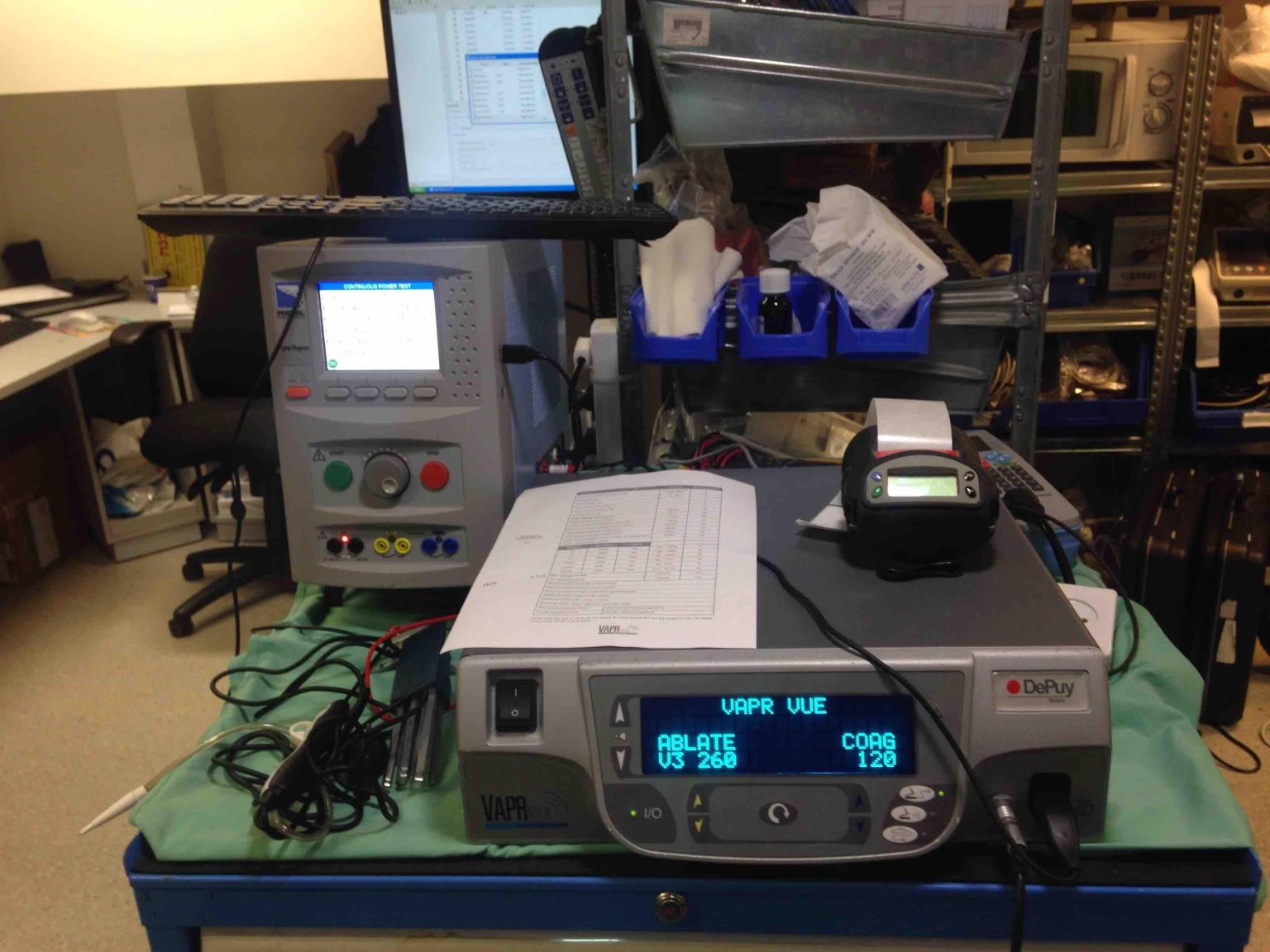
Investment in advanced medical device testing technology from Rigel Medical is reaping benefits at one of a private hospital in Israel. The 110-bed Herzliya Medical Center has been using the Rigel Uni-Therm electrosurgical analyzer for several years as part of a suite of equipment to undertake comprehensive testing and calibration of approximately 70 items of operating rooms and outpatient clinics radio frequency generators. Capable of automating all required tests, the compact analyzer accurately measures the performance of equipment, including high frequency leakage, high current, power output and patient return plate alarm testing. Its ease-of-use and advanced capabilities have simplified performance testing procedures as part of the planned in-service preventative maintenance programmes the hospital undertakes, which are overseen by director of the Biomedical Department, Tameem Jaber. He estimates that the time taken to complete these procedures has been cut by an estimated 40% using the Uni-Therm when compared to the biomed test equipment the hospital previously used. He says: “Uni-Therm continues to contribute to raising test standards and delivering operational efficiencies. It has improved the ease by which our generators can be checked for electrical safety then a performance accuracy while the ability to produce one report covering all test procedures is extremely beneficial, saving even more time and effort. “We can customise our auto-test sequences using the analyzer and can run through all the manufacturer’s recommended tests in under 10 minutes. This is significantly quicker and easier when compared to the biomed test equipment we used to use before turning to Rigel.” Located north of Tel Aviv on the Mediterranean coast, the Herzliya Medical Center was the first facility of its kind in Israel to undertake heart surgery, neurosurgery, and endoscopic procedures among other complex operations. It has also led the way in the development of the country’s CT scanning technology, catheterisation, in vitro fertilisation, cytogenetic laboratory and ICU capabilities. Tameem Jaber explained that the adoption of the Uni-Therm, which connects to the Israel Rigel’s Med-eBase asset management software, meets the medical center’s requirements for the beneficial production of reports and certificates for the device under test, which can be stored on either a local or remote database using a CMMS developed by a local software company. “Using the analyzer makes IEC 60601-2-2 testing less complicated and easier at the hospital. The user-friendly screen on the unit provides step-by-step connection instructions and simple analysis data, which can be interpreted quickly to check the equipment under test is working properly,” he adds. “The ability to enter quickly the medical device manufacturer’s own test specific programmes and print off customised check labels is also beneficial. The Uni-Therm analyzer was designed more specific to biomedical testing environment in addition to the ability to test and calibrate RF generators of wide manufactures using a special test cables or custom made for example for testing MITEK VAPR VUE (JNJ) or MALIS CODMAN  CMC-V or GEN11 ENSEAL Harmonic Scalpel.” The Uni-Therm features onboard memory, test automation, comprehensive data management capabilities and a wide range of in-built resistors. USB technology improves connectivity to other equipment for the rapid downloading of test data and the uploading of the electrosurgical device’s power curves as well as test specific programmes. Output waveforms can be examined through a built-in scope output, which allows for easy confirmation of the desired waveform shape. The Uni-Therm is among several Rigel defibrillator analyzers, infusion pump analyzers and combination vital sign simulators the hospital uses, which contribute effectively towards ensuring compliance with appropriate international test standards, including IEC 60601-2-2. These include the UNI-SIM, UNI-Pulse, Rigel 288+ and Multi Flow to test and calibrate patient monitors, infusion pumps and defibrillators.

Gordon McArthur is chair of the Electrical Engineering Training Foundation
It’s all change at the top as the Electrical Engineering Training Foundation (EETF), the organisation which helps develop the next generation of skills in the electrotechnical sector in Scotland, appoints a new chair and a new board member. The EETF will now be led by Gordon McArthur, Managing Director of WMQ Building Services, based in Netherton, Wishaw. He takes over from Alex Guyan, who has been in the chair for eight years. Mike Stark, Director at Atalian Servest AMK, also joins the board. The changes come at a momentous time for the sector, which is aiming to gain professional recognition for electricians and is vitally aware of the crucial role that training plays in providing the skills and knowledge necessary for it to thrive. The EETF, which was established by SELECT, Scotland’s largest construction trade association, in 1998, provides grants which support training across the industry, funds number of different projects and encourages continuing career progression. Gordon McArthur became MD of family-run WMQ in 2008, taking the reins from his father Jim, who was EETF director and Chairman from 2002 until 2015. The firm, which employs more than 100 people, is one of the leading contractors in Scotland and was recently named by the London Stock Exchange as one of the UK’s most dynamic and fastest-growing firms. He says: “It is a huge privilege to have been asked to take on this important role. The electrical sector becomes more complex and high-tech with each passing year and training must be at the front and centre of everything we do. “The Foundation has played a tremendous role under Alex Guyan’s leadership in encouraging everyone within the sector to develop the skills and knowledge which underpin a lifelong career. I am delighted to be joined by Mike Stark, who will bring a great depth of expertise to the board.” Mike Stark says: “I fully acknowledge the central role that training must play if we are to have the skillsets we need to take us forward in a technologically exciting and fast-changing working environment. “Having mentored employees and apprentices at Arthur McKay, I know that there is a wealth of talent in this country, as well as an enthusiasm for, and understanding of, the potential rewards of a career as an electrician.” Alex Guyan comments: “It is with great confidence that I pass the baton to Gordon. He is a dynamic business personality who is acutely aware of the effort we need to make to keep our skills fit for purpose as the sector advances. “I am very proud of the work the charity has carried out over my term and the projects we have been able to support. I wish Gordon and Mike all success.” In previous years, the EETF had established partnerships with the Construction and Built Environment Challenge (CABEC) and the Prince’s Trust, which helps young people into jobs, education and training.

SGS searches for tradespeople who helped their community during COVID-19
Brits are being encouraged to nominate tradespeople in their area who have gone above and beyond to help out their local community during the COVID-19 pandemic. The ‘local hero’ awards, which have been launched by UK manufacturer and retailer SGS Engineering this week, are designed to celebrate the most generous and thoughtful plumbers, builders, electricians, joiners, gardeners, and mechanics who offered valued help to those in need, as a result of the coronavirus crisis. One national winner will be awarded a £1,000 cash prize and a Kielder Tool Kit worth over £500, while up to five regional winners will each take home cash prizes worth £250. Dave Gordon, General Manager at SGS Engineering explains: “We’ve heard so many stories about tradespeople helping out their communities during COVID-19 – whether that’s doing free MOTs for key workers or even gardening for those who are shielding – and we’ve felt incredibly proud to be part of such a committed and caring industry. “We wanted to recognise those individuals and businesses who really went out of their way to support people in need in their local areas, so we decided to launch these local hero awards. “We look forward to seeing all the entries and reading about all the amazing work that people have been doing.” Nominating someone for a local hero award is free and easy to do via the dedicated entry form. Those making a nomination are encouraged to share information about the tradesperson who helped them (or a friend/family member), what they did, and when they did it during COVID-19. Entry closes at 11:59pm on Sunday 7th March. Expert industry judges from SGS and Kielder will be reviewing all entries personally. A shortlist of finalists will be contacted and then revealed publicly on Monday 15th March. A poll will then be opened, enabling the general public to vote for an overall national winner and up to a further five regional winners, which will be crowned on Wednesday 31st March. Prizes include: Overall national winner: £1,000 cash prize and a Kielder Tool Kit worth over £500 Regional winner (Scotland): £250 cash prize Regional winner (Northern England): £250 cash prize Regional winner (Midlands & Southern England): £250 cash prize Regional winner (Wales): £250 cash prize Regional winner (Northern Ireland): £250 cash prize