2 November 2026
Product of the Month: Amari Floodlight range by Aurora Lighting
 
25 November 2026
Scolmore helps rejuvenate Tamworth Cancer Support Centre
 
25 November 2026
Leicester apprentice crowned 2026 SkillELECTRIC champion
 
24 November 2026
JTL celebrates opening of new Tyneside training centre
 
24 November 2026
LiGHT 26 welcomes record number of visitors to fifth event
 

Latest News


Tools To Support The Trade
In these unprecedented times, the electrical trade, like many others, is having to realign the way day-to-day working practices are carried out. Social distancing means many contractors and wholesalers are currently unable to undertake their typical working day, with many confined to their homes for the foreseeable future. Hager is committed to supporting the trade during such an uncertain period. And is doing so by offering a combination of online and offline tools and resources so that access to essential technical information, learning and development and interactive connections to colleagues in the industry via social media, is always available. Online information and support Hager has created a wide range of online tools that can help the trade keep up-to-date with essential information, news and business updates. The company’s eCat mobile app provides digital access to product information, technical data, descriptions and trade prices, while other online resources including advisory white papers, in-depth product brochures and BIM support can be accessed via its website. Teamwork Hager’s technical teams remain available to assist with technical and product queries both via telephone and online. So, whatever your query, Hager's experts are on hand to help and support contractors with any issues. Stay connected on social The #HagerGang community on social media allows electrical contractors to connect with like-minded individuals and stay up-to-date on the latest news regarding Hager and the industry. It’s a great way to keep in touch, swap experiences and pass on tips – especially at a time when getting out and about is restricted. Training and development In addition to the tools available from Hager, contractors should look to use this time to expand their industry knowledge through training during these quieter times. Several courses are available online from a number of providers, including the NICEIC and ELECSA. Hager's Paul Collins comments, “A lot of industries are having to adapt to new ways of working in the current climate and the electrical trade is no exception. We stand behind the UK’s electrical professionals and wholesalers and remain committed to supporting them with a range of options including whitepapers on key issues, to placing technical experts at the end of the phone. We would encourage contractors to take the opportunity to further enhance their knowledge in readiness for a return to a more familiar working environment.” For more information, go to www.hager.com/uk.

Lighting and the Circular Economy Webinar
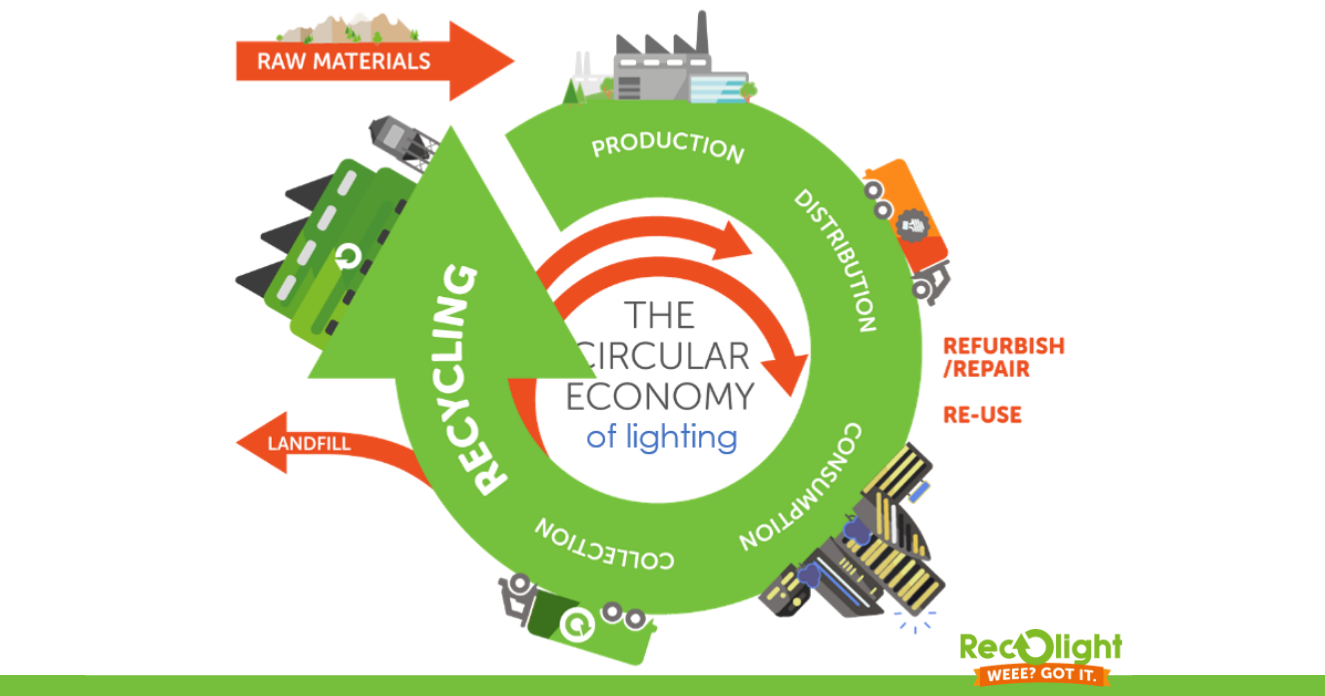
A Recolight Circular Economy webinar will take place on May 28 at 11am. The webinar - which you can sign up for here - will give attendees vital insights into new Circular Economy regulations, standards and commercial requirements for lighting. Presenters from Defra’s Circular Economy Team, Lighting Europe, and Recolight will provide an essential introduction to the changes. The webinar will be chaired by Ray Molony. The webinar will provide a summary of new material efficiency and product design standards that will impose new requirements on products sold in the EU. Speakers from Defra will introduce the UK’s approach to the Circular Economy following the UK’s departure from the EU. Nigel Harvey, Recolight's CEO, comments, “Sustainability is rapidly moving from ’The right thing to do to safeguard our planet‘ to ’A must do to stay in business‘. The earlier companies start, the more likely they are to be able to meet/exceed the new requirements.” Attendance for the webinar, which will last around one hour, is free of charge. Register for the webinar by clicking here.

FEATURE - Li-ion Leading The Way
Marc Garner, of the Secure Power Division at Schneider Electric, discusses the UPS considerations that have to be factored in when choosing between Li-ion and VRLA batteries. Given their many advantages over traditional technologies such as valve-regulated lead-acid (VRLA) batteries, lithium-ion is fast gaining popularity as a power backup option for Uninterruptible Power Supplies (UPS). A 2018 Bloomberg New Energy Finance report forecasted that Li-ion technology will comprise 40% of all data centre backup batteries by 2025, and that in the hyperscale sector, Li-ion would become the predominant battery technology, accounting for 55% of UPS batteries. Compared with VRLA, Li-ion offers users many benefits, including greater power densities, smaller size, less weight and longer operating life. They can also withstand many more charge/recharge cycles, typically more than 1,000 compared with 200-400, before losing their ability to provide effective backup power. As a result, they occupy less space, incur lower maintenance costs and require less frequent replacement, offering the user a lower total cost of ownership (TCO) over the lifecycle. This helps to offset what was once considered a key disadvantage, an up-front cost premium, but even that is steadily diminishing thanks to ongoing development and increased manufacturing volumes. Cost considerations For data centres and other critical applications, power continuity is essential, and cost can often be a determining factor in the choice of technologies. Total cost of ownership is determined as the cost of a UPS over its working life. For most, it is the aggregate of Capital Expenditure (CapEx), or the upfront cost of acquiring and deploying the UPS versus its Operating Expenditure (OpEx); the recurring cost of running, maintaining and servicing the system throughout its life. A smaller investment in CapEx may be less likely to be challenged, but a change of mindset during the deployment phase can offer many benefits to the user in the long-term, especially from an operational perspective. Studies by Schneider Electric’s Data Centre Science Centre, for example, and information included in White Paper #229: ‘Battery Technology for Data Centres’, offers key guidance for electrical contractors and found that over a 10-year period, Li-ion delivered a TCO that is between 10% and 40% lower than equivalent UPS systems based on VRLA. Furthermore, the smaller size occupied by a Li-ion battery is of obvious advantage to those responsible for larger enterprise colocation environments and whose revenues depend on maximising the white space. Here, real-estate savings can offer an instant improvement to the bottom line, especially when multiplied by the many hundreds, if not thousands, of assets located in a large facility. Remote management capabilities Built-in battery management systems including software, sensors, switches and microcontrollers are an essential component of any Li-ion UPS system. Due to their chemical makeup and higher energy density, they are sensitive to being overcharged unless managed properly. Not only does this software greatly improve the safety and reliability of the UPS, it also makes Li-ion systems a natural fit for remote management. As the maintenance and operation of data centres becomes increasingly service driven and requires expert guidance from electrical contractors and specialist power partners, UPSs’ will include Internet of Things (IoT) technology to provide data about their internal status and operation via tools that enable greater remote management capabilities. Another key benefit is the longer operational life of Li-ion, which is typically 10 to 15 years, compared with VRLA alternatives that offer a lifecycle of four to six years. This means greater reliability, fewer battery replacements and less frequent maintenance visits, offering the user a lower overall servicing cost. Tools to enable data driven decision-making No matter what type of UPS is selected, the ability to right-size against the specific needs of the application is essential, especially from the perspective of energy usage. Due to the mission-criticality of a UPS, power protection systems can be often over-provisioned, increasing operating costs and energy usage dramatically. To aid electrical contractors and partners further in the decision-making process, Schneider Electric has created a series of digital TradeOff tools, which model the cost implications of deploying new critical infrastructure technologies. The Lithium-Ion vs. VRLA UPS Battery TCO Calculator can assist in the process of choosing a UPS type and the battery configuration most appropriate for the environment it is being deployed in. By varying inputs such as capacity, service life, backup time and battery replacement period, and selecting the expected operating costs from local power and real-estate, electrical contractors can use the tool to estimate the cumulative cost of deploying a Li-ion or VRLA UPS and make a data driven assessment based on the applications needs. The Lithium-ion vs VRLA Battery TCO Calculator also helps the user identify the most energy efficient and cost-effective choice. Today, power continuity remains essential for all critical infrastructure applications, each with its own business case and backup needs. Looking forward, energy efficient technologies offer the user a far greater return on investment (ROI) and a reduced carbon footprint, increasing uptime and availability with lower emissions. - This article originally appeared in the May 2020 issue of ECN.

Engineering Services Bodies Issue Coronavirus Site Safety Guides
Leading engineering services sector bodies, ECA and BESA, have jointly developed two new guides to help contractors to manage coronavirus-related issues on site. The new guides will be freely available to the wider industry during the current emergency. They provide sector-relevant guidance for engineering and building services contractors working across construction and FM in two specific areas: • ‘Specific Environments’ (where there may be higher risk of COVID-19 transmission); and • ‘Close proximity working’ (less than 2m). The new guides: - Align with the hierarchy of preventative measures shown in the Construction Leadership Council Site Operating Procedures, based on guidance from Public Health England; - Do not recommend the deployment of respiratory protective equipment (RPE) for general site activities, most notably where social distancing is possible; and - Recommend that any decision to deploy RPE in site-specific situations should be based on risk assessment. The guides have been drawn up with the support of a COVID-19 Expert Panel made up of BESA and ECA safety practitioners. The panel is also helping ECA and the BESA to provide informed, practical comments on site health and safety issues to the government and industry bodies who are generating overarching guidance in this area. Rebecca Crosland, BESA Health & Safety Advisor, says, “It is imperative that there is further guidance out there to help keep the industry safe. The health, wellbeing and safety of everyone on site must be a priority during the COVID-19 health crisis. Businesses must exercise their duty of care under legislation to ensure all workers are protected and ensure that any critical information related to their health and safety is communicated clearly and then implemented.” Paul Reeve, ECA’s CSR Director and a member of the CLC’s working group on site safety measures, adds, “The CLC SOP is an overarching industry document, but it refers to the need for sector guidance. These two guides are the start of joint ECA and BESA activity to produce more detailed, sector-relevant information that’s desperately needed by many engineering services contractors. “They aim to help with the practical management of coronavirus-related issues on site, which may include the challenges associated with doing essential work in closer proximity than two metres.” ECA and BESA welcome comments on the new guides from across the industry. The guides are available on the ECA website: GN1 - https://www.eca.co.uk/downloads/business-support/health-and-safety/coronavirus/draft-covid-19-and-engineering-services-guidance GN2 - https://www.eca.co.uk/downloads/business-support/health-and-safety/coronavirus/draft-covid-19-and-engineering-services-guidan-(1) About ECA and BESA – Working together to represent the engineering services sector • ECA and BESA collaborate on a range of issues in the engineering services sector. The partnership brings together the two leading associations representing engineering services; some 4,000 businesses with a combined annual turnover of almost £10bn. • Together, ECA and BESA cover a range of engineering, design, installation and facilities management activity, including electrical, heating, plumbing, energy management, micro-generation, ductwork, ventilation, fire and security, and wireless systems. • Joint work includes representation in key areas like contracts, procurement, payment, and health and safety. Overall, the engineering services sector accounts for some 40% of UK construction/maintenance turnover.

LIA Creates Endorsed Lighting Product Scheme
Due to increased scrutiny of emergency lighting and fire safety products, for the first time ever, the Lighting Industry Association (LIA) has created a new scheme to offer an opportunity for emergency lighting manufacturers to have their products individually endorsed by ICEL and the LIA.  The first company to achieve such certification is Emergency Lighting Products Limited. The ICEL Product Endorsement scheme recognises products which have been developed and manufactured in accordance with the relevant safety directive and standards. Therefore, providing specifiers and end users with the confidence that the emergency lighting products they install have been scrutinised and have controlled manufacturing processes, with an independent verifiable assessment that the products have genuinely been subject to these checks. Administered by the LIA Compliance Team, all approved products will be listed on the ICEL Product Endorsement Scheme register. These products will also be entitled to use a special mark to indicate the endorsement and a strict process of annual audits will ensure products maintain their status. Emergency Lighting Products Ltd submitted their Emergency Escape/Exit Luminaire range for approval and after a meticulous evaluation process and documentation review, their product range have successfully passed the ICEL Product Endorsement Scheme criteria and now feature on the register. When asked why Emergency Lighting Products Limited got involved in the scheme, David Wright, Managing Director of Emergency Lighting Products Limited comments: “Emergency Lighting Products Limited are very proud to receive official ICEL Endorsement of our first range of twelve emergency lighting luminaires. The new ICEL scheme provides an opportunity to have products, the manufacturing facility and all of the supporting documentation independently assessed, giving our customers even more confidence when making a purchasing decision. ELP will certainly be submitting more luminaires and conversion equipment for assessment under the ICEL Product Endorsement Scheme.”  If you are an ICEL member or carry emergency lighting in your range and are interested in getting your products endorsement, click here.  

Red Arrow To Move Into New Facility
Red Arrow, a manufacturer and distributor of lighting and electrical products to the wholesale industry, is working towards a robust and positive future with plans to transform a new 55,000 square foot facility, designed with excellent customer service in mind. Currently based in Sheffield, Red Arrow's new facility is equipped with viewing galleries, full support and technical advice, all under one roof. The company offers products with unique design features, and there's always been a focus of putting the emphasis on quality. Red Arrow is supported by a full ISO9001 accredited UK HQ with NPD, testing, design, technical, stock management and customer service for products. With availability, quality, reliability, performance and trust at the heart of the business, Red Arrow is focused on getting its products to market faster, while offering a new experience to its customers. And with a Wholly-Owned Foreign Enterprise (WOFE), the lighting manufacturer and distributor can control its own processes and product development - differentiating itself from traditional competition and holding a stronger position in the industry - while also allowing the company to speed up the introduction of new products. In a competitive marketplace, the team at Red Arrow is expanding their service by implementing a product development initiative. Aimed at bringing improved quality and unique design features to their products, this new initiative is designed to help give customers a commercial advantage for their clients, installers and end users. And with an extra ongoing technical programme for the entire team, the lighting manufacturer and distributor is planning to upskill its workforce, allowing the team to train customers in the best use of the products. Working towards a quality-first mindset, Red Arrow achieved ISO9001 certification in January 2020, with plans already advanced for ISO14001. Designed for customers Currently standing as an empty shell, Red Arrow's new facility will be transformed into a state-of-the-art warehouse and office space, designed with electricians and wholesalers in mind. Graham Lewis, Sales Director of Red Arrow, comments, "If all goes to plan, our sales, customer service, marketing, technical and finance teams will all be based in the new building, together. This will allow us to offer a co-ordinated customer experience. And with facilities such as the dedicated lighting scheme design, we can take out the guesswork when choosing the right products, while also providing full calculations, support and tech know-how. All under one roof." The re-branding process is continuing to grow at an impressive speed – and Red Arrow tells us that with increased social media activity, a new website and a fully redesigned product guide coming soon, its new look reflects the company's goals for the future. The changes make it easier for customers and installers to see exactly what Red Arrow’s products do with new data, better packaging and improved customer service. The business is working through the current climate with positive plans and a resolute commitment to its customers.

VIDEO - ESP's New IP CCTV Ecosystem
Already offering one of the most comprehensive collections of premium quality, competitively priced CCTV systems for the domestic market with its 4MP range, ESP has developed a brand new IP (Internet Protocol) CCTV range that will satisfy the growing demand from customers and contractors and will meet the needs of a changing market place which is moving from analogue to IP. Take a look at the video below: https://www.youtube.com/watch?v=otLXZgxqvl4   The new IP POE CCTV range is designed to offer superior, reliable and straightforward installation solutions for a range of applications from domestic through to larger and more complex commercial projects. The range features POE (Power-Over-Ethernet) which enables the camera and power feed to be wired in Cat5e cable up to 100 metres without the need for additional power, which makes installation much more convenient. A single Ethernet cable provides both the power and the HD digital feed, with just one cable per camera and multiple cameras can be installed anywhere on the network that the NVR is connected do. Processing power, an abundance of features, versatility and high resolution IP CCTV all combine to make this the superior choice over traditional analogue systems. There are two distinct IP ranges available - the REKOR IP 2 Megapixel range which has been tailored for the domestic market, and the HDView IP 5 Megapixel range which is aimed at larger applications with a wide choice of NVR and camera selection. All NVRs are packed with features, such as remote monitoring via the ESP IPView App, H265 compression, motion record activation and they are supplied with quality surveillance hard drives for peace of mind.

The benefits of protective clothing
Irrespective of the working environment, it’s essential that contractors plan accordingly and protect themselves with the right choice of personal protective clothing (PPE). Reece Safety, a provider of life critical safety products, explains more. Many workplaces require workers and visitors to wear personal protective clothing (PPE) while on worksite premises if there are hazards present in the area, such as open flames or chemicals which can cause harm. It is important that PPE is always worn correctly whilst in a hazardous area, as this will prevent accidents from occurring and make for a safer work environment. By having PPE in place within the workspace, workers should not have to worry about being safe at work, which therefore reduces the likelihood of workplace injury or short-term/long-term health issues caused by a situation that protective clothing may have prevented. Below, we will discuss the key benefits of PPE in more detail, along with why investing in protective clothing for staff in all hazardous environments should be paramount. Prevent injury from harmful bacteria and corrosives If you’re working with chemicals, it is imperative to wear full PPE from goggles to gloves. Harmful and corrosive substances, particularly liquids, can be very dangerous if spilled or leaking occurs; often resulting in splashes which can be life-altering when contact is made with the skin or eyes. When working in an environment that aims to control harmful bacteria such as a clinical lab or a hospital, PPE acts as a barrier between infectious materials that can cause illness and damage to the skin. In these environments, protective clothing is vital. Reduce the risk of respiratory illness Respiratory issues from breathing in smoke, gases or chemicals from contaminated air can be toxic, so respirators are essential to protect your lungs from both long-term and short-term gas-related illnesses. However, on oil and gas sites, it is important to be fully equipped with eye protection, hearing protection and flame-resistant clothing. If working in oil and gas wells, this can expose workers to hydrogen sulphide, which can cause irritation and difficulty breathing in some asthmatics. One of the worst gases to inhale is crystalline silica, which is a known lung carcinogen that can cause silicosis and can, in the worst cases, be fatal. Protect your body from extremes of heat and cold It is imperative to keep workers safe and comfortable, even in uncomfortable and dangerous situations. Protective suits and arc flash clothing from Reece Safety are some great examples of how PPE can keep you safe from extreme heat when welding or using electricals for example, as well as extreme cold such as outdoor or underground maintenance work. Multiple layers of PPE are to be worn for extreme temperatures, including heat-resistant outerwear for hot environments or thermal layers and wicking material to keep you warm in cold environments. Preventing injury Whether it’s falling rocks or slipping, make sure you’re protected with the right footwear and head and body protection when you’re entering a hazardous area. Boots with good grip and a helmet are examples of much needed essentials to protect yourself from falling and head injuries while on the job; these injuries are some of the most common in the workplace. So be sure to wear your protective clothing until you are no longer in a hazardous area, particularly in more dangerous areas such as working underground, on building sites and in damp environments. Top tip: Make sure your PPE is cleaned and locked away securely when not in use to avoid issues like cross-contamination or getting clothing mixed up at work, as each person requires differently sized PPE to fit appropriately. - This article originally appeared in the May 2020 issue of ECN.

Heat Pump Industry Welcomes Support For Low Carbon Heat
The Heat Pump Industry has welcomed the Government consultation on Future Support for Low Carbon Heat - in particular the proposal to make grants of £4,000 available for consumers wishing to replace fossil fuel boilers with Heat Pumps. Chairman of the Heat Pump Association (HPA), Graham Wright, says, “We are pleased the Government is proposing this important step to decarbonise the way we heat our homes, and thank the Minister, the Rt Hon Kwasi Kwarteng MP, and his civil servants, for their constructive engagement with the HPA, and for developing these policy proposals on the basis of sound evidence and economic analysis. We are particularly pleased that the Government has quoted our recent Industry Roadmap, published last November, within the consultation, and has adopted our proposal for a £4,000 grant per customer, to support heat pump uptake. “The Committee on Climate Change has made it clear that the most cost-effective way for the heat sector to deliver the country’s legally binding carbon targets, is to ensure all new heating systems from 2035 are low carbon. Yesterday’s publication is an important first step in delivering that critical market transformation. “Although there is further dialogue to be had during and after the consultation period, particularly on whether the overall levels of funding are sufficient to deliver the required growth, and ensuring that alternative policy support is developed for larger heat pump installations, today’s announcement is a most welcome step in the right direction.”

Report Reveals Tradespeople Being Harassed During Essential Construction Work
The Construction Industry Coronavirus (CICV) Forum is providing greater visibility on what constitutes ‘essential work’ to prevent key workers being harassed and verbally abused during vital construction projects. The Forum’s members have reported an increasing number of tradespeople being intimidated and verbally abused by the public while carrying out legitimate projects in line with CICV Forum guidelines. One contractor says, “On one commercial job, our engineers were subjected to a barrage of abuse by residents and staff. Our guys were upset and didn’t want to be there, so in the end, the local authority had to put up posters explaining that we were carrying out essential work. It was the only way our engineers could be left alone to do the work. “Not all essential obvious work is obvious to the public, but that is no excuse for the behaviour that some of us in the construction industry are having to put up with.” To try and diffuse the situation, the Forum has produced a checklist of projects to help the public understand the range of work classified as ‘essential’. It also plans to offer on-site signage to help workers make it clear to the public they are carrying out essential work only. Kevin Stewart, Minister for Local Government, Housing and Planning, said such measures were essential to provide clarity and reduce tension between the wider public and workers. He comments, “The general public may not be aware of the full range of projects that constitute ‘essential work’, but these are workers who are performing a vital role safely and responsibly. “At a time when the Scottish Government is asking people to remain in their homes it is even more important that these homes are watertight, safe and have essential working facilities, such as water, gas and electricity. “Builders and plumbers’ merchants are also needed to provide supplies for essential repair and maintenance, such as heating and hot water breakdowns, roofing repairs, and electrical and fire safety. “It is important that the public understand that there is still a need for essential works to be carried out in these challenging times and industry professionals should be able to complete repairs in safety, without fear of criticism and rebuke.” His words were echoed by John McKinney, secretary of Forum members the National Federation of Roofing Contractors, the Stone Federation and the Scottish Contractors Group, who adds, “Essential construction work is not confined to building a major hospital for COVID-19, but we know that people might not be aware of this. “There are dozens of other construction works that are classed as essential to keep the fabric of Scotland intact. At the very least, homes need to be watertight and safe both inside and out for people to be able to live in them. That’s why the construction industry is working hard across Scotland to ensure people can stay at home during these times to protect the NHS. “Greater understanding is needed among the public to understand that the key workers carrying out such work aren’t flouting the rules – they are performing essential tasks and should be allowed to do so without fear of abuse.” To help the public, the Forum has now compiled a list of essential work that is permitted to be carried out, including:                 Removal of elements in danger of collapse, e.g. cladding                 Repair and construction of critical road and utility infrastructure                 Emergency call-out services, e.g. electrical, plumbing, glazing and roofing                 Making inhabited buildings safe and watertight, e.g. after storm damage                 Domestic repairs to ensure occupants’ safety and wellbeing, e.g. the elderly                 Repair and maintenance of essential buildings, e.g. fire and police stations                 Safe operation of faulty heating and water systems                 Essential inspections to prevent health outbreaks, e.g. legionnaires                 Supply of materials for these and other essential COVID-19 projects. In addition, the Forum is developing a series of free signage for contractors to use to make it clear that any work being carried out is essential. Designed to be printed out and inserted in van windows and properties, the read: ‘Key Worker: Carrying Out Essential Construction Work.’ Andrew Renwick, Managing Director of Caltech Lifts, who represents Forum member the Lift and Escalator Industry Association, said it was vital that this new collateral was used responsibly. “It is imperative that this material is only displayed and worn by individuals undertaking qualifying work, so employers should also issue employees with appropriate paperwork so that they can provide evidence if questioned by the police,” he says. “Anyone caught abusing this material should be dealt with and the employer spoken to by the authorities.” Set up in March, the CICV Forum has already played a major role in clarifying conflicting information for the sector and issuing practical guidance for companies, clients and employees. It has also established a series of influential sub-groups dealing with mission-critical aspects such as health and safety, skills and future planning.