2 November 2026
Product of the Month: Amari Floodlight range by Aurora Lighting
 
24 November 2026
JTL celebrates opening of new Tyneside training centre
 
24 November 2026
LiGHT 26 welcomes record number of visitors to fifth event
 
23 November 2026
Advanced acquires communications specialist Baldwin Boxall
 
23 November 2026
Trades face 'skills squeeze' as apprenticeship demand soars
 

Latest News


New LED driver for intelligent and flexible lighting systems
With the new OTi DALI 80/220-240/2A1 NFC L LED driver, OSRAM complements its top-notch range for designing intelligent and flexible lighting designs. Combining various energy-saving features, the DALI-2 LED driver can be programmed via DALI and NFC. In addition to the Corridor Function and Advanced TouchDIM, it also supports Constant Lumen Output (CLO). Monitoring data and luminaire information in accordance with DiiA specifications Part -251, -252 and -253 provide a sound basis for optimised operation in IoT installations. The driver is just the right choice for emergency lighting systems with a central battery – and thanks to its slim housing, it even fits into small linear installations. And with its wide operating range and high-quality analogue dimming from 1 to 100%, it addresses the requirements of offices, educational institutions and shops alike.

Pharos powers Manchester’s spectacular Tower of Light 
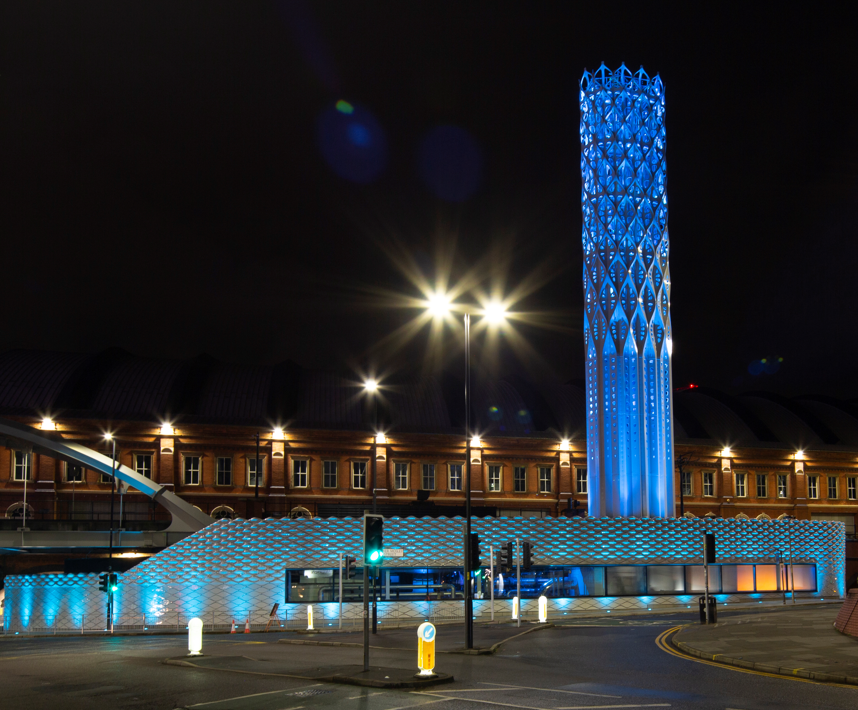
Located in the heart of Manchester’s iconic city centre, a new 40-metre illuminated tower has been constructed, marking a key milestone in the development of the city’s new heating and electricity network. The striking new landmark, proudly named ‘The Tower of Light’ is a flue tower and façade enclosing the new Vital Energi CHP energy centre, which stands tall in Manchester’s Civic Quarter. Spearheaded by the city’s ambitious target to transition to zero carbon by 2038, the Manchester Civic Quarter Heat Network (MCQHN) is now supplying low carbon heat to its first customer, the Manchester Central Convention Complex. The ground-breaking £24m project generates low carbon power in an energy centre beneath the railway arches by Manchester Central. It is then distributed by a 2km network of underground pipes which will soon serve a whole host of Manchester’s iconic buildings, including Bridgewater Hall, Central Library, Heron House, Manchester Art Gallery and Manchester Town Hall. The tower has been expertly designed by award-winning architects Tonkin Liu, using a shell lace structural technique created in partnership with Arup. The structure comprises of 3-8mm laser-cut sheets which are then curved and welded together to create a strong, rigid surface. This ultra-lightweight, vertical, single-surface structure provides a strong support to the chimneys at the base of the energy centre, impressively using only minimal materials to do so. During the day, the wind moves reflectors to direct sunlight into the tower, filling it with dancing light. At night, The Tower of Light comes to life, showcasing the beauty of its spectacular design. SEAM Design, appointed to create the tower’s lighting scheme, specified Pharos Architectural Controls to help achieve this. The luminaires were supplied by leading British lighting manufacturer Tryka; using the trusted and highly versatile Pharos LPC (Lighting Playback Controller) 2, which supports the DMX lighting protocol. A Pharos TPC (Touch Panel Controller) has also been integrated into the final solution, allowing the tower to benefit from lighting controls, complete with a smart user-friendly interface. Mark de Gruyter, Regional Manager EMEA of Pharos, comments: “Manchester’s iconic Tower of Light is an exceptional commitment to tackling climate change, and the design and innovation to deliver this project has been outstanding. We are firm believers in creating a sustainable future, and Pharos is thrilled to have contributed to this remarkable tower. It’s not only a fantastic source of low carbon power, but at the same time demonstrates Manchester’s unique ability to stay ahead of the curve in both function and design.” The spectacular Manchester landmark is projected to save an initial 1,600 tonnes of carbon emissions per year, contributing towards Manchester’s target to transition to zero carbon by 2038.

Saving trees and preventing power cuts – how data analysts hold the key
Clever use of data about trees across the East and South East of England, is helping to reduce power cuts for residents. In the past year, UK Power Networks has invested £19million in tree trimming to keep branches away from power lines and help prevent outages for communities. To ensure this was being spent efficiently, on a more scientific and sustainable basis, the company’s analytics team designed a new computerised tool for tree-cutting colleagues to best decide when, where and how to clear trees and bushes away from power lines. This use of software calculates a risk ranking for each tree, in terms of the priority it should be given for trimming for maximum benefit, which also helps ensure no trees are cut unnecessarily. It takes into account different varieties’ growth rates, tree ages and locations. The innovative project builds on existing use of mapping technology such as LlDAR plane patrols which UK Power Networks was the first UK network operator to adopt. The data analysis has already resulted in fewer power cuts for customers, with the combined benefit of saving 350 trees from felling (equal to 75 tonnes of CO2) for communities as the UK faces climate change and strives towards Net Zero. It has also helped the company reduce the number of power lines damaged by trees and branches, particularly during storms, and protected an estimated 9,000 customers from potential power cuts. UK Power Networks plans to spend £90million on tree cutting from 2023 to 2028. Alex Mahon, who heads the company’s analytics team, comments: “Our focus is always to collaborate across the business to deliver both change and lasting value. “This tool adds to the resilience of our electricity networks, reduces power cuts, and also ensures that the environmental impact of tree trimming is also lessened by directing work to where it is most needed.” Martin Peters, an area tree manager for UK Power Networks, says: “We have a long-established programme of tree cutting which is carefully managed to make sure we prioritise trimming trees which present the greatest safety risk, or those most likely to touch overhead lines. “The analytics team understood our objectives and the successful use of their tool has added to our existing technology such as the use of LIDAR. It helps us make the best decisions about when and where to trim trees across the communities we serve.”

If it doesn’t conform, complete the form!
The Electrical Safety Roundtable and TrustMark have collaborated to create a new reporting tool to monitor levels of unsafe and non-compliant electrical installations in homes across Great Britain. The Electrical Safety Roundtable was founded on a mission to improve electrical safety in the home. TrustMark provides a mark of Government Endorsed Quality to tradespeople who undertake work in and around people’s homes. Taking inspiration from the Health and Safety Executive’s tool for reporting of injuries, diseases, and dangerous occurrences (RIDDOR) and the tool for Collaborative Reporting for Safer Structures (CROSS), as a team these two organisations have created a tool to help to monitor the levels of unsafe and non-compliant electrical installations in homes within Great Britain. With recent regulations putting a greater emphasis on mandatory electrical safety checks, the industry expects more instances of unsafe and non-compliant electrical installations to be uncovered in homes, yet this information is currently not being tracked or monitored centrally. This poses a challenge to getting a true understanding of the risks posed by electrical installations in homes throughout Great Britain and therefore makes it challenging to consider whether policy or industry intervention is needed to mitigate the risk. The data collected will be analysed regularly, and the results will be made public. In addition to improving the electrical safety of homeowners and tenants, it is hoped that the data gathered will help shape policy discussions and industry initiatives. Similarly, if successful, this provision could be applied in other industries. Commenting on the launch Simon Ayers, CEO TrustMark says, "This is a really important initiative which will help to identify areas of electrical safety risk in homes across Great Britain. Having this data provides the opportunity to improve the standard and quality of electrical installation work where it’s needed, and help to tackle key areas of skills, knowledge and training." Chris Pack, Chair of the Electrical Safety Roundtable in the Home comments: "It’s great to see this initiative reach fruition. As an organisation it is our mission to enhance electrical safety and the results from this tool will help us understand the major areas of electrical risk in homes and provide quantifiable data on the level of risk posed by unsafe and non-compliant electrical installations. We are looking forward to reviewing and analysing the data over the coming months and using that information to maximise our impact." Alongside the reporting tool, a new webpage on the Electrical Safety Roundtable Website has been created to provide consumers with guidance on how to seek redress and rectification of unsafe or non-compliant electrical work.

Fix Radio discusses how mental health is impacting the trades sector 
As the nation was forced to spend more time at home due to sequential periods of lockdown, the past year and a half has seen an unprecedented increase in home renovations, with 4 in 5 homeowners spending their money on improving their home according research from Eureka!, resulting in record sales within the trade. However, the impact of such a gruelling year has resulted in workers and smaller firms operating in the domestic improvement space struggling to keep up with these unprecedented levels of demand. Financial problems, pressures in the supply chain, and finding the right people to work with has heavily weighed on the mind of the tradespeople, causing a steep increase in the rates of anxiety and stress. Tragically, the ONS reported last year the suicide rate among construction workers is three times the national average for men, equating to more than two construction workers taking their own life every day, highlighting the magnitude of the crisis. Fix Radio are here to discuss. New research commissioned by Eureka! mirrors these findings showing 75,000 UK trade businesses are currently impacted by a potential mental health issue with 54% respondents stating mental health is a ubiquitous issue for trades professionals. A further 51% stated they knew someone in the trade who had been impacted by mental health challenges. The research also found that 69% of tradespeople said there is still a stigma towards seeking help for mental health amongst those working in the sector, preventing them from discussing it beyond close friends or family members. Key Stats: 75,000 UK trade businesses are currently impacted by a potential mental health issue 54% of installers stated mental health is a big issue for trades professionals in general 51% said they knew someone in the trade who had been impacted by mental health challenges 69% agreed there is a stigma attached to seeking support for a mental health condition in the trades sector Businesses that are experiencing ‘operational frictions’ are nearly three times more likely to report a possible mental health issue For Mental Health Check-In Day, experts in the trade, Fix Radio – the UK’s only radio station dedicated to the trade – will be shedding light on the mental health crisis that is affecting the trades sector and discussing ways to support them. With an audience 400,000 tradespeople, Fix Radio has established itself as a trusted voice within the industry. Featuring regular podcasts and interviews with some of the biggest talent in the industry including Facebook superstars, the Bald Builders and, Clive Holland of the BBC. Fix Radio are also available to discuss the following topics: The pressures tradespeople are facing in the upcoming months How can businesses support the mental health of their employees Why tradespeople struggle to discuss mental health related issues

Schneider Electric partners with Which? to support electricians
Schneider Electric has partnered with Which? to support electricians across the UK. The partnership will enable electrical professionals to become a Which? Trusted Trader cheaply and quickly, helping them to generate more business. Which? Trusted Traders is an endorsement scheme that recognises trustworthy traders. The company has been helping consumers for over 60 years, assessing and endorsing traders who meet its high standards. The Trusted Traders accolade provides customers with the confidence that they are dealing with experienced and qualified professionals. As well as being able to display the icon, endorsed professionals are given a profile on the Which? website, access to industry news and a dedicated account manager to help with customers. Members of mySchneider will now be able to become a Which? Trusted Trader with a discount of 50% off the first six months. “We are constantly striving to support the electrical industry and provide electricians with the tools for success,” says Nico van der Merwe, Vice President of Home and Distribution, Schneider Electric UK & Ireland. “The parternship is another element of that commitment and we will continue to roll out new promotions. We want to offer a full spectrum of support, and alongside mySchneider, the podcast series and our competitions, we understand the need to open up new sales channels – and working with Which? does just that.”

Earnings for electricians hit highest level since start of pandemic
Earnings for self-employed electricians have reached the highest level since the start of the pandemic, according to the biggest payroll business in the construction industry. Average weekly pay rose by 2.4% to £1,150 during last month, the highest December pay levels on record and 6.7% higher than the same period last year. The previous high was £1,300 in January 2020, two months before the first lockdown. The analysis was carried out by Hudson Contract, the UK’s largest provider of tax status and employment contract services to the construction industry with annual revenues of £1.6 billion and a client base of more than 2,500 construction SMEs. Ian Anfield, managing director, says: “We capped off 2021 with the highest earnings for electrical contractors since the start of the pandemic. “As we have seen year after year, we usually see earnings fall back in January because people will be working fewer hours. We would then expect a steady rise in earnings to reach December levels by April.

Simplicity and integration: Growing the EV charging network
The UK EV market is booming, with more electric cars registered in 2021 than in the previous five years combined, and with an estimated 1 million EVs and plug-in hybrids now driving on Britain’s roads. The roll-out of a robust EV charging infrastructure is vital to support this rapid EV growth and, as such, is an important component in the transition to a fossil-free society. Equally important though is how these charging points operate, and how they integrate into the society we live in. Here are some predictions from CTEK about what they think will happen, as we strive to meet Government targets. 1. Open standards and load balancing are becoming increasingly important The connection of the charging points is one of the most important aspects for building stable electrical systems and overcoming possible power problems in urban areas. Open protocols like OCPP (open charge point protocol) should be standard. All charging points and networks should also be able to balance loads, which means optimising charging based on the needs and capacity of the grid, individual households and properties. Smart and safe charging benefits society at large. 2. EV roaming to make an entrance In mainland Europe, a number of operators like E.ON drive and Vattenfall inCharge have now entered into ‘EV roaming’ agreements that will open up the EV charging infrastructure for drivers, giving them access to thousands of charging locations worldwide, in much the same way as data roaming agreements work for mobile phones. This is a really positive development for EV drivers, and one that we would expect to see making its way to the UK fairly soon. EV roaming also fits well with the UK’s environmental goals, and wider global sustainability goals. 3. Payment solutions will be simplified When it comes to payment solutions, there are many players in the market today  which is a good thing, but it has also led to a plethora of different payment methods at charging stations. As an EV owner, you may need to carry several RFID tags in the glove box to charge on the roads. If you come to a new charging post, you may also need to scan a QR code and register on a website, or in an app, to charge your vehicle. Work is underway on EU legislation which would require operators to open their chargers to everyone in a non-discriminatory and transparent way, and allow debit card payments. Whether the UK Government decides to follow this legislation is yet to be seen, but hopefully 2022 will be the year when we exchange RFID tags, QR codes and apps for the ability to easily tap our mobile phones, and use our debit cards, when we need to top up our car batteries. The evolving international ISO 15118 standard for ‘vehicle to grid’ communications is a real game changer, as it will enable an EV to simply ‘plug and charge’. You don’t need all the different RFID tags and payments cards, the car automatically identifies itself to the charging station, and the cost of the charging session is then automatically taken from your debit or credit card – as simple as that! 4. Areas of growth Although home chargers will remain the biggest market in real terms (around 74%), we predict that chargers for commercial fleet will see the fastest growth, followed by destination, workplace and roadside charging. Many companies are already realising the benefits of fleet electrification. As well as the clear environmental benefits, the cost of running an EV are considerably lower than a petrol or diesel vehicle, and there are significant tax benefits for the company, and employees personally. The Government offers grants of 35% (up to £3,500) off the price of an electric car and up to 20% (up to £8,000) off an electric van. We can expect to see increasing Government pressure on businesses to make more environmentally sound choices about the vehicles they provide for staff, so installing EV chargers now is a smart futureproofing move.

CP Automation offers compact and versatile power analyser range
CP Automation now supplies the PQube 3 series of power analysers from Powerside. The power analysers measure, identify and record all power quality disturbances and environmental or process parameter symptoms in real-time. This will equip the company’s customers with the tools to effectively identify power quality disturbance issues and consequently improve productivity at their facilities. The PQube 3 series constitutes five models – the PQube 3, 3e, 3r, 3v and 3 Portable. The standard variety comes with an impressive number of features, such as up to 14 energy metering channels, four quadrant metering, alarms, intuitive touch-screen display and automatic reporting. Incredibly versatile, the power analyser can also be used as a controller, voltage monitor and revenue-grade meter. It is certified for class A power quality as per IEC 61000-4-30 Ed3 and measures in real-time, recording 2 kHz to 150 kHz emissions. In addition to the standard model, CP Automation also stocks the PQube 3 Portable power analyser. It detects high-frequency transients at 4MHz and records 2kHz to 150kHz conducted emissions. This device combines powerful communication capabilities with the quick installation of a portable instrument. Perfect for temporary power measurement activities, it can be used as a stand-alone with a USB stick for configuration and data download or if connected to a network, it delivers event notification and regular reporting. “There’s no question that power quality disturbances are on the rise,” explains John Mitchell, global sales & marketing director at CP Automation. “Harmonic currents, poor power factor and voltage fluctuations are all common problems in industry. Customers can install the PQube 3 for continuous monitoring and this is the first step toward gathering clear actionable data to solve power quality problems. Crucially, data recorded by the PQube 3 can help to pinpoint the root cause of power quality issues, reducing plant equipment failure or nuisance tripping. Its continuous recording allows the user to go back and in time and see what happened.’’ Typically used in a range of commercial and industrial facilities, the PQube 3 series is particularly suited to applications from a supply connection of a transformer, generator, PV solar plant or wind turbine in all industries, such as marine, data centres, manufacturing, transport, water and wastewater, and hospitals to name a few.”

TRILUX delivers lighting solution for the largest sports retailer in the world
Any sports enthusiast will have visited a Decathlon store. The world’s largest sporting goods retailer is famed for stocking a wide range of sports products; from basic supplies like tennis rackets to advanced extreme sports goods such as scuba diving equipment. Stores are typically sized at an average of 4,000m². They have been given an over-haul by TRILUX. Decathlon's main mission is to “make sport accessible to as many people as they can.” Their UK property team are working on delivering this by ensuring the shopping experience allows customers to test and try products in an environment which communicates the brands values of vitality and responsibility. These were core to a recent lighting upgrade program, which covered their Reading and Wednesbury stores. TRILUX proposed that the Wednesbury Decathlon store replaced its existing 49W T5 fittings with E-Line LED on the salesfloor and the back of house fittings with carefully selected LED equivalents. By switching to LED, Decathlon are not only benefitting from increased LUX levels on its retail space but would reap more rewards with the added benefit of healthy energy savings and minimal maintenance costs. The existing lighting was positioned in between aisles which made fixture movement quite restrained so a proposal was put to Decathlon to rotate the lighting by 90 degrees so it would no longer be aisle dependent which they were keen to implement. This allowed the removal of redundant trunking and cabling in the ceiling areas, reducing clutter. In implementing the TRILUX scheme Decathlon have achieved a fresh modern look throughout the store. They have created more impact with a better quality of light which intensifies and improves the clarity of product presentations, enhancing colours vibrancy. Light levels have increased from 500lux to 800lux at floor level and they are also benefitting significantly from energy and maintenance savings. Conor McAteer, Decathlon Operations Manager, concludes, “The new lighting has provided us with a modern and much brighter look to our store. As a company we aim to be as sustainable as possible and this lighting project has allowed us to do so by reducing our energy consumption.”