2 November 2026
Product of the Month: Amari Floodlight range by Aurora Lighting
 
23 November 2026
Advanced acquires communications specialist Baldwin Boxall
 
23 November 2026
Trades face 'skills squeeze' as apprenticeship demand soars
 
20 November 2026
Ovia: Delivering performance and flexibility across every sector
 
20 November 2026
Exclusive: how to prepare a building for future technology
 

Latest News


Vent-Axia Provides Ventilation for Giving Back Crawley’s HQ Refurbishment
Vent-Axia has donated ventilation units to local charity, Giving Back Crawley, as part of the refurbishment of its new base. A small charity that serves the local homeless community, Giving Back Crawley found a permanent place to operate from, including preparing and cooking hot meals, but the building needed a complete refurbishment following water damage. Vent-Axia supported this great cause with ventilation to help make the place a suitable home for the charity. Vent-Axia was more than happy to help Giving Back Crawley. One of the company’s members of staff Linda Dawson regularly volunteers at the charity so was able to give a first-hand account of all the good work the charity does with helping the homeless in Crawley. Cooking and delivering over 100,000 meals in the last 18 months to those who need them most, Giving Back Crawley serves the homeless community in Crawley, West Sussex and is entirely run by volunteers. As well as serving their guests free meals, the charity provides the essential items they need to get by such as clothing, bedding and wellbeing items. Giving Back Crawley’s new base also allows them to run a free grocery shop and host regular health checks with paramedics. To provide effective ventilation for the Giving Back Crawley base, Vent-Axia donated two T-Series roof ventilation models that were installed in the kitchen and servery area. These units will allow for extract ventilation from the kitchen and supply or extract from the servery area. Meanwhile, for the laundry area Vent-Axia supplied a HR200WK heat recovery ventilation, which was installed with a Vent-Axia Ecotronic Humidity sensor to help deal with any humidity issues that may lead to condensation and mould. Finally, Solo Pro extractor fans with timers were installed in the toilets. “We would like to thank Vent-Axia for donating the ventilation for our building. The building needed a complete refurbishment following water damage and so we are very grateful to all the companies in our community that have rallied together to help us so that we can cook for the homeless community in Crawley,” comments Joe Dines, chairperson at Giving Back Crawley. “We are delighted to be able help this fantastic local charity create a permanent base from which to provide hot meals and a variety of support to the local people who need their help”, says Lena Hebestreit, Marketing Manager at Vent-Axia. “We’ve supplied a range of ventilation units that have been installed throughout the building to combat condensation and mould and help ensure good indoor air quality. Not only will this help protect the building itself for the future, it will also ensure that both the volunteers and their guests are benefitting from a healthy indoor environment.” Installed in the kitchen and servery area, the T-Series roof model has a low-profile cowl and is suitable for installation in horizontal, angled and vertical glass and for fixing plates in roofs. Known for its robustness and quality, the T-Series’ high-quality design has stood the test of time and has evolved with new and improved motors, impellers and grilles. With extract/intake models available in 4 sizes from 6 to 12 inches, the T-Series features a unique speed control pack which enables high, medium or low speed to be pre-set to suit room size or required duty. A patented electronic shutter system ensures quiet, trouble-free operation while the T-Series controllers and sensors save energy by only switching on the units when needed, either manually or automatically. With energy saving in mind, T-Series Fitting Kits are supplied complete with an integral instantaneous automatic louvre shutter concealed behind the interior grille. It will operate on both intake and extract and at any angle of mounting. Meanwhile, the HR200WK single room heat recovery ventilation unit offers up to 75% heat recovery and features a three speed, external rotor motor that has two matched impellers to ensure a controlled airflow through the unit, with exceptionally economical 25Watt low speed power consumption. Ideal for installation in the charity’s laundry, the unit removes odours and extracts airborne impurities such as dust, dirt and grease, replacing it with fresh, warmed air. The energy-saving, compact and self-contained unit controls condensation, is low noise, offers easy installation and is designed for through-the-wall mounting. The HR200WK’s highly efficient, polymeric heat exchanger cube is also washable and perfect for the refurbishment. Ideal for internal bathrooms, toilets and other small rooms, the Vent-Axia Solo Pro range of 100mm high performance centrifugal extract fan is suitable for wall, ceiling, panel and window mounting. Installed in the charity’s toilets the updated range offers improved aesthetics, sound and installation. The range has been specifically designed for effective ducted ventilation and can also be used with flat ducting for shorter concealed runs. With single speed and overrun timer models available, the Solo Pro range also features a SELV option for installation over or within reach of a shower or bath.

How to protect your home against freezing conditions this winter
When freezing winter weather arrives you can easily pull on an extra jumper or blanket to keep out the chill. But how do you protect your home from inconvenient problems – and potentially costly repairs? The AA shares a guide on how to protect your home against freezing conditions this winter. Prevent frozen pipes in winter Insulate your pipes and the loft water storage tank. Put the insulation foam on top of pipes rather than underneath them. Turn off any indoor valves on pipes leading to outside taps, then open the outside tap and leave it open to let any water drain out. Regularly check all the taps in your home during the winter months. If little or no water flows, there may be frozen water in the pipes. If you are away from home in the winter, set the central heating to come on for a short period each day to prevent pipes from freezing. Find out where the mains water stopcock is, and make sure it turns off easily. If your pipes do freeze, turn the water off and thaw them out slowly with hot water bottles. Never use a heat gun or blow torch. Ask someone to check your home if you're away for a while. This should help make sure leaking or burst pipes are spotted early and damage is kept to a minimum (tell them where the stopcock is). Freezing winter weather can bring problems for condensing boilers. They can sometimes shut down if the condensate pipe freezes – and leave your home without heating just when you need it most. Get ready for winter Save a supply of drinking water for emergencies. Repair any dripping taps – if they freeze, they'll block your pipes. Clear leaves and debris from gutters to reduce the risk of dams that can turn to ice. Insulate pipes in unheated areas like the garage. Tidy away or cover garden furniture. Check the outside lights are all working, or add a light to make access safer. Keep yourself warm – enjoy a hot meal and drinks, and keep active. Check for severe weather warnings in your area. If very severe weather is forecast, especially snow, leave your heating on all day at the usual temperature setting. When snow is forecast, try to avoid making unnecessary journeys, or wait until the roads have been gritted. If you need to clear a snowy or icy path or driveway, only do so if it won't pose a risk to your safety. It's also a good idea to buy de-icing salt for your drive or path before snow or ice comes. Improve your energy efficiency A good start is to fill any draughty gaps and also keep the heat inside your home. This will help save on your fuel bills too. Block draughts from windows, external and internal doors, skirting, loft hatches, and pipes or cables passing through walls. Draw the curtains at dusk and close internal doors to unheated rooms. Insulate your loft – a quarter of your heat can be lost through the roof. Get heating appliances serviced, or your chimneys swept to make sure that the fire burns efficiently. Radiator reflectors will direct heat into the room and not out through an external wall (make sure the radiators are not covered by curtains or furniture). Fit a thermal jacket around the hot water cylinder – at least 75mm thick – and check the thermostat isn't set higher than 60 degrees. If your radiators have cool spots when the central heating is on, bleed them to improve their efficiency. Set your heating to 18–21°C to keep your bills low, and to come on earlier and go off later rather than turning the thermostat up.

EnviroVent's ventilation solution chosen for 'homes of the future' pilot
A ventilation system from EnviroVent has been chosen for a flagship new build scheme that could shape the Government’s ‘Future Homes Standard’. EnviroVent’s energiSava 250 MVHR (Mechanical Ventilation Heat Recovery) system has been specified for Project 80, a new development by Birmingham housing association Midland Heart. The development of 12 homes will meet the Government’s Future Homes Standard, reducing carbon emissions by up to 80%. These homes will be monitored constantly as this research project will be used to inform the Government’s next consultation about the Future Homes Standard, which will be compulsory for all new homes built by 2025 EnviroVent’s Managing Director Andy Makin explains: “We’re very excited to be working with Midland Heart on this innovative low carbon project. The fact that this project is being closely monitored in line with the government’s consultation on the Future Homes Standard just goes to show the role that low carbon, low energy ventilation systems have to play in the homes of the future.” Director of Development at Midland Heart, Chris Miller, says: “We’re really proud to be leading this pioneering project and look forward to working with EnviroVent as one of our partners and welcoming new residents to this unique development.” “The homes here will be ‘normal homes’, constructed largely using regular materials which have been sourced locally, demonstrating the practicability of the Future Homes Standard.” The energiSava® 250 MVHR unit is a popular choice with housing associations for newbuild projects as it provides optimum ventilation for a property with a minimum loss of energy. It extracts moisture-laden air from the wet rooms such as bathrooms, WCs, kitchen and shower rooms, at the same time it supplies fresh air into the living areas, recovering the energy from the extracted air. This unique ventilation system incorporates Intellitrac Technology, which monitors and controls humidity. It operates continuously at a low level to ensure that the home is correctly ventilated, providing good indoor air quality with no user intervention required. As humidity rises and falls, the motor speed rises and falls in correlation. This controls condensation and reduces the time that the system operates on maximum speed, helping to save energy. A highly collaborative programme encompassing industry, academia and the public sector, Midland Heart is working in partnership with local construction company Tricas Construction Ltd to build the homes. The Building Alliance and Birmingham City University are also working with Midland Heart to support the project. The University will provide in depth research to evidence all aspects of the design and delivery of the homes of the future to measure cost-effectiveness, with residents to understand their experience of the new technology. The project will also offer a living lab for student learning. The evidence gathered will help to inform future policy on climate change adaption in the built environment. The homes are due for completion by Easter 2022, three years ahead of the Government’s target. Whilst there are other examples of low carbon developments, this is the first that models the Government’s Future Homes Standard which will be compulsory for all new homes built by 2025.

 Staying warm this winter – helping the EIC to help others
As we come into January, with the warmth of the festive season behind us and the coldest winter months ahead, our minds are no doubt turning to our fuel bills. With more of us working from home, and energy price hikes across the board, it’s likely we’ll all be feeling the pinch over the coming months. This winter, the EIC wants to help its industry colleagues stay warm. 25.9% of people now work from home, with electricity consumption in the UK rising by around £70 a month on average. It’s estimated that already 13% of households are living in fuel poverty in England with 25% in Scotland, 12% in Wales and 18% in Northern Ireland. Add skyrocketing energy prices from suppliers and the cost of staying warm can be daunting, especially to those vulnerable or already in financial difficulty. This was especially true for James, who lived with his mum Kathy and was in the first year of his apprenticeship. Recovering from debilitating chemotherapy treatment for breast cancer, Kathy was a single parent with little financial resource. As a result of her illness and treatment, she’d taken early retirement and received only a small pension. The next five years were crucial to her health outcome. James was carer to his mum and the main breadwinner in the house. His salary paid household bills and the cost of his apprenticeship equipment. To help with rent and expenses, he worked a night job, but was exhausted. His mental health was deteriorating from lack of sleep and the potential of failing at his apprenticeship. Trying to hold it together for his mum caused James deep anxiety. Around this time, James contacted the EIC for mental health support. He engaged with his therapist well, and after twelve CBT sessions, he felt better able to cope with supporting his mum. The EIC helped him to apply for the first Apprenticeship Bursary, and he was granted emergency financial support for the broken boiler at home. Having a long-term health condition, Kathy was particularly vulnerable to the effects of cold weather. Other vulnerable groups include people over the age of 65, children under five, pregnant women, and those with disabilities and mental health conditions. Can you help someone stay warm this winter? The Apprenticeship Bursary programme is for instances just like James’s. The EIC wants young apprentices to get the support they need, when they need it. The help James accessed was due to the EIC and the powerLottery. Through that, James got the financial and medical support required to keep his mum warm and get back on his feet. Without powerLottery, EIC wouldn’t be able to support people like James. That’s why you are needed to become a powerLottery player – to help EIC continue supporting its industry members. powerLottery is the only lottery made for our industry by our industry. It gives players 40 chances to win cash prizes ranging from £50 to £1,000 every single month. A £10,000 draw bi-yearly gives you even more opportunity to win BIG. A new car, a holiday in the sun, a kitchen re-fit or a brand-new wardrobe… think of all the different ways you could spend £10,000. To sign up to play the powerLottery, click here.

SME profits creep up, but skills and materials troubles persist, says ECA
The latest quarterly Building Engineering Business Survey, conducted by leading electrotechnical trade body ECA in partnership with BESA, SELECT and SNIPEF, has revealed that while SME turnovers continue to recover from the pandemic, finding the right people and materials to cope with mounting orders is a growing cause for concern. Under half (44%) of respondents reported a rise in turnover in Q3 2021 compared with Q2 2021, while nearly a third (30%) reported no change. Well over half (57%) reported that their overall turnover was higher in Q3 2021 than for the same period in 2020. Rob Driscoll, ECA Director of Legal and Business, says: “The industry has entered the Christmas period with some optimism – a far cry from last year, when uncertainty around Brexit, COVID and UKCA marking gripped the economy. “Order books are slowly filling and SMEs – the backbone of the economy – have done remarkably well during this second pandemic year. However, the skills shortage and materials crisis show little sign of resolving any time soon. “This risks creating a ticking time bomb. Contractors can fill their order books today but regret it when attempting to deliver those contracts during 2022 at prices fixed in 2021. We echo the Construction Leadership Council’s advice, which encourages parties to share the risk of market volatility.” A third (33%) reported that their overall business performance was ‘about the same’ in Q3 2021 compared to Q3 2019, before the coronavirus pandemic, while 1 in 5 (20%) reported it to be ‘worse’ or ‘much worse’. When asked to rank their most worrying business concerns, materials shortages, staff shortages and delays to projects came out on top. Two in 5 (39%) said staff shortages was their ‘number one’ business concern. Staffing continues to pose a challenge for SMEs in particular. Of the 52% of respondents who said they currently have vacancies in their business, over a quarter (26%) said there were ‘not enough applicants’, and a third (31%) said applicants lacked the right skills or qualifications for the job. Iain Mason, Director of Membership & Communications at SELECT, says: “From our own Member feedback, it is clear that 2021 has been an extremely busy year for many businesses, and it is to be hoped that a solution can be found to the ongoing supply and material issues to help contractors keep pace with demand. “As far as skills are concerned, the number of new electrical apprentices and adult trainees in Scotland recently reached a 12-year high, and it is to be hoped that this encouraging trend continues into 2022 and beyond. Having a qualified and competent workforce is essential if we are to build the electric future that awaits us all.” BESA director of legal and commercial Debbie Petford says: “With new construction work predicted to grow strongly in 2022, there are plenty of reasons to be optimistic. “The building engineering sector is showing strong signs of resilience, but we have major underlying challenges around materials and skills shortages, which are driving inflation. “The Construction Products Association also reports that more than 200,000 experienced people have left the industry since the start of the pandemic. That loss of expertise creates a particular challenge, especially when workloads are rising. Companies will have to be very focused on attracting and retaining talent in the coming years.”

Christmas joy for ECN competition winner!
Christmas came early for Andrew Whyte of nrt group when he was chosen as the lucky winner of ECN’s November competition! Andrew entered to win a Nintendo Switch Neon with Joy-Con Controllers and USB-C port – courtesy of Hamilton – and took delivery of his prize at the weekend, just in time for Christmas. “You enter these competitions not really thinking you’re going to win,” says Andrew. “Winning a Nintendo Neon couldn’t come at a better time, my kids are going to love this. A big thanks to ECN and to Hamilton. Merry Christmas.” Hamilton’s Sales and Marketing Director, Gavin Williams, says, “Congratulations to Andrew at nrt group for finding the correct answers about Hamilton’s range of combined USB-A & USB-C Charging solutions. And here’s to a highly charged Christmas…ENJOY!"        

Marshall-Tufflex appoints Jon Chamberlain to MD role
Marshall-Tufflex has announced the appointment of Jon Chamberlain as Managing Director (Designate) from 1 January 2022, with full responsibility commencing from 9th June 2022. The move follows Paul Mitchell’s phased retirement from the leading cable management manufacturer. Jon Chamberlain joined Marshall-Tufflex in 2016 and has been instrumental in leading the sales operation and driving business growth, most recently as its Commercial Director. With over 35 years’ experience in the electrical manufacturing industry, Jon is a well-respected and well-known figure and his knowledge and understanding of the cable management sector and its customers will be key in shaping the future of the business. Jon’s appointment as Managing Director (Designate) follows Paul Mitchell’s planned retirement at the beginning of June, when Jon will take over the full Managing Director function. Paul joined the company in 1990 as a toolmaker and progressed through the business to Operations Director and recently to his current position as Managing Director. Paul’s dedicated service of over 30 years has contributed greatly to the success of the British based manufacturer as it marks its 80th anniversary. “I’m honoured and delighted to receive this promotion,” says Jon. “It’s an exciting time for Marshall-Tufflex as we continue to expand and strengthen our portfolio of high-quality cable management solutions. 2022 is also our 80th birthday, so it’s a year of both celebration and ambition, as we aim to achieve 80% recycled material across our PVC-U products. I am looking forward to leading the company in achieving this and to further drive change across the sector.” On handing over the mantle to Jon, Paul Mitchell says: “With 35 years of industry experience behind him, coupled with his knowledge and genuine passion for the sector, Jon’s appointment will hugely benefit our customers and our business. Under Jon’s leadership, I firmly believe the company will continue to go from strength to strength and uphold the keen emphasis we place on quality manufacturing and the use of recycled material. I would like to congratulate Jon on his new role and wish him the best in taking Marshall-Tufflex to the next level.”

Utility companies join together with Scope to support disabled customers this winter
UK Power Networks, Anglian Water and gas distribution company, SGN, have come together in a cross-utility partnership with Scope to help disabled customers manage their utility bills. Over this autumn and winter, disabled customers of each of the companies will be provided with details of disability equality charity Scope’s free advice helpline offering support to those living with disabilities who need help managing their energy and water requirements. The partnership is focusing on helping those who are worried about energy or water bills and need advice. It’s also aimed at disabled customers who are struggling to top up their pre-payment meter or are experiencing barriers in accessing grants or other support already available to them. The helpline, which is known as ‘Disability Energy Support (DES) with Water Advice’ launched in December 2020, and is already being promoted by all the companies as part of their work with the Scope Utilities Membership (SUM). Now, Anglian Water, SGN and UK Power Networks have each provided additional funding to allow Scope to increase the number of people that can be helped by this service and to expand the range of services available through the helpline so they can get truly holistic support. DES is open to any disabled person or household in England and Wales where one or more disabled people live. To date, Scope estimates the service has already saved people a total of nearly £345,000. Customers will be offered a 45-minute telephone appointment with an energy adviser who will provide support specific to their needs. Looking at recent energy bills, meter readings, missed payments and payment plans, the energy adviser will help the customer create a personalised action plan, setting out steps to be taken to resolve problems which may include contacting other services for additional advice and support. Customers will also be entitled to two follow up meetings with their adviser. Dr Giulia Privitera, Strategic Social Sustainability Programme Manager at UK Power Networks, says: “Put simply – the social model for disability says people are disabled by barriers within society, not by their disability itself. The same applies for the energy sector. This partnership is breaking down the barriers to ensure those with disabilities have access to the crucial support they need to manage their energy and water needs.”

Shattering the myths about jobs in manufacturing
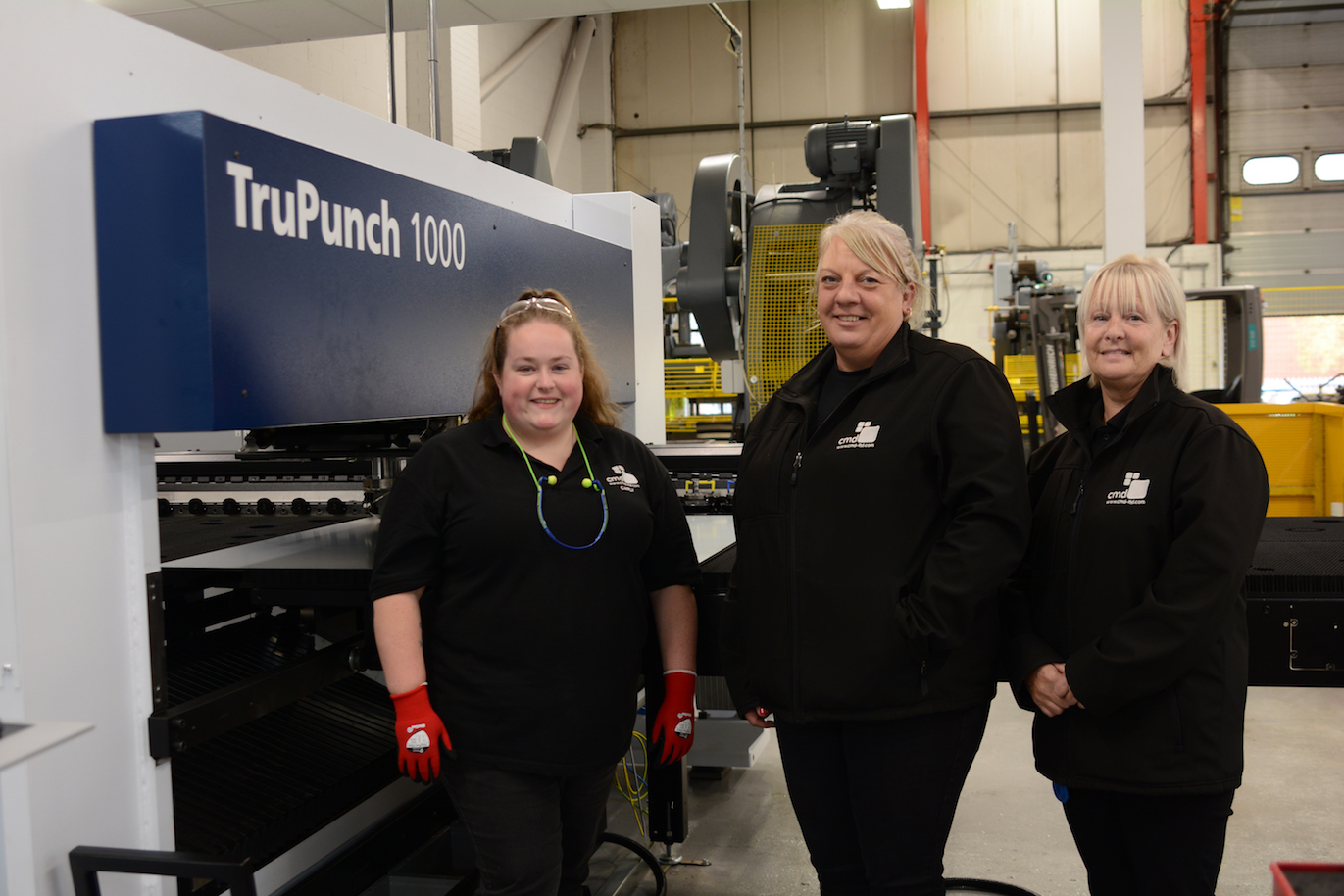
Increasing the UK’s manufacturing capabilities and capacity is a key element of the Government’s strategy for ‘building back better’ across both traditional and emerging industries. For Rotherham-based electrical manufacturer, CMD, which produces power distribution and workstation power products at its Rotherham factory, that’s a welcome commitment. The company understands, however, that reducing the UK’s reliance on imported goods involves delivering lean and efficient manufacturing operations, alongside recruitment and training of talented, career-focused individuals. Jon Holding, general manager of CMD Ltd explains: “Manufacturing has changed significantly over the past few decades, with equipment, lean management strategies and automation all playing a role in helping scale-up throughput and increase capacity. “But those have not been the only changes. We have also moved from a culture where manufacturing was seen as an aspirational career path to one where it is rarely a first choice for young people leaving school. We need to change that by demonstrating the opportunities the manufacturing sector offers for training, promotion, flexible lifestyles and job satisfaction in order to attract a more diverse workforce of people who see it as a long-term career, rather than just a job. Those are goals we are delivering at CMD.” Career path With a diverse range of roles, a clear pay structure and plenty of opportunities for progression, CMD makes a compelling case for working in the company’s Rotherham factory. One of the business’ factory floor team, Carly Glynn, highlights the potential for manufacturing roles to appeal to a wider demographic. Aged 25 when she joined the company, Carly had previously worked in an office environment as an HR supervisor. Her father and two of her uncles already worked in CMD’s factory and she was keen to follow in their footsteps in a hands-on role. “At school I’d wanted to go into mechanical engineering,” Carly explains, “but I’d been discouraged because I was a girl, and I ended up taking a very conventional route into an office job. I didn’t mind the role but it was always in the back of my mind that I wanted to do something more hands-on, so applied for a job in the factory.” Carly’s first role at CMD was in the production department making floor boxes for electrical installations. “People assume that if you work on a production line you’ll be doing boring, repetitive work,” Carly explains, “but, in my experience, that’s not the case at all. I learned new skills from day one, getting to grips with the technical aspects of production. One of the things I loved from the outset is that no two days are the same. CMD is an agile business that makes products to order, often tailoring the exact specification to meet the customer’s requirements, so my role was very varied from the beginning.” In addition to a formal induction and training, Carly worked alongside an experienced colleague for her first four weeks at CMD to ensure she had the opportunity to ask any questions and seek reassurance about the work she was doing. “From the outset I felt supported to succeed in the factory,” she continues, “which is a great motivator. Within three months, I was also given an opportunity for promotion, with responsibility for testing products. Because CMD’s factory is ISO 9001 certified, quality assurance checks are integral to every process and it felt great to be given such responsibility so early on.” Promotion Carly stayed in the same role for around a year and, when COVID-19 arrived, she trained in other disciplines in line with CMD’s strategy for maintaining production levels despite the challenges of staff absences due to the pandemic. When Carly caught the virus, she was forced to take several weeks off work and the experience made her more focused than ever on progressing her career. “By the time I returned from having COVID-19,” Carly explains, “I had plenty of experience under my belt and I really wanted to challenge myself to go beyond my comfort zone. I spoke to my manager and asked her if I could learn more aspects of the manufacturing operation. I was given opportunities to work on several other production lines and then, in September, I was promoted to work in the metal shop.” Carly’s new role in the metal shop has coincided with CMD’s investment in a new TRUMPF metal punching machine, and she has been trained by the machine manufacturer to programme and operate the equipment. “People assume that the work is very physically demanding,” Carly explains, “But that’s not really the case. In fact, I would say it’s more mentally challenging because I have to ensure the machine is correctly programmed and that we’re producing the right output for the production schedule.” It’s one of a number of common misconceptions about her manufacturing role that Carly is keen to dispel. “The factory is surprisingly clean, calm and quiet,” she continues, “and there is great camaraderie amongst the team. It’s also more gender balanced than most people think,” she adds, “in fact, my line manager is also a woman.” The other feature of Carly’s career that she often finds intrigues friends and family with nine-to-five jobs is how her shift patterns affect her body clock and social life. Her shifts alternate between two shift patterns, with a 6am-2pm schedule one week, followed by a 2pm-10pm shift the next. “The hours actually work really well for me,” Carly continues. “I have plenty of daytime free time to get things done at home, and when I am on an early shift I can go away for the weekend mid-afternoon on a Friday and come back Monday lunchtime without taking any leave. I’m really keen on motorsports so my schedule allows me to travel round the country every fortnight to follow my hobby and it fits around my lifestyle really well.” Ambition So what does the future hold for Carly and others like her? For CMD, there is a clear strategy in place to recruit and train people that want to build a long-term career with the company in manufacturing roles. Carly’s strategy is equally clear; “I’ve already told my line manager that I want her job in five years’ time,” she smiles. “I know that if I continue to work hard and learn, I can keep rising through the ranks to team leader.”  

J S Wright wins training employer of the year award
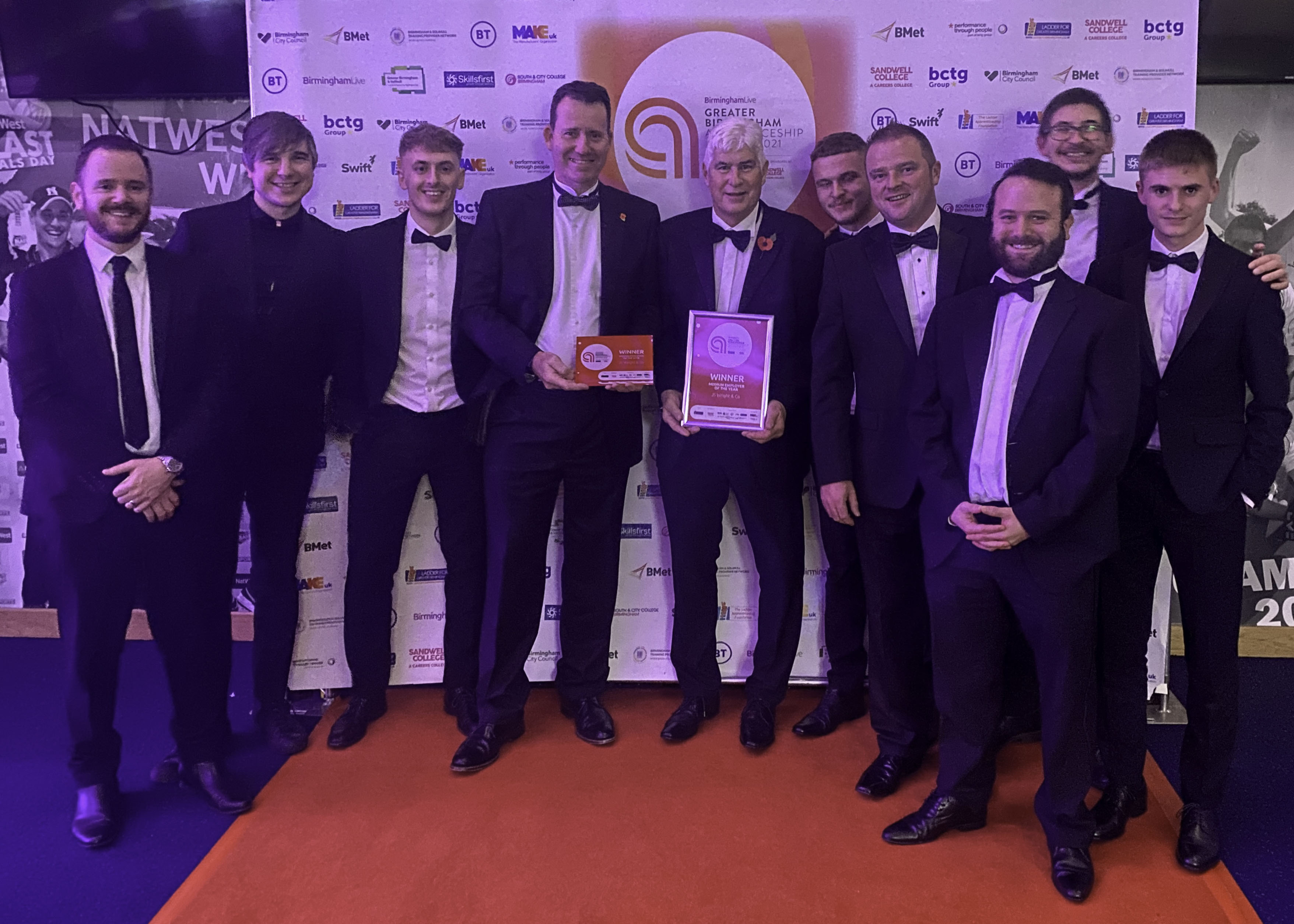
Mechanical and electrical services specialist J S Wright has been honoured with a top regional award for its apprentice training. The company, which is based in Birmingham and has an office in London, beat off stiff competition to be named as Best Medium Employer at the Greater Birmingham Apprenticeship Awards 2021, held at Edgbaston cricket stadium. J S Wright was chosen on the success of its academy which, since its launch in 2008, has taken on 55 apprentices on a range of craft and technical courses in which learning skills are also nurtured by existing employees. The judging panel was impressed with how the apprentices are given a complete understanding of the business and full support through on-site experience and individual mentoring – an approach that has seen no less than 33 of those 55 apprentices still with the company. Paul Millington, J S Wright Associate Director and Leader of the J S Wright Academy, comments: “I am delighted to have received this award on behalf of J S Wright. We started our Academy to help our young people develop their careers within the business and to help bridge the skills gap, with the result that we now have a sustainable and highly motivated workforce.” Phil Leech, Managing Director of J S Wright, adds: “We regard our apprentices as our leaders of tomorrow and invest heavily in instilling in them the leadership qualities and values which have sustained us through our history and are key to our continuing to expand and diversify as an M&E services provider.” The awards were run by BirminghamLive in partnership with the Ladder for Greater Birmingham campaign, and J S Wright’s award was sponsored by Greater Birmingham and Solihull LEP.