2 November 2026
Product of the Month: Amari Floodlight range by Aurora Lighting
 
23 November 2026
Advanced acquires communications specialist Baldwin Boxall
 
23 November 2026
Trades face 'skills squeeze' as apprenticeship demand soars
 
20 November 2026
Ovia: Delivering performance and flexibility across every sector
 
20 November 2026
Exclusive: how to prepare a building for future technology
 

Latest News


GDPR rules still apply after January 1st- what small business' should know
Some uncertainty remains with businesses who deal with the EU on the provision relating to data after the end of the transition period on 31st December. The UK government stance is that GDPR is and will remain engrained in UK law during the transition period and into 2021. The EU is conducting a data adequacy assessment of the UK and if the EU grants positive adequacy decisions by 1 January 2021, it would mean that personal data can flow freely as it does now, without any action by organisations. With only weeks to go, the EU has yet to decide as to whether they accept that the UK’s data protection regime is still adequate. At this stage nothing much is changing, but it is essential - especially for small businesses - that they ensure their data protection procedures, and data transferring are up to date and compliant. For small businesses who have moved from a physical location to an ecommerce solution, they may not realise that some procedures when sharing customer data are not compliant with even UK data laws. James Tilbury, Managing Director at leading IT support company, ILUX comments: “We have been following all updates from the UK government for our clients and have been waiting to see how the EU will respond with their opinions on our current data standards. This will decide whether this will affect how we share data from 1st January 2021 and whether additional requirements will be put in place. But this is only for those who share data with EU countries. In the UK, things will not be changing and GDPR law remains ingrained in our data procedures.” As well as sharing customer data, businesses need to make sure that their cyber security is up to date. Cyber threats are not exclusive to larger companies and a data breach can be costly for a small business. James explains: “Earlier this year our research with homeworkers highlighted that 1 in 10 home workers did not feel that they were GDPR compliant working from home. A quarter also said that they felt their systems were inadequate to do their job. Having the adequate cyber defence software and hardware is essential, but more importantly it needs to be regularly updated to ensure if protects against the most recent threats. Employee training on best practice and familiarisation on the signs of an attack are also essential activities that should be undertaken on a regular basis. If a small business is unsure, it is always advisable to speak to a professional to understand the requirements of the business, and make sure this is communicated to all staff handling company equipment and information.”

Briggs & Forrester to make significant carbon saving
Briggs & Forrester have taken the next step in their journey to becoming a more sustainable business, reducing their environmental impact by switching to a green fleet provider, lowering the carbon footprint of the Group and employees. Lex Autolease have been selected as Briggs & Forrester’s partner of choice to provide a fully comprehensive service covering new company car and van ordering. By offering only Electric Vehicles, Plug-In Hybrid and traditional Hybrid vehicles to employees, this will significantly lower the Group’s Carbon Footprint. Briggs & Forrester are now able to offer the 'best available mix of manufacturers and vehicles to provide improved running costs and the added benefit of lower carbon emissions'. Dan Faulkner, Corporate Business Development Manager, Lex Autolease says : “We’ve seen many businesses explore the option of adding EVs to their policies in recent years – a move that will help reduce carbon footprint while also achieving significant cost reductions. The government’s recent announcement to bring forward the ban on ICE vehicles will no doubt fuel the switch for many. “2030 will come around particularly quickly for businesses with large fleets of traditionally-fuelled cars and vans. Briggs & Forrester were ahead of the game, and we’ve been able to work with them to develop a solution that ensures their drivers have access to green vehicles that suit their needs.” The CO2 emissions information of the vehicles on offer to Briggs & Forrester employees are provided in line with the recent focus of Worldwide Harmonised Light Vehicle Test Procedure (WLTP).  The Group will be making an initial saving of 1,702 tonnes of carbon per annum, which will improve year on year as the existing fleet is converted to electric, plug-in hybrid and traditional hybrid vehicles. Paul Burton, Group CEO comments: “We are proud to have partnered with Lex Autolease to offer our staff a wide range of electric and hybrid vehicles that will help to reduce our environmental impact. We have been working to improve our company fleet for some time and are proud that we have been able to launch this year. We have installed charging points at our head office with the aim to roll this out to our 10 regional offices across the UK.”

Launch of UK's first coordinated system to boost renewable energy
The South Coast Regional Development Programme is a collaboration between National Grid Electricity System Operator (ESO), National Grid Electricity Transmission (ET) and UK Power Networks. UK Power Networks is the first distribution network operator to use the system, which will be rolled out across other participating networks in 2021. The South Coast has one of the most dynamic electricity networks in Europe, with significant amounts of renewable energy generation, a nuclear power station and interconnecting cables to Europe. This makes managing electricity flows a complex challenge for transmission and distribution companies. The new system will directly connect the local network operator’s control room with the control room at the national system operator, giving them more visibility and control to keep the system balanced. The roll-out of the system will enable up to 600MW of distributed energy resources (DER) to be connected in the region, based on the scenarios originally considered in the Regional Development Plan’s design phase. Julian Leslie, head of networks at National Grid ESO, says, “The delivery of the first phase of this project is a significant step forward in coordinating the planning and operation between the ESO and DNOs. As we move towards net zero, it’s critical that we can all make best use of the zero carbon resources connected to electricity networks and joined-up functionality, as demonstrated through this project, will be vital to achieving that goal.” Building on this work, UK Power Networks and National Grid ESO are now developing the next stage of their Regional Development Programme in the South East. This will involve putting in place new commercial and technical arrangements to incentivise electricity generators to further support the national transmission system. UK Power Networks and National Grid ESO have been working alongside other networks through the Energy Network Association’s Open Networks project, to enable the solution they have developed to be rolled out nationwide. Randolph Brazier, director of innovation and electricity systems, at Energy Networks Association, which represents the UK and Ireland’s energy networks businesses concludes: “Smart technologies are challenging the traditional way we generate, consume and manage electricity. This collaboration between UK Power Networks and National Grid ESO will enable better planning and operation of the electricity networks. Network operators are focused on supporting the Prime Minister’s vision for climate action so this is an important step forward in the sort of collaboration that will be required to deliver the net zero energy system the public need.”

New occupational qualification structure for network infrastructure industry
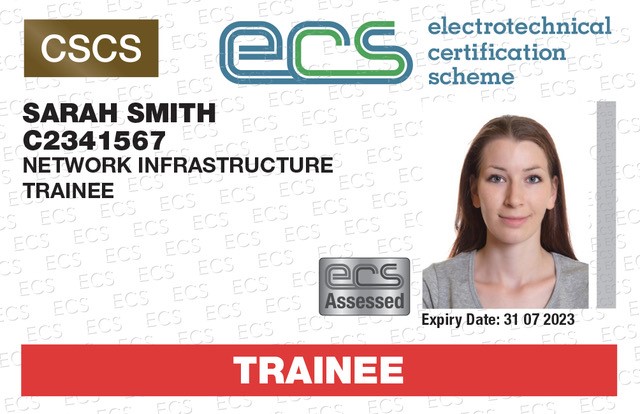
The Network Infrastructure industry’s new Occupational Qualification Structure leading to Electrotechnical Certification Scheme (ECS) Card recognition comes into play on 1 January 2021. From this date onwards, all new (initial) applications must comply with the Structure, and there are cards already available that recognise all levels of Network Infrastructure occupations, including Network Infrastructure Assistant, which includes the requirement for a Network Infrastructure Assessment, and Network Infrastructure Installer Gold Card. From 1 July 2021 all card renewals will also need to meet the requirements of the new Occupational Qualification Structure. The new Structure has been developed by an industry wide working group formed of the Electrical Contractors’ Association (ECA), the Joint Industry Board (JIB), SELECT, CNet Training and a large group of employers, and follows the launch of the Network Cable Installer Apprenticeship Standard. Setting the benchmark for new entrants to the market at Level 3, it crucially addresses the need to recognise professionals currently in the workforce that already benefit from hands-on experience, previous education and training and industry recognised qualifications. Jay Parmar, Chief Executive of the JIB, says: “The new pathway clarifies the differences in education, training and experience for those already in the industry, and sets out a route for those entering the network cabling infrastructure industry. The JIB is delighted to have been involved in what we believe will mark a significant upturn in professionalism and competency in the Network Infrastructure industry.” Martin Smith, International Lead – Network Infrastructure at CNet Training, comments: “The introduction of the Network Cable Installer Apprenticeship means that the long-awaited defined educational routes for both new starters and existing workforces are now in place. A formidable collective effort has gone into this new card Structure and its introduction will help to deliver the necessary skills and qualifications to lead the Network Infrastructure industry into a new era.”

BES expands team to manage growth
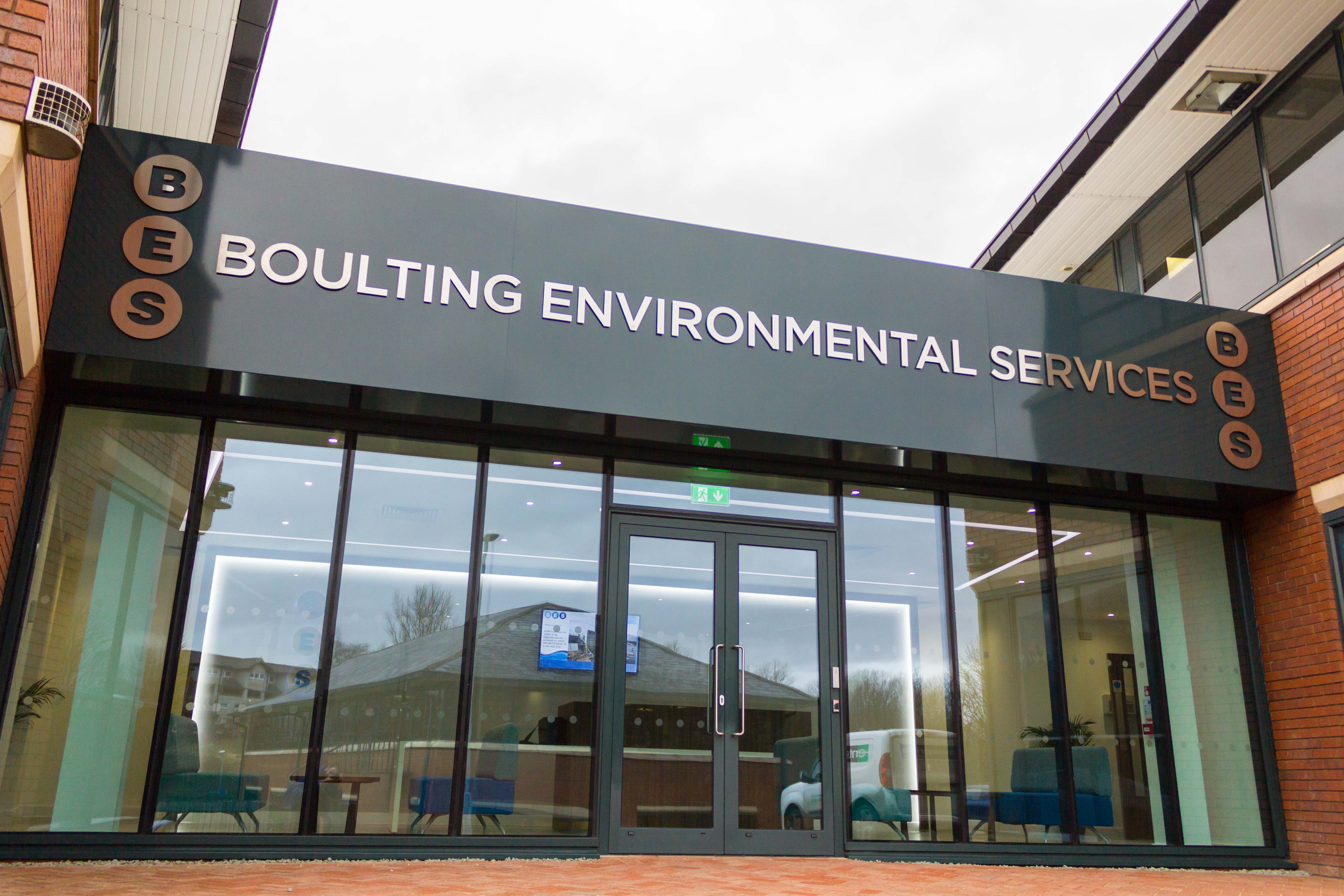
Following a period of sustained growth BES has increased its team by more than 30 in just the past six months. Based in Rochdale and Milton Keynes, BES has built a reputation for the design, construction, commissioning and validation of facilities for the pharmaceutical, healthcare and life sciences sectors. The company delivers project solutions to 'standards of quality and compliance' across the UK. BES’ recent expansion ensures the company can continue to provide the 'expertise and experience' required by customers in highly-regulated industries. It also prepares the company for further managed growth, ensuring the availability of the right skills, experience and collaborative approach on every project. Steve Marsh, managing director of BES explains: “Our technical expertise and the culture of our business are primary reasons why customers engage with us and why repeat business is so high. We have a full, multidisciplinary team and their collaborative approach combine perfectly to develop the fully-integrated solutions our clients require.” With the addition of more than 30 new recruits, BES now employs more than 150 people. New members of staff have been deployed across all parts of the business, including, architectural and building services design and BIM coordination, together with project management, construction management and project controls. Most notably, BES has appointed several process engineers and validation consultants to support a number of process-driven commissions. “Not only are we looking for excellence when we recruit,” Steve continues, “but also a good cultural fit. Consequently, recruitment is carefully planned, in advance of any specific needs. Our reputation helps us attract the best talent, enabling us to provide strong and experienced teams on all projects. As the business continues to grow, consistency of service is maintained thanks to our excellent staff retention record and hands-on senior team” The latest recruit is a trainee architectural technologist. The company has 'always been passionate about developing in-house talent', with several of its earliest apprentices now in senior roles within the business. Steve adds: “Our business goes from strength-to-strength and it is essential we bring in talent to enable the company to grow. In our experience, the most successful outcomes are achieved when we work collaboratively with our clients and, in addition to providing technical knowledge and construction expertise we are committed to building the culture of our team with intelligence at the top of the agenda. I am proud of our team here at BES and of the company we have built. With many exciting projects underway, I am delighted to welcome our new employees.”

Businesses boost mental health during pandemic
The vast majority of large electrotechnical and engineering services businesses now train staff as Mental Health First Aiders, according to a survey commissioned by engineering services trade body ECA. 24 of the largest ECA Members, with a combined turnover of several billion pounds, responded to the COVID-19 Impact survey, with 89% of businesses reporting that they had First Aiders. More widely, the survey showed growing sector engagement with mental health. Overall, 85% of companies had specific policies and procedures to support the wellbeing of their staff. Among the rest, around half reported they are developing specific policies. Only a minority stated the issue was covered by general support and awareness training for managers. In addition, 83% of businesses provided access to counselling services. Paul Reeve, ECA Director of CSR, says: “It’s widely understood that mental health is a significant issue across construction and engineering services. However, the pandemic has amplified the factors adversely affecting health. “These range from various causes of stress to increased isolation, poor diet and lack of exercise. Reflecting these increased challenges, the large contractors reported significant and increasing engagement with mental health issues.” Even so, 47% of respondents mentioned ‘communication’, and 41% ‘workplace stigma and perceptions’ as challenges to managing mental health. Around a third of respondents (35%) referred to the difficulty of measuring outcomes, both in terms of improved mental health and return on investment. ECA promotes mental health awareness in the workplace, and offers its Members discounted online First Aider and Awareness training. ECA members also have access to a wide range of health and welfare services through employee benefits provider ECIS.

81% of UK electricians aren't sure how to use social media effectively
Social media has transformed businesses in all industries, but despite helping many tradespeople get more work, a staggering 85% say they don’t know how to use it effectively. New research by IronmongeryDirect has explored how trade businesses currently use social media and how many are currently missing out on its benefits. Almost half (47%) of tradespeople say that having a social media presence helps them get more work, with Facebook being the main platform (22%). This is for several reasons, including the ability to build stronger client relationships (15%), get ahead of competitors (15%) and interact with community groups (22%). Such is the power of social media, one in six (16%) tradespeople believe it is now just as important, if not more, than traditional word of mouth. Because of this, 45% now actively advertise on at least one social platform and more than one in 10 (12%) use social media as their only form of marketing. However, despite recognising its importance, the vast majority of tradespeople say they are not using social media effectively. Nearly nine in 10 (85%) don’t know how to get the most out of it, with plumbers the least likely to maximise its potential (90%). Joiners are the most social savvy of all the trades, yet 79% still don’t know how best to use their channels to help their business. Electricians are just behind, at 81%. The trades most likely to get more work by using social media are: Builders – 66% Bricklayers – 53% Landscapers – 51% Painter/Decorators – 46% Electricians – 45% Plumbers – 45% Building Surveyors – 37% Carpenters – 33% Joiners – 33% Plasterers – 25% On average, female tradespeople dedicate the most time to social media promotion, with over half (51%) pursuing leads online, compared to just 41% of men. They are also more likely to ask customers to leave reviews online (28% vs 23%) and such digital feedback is growing in significance. Over 20 million business reviews are posted on Google every day and they can have a huge impact on a company’s performance. A recent study found that businesses with positive scores on review sites can earn up to 58% more revenue. Overall, a quarter (25%) of trade businesses ask for reviews and a similar amount (26%) believe that positive comments can directly lead to more custom. However, more than a fifth (21%) of tradespeople worry about receiving negative reviews and the impact that might have.

Electricians power through lockdown to boost earnings growth
The second national lockdown had no impact on earnings for self-employed electricians, according to one of the construction industry’s biggest payer of subcontractors. Hudson Contract says that average weekly pay had strengthened by 3.4% to £1,110 during the month of November. Ahead of the lockdown, ministers clarified that tradespeople could continue to enter homes. Ian Anfield, managing director of Hudson Contract, says: “Undoubtedly the clear guidance from government ensured that self-employed tradespeople could continue safely going about their business during the national lockdown. “Most of our construction clients are reporting a decent amount of activity and have already secured projects for next year. “The housebuilding sector remains buoyant with support measures due to continue into the first quarter of 2021 and the government is committed to new infrastructure spending.” Hudson Contract delivers the most accurate indication of pay trends across the sector, publishing the average pay for a spectrum of 17 different trades split across 10 regions in England and Wales. The family-owned group supplies statistics to the Bank of England to keep policymakers updated with real-time insights on demand for skilled labour.

JS Wright leads way with 45001 accreditation
J S Wright has enhanced its reputation as one of the industry’s safest business operators after clinching a new globally recognised management award. The 130-year-old company, which has offices in Birmingham and London, has achieved certification to the new ISO 45001 Occupational Health and Safety Management standard, the world’s first international OHS standard, which has replaced its BS OHSAS 18001 accreditation for protecting employees. As one of the first M&E building services providers to be awarded the coveted accreditation, global standards organisation BSI assessed J S Wright on its approach to health and safety against a rigorous and robust set of processes. J S Wright’s IMS & Site Administration Manager Christine Wiesztort and Business Systems Auditor Jane Dimmick led the programme to deliver the integrated approach to health and safety including the involvement of all 186 members of its directly employed workforce required by the new standard. It took six months of working within the challenging constraints of the Covid-19 lockdown, which included the need for remote auditing, for the IMS team to successfully achieve full compliance. Christine Wiesztort says: “The IMS team was extremely proud to have achieved this accreditation after overcoming a number of obstacles thrown at us by Covid including a lengthy sixth-month gap during the year to the award.” Phil Leech, Managing Director of J S Wright, comments: “This is a fantastic achievement and thanks go to all involved especially Christine and Jane in what has been a particularly challenging time. “Achieving ISO 45001 certification provides our clients, suppliers and employees with an added level of confidence in the way we operate.” The IMS team is already preparing for the company to have all three of its safety, quality and environmental accreditations renewed in the New Year. Established in Birmingham in 1890, J S Wright designs, manufactures, installs and maintains mechanical and electrical services for the hotel, residential, social housing, student accommodation, leisure and commercial sectors. The company was voted one of the UK's Top Ten Specialist Contractors to Work For in the 2016 Construction Enquirer Awards, was a finalist in three categories in the 2018 H&V News Awards, and was named Construction Services Employer of the Year in the 2020 BAME Apprenticeship Awards.

Stopping the cycle of workplace stress with EIC
The Electrical Industries Charity can support you and your immediate family if you are a current employee, apprentice or retiree from the electrical and energy sector. Jenny works within the generation and renewables sector and had been an employee for more than several years. Working within a competitive environment Jenny found she was being considered for redundancy and in the first instance contacted the Electrical Industries Charity for CV support. The Electrical Industries Charity offer members of our industry specialist CV writing support and can even provide a mentor within our sector to run through interview questions and develop your skills. Jenny wished to revamp her CV but in her initial call with the charity welfare team she disclosed she had been struggling with her mental wellbeing. 1 in 3 of those who approach the Electrical Industries Charity for assistance need mental health support and in 2019/20 we issued 13,238 grants for counselling support to those in our sector. Jenny had tried to overcome her mental health issues herself but found she was unable to cope – a common thread within our industry. Upon further talks with the Electrical Industries Charity welfare team it became apparent Jenny was struggling with ongoing and unrelenting workplace stress accelerated by the thought of redundancy. As well as this Jenny had recently suffered a family bereavement and her stress levels began to spiral. Jenny struggled to cope with bereavement alongside work and found her mental wellbeing severely compromised. Jenny was assigned a charity welfare case worker and she was referred for a psychological assessment which was sourced and funded by the charity. Jenny was diagnosed with an anxiety disorder and was suffering with work related burnout. The charity sought a therapist for Jenny who through six sessions helped her to restore her sense of self and equipped Jenny with some coping strategies to help spot and manage stress as well as prevent it. Jenny and her therapist worked through her grief and since her sessions Jenny has been coping much better on the days where grief and stress may leave her feeling overloaded. Thanks to the Electrical Industries Charity support Jenny is in a much better headspace and has found that her workplace stress no longer effects or exacerbates personal matters and vice versa. Jenny is much happier and although she still does struggle with waves of grief and stress, she now has the tools needed to tackle both effectively. If you’re struggling with workplace stress here are some top tips that you can use to help yourself feel more zen: 1) Form positive relationships at work 2) Start exercising or exercise more 3) Eat well and snack well 4) Get enough sleep 5) Prioritise and organise 6) Kick bad habits – stay positive, resist perfectionism and focus on what you can control