2 November 2026
Product of the Month: Amari Floodlight range by Aurora Lighting
 
20 November 2026
Ovia: Delivering performance and flexibility across every sector
 
20 November 2026
Exclusive: how to prepare a building for future technology
 
20 November 2026
Smart Energy Training adds electrical apprentices to portfolio
 
19 November 2026
UK Power Networks awards £4m energy flexibility contracts
 

Latest News


ECA welcomes government’s house building plans
ECA has welcomed the new government’s plans for an immediate programme of house building, investment in infrastructure including clean energy, and unblocking the planning system. ECA Chief Operating Officer, Andrew Eldred, explains, “We have seen a new era of opportunity set out by the Chancellor and the Secretary of State for Energy Security. Businesses in the electrotechnical sector will welcome the swift actions taken by the new government with the prospect of economic growth promising busy order books after months of flatlining. “These ambitions will increase an already stretched workforce and could exacerbate the culture of poor payment practice in supply chains. The government must work closely with industry to address these underlying structural issues to have a chance of fulfilling their pledges.” The new Chancellor, Rachel Reeves, has pledged to build 1.5 million homes in the next five years, while the new Energy Secretary, Ed Miliband, has reiterated the Labour party’s pledges to boost energy independence and cut bills through clean power by 2030. ECA continues to campaign for the electrotechnical sector to be placed front-and-centre of the clean energy transition, through appropriate skills development and investment in energy efficiency and low carbon technologies. ECA works closely with its members, industry partners and government to raise the profile of electrical contractors in the transition to net zero carbon. The Association produces regular guidance notes, technical bulletins, and industry updates to keep members at the forefront of the net zero transition. For more from ECA, click here.

PULS launches PISA-M electronic circuit breakers
PULS, a provider of DIN-Rail power supplies, has announced the launch of its new series of PISA-M 4-channel electronic circuit breakers (ECBs). These devices are the perfect safety and power distribution tool for applications with power requirements ranging from 90W to 480W. The new PULS electronic circuit breakers manage the current distribution on the secondary (load) side of a control system, separating it into smaller 'power islands' which are easier to maintain and reduce the risk of costly total power outages. PULS PISA-M ECBs are designed to provide comprehensive safety solutions for power systems. They protect system components from over-current and short-circuits, as well as wiring from overheating. In addition, PISA-M also protects the system power supply from overload. The on-board protection features combine to ensure a high system robustness and reliability. This benefits users with less time spent on maintenance, lower replacement costs and more focus on operations. The PISA-M features a digital coded interface, providing an easy way for maintenance staff to remotely control the devices and to monitor the operational system status. This means power distribution can be managed easily via a PLC and a central user interface. With a width of only 22.5mm, PULS says that PISA-M is the smallest four-channel electronic circuit breaker in the market. This compact design means it can fit into any system, freeing up valuable space in control cabinets. Push-in connectors on the front of the PISA-M allow for a quick and tool-less installation, saving time and effort. In addition, two-colour LEDs that show the status of each output channel in real-time, and a button is provided on each channel for easy on/off switching and resetting. PULS provides a number of versions of PISA-M ECB. The 4ADJ modules are adjustable, allowing each output channel to be set to the required current value from 1 to 8A. If a plug-and-play device with fixed currents is needed, PULS offers PISA-M versions with fixed output current settings (e.g. 2A, 4A, 6A, 8A). This flexibility allows customers to choose the version that best fits their specific needs, making the installation process even faster, easier, and more secure.

The five most costly problems tradespeople face
With most of the UK experiencing the impact of the cost-of-living crisis, it is important that unexpected costs are avoided where possible. However, those working in skilled trades face several challenges in their roles which pose a financial threat. Rob Rees, Divisional Director of Markel Direct, a specialist insurer of tradespeople, highlights the five costliest problems which tradespeople could be putting themselves at risk of facing, along with the necessary precautions and solutions to avoid a devastating impact. 1. Workplace injuries Tradespeople face a higher risk of personal injury due to the nature of their work. The construction sector, in particular, records one of the highest rates of workplace injuries, according to Health and Safety Executive data. Common injuries include slips, falls, accidents from heights, strains and sprains, often related to lifting heavy objects. Business owners are responsible for their workers' safety, and for trades businesses with employees, arranging employers’ liability insurance is a legal requirement if you employ staff. It can cover your legal expenses and compensation in the event of an employee being injured at work. Sole traders, on the other hand, should ensure they have insurance covering personal injury. While public liability insurance is popular and vital for tradespeople, it only covers injuries to third parties, not the tradesperson themselves. To cover personal injuries sustained whilst at work, occupational personal accident insurance can help by providing an income whilst you are unable to work. 2. Damage to third party property (including client property) In the world of trades, even the most skilled professionals can occasionally make mistakes that result in damage to property. The range of issues can vary from minor mishaps, such as paint spills on floors and furniture, to potentially catastrophic events like fires. Such damage can lead to disputes, project delays and potential legal actions, all of which have the potential to place strain on a tradesperson's financial stability. To minimise the negative impact of damage, here are some essential steps to follow: • Assess the damage: Before taking any action, carefully evaluate the extent of the damage. Determine whether it resulted from your work or existed beforehand. • Notify the client: Promptly inform the client about the damage and discuss the situation. • Consult your public liability insurance provider: Contact your insurance provider to report the incident. Provide them with as much information as possible so they are best placed to support you. • Follow insurance guidance: If the damage resulted from your work, follow the guidance provided by your insurance provider regarding next steps and potential coverage. • Prevent future incidents: Implement measures to prevent similar incidents from occurring in the future, such as enhanced safety precautions or improved work processes. Taking these steps can help you to better address property damage incidents, protect your reputation and maintain the financial stability of your trades business. 3. Tool theft, damage and loss A recent survey found that 57% of tradesmen who had their tools stolen suffered financial losses. Among them, 41% reported losses exceeding £2,500, a substantial amount amid rising living costs. Tools are often stolen from vans, with 41% of thefts occurring either at home or on-site. Tool theft not only hits finances but also disrupts work due to the time lost in replacing tools, and similar financial challenges arise when tools are lost or damaged during on-site work. To safeguard your tools, take necessary precautions such as: • Adding extra locks/alarms to your vans • Removing tools overnight • Parking in secure locations • Using visual deterrents like alarm stickers and CCTV Additionally, to alleviate the financial burden of tool theft, consider taking out tool insurance, which covers the cost of replacing stolen equipment and extends to tools lost at sites or damaged due to factors like flooding or fire. Surprisingly, 25% of tradespeople are unaware of tool insurance, despite its benefits. These measures can help protect your valuable tools and your livelihood. 4. Project delays One study showed that the primary reasons builders faced project delays was due to material shortages (73%) and a shortage of skilled labour (55%). Other common reasons for delays include poor time management, health issues, equipment problems (including theft), subcontractor issues and weather-related setbacks. Delays can lead to financial losses, as well as harm your reputation. To minimise the financial impact of delays, develop contingency plans for common delay factors. Once you've identified the potential delay factors, develop specific strategies to address each one. These may include: • Building buffer time into the project schedule to account for unexpected delays. • Researching and identifying alternative suppliers for critical materials needed for the project. • Keep a buffer inventory of essential materials on-site or readily available to mitigate the impact of sudden shortages. • Keep all project stakeholders informed about potential material shortages and the steps being taken to address them. These plans allow for quick responses when problems arise. Open communication is also essential; if delays occur, communicate early and clearly with your clients about the reasons and potential timeline adjustments. Managing their expectations can help to prevent dissatisfaction and strained relationships. In more challenging situations, familiarise yourself with the legal aspects of project delays, including contract clauses related to delays, penalties and dispute resolution mechanisms. Being proactive and transparent can help you navigate project delays more effectively while safeguarding your monetary interests and professional relationships. 5. Unexpected legal costs Unexpected legal fees can pose a significant and unforeseen challenge for tradespeople, potentially jeopardising finances and livelihoods. Whether it's disputes with clients, issues related to overdue payments, or unexpected legal situations stemming from your work, the cost of legal advice can quickly add up. Seeking legal guidance at the earliest signs of conflict can help prevent matters escalating into a legal dispute or court case, so to safeguard your financial stability and professional reputation, you should consider proactive measures. This includes having a contingency fund specifically allocated for legal advice or making use of legal helplines. Markel Direct provides its business insurance policyholders with access to a 24-hour legal advice helpline, as well as access to Business Hub, which contains legal document templates to help with various problems. Having access to valuable advice from experienced legal professionals can help tradespeople to navigate challenging situations. It is impossible to predict when a problem may arise that could affect a tradesperson's finances and work; however, what can be done is taking the proper precautions to ensure they have safeguarded against the most experienced issues in the industry. For more from Markel Direct, click here.

CEF to bring TechTalks to locations across the UK
Leading electrical wholesaler, CEF, has announced that registrations are now open for its upcoming series of TechTalks, commencing in September. Taking place in over 20 locations across the UK, the free and educational events are back for a fourth series and will once again feature expert advisers and presenters providing insightful information on the latest standards, regulations, news and products from over 20 leading brands with CPD accredited training. The upcoming series, centred around the theme of ‘Have your say’, will provide a platform for electricians to collaborate with CEF and its event partner, the Institute of Engineering and Technology (the IET). Attendees will be given the chance to expand their knowledge about the industry, as well as share their opinions and ask questions. CEF’s Head of Technical Solutions, Darren Staniforth, says, “We are thrilled to be returning for our fourth series of CEF TechTalks. We’ve had more than 10,000 people attend the previous series, and we’re excited to have the opportunity to further connect with our customers.” Digital certificates marking attendance and CPD accreditation will be emailed to all attendees following the events. Additionally, CEF will offer exclusive discounts and giveaways to all event participants along with a pack of 'Techcards', which act as a handy reference to the topics covered at each talk. Complimentary breakfast and refreshments are served at all events. The first talk is scheduled to take place in Glasgow on 3 September 2024, with the final event taking place in Oxford on 21 November 2024. Other locations include Edinburgh, Wrexham, Manchester, Birmingham, Cheltenham, Bristol, Southampton, London, Durham, Preston, Newmarket, Maidstone, Isle of Man, Derry, Belfast, Leeds, Sheffield, Cardiff and Exeter. For the full list of dates and venues, and to secure a place, visit your local CEF branch or register for free at cef.co.uk/tech-talks. For more from CEF, click here.

NAPIT responds to the general election
In this story, Frank Bertie, Managing Director of NAPIT, welcomes the positive approach of the new Labour Government’s willingness to engage with industry to bring forward plans to meet the net zero targets, and looks forward to working with Government officials, politicians and policy makers from all parties. After the general election on 4 July, where the Labour Party secured a landslide victory, it was encouraging to see the new Prime Minister, Keir Starmer, talk about "the opportunity of clean British power, cutting your energy bills for good." Additionally, it was promising to see the new Chancellor, Rachel Reeves, outline plans to "get Britain building again," including new housing targets and lifting the ban on on-shore wind. NAPIT welcomes these changes to the planning system, as well as new housing and on-shore wind. These changes will provide our members with increased opportunities and confidence with planning their future work. The renewed vigour in setting these ambitions can only stimulate confidence in the newbuild housing sector and for retrofit renewable installations in the existing UK housing stock. The commercial sector equally needs a similar intervention to provide confidence to allow planning, training and increases upskilling the workforce. The net zero policy is essential for tackling the effects of climate change, necessary for the security of energy supplies and for the opportunities for the renewable-led skilled workforce to develop and grow. As promised in Labour's election manifesto, the new government plans to build 1.5 million homes over the next five years. This will create more work opportunities for our members, whether it is in electrical work, heating, plumbing, the installation of microgeneration technologies, or energy efficiency measures. Clean, affordable and secure energy can only be a positive for the planet, households, businesses and the economy with the opportunity for highly skilled jobs and careers as we transition to net zero. We look forward to working with the new Government officials, politicians and policy makers from all parties to develop a plan to train the UK workforce to meet the needs of our low carbon future. It is vital that there are sufficient trained and accredited workers to take advantage of those opportunities as we transition to net zero, which is where organisations such as NAPIT will be an integral part. For more from NAPIT, click here.

Signify announces launch of new UK lighting brand
Lighting specialist Signify is launching a comprehensive new over-the-counter trade range of lighting under a new brand named Ecolink. Designed and developed in the UK to meet the specific needs of electrical professionals, the new Ecolink range has been developed with the vision to illuminate spaces through competitively priced, energy efficient LED luminaires. July sees the first phase of the Ecolink launch, with the range comprising: • LED Panel with four possibilities – on/off, on/off plus three-hour manual emergency, DALI, and DALI plus three-hour manual emergency • IP65 rated LED floodlight with IP65 motion sensor • LED batten with options for plug-in self-test emergency lighting pack, or a manual test emergency pack • LED standalone emergency range, comprising IP65 bulkhead, twin spots, recessed and surface mounted spots • LED emergency exit signs for wall and ceiling mounting, all equipped with high-quality Lithium Ferro Phosphate batteries • LED non-corrosive fitting with the choice of manual test emergency pack, or plug-in self-test emergency lighting pack For flexibility and ease of ordering, the same emergency pack can be used across both the LED battens and non-corrosive luminaires. Phase two of the range will be launched across September and October, and will see the addition of: • LED bulkhead - available in switchable CCT (correlated colour temperature), enabling users to select their preferred lighting colour temperature, as well as switchable lumen output allowing the brightness to be adjusted to suit the application and meet regulation requirements • LED highbay • LED fire rated downlight - available with switchable CCT The new Ecolink range in its totality meets most of the lighting application requirements of UK electrical installers in day-to-day projects, Signify says, noting that is designed to be a one-stop shop for all commercial and residential projects. Ecolink LED lighting products are available instore and online from many distributors. Installers can view product information via the Ecolink website and purchase from a range of online stockists. There is also a distributor login area on the site, for wholesalers who wish to buy stock. For installers wishing to use Ecolink in projects that require a lighting design, the range is also available via Signify’s new LumXpert app. Installers can create tailored lighting designs, generate quotes and enjoy real-time access to stock availability and special offers from a range of wholesalers. There’s also the option for access to extended payment terms. Nico van der Merwe, CEO UK&I, Signify, says, “We are delighted to bring our new range of Ecolink products to the mass market, to not only deliver on the lighting needs for the majority of installer projects, but to do so in a simple, easy to order way, with guaranteed reliability at a pocket-friendly price.” For more from Signify, click here.

InstallerSHOW announces Building Safety Week 2025
Following a record-breaking event at the NEC Birmingham in June, InstallerSHOW has announced the launch of Building Safety Week 2025 with partners, Building a Safer Future (BSF) and the Code for Construction Product Information (CCPI). A joint initiative with the BSF and CCPI, as well as a host of other industry associations, Building Safety Week will address and solve major issues affecting the whole sector as a result of new legislation from the Building Safety Act. Building Safety Week at InstallerSHOW 2025 aims to create a culture change in how we build – across the supply chain – on any sized project. Utilising the UK’s largest gathering of professionals in the sector, Building Safety Week will act as a forum for sharing insight, information and learnings from BSF champions who have embarked on continuous improvement, to the construction sector manufacturers who are delivering clear and concise information on their products. Nathan Garnett, Business Development Director at Lyrical Communications, says, “We feel that together we can embed a culture of building higher quality buildings, as well as assisting the whole sector, from specifier to installer, when it comes to understanding and abiding by the Building Safety Act. There is an awful lot to do, and collaboration and knowledge sharing is critical. “Regular communication with our community of over 500,000 professionals in the coming months, as well as delivering Building Safety Week to 30,000 visitors at InstallerSHOW 2025, will be vital in driving that culture change.” Amanda Long, Chief Executive, Code for Construction Product Information, adds, “The CCPI is really pleased to be supporting Building Safety Week at InstallerSHOW 2025. It will allow us to really focus on how building safety is being prioritised in the industry and specifically on how schemes like the CCPI can really help the sector deliver the standards that it needs to deliver safer buildings. The installer is the key part of the whole process, and we have to be a part of that conversation.” Louise Wren, Building a Safer Future Lead, comments, “Building Safety Week at InstallerSHOW 2025 will be a focal point for everyone to come together, collaborate and share best practice. BSF Champions are market leaders in continuous improvement, and together we are looking forward to supporting the whole industry by celebrating and sharing that success as part of Building Safety Week.” Plans are already well under way for Building Safety Week at InstallerSHOW 2025, and the organisers are in discussions with a high volume of stakeholders about their involvement. With collaboration at its heart, organisers are keen to hear from anyone wishing to support Building Safety Week. For more from InstallerSHOW, click here.

KNX UK announces details of this year's National Conference
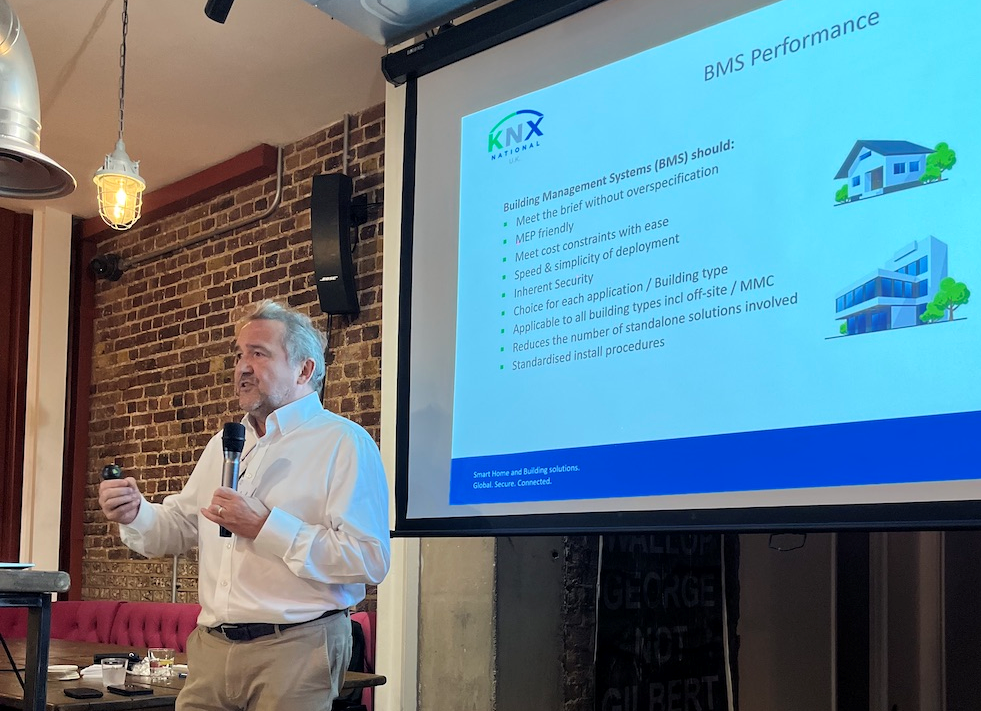
KNX UK has announced the details of its upcoming National Conference, an event designed for professionals in the building automation, construction, building design and electrical engineering industries. Set to take place on 5 September 2024 at SAMA Bankside in London, this year’s conference will offer a dynamic and interactive agenda aimed at equipping attendees with the knowledge to thrive amidst changing regulations and technological advancements. Notably, the event will provide critical insights into PSTI and RED Compliance and KNX IoT. This one-day event promises a rich programme filled with expert insights, practical applications, and strategic guidance in the rapidly evolving world of building automation. Featured speakers include Jesús Arias on the global expansion of KNX IoT and Alex Buchan CEng., who will provide crucial updates on PSTI and RED compliance affecting all levels of the supply chain within the UK and EU markets. Other guest speakers include Harry Doling of Umbra Shading and the KNX UK Chairman, Iain Gordon. Attendees will benefit from CPD opportunities, product demonstrations, and discussions designed to enhance understanding and proficiency in implementing KNX technology. The 2024 National Conference is an exceptional platform for manufacturers, distributors, integrators, and consultants to connect, share insights, and explore collaboration opportunities. Engage in project forums, discussions with KNX experts, and get hands-on experience with the latest KNX innovations during product demonstrations. The event will also celebrate standout innovations and contributors within the KNX UK community, highlighting their achievements and inspiring future excellence. All attendees will enjoy a free lunch and refreshments throughout the day, with a licensed bar available to facilitate networking in a relaxed atmosphere. KNX UK is committed to delivering a conference that not only provides essential industry knowledge but also fosters an environment of growth and advancement for professionals across the board. We encourage all members and industry stakeholders to attend this transformative event. For more information on the conference agenda and to register, click here.

Fergus provides tips on how to maximise your profit margin
Fergus, the job management software designed for tradespeople, is providing trade business owners with tips to get their gross profit up in just 90 days. The advice is based on real world experience from Fergus Founder and Tradesperson, Dan Pollard, who successfully ran a heating and plumbing business before he founded Fergus. “Having a plan will help trade business owners increase their profits by making efficiencies and pricing properly,” says James Chillman, UK Country Manager for Fergus. “In around three months we will be heading into the Christmas period. Get to grips with a plan now and by then you could be enjoying your festive time off knowing your business is in great shape for the next year.” Here are Fergus's seven ways to maximise your gross profit margin: 1. Master your margins Understanding your profit margin is fundamental to financial management. It involves knowing what each job should bring in after covering all variable costs, such as materials and labour. Aim for a gross margin that compensates for your fixed overheads. This clarity ensures each job positively contributes to your business's financial health. 2. Embrace effective job management software Implementing job management software is crucial for tracking and boosting your gross margin for each project. With tools like Fergus, you can assign team members to jobs in seconds and see any conflicts, notify your team of any changes via the mobile app and look ahead to check what needs ordering and when. Fergus also offers real-time insights into financial performance, helping you make informed decisions swiftly. By managing every detail, from quoting to invoicing, Fergus ensures that no opportunity for profit is overlooked. 3. Optimise labour efficiency Labour costs often consume a significant portion of the budget so it's essential to ensure that every hour paid is productive. Plan your workforce’s schedule meticulously to prevent idle time and unnecessary overtime. If you’ve booked a last minute job, check to see who is close-by to take it on so there’s no travel time wasted. 4. Tightly control overheads Regularly review and audit your overhead expenses to identify where spending can be reduced without affecting operational efficiency. This could involve renegotiating contracts, automating processes, or eliminating unnecessary expenses. Every penny saved on overheads directly increases your bottom line. 5. Implement strategic purchasing Effective inventory management is critical for maintaining healthy profit margins. Adopt a strategic approach to purchasing – buy enough to meet demand but avoid excess stock. Use forecasting systems to align purchases with actual needs, minimising waste and reducing costs. 6. Refine your pricing Ensure your pricing reflects the true cost of doing business, including all direct and indirect costs. Regularly adjust your pricing models based on competitive analysis and customer feedback to meet market demands and support your financial goals. 7. Educate and engage your team A team that understands the financial goals of your business is invaluable. Educate your team on how their work impacts the company’s gross margin. Engaging them in this way not only helps them understand their role in the company’s success but also empowers them to take proactive steps towards cost-saving and efficiency-enhancing measures. This fosters a culture of accountability and continuous improvement. For a free trial of Fergus software, visit fergus.com. For more from Fergus, click here.

AWEBB adds two new companies to its consortium
Electrical purchasing consortium, The Association of Wholesale Electrical Bulk Buyers (AWEBB), has announced that Contact Electrical Wholesale and Bonus Electrical joined its progressive buying group on 1 July 2024. This move comes as both companies transition from other buying groups to AWEBB, reinforcing AWEBB’s market wide commitment to strengthening collective capabilities in the electrical wholesale industry. Contact Electrical Wholesale is an electrical wholesaler based in central Birmingham. With an impressive track record of over 18 consecutive years of growth, it is renowned for delivering comprehensive solutions tailored to its customers' needs. Founded 60 years ago as a modest electrical wholesaler, Bonus Electrical has grown into a multifaceted operation with multiple sites, distinguished by its commitment to excellence and customer service. The decision to join AWEBB underscores Bonus Electrical's dedication to advancing its market position and embracing future opportunities, the companies say. By joining AWEBB, both companies gain access to a wealth of resources, including management training, networking opportunities and extensive commercial knowledge and expertise. Matt Dodwell, Managing Director of Contact Electrical, comments, “Joining AWEBB marks an exciting milestone for Contact Electrical. We believe AWEBB’s strong deals and shared values will support our future planning and help us better serve our customers and achieve new heights.” Mike Burgess, General Manager of Bonus Electrical, adds, “AWEBB's strategic initiatives, including group marketing, comprehensive training programmes and the opportunity to innovate and share best practices with such innovative fellow members, is something we are all very excited about.” Mark Lambert, CEO of AWEBB, notes, “We are delighted to welcome both Contact Electrical and Bonus Electrical to AWEBB. They both have a very impressive track record of growth and excellence, which makes them a fantastic fit for our association. The addition of both these new members underscores our dedication to fostering synergy and driving positive change within the industry. We look forward to many happy years of collaborative working." For more from AWEBB, click here.