2 November 2026
Product of the Month: Amari Floodlight range by Aurora Lighting
 
20 November 2026
Ovia: Delivering performance and flexibility across every sector
 
20 November 2026
Exclusive: how to prepare a building for future technology
 
20 November 2026
Smart Energy Training adds electrical apprentices to portfolio
 
19 November 2026
UK Power Networks awards £4m energy flexibility contracts
 

Latest News


LeaseVan seeks changes to double yellow line laws
If a new campaign from motoring groups is successful, van drivers could potentially be allowed to park on double yellow lines. This is because experts at Lease Van are calling for tradespeople to legally be able to park on double yellow lines throughout the day when on site or attending a maintenance job. The campaign comes after the news that 3.5 million parking fines were issued to tradespeople last year - costing them a massive £177 million. Currently, tradespeople are only allowed to stop on double yellow lines if making a commercial delivery or drop off. Even then, there are time restrictions in place, which is typically 40 minutes for HGVs and 20 minutes for LGVs - and the driver must be constantly unloading/loading whilst parked up. Although some local authorities offer tradespeople certain parking permits to use spaces and avoid receiving a fine, these are often hard to manage, confusing, and don’t cover the right location, LeaseVan says. Now, the company's experts want tradespeople to be able to legally park on double yellow lines and in restricted parking bays for as long as is necessary whilst completing a job. Tim Alcock from Lease Van comments, “Allowing tradespeople and van drivers to park in restricted areas or on double yellow lines whilst attending a job will not only make the workplace a safer environment, but it will help towards speeding up the completion of a job. “Currently, tradespeople may be forced to park far away from their site and spend time looking for a suitable parking space, which only decreases the amount of time they can spend working. They may also feel pressured and rush to unload or reload heavy materials and equipment to ensure they stay within the time restrictions. “After the news that 3.5 million parking tickets were issued to tradespeople last year, we want to encourage the government and local authorities to rethink the parking restrictions for those working essential maintenance jobs for households and businesses across the country. “Removing parking restrictions for tradespeople, where safe to do so, will ensure workers do not need to worry about receiving hefty fines and penalties for trying to do their job in a safe manner and to a high standard.” Furthermore, LeaseVan believes that if tradespeople and LGV and HGV drivers are able to park without restrictions or the worry of receiving a fine and further penalties, the workplace would subsequently become a safer environment. The company believes that unrestricted parking would reduce the risk of tradespeople rushing to unload and load goods, and stop the need for heavy equipment to be carried for a longer distance than necessary. For more from LeaseVan, click here.

Andale announces community partnership with Leeds United
Yorkshire electrical contractor, Andale Electrical, is celebrating its tenth year in business by joining the Leeds United Community Partnership. In a deal brokered by sports right specialists, Eleven Sports Media, the community partnership will enable Andale Electrical to elevate its brand through powerful digital displays and fan engagement platforms installed throughout Elland Road. These will reach fans in the stadium via a pitch-facing LED, a crowd-facing LED and a mid-tier LED, and these will also reach television audiences watching across the UK. Further branding opportunities will be made available to Andale Electrical through Eleven’s award-winning StadiumTV and StatTV, a dedicated club channel for fans, which significantly increases brand visibility to supporters in attendance throughout the entire matchday. The company will also be invited to attend the end of season awards and VIP partner events, giving its directors the opportunity to connect with fellow community partners. Dale Morris, Managing Director of Andale Electrical, comments, “As a Leeds-based company, we jumped at the chance to position ourselves alongside Leeds United, with the club and its fans. Connecting with the local community is paramount to the ongoing success of our brand and we are proud of the status the Leeds United Community Partnership provides us with. It’s going to be a real buzz to see our brand gracing Elland Road on matchdays.” From its Leeds office in the heart of West Yorkshire, Andale Electrical provides complete commercial, industrial, and domestic electrical services throughout the North of England. An NICEIC approved contractor, Andale Electrical has worked across all sectors from retail and leisure to manufacturing and commercial. From bespoke design and installation to everyday maintenance, Andale offers a full-service offering from a team of highly qualified professionals who put customer care first.

Industry urged to have its say on IET Wiring Regulations
The Institution of Engineering and Technology (IET) and BSI are calling on the electrical industry to have its say on an amendment to BS 7671:2018+A2:2022, which will go to DPC (Draft for Public Consultation) on 8 May 2024. The amendment follows a bulletin from BEAMA which aimed to clarify the differences between connections for unidirectional and bidirectional RCDs and circuit-breakers. The amendment is due to be published in the summer, where it will be free to view on both the IET’s and BSI’s websites. Comments on the DPC can be submitted through the BSI’s Standards Development portal until 5 June 2024. IET’s Mark Coles, Head of Technical Regulations, comments, “When issues arise, it’s important that standards take on the necessary changes as quickly as possible. This fast-track route to amendment will allow designers and installers to quickly get the information out to their clients and promote safety in electrical installations.” BSI’s Dan Palmer, Associate Director, Committees, adds, “We welcome public comments on BS 7671. Having your say can help shape the changes introduced in this new amendment and will help electrical professionals keep up to date with new and innovative technologies. We have been partnering with the IET on the wiring regulations for more than 30 years, ensuring amendments are introduced to maintain the safety of electrical installations.” The IET and BSI jointly manage JPEL/64, the committee responsible for BS 7671. More information can be found at theiet.org/updates. For more from The IET, click here.

Screwfix halves direct carbon emissions in net zero drive
Trade retailer, Screwfix, has announced that it has reduced its direct carbon emissions (scope 1 and 2) by 50% since 2021/22, despite growing from 790 stores to more than 900 stores. In 2021, Screwfix’s direct carbon emissions measured more than 23,000 tonnes. In 2022, this figure dropped to 18,900 tonnes, and by the end of 2023 it had decreased to less than 11,000 tonnes. The fall in direct carbon is driven by a move away from fossil fuel heating to air source heat pumps (which use cleaner electricity) in over 639 stores, with more added every month, and a transition to HVO (hydrotreated vegetable oil) in delivery vehicles across 85% of the fleet. Made from 100% waste materials, HVO is an alternative fuel that uses renewable feedstocks and food wastes, including cooking oil. HVO diesel not only helps Screwfix to minimise carbon emissions, but it also reduces the impact transport has on air quality. The retailer is committed to replacing fossil fuel heating in all stores and transitioning the remainder of the delivery fleet to HVO, to halve its Scope 1 and 2 carbon emissions again within the next two years. Screwfix is also now working to measure and reduce indirect and product related (scope 3) emissions, as it works towards net zero carbon. Screwfix’s ambitious sustainability strategy, ‘Let’s Fix Tomorrow, Today’, launched in 2021, with the trade retailer pledging to eliminate carbon emissions, reduce and recycle waste, source responsibly, keep products in use for longer, sell sustainable products and provide sustainable packaging. Screwfix continually gathers insight from customers about how important sustainability is to them and ensures that this insight shapes the strategy and its six main pillars. The retailer has achieved many milestones across each pillar of the strategy so far. Sales of refurbished products reached £2 million last year and Screwfix is planning to double its refurb operation this year, investing a further £1 million into its distribution centre at Stafford. This will enable the refurbishment of water-based products (pressure washers, showers and taps) and high value non-electrical products. In 2023, Screwfix labelled more than 1,500 products with its Green Star, highlighting options with a lower environmental impact and making it easier for customers to shop sustainably. The number of Green Star products will double to more than 3,000 by Summer 2024, the retailer says. 83% of waste was recycled last year, with 17% incinerated – with the heat generated captured to create electricity. Since 2018, over 99.5% of waste has been diverted from landfill. The retailer is launching waste reporting and a paper printing dashboard to support store colleagues with tracking and avoiding unnecessary printing where possible. Screwfix has supported suppliers in transitioning to sustainably sourced and recycled packaging, and has transitioned its own brands - Site, Swirl, Turbo and LAP - into easily recyclable packaging. As of 2023, one of the retailer’s highest volume products, No Nonsense sealants, are now in tubes made from over 30% recycled plastic. The retailer’s sustainability strategy is driven by its colleagues. In 2022, Screwfix launched an engagement campaign called Make A Switch, inviting colleagues to share sustainable switches they’d made and suggestions they had for the business. A year later, over 3,700 colleagues came together across the business for The Big Switch, to raise awareness and save carbon. In April 2024, Screwfix celebrated its first SustainFest with its colleagues, with activities, supplier visits and talks at its Yeovil Head Office and across its 900 stores. Matt Compton, Screwfix Commercial Director, comments, “Our colleagues tell us that working for a responsible retailer is really important to them and we have achieved some phenomenal milestones that we’re really proud of. We know there is much more to do and we’re committed to going even further to reduce our impact on the environment and make it even easier for our customers to shop more sustainably.” Screwfix has also been recognised for its sustainability achievements by the British Retail Consortium, receiving awards for its HVO project in 2023 and Air Source Heat Pump programme in 2022. For more from Screwfix, click here.

Three-engine generator unveiled in new POWERMX range
Energy specialist, Aggreko, has unveiled a comprehensive range of Stage V multi-engine generators to provide flexible, reliable, clean and efficient power to sectors with demanding and varying power requirements. Designed and manufactured by Aggreko, the new POWERMX range delivers modular power in one containerised offering that can rapidly be scaled up or down depending on the power requirement. The new range includes the POWERMX3, which is the first ever three-engine, 1.35MVA generator housed in a single ISO 20ft container, alongside the company’s latest dual-engine 1.25MVA POWERMX2 Stage V generator. The launch comes as energy intensive industries – such as manufacturing, utilities, data centres and construction – face the challenge of balancing energy resilience while reducing emissions in line with net zero targets. Aggreko has introduced POWERMX solutions into its European fleet for customers requiring a power package to provide additional capacity, enhance resilience, overcome power capacity constraints and grid limitations. The POWERMX generators operate with a load-on-demand system, adjusting seamlessly and autonomously to varying power needs. Their advanced control features and multi engine design means the system can efficiently generate power throughout the load range up to 1.35MVA. The intelligent Stage V solution ensures adaptable power delivery precisely when needed, in addition to optimising fuel efficiency, improving resilience and minimising emissions by generating only the required amount of power. Oversizing generator sets is a common occurrence across many applications, which risks inefficiencies and potential equipment issues when running at low loads for prolonged periods. However, the efficient, flexible power output that the POWERMX range can offer - even at low loads - mitigates these issues, further enhancing efficiency and reliability. The advanced control system also allows the engines to meet load-sharing, base-loading, peak lopping or standby requirements. Meeting strict emissions regulations across Europe, the new Stage V Certified generator is approved for diesel, Hydrotreated Vegetable Oil (HVO), Gas to Liquid (GTL) and B10 fuels, providing fuel flexible options that support CO2 reducing strategies. When using multiple POWERMX units, flexibility of power output is further enhanced, allowing sites with high power demand to be able to access a Stage V certified solution. As organisations look to adopt decentralised energy approaches to improve resilience on their sites as the reliability of grid supply continues to be questioned, having this flexibility of power output with lower emissions will be key to mitigate potential disruption. As part of the company’s commitment to providing the correctly sized and efficient technology, the new POWERMX range joins the portfolio of Greener Upgrades solutions. This includes battery energy storage solutions (BESS), oil-free air compressors, steam boilers, Stage V generators and chillers. Supporting customers’ renewable energy transitions with access to these new cleaner technologies is a key part of Aggreko’s sustainability framework, Energising Change. David McDonald, Head of Power Generation Products at Aggreko, says, “Delivering best-in-class efficiency, reducing emissions and building energy resilience are key priorities for all industries. Harnessing the full capabilities of the first of its kind POWERMX3, in addition to the POWERMX2, we can support our customers with their sustainability goals without compromise. “The need to adhere to even more stringent emission regulations is often a priority, particularly for large, multi MW projects. This results in an increased requirement for Stage V solutions that are also compatible with greener fuels. With the new POWERMX range, energy intensive sectors will benefit from this type of revolutionary multi engine solution that delivers lower emissions while affording flexible power provision and security of supply. “Coupled with the existing fleet stage V generators, battery energy storage systems (BESS), oil free air compressors, coil steam boilers and extended portfolio of greener upgrades products, the POWERMX range will provide even more choice to our customers across all sectors.” For more from Aggreko, click here.

Lucy Zodion accelerates EV adoption on the Isle of Man
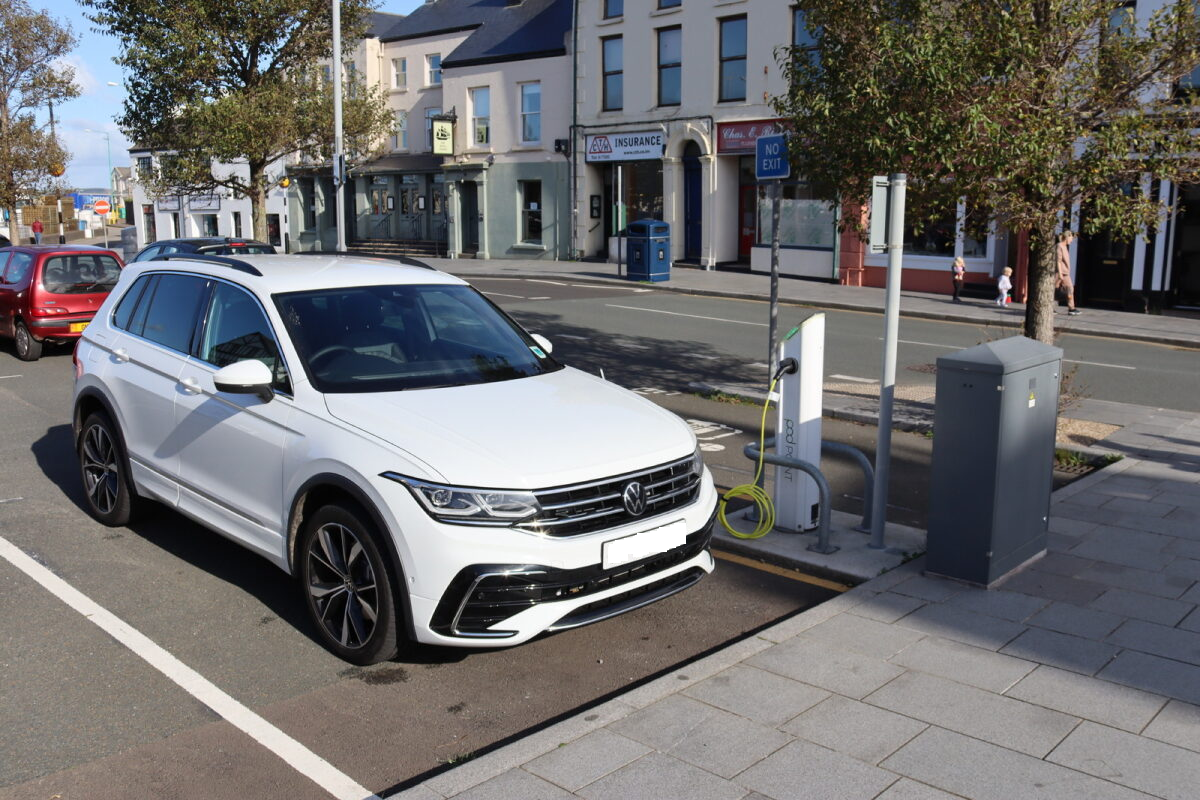
In a concerted effort to combat climate change and foster sustainable transportation solutions, Manx Utilities, the primary provider of mains water, wastewater, and electricity services on the Isle of Man, has joined forces with Lucy Zodion to propel the island's electric vehicle (EV) revolution. With a shared commitment to environmental stewardship, this collaboration aims to significantly enhance the Isle of Man's infrastructure for EV charging. Aligned with the Isle of Man Government's ambitious environmental goals, Manx Utilities has embarked on a mission to reduce carbon emissions and diminish reliance on fossil fuels by promoting the widespread adoption of electric vehicles. Recognising the pivotal role of EVs in achieving these objectives, Manx Utilities has initiated a strategic plan to develop a comprehensive public charging network across the island, in line with European standards. To bolster the island's charging infrastructure, Manx Utilities sought the expertise of Lucy Zodion, a leader in electrical distribution innovations. Lucy Zodion's EVIS Feeder Pillars were selected to support the expansion of the charging network, with a focus on improving existing facilities and strategically installing new charge points across picturesque locations, such as Peel, a seaside town and fishing port. The deployment of Lucy Zodion's modular pillars enables swift installation and future scalability, ensuring that the charging network can readily accommodate the growing demand for electric vehicles on the Isle of Man. Equipped with advanced features including anti-condensation heaters and PEN fault detection technology, these pillars represent a milestone in the island's transition to sustainable transportation solutions. Mark Christian, Business Development Project Delivery Manager at Manx Utilities, comments, "We chose to partner with Lucy Zodion for its unparalleled flexibility in designing and manufacturing EV pillars tailored to our specific needs. Their continued support has been invaluable as we expand our charging infrastructure to meet the growing demand on the Isle of Man." The collaboration between Manx Utilities and Lucy Zodion has not only expedited the deployment of EV charging points, but it has also minimised disruptions to daily life on the island by reducing time on-site installation time, particularly in high-traffic areas.

BG SyncEV launches new Balancer for multi-charger management
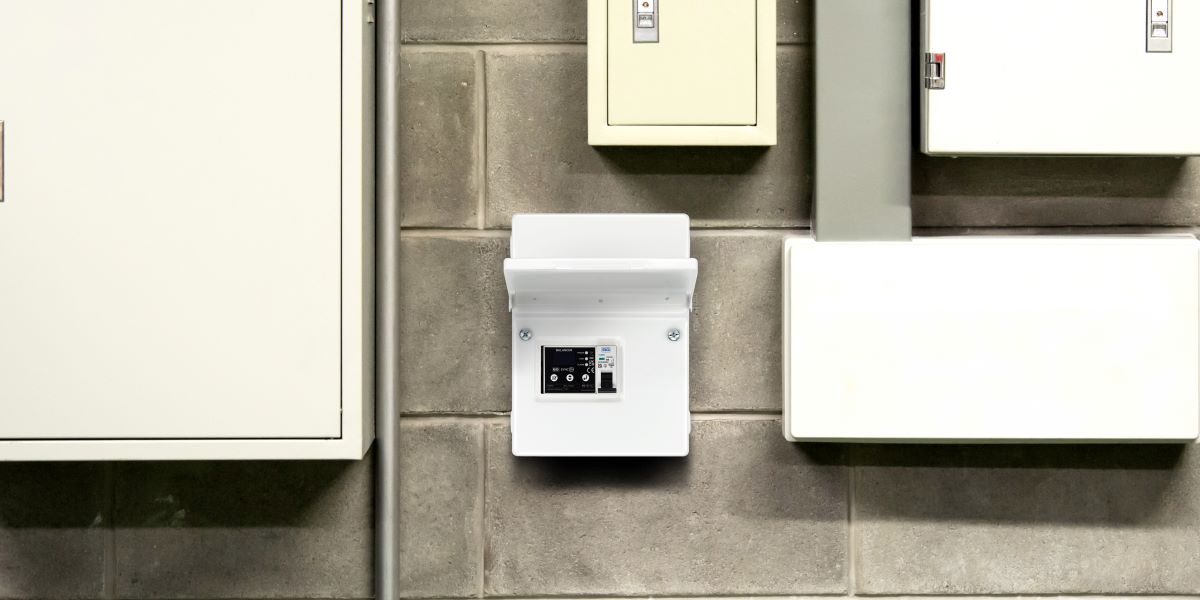
BG SyncEV has expanded its range of EV chargers with the introduction of Balancer, a new multi-charger load management for commercial properties that's available with no additional subscription cost. The BG SyncEV Balancer load management system is engineered to integrate with existing building wiring and supports up to 16 chargers. The device dynamically monitors available power and communicates with connected chargers to ensure each receives equal power, allowing for easy expansion with additional chargers in the future. Optimising power usage, it provides dynamic load management to allocate available power from the building to connected vehicles. This ensures efficient charging without the need for complex queuing systems and allows for more vehicles to be charged simultaneously without exceeding a building’s safe power limits. The Balancer operates locally without requiring an ongoing network connection or costly subscription, providing a cost-effective option for commercial EV charging. The BG SyncEV Balancer detects and accommodates the number of chargers connected, handling up to 16 chargers with ease, the company says. This future-proofs EV installations by ensuring businesses can easily install and expand their EV charging capacity as charging needs evolve, and it can also prevent the need for complex set-ups and costly modifications. Designed to be easy to install, and without having to upgrade the building’s existing power supply, the Balancer can be easily connected to existing and future EV chargers and balances the available power automatically, creating a smooth experience for the user. Three different versions of the Balancer, including single and three phase options, are available to suit each user and their infrastructure’s needs. The new BG SyncEV Balancers are available to purchase from local electrical wholesalers.

CTEK provides ten steps to encourage electric car conversions
Electric vehicle (EV) charge point manufacturer, CTEK, has stated that the switch to electric vehicles on UK roads could be sped up by encouraging and enabling widescale conversion of petrol and diesel cars. As a result, CTEK has issued a ten-point plan to make converting from internal combustion engine (ICE) cars to EV simpler and more affordable: 1. Simplify retyping: create a simplified process for retyping vehicles that have been converted to electric power. This should include a specific registration category for electrically converted vehicles. 2. Standardise requirements: introduce standardised requirements for electric vehicle conversion that are clear and easy to follow. 3. Subsidise: offer financial incentives or subsidies to individuals and companies that choose to electrify their vehicles. This can reduce initial costs and make it more attractive to convert. 4. Training: offer training courses for mechanics who want to specialise in EV conversion. 5. Simplify inspection: create a specific inspection process for electrically converted vehicles. 6. Provide technical support: establish a national technical support centre where individuals and businesses can get advice and guidance. 7. Support R&D: invest in developing conversion technologies to reduce costs and improve efficiency. 8. Publicise: run information campaigns to raise awareness of the benefits of electric vehicle conversion and how the process works. 9. Co-operate: Encourage co-operation between authorities, the automotive industry and third-party suppliers to develop and promote electricity conversion solutions. 10. Eco-friendly loans: Work with financial institutions to offer special low-interest loans for those who want to electrify their vehicles. Daniel Forsberg, CTEK’s Marketing Manager EVSE, takes up the story: “Converting older ICE vehicles to electric power makes environmental sense, as the millions of ICE cars on the road embody a huge amount of material resources, manufacturing manpower and energy costs. “A future in which tens of millions of ICE cars are all scrapped would be a tremendous waste of money, materials and the carbon dioxide already emitted during their making. And manufacturing a new EV involves a large carbon cost. “Converting ICE cars to electric is entirely feasible, and the UK is already home to a growing number of boutique automotive businesses focused on these transformations. They are often turning classic cars and vans into EVs, yet the principles are the same for more modern vehicles. “Currently, conversions are expensive, which is one reason classic car owners are the main customer base. They often have the finances to pay for it and the incentive of wanting to give a cherished vehicle a fossil fuel free future. “To bring this option to the masses, drivers need incentivising and auto businesses need to be attracted to offer an affordable conversion service by making the process simpler. “The UK has a strong automotive industry with many skilled employees who can develop methods and processes to implement electric conversion in a cost-effective and environmentally conscious way. “The UK has many reasons to incentivise the conversion of older cars to electric power - environmental, economic and employment. In Sweden, our government is looking seriously at this and in France there are already subsidies and a supportive regulatory framework, which has encouraged Renault to become active in conversion. “Imagine if some of the most numerous petrol and diesel cars on UK roads, such as Ford Fiestas and VW Golfs, could be cheaply converted to electric. That would be a real gamechanger on the UK’s drive to its EV future.” For more from CTEK, click here.

GivEnergy opens its first UK manufacturing facility
Fast-growing energy storage firm, GivEnergy, has officially opened its first UK manufacturing facility. Situated strategically in the heart of the Midlands, the company believes that the cutting-edge facility signifies a pivotal moment for the UK clean energy sector. The newly opened facility will primarily manufacture commercial energy storage systems. It also leaves space to bring in the future manufacturing of the company’s smaller products, such as its EV charger. Meanwhile, the factory will simultaneously repair, recycle, and reuse damaged or old GivEnergy battery systems via a custom-built R&D lab. With both the production of new products and the restoration of old, GivEnergy tells us that the new facility is a testament to its commitment to a greener future. The site itself is a physical, working testament to sustainability by virtue of the addition of solar panels and the use of its own commercial energy storage system. Furthermore, the building is not just net zero - it is actually net positive to the grid. Jason Howlett, CEO of GivEnergy Group CEO, comments, “We’re absolutely passionate about turning North Staffordshire into a centre of excellence for the renewables industry. This new manufacturing site is just one part of that mission. We’ve already invested substantially in the region over the past 18 months with a new HQ, additional property acquisitions, and heavy recruitment drives. Now, we’re thrilled to be able to continue fostering economic growth and creating highly-skilled job opportunities via a British manufacturing facility.” Marking the opening was an inaugural launch event held on 26th April, 2024. In attendance were esteemed Government guests such as Amanda Solloway - Parliamentary Under Secretary of State (Department for Energy Security and Net Zero) and Aaron Bell MP. Also present were prominent figures from the likes of Octopus Energy, E.ON, Beat the Cold charity, multiple renewables wholesale leaders, and more. Speaking at the event, both Amanda Solloway and Aaron Bell praised GivEnergy’s growth story - expressing excitement over what this degree of momentum represents for progressing the UK’s clean energy initiatives and combatting fuel poverty. Aaron Bell, MP for Newcastle Under Lyme, commented, “I was thrilled to be asked to open this amazing new facility which will genuinely have a great impact on people’s lives. GivEnergy is a fantastic entrepreneurial business which has grown amazingly over these last few years. Its battery technology can lift people out of fuel poverty with greener energy, and it is working at pace with charities and Government to achieve that. “I am delighted to see this Newcastle-based business go from strength to strength. Congratulations to Jason Howlett and his team at GivEnergy for creating local jobs and growing manufacturing here in North Staffordshire, while combating fuel poverty and promoting sustainability. This amazing local business has rapidly grown over the past five years, expanding globally to South Africa, the Netherlands, Singapore, and Australia. I look forward to seeing its progress over the next five years.” GivEnergy’s new manufacturing site will create multiple jobs spanning engineering, warehousing, and R&D. Plus, having this additional (and substantial) site will allow the company to stimulate electrical jobs via an expanded training facility for its approved installer programme. This will double GivEnergy’s existing training capacity to help meet demand – allowing ever-more qualified electricians become certified to fit battery storage systems. “It’s gratifying to receive support from so many senior government officials and local stakeholders”, adds Jason. “The movement around clean energy is accelerating, and we’re proud to help drive that charge. “With our first UK manufacturing facility, we’re reaffirming our commitment to deliver cutting-edge solutions that empower energy freedom for all - whether that’s businesses, communities, individual homeowners, or social housing residents. And, better yet, we’re doing it from right here in the UK.” With operations now underway, GivEnergy plans to leverage these nearshored manufacturing capabilities. The company now looks forward to driving technological advancements in battery storage systems - contributing to the UK's ambitious climate goals while delivering tangible benefits to customers and society at large. For more from GivEnergy, click here.

Whatley Manor partners with Greenly in sustainability drive
Having established itself as one of Britain’s most environmentally responsible hotels over the course of five years, Whatley Manor - a luxury hotel in the Cotswolds - has announced a new partnership with Greenly, a provider of carbon assessment and accountability products for companies of all sizes and for all industries. The integration of Greenly’s software allows Whatley Manor to measure and benchmark the impact of its sustainability actions in real-time, providing its management with actionable insights to deploy a coherent and impactful sustainability strategy. As a result of this collaboration, Whatley Manor will be able to simplify monitoring of all greenhouse gas emissions, including Scope 3 emissions emanating from its suppliers, making up an estimated 80% of a company’s carbon footprint. Such information will help Whatley Manor choose suppliers who share its commitment to the environment, helping guests to do their bit for the planet during their stay. As calculated by Greenly, the hotel registered an impressive drop in its carbon emissions in 2023 as compared to the preceding year. Using the market-based approach, which takes into account the energy suppliers engaged by the hotel, Whatley Manor’s carbon footprint fell from 1778 tCO2e in 2022 to 1057.2 tCO2e in 2023. Whatley Manor has also reduced its carbon footprint by choosing more environmentally conscious service providers. This provides a clear example of Greenly’s long-standing belief that business can be made greener through a virtuous cycle of like-minded suppliers at every stage of the value chain. For Greenly, this represents an important expansion into the British hospitality sector, accelerating its efforts towards debunking the conventional wisdom around the difficulties of decarbonising this sector, which currently accounts for 15% of Britain’s GHG emissions. Whatley Manor’s adoption of Greenly’s software reflects its commitment to a data-driven approach to addressing climate change, complementing existing ESG efforts covering energy efficiency, waste reduction, community engagement and funding climate action. Michele Mella, General Manager of Whatley Manor, comments, “Our collaboration with Greenly is the latest expression of our steadfast belief that luxury and the environment can coexist. We strive to deliver an exceptional guest experience while reducing our impact on the planet, and invite all guests and the community to join our commitment to sustainable tourism.” Alexis Normand, CEO and co-founder of Greenly, adds, “The hospitality sector has a significant role to play in addressing the climate crisis, primarily by looking at all aspects of their operations and deploying more sustainable alternatives, such as seeking out more sustainable suppliers. We are pleased to work with a hotel like Whatley Manor which shares this vision, and look forward to helping them assess and manage their impact on the environment.”