2 November 2026
Product of the Month: Amari Floodlight range by Aurora Lighting
 
23 November 2026
Advanced acquires communications specialist Baldwin Boxall
 
23 November 2026
Trades face 'skills squeeze' as apprenticeship demand soars
 
20 November 2026
Ovia: Delivering performance and flexibility across every sector
 
20 November 2026
Exclusive: how to prepare a building for future technology
 

Latest News


EDA Publishes Guidance For Electrical Wholesale Branches
The Electrical Distributors’ Association (EDA) has published a guidance document named ‘COVID-19 & Social Distancing: Practical Guidance for Electrical Wholesale Branches’ - which covers every aspect of a typical branch structure giving ideas and advice on how to adapt processes whilst continuing to trade safely during the pandemic. Developed by the EDA and a group of expert wholesalers, the guidance is available to download through the Association’s specially created online Hub.  Margaret Fitzsimons, CEO at the EDA, explains why the guidance was needed, “The safety of our members’ employees, customers and suppliers is vital and this guidance provides practical suggestions and ideas that can be adapted for branch operations of all sizes and layouts. Our guidance does not replace companies’ existing health and safety procedures, rather it is complementary.  “At this stage in the pandemic no one knows how long social distancing will be with us but as a sector we need to plan ahead, and our guidance can help members develop safe yet responsive working practices.”  The EDA’s guidance is based on Site Operating Procedures (SOP) produced by the Construction Leadership Council (CLC) and the expert group of wholesalers are from these EDA member businesses:  ⦁ ANEW Ltd ⦁ AWEBB ⦁ BEMCO – British Electrical and Manufacturing Company ⦁ BEW Electrical Distributors Ltd ⦁ City Electrical Factors Ltd ⦁ Edmundson Electrical Ltd ⦁ ETC Electrical Supplies ⦁ Fegime UK ⦁ KEW Electrical ⦁ LEW Electrical Distributors ⦁ The IBA Buying Group ⦁ Stearn Electric Company Ltd 

Scottish Construction Sector Must Play Its Part In Ensuring Cash Flow Integrity
Two construction industry bodies have joined calls for the sector to step up and ensure payments are made on time to safeguard cashflow and ensure business and job survival. As trade and professional bodies continue to pull out all the stops and Scottish and UK governments provide additional support to keep companies going, the Construction Industry Coronavirus (CICV) Forum and Construction Scotland stressed that the sector must prove that it is trying to help itself. Alan Wilson, Chair of the CICV Forum and Managing Director of SELECT, says “The construction sector is facing extraordinary difficulties at the moment and these problems will only be exacerbated if anyone delays or refuses to pay their suppliers. “There has been some evidence that some businesses have chosen to delay payments or extend credit terms, which is quite unacceptable – and wholly the wrong response to the current situation. “Put simply, we will only come out of this with a viable construction sector if the cash keeps flowing and businesses which are the lifeblood of the economy can maintain enough liquidity to meet their own commitments.” Ken Gillespie, Chairman of the Construction Scotland Industry Leadership Group, says, “Cashflow works if everybody in the chain plays their part. It is vital for everyone, especially at a time like this to ‘pay it on’ and enable others to pay their bills as well. “The industry has already shown that it can act in concert and now it has to recognise that it is vital that invoices are paid on time. Paying bills means that we will have a viable industry when we begin to come out of the current situation”. The construction industry in Scotland employs more than 175,000 people, or around 10% of the total workforce. It contributes £21.5 billion to the country’s GDP and acts as a strong economic multiplier, with £2.94 generated for every £1 spent on construction output. Vitally for the industry’s future, it also supports around 10,000 apprentices.  

Promotions IDEAL For Key Workers Launches
IDEAL Networks has launched new promotions exclusively for the key workers who are keeping networks running in critical industries. “Avoiding network downtime is more crucial than ever in many industries,” says Tim Widdershoven, Marketing Director for IDEAL Networks. “We want to provide extra support to the hard-working Systems Integrators and IT Managers that are maintaining and installing these mission critical networks.” The new promotions are designed to help prevent disruption and keep networks running in the vital healthcare, defence, food and beverage, finance, and telecommunications industries, as well as to support critical data centres, and manufacturers of food and consumer goods.  Several promotional product bundles will be available to IT and networks key workers as part of the promotion, which runs from 1st May 2020 to 31st July 2020. These special bundles either provide free accessories or a second complementary tester with the purchase of selected IDEAL Networks data cable and network test equipment.  Testers included in the promotion are VDV II cable verifiers (Plus and Pro models), the NaviTEK NT Pro Network Troubleshooter, the NaviTEK IE PROFINET Tester, the SignalTEK NT Network Transmission Tester and the LanXPLORER Pro In-line Troubleshooter.  All bundles can be purchased from distributors or the IDEAL Networks online shop. As part of the promotion, IDEAL Networks is also offering eligible technicians and installers the chance to trade-in any existing wiremapper to save up to £175 on a new SignalTEK CT and SignalTEK NT Transmission Tester.  Users should contact their usual IDEAL Networks distributor to arrange the trade-in. “These are difficult times, so we want to provide a little help wherever we can,” says Widdershoven. “Therefore, we are donating two per cent of the revenue from these special promotions to the World Health Organisation’s COVID-19 Solidarity Response Fund.”  For details of the WHO Solidarity Response Fund, click here.

VIDEO - New Domestic Electrical Work Video Guide
A new short safety video for householders and electrical and other engineering contractors has been released by ECA, NICEIC and ELECSA. Based on UK Government and Public Health England guidelines, the video outlines the important steps which contractors should follow to ensure essential domestic work can be undertaken safely during the current pandemic. These include maintaining social distancing and thorough hand washing, along with other practical measures that range from taking electronic payments to not requiring the traditional ‘contractors cup of tea’. The video also provides simple complementary advice for householders to follow, to help protect everyone involved from the spread of coronavirus. Paul Reeve, ECA CSR Director, comments, “This concise video shows some of the key steps necessary to ensure that domestic electrical and similar work is undertaken safely. We urge electrical and other engineering services contractors to watch the video, and read the ECA’s supporting guidance, to help ensure the protection of contractors and the public during essential domestic maintenance or repairs.” John O’Neill, NICEIC’s Technical Director, adds, "This video aims to provide guidance for registered electrical contractors who are required to undertake essential electrical repairs in domestic properties. We urge our contractors to use the video to educate themselves and their customers about working practices to ensure that emergency work can be carried out safely. "In addition to this, we strongly advise our registrants to keep abreast of current Government guidance by visiting www.gov.uk/coronavirus regularly." The video is supported by Electrical Safety First and the Electrical Distributors Association (EDA), with acknowledgment to the CICV Forum for producing the initial video for use in Scotland. The video can be viewed below: https://www.youtube.com/watch?v=A-J-2vJoMFg Further ECA coronavirus updates – which include guidance, webinars and news updates - are also freely available to the industry at www.eca.co.uk/coronavirus. These include a freely available template for domestic contractors, which can be accessed here.

British Cables Company Remains Operational Despite Pandemic
At a time when many businesses are experiencing severe difficulties, Manchester-based British Cables Company (BCC) is remaining positive, with cable manufacturing lines still fully operational. BCC Managing Director, Kevin Samuel comments, “I am pleased to report that we have a good measure of positive news here at British Cables Company. The business continues to fulfil scheduled orders and also meet new demands for our cable products. We are maintaining a 3 shift system which means our manufacturing lines are working to a high capacity with no interruptions to production or deliveries.  “Following our initial announcement in September 2019, one of the most significant developments we are currently overseeing is the relocation of the Irish Driver-Harris (IDH) business to our Manchester factory. Approximately 60% of the production machinery movement has now been achieved and we are on schedule to complete the transfer during August this year.  This initiative enables the continued production of 6491B and 2491B cable products that IDH currently supply into the UK market. We have already partially established this cable production and samples are now with BASEC for approval. “This strategic development puts BCC in a very strong position as it means we have large stocks available here in Manchester for rapid call-off by our customers.  “We have also been expanding our sales resources. I am delighted that Barry Turnstill joined the sales team recently to cover London and the South East region.  Barry is well known to many of our customers, having spent over 30 years in the electrical wholesale trade. We look forward to him enhancing BCC’s reputation for delivering excellent service and great deals to his customers. “Last, but certainly not least, I am exceptionally proud to announce that we have been awarded the RoSPA ‘Order of Distinction’. This highly sought-after achievement (over 2000 entrants vie to achieve this notable accolade) comes as a result of 15 consecutive Gold awards for consistent health and safety standards. Essentially, this is the ultimate recognition of BCC working hard to ensure its staff get home safely to their families at the end of every working day. “In summary, whilst this is one of the most challenging times for everyone, I am proud of the British spirit of endeavour and commitment here in Manchester. We remain positive about the future and we are eagerly anticipating the new cable production lines becoming fully operational in the next few months”.  

NAPIT Publishes Electrical Safety Guidance For Landlords
With the new Electrical Safety Standards in the Private Rented Sector coming into force in England on July 1, 2020, NAPIT has published specific Guidance for Landlords. The regulations coming into force are for new, specified tenancies, and private landlords will be required to ensure their properties are subject to electrical inspection and testing, carried out by a qualified, competent person at intervals not exceeding five years (and resulting in a satisfactory report). This will apply to all existing specified tenancies from April 1, 2021. Despite these challenging and uncertain times, the regulations will still be introduced as planned, with the Government issuing guidance making it clear that landlords are still responsible for providing safe homes during the pandemic. However, if they can show that they have taken all reasonable steps to comply with their duties under the regulations, they are not in breach of the duty if they cannot comply. Mike Andrews, CEO of NAPIT, comments, “As the National Association of Professional Inspectors and Testers, we see it as our duty to provide accurate, consistent and easy to understand guidance for landlords on these new regulations. Electrical safety is at the forefront of everything we do, and we have worked hard on this guidance to make it easy for landlords to understand their requirements. We have also launched a dedicated online search facility on our website helping landlords search for competent and qualified tradespeople that they can trust to carry out their electrical inspections. "As well as this, we have created a new Landlord Electrical Installation Safety Record for our members to use, which provides a summary of the often lengthy Electrical Installation Condition Report. We will continue to support both our members and landlords during this period of adjustment.” For a detailed breakdown of the new regulations and for more information on the issue of compliance during lockdown, read NAPIT's specially developed Landlord Guidance, which explains the regulations in an easy and concise way. They also answer questions that landlords may have, including: - Do I have to have another full electrical installation safety report carried out if my first one is unsatisfactory? - How can I ensure the electrical inspector I use to undertake the electrical inspection and testing of my electrical installation meets the requirement to be qualified and competent? - Does my electrical installation need to comply with the 18th Edition of the Wiring Regulations? If there are queries not covered by the guidance, NAPIT encourages you to email nta@napit.org.uk and the organisation will do its best to help. To access the NAPIT Guidance for Landlords, click here.

Tools To Support The Trade
In these unprecedented times, the electrical trade, like many others, is having to realign the way day-to-day working practices are carried out. Social distancing means many contractors and wholesalers are currently unable to undertake their typical working day, with many confined to their homes for the foreseeable future. Hager is committed to supporting the trade during such an uncertain period. And is doing so by offering a combination of online and offline tools and resources so that access to essential technical information, learning and development and interactive connections to colleagues in the industry via social media, is always available. Online information and support Hager has created a wide range of online tools that can help the trade keep up-to-date with essential information, news and business updates. The company’s eCat mobile app provides digital access to product information, technical data, descriptions and trade prices, while other online resources including advisory white papers, in-depth product brochures and BIM support can be accessed via its website. Teamwork Hager’s technical teams remain available to assist with technical and product queries both via telephone and online. So, whatever your query, Hager's experts are on hand to help and support contractors with any issues. Stay connected on social The #HagerGang community on social media allows electrical contractors to connect with like-minded individuals and stay up-to-date on the latest news regarding Hager and the industry. It’s a great way to keep in touch, swap experiences and pass on tips – especially at a time when getting out and about is restricted. Training and development In addition to the tools available from Hager, contractors should look to use this time to expand their industry knowledge through training during these quieter times. Several courses are available online from a number of providers, including the NICEIC and ELECSA. Hager's Paul Collins comments, “A lot of industries are having to adapt to new ways of working in the current climate and the electrical trade is no exception. We stand behind the UK’s electrical professionals and wholesalers and remain committed to supporting them with a range of options including whitepapers on key issues, to placing technical experts at the end of the phone. We would encourage contractors to take the opportunity to further enhance their knowledge in readiness for a return to a more familiar working environment.” For more information, go to www.hager.com/uk.

Lighting and the Circular Economy Webinar
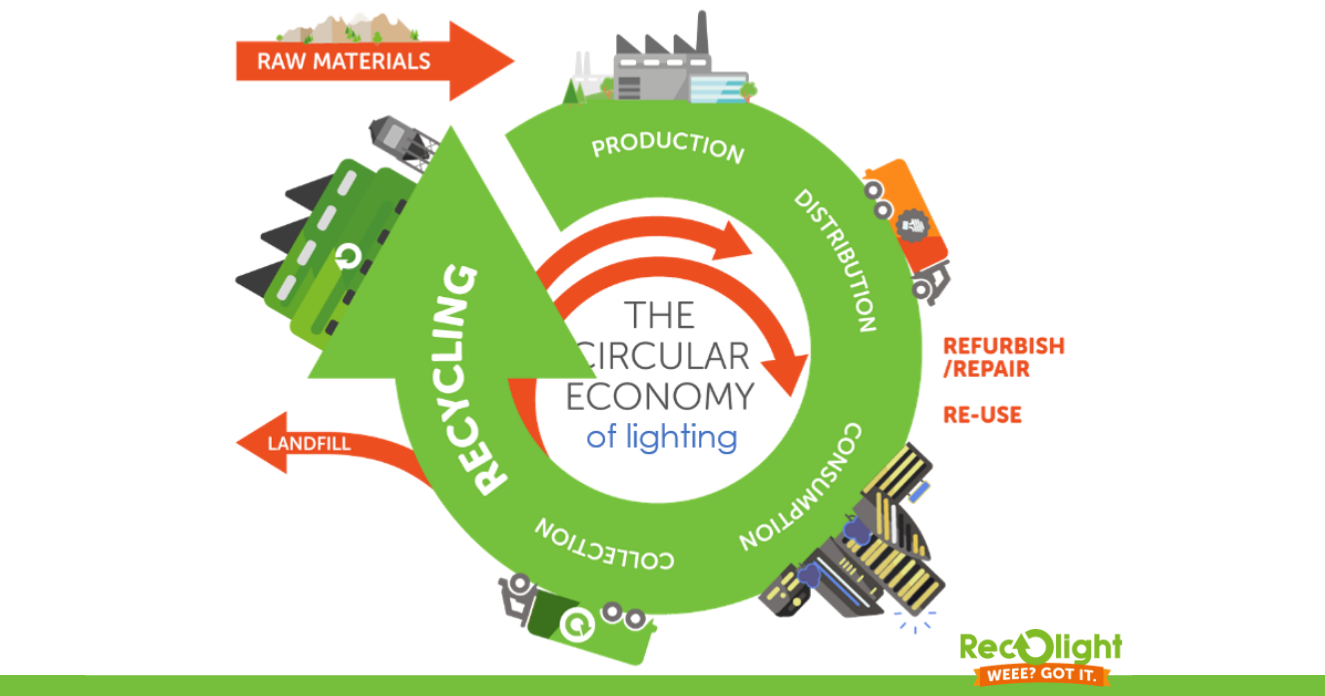
A Recolight Circular Economy webinar will take place on May 28 at 11am. The webinar - which you can sign up for here - will give attendees vital insights into new Circular Economy regulations, standards and commercial requirements for lighting. Presenters from Defra’s Circular Economy Team, Lighting Europe, and Recolight will provide an essential introduction to the changes. The webinar will be chaired by Ray Molony. The webinar will provide a summary of new material efficiency and product design standards that will impose new requirements on products sold in the EU. Speakers from Defra will introduce the UK’s approach to the Circular Economy following the UK’s departure from the EU. Nigel Harvey, Recolight's CEO, comments, “Sustainability is rapidly moving from ’The right thing to do to safeguard our planet‘ to ’A must do to stay in business‘. The earlier companies start, the more likely they are to be able to meet/exceed the new requirements.” Attendance for the webinar, which will last around one hour, is free of charge. Register for the webinar by clicking here.

FEATURE - Li-ion Leading The Way
Marc Garner, of the Secure Power Division at Schneider Electric, discusses the UPS considerations that have to be factored in when choosing between Li-ion and VRLA batteries. Given their many advantages over traditional technologies such as valve-regulated lead-acid (VRLA) batteries, lithium-ion is fast gaining popularity as a power backup option for Uninterruptible Power Supplies (UPS). A 2018 Bloomberg New Energy Finance report forecasted that Li-ion technology will comprise 40% of all data centre backup batteries by 2025, and that in the hyperscale sector, Li-ion would become the predominant battery technology, accounting for 55% of UPS batteries. Compared with VRLA, Li-ion offers users many benefits, including greater power densities, smaller size, less weight and longer operating life. They can also withstand many more charge/recharge cycles, typically more than 1,000 compared with 200-400, before losing their ability to provide effective backup power. As a result, they occupy less space, incur lower maintenance costs and require less frequent replacement, offering the user a lower total cost of ownership (TCO) over the lifecycle. This helps to offset what was once considered a key disadvantage, an up-front cost premium, but even that is steadily diminishing thanks to ongoing development and increased manufacturing volumes. Cost considerations For data centres and other critical applications, power continuity is essential, and cost can often be a determining factor in the choice of technologies. Total cost of ownership is determined as the cost of a UPS over its working life. For most, it is the aggregate of Capital Expenditure (CapEx), or the upfront cost of acquiring and deploying the UPS versus its Operating Expenditure (OpEx); the recurring cost of running, maintaining and servicing the system throughout its life. A smaller investment in CapEx may be less likely to be challenged, but a change of mindset during the deployment phase can offer many benefits to the user in the long-term, especially from an operational perspective. Studies by Schneider Electric’s Data Centre Science Centre, for example, and information included in White Paper #229: ‘Battery Technology for Data Centres’, offers key guidance for electrical contractors and found that over a 10-year period, Li-ion delivered a TCO that is between 10% and 40% lower than equivalent UPS systems based on VRLA. Furthermore, the smaller size occupied by a Li-ion battery is of obvious advantage to those responsible for larger enterprise colocation environments and whose revenues depend on maximising the white space. Here, real-estate savings can offer an instant improvement to the bottom line, especially when multiplied by the many hundreds, if not thousands, of assets located in a large facility. Remote management capabilities Built-in battery management systems including software, sensors, switches and microcontrollers are an essential component of any Li-ion UPS system. Due to their chemical makeup and higher energy density, they are sensitive to being overcharged unless managed properly. Not only does this software greatly improve the safety and reliability of the UPS, it also makes Li-ion systems a natural fit for remote management. As the maintenance and operation of data centres becomes increasingly service driven and requires expert guidance from electrical contractors and specialist power partners, UPSs’ will include Internet of Things (IoT) technology to provide data about their internal status and operation via tools that enable greater remote management capabilities. Another key benefit is the longer operational life of Li-ion, which is typically 10 to 15 years, compared with VRLA alternatives that offer a lifecycle of four to six years. This means greater reliability, fewer battery replacements and less frequent maintenance visits, offering the user a lower overall servicing cost. Tools to enable data driven decision-making No matter what type of UPS is selected, the ability to right-size against the specific needs of the application is essential, especially from the perspective of energy usage. Due to the mission-criticality of a UPS, power protection systems can be often over-provisioned, increasing operating costs and energy usage dramatically. To aid electrical contractors and partners further in the decision-making process, Schneider Electric has created a series of digital TradeOff tools, which model the cost implications of deploying new critical infrastructure technologies. The Lithium-Ion vs. VRLA UPS Battery TCO Calculator can assist in the process of choosing a UPS type and the battery configuration most appropriate for the environment it is being deployed in. By varying inputs such as capacity, service life, backup time and battery replacement period, and selecting the expected operating costs from local power and real-estate, electrical contractors can use the tool to estimate the cumulative cost of deploying a Li-ion or VRLA UPS and make a data driven assessment based on the applications needs. The Lithium-ion vs VRLA Battery TCO Calculator also helps the user identify the most energy efficient and cost-effective choice. Today, power continuity remains essential for all critical infrastructure applications, each with its own business case and backup needs. Looking forward, energy efficient technologies offer the user a far greater return on investment (ROI) and a reduced carbon footprint, increasing uptime and availability with lower emissions. - This article originally appeared in the May 2020 issue of ECN.

Engineering Services Bodies Issue Coronavirus Site Safety Guides
Leading engineering services sector bodies, ECA and BESA, have jointly developed two new guides to help contractors to manage coronavirus-related issues on site. The new guides will be freely available to the wider industry during the current emergency. They provide sector-relevant guidance for engineering and building services contractors working across construction and FM in two specific areas: • ‘Specific Environments’ (where there may be higher risk of COVID-19 transmission); and • ‘Close proximity working’ (less than 2m). The new guides: - Align with the hierarchy of preventative measures shown in the Construction Leadership Council Site Operating Procedures, based on guidance from Public Health England; - Do not recommend the deployment of respiratory protective equipment (RPE) for general site activities, most notably where social distancing is possible; and - Recommend that any decision to deploy RPE in site-specific situations should be based on risk assessment. The guides have been drawn up with the support of a COVID-19 Expert Panel made up of BESA and ECA safety practitioners. The panel is also helping ECA and the BESA to provide informed, practical comments on site health and safety issues to the government and industry bodies who are generating overarching guidance in this area. Rebecca Crosland, BESA Health & Safety Advisor, says, “It is imperative that there is further guidance out there to help keep the industry safe. The health, wellbeing and safety of everyone on site must be a priority during the COVID-19 health crisis. Businesses must exercise their duty of care under legislation to ensure all workers are protected and ensure that any critical information related to their health and safety is communicated clearly and then implemented.” Paul Reeve, ECA’s CSR Director and a member of the CLC’s working group on site safety measures, adds, “The CLC SOP is an overarching industry document, but it refers to the need for sector guidance. These two guides are the start of joint ECA and BESA activity to produce more detailed, sector-relevant information that’s desperately needed by many engineering services contractors. “They aim to help with the practical management of coronavirus-related issues on site, which may include the challenges associated with doing essential work in closer proximity than two metres.” ECA and BESA welcome comments on the new guides from across the industry. The guides are available on the ECA website: GN1 - https://www.eca.co.uk/downloads/business-support/health-and-safety/coronavirus/draft-covid-19-and-engineering-services-guidance GN2 - https://www.eca.co.uk/downloads/business-support/health-and-safety/coronavirus/draft-covid-19-and-engineering-services-guidan-(1) About ECA and BESA – Working together to represent the engineering services sector • ECA and BESA collaborate on a range of issues in the engineering services sector. The partnership brings together the two leading associations representing engineering services; some 4,000 businesses with a combined annual turnover of almost £10bn. • Together, ECA and BESA cover a range of engineering, design, installation and facilities management activity, including electrical, heating, plumbing, energy management, micro-generation, ductwork, ventilation, fire and security, and wireless systems. • Joint work includes representation in key areas like contracts, procurement, payment, and health and safety. Overall, the engineering services sector accounts for some 40% of UK construction/maintenance turnover.