2 November 2026
Product of the Month: Amari Floodlight range by Aurora Lighting
 
23 November 2026
Advanced acquires communications specialist Baldwin Boxall
 
23 November 2026
Trades face 'skills squeeze' as apprenticeship demand soars
 
20 November 2026
Ovia: Delivering performance and flexibility across every sector
 
20 November 2026
Exclusive: how to prepare a building for future technology
 

Latest News


Increase In Electricians Certifying Skills, Says JIB
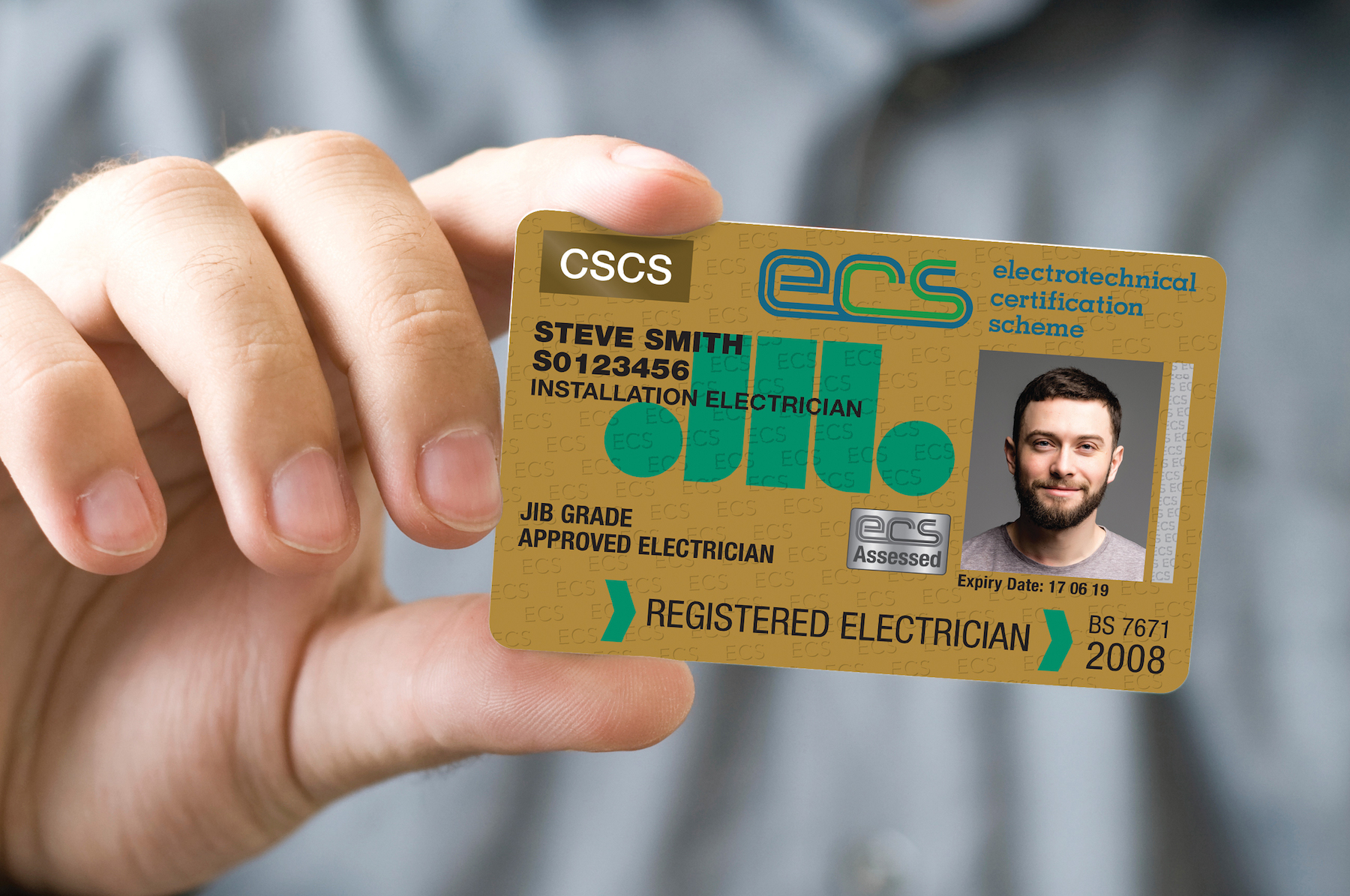
Applications for ECS gold cards from the Electrotechnical Certification Scheme increased by 36% in 2017, signalling a boost in the number of electricians looking to formally certify their skills.  In total the scheme in England, Wales and Northern Ireland now has around 128,000 cardholders, ranging from apprentices to electricians and managers. In addition to core electrical occupations, the ECS also covers other electrotechnical disciplines such as fire, security and datacomms systems. Following investment in IT systems in recent years, customer service has also improved, with card processing turnaround times being significantly reduced from typically four to five weeks to, on average, 10 working days or less.   To date, around 6,000 electricians have opted to recognise their skills since the ECS Registered Electrician scheme launched late last year.  "The increase in gold card holders is good news for the industry, as it reflects a significant rise in the number of electricians looking to recognise their skills at the industry-recognised Level 3 standard," said David Thomas, ECS strategic development manager. "The initial interest shown in becoming an ECS Registered Electrician is also encouraging and we hope that as more electricians sign up to this new status, it will help to raise standards across the industry even further."

ECA and BESA Issue Retentions Plan To Government
A hard-hitting action plan to finally put the issue of cash retentions in construction to bed has been issued to the government by leading engineering services bodies the BESA and ECA. The submission follows the collapse of Carillion last month, which has severely affected many subcontractors. In the submission, the two trade bodies called on the government to put retentions in trust as a key first step, with the Peter Aldous Bill seen as a suitable legislative vehicle. This would then be a stepping stone on an industry roadmap to full abolition of retentions in the near future. The joint submission also includes new findings from a joint survey issued in late 2017, as follows: Over nine in 10 (92%) of respondents said they have faced construction retentions during the last three years, with two-thirds of current contracts involving retentions; Over half (56%) faced total retentions of over £100,000 against current contracts; Many respondents wait longer to get their retention monies than the typical 12 months defect liability period – six months more on average; The average amount of monies held over the past three years, which has not been paid back after the completion date and is thus outstanding, is £34,826; and The average retention was five%, which exceeds many supply chain profit margins. “Prompt and fair payment is essential for industry collaboration, increased productivity and investment," ECA director of business Paul Reeve commented. "Putting retentions in trust is vital to making early progress with protecting and supporting SMEs. Looking forward, it would help the industry not just to survive, but to modernise and deliver on the new sector deal”. “The government’s Industrial Strategy relies on an engineering services sector which has both the capability and capacity to continue to deliver against UK demand. Recent events have shone a spotlight on just how critical prompt and fair payment is to ensure a financially healthy, innovative and productive sector best achieved through a move away from the use of retentions, ” added BESA director of legal and commercial Rob Driscoll. The joint submission also backed conclusions from consultancy Pye Tait that withholding retentions is widespread across construction. However, BESA and ECA noted that Pye Tait’s research was only based on the top three supply chain tiers, thereby underestimating the scale of the problem. The ECA and BESA solution – for retentions to be held in trust – already exists in Australia and has been compared to the UK’s private housing rental deposit scheme. The trade bodies noted that had such a scheme existed before the Carillion collapse, this would have protected many subcontractors, and the fallout must serve as a catalyst for change. The BESA and ECA made the submission in the context of the Government’s consultation into the practice of retentions in construction, which closed in late January.  

Aico Offers Free Smoke Alarm Training In Scotland And NI
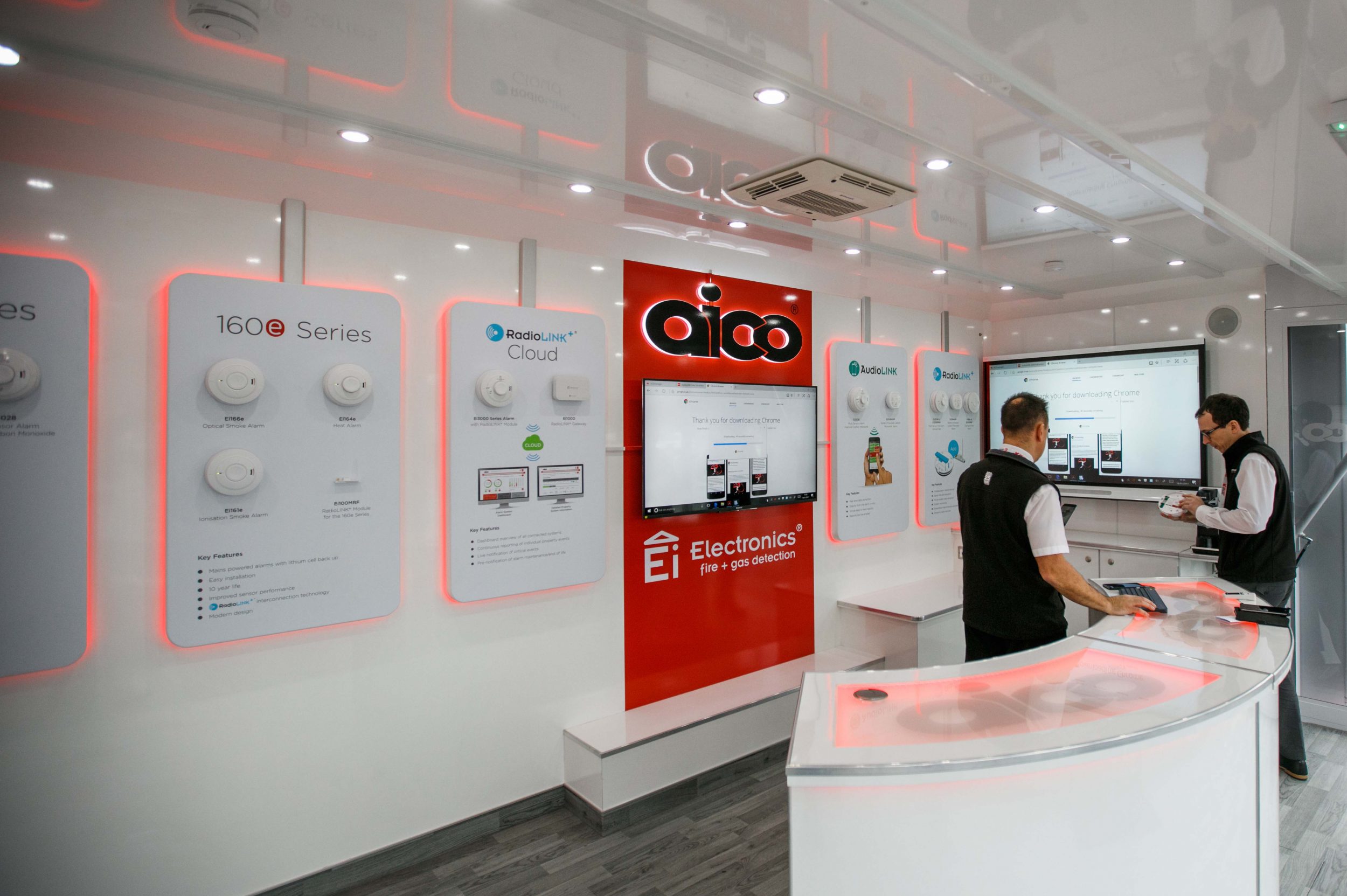
Aico Ltd. has announced its mobile training and demonstration units will be delivering 'Expert Installer' training in Northern Ireland and Scotland this spring and summer. The first mobile unit visited Northern Ireland on February 13-14, with more dates planned for March, May and June.  Dates in Scotland start from February 20 – 22, with further dates running through to June 1. A specially designed webpage on Aico’s website tracks all the mobile units and provides the latest information on dates and venues.  Aico’s CPD accredited Expert Installer is a free of charge modular training scheme designed to ensure everyone involved in domestic alarm specification and installation has all the information they need.  Aico’s Mobile Training and Demonstration Units have proven highly effective in bringing Expert Installer training to more people across the sector than ever before.  Their internal layout can be configured to meet different requirements, be it a product demonstration or a hands-on training session with Aico alarms and technologies, such as AudioLINK data extraction or RadioLINK+ wireless alarm interconnection.  

VEO Oy Acquires I.C. Electrical
Finnish technology firm, VEO Oy, has acquired UK-based electrical installations and contracting company I.C. Electrical Ltd (ICE) for an undisclosed sum. VEO Group, headquartered in Vaasa, on the west coast of Finland, has strengthened its position in the UK marketplace to support its ambitious international growth strategy. During the last 10 years, both companies have worked closely together, and this acquisition is part of VEO Group’s commitment to stay, grow and develop its services in the UK despite the uncertainties posed by Brexit. The range of products and engineering capacity offered by the group will provide ICE’s customers and partners with access to a broader scope of supply, turnkey EAI engineering and high-end technology products made either locally or in Finland. As well as the UK, VEO Group also operates from seven other locations across Finland, Sweden and Norway. Marko Ekman, CEO of VEO Group, said, “ICE’s extensive experience in the UK market combined with VEO’s products and expertise creates a strong foundation to build on. Growth and internationalisation will continue to play an important role in VEO’s plans for the future.” Tim McNeilly, managing director of I.C. Electrical Ltd, said: “The synergies between our businesses are enormous. This, matched with an unrivalled level of trust, cooperation and engineering knowhow, gives us a winning formula. “The acquisition represents a positive step forward for VEO in the UK and is evidence of our genuine desire to continue on the path of growth despite the uncertainty created by Brexit. Together we can provide our customers with the most suitable and comprehensive deliveries on a project-specific basis. We offer engineering, design, control panels and installations that complement VEO’s existing products and services and we look forward to sharing these benefits with both new and existing customers.” Jarkko Aro, sales and operative director at I.C. Electrical Ltd, added, “The increased capacity to design products and produce them at our own factories supports the flexibility and efficiency of our increased operation. Moving forward, our combined expertise can be utilised particularly well for waste to energy operations by generating electricity to the network, as well as heat to local houses or businesses by incinerating waste which normally would go to landfill.”

Tackling Gender Inequality Must Be Priority, Says NICEIC
"Tackling gender inequality must be a trade priority," NICEIC CEO Emma Clancy has said. As the nation celebrates the 100th anniversary of the female vote Emma has said that despite a certain level of progress in other industries, gender disparity still remains a prevalent issue in the electrical and wider construction sectors. “February 6, 1918, was an important milestone in our history, but it only marked the start of a journey that we are still on today to bring about equality,” commented Emma. “The unfortunate reality is that, despite great progress being made in breaking down gender barriers in other areas of life, there is still a huge job to do in the construction industry. “In the electrical industry alone, women only make up around 1% of the total workforce. As an industry we need to broaden our approach to recruitment and the image we portray.” NICEIC continues to promote opportunities for women in the electrical industry through its Jobs for the Girls campaign. The campaign has helped bring greater focus to the issue and while perceptions of the construction industry are changing, Emma believes there are still more steps that can be taken to create a more inclusive environment. “There are some great success stories out there of women who have made a great career in the electrical industry," added Emma. “They are real trailblazers and evidence that the industry is changing. However, the numbers are still painfully low and many young women are still pushed into careers such as hairdressing or childcare as it is the perceived norm. “We need to change the perception of the industry as one traditionally for boys and make it more inclusive and appealing to women. Young females need see it as a viable, exciting career option from the very beginning. “What we have found in particular is that women who do become electricians often do so later on in life – when in fact they could have started out much sooner if they had the appropriate information or encouragement.” For more information, visit the NICEIC's Jobs for the Girls campaign.

Triveneta Admits Production Fault In Flexible Cord
Italian cable company, La Triveneta Cavi (LTC), has confirmed it experienced a production fault last year that resulted in flexible cord cable with exposed copper conductors, on sale in the UK, reports the Approved Cables Initiative (ACI). The cables, which failed the British and European Standards flex test, were found on sale following random market place sampling by the ACI. The Initiative has recently stepped up this programme of surveillance following an increase in reporting of substandard cable. In a written notification, LTC outlined that the incident, which the ACI originally reported in November last year, may be attributed to the `running-in’ phase of a new production plant in Moldova at the end of 2016 and into early 2017. Since the ACI’s original announcement, certification body IMQ has indicated that it has been addressing issues identified during routine surveillance work with the Triveneta factory in question. These issues were being dealt with in accordance with the HAR scheme rules and IMQ requirements. The company has also confirmed it is working with IMQ and that during the latest inspections at its production site by IMQ, no problems or anomalies were detected. BASEC also reported that testing of a further batch of cable passed relevant tests. In September last year, tests of cable samples were commissioned by the ACI and carried out by three independent sources. All showed similar results. Other non-conforming results were also noted but the exposed copper conductors were deemed to be the most dangerous failing of the tested cable. All cable samples failed flex tests under BS EN 50525-2-11 2014. The affected three core 1.5sq.mm cords could potentially be fitted to vaccuum cleaners, electric drills and extension leads, all of which are exposed to constant flexing during their everyday use. The ACI believes the copper conductor strands which penetrated the PVC insulation and sheathing during the test could cause serious electric shock or even death if they come into contact with a user. The samples of Triveneta flexible cords which were tested were marked with the manufacturer’s identification ‘La Triveneta Cavi’ and carried a 2016 manufacturing date. They were also marked with the IEMMEQU <HAR> approval mark. The failed flexible cords were orange and white in colour – however the ACI advises that all colours should be treated with great caution. For further advice on this issue and other substandard cable can be found at www.aci.org.uk.

ECS Registered Electricians – Have You Signed Up Yet?
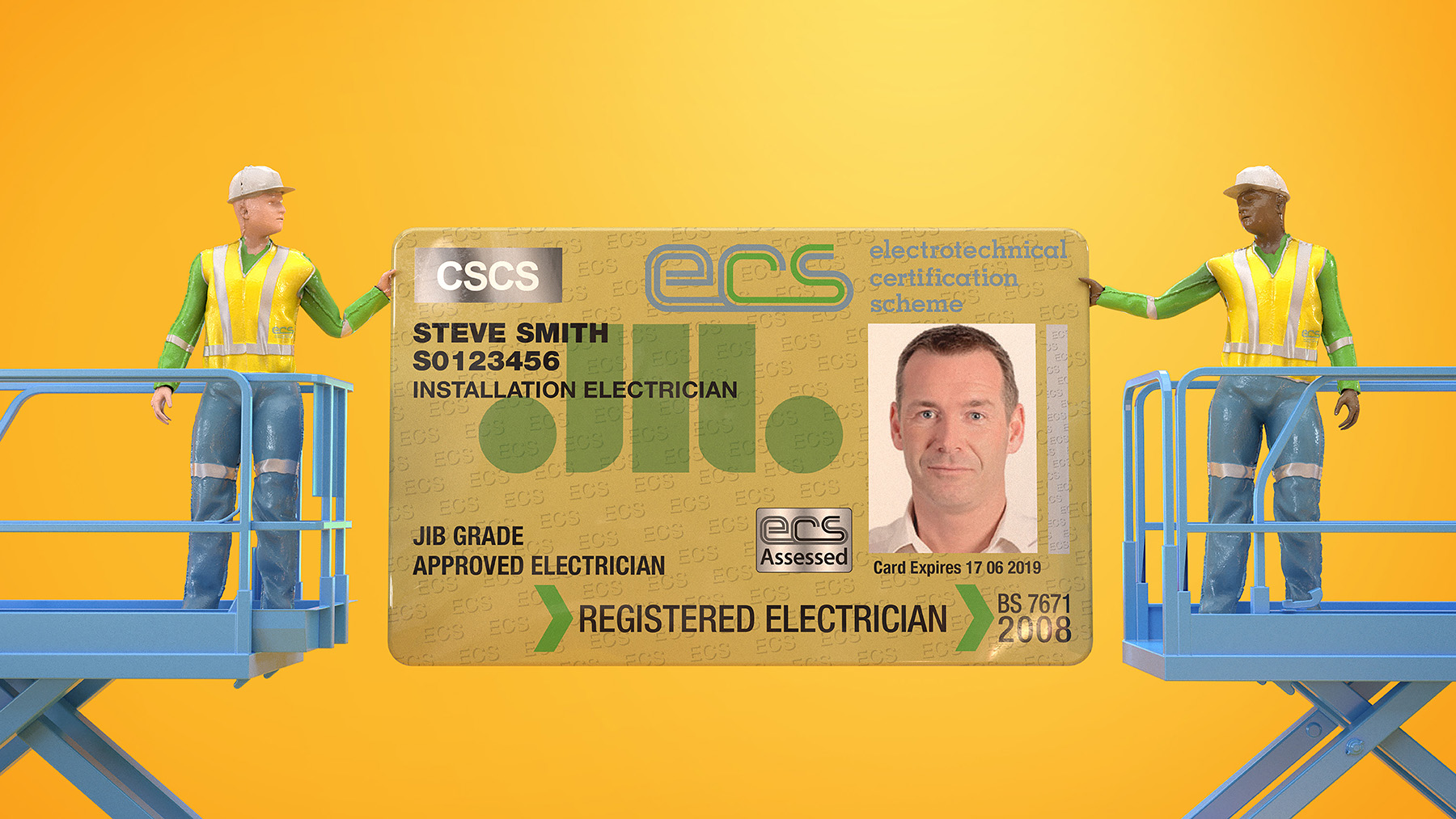
The Joint Industry Board (JIB) talks about the progress of the ECS Registered Electrician Card since its launch, and the benefits it offers both individual electricians and employers. Over 6,000 ECS cardholders are now ECS Registered Electricians, following the launch of the new status. Operated via the ECS card scheme, the new status is available to all ECS Installation and Maintenance Electrician cardholders in Northern Ireland, England and Wales who are qualified in the current (17th) edition of the BS7671 Wiring Regulations. It has been introduced by the JIB to raise standards across the industry and recognise electricians who are qualified to NVQ Level 3 and the current British Standard for electrical installation. For a cardholder, becoming a Registered Electrician means they can get a well-deserved endorsement for their professionalism and skills, stand out amongst their peers and get a valuable boost to their status and credibility across the industry. For electrical contractors, it’s an opportunity to demonstrate that their electrical workforce is up-to-date on the latest industry technology developments and is committed to maintaining this level of professionalism. [caption id="attachment_13881" align="aligncenter" width="640"] Mike Smith (l) and Kevin Snowdon (r) with their ECS Registered Electrician cards. Photographs by Rob Cook.[/caption] Two prominent members of the electrical industry were among the first to sign up for the new ECS Registered Electrician status. ECA President and bid director at SES Engineering, Mike Smith, and Kevin Snowdon, owner of NES Electrical, applied for the new cards after meeting the criteria and agreeing to the Code of Professional Practice. On receiving his card, Kevin Snowdon said, "The Registered Electrician status recently introduced by the JIB means the electrotechnical industry will now benefit from knowing they have employed a qualified electrician for all of their electrical requirements. “Supported by all of the industry leaders, but in its voluntary stage at the moment, I hope one day this will be a mandatory requirement similar to the government-approved GasSafe scheme. At NES Electrical, it is a worthy addition to an already highly regarded card." Mike Smith added, “The ECS Registered Electrician card is a new, exciting development that’s all about the individual electrician and not about company competency or certification. For the electrician, it recognises his or her achievements and qualifications and their commitment to ongoing professional development. For employers and clients, they can see at a glance the electrical and safety qualifications of an individual. “In the long term, I hope this voluntary scheme is widely taken up, so that as an industry we regain the recognition and reputation we deserve throughout construction and engineering for being highly trained and safe working tradesmen.” To find out more about ECS Registered Electrician visit www.ecscard.org.uk/ecs-registered-electrician

UK Commercial Vehicle Manufacturing Declined In 2017, Says SMMT
British commercial vehicle (CV) manufacturing declined 16.7% in 2017 as 78,219 vans, trucks, buses and coaches left production lines, according to figures released today by the Society of Motor Manufacturers and Traders (SMMT). Domestic demand fell to its lowest since 2009, down 25.0%, with 29,320 CVs rolling off production lines and onto British roads.1 The decline reflects a fall in business confidence and fluctuating buying cycles, which are a natural feature of the market. Meanwhile, 48,899 CVs were produced for overseas markets, representing a fall of 10.8%. However, exports accounted for 62.5% of overall UK production – up from 58.4% in 2016 – the largest proportion in eight years.2 The EU remains the UK’s largest market, with 94.1% of CVs produced for international markets, and the majority bound for European Union countries. The news comes as UK Automotive restates the need for an urgent agreement on the terms of a post-Brexit transition deal. This must be comprehensive, result in no change and allow business to continue as usual until a new trading relationship with the EU is in place. This means maintaining the UK’s membership of the single market and customs union and addressing critical details that, if ignored, could have a damaging effect on the industry’s competitiveness. The agreement must include guarantees that the UK will continue to benefit from EU Free Trade Agreements (FTAs) and Customs Union arrangements with third countries, for the full duration of transition. Secondly, vehicle certifications that have been issued in the UK must remain valid at home and abroad so that vehicles can continue to be sold across the EU. Finally, no new customs checks, which would add cost, cause delays and disrupt manufacturing, should be applied during the transition. Mike Hawes, SMMT Chief Executive, said, “Fluctuating fleet purchasing cycles, alongside declining confidence among operators in the CV market, affected production in 2017. British CV manufacturing continues to make a vital contribution to the UK economy, with an increasing proportion shipped to global markets. More than nine out of every 10 vehicles we export are produced for EU customers, underscoring the need for urgent clarity on the transitional arrangements for Brexit.” Footnotes 1. In 2009, 24,225 CVs were produced for the domestic market. 2. In 2009, 77.5% of commercial vehicle production was for export.

Electrical Industries Charity Supports ‘Silent Generation’
The Electrical Industries Charity is urging the industry to show their support for over 50,000 retired colleagues who are struggling with loneliness, isolation, poverty and mental health problems. According to the charity, a recent report published by the BBC showed that in the UK there are nearly one million people aged 75 years or older who are living in poverty and are in need of help. This accounts for over 300,000 more elderly people in the UK than five years ago. Age UK has released a report which states that poverty, loneliness and isolation are the top three major factors affecting the mental health and wellbeing of older people. The report also revealed that currently, 49% of people aged 65 years or older say that their only form of company is television or their pets and over one million individuals said that they always or often feel lonely. To address these issues and to end the ongoing struggles of elderly people in the electrical sector while allowing them to have the retirement they deserve, the Electrical Industries Charity has launched the Pensioner Support Programme. The programme offers elderly people who have worked in the electrical or energy-related sectors access to free support services that include telephone counselling, financial and debt assistance, household repairs and essential items. It also offers support for carers, mobility and disability support, and complex case management while giving them a way to connect with fellow retired colleagues. The charity aims to reduce the loneliness and isolation of retired colleagues through early intervention and the provision of a support network. For further information, or to sign up to thePensioner Support Programme, contact Vicky Gray on vicky.gray@electricalcharity.org.

JTL Supports Its Apprentices Through Carillion Collapse
JTL, specialist provider of apprenticeships for young people in the electrical and heating and plumbing sectors has spent the last few weeks since the announcement of Carillion’s collapse helping apprentices working for the company that have been working towards qualifications through JTL. JTL currently has more than 6,000 apprentices across England and Wales. It currently works with more than 3,000 employers, and it is with a number of these that JTL is talking, trying to find vacancies for the Carillion apprentices that are currently not guaranteed a placement after the end of January. Commercial director, Liam Sammon, says the company currently has 26 learners on an apprenticeship programme with Carillion, “The good news is that just under half our Carillion apprentices have now secured new or ongoing employment that has preserved their apprenticeships. Our training officers are using their contacts with other employers to do everything they can to secure employment for the others. “These are difficult times for a whole raft of ex-Carillion employees at all levels, but we are understandably concerned first and foremost for those young people that we have been working with, in some cases for more than three years. JTL, as a charity, are able to provide a financial incentive for employers through an ‘Adoption Grant’ where we can award up to £1,500 in respect of any JTL apprentice who is made redundant and taken on by a new employer. We are particularly keen to hear from employers in the Mechanical Engineering Services and Heating and Ventilation sectors and if you want to contact us or talk about anything else, please phone our customer services team on 0800 085 2308 who will be able to give you more information and advice.”