2 November 2026
Product of the Month: Amari Floodlight range by Aurora Lighting
 
10 November 2026
Openreach partners with Allstar to boost EV charging options
 
10 November 2026
VCHRGD appoints Craig Summers as Head of Partnerships
 
9 November 2026
UK Power Networks helps nine veterans secure energy sector jobs
 
9 November 2026
Exclusive: why getting project planning right from the outset matters
 

Latest News


Enhancing commercial property returns through faster fit-outs
Office building owners and managers can save money and cut carbon emissions while adapting to modern, flexible work patterns, a new joint study has revealed. Globally integrated real estate group Lendlease, global sustainable consultancy firm Arup, and Schneider Electric, a provider of digital transformation of energy management and automation solutions, detail innovative strategies to add commercial Real Estate Value (CRE) in a new white paper titled, Get more from your core investments: How faster fit-outs can drive higher returns for commercial properties. It shows how to balance flexible occupancy opportunities with addressing sustainability challenges. The urgency of this initiative is clear. "As a recent McKinsey report points out, buildings account for almost 40% of global carbon emissions,” notes Estelle Monod, Global Buildings President at Schneider Electric. “This reality requires immediate action, especially as CRE companies navigate stringent environmental regulations, shifting tenant and investor expectations, and a volatile market landscape. We recognise these pressures and are committed to offering solutions that facilitate this transition.” As key players in the CRE market, Lendlease, Arup, and Schneider Eectric combine their expertise to propose practical solutions for the industry's evolving demands. The study focuses on leveraging technological advancements to create adaptable building services that reduce waste and improve environmental performance. Andy Hodgson, Global Advisory Services Leader at Arup, comments, “Trying to cut carbon while also tackling fluctuating office occupancy with post-COVID work patterns is a major challenge for the commercial office real estate market. But with a new approach to building construction, a flexible design can bring financial benefits alongside unlocking shorter and more flexible leasing arrangements.” Traditional building design and construction methods often struggle to address sustainability and carbon accounting. In response, Schneider Electric, Lendlease, and Arup collaborated on a practical guide that illustrates how an adaptable approach can help strike a balance between flexible occupancy and reduced carbon emissions with a solution that enhances building adaptability and reduces material waste. The white paper introduces a new method for designing and implementing integrated building services within commercial office space. This method was applied to one floor within a major office tower building in Sydney, Australia, and demonstrated tangible benefits. Modelled scenarios for a single building show the potential to generate significant lifecycle cost reductions, additional revenues, and savings of more than 1,500 tons of carbon dioxide over 30 years. Andy Hodgson, Global Advisory Leader at Arup, highlights the financial advantages, stating, "Reducing costs (which can lead to higher rental value) and shorter vacancy periods were key considerations in the model. Interestingly, the current model doesn't account for energy savings, yet the solution inherently provides this additional benefit." For landlords, the benefits extend beyond financial gains. Advanced apps and automation offer improved space utilisation and increased tenant comfort. Tenants also gain insights into space usage and can adapt their environment for maximum efficiency and comfort. For more from Schneider Electric, click here.

Lithe Audio transforms the fully immersive home cinema experience
With its new WiSA-enabled Lithe Audio Wireless Cinema Hub and WiSA-enabled Lithe Audio Cinema Subwoofer with 8” driver and premium amplifier, Lithe Audio has created a transformative system to deliver a high-quality cinema experience at home, in your living room or outdoors, without any AVR or speaker wires. With seamless connection to Lithe Audio WiSA-certified ceiling and on-wall speakers - such as the Pro ceiling speakers or new WiSA iO1 indoor/outdoor speaker - the system can be discreetly installed to deliver a fully flexible and immersive experience without the need for a dedicated cinema room. “This is a game-changing solution that wirelessly delivers a discreet yet fully immersive room-filling media experience for movies, gaming or music in the home,” says Amit Ravat, Director of Lithe Audio. “The Cinema Hub provides multiple wireless streaming services and Dolby sound format options and links seamlessly to any WiSA-enabled speakers without connecting cables. Together with the WiSA Subwoofer, it transforms the home cinema experience into something extraordinary. “Paired with our WiSA-enabled in-ceiling Pro speakers or iO1 speakers, this high-quality cinema experience is achievable in any room and scalable to any size. And as the i01 is waterproof with an IP-66 rating - with six different mounting configurations – you can use this system to create fully immersive outdoor TV setup too.” Tony Ostrom, WiSA Association President, adds, “The team at Lithe Audio continues to innovate and lead with amazing audio solutions that bring powerful performances, elegant design, and simplicity of installation to anyone seeking amazing home entertainment experiences. We are very excited to be the technology driving the high quality wireless audio connectivity and performance of this great solution from our friends at Lithe Audio.” For more from Lithe Audio, click here.

Social housing heating project scoops Business Green award
At the recent UK Green Business Awards in London (which took place on 12 June), Kensa’s multi-award-winning retrofit project for Thurrock Council, which saw networked heat pumps installed in 273 high-rise social housing flats, received another accolade by securing the Business Green Renewable Energy Project of the Year award. Part-funded by wave one of the Government’s Social Housing Decarbonisation Fund (SHDF), the flagship project, delivered by Kensa Contracting and Thurrock Council, saw ageing electric storage heaters across three tower blocks in Thurrock, Essex, replaced with highly efficient, low-carbon networked ground source heat pumps. Since completion, the project has cut residents' energy bills by as much as 66%, lifting many out of fuel poverty and enabling them to heat their homes properly. Replacing electric storage heaters - which cost some residents thousands of pounds a year to run - with Kensa’s compact Shoebox heat pumps is also expected to reduce carbon emissions by 70%. Networked heat pumps consist of ground source heat pumps installed in individual properties, whether flats, terraced streets, or new-build homes, connected to a shared network of underground pipework. This provides each property with low-cost, renewable heating, hot water, and cooling. Installing this solution in 273 Thurrock flats set a blueprint for using SHDF funding to replace inefficient heating in social housing with Networked Heat Pumps. From creating new green local jobs to providing the Council with a long-lasting renewable heating system, the project delivered multiple benefits across the community. With £1.2bn available this summer through SHDF wave three, social housing providers can apply for funding to make energy efficiency improvements in their properties, including replacing inefficient heating systems. Speaking about the heating system, Thurrock resident, Diane Barr, says, “The heat pump is much warmer, and the hot water is so fast compared to the old system. Plus it’s so cheap – I pay around £21 a week, and that’s with doing the washing, using the tumble-drier and dehumidifier. With the storage heaters, it cost around £70 a week, and I only used to have the heating on in three rooms, and the hot water ran out pretty quickly, so we couldn’t have a shower.” After receiving the award, Ieman Barmaki, Sustainability Director at Kensa Contracting, noted, “It’s brilliant for this project to receive the Business Green Renewable Energy Project of the Year award. We’re incredibly proud of this installation; it’s made a huge improvement to people’s lives, it’s lowered energy bills and given residents a heating system they can afford to use. “Networked heat pumps present an ideal solution to decarbonise complex properties like high-rise tower blocks. We’ve delivered this renewable heating system to over 1,700 high-rise social housing flats, giving long-lasting benefits for the housing providers, the residents, the community and the environment.” For more from Kensa Group, click here.

Financial boost for community energy groups announced
UK Power Networks has pledged £1 million to help community energy groups scale up their net zero programmes. Working alongside Community Energy South (CES), the new funding will help up to 20 community organisations and charities support those who are at risk of falling behind in the net zero transition. Community energy groups play a critical role in supporting vulnerable customers across the country. This work will put boots on the ground, helping fund local jobs for local people with the aim of reaching 20,000 people and conducting over 1,200 in-person home visits. CES has been awarded funds to enlist and support the participating groups in delivering the work. This partnership will be crucial in ensuring the right support is established in the right places across London, the East and South East of England. Six community energy groups are already on board and working on plans to recruit and expand their energy advice services. More groups will be coming online for the second phase starting in September. Suleman Alli, Director of Finance, Customer Service and Technology at UK Power Networks, says, “We’re extremely proud to be able to support the impactful work of community energy groups across the areas we serve. We hope this funding boost will make a meaningful difference to those in our community and provide our customers with support and guidance to ensure no one is left behind in the transition to net zero.” CES will provide fully funded bespoke training for new recruits to become ‘energy champions’, now a sought-after career opportunity within the community energy sector. One energy champion already working in the area comments, “I enjoy visiting homes and meeting people and being able to help them with ideas on how they can improve their home and spend less money - and help the environment too. It’s a win-win! The training gave me the knowledge and confidence to be able to go out to people's homes and talk to them about saving energy. The support from the leaders and wider group has been brilliant for when something different crops up.” Ollie Pendered, Chief Executive Officer of CES, adds, “This is a ground-breaking moment for the community energy sector. The intrinsic value of all the hard work by thousands of volunteers across the country has been recognised, and through this campaign, up to 20 community energy groups will have the opportunity to receive funding to create local job opportunities and deliver their energy saving campaigns within their communities. This is an extraordinary development and one we thank UK Power Networks for enabling.” For more from UK Power Networks, click here.

Ansell Lighting launches AFIX Connector range
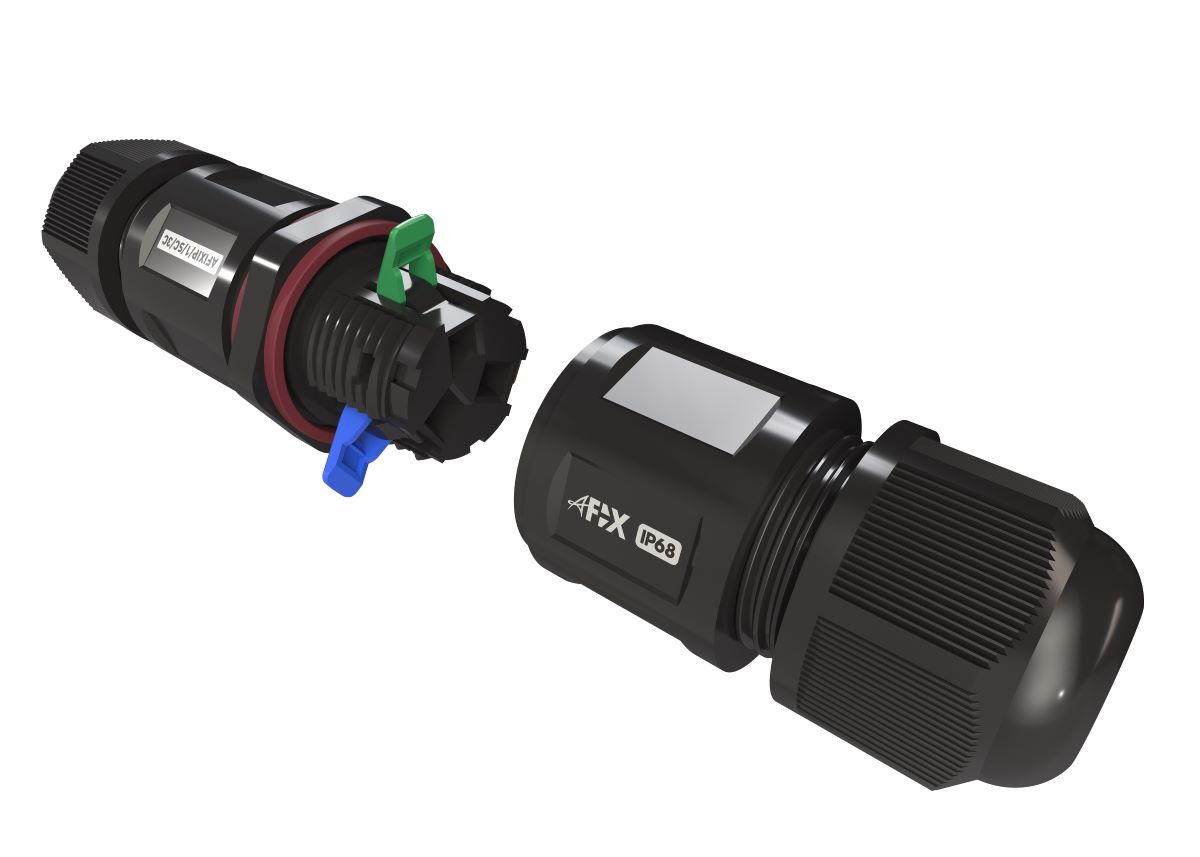
Enabling the quick and efficient fitting of multiple lighting fixtures, Ansell Lighting has unveiled AFIX, a brand-new range of high-quality connectors. Speeding up installation times, the AFIX range incorporates four versatile product types - AFIX Connector, AFIX IP Straight Connector, AFIX IP T-Junction Connector and AFIX IP Junction Box Connector - all of which enable hassle-free connection and enhanced productivity on-site. Designed specifically for indoor use, the AFIX Connector range comprises a choice of three and four pole models with push fit connections and two part click-and-connect design for quick and easy, toolless installation. Cable clamps provide safe and secure connection whilst an innovative, easy access testing port enables instant reading for fixed wire testing. IP20 rated, the AFIX Connector range is ideal for use with recessed downlights and high bay luminaires. Designed for indoor, inground and outdoor use, the AFIX IP Straight Connectors and T-Junction Connectors are IP68 rated for maximum protection against dust ingress and water immersion, making them ideal for demanding external environments and ensuring long-term durability. Suitable for use with bollard, in-ground, spike and floodlights, both connectors are available in three and five core options and facilitate quick and easy installation. Three core models feature lever connections whilst five core models feature screw terminals. Also created for indoor, inground and outdoor use, the AFIX IP Junction Box is available in three different sizes. The small model features two way, three core connections; the medium model features three way, three core connections; and the large model features three way, five core connections. Extremely durable, the small and medium sized junction boxes are IP65 rated ensuring protection against dust and water ingress. The large model is also highly robust with a IP68 rating. All junction boxes feature push fit connections to ensure quick, easy and toolless installation. Mark Abbott, Managing Director at Ansell Lighting, says, “A key focus of our new product innovation and development is to ensure we create solutions that enhance our customer’s experiences and are quick and easy to install. “The AFIX range does exactly that. By offering a comprehensive selection of high-quality, robust connectors, we aim to streamline the process for our customers while delivering unparalleled performance and reliability in lighting solutions." For more from Ansell Lighting, click here.

HellermannTyton introduces new cable tie tensioning tool
Cable management specialist, HellermannTyton, has launched its latest cable tie tensioning tool. With improved performance, usability, and safety, the brand-new EVO9i cable tie gun builds on the strengths of the previous EVO9 model to ensure consistent and reliable cable tie tensioning for customers working across automotive, rail and manufacturing industries. Effortlessly cutting ties from 4.6mm to 13.5mm wide, the EVO9i carries a sleek profile which enables the tool to pass through wires without catching, while an extended nose can easily tension and cut cable ties in confined spaces, even out of sight. The tool also retains many familiar features, such as a lockable switch to prevent accidental changes to the tension setting and HellermannTyton’s patented TLC functionality, eliminating tool kick-back, and reducing stress and strain on the operator’s hand. The EVO9i is a base tool that is also available in HT (High Tension) and SP (Short Span) models. The former is a high-tension version, creating tension of up to 516N, whilst the SP model performs at the same levels as the EVO9i but is designed for smaller hand spans. The tension is controlled with a user-friendly knob, providing 33 settings to fine-tune and tailor the performance to any application. Graeme Morley, Product Manager for HellermannTyton, says, “After seven years of service, the EVO9 family is being replaced by the improved EVO9i range. Building on an extensive heritage, this latest generation is our best release yet. The upgraded mechanisms and increased ergonomics through twin-shot mouldings make the EVO7i and EVO9i families market leaders. “These tools are so intuitive and user-friendly that time savings, safety and quality improvements are guaranteed, even for an operator using it for the first time. Being able to guarantee that every tie is cut flush at the same tension every time is absolutely critical, and these tools are designed to do just that, whilst greatly reducing installation time, and therefore money, for our customers.” The blades and nose pieces are backwards compatible with the EVO9 family, enabling users to easily transfer any spares they have. Like with the smaller EVO7i, the EVO9i family also comes with a 12-month warranty. For more from HellermannTyton, click here.

New 'HandyPAT' device seeks to simplify PAT testing
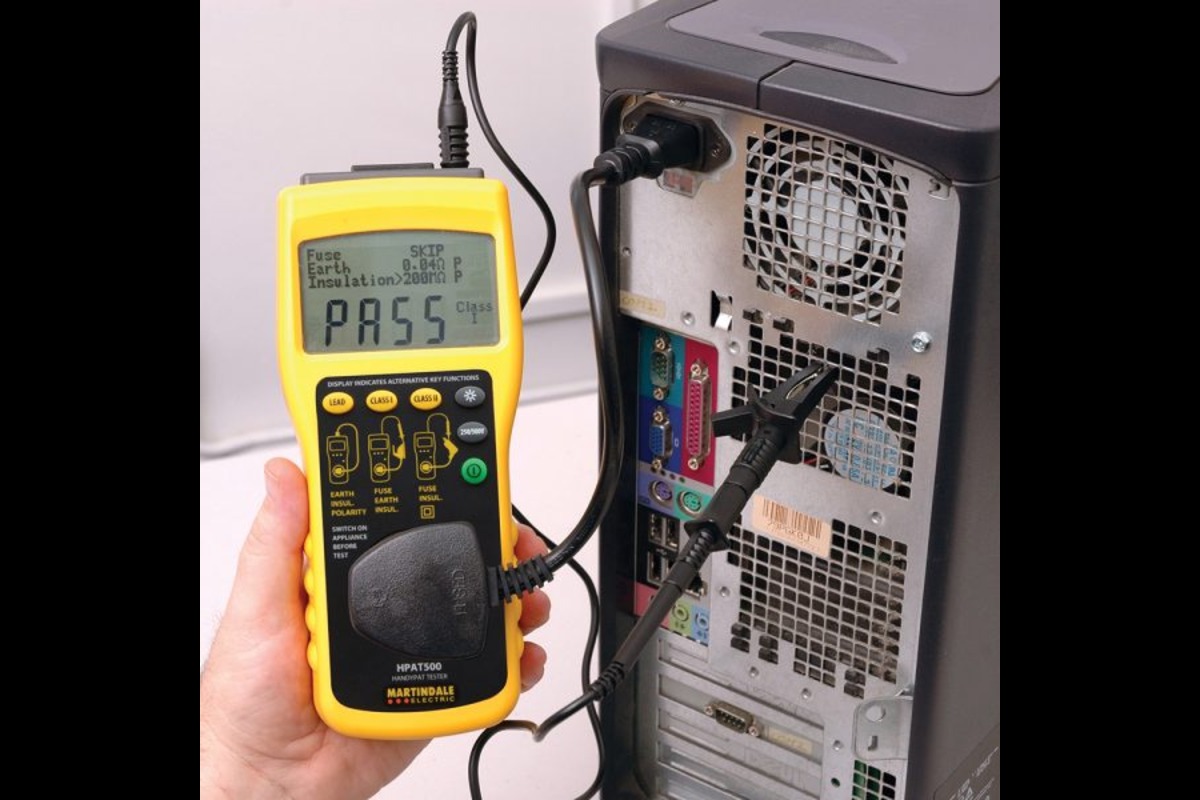
With the Electricity at Work Regulations 1989 requiring that electrical equipment that has the potential to cause injury be maintained in a safe condition, Martindale Electric believes that its compact HPAT500/2 ‘HandyPAT’ is the perfect device for anyone who needs to check that electrical appliances are safe to use. With its one-button test selection and backlit display, the HPAT500/2 is designed to be very easy to operate. A single button press activates either a full Class I, Class II or lead test without any further interaction required by the user, unless a failure is encountered. Users can perform a 500V insulation test quickly and the device enables you to switch between different test voltages of 250V and 500V with ease. This is particularly useful when testing appliances with surge-protected circuits, such as sensitive IT equipment that requires a 250V test. The tester comes with rechargeable batteries and a mains charger for low cost of ownership, and it can even be used whilst recharging to avoid downtime. Its lightweight, portable design makes it ideal for testing in many locations, whether under a desk or at a wall mounted monitor. The display has clear PASS/FAIL indicators and shows actual test values on screen. Simple connection diagrams are permanently shown on the case body, making it easy to start testing straight away. The HPAT500/2 comes with an extension lead adaptor, an earth bond probe with clip and a sturdy 'Test & Go' carry case with a separate pocket for accessories to keep the HandyPAT protected and safe. The device complies with BS EN 61010 safety standards. For more from Martindale Electric, click here.

Vent-Axia ventilation unit tackles condensation in DIY house refit
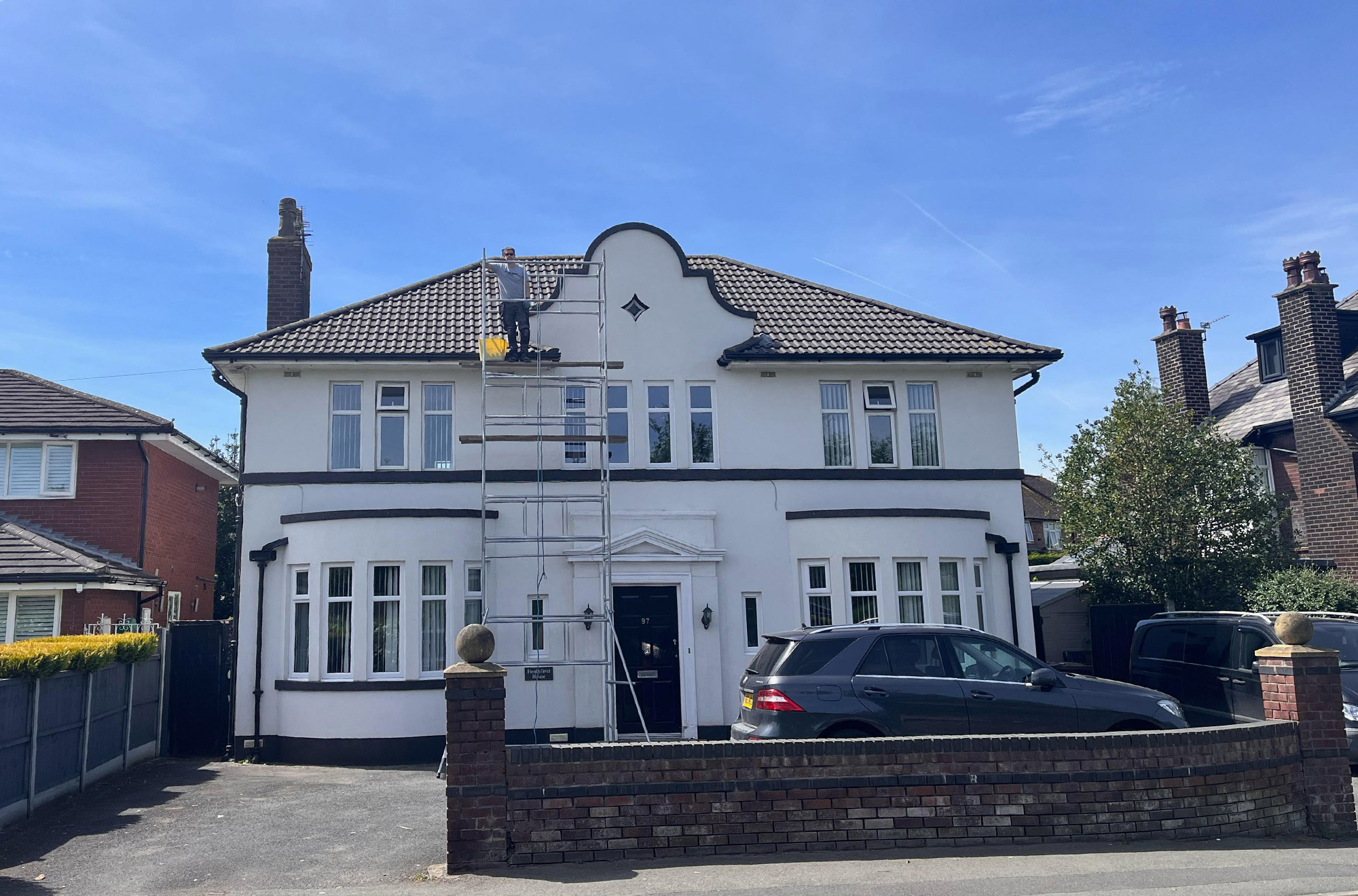
British ventilation manufacturer, Vent-Axia, has solved the problem of condensation and mould in a 1930s home in St Helens, Merseyside, with its PureAir Home Positive Input Ventilation unit (PIV). Rob Ford, a YouTuber who specialises in instructional DIY videos, is refurbishing a four-bedroom, double-fronted house with two large bay windows. It was almost derelict when he bought the house seven years ago and needed a new roof, new rendering, new central heating, rewiring, and every room taken back and replastered. Although the refurbishment was going well, when last winter’s gas price rises went up, Rob reduced the house’s heating. As a result, the house first had a problem with condensation and then black mould. The addition of cavity and roof insulation then made it worse because of a lack of ventilation. The condensation was particularly severe on the home’s landing window, but it was also bad on the windows in all four bedrooms too. To tackle the issue, Rob bought a window vacuum, and although this removed the condensation in the morning, it did not prevent the condensation and mould from returning every day. He therefore undertook research to find an answer to his condensation problem and discovered that PIV was an ideal ventilation solution. A number of his followers on social media also recommended PIV, leading Rob to install the Vent-Axia PureAir Home PIV with integral heater in his loft which soon began to tackle the condensation. Rob explains, “Our windows used to be completely filled with water, but after installing the Vent-Axia PureAir Home PIV, the condensation has gone. After a while I wondered whether the condensation had disappeared just because the weather was warmer, so I turned the unit off for a week and guess what? The condensation came back. I turned the unit back on and it disappeared again, so I’m pretty sure it’s working fantastically well. “As for noise, once we fitted it and we closed the loft hatch up we haven’t noticed any noise coming from the unit. I’ve spoken to a couple of people who also had them fitted and they said the condensation has disappeared, so I think it’s safe to say PIV is the solution to condensation and mould.” Designed to be simple to install, air is drawn into the PureAir Home unit via the loft from outside and incoming air is filtered via the high-grade ISO ePM10 (G4) or optional upgrade ePM2.5 (F7) filters, removing nasty contaminates before gently introducing it into the habitable areas of the property. The diffuser directs the airflow upwards where the incoming air mixes with the warm air that gathers at ceiling height. The airflow can be adjusted to meet the needs of a property. The PureAir Home PIV offers whole house air purification and humidity control. Designed to improve indoor air quality (IAQ) and prevent moisture build-up, the PureAir Home offers a highly effective solution to control condensation and mould, as well as offering high levels of air filtration. The PureAir Home reduces the risk of health issues in the home by improving IAQ and quickly eradicating conditions that lead to mould growth and associated health issues, such as asthma and itchy skin. Providing filtered, tempered air (heater model only) into the home, that is drier than the inside air, the PureAir Home creates an indoor environment where condensation and mould find it hard to exist, benefiting occupants and avoiding the damaging effects on the building. Boasting quick and simple installation, the PIV unit is highly energy efficient, unobtrusive, near silent and helps provide a healthy environment. The unit will continuously ventilate silently in the background whilst in ‘Trickle’ mode. Once the unit automatically senses excess heat being lost into the loft, the airflow will increase to ‘Energy Recovery’ mode to recover heat that would otherwise be lost through the roof. Rob Ford is a cabinet maker, qualified joiner, DIY expert and YouTuber. Rob started making instructional DIY videos of his home’s refurbishment when he worked in a college and the students encouraged him to make them. You can watch his video on installing the PIV and reviewing its performance below. https://youtu.be/06FvI9rVjOw For more from Vent-Axia, click here.

The cost of cabling and the case for future-proofing
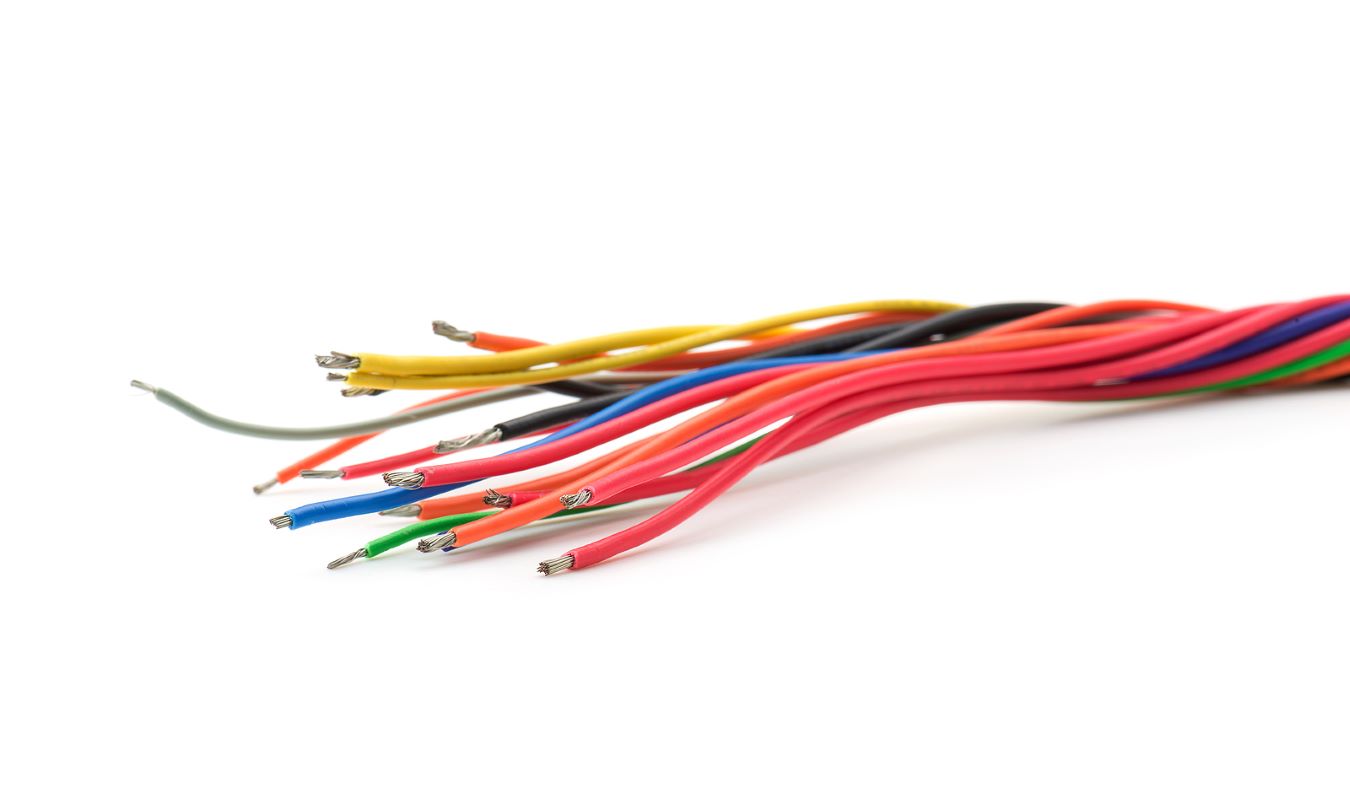
When installing cabling into new properties, renovations, or retrofits, it can be tempting to save money and go for cheaper options that do the job in the present day. But when the needs of modern living are constantly changing, will they still do the job for the foreseeable future? Do the reduced initial costs outweigh those of having to redo the job later down the line? Christopher Kay, Operations Manager at Custom Designed Cables, explains the benefits of future-proofing: “Balancing costs and forward planning is a struggle many in the construction industry know all too well, something that’s certainly true for the world of cabling. Take ethernet cables, for example. Cheaper options still do the job just fine, but if you think about how much the demands for internet speeds as well as the speeds available have increased over a relatively short period, it becomes a quick waiting game until they’ll need to be updated. “Keeping on the topic of ethernet cables, you’ve got your two main options of Cat5e and Cat6. Cat6 cables generally set you back around 10%-20% more per cable length than Cat5e, but for this increase in cost you get a cable that is 10 times faster, and able to carry up to 10 Gigabits per second compared to the Cat 5e’s 1 Gbps and having twice the frequency. “While 1Gpbs would’ve once seemed unnecessary for home use, the ever-increasing amount of devices that rely on our home internet, as well as more people working from home has even these once-futuristic speeds looking like they might not be enough - and the need for faster speeds is only worse in offices. Laptops, virtual meetings, and coworking apps all constantly eat up bandwidth, and the demand isn’t exactly going to slow anytime soon. If you’re having new cables fitted and go for the Cat5e option, you’re probably going to have to deal with some tenant complaints down the line. “Cat6 cables meanwhile prevent these issues for a far longer period, future-proofing the building to a much greater extent. Yes, you’ll have those higher initial costs to contend with, but is saving 20% worth having to consider a full refit after a few years? We’re now up to Cat8 cables which are currently only really needed by buildings like data centres which deal with huge amounts of information transfer; however, this was how people once thought of earlier cables which are now being used in homes across the country. A refit of these cables is always going to be needed sometime in the future as nothing can stay fit for purpose forever, however, this is one instance where sooner rather than later isn’t better.”

Spelsberg introduces new Greenline junction box
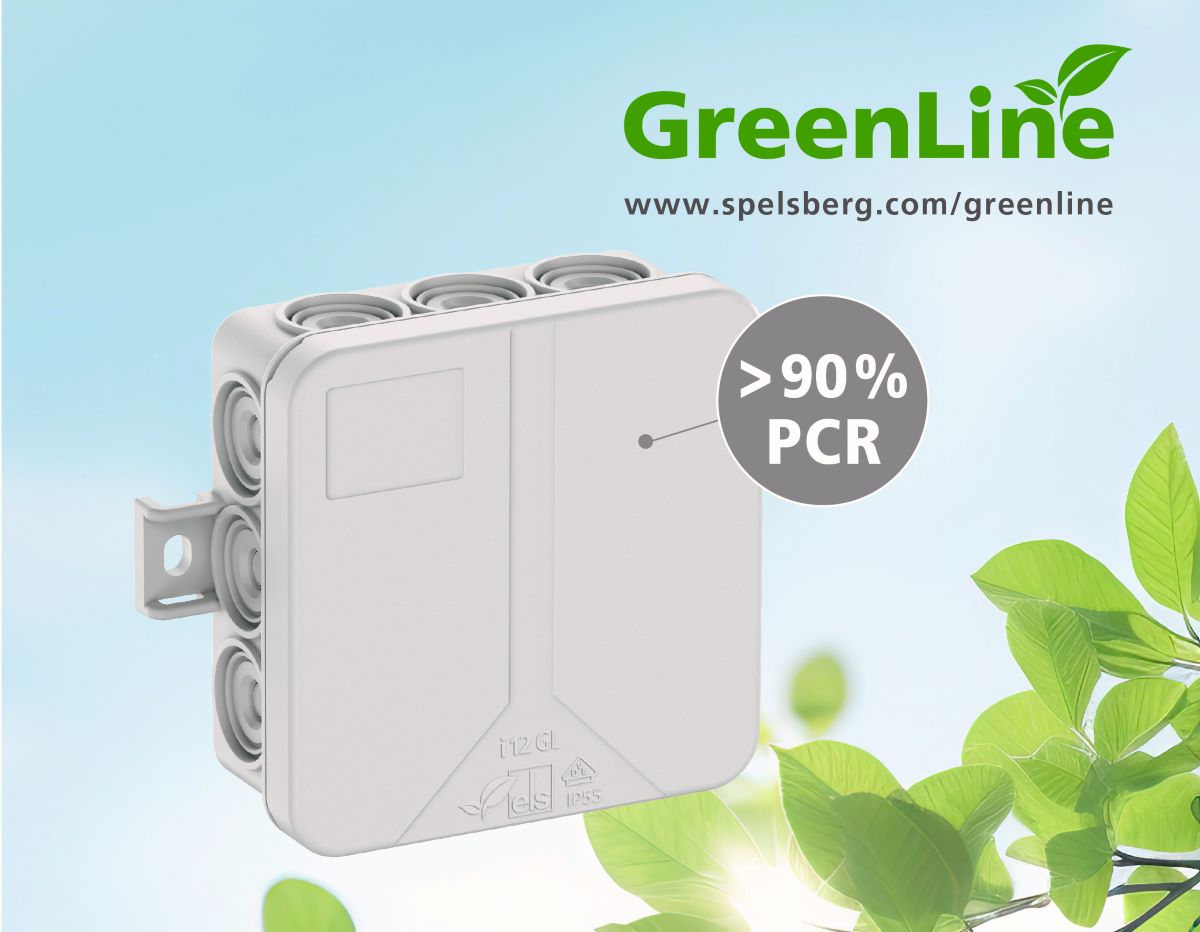
Spelsberg, a provider of electrical installation and enclosure technology, has introduced a new i 12- L GreenLine junction box, which is manufactured from at least 90% recycled plastic. The i 12-L GreenLine offers the same functionality as its conventional counterpart, but with a body and lid that are primarily manufactured from post-consumer recyclate (PCR). This use of recycled materials doesn’t just reduce the amount of new plastic used in the production process, but also decreases the junction box’s carbon footprint. By using these recyclates, Spelsberg has reduced the amount of CO2 emissions associated with the junction box by 40%. Importantly, a reduction in both new materials and carbon emissions doesn’t come with any reduction in performance, the company says. Both the conventional and GreenLine versions of the i 12-L share the same dimensions and are designed for indoor use. They also both meet the IP55 and IK07 standards for protection against contact and external elements, are fully VDE-certified, and feature self-sealing insertion membranes and external fixing lugs. By using a standard, trusted design, Spelsberg has ensured that end-users can easily slot the GreenLine junction box into their existing workflow. Even the installation process remains identical to conventional junction boxes. Chris Lloyd, Spelsberg UK Managing Director, comments, "At Spelsberg, we are dedicated to not only advancing technological innovation, but also ensuring that our products support sustainable practices. The i 12-L GreenLine junction box is a prime example of this commitment, demonstrating that environmental responsibility can operate hand-in-hand with superior performance. “This product underscores our promise to provide our customers with high-quality, reliable solutions that meet today’s environmental challenges without compromising functionality. We are proud to lead the way in sustainable manufacturing and set new standards for the electrical industry." Spelsberg tells us that its commitment to sustainability doesn’t end with the junction box itself. The company has also worked to ensure that the materials used to ship and secure the GreenLine series are environmentally friendly. The packaging uses at least 40% post-industrial recyclate, while the packaging labels are crafted from 95% sugar cane fibre and 5% hemp and linen - all renewable materials. The corrugated cardboard boxes used for shipping are produced without bleaching, which conserves energy and reduces resource consumption even further. For more from Spelsberg, click here.