2 November 2026
Product of the Month: Amari Floodlight range by Aurora Lighting
 
11 November 2026
Energy, AI and smart buildings: register now for EMEX 2026
 
11 November 2026
Solar and batteries could cut electricity costs by 40%, data finds
 
11 November 2026
EIC confirmed as ECN Awards 2026 charity partner
 
11 November 2026
Acrospire to support Green Frog's European expansion
 

Latest News


MEGAMAN to showcase fixture range at first visit to CEF Live
MEGAMAN will be exhibiting for the first time at this year’s CEF Live, due to be held at the NEC in Birmingham on the 8-9 June. Building on the success of the Performa and Essentials fixture range launch, the Megaman team will be looking to connect with the CEF customer base and introduce its flexible fixture options. The Performa range is a selection of adaptable, high-performance fixture solutions, combining quality materials and value-added features such as motion sensors, emergency compatibility, dual beam (DBT) and colour change technology (CCT). Meanwhile, the Essentials range provides cost-effective staple products that promote reliability over innovation, making them ideal options to keep on hand in the back of the van. There for the day-to-day, Essentials deliver in terms of cost and results for both retrofit and new-build installations. In addition, Megaman will be sharing details of the INFINITE smart lighting system that is easy to set up and operate via Bluetooth from a phone or tablet. Designed for both residential and commercial spaces, it allows for the wireless control of both new and pre-existing fixtures. “We’re really looking forward to CEF Live and the chance to chat one-on-one with visitors for the first time,” comments Micaela Abbot, Sales Director at Megaman. “Our product portfolio has evolved significantly and so has our business with CEF and its customers. As such we’re keen to introduce visitors to the world of Megaman fixtures and demonstrate that our fixtures can provide the ideal solution no matter the site or budget requirements.”

BEAMA launches Future Homes Standard Report 
The government’s commitment to regulate all new residential developments to be net zero ready from 2025 is fast approaching and has laid down a clear direction of travel for building design and construction. Through the second stage of its Future Homes Standard consultation – due to launch later this year – there will be a requirement to future proof all new dwellings with low carbon heating, high performing fabric specification and a complementary ventilation strategy which will focus on the assured health and well-being of occupants. BEAMA’s Future Homes Standard Phase 1 Impact Report lays out a framework to prepare for the changes coming through from 2025, focusing on a range of technology options best suited to a variety of dwelling and occupancy profiles. The report acknowledges that the majority of technology solutions already exist today and therefore focuses on the specific enablers that will support their inclusion within the homes of the future. Subjects such as design, installation and commissioning competency; the necessity to undertake a steep evolution in SAP’s building modelling capability; and the very real challenge of preparing consumers for a new way of living, are all covered within the report. Commenting on the launch of the report, BEAMA CEO, Dr Howard Porter, says, “BEAMA has been a long-term supporter of innovation and progressive building standards. Through this report we are seeking to open a path towards collaborative discussion with, not only government, but also the wider construction industry. We share a common objective and we are very much looking forward to being a leading stakeholder in the preparation for the start of an exciting new era for energy efficiency, renewable solutions and connected flexibility infrastructure from 2025. Our efforts will not stop at today’s publication. This is the first phase of a two-step report focusing on new build compliance, with the second half of the report planned when we can complete BETA SAP 11 modelling. We have also recently become a Future Homes Hub partner, where we will be seeking to undertake a range of ‘task and finish’ projects in the coming two years to facilitate the new Standard’s success”. Welcoming the report, Ed Lockhart CEO of the Future Homes Hub, says, “BEAMA’s ‘Network to Emitter Impact Report’ provides an excellent analysis of the technology options for meeting the Future Homes Standard. It builds on the knowledge pooled through the Future Homes Standard Task Group’s Ready for Zero report. We are looking forward to working ever more closely with BEAMA, bringing the collective expertise of manufacturers and suppliers together with that of homebuilders on the journey to net zero. As we do so we must all keep a laser focus on building high quality homes and places that people love living in”.

Non-corrosive battens from Knightsbridge provide performance
The new Torlan suite of LED battens from Knightsbridge provide a non-corrosive, energy efficient and high performance lighting solution for a wide range of applications, ranging from residential to agricultural and industrial. As the heart of the Torlan collection is TorlanComm. Suitable for indoor and outdoor commercial applications, TorlanComm comes in two versions - CCT adjustable and Digital Addressable Lightning Interface (DALI) CCT - three colour temperatures and a choice of wattages. Beyond ‘standard,’ self-test emergency, microwave and microwave self-test emergency options are also available. Wattages vary from 26-62W, outputs are from 3955-9025lm, and colour temperatures offered are 3000K (warm white), 4000K (cool white) and 5700K (daylight). Bodies and diffusers are impact-resistant, non-corrosive polycarbonate with stainless steel clips (which ensure longevity), and with ceiling and end conduit fixings. The DALI version has built-in control gear for intelligent control integration. A choice of accessories permit installation onto BESA conduit boxes or suspension hanging. TorlanComm is IP65 and IK08 rated. Either side of the TorlanComm sit the TorlanEco and the TorlanPro. TorlanEco is a cost-effective IP65 and IK06 rated budget LED batten suitable for indoor and outdoor applications in residential and commercial premises. With tool-free cable termination and fast-fix fittings, it is easy to install on walls or ceilings, and comes in three lengths, three wattages (depending on length) and two colour temperatures - 4000K (cool white) and 5700K (daylight). Designed for the toughest of environments such as farms and other extreme applications that demand robust, dust and watertight, impact-resistant lighting, the heavy-duty TorlanPro is a simple but effective LED batten offering a contractor-friendly fast-fit electrical connection without opening the luminaire, easy operation and high levels of illumination. With a single power feed, low flicker and of acrylic and nylon construction, the TorlanPro comes in cool white only, and delivers 6400lm and 7175lm at 45W and 50W respectively. For suspension use only, TorlanPro is also IP69K waterproof as standard and high impact-resistant to IK08.

Recolight appoints new Operations Manager
Recolight has announced the promotion of Cindi Novell to the role of Operations and Compliance Manager. Cindi has over eight years’ experience working closely with former operations manager, Amel Gharbi, whom she replaces. Commenting on her appointment, Cindi says, “I am delighted to be joining Recolight at an exciting time, as we drive to net zero and a more sustainable, circular, and efficient service.” Announcing the news, Recolight Chief Executive, Nigel Harvey says, “With Cindi’s wealth of experience working in the operations team, she was a natural choice for promotion. Cindi will play an integral role in further enhancing the efficiency and value of our WEEE collection service.”

Screwfix Sprint delivers trade essentials to site in 60 minutes or less
Screwfix has launched a national campaign for its 60-minute delivery service, Screwfix Sprint. Sprint allows customers to have products delivered to home or site in 60 minutes or less, without breaking their stride. The trade demand quick and easy access to a broad range of competitively priced products, and Screwfix Sprint provides another option for customers to get their job done quickly, affordably and right first time. The campaign, signed off with the line ‘Don’t stop. Sprint.’, brings Sprint to life through a tv advert showing a tradesperson ordering on the Screwfix app, then dancing through the site with his team to the tune of ‘Break My Stride’ by Matthew Wilder. The classic track is an 80’s earworm, deliberately chosen to help plant the campaign into construction sites all over the country. Together with the dance moves, it’s also the hook of Screwfix’s social media influencer campaign, designed to amplify the message and underline the authenticity of the brand. Jack Wallace, Marketing Director at Screwfix, comments, “With Sprint, Screwfix is meeting the growing demand from UK tradespeople for affordable, high-quality products in their hands quickly. “For busy tradespeople, time is literally money and finding the time to pick up an essential and often unplanned item is an inconvenience that can also have an impact on project schedules. With Sprint available in over 320 Screwfix stores across the UK and just a £5 delivery charge, customers no longer need to sit in traffic when the unexpected happens, they can have it delivered in 60 minutes or less.” Over 30,000 Screwfix customers have already utilised Sprint’s convenience, with up to 80% being tradespeople. The service has become embedded into the way some customers shop with the omni-channel retailer. A Screwfix Sprint customer says, “Used this service to get a few bits that I had run out of. Saved me from having to down tools and go to the store. It was delivered within 30 minutes of ordering. Really handy if you can’t secure your workplace and need some bits and helps with workflow. I’ll definitely be using this service again.” In 2022, Sprint was awarded Best Customer Experience at the Retail Week Awards. The judges described Screwfix Sprint as ‘genius’, underlining how putting customers first led Screwfix to create a service that really makes life easier for busy tradespeople. To benefit from Screwfix Sprint convenience, download the Screwfix app or visit the Screwfix website for more information.

Cellforce chooses Siemens Xcelerator to scale EV battery production
Cellforce and Siemens have concluded a memorandum of understanding with the aim to enter a strategic partnership. Cellforce develops and manufactures high performance Li-ion battery cells for the automotive market by utilising advanced battery materials and production technologies. Siemens will become Cellforce’s preferred supplier in automation and digitalisation technology, speeding up the completion of the Cellforce gigafactory in Reutlingen, Germany. Both companies will join forces to enhance battery design, manufacturing processes and building operations, from production design, planning and simulation, to the automation of the entire production process. Both companies will also work together to create a sustainable, comfortable and safe working environment with Siemens building management technology and energy performance services. Siemens will provide a broad range of solutions from the Siemens Xcelerator portfolio, including Product Lifecycle Management (PLM), Manufacturing Execution Systems (MES), industrial edge computing, and tools for IT/OT connectivity, fire safety and security, measurement and control technologies to enhance energy optimisation for the carbon net zero battery cell factory. Siemens’ end-to-end solutions will support Cellforce to produce high performance batteries at scale, while meeting throughput, cost, and sustainability targets. “End-to-end digitalisation of design and production is key for a commercially successful battery cell production with the lowest CO2 footprint in Germany,” says Dr. Markus Gräf, COO of Cellforce.

Safer and Smarter Home: a new consumer guide
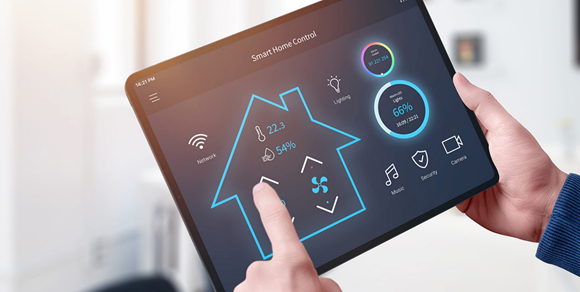
Leading companies in the smart home technology sector have created their second in a series of guides, helping consumers in the UK when buying and using smart technology in their homes. The new guide builds on its predecessor, Your Guide to a Safer, Smarter Home, to highlight to consumers examples of the benefits of smart home devices and to dispel some common myths that consumers may have. It was produced and published by The Smart Technology Product Safety Stakeholder Group, which was established by Electrical Safety First and DLA Piper in March 2019 to discuss topics that are relevant to product safety in the IoT or smart technology sector, and to develop and promote industry best practice. It is a multi-lateral group comprising a broad range of businesses and organisations operating in this space at all points in the supply chain. “Many people would welcome the benefits from making their home ‘smarter’, but there is so much misinformation about smart products and how to get them installed correctly,” explains Martyn Allen, Technical Director at Electrical Safety First and co-chair of the group. “This new guide provides information and guidance, and busts a few of the common myths that may exist when buying and using smart home devices.” Michiko Jo, another Co-Chair of the group, comments, “This ultimately will help consumers in the UK make better and more confident decisions when planning their smart home.” Mark Dewar, Partner at DLA Piper and Chair of the group’s Downstream sub-group, adds, “The smart home environment is becoming ever increasingly prevalent to the point of becoming the norm, for every day domestic devices and installations are becoming more complex. Whilst the first guide focused on plug-and-play smart devices used in the home, this guide covers smart and connected devices or systems that often need a qualified installer to design, build and to set it up properly.” The guide is available now and is free to download here.

The issues surrounding fluorescent lighting
By Anthony Parkinson, Technical Compliance Manager, Ansell Lighting Led by the EU’s Restriction of Hazardous Substances (RoHS) Directive, the production of fluorescent lamps is set to be banned in the UK from 25 August 2023. The directive, which aims to restrict the use of hazardous materials, rules that mercury can no longer be used in lamps as well as other types of electrical and electronic equipment due to the potential risks it poses if released into the environment. Only HPD lamps and special purpose lamps are exempt from the ban and will be produced for another three to five years. A powerful, developmental neurotoxin, mercury can cause significant health and environmental problems. Whilst perfectly safe to use in lighting sources when undamaged, if a fluorescent lamp breaks or is disposed of improperly, the mercury it contains can contaminate its surroundings, posing a risk to human health. A familiar item in homes, offices, schools and hospitals, fluorescent lighting was originally created in the 1930’s and became a popular source of lighting due to its energy efficient properties when compared with incandescent and halogen alternatives. However, as technology has improved and LEDs introduced, fluorescent lighting has naturally seen its popularity dwindle with property owners and managers opting for lighting solutions that are cheaper to operate, kinder to the environment and easier to dispose of. The benefits of LED lighting vs fluorescent lamps are well publicised. Being up to 80% more energy efficient, LED is cheaper to operate and far more environmentally friendly than its predecessor. LEDs also offer heightened controllability, allowing different colour temperatures and intensities to be set which in turn impact energy use. They also have a significantly lengthier service life and so offer far better value for money over their lifespan. With such a significant change to legislation on the horizon, now is the ideal time to discuss lighting system upgrades to LED with customers. Whilst wholesalers will continue to stock CFL, T5 and T8 lamps until supplies are exhausted, it is fair to assume that their availability will undoubtedly dwindle as time moves on, increasing purchase prices and ongoing maintenance costs in turn. Many customers will be unaware of the legislation that is due to come into play and so sufficient forewarning will support them to take the decision to upgrade lighting systems before these factors become a problem. This, coupled with current economic pressures and soaring energy costs, means the case for switching to more energy efficient technologies has never been clearer. That said, the complete upgrade of a lighting system may seem like a costly expense to many, so consumers are generally seeking to simply replace a fluorescent lamp with an LED equivalent in its current fitting. Whilst possible, this comes with potential safety risks and is something installers may choose to discourage. In some cases, once fitted, existing lighting systems may require adaptation to ensure that they are operating correctly with an LED lamp. This will require further costly evaluation and testing and can prove to be unsafe. LED replacement tubes are also up to 30% less energy efficient than a complete LED installation so the cost savings and environmental benefits are much reduced. Customers deliberating over whether to make the change to LED should be made aware that the initial outlay for a new lighting system should be recovered in just two to three years alone, from savings incurred on energy bills. With the writing on the wall for fluorescent lighting, its clear to see that the RoHS directive will undoubtedly make a positive, lasting change to the environment and our pockets. Installers have a real opportunity to help to drive this change and to educate customers on the adjustments that need to be made to accommodate it.

IET and BSI publish corrigendum to BS 7671:2018
The Institution of Engineering and Technology (IET) and BSI have announced the release of a corrigendum to BS 7671:2018+A2:2022. The corrigendum will make changes to five areas of BS 7671, and are effective from 15 May 2023. It will be available for free download from the IET and BSI. Areas of change include: Regulation 422.2 has been amended to clarify the scope of the provision. Indent (ii) of regulation 443.4.1 has been removed. The term safety service, formerly included in regulation 443.4.1 (ii), encompassed a wide range of systems. The provision, therefore, had unintended consequences for improvements to fire safety systems within installations. Table 443.2 and the note to regulation 534.4.1.1 have been amended to remove examples of equipment. Regulation 701.1 has been amended to remove the reference to birthing pools. A new regulation, 710.422.2.201, has been included in order to modify requirements in regulation group 422.2 for protected escape routes in healthcare facilities. Mark Coles, Head of Technical Regulations at the IET, says, “The IET is the authority for electrical installations in the UK and ensures that the National Wiring Regulations Committee carefully considers all necessary updates to the regulations to ensure they best meet the needs of the industry. This corrigendum is intended to correct misunderstandings, remove perceived barriers and ensure that peoples safety comes first.” Dan Palmer, Associate Director, Committees, at BSI, says, “BSI is proud of our longstanding relationship with the IET to support high standards of safety for the benefit of all. We have been partnering with them on the Wiring Regulations for more than 30 years and recognise the importance of keeping them updated.”

Safety warning to builders after live cables left hanging around
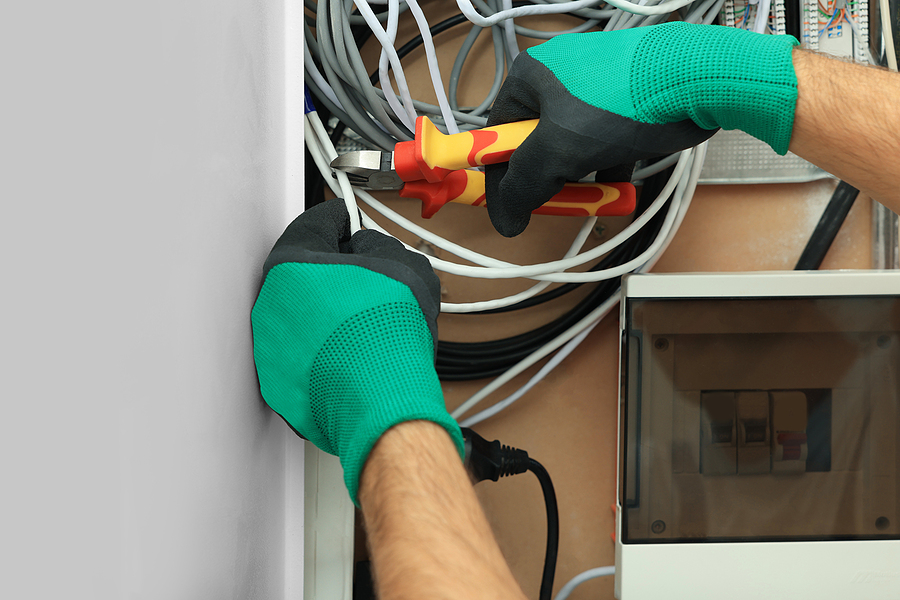
Cutting through, or moving live electricity cables is a job for the experts - that’s the warning from an electricity firm after its engineers discovered live cables dumped in a wheelie bin. UK Power Networks’ teams have seen an increase in the number of live electric cables being left in a dangerous state, for example hanging from a fence, tacked onto a piece of wood, and in a recent case live cabling was found dumped in a wheelie bin where it could kill someone. The company has warned builders, demolition workers and homeowners to take care and call their network distributor if they want cables moved and a site survey will then be undertaken. A range of free safety advice is available, including reminders to always plan work, use cable avoidance tools and employ professional electricians to complete tasks. Last year the number of incidents of interfering with the electricity network tripled. Between April 2022 and March this year there have been over 1,000 instances of interference across London, the east and south east of England. Power workers are now finding unsafe sites on a regular basis. Electricity surveyor Chris Slattery attends properties where customers have requested alterations to their electricity service, a new connection or an upgrade. He says, “A lot of the jobs have to be reported as dangerous or unsafe because a customer has had a power cable moved. Many customers say they didn’t know the live cables couldn’t be moved by anyone, others say they knew someone who would do it cheaply." “I have seen live electricity supplies left hanging off a wall, left on the floor or even left in a wheelie bin! Also a lot of sites we are asked to attend are unsafe because they are a complete mess underfoot, and we have to abort our visit until it is safe to set foot on the site.” Education and engagement advisor Ros Forbes regularly speaks at industry events to remind site workers to work safely. She says, “The sort of situations that have been discovered, have the potential to cause life changing injuries - or even death. “A lot of these sites are relatively open to the public so that can result in a danger, not just to the builders on the job and tradespeople who follow them on to the site, but also to members of the public, as well as our own staff.” “Building tradespeople are a key target for us in order to communicate the safety message,” says Ros. “In their eagerness to crack on with the job, some builders are putting themselves and others at considerable risk, and every accident is wholly avoidable.”