2 November 2026
Product of the Month: Amari Floodlight range by Aurora Lighting
 
11 November 2026
Energy, AI and smart buildings: register now for EMEX 2026
 
11 November 2026
Solar and batteries could cut electricity costs by 40%, data finds
 
11 November 2026
EIC confirmed as ECN Awards 2026 charity partner
 
11 November 2026
Acrospire to support Green Frog's European expansion
 

Latest News


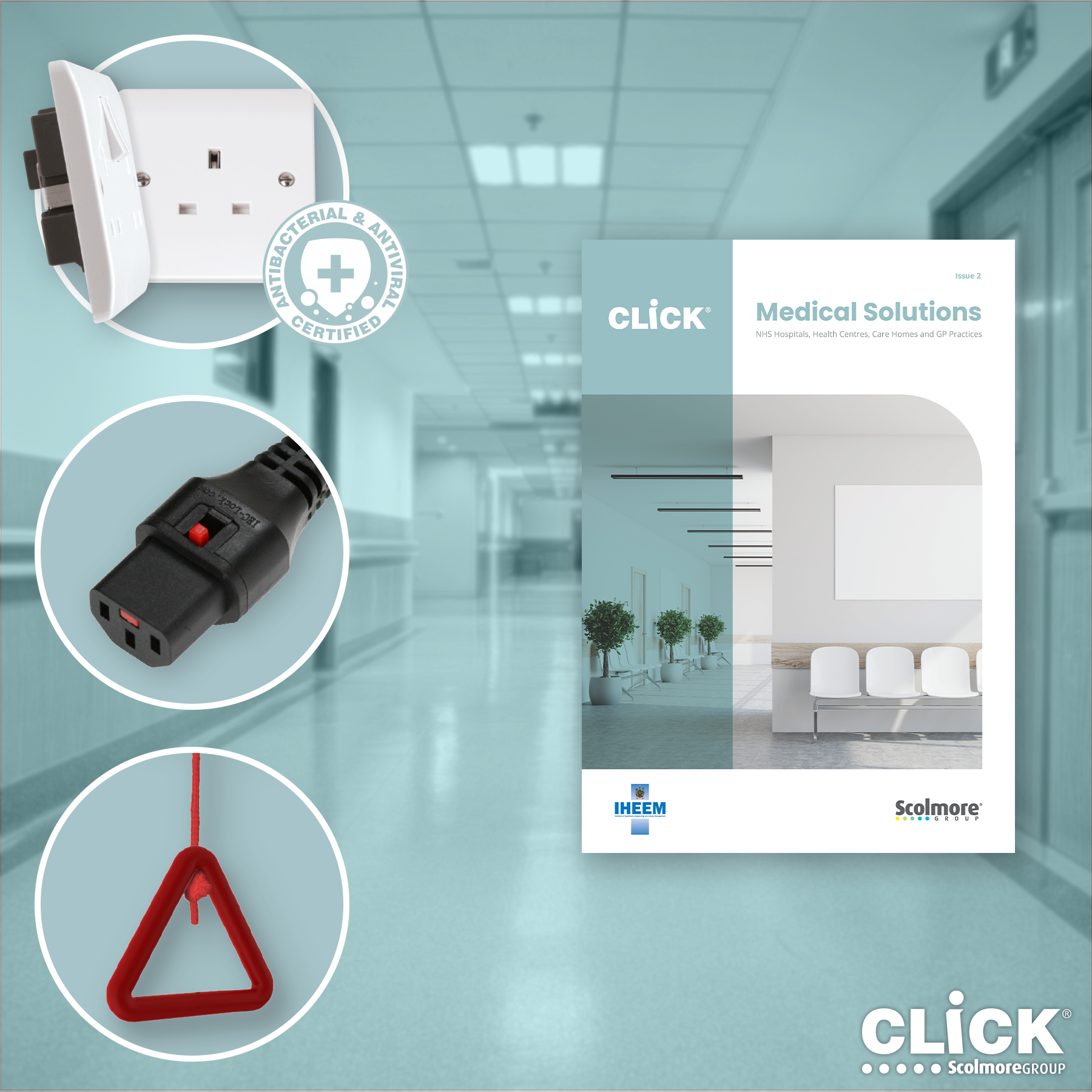
Scolmore launches new Medical Solutions brochure
Scolmore has released an updated version of its Medical Solutions brochure, which incorporates the very latest additions to its growing range of products dedicated to healthcare settings. The specialist products that make up the Scolmore Medical Solutions range are from the Mode wiring accessories collection. All Mode products are manufactured using urea formaldehyde, which has similar inherent properties to antimicrobial additives that inhibit the growth of infectious diseases. All products independently tested achieved a 99.99% kill-off rate across all four types of strains of bacteria - MRSA, E-Coli, Salmonella, Klebsiella Pneumonia and enveloped viruses. Mode plates have also been independently tested and have shown to have anti-viral properties against enveloped and non-enveloped viruses. After a contact period of four hours, Mode was shown to have a 99.99% kill-off rate against enveloped viruses and a 92% kill-off rate against non-enveloped viruses. It has also achieved 99.98% kill-off rate against influenza A(H1N1) after a 24-hour period. The full Mode antimicrobial and antiviral Medical Solutions range currently comprises switches and sockets; blue ‘Medical Equipment Only’ sockets, red and green outboard rocker switched socket outlets, key lockable switches and sockets, locating sockets, wide rocker switches, and the Part M range of visually contrasting wiring accessories. Scolmore recently added EBBs (Equipotential Bonding Busbars) to its Click wiring accessories range.  EBBs play a major role in ensuring patient and clinician safety. In accordance with the Requirements for Electrical Installations BS 7671:2018 AMD2 Section 710 (Medical Locations) and the Health Technical Memorandum HTM06 01:2017, all Group 1 and 2 Medical Locations are to have an Equipotential Bonding Busbar (EBB) and associated supplementary protective equipotential bonding installed. Scolmore’s 20-page Medical Solutions brochure brings together this growing range of specialist products. It provides a comprehensive guide for those contractors, specifiers and designers working on a range of healthcare related projects, including NHS hospitals, health centres, care homes and GP practices.

Gripple appoints new MD and board directors
Gripple has appointed a new Managing Director for the UK and Ireland, and new board directors. Kevin St Clair takes up the role of UK Managing Director, following 21 years at Gripple, Charlotte Hill will replace Kevin in his former role as Operations Director and Sam Ryall, joins the UK board as Supply Chain Director. Kevin started his career at Gripple in 2002 as the company’s first quality manager, responsible for implementing ISO9001 and ISO14001 Certification, before moving into a broader quality and supply chain management role and later becoming Site Manager at Gripple’s Riverside Works facility in Sheffield. Five years ago, Kevin was promoted to Group Operations Director, where he had full operational responsibility for Gripple’s six UK manufacturing sites. Kevin explains, “I am delighted to take up my new role at Gripple and to be working with a fantastic Board of Directors. My focus will be on delivering strong results in the UK, as well as continuing to improve our global service and support. “Our markets and products are constantly evolving, as is our strategy to identify challenges that customers face and to develop innovative solutions, offering environmental, time and user-friendly benefits. “Diversification remains a key part of our business, as we launch innovative solutions into the solar, utilities and industrial services markets. This is an exciting time for our business as we continue to target 20% of total sales from new products released in the last five years, with innovation, sustainability and greater efficiency as top priorities.” Charlotte Hill and Sam Ryall have both being promoted from their roles as operations manager and supply chain manager, respectively and join the Gripple UK and Ireland board. The board also comprises Sales Director - Chris Bugg, Head of Digital Transformation - Darren Cork, People and Culture Director - Katrina Ritchie, and Finance Director - Clare Legg. Charlotte joined Gripple eight years ago as product manager and during this time has gained significant knowledge of the business, through her work in new product introduction, continuous improvement, engineering management and most recently as operations manager for Gripple’s Hellaby, Hawke Street and Riverside Works facilities. Charlotte has a BEng in Mechanical Engineering and an MBA in Manufacturing Strategy. Sam Ryall joined Gripple four years ago from B Braun Medical in Sheffield, where she had worked for 18 years, most recently in the role of purchasing manager. Since she joined Gripple, Sam has developed an excellent supply chain team and has played a key role in guiding Gripple through unprecedented supply chain challenges, including Brexit, COVID-19 and the Ukraine war. Kevin explains. “Charlotte and Sam bring great qualities to board. Charlotte’s performance over the years leaves me with no doubt that she will continue to deliver excellent results and strengthen the operations team further. Sam has demonstrated strong leadership skills and has proven to be a real team player, with great drive and enthusiasm, facing challenges head-on and finding solutions that have taken our business forward. Kevin will continue to report to Ed Stubbs, who as Group Managing Director will dedicate more time to the development of the Gripple group worldwide - focusing on driving new product development and overseeing the creation of new operational facilities at the company’s newest Don Road facility in Sheffield.

Electric Car Count: March 2023
In March, electric cars accounted for 16.21% of all new car registrations in the UK, as the exponential growth in EV uptake seen in recent years begins to stabilise. While demand for electric vehicles is still high, it is likely that slower rates of growth will continue until the ZEV mandate is implemented in 2024, and supply is able to consistently match consumer demand. Ben Nelmes, Chief Executive Officer at New AutoMotive, says, “March was a strong month for electric car sales, but the share of car sales that are fully electric is roughly the same as March last year. “Consumer demand is strong, and the government needs to boost the supply of electric cars to the UK to enable more people to go electric. “The government’s latest proposals for a California-style Zero Emissions Vehicle mandate are an important signal that the UK government is committed to its ambition to end the sale of petrol and diesel cars by 2035, and will make it cheaper and easier for British drivers to go electric.” UK market overview The electric vehicle segment of British new car sales was solid at 16.21% in March, and while the UK can still confidently expect EVs to hit the initial 20% market share target laid out in the most recent ZEV Mandate consultation, it may be that more exponential growth doesn’t occur until the mandate is implemented in 2024. The market share of EVs last month was roughly the same market share as in March 2022, and a sign that the exponential growth in electric registrations seen over the past few years is beginning to stabilise. The electric share of the market over 2023 is still significantly higher than it was in 2019, 2020, and 2021, but is moving at a trajectory similar to that of 2022. The implementation of the ZEV mandate for 2024 will be key to reigniting growth in electric car sales. Fiona Howarth, CEO of Octopus Electric Vehicles, says, “Demand for EVs on salary sacrifice - where cycle-to-work meets EVs - has taken off in the UK. We have more enquiries and orders month-on-month as people wake up to the benefits of going electric. With the tax benefits and low cost charging, EVs are now cheaper to run than their gas guzzling equivalents. “The MG 4 has taken the market by storm, so it’s no surprise to see it in pole position with our customers. Its range, size and competitive price makes it the obvious choice for families looking to switch over to green driving. “Audi is potentially the biggest winner we’ve seen this quarter. The newly revamped Q8 is dominating the premium SUV market with real world range (over 300 miles) that is blowing competitors out of the water. “It’s over to the government to keep the EV revolution fully charged. The recently published ZEV mandate and ongoing commitment to a great charging network will ensure manufacturers know that the UK no longer wants dirty cars. More models at higher volumes will drive more demand, lower costs and cleaner air for all." Regional highlights Oxfordshire continues its regular dominance of this table, with an impressive 44% of all cars registered in the area in March being electric. Wimbledon was a distant second, at 31%, with the Bristol DVLA region coming in third, with 24%. New AutoMotive tracks regional registrations using a three-month rolling average, which masks big variations in the EV market share from month to month. The race for EV market share Tesla dominated the electric segment of the British new car market in March, as they usually do in a month where they make deliveries. Despite recent turbulence around the company, it still has a strong grip on the UK’s electric car market, with its market share (23.49%) almost double that of MG who came in at second place, claiming 10.92% of the market. Outside of the top two, European manufacturers dominated the rest of this table, collectively claiming 30% of the market. The brands that are quickest to electrify In a month where the EU committed to exempt cars that run on e-fuels from regulation that will see only zero-tailpipe emissions cars to be sold from 2035 onwards, European manufacturers dominated this table. Seven of the top 10 marques on this table are based in Europe - including household names like Porsche, Volvo, BMW, and Audi. This dominance highlights the growing importance of electric cars to the future of European car exports, and raises serious questions about the decision to provide an exemption for e-fuels. With more Chinese EV marques looking to begin exporting their vehicles over the next 12 months, competition for a share of the electric segment of markets around the world will become more intense. The EU’s e-fuels loophole risks shifting European manufacturers' focus at a crucial time - just as competition in the rapidly growing global market for electric vehicles really heats up.

Drayton adds new module to online training academy
Drayton has introduced a new training module to its online training academy, 9° Know How, broadening learning opportunities for installers. The new addition, which is the fifth module available, supports installers by covering the installation, wiring, and testing of Drayton’s range of motorised valves, which are used for creating multiple heating zones. Within the module, wider specification and technical details are also covered. The one-part module, which is presented in video format, accompanies other short courses on 9° Know How for a comprehensive overview on installing Drayton’s most popular products, including the new Digistat, TRVs and auto-balancing TRVs and Wiser, its smart heating control. Drayton’s free online training academy is part of the 9° network offering. Members can also enjoy access to discounted Drayton products, extended warranties, and VIP technical support. Those who complete the Wiser module on 9° Know How will attain Wiser Approved Installer status, which includes a listing on the Wiser consumer website, helping them to generate business leads. Installers can also gain Wiser Rewards for fitting and registering Wiser kits. Clare Stevens, Trade Marketing Manager at Drayton, says, “Following the success and popularity of 9° Know How, it is great to be expanding our academy content further to help support installers working with Drayton products. We hope its many members continue to enjoy our courses and the other benefits of being part of the 9° network.”

AI-powered modular energy storage system hits the market
Powervault has launched the P4, which Powervault says is its most powerful energy storage solution yet. Due to its modular design, backup power options and AI technology, the P4 has received positive feedback from the building industry and installers. Best suited for bigger homes and commercial properties, the P4 has a larger battery and inverter than the PVCompact, allowing for greater storage and power. Customers can choose from five AC capacities: 8kWh, 12kWh, 16kWh, 20kWh and 24kWh, all of which are compatible with solar PV and wind turbine systems and housed in a slim, all-in-one, wall-mounted design. For high-demand commercial properties, the P4 can be multiplied to form a three-phase system - offering a 72kWh storage capacity. Each modular system consists of four to 12 batteries that weigh 25kg each, making installation easier and minimising the need for multiple installers. If needed, capacity can be gradually increased, allowing houses and businesses to expand their energy usage without having to replace the entire system. Powervault is also one of the few manufacturers that provide post-installation customer support, which means that once the storage has been fitted successfully, Powervault becomes the customer's primary point of contact for any operational support. SmartSTOR software is at the heart of Powervault’s battery storage solutions. SmartSTOR optimises the device on a daily basis depending on the customer's tariff, power use, and weather predictions to ensure the most effective energy consumption. This technology offers customers a hassle-free way to reduce CO2 emissions and optimise energy savings by storing cheaper off-peak electricity to use during peak hours - a compelling argument for making battery storage a part of our everyday lives. This technology is especially beneficial for users with time-of-use tariffs and electric vehicle owners. Users can also monitor charging, discharging, solar generation, and energy usage statistics anywhere with Powervault's online portal. Joe Warren, Managing Director of Powervault, says, “2023 is a pivotal year for battery and energy storage deployment in the UK. Domestic and commercial customers alike are deeply concerned about energy security and costs, and storage systems - especially those co-located with renewable generation - are increasingly becoming one of the most sought after ways to tackle those concerns while making positive strides to combat climate breakdown. “We’re delighted to launch the Powervault P4, our most advanced energy storage system. As we move towards net zero, the UK electricity sector is undergoing an exciting transformation. Installing a Powervault is one of the first steps many of our customers take on their journey to net zero - and our customers benefit from powering their homes with more of their self generated, clean, renewable energy.”

Screwfix expansion continues
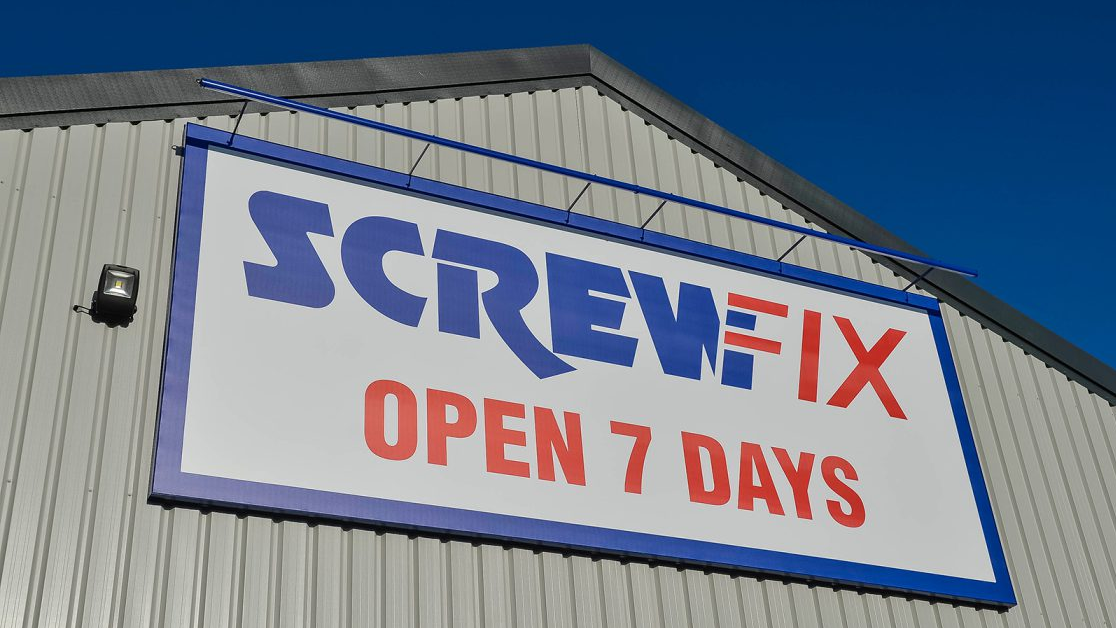
Screwfix has announced its ambition of opening up to 85 new stores across the UK, Ireland and France by the end of January 2024, creating more than 800 jobs in local communities. The announcement follows a record year of store openings in 2022, including its first five stores in France, with the total number of store openings for the year reaching 87. Committed to supporting the local communities in which its stores operate, Screwfix’s expansion plan will create new jobs, including those of retail assistants, assistant managers, and branch managers. As an approved training provider, colleagues in the UK and Republic of Ireland can participate in the retailer’s apprenticeship scheme and join the 850 apprentices currently training across the business. As part of the retailer’s commitment to reducing carbon emissions, the new stores will be equipped with air source heat pumps to provide heating and hot water. Screwfix’s entire store network is already powered exclusively by renewable electricity, and the retailer has been on a journey over the last 12 months to retrofit its existing stores with air source heat pumps. At the end of the 2022/23 financial year, more than 500 Screwfix stores were fitted with the low carbon technology, representing over 50% of the overall total, with more to be rolled-out in 2023. John Mewett, Screwfix CEO, says, “We know how busy tradespeople are and how important it is to be able to find a Screwfix store close to their jobs. In response to sustained demand from tradespeople across the UK, Republic of Ireland and France, we are driving forward with our store opening program with the plan to open up to 85 stores this year. “These expansion plans are making Screwfix even more accessible to tradespeople, ensuring they can get their job done quickly, affordably, and right the first time. This is a very exciting time to be part of Screwfix as we continue to grow and deliver on our ambitions. I look forward to welcoming new colleagues to our stores over the course of this year.”

eFIXX announces award winners in association with Luceco Group 
eFIXX has announced the winners of its 30 under 30 awards, in partnership with headline sponsor Luceco Group. Now in its second year, the awards recognise up-and-coming talent within the industry and showcase the next generation of electrical contractors. The judges have been busy whittling the shortlist of nominees down to the 30 chosen winners, naming them as 30 of the most promising up-and-coming talents in the electrical contracting industry. The winners were revealed in a dedicated awards event on 31 March. eFIXX are proud to announce the 30 winners named below: Aaron Kelly Adam Thomas Archie Murton Braden Kiddell Bradley May Callum Leech Christian White Conor Skelton Daniel Rhodes Declan Walker Dylan Hassall Eddy Taylor Harrison Pritchard-Smith Harvey Canning Iona Glover Jack Duignan Jason Marais Kieran Randall Leonard Radley Lewis Groome Luke Williams Max Bradley Mazin Osman Meg Ryder Nick Tucker Ollie Brazier Olly Ford Reece Cardy Samuel Eggby Tianna Verdi Gordon Routledge, Technology Editor at eFIXX, comments, "This year's eFIXX 30 under 30 award winners are an inspirational group of individuals who have achieved remarkable success in the electrical industry. From entrepreneurs launching renewable energy and electric vehicle charging businesses, to those overcoming adversity to get a toehold and start their careers. The winners exemplify the opportunities and diversity present within our industry. We are incredibly proud to recognise their accomplishments and dedication, and applaud them for their determination to succeed." John Williams, Trade and Specification Director at Luceco Group and one of the 30 under 30 awards judges, adds, “A huge congratulations to the 30 individuals named as winners of the awards this year. The quality of the entrants was hugely impressive, making it an incredibly difficult decision for myself and the other judges to select 30 winners from such a remarkable line-up. We have been so proud to sponsor the awards again this year and be part of the process of recognising emerging stars. The winners are truly the rising stars of our industry, showing incredible dedication and passion to their craft and who are looking to the future with innovation and success.”

30% of UK electricians encounter asbestos every week
Ahead of Global Asbestos Awareness Week (1-7 April), ElectricalDirect surveyed trade workers from across the nation to see how often they encounter it, and the impact this has on their health. The study found that 78% of electricians have come across asbestos - the fibre-like material once used for insulation - in their working lives. This has serious consequences, with 41% having had symptoms of an asbestos-related disease, or knowing a colleague who has. Tradespeople are amongst the most at-risk workers of asbestos-related diseases, and across all industries, the majority are exposed to the potentially lethal material on a regular basis. Three in five (60%) find it every year, over a third (35%) say every month, and one in 12 (8%) come face to face with asbestos every day. Tragically, one in 20 (5%) know someone who has died of such a condition, and every week, 20 tradespeople deaths are attributed to asbestos. Some trades are more likely to be exposed than others, and so should be particularly cautious. Almost every carpenter (95%) questioned had some history with asbestos, and bricklayers (88%) are a close second. With such severe consequences, it’s important that tradespeople know the warning signs of the diseases, and consult a doctor straight away if any appear. Dr Rhianna McClymont, Lead GP at Livi, the digital healthcare provider, says that asbestosis causes a range of symptoms, including: Persistent cough Shortness of breath Wheezing Pain in the chest or shoulder Tiredness Swollen or ‘clubbed’ fingertips However, ElectricalDirect’s research found that the majority of UK tradespeople are unaware of these symptoms. When asked to identify the signs of asbestosis, almost two-thirds (64%) failed to select a persistent cough, and over half (55%) didn’t pick out shortness of breath. Dr Rhianna explains more about the condition: What is abestosis? “Asbestosis is a chronic lung disease caused by breathing in large amounts of asbestos dust for a long time. The asbestos gets lodged in the lungs causing scarring around the air sacs (alveoli), which means oxygen can't reach the bloodstream easily. The scarring leads to the lungs hardening, making it more difficult to breathe because the lungs cannot hold as much air as they used to.” What causes it? “The condition is caused by long-term exposure to asbestos, a material used in the past for cement, insulation, car parts, and some roof and floor tiles. The fibres in asbestos break down into little pieces when they're damaged, released into the air and then breathed in. These fibres get stuck in the lungs, and over a long time, can cause permanent lung damage.” Dominick Sandford, Managing Director at ElectricalDirect, says, “Despite being banned in the UK in 1999, asbestos is a still a real issue in the industry, and it’s awful that so many tradespeople die from related diseases every year. “Some people might not experience symptoms for decades after their exposure to the material, so it’s important that individuals remain vigilant, and see a doctor immediately if they spot any signs.”

Plugged in and ready to go: all-new series of THE WIRE
Following a record breaking 2022, which saw THE WIRE achieve over 100,000 views via its live broadcasts and on-demand service, NICEIC is plugged in and ready to deliver even more content. Paul Collins, NICEIC’s Technical Director says, “It is clear to see THE WIRE is something our customers truly value and with this new series we strive to raise the bar even further. Making sure we cover the topics which matter most, new episodes will deliver the information our customers want and need to ensure that they remain at the top of their game.” Free and exclusive to NICEIC certified businesses and their teams, the new series, which kicks off on 19 April, will include the following episodes: Fundamentals of Condition Reporting: domestic and non-domestic installations - 19 April 20:00 EICR Coding Clinic - 3 May 20:00 Managing mental health and wellbeing - 17 May 20:00 The Role of a Qualified Supervisor - 21 June 20:00 Fundamentals of Electrical Energy Storage Systems - 12 July 20:00 “We were delighted with the response to THE WIRE last year,” says NICEIC’s Events and Marketing Manager, Sarah Hunter. “The viewing numbers were fantastic, but the direct feedback was as encouraging and showed, on average, viewers rated THE WIRE 4.7 out of 5. Furthermore, over 95% stated THE WIRE was a valuable part of their certification with NICEIC. “Of course, there is always room for improvement, and we are confident this season will be our best yet.” CPD-certified THE WIRE webinars count towards the CPD requirement, and for each episode watched, viewers will receive a personalised CPD Certificate.

Expert shares tips for businesses to reduce their energy consumption
An expert has shared five ways that businesses can reduce their energy bills and become more sustainable by making just minor adjustments to their working environment. The average small to medium-sized UK business could reduce their bills by 18-25% if they implemented energy efficient measures, and with commercial energy not included in the price cap, many will be particularly invested in reducing their usage. However, new research by ElectricalDirect has found that the majority of UK businesses could be doing far more to cut back on their energy consumption, so it has partnered with Claire Watson, Managing Director at Airmatic, to share ways that companies can save. Regularly maintain your lighting - 86% of businesses don’t Businesses waste energy and money by not regularly maintaining their office lighting, as without frequent checks, light levels can fall by almost a third over a couple of years. Regular maintenance can help reduce costs by up to 15%. Claire says, “Lighting maintenance can not only help to identify fixtures or bulbs that may be losing power or need replacing, but also keep fittings clear of dust, which can weigh them down and potentially cause damage over time. You can also check which lights may need upgrading to energy efficient bulbs.” Reduce the heating temperature in the office - 85% of businesses don’t UK businesses can also save money by reducing the heating temperature in the office, and a reduction of just 1°C can cut fuel consumption by 8%. Claire advises, “Even by lowering the thermostat by a degree or two can save plenty of money - potentially up to £200 a year - especially given the current prices of energy. As we move towards the summer, this will become less of an issue, but next time you have to warm the place up, set it a degree lower.” Keep radiators clear of obstructions - 85% of businesses don’t If items are placed in front of a radiator, this will cost your business money and energy, with the heat generated mainly warming up the obstruction, rather than the room. Claire says, “Radiators stuck behind any object, from desks and cabinets to sofas and curtains, are only going to cost you money. Unless you’re looking to only heat up these items, make sure your radiators are completely unobstructed, which will in turn heat up your space much faster.” Set the heating at a constant temperature - 85% of businesses don’t Keeping the temperature at a constant level will help reduce your office energy consumption, as repeatedly moving it up and down will only increase your bills. Claire advises, “Keeping your heating at a constant temperature can also be a good way to save that many don’t consider, as the cost of trying to quickly heat up a cold room or cool down a room in the summer can end up being more costly. This is because your heating and air conditioning doesn't have to try to work overtime to counteract the temperature you’re trying to correct.” Make use of natural light from windows and skylights - 84% of UK businesses don’t Using natural light rather than switching the lights on and off on a sunny day can help save money and energy in the office. By reconfiguring your office space, you can make the most of the natural light that comes in by moving workspaces to naturally well-lit locations. Claire says, “Now that we’re finally in the spring, the increase in natural light will be a lifesaver when it comes to cutting down your energy costs. If your premises has plenty of windows, you may have days where you don’t need the lights on at all, especially around midday. It’s worth periodically checking if the amount of natural light your space is getting throughout the day warrants the lights being on or off.” “It’s thought that a good day-lighting design and setup could save you up to 75% if you’re able to greatly reduce the amount of lights switched on.” Dominick Sandford, Managing Director at ElectricalDirect, says, “We hope these tips prove helpful and businesses can start making small changes to save both money and energy. “It’s important that companies of all sizes engage in these types of behaviour, but our research found that small businesses are far more likely to implement simple everyday changes than larger organisations, who instead invest in expensive measures, like solar panels. We know that small actions make a difference as they all add up, so we’d encourage all business owners to consider changes wherever possible, no matter how minor.”