2 November 2026
Product of the Month: Amari Floodlight range by Aurora Lighting
 
11 November 2026
Energy, AI and smart buildings: register now for EMEX 2026
 
11 November 2026
Solar and batteries could cut electricity costs by 40%, data finds
 
11 November 2026
EIC confirmed as ECN Awards 2026 charity partner
 
11 November 2026
Acrospire to support Green Frog's European expansion
 

Latest News


ECS scheme expands into the digital age
One of the largest personnel certification schemes in the UK for those working within the construction and the built environment, the Electrotechnical Certification Scheme (ECS), has expanded its scheme to include digital skills. Being the sole ID and competence card scheme in this industry that demonstrates the skills, knowledge, qualifications, and experience of individuals, and with ECS cards being compulsory on almost all UK construction sites, the ECS Scheme is recognised and endorsed within many industries throughout the UK, including Network Infrastructure and now Digital Infrastructure. Now the ECS is expanding the successful scheme into Digital Support occupations: Digital Support Technician and Operative Network Security Technician Digital Network Engineer Digital Support Manager These occupations cover those using digital technologies (likely as part of IT and/or telecoms infrastructure roles) in areas such as digital communications, network systems, data centre operations and management, network and cyber security, programming, software, support, and user skills. Not only are these areas essential skills for organisations of all sizes in a growing digital age, but there are also increasing overlaps between the traditional craft electrotechnical skillsets and the development of greater automation, controls, and programming requirements for those working within the built environment. To develop these new routes to personnel certification, ECS worked with the Department for Education, Institute for Apprenticeships, British Computer Society – Chartered Institute for IT, awarding organisations and providers, such as Pearson, CompTIA and the leading provider of technical education for the digital infrastructure industry, CNet Training, alongside a number of large employers and industry stakeholders. The cards are supported by education and training providers that deliver industry recognised qualifications, for example the new Digital Support Technician card is supported by the qualification level 4 Certified Data Centre Technician Professional (CDCTP®) and the Certified Wireless Infrastructure Technical (CWIT®), plus the level 5 data centre programs that span specialisms across the technical data centre environment from design and audit through to data centre sustainability. The Digital Support Manager card is supported by the level 5 Certified Data centre Management Professional (CDCMP®) program and the highly regarded level 7 Master’s Degree in Data Centre Leadership and Management. Those with the CNet qualifications and ECS Health & Safety Assessment can apply online at www.ecscard.org.uk via MyECS, an online portal that allows card holders to manage their ECS applications and renewals. Andy Reakes, Head of Growth at the Joint Industry Board and Electrotechnical Certification Scheme says, “All requirements for ECS cards are developed and agreed by industry. This latest expansion is the result of continued hard work with a number of organisations to ensure ECS covers sectors that are essential in the built environment of the 21st century.”

Two in five UK tradespeople suffer from work-related pain every week 
A study by Jacuzzi, the hot tub and hydrotherapy specialists, surveyed Brits from a variety of industries about their experiences of injuries and pain at work and found that half (50%) of tradespeople have taken time off work for a work-related pain or injury Three in five (60%) tradespeople report lower back injuries, making it the most common injury sustained on the job. Shoulder pain (31%) is the second most likely issue to trouble tradespeople. In construction, neck pain (32%) is the most common form of discomfort amongst workers, followed by arm pain (25%). Sadly, seven in 10 (71%) construction workers say that they experience pain at work at least once a week, the highest percentage of any industry. Only 7% never experience any form of work-related pain. Nearly nine in 10 (89%) of construction workers said that they’d taken time off due to injury, with 56% missing more than a week. Tracey Hudson, Executive Director, at HR Dept, says: “It’s worrying to see that regardless of the industry, a large portion of workers are experiencing pain, injury or discomfort as a result of their working conditions. “It’s no surprise to see back pain is the most commonly experienced form of pain, as this is an area of the body that’s put under considerable stress, whether you’re working at a desk or on a construction site. “If you experience pain due to your work, make sure to raise the issue with a line manager or your employer’s HR department, as they will take steps to ensure you are safe, and will work with Occupational Health or your GP who can often suggest changes to your working environment which can help prevent injury or the recurrence of pain

NAPIT gets ready for the release of Amendment 2 BS 7671:2018+A2:2022
BS 7671:2018+A2:2022 will be the first, full consolidated amendment to the BS 7671:2018 18th Edition IET Writing Regulations, which was first published in 2018. Amendment 2 will come into immediate effect when published on Monday 28 March 2022, with the previous version BS 7671:2018+A1:2020 being withdrawn six months later. The significant changes include: A new requirement for Arc Fault Detection Devices (AFDDs) in some AC final circuits for installations in some types of higher risk residential buildings. The requirement for the fire safety design of buildings to be documented where specific conditions of external influence exist, such as protected escape routes and locations with risk of fire. Changes to identification, labels and notices, such as for consumer units, affecting how safety information is provided to the user of the electrical installation. A chapter on Prosumer’s Low Voltage Electrical Installations, in a new part, Part 8. Method for determining the requirement to provide overvoltage protection. In preparation for its release, NAPIT is ensuring it has everything members need to get up to speed with the amendment, including: Pre-orders for updated NAPIT and IET publications are now live on NAPIT Direct. Hosting a range of CPD webinars to provide an overview of the amendment and what it means to its members, the webinars will take place on Tuesday 1 March, Tuesday 5 April and Tuesday 3 May at 6pm with a live Q&A with JPEL Committee representatives Frank Bertie, Paul Chaffers and Richard Townsend. Launching its new set of NAPIT EXPO Technical Roadshows with Amendment 2 CPD masterclasses starting April 2022, open to all with locations to be confirmed soon. Here you’ll have access to face-to-face technical training and membership advice, as well as free gifts, discounts, and refreshments. Frank Bertie, NAPIT’s Chief Technical Officer, (JPEL/64 member and deputy chair of Sub Committee A) says: “This Amendment is an essential update and is the result of years of work by the JPEL/64 committee, the committee responsible for BS 7671, with which NAPIT have had strong representation on for over 20 years. It’s important that our electrical members keep up to date with the ever-changing technologies and ways of working to ensure they are working to the safest standards, and they can do that by viewing our webinars, attending our events and within our updated publications.”

Gira acquires 100% of the shares in Wandsworth
Gira has acquired Wandsworth, a manufacturer of switch ranges made of finished metal and of professional emergency call systems for hospitals and care facilities. Founded in 1904 and headquartered to the west of London in Woking, where it currently employs 110 people, this long-established company with its two business divisions “Wandsworth Electrical” and “Wandsworth Healthcare” has been part of the almost equally long-established family business Gira (1905) since mid-January. “When two healthy, successful and independent faamily businesses come together with different strengths that complement each other in a special way, it is an ideal launch pad for growth and success. And when the culture, values and aspirations of both companies are as closely related as they are at Wandsworth and Gira, then this can only be a success story,” declares Dirk Giersiepen, Managing Partner of Gira, and Dominik Marte, Managing Marketing and Sales Director from 1 March 2022, in a personal letter to the Wandsworth staff. Win-win situation Smart building specialist Gira, whose systems and solutions are sold in 40 countries, primarily in Europe and Asia, has been active in the UK since 2011, with its own sales company since 2018. By acquiring Wandsworth, Gira hopes to sustainably tap into the growth potential of the large British market and expand its market position. “The brand recognition of Wandsworth, its large customer network, and its sales strength in the UK will allow us to access the British market in a completely different way than before,” commented Gira’s Managing Director Marketing and Sales, Dominik Marte, adding that this applied all the more as Adam Sherry, owner and chief executive of Wandsworth since 2013, would continue to run the company for the next few years at both parties’ request. “His great market knowledge and his personality as a guarantor of trust and continuity are important building blocks in helping us achieve our growth targets,” says Dirk Giersiepen. In turn, Wandsworth will benefit from the huge expertise in electronics, smart building and software that has accumulated in the Gira Group. “Wandsworth has little in-house expertise in these areas, which will continue to gain importance in our industry. Working together in the Gira Group will open up new opportunities for us on the product side,” explained Wandsworth CEO Adam Sherry. For example, KNX technology, a globally successful standard in building automation, will be available to Wandsworth in future for integration into its product range. New jobs Both Gira and Wandsworth also see good opportunities to generate additional synergies in international sales. “This will create opportunities for us to offer our products in international markets via Gira’s sales organisations,” said Adam Sherry, also noting that joint marketing in future could help both partners gain a better foothold in the growth regions of the Middle East and Eastern Europe. This is helped by the fact that the product ranges of both companies barely overlap and are not substitutes for each other. “Given this win-win situation, the signs are clearly pointing to joint growth for both brands, which will of course be retained as valuable assets,” states Dirk Giersiepen with conviction. “For this reason, we can also assume that this expansion of the Gira Group will create new jobs in both Woking and Radevormwald.” In addition to Gira and Wandsworth, the Gira Group also includes holdings in electronics specialist Insta, software incubator ISE, plastics specialist Stettler, and start-up Senic.

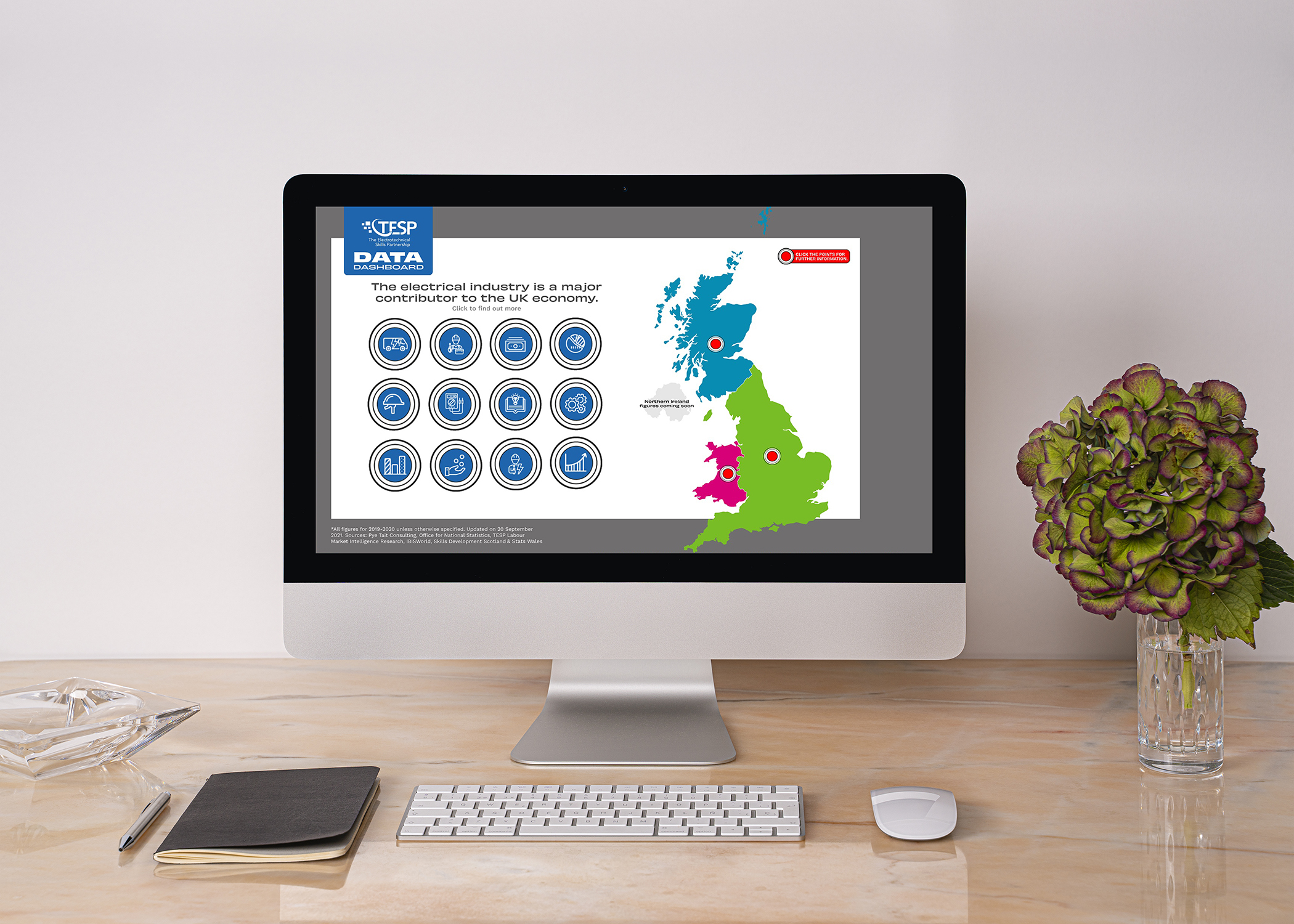
New Data Dashboard shows value of electrical industry to UK economy
The Electrotechnical Skills Partnership (TESP) has launched an innovative Data Dashboard that shows the significant contribution made by the electrical sector to the UK economy. The animated online tool provides instant facts and figures about the industry, including number of business and people employed, collective turnover and how the UK electrical sector is split in terms of types work carried out. Highlights include: More than 47,000 businesses, 99% of which are ‘small’ (i.e. fewer than 50 employees) More than 340,000 individuals employed: a 17% increase since 2015 More than 26,000 electrical apprentices currently in training Hosted on the TESP website, it also shows regional statistics for England, Scotland and Wales, as well as apprentices and adult trainees recruited and currently in training across the UK. The dashboard also reveals the growth in workforce, turnover and businesses – including micro-businesses – that the sector has enjoyed since 2015 and is designed to be updated to reflect ongoing activity. Ruth Devine, Chair of TESP and Managing Director of SJD Electrical, says: “This dashboard is an engaging way to find out more about today’s electrical industry and the massive contribution it makes to the UK economy. “It’s easy to navigate and understand, and it shows at a glance the value of our industry across a wide range of relevant categories.” The dashboard was developed by Scotland’s largest trade association, SELECT, with input from fellow TESP partners ECA, JIB, National Electrotechnical Training and Unite, utilising research with industry employers. Ruth adds: “This new tool demonstrates the growth that has been enjoyed in the past few years as the industry continues to embrace new technology and innovative ways of working. “We will continue to use it to keep track of what we hope will be an encouraging and positive contribution to our electric future.”

Call for future apprentices to apply for careers in power
In the lead up to National Apprenticeship Week (February 7-13), UK Power Networks has opened applications for 20 new apprentices this year. The Week will shine a light on the benefits that apprenticeships can bring to individuals, employers and to the wider economy. At UK Power Networks 14 new craft apprentices and six higher apprentices will play a key role in the country’s transition to Net Zero, as the company enables communities to use low carbon technologies including electric transport and heating. The apprentices will be trained in skills that maintain, repair and build electricity networks which deliver safe and reliable power supplies to 8.3 million homes and businesses across the East of England, London and the South East. All the trainees will spend their time specialising as electrical linespeople, fitters or jointers learning how to safely repair, maintain and connect overhead lines, substations or underground cables. The practical element of the apprenticeship will be completed at the company’s dedicated training centres in Suffolk and Kent which are rated Good by Ofsted, coupled with on-the-job training with experienced staff, putting new skills into practice under personal supervision. The closing date for applications is 20 February. Charlie Aston, engineering trainee manager at UK Power Networks, says: “We’ll be excited to welcome the new intake of 20 apprentices. The success of our previous cohorts really demonstrates the benefits of offering apprenticeships and I’m sure our next group will be fantastic assets to our business in future.” Caden Gardiner, a foundation apprentice who already works at UK Power Networks, comments: “I was looking online for apprenticeships and discovered the UK Power Networks website. I read about people who have worked for the company previously and it interested me. Apprenticeships are a good investment for the company as they train their employees and invest in their future. You also get on-the-job training which you don’t always get at university.” UK Power Networks is ranked number six in the UK’s Top 25 Best Big Companies to Work For, and a ‘Platinum’ Investor in People.

CityFibre project in Nottingham celebrates first anniversary
CityFibre has now laid a staggering 110km of full fibre internet cables beneath the streets of Nottingham as part of its £117million plan to future-proof the city’s digital connectivity. The landmark achievement by CityFibre, the UK’s largest independent full fibre platform, means there is enough full fibre cabling connecting the city’s homes to cover 1,000 Nottingham Forest FC pitches. [caption id="attachment_29066" align="alignleft" width="300"] CityFibre Nottingham City Manager Dominika Walker.[/caption] Nottingham is benefitting from a state-of-the-art full fibre rollout as part of a £117m private investment from CityFibre, meaning its residents and businesses will soon be able to enjoy access to the fastest, most reliable connectivity available. The rollout will boost business productivity and innovation and deliver millions of pounds in economic benefits for the city, while giving residents access to the UK’s fastest broadband services. Dominika Walker, CityFibre’s City Manager for Nottingham, said: “Over the past year, we have made great progress across Nottingham as we lay the foundations for its digital future. The benefits this category of connectivity brings literally touches all aspects of residents’ lives. “We’ve seen first-hand how much it can really mean to people to be connected and the opportunities this brings. With our network now live across many parts of the city, we are pleased that more residents in the area now have access to the fastest and most reliable broadband services available.” [caption id="attachment_29067" align="alignright" width="300"] CityFibre Nottingham City Manager Dominika Walker.[/caption] Nottingham is among the growing number of locations in the UK to benefit from CityFibre’s £4bn Gigabit City Investment Programme which will bring new and improved broadband infrastructure within reach of up to eight million homes and businesses nationwide. CityFibre’s build partner McCann is working in various locations across the city, with work currently ongoing in the Leen Valley and Aspley areas. Work has been completed across large sections of the city including Wollaton and Bilborough, with more to follow soon. As work is completed in each neighbourhood, residents can access some of the fastest and most competitive broadband packages available. In Nottingham, services are available from internet service providers such as Vodafone, TalkTalk, Zen and Air Broadband with even more set to join the network in the future. In addition to its digital investment in the city, CityFibre has committed to helping tackle digital exclusion. Last year, the team donated laptops to local charity, Nottingham Women’s Centre, helping to ensure that more people have access to technology.

New LED driver for intelligent and flexible lighting systems
With the new OTi DALI 80/220-240/2A1 NFC L LED driver, OSRAM complements its top-notch range for designing intelligent and flexible lighting designs. Combining various energy-saving features, the DALI-2 LED driver can be programmed via DALI and NFC. In addition to the Corridor Function and Advanced TouchDIM, it also supports Constant Lumen Output (CLO). Monitoring data and luminaire information in accordance with DiiA specifications Part -251, -252 and -253 provide a sound basis for optimised operation in IoT installations. The driver is just the right choice for emergency lighting systems with a central battery – and thanks to its slim housing, it even fits into small linear installations. And with its wide operating range and high-quality analogue dimming from 1 to 100%, it addresses the requirements of offices, educational institutions and shops alike.

Pharos powers Manchester’s spectacular Tower of Light 
Located in the heart of Manchester’s iconic city centre, a new 40-metre illuminated tower has been constructed, marking a key milestone in the development of the city’s new heating and electricity network. The striking new landmark, proudly named ‘The Tower of Light’ is a flue tower and façade enclosing the new Vital Energi CHP energy centre, which stands tall in Manchester’s Civic Quarter. Spearheaded by the city’s ambitious target to transition to zero carbon by 2038, the Manchester Civic Quarter Heat Network (MCQHN) is now supplying low carbon heat to its first customer, the Manchester Central Convention Complex. The ground-breaking £24m project generates low carbon power in an energy centre beneath the railway arches by Manchester Central. It is then distributed by a 2km network of underground pipes which will soon serve a whole host of Manchester’s iconic buildings, including Bridgewater Hall, Central Library, Heron House, Manchester Art Gallery and Manchester Town Hall. The tower has been expertly designed by award-winning architects Tonkin Liu, using a shell lace structural technique created in partnership with Arup. The structure comprises of 3-8mm laser-cut sheets which are then curved and welded together to create a strong, rigid surface. This ultra-lightweight, vertical, single-surface structure provides a strong support to the chimneys at the base of the energy centre, impressively using only minimal materials to do so. During the day, the wind moves reflectors to direct sunlight into the tower, filling it with dancing light. At night, The Tower of Light comes to life, showcasing the beauty of its spectacular design. SEAM Design, appointed to create the tower’s lighting scheme, specified Pharos Architectural Controls to help achieve this. The luminaires were supplied by leading British lighting manufacturer Tryka; using the trusted and highly versatile Pharos LPC (Lighting Playback Controller) 2, which supports the DMX lighting protocol. A Pharos TPC (Touch Panel Controller) has also been integrated into the final solution, allowing the tower to benefit from lighting controls, complete with a smart user-friendly interface. Mark de Gruyter, Regional Manager EMEA of Pharos, comments: “Manchester’s iconic Tower of Light is an exceptional commitment to tackling climate change, and the design and innovation to deliver this project has been outstanding. We are firm believers in creating a sustainable future, and Pharos is thrilled to have contributed to this remarkable tower. It’s not only a fantastic source of low carbon power, but at the same time demonstrates Manchester’s unique ability to stay ahead of the curve in both function and design.” The spectacular Manchester landmark is projected to save an initial 1,600 tonnes of carbon emissions per year, contributing towards Manchester’s target to transition to zero carbon by 2038.

Saving trees and preventing power cuts – how data analysts hold the key
Clever use of data about trees across the East and South East of England, is helping to reduce power cuts for residents. In the past year, UK Power Networks has invested £19million in tree trimming to keep branches away from power lines and help prevent outages for communities. To ensure this was being spent efficiently, on a more scientific and sustainable basis, the company’s analytics team designed a new computerised tool for tree-cutting colleagues to best decide when, where and how to clear trees and bushes away from power lines. This use of software calculates a risk ranking for each tree, in terms of the priority it should be given for trimming for maximum benefit, which also helps ensure no trees are cut unnecessarily. It takes into account different varieties’ growth rates, tree ages and locations. The innovative project builds on existing use of mapping technology such as LlDAR plane patrols which UK Power Networks was the first UK network operator to adopt. The data analysis has already resulted in fewer power cuts for customers, with the combined benefit of saving 350 trees from felling (equal to 75 tonnes of CO2) for communities as the UK faces climate change and strives towards Net Zero. It has also helped the company reduce the number of power lines damaged by trees and branches, particularly during storms, and protected an estimated 9,000 customers from potential power cuts. UK Power Networks plans to spend £90million on tree cutting from 2023 to 2028. Alex Mahon, who heads the company’s analytics team, comments: “Our focus is always to collaborate across the business to deliver both change and lasting value. “This tool adds to the resilience of our electricity networks, reduces power cuts, and also ensures that the environmental impact of tree trimming is also lessened by directing work to where it is most needed.” Martin Peters, an area tree manager for UK Power Networks, says: “We have a long-established programme of tree cutting which is carefully managed to make sure we prioritise trimming trees which present the greatest safety risk, or those most likely to touch overhead lines. “The analytics team understood our objectives and the successful use of their tool has added to our existing technology such as the use of LIDAR. It helps us make the best decisions about when and where to trim trees across the communities we serve.”