2 November 2026
Product of the Month: Amari Floodlight range by Aurora Lighting
 
11 November 2026
Energy, AI and smart buildings: register now for EMEX 2026
 
11 November 2026
Solar and batteries could cut electricity costs by 40%, data finds
 
11 November 2026
EIC confirmed as ECN Awards 2026 charity partner
 
11 November 2026
Acrospire to support Green Frog's European expansion
 

Latest News


17th December is the most popular day for tradespeople to be called out
This Friday will be the busiest day of the year for electricians, plumbers and heating engineers to be called out for emergency home repairs, latest research by Toolstation shows. 15% of tradespeople identified it as the most popular day for being called out, as many households start to get prepared for their Christmas festivities and welcome friends and family to their home. Boilers are the most at risk of breaking down, with over half (53%) of heating engineers expecting to be called out to repair them on the 17th. Almost half (41%) of tradespeople expect to be called out to fix leaking radiators. With colder weather conditions hitting, 34% of tradespeople also expect that they will have to deal with frozen pipes too. Matt Nourse, Commercial Director at Toolstation says: “With a cold snap well underway, it’s worth checking everything is working before you batten down the hatches for Christmas. The combination of cold weather, damp and frost and preparing to host family and friends can put extra stress on parts of the home that are essential for keeping homes warm and dry.”

New cost-effective EV charger with built in PME from Sevadis
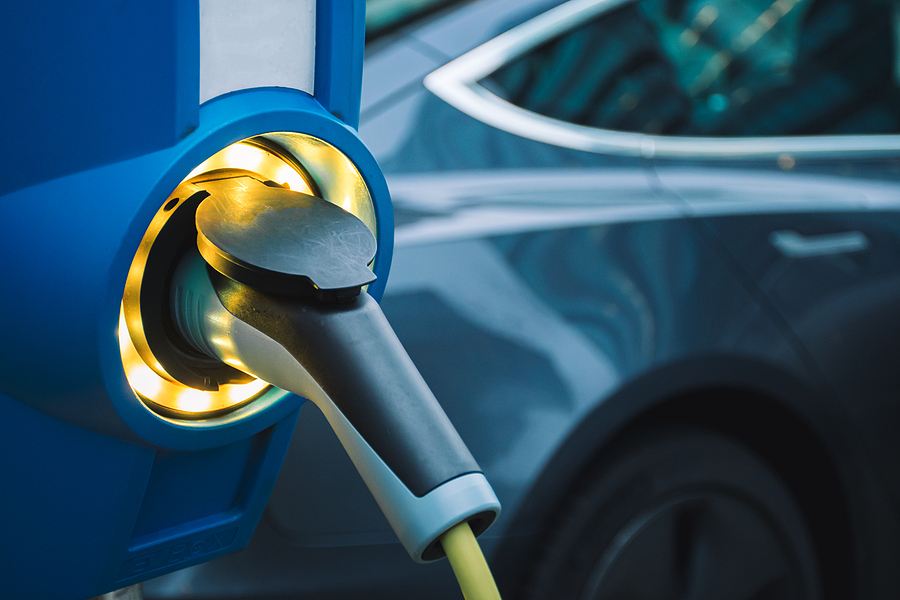
Sevadis has launched MaxiCharger, a new electric vehicle (EV) charger that provides a cost-effective solution for a wide range of sectors and applications, with all the flexibility and functionality that installers and their customers require. Sevadis also offers full product training on the new MaxiCharger, as well as its expert technical support, to assist installers and wholesalers. The latest addition to the Sevadis range of EV charging solutions, MaxiCharger is a wall- or pedestal-mounted single outlet, universal Type 2 charger. It has a charging capacity of up to 7.4kW on a single-phase connection and 11kW or 22kW on a three-phase connection. Importantly, the unit has Protective Multiple Earthings (PME) fault detection built in, meaning there is no need for an earth rod or separate monitoring device. This means a simpler and more cost-effective installation and helps ensure compliance with the IET Wiring Regulations 18th Edition (BS 7671). MaxiCharger, with a RRP from £399, is also Open Charge Point Protocol (OCPP) 1.6 compliant. OCPP allows compatibility between the charger and a range of different management and billing software platforms to provide greater choice and flexibility for customers. It also features integrated smart dynamic load balancing (DLB) to automatically regulate the power drawn by the EV chargers when in use to prevent overloads and power shortages. The dynamic load balancing also ensures a fair distribution of the available power to all charging vehicles, which is essential at times of peak demand. Furthermore, MaxiCharger has 4G, Bluetooth, Wi-Fi and ethernet connectivity options to suit the needs of the customer and the existing building infrastructure. The charger unit is also IP65 rated against water and dust ingress on the tethered MaxiCharger and IP54 rated on the socket version. It also has IK08 impact resistance and is supplied with an industry leading three-year warranty. Installers and wholesalers can also benefit from the support offered by Sevadis. Sevadis provides full technical support including free site surveys where required and product specific installer training. John Abernethie at Sevadis says, “The use of electric vehicles is expanding rapidly and the Government announcement that all new buildings with parking must include EV charging points means customers need a cost-effective but high performance solution. The robust MaxiCharger is suitable for a wide range of applications from homes and offices to leisure and hospitality. It has also been designed to make installation straightforward, with systems such as PME fault detection and dynamic load balancing built in.” Developed in partnership with Autel, Luca Scattolin, General Manager of Autel Europe comments, “This is our first entry into the UK and it was paramount that we partnered with a company that understood and had significant expertise in this market. We are extremely proud of the product we have developed with Sevadis and believe it is ideal in making a high quality product more accessible. This is exactly what the market needs.”

Tamlite Lighting scoops national recycling award for circular economy initiative
Tamlite Lighting has scooped its second sustainability award in as many months after it was named winner of the Circular Economy Initiative of the Year at the Materials Recycling World (MRW) National Recycling Awards 2021. The awards are the most prestigious honours in the recycling and resource management sector, and recognise leaders and best practice within the waste and recycling industry, and further along the supply chain. Named winner of the hotly contested category, Tamlite Lighting was shortlisted alongside 12 other organisations committed to the deployment of circular economy strategies. Having entered the award in partnership with its sister company Electrical Waste Recycling Group (EWRG – The Waste Experts), the award recognises the impact of Tamlite Environmental – an extensive luminaire, lamp, and electrical waste recycling service, which achieves a 98% recovery rate. Judges noted that Tamlite Lighting had embedded circular economy principles into designing out waste and has identified ways to keep products and materials in use over a longer life cycle – thus resulting in a positive impact on the environment. Debbie-Sue Farrell, Head of Wellbeing and Manager of Marketing at Tamlite Lighting comments on the win: “We are delighted to have won this prestigious award and to be recognised for our sustainable business principles. Tamlite understands the value of a circular economy, and how it can benefit people, the environment and businesses. By working in partnership with EWRG we’re able to offer our customers an unparalleled lighting recycling service. “Although this initiative is in its infancy, it has already made a significant impact. We have a key role to play in providing a more sustainable future. By adopting a new way of thinking when it comes to recycling, we’re able to focus our efforts towards creating lighting solutions that will last long into the future.” Tamlite Lighting was also named Sustainable/ Ethical Manufacturer of the Year at the Insider Made in the Midlands Awards earlier this Autumn.

NAPIT launches new digital member ID card 
NAPIT have introduced a new membership identity card app to make it quicker and easier for customers to verify the competence of NAPIT members. NAPIT electrical members can now access their new digital ID card anytime and anywhere, be it online or offline. The introduction of this new digital ID card makes NAPIT the first certification body in the electrical industry to offer this service. Mike Andrews, CEO at NAPIT Group, says: “Our world today is undeniably one which is focused and reliant on digital technologies and advancements. With this in mind, we are very proud to launch our digital ID app that allows our electrical members to access their membership ID card on-the-go via their smartphones, with or without internet connection. As a business, we are committed to enhancing safety and promoting competence in the sector. This digital ID app allows our members to demonstrate their certification scope in a clear and easy way to their customers. The additional benefit of a QR code, on the card, allows the customer to verify the members identity and competence enhancing this offering further.” NAPIT services such as technical support and customer services are also easily accessible via the app. NAPIT now provides all its registered electrical operatives with a digital ID card and understands that some of its members may need or want to carry a physical ID card as well. Therefore, it is providing them with the option of either or both cards via a new preference section within the members area on the NAPIT Online portal. "NAPIT strives to serve the individual needs of members. Providing them with both options, therefore, works to their advantage," adds Mike. As well as the added benefits to members of this App, NAPIT hopes that by making this switch the printing and postage of plastic ID cards will be reduced in line with their corporate responsibility to protect the environment. Also, in order to speed up production, NAPIT has outsourced its physical ID card fulfilment to MBA, an established and progressive Document Management, Print and Digital Communications specialist, providing solutions for a number of known brands including National Trust, the NHS and United Utilities. “We are committed to becoming a truly sustainable business and we will continue to provide our customers with high quality sustainable products and services in ways to protect the environment and help reduce all our carbon footprint,” emphasises Mike. If you are a NAPIT electrical member you will be invited to access the member portal giving you instructions on how to download the app and update your preferences. The digital ID card app is now available to download on both the Apple App Store and Android Play Store.

Annual review showcases JIB's commitment to delivering for its members
The Joint Industry Board (JIB) has released its 2021 Annual Review, which highlights key achievements delivered for its members with Direct Employment featuring as a key story from the year, as well as the JIB’s crucial actions in response to priorities identified in the 2020 JIB Membership Survey. The priorities for members were the increased promotion of the benefits of Direct Employment, enhanced engagement with industry, improved visibility of JIB members to clients and more focus on Continuing Professional Development (CPD). In February 2021, the JIB published its ‘authoritative and compelling’ report into the benefits of Direct Employment. Following publication, the JIB has been actively involved in promoting the benefits to over 1,500 key stakeholders and Chaired a Construction Leadership Council group on Direct Employment in September. This gave the JIB a unique platform to lobby directly to Government and an influential and diverse stakeholder group from across the supply chain. The JIB is continuing this work to rebalance the industry and re-establish the founding principles of direct employment, apprenticeships, and high standards of training and qualifications. JIB also responded to members’ feedback by hosting a series of relevant webinars which attracted over 500 people. A pilot Forum was hosted in June, which had insights from the Bank of England on the current economic impact and the Electrotechnical Certification Scheme (ECS) launched a new CPD digital system allowing all individuals to digitally record their ongoing skills and knowledge for the first time. There were some significant landmarks to celebrate as well. ECS Check, the free online system that provides necessary insight and visibility through all levels of the supply chain, recorded its 1,000th registration since its launch in early 2020 and the ECS Remote Invigilation service, offering ECS card holders and employers the opportunity to take their assessments without having to travel to an assessment centre, was also launched giving card holders greater flexibility than ever before. Remote Invigilation services are already seeing thousands of users per month taking advantage of this industry-leading technology approach, helping members save time and money. The JIB Skills Development Fund proudly supported a record 55 people undertaking skills development and CPD as part of their career progression. The charity also provided crucial financial assistance to those out of work and looking to upskill to re-enter the workforce. Jay Parmar, Chief Executive of the JIB, says: “The JIB has been working extremely hard to make the electrotechnical industry a healthier place as things start getting back to normal, and we have continued to play an active role in upskilling the industry and in the development of sector-specific competence frameworks. This Annual Review is a round-up of all the JIB’s news, campaigns and progress taken in 2021 and I hope that it will inspire some positivity for all JIB members and employees as we look forward to 2022.” The JIB Annual Review can be read here.

EV Charging as quick as refuelling thanks to High Power Chargers, reports IDTechEx
High Power Chargers (HPCs) refer to Level 3 DC fast charging at a rate of 50 kW or more. In general, because vehicle range and battery capacities are increasing, there is an increased ability for vehicles to accept higher charge rates. Based on a variety of industry announcements, using variants of current battery chemistries and battery pack designs, the time to recharge is expected to be reduced to below approximately 15 minutes to charge to 80%. Corresponding with these general goals, the number of vehicle models that are able to accept higher power is expected to increase in the next several years. However, in the near term, many existing low-range electric vehicles will not be able to take advantage of chargers operating at 350 kW. A mix of charging speeds available at a charging site, controlling power output at a single charger, or sharing power among a group of chargers will usually satisfy the mix of vehicles that arrive with the ability to charge at their maximum power acceptance rate. Installation and the idea of coverage versus capacity   Currently, there are major deployments of fast chargers worldwide, often funded by government at the local, regional or national level. The growth in the number and location of fast charging has occurred organically or as a result of national plans. However, fast charging makes up only a small fraction of all-electric vehicle charging and requires more expensive hardware and higher utility costs than Level 1 or Level 2 charging in most settings. Distribution lines and the final transformers are the most likely to require an upgrade to accommodate fast chargers, alongside installing separate power cabinets to the charge post itself. The new report “Charging Infrastructure for Electric Vehicles and Fleets 2022-2032” by IDTechEx takes a deep dive into the costs and footprints associated with HPCs in addition to the charging market in general. These impacts can be mitigated with several strategies including choosing locations with low grid impacts, smart charging, combining fast charging with energy storage, and applying time of use rates. As the population of BEVs increases within a country, one HPC can support more BEVs. Initially, sufficient geographic coverage is needed even for a small number of vehicles. Initial stations are likely to be underutilized. As the number of BEVs grows, the increased BEV population may pioneer new locations but is likely able to more fully utilize the original locations. Eventually, a station reaches capacity at a location, and instead of adding a station in a new location, additional HPCs can be added to address capacity concerns in the same location. Another major benefit of HPCs is their modularity - most of the chargers are available in 50/75 kW step power units which are connected to meet the required power demand and can be scaled up or down based on utilization. Cooling technologies will be crucial   Charging a battery with too much power could cause lithium plating and dendrite formation around the anode, permanently reducing capacity; at a pack level, it can cause cells to age at different rates and pack overheating. To ensure the longevity of the power electronics, HPCs also require some sort of cooling technology to ensure optimal performance at high-efficiency levels. To support high power charging, efforts are being made on both the vehicle and charger side to prevent overheating. Solutions include preheating batteries, liquid cooling, and using intelligent battery and charger management software as covered in the IDTechEx report. Connectors and standards are gearing up for future power levels   There are five different types of DC fast-charging plugs that can transmit power above 36 kW. These plug types are referred to as CHAdeMO, the European Combined Charging System (CCS type 2, or sometimes referred to as “Combo”), the U.S. Combined Charging System (CCS type 1),  Tesla, and GB/T. The CHAdeMO and  Tesla systems are used in many markets, and the GB/T system is only used in China. New standards are enabling the maximum energy transfer rate for each plug type to increase. While CHAdeMO plugs support 1000 Volts and 400 Amperes, enabling a maximum power of 400 kW, CCS type plugs can now support a maximum voltage of 1000 V at 500 A, enabling a maximum power of 500 kW. However, typical market power for CHAdeMO does not exceed 150 kW whereas CCS is now the preferred connector type for high power chargers offering power levels in the 150-350 kW range. Tesla has been incrementally increasing the power output of its supercharger network, with the V3 supercharger capable of delivering 250 kW of peak power. China is also developing the ChaoJi protocol to achieve harmonization between GB/T and CHAdeMO standards. It sets out a very ambitious target of 900 kW and would also be capable of charging large commercial vehicles such as buses and trucks. The CharIn association has developed the High Power Charging for Commercial Vehicles (HPCCV) standard which will be used for charging in the range of 200-1500 V and 0-3000 A enabling up to 4.5 MW of power delivery. The latest IDTechEx report on Charging Infrastructure for Electric Vehicles and Fleets 2022-2032 provides a comprehensive overview of various fast charging technologies and standards globally, including hardware benchmarking, key market player analysis and regional public fast charging deployment.

How to limit outdoor light pollution with the Zenith Wallpack
Area lighting is an essential part of outdoor lighting installation but choose the wrong luminaire or lighting design and you could be generating unnecessary light pollution: at great cost to the environment, and potentially your customers. Red Arrow’s new Zenith provides a simple solution, with its high-performance lens creating a targeted downward 110° beam angle. Is area lighting a light pollution nuisance? Area lighting and floodlights are the most common causes of light-pollution related complaints to local authorities in the UK. Yet they are also essential fixtures to keep a wide variety of locations safe and usable after dark, particularly in the depths of winter: from social, public and commercial centres, including car parks, to critical operation centres like transport hubs. The challenge for electricians installing environmentally-friendly outdoor lighting is to ensure that the design – and the luminaire it uses – target the area that needs to be illuminated and doesn’t spill into surrounding areas. If not, the light risks becoming a ‘statutory nuisance’ under the Clean Neighbourhood and Environment Act 2005 as well as a hazard for wildlife, and could be removed or adjusted after installation, at cost to the customer. According to research by the British Astronomical Association’s Commission for Dark Skies, at least 30% of outdoor lighting is wasted thanks to poor shielding and positioning, resulting in atmospheric pollutants like sky glow and light intrusion. That’s why Red Arrow have addressed this issue with the new Zenith architectural wallpack, available from January 2022. The Zenith: a more environmentally friendly luminaire The Zenith’s high-performance lens, with a downwards 110° beam angle, works to direct the light to illuminate the desired area, and not the spaces around it, generating less light pollution from sports stadiums, private pathways, public cityscapes, building perimeters and a whole host of other locations where area lighting is key to safety and security. With CCT (colour appearance) switchable between 3000K and 4000K, the luminaire can also be easily set to warmer colour temperatures to complement hard landscaping materials in public space design, or for areas where wildlife needs to be protected, as outlined in the Institute of Lighting Professionals (ILP) and Bat Conversation Trust’s 2018 guide to ecological lighting design. The Zenith’s environmentally friendly credentials don’t end there: thanks to the latest LED technology, this luminaire is also more energy efficient, operating at 125-139 lumens per watt. The fitting’s lumen output is also switchable, giving installers and designers flexibility for different project requirements and further energy saving.  Photocell options are available to save further energy by activating only when there is insufficient daylight. Integral emergency versions offer even greater flexibility, safely lighting to emergency muster points in the event of a mains power failure.

Apprentices of the year crowned by SJIB and Edmundson Electrical
Two young electricians have been recognised for their exceptional talent in the Scottish Joint Industry Board (SJIB) Apprentice of the Year awards, sponsored by Edmundson Electrical. Cameron Wood and Patrick Henderson were presented with their awards and certificates in special ceremonies with their respective employers. Cameron proudly lifted the 2021 trophy, while Patrick received the 2020 award which had to be delayed due to lockdown. Both also received £500 from the SJIB and £500 from Edmundson Electrical. Fiona Harper, The Secretary of the SJIB, comments: “The SJIB Apprentice of the Year awards, sponsored by Edmundson Electrical, celebrate the best new talent in our industry, and both Cameron and Patrick have both demonstrated excellent skill and dedication. “We were disappointed that we were forced to postpone the 2020 ceremony, but we are equally delighted that Patrick has now been recognised for his exceptional talent.” Derek Allen, Scottish Regional Director of Edmundson Electrical, added: “Both winners should be rightfully proud of their achievements, and their employers and college lecturers should also be praised for continuing to help develop the talent of tomorrow.” Cameron is now a qualified electrician who works for JS Hardie Electrical in Lauder, Berwickshire, after completing his studies at Borders College in Galashiels. The 21-year-old says: “I was really surprised when I found out I’d won this award; I definitely didn’t expect it and it’s made all the hard work and sleepless nights worthwhile! “I really enjoy my job. I do mainly domestic and agricultural work as well as the occasional new-build – it’s always different and I like the challenge and variation. I don’t know what the future holds and don’t have a solid plan but I have plenty of time to think about it.” David Hardie, Director at JS Hardie, adds: “Cammy’s a worthy winner of this award. He picks things up well, isn’t scared to ask when he doesn’t know something and his knowledge of the regulations is brilliant. “He’s also very particular and conscientious – everything’s always very neat and tidy and all his customers say he’s a good worker. I’m sure he’s got a great future ahead of him and that he’ll do well whatever path he follows.” After successfully completing his training, 2020 winner Patrick now works for Atalian Servest AMK in Loanhead, Midlothian, after studying at Forth Valley College in Falkirk. The 23-year-old says: “When I started my apprenticeship, it didn’t even cross my mind that I’d win an award like this. I just saw it as a job but it turns out I was good at it! “It does feel strange to actually receive the award now because I’ve qualified, but I’m happy to finally get my hands on it! A lot of the credit goes to the training I got at college, plus all the support from Atalian Servest AMK and my colleagues. “I enjoy the challenges the job brings and want to go as far as I can in my career. I’m currently doing my HNC in electrical engineering and am really pleased this is the path I followed; I feel like I’ve made the right choice.” Atalian Servest AMK Director, Mike Stark, comments: “We’re all so proud that Patrick’s finally received his award. From day one, he knew what he wanted to do and what his end goal was. When he started, he pretty much said he wanted my job and that’s what I wanted to hear – it shows his approach to things.” Mike adds: “I’ve also got so much respect for what the SJIB and Edmundson are doing to recognise the achievements of electrical apprentices like Patrick and Cameron despite COVID-19. They deserve it.”

Niglon launches new connection boxes
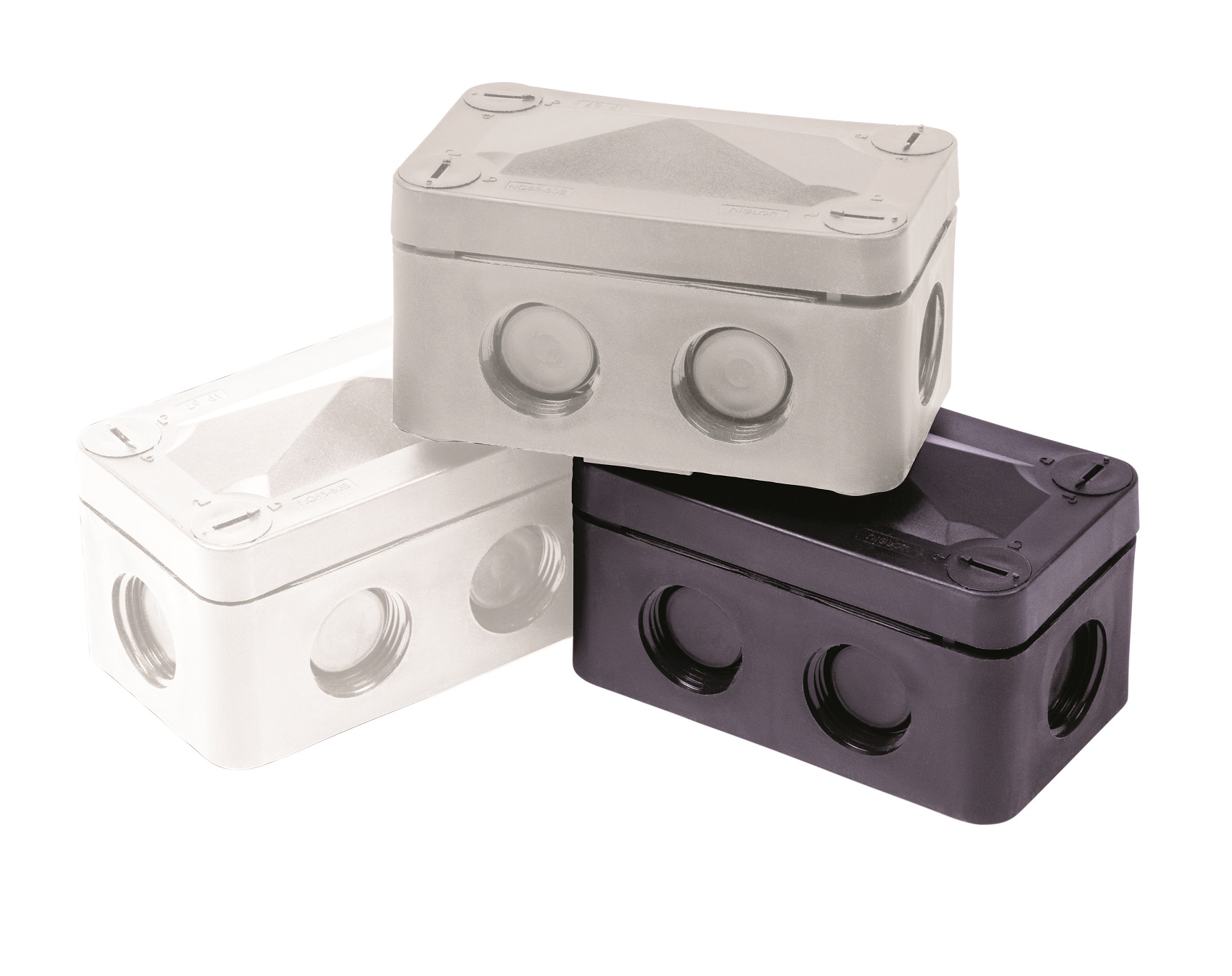
When it comes to connection boxes, there are now even more options to choose from. The Niglon team has launched its IP66 Membrane Moulded Boxes, available in black, grey or white, which are weatherproof and UV resistant meaning they’re ideal for use outdoors. An integrated gasket to ensure the perfect seal, dual option cable entry, and quick fixings mean the product couldn’t be simpler to install. Niglon’s Commercial Director Paul Dawson comments: “We are committed to extending our ranges to ensure we’ve got the right products for every installation. And we’re also committed to thoroughly researching and testing each new launch, so we can be proud to put the Niglon name on every single product.”

North-West Londoners to benefit from £1 million scheme
North-West London is set to benefit from a new £1 million investment to upgrade the electricity network. Work is currently underway to install a new grid supply point in Willesden. The new equipment replaces existing equipment which has been installed for decades and will be decommissioned. This will help to meet future demand of local power supplies in Willesden and the surrounding areas. The project, by electricity distribution firm UK Power Networks, started in May 2020 and is due to finish in March 2022, providing power for the equivalent of 2600 homes. As part of the scheme, the firm has consulted local councils and other interested parties to ensure that people experience as little disruption as possible while installation work takes place. Joshua Alderdice, project manager at UK Power Networks, says: “This cable upgrade is part of our ongoing investment in the network to maintain reliable power supplies. The aim is to test the cable connections as we go along, to ensure a smooth transition for when the project is completed next year.” UK Power Networks is constantly working to improve the performance of its network and to meet future needs for power. This network improvement project is part of the company’s £600 million investment in its electricity networks this year, to help local communities achieve their decarbonisation ambitions; so as more customers turn to low carbon technologies such as electric vehicles, they have a supply and infrastructure that’s fit for purpose.