2 November 2026
Product of the Month: Amari Floodlight range by Aurora Lighting
 
11 November 2026
Energy, AI and smart buildings: register now for EMEX 2026
 
11 November 2026
Solar and batteries could cut electricity costs by 40%, data finds
 
11 November 2026
EIC confirmed as ECN Awards 2026 charity partner
 
11 November 2026
Acrospire to support Green Frog's European expansion
 

Latest News


Power poles play their part for safety
UK Power Networks has added a unique six-digit number and a QR code to almost half a million electricity poles in the East of England as an extra safety precaution. The new labels will direct people on how to report hazards or damaged overhead power lines and to access the latest safety advice. The company, which distributes electricity across the East, has now labelled 490,000 wood poles assets across the region. This will enable people to report the unique pole number and its location and also help them find electrical safety tips by scanning the QR code. These include specific information available for landowners, farmers, anglers, construction, haulage and logistics companies as well as the emergency services. This content will include written guides to staying and working safe around electricity as well as video material, while it will also provide the what3words location code for each pole to help the reporting of any emergency incidents and the 105 national power cut and emergency number. Ros Forbes, a safety advisor at UK Power Networks, says: “Getting the best safety information and resources to the right people when they need it is key to keeping people safe. “Using the vast number of poles we have is an innovative way of doing this and a first for both UK Power Networks and other Distribution Network Operators. “We have worked with our asset management team to ensure the QR codes can direct people to the range of information we have about staying safe around high voltage electricity across a range of jobs or activities. “This technology is a first for the industry and means we have a direct point of contact for the public at what is effectively half a million different locations so it’s really useful and gives us scope to reach out to even more of our customers.”

IronmongeryDirect and ElectricalDirect support students learning in Africa
A charity that aims to empower students in Africa with quality IT school resources, has received a donation of over 300 computer items from IronmongeryDirect and its sister company, ElectricalDirect.   The two companies, part of the Mantuan Group, have donated over 300 items of IT equipment to the Turing Trust, a charity that reuses and refurbishes tablets, phones and computers to be deployed to schools in Africa. The equipment donated by the Essex based ironmongery and electrical suppliers included computers, laptops, monitor screens and cabling, enabling 1,944 students to gain vital access to digital resources and learn vital IT skills. What’s more, the donation offsets 30 tonnes of CO2 emissions, which is the equivalent of planting 75 trees, or offsetting the annual carbon footprints of three Britons. On the company’s donation, Dominick Sandford, Managing Director at IronmongeryDirect and ElectricalDirect says: “As part of our ongoing commitment to charity and worthwhile causes, we are delighted to support the Turing Trust with this donation. By providing training opportunities and skills development both in Africa and the UK, its operation also reduces waste and supports a more sustainable and environmentally friendly society, and we are pleased that we can help make a difference.”   James Turing, Founder & CEO of the Turing Trust comments: “We are immensely grateful to all the team at IronmongeryDirect and ElectricalDirect for their donation, which will empower almost two thousand students with technology enabled education in Africa. The embodied energy savings created from this donation is also enough to power seven UK homes for a year and this donation helps to demonstrate what can be achieved through a circular economy approach to reusing business IT equipment.”   The Turing Trust was set up in 2009 in honour of Alan Turing by his family and seeks to provide quality IT resources and training to schools in sub-Saharan Africa. From its Edinburgh workshop, the charity refurbishes and ships IT equipment and educational software to help bridge the digital divide.

TrustMark launches Homeowners Guide to Retrofit
TrustMark has now launched its “Guide to Retrofitting your home”. The guide aims to help clarify and explain for homeowners what ‘Retrofit’ means, how it works and the benefits it can bring for how we live in our homes. The guide launches at the inaugural ‘Building Sustainable Communities’ event, in partnership with Bradfords Building Supplies, being held this evening (24 November) at the Somerset County Cricket Club. With UK homes using 35% of all its energy and emitting 20% of the carbon dioxide emissions, retrofitting existing homes with energy and emission-reducing measures is ever-increasingly important in the drive to meet the UK Government’s target of Net Zero by 2050. Simon Ayers, CEO of TrustMark explains, “Retrofit is a well-used term in the construction and Repair, Maintenance and Improvement (RMI) industry that’s been around a long time and understood by many. For homeowners though, it’s a relatively new term and getting to grips with what it actually means and the options and benefits open to them can be a little overwhelming. We felt we could help improve their understanding, demystify some of the jargon and technical terms used and assist homeowners to understand how they can benefit from retrofitting their home.” With around 28 million homes in the UK and the average Energy Performance Certificate (EPC) rating of D or below, there is an opportunity for homeowners to improve not only the energy consumption and emissions of their homes but also the health and wellbeing of their families. “Making our homes healthier and more comfortable to live in is increasing in priority for many of us,” continues Ayers. “But to get the best result from installing any energy efficiency measures and to avoid making an existing problem worse, they should be properly planned, well-thought through and carried out by skilled, technically competent tradespeople who commit to high standards of workmanship and protection for their customers.”

Scrub up nicely with Knightsbridge bathroom accessories
Frequently it is the little touches that impress in bathroom design, and that’s why Knightsbridge offers a range of wiring accessories to complement any décor, from shaver sockets to pull cords. Knightsbridge supplies more than 30 different types of shaver socket, in a huge array of colours, finishes and fixings, to suit every style of bath and washroom. As an example, sockets can be screwless, flat plate, raised edge, or round edge and finished in a variety of matt and reflective metal finishes – matt black, polished brass, and gunmetal to name a few. Many of these also come with a choice of black, white, or grey inserts, offering the buyer huge flexibility in choice. These shaver sockets can be matched to other wiring accessories, such as two-way plate switches and fan isolator switches. Pushing the boundaries of innovation, Knightsbridge also offers a Grid fan isolator grid module, which takes up just a single grid position. This module can be finished in polished chrome, brushed chrome, white, matt white, matt black, and (more recently) gun metal. The pull cord switches are offered in polished chrome, metal matt black, brushed chrome, black nickel, antique brass, white and matt white – with matching pull cords. With such a wide range of products, designs and finishes to choose from you can transform any bathroom, making it both stylish and functional with wiring accessories that add value.

CICV Forum insists the industry must keep following COVID-19 measures
As Scotland prepares for its second coronavirus cold snap, the Construction Industry Coronavirus (CICV) Forum has urged the sector to focus on health and safety to protect colleagues, customers and families from another winter of discontent. The collective warns that COVID-19 is still a serious threat and vaccinations can only help so much – insisting that it’s vital for the whole construction industry to keep following rigorous health and safety procedures at all times. Rebecca Crosland, Chair of the Forum’s Health and Safety group, and Head of Health & Safety at the Building Engineering Services Association (BESA), says: “Despite a highly successful vaccination programme, the coronavirus pandemic is far from over. “With new cases of COVID-19 being reported all the time, what we do now will have a big impact on the transmission of the virus as we move into the winter and New Year. “With colder weather approaching, people will be increasingly working and spending their downtime indoors, where the risk of infection is much greater. It is therefore vitally important, even if you have been vaccinated, to keep following all the COVID-19 secure controls to protect vulnerable individuals, your work colleagues and yourself. “This means washing your hands regularly, keeping to the physical distancing rules and using your face covering whenever possible. Remember – just because you don’t have to wear one, doesn’t mean you shouldn’t! “It’s also important to get tested regularly, especially if you have developed symptoms, and to ensure you get vaccinated and receive the booster jab when offered.” [embed]https://www.youtube.com/watch?v=UxjPUdhvBYE[/embed] The Forum said it was essential for the industry to keep following its latest advice video on safe working practices and other information on its website, including updated good practice guidelines designed to keep companies and their staff safe. The body has produced a wide range of easy-to-follow guidance animations over the past 20 months, including advice on face coverings, guidance on travel and information for those carrying out domestic work And Martyn Raine, Technical and Skills Manager at SNIPEF, adds: “The health and safety advice may seem familiar by now, but the core messaging and key points are still relevant and should be followed by all workers in all roles. “At the root of everything is basic hygiene and the recognition that COVID-19 isn’t giving up, so neither should we. “We have come so far and worked so hard, so it’s essential that we keep giving this deadly virus the respect it deserves and keep ourselves, our colleagues and our families safe when we’re on and off-site.” As well as its range of videos and guidelines, the CICV Forum has produced a Long COVID safety-critical roles checklist, secure site risk assessment template and close working checklist that can be downloaded to help contractors plan COVID-safe working practices. The guidance follows a range of other information which is still available on the Forum site, including advice on working from home and preparing for HSE spot checks. The CICV Forum is made up of 29 trade associations, professional services bodies and companies. Since its inception in March 2020, it has maintained a steady supply of information and practical advice to the sector as well as carrying out surveys, producing animations and posters, hosting webinars and speaking with government ministers.

Overcoming design challenges for Gateshead's new school
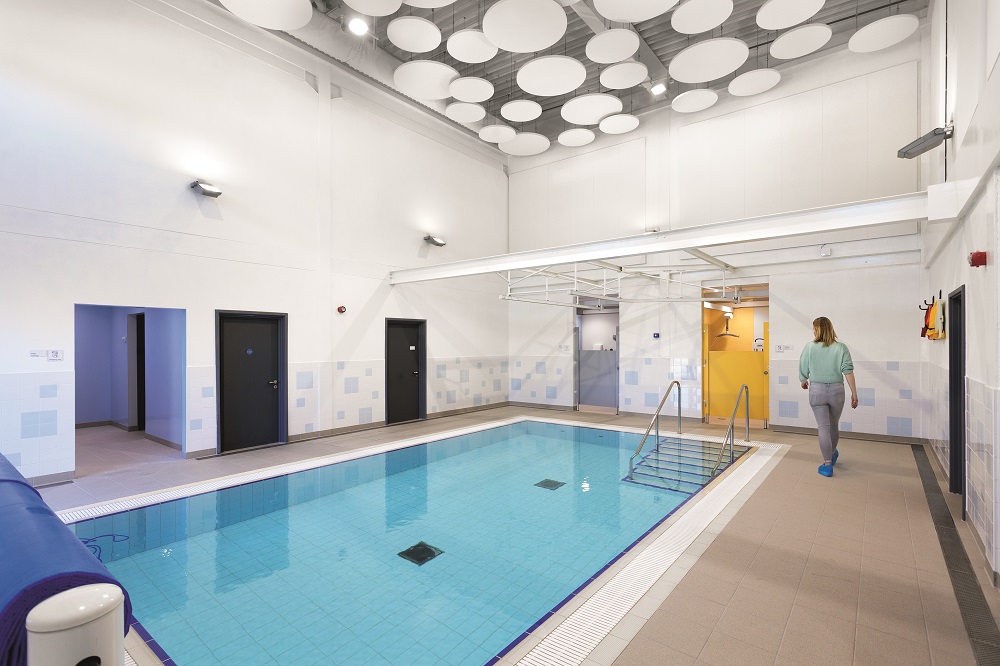
The lighting design of Gibside School, Gateshead's new flagship state-of-the-art special needs primary school, wasn’t without its challenges. Vaulted and unique ceiling designs were soon overcome by the design team at Thorn Lighting. The team prepared a full interior and exterior lighting design layout to Wates Construction and McVickers Electrical Contractors for the £12.1 million design and build project that was subsequently approved by Gateshead Council. Gibside is a primary school for pupils with a range of special needs (moderate learning disabilities (MLD), severe learning disabilities (SLD), profound and multiple learning disabilities (PMLD) and autism spectrum condition (ASC). The new school accommodates 170 pupils, and the specially designed building includes a hydrotherapy pool with hoists, two halls, an internal sheltered courtyard so children can play outdoors in all weather, a multi-use games area with accessible gym equipment, sensory and soft playrooms, specialist changing facilities and offices for physiotherapy. The classrooms initially posed a problem as the ceiling is vaulted and also flat in places, making uniformity an issue. Thorn’s IQ Wave range was the ideal solution. A combination of the suspended and surface mounted luminaires, provide great uniformity and illumination levels for the classrooms. IQ Wave incorporates Thorn’s unique MV-Tech light optic and the highly reflective back, creates a smooth, homogenous illuminance with great lighting quality and high user comfort. Low glare (UGR 19, <3 000 CD/m2 at 65°) ensures a comfortable ambient light while high efficacy (>100Llm/W) achieves significant energy savings when compared to traditional light sources. IQ Wave benefits from a modern wave design and the flexibility of several installation options including the possibility of recessing the luminaire in exposed and concealed grid systems as well as plasterboard. For the swimming pool lighting, a unique ceiling had to be incorporated into the design. This obstacle was overcome with the use of Thorn’s Areaflood Pro floodlights mounted directly and indirectly over the pool area. Areaflood Pro is a general-purpose area floodlight with superior optical performance, control and efficiency. Optimal light control (0cd at 90°, minimal spill light) provides a comfortable low glare lighting for swimmers and its 100k hours rated lifetime on both drivers and LEDs ensures minimal maintenance costs. Thorn’s extremely efficient Hipak Pro high bay illuminates the sports hall, with a dedicated asymmetric optic, sports bracket for extra security and a high light output of up to 18500 lumens. The innovative design of the body ensures optimal thermal management and a long LED life up to 50 000 hours. With significantly reduced maintenance. Beta has been installed in the offices to provide a flexible, efficient, and long-lasting solution with a prismatic diffuser in square and rectangular variants suiting the traditional modular ceiling dimensions (600, 625, 300x1200). The corridors have been lit using Thorn’s Chalice LED downlights and slim, circular Novaline luminaires. Chalice is a complete range of LED downlights with two diameters (150mm and 200mm) and a SMD-LED module providing lumen package options from 1200lm up to 2700lm. Novaline LED offers a wide variety of lighting options with four lumen packages; 1 250, 1 800, 2 500 and 3 500 lumens, and a choice of two colour temperatures; 3000K and 4000K, for lighting design and application flexibility. Glacier efficient decorative LED pendants with high lumen packages have been installed in the halls, creating a modern fresh appearance. Other interior luminaires installed include Cetus recessed downlights in the toilets and Aquaforce IP66, dust and moisture resistant LED luminaires in the plant area. For the exterior, Piazza II LED robust IP65 rated luminaires with a unique light distribution have been mounted on to the external walls. Piazza II LED offers 3 metre forward light throw and 12 metre spacing with a very low upward light throw with less than 2.5% ULOR and excellent 116 lm/W efficiency. DCO-LED bollards have been installed on pathways to provide comfortable visual guidance via an ambient white light with no glare. Civiteq LED lanterns have also been incorporated with 120 LEDs driven at 350mA and a wide optic. David Wingfield, business unit director of Wates Construction in Yorkshire & North East comments: “The handover of this project is a fantastic achievement for all involved. Despite the challenges posed by the pandemic, our teams and partners have worked tirelessly and used huge amounts of initiative to deliver this state-of-the-art facility, within budget and to the specific design requirements of the school”.

New £4million power boost for the residents of East London
The Residents of East London are now benefitting from a new £4 million investment to upgrade the areas electricity network. Work has recently been completed to install two new 132kV cable circuits between Barking and Brunswick Wharf. The new routes replace existing ones which have been working for decades and will now be decommissioned. This will help to ensure the reliability of local power supplies in the future. The project, by the electricity distribution firm UK Power Networks, started in mid 2018 and was energised this summer, providing enough power for an equivalent of 18,000 homes. As part of the scheme, the firm consulted with local councils and other interested parties in order to ensure that people living in the area experienced as little disruption as possible whilst installation work took place. Joshua Alderdice, project manager at UK Power Networks, says: “East London is home to both regeneration and new investment, so therefore ensuring the lights are kept on for all, is vital. That’s why we are making a significant investment into this project. “UK Power Networks is working in partnership with our alliance of contractors to support the substantial increase that will be required in capacity for this busy area.” UK Power Networks is constantly working to improve the performance of its network and to meet future needs for power. This network improvement project is part of the company’s £600 million investment in its electricity networks this year, to help local communities achieve their decarbonisation ambitions in the drive to Net Zero. One of the UK’s largest electricity distributors delivers electricity to around 8.3 million homes and businesses and currently employs over 6,000 staff and contractors in order to maintain the London electricity network for 2.4 million customers. In London alone, UK Power Networks’ cables stretch across more than 37,000 kilometres.

Become a registered electrician with the ECS and raise standards
The Electrotechnical Certification Scheme (ECS) is encouraging electricians to help raise standards for installation and maintenance electricians by becoming an ECS Registered Electrician. There are now more than 35,000 Registered Electricians under the scheme, representing more than two-thirds of all ECS gold card holders in electrical installation and maintenance occupations. This number is increasing every day as more experienced electricians sign up to the Registered Electrician status, as well as newly qualified electricians meeting this threshold for competence-based vocational qualifications to a Level 3, the latest edition of BS7671 and signing up to the Code at the start of their professional journey. ECS Registered Electrician status was introduced in 2017 to raise the bar on new entrants obtaining their ECS gold card, and to recognise the need for undertaking of continuing professional development (CPD). It also introduced a Code of Professional Conduct and ensured electricians were kept up to date with the latest edition of the wiring regulations (BS7671). Andy Reakes, Head of Growth at ECS, says: “Registered Electrician status recognises those who are not only qualified to the industry-recognised Level 3 standard, but also have opted into the Code of Professional Conduct and a commitment to undertake CPD. This status is a well-deserved endorsement for the professionalism and skills of these installation and maintenance electricians, and also means they stand out amongst their peers with a valuable boost to credibility in the industry. “More clients and contractors are requiring electricians to be up to date with the latest edition of the wiring regulations and technology developments so aspects like Registered Electrician status and the addition of the CPD recording system are vital for quickly and effectively demonstrating this verified level of training, assessment and competence.” If you haven’t signed up to ECS Registered Electrician status yet, login to MyECS and update your status to show your commitment to development and raising standards.

Case study: Network Rail invests in reliable signalling power with Schneider Electric’s Compact PSP
How intelligent power supply solutions help Network Rail’s signalling equipment operate reliably with reduced costs and carbon emissions. Network Rail owns, operates and develops Britain’s railway infrastructure. The company has 14 routes across five Network Rail regions, including Eastern, North-West and Central, Southern, Wales and Western and Scotland’s Railway. Specifically, Scotland’s Railway makes up over 17% of Britain’s rail network. Network Rail owns and maintains 4,715 bridges, manages 591 level crossings and has 4,326 signals and 359 stations in Scotland. As part of Network Rail’s decarbonisation programme, it has also electrified 325km of Scotland’s central railway network in seven major cities. In 2020, Network Rail was the first rail company worldwide to commit to a decarbonisation programme and is working to transition from diesel to electric trains to achieve a net zero carbon railway by 2050 as part of the UK efforts to prevent climate change. Scotland’s Railway is on track for reducing the industry’s carbon emissions to net zero by 2045. The fundamental role of Network Rail is to deliver a safe and reliable railway, which requires the careful management and delivery of thousands of projects every year as part of the Railway Upgrade Plan to grow and expand the nation's railway network and respond to the tremendous growth in demand over the past 20 years. One of Network Rail’s most important aspects is ensuring a continuous supply of power to signalling systems; otherwise, the railway stops. The challenge The UK rail industry is faced with increasing demand from passenger travel, the rail freight industry and the ongoing need for asset replacement of the network whilst ensuring safety, security and reliability. The Office of Rail and Road found that in 2021, nearly 60% of train cancellations were attributed to infrastructure and network management issues such as track and signalling. This figure hasn’t changed since 2019, so it’s clear that this issue needs to be addressed. To meet this challenge, rail operators require intelligent solutions to monitor, control and optimise the electrical assets on the rail network. The signalling power supply comes onto the rail infrastructure from a Distribution Network Operator (DNO) network through a Principal Supply Point (PSP). A PSP for many train routes may also have an uninterruptible power supply (UPS) to maintain the supply through transition to alternate power supplies. However, large-scale PSPs are often designed as a one-product-fits-all, and in many instances, can become excessively expensive. The need for a commercially effective, compact alternative with a smaller carbon footprint became increasingly apparent. The solution With this in mind, Network Rail partnered with Schneider Electric to trial its reliable Compact PSP (cPSP) in Derbyshire before successfully gaining the contract and installing at four locations in Scotland: Pitlochry, Blackford, Mosspark, and Insch. Schneider was a compelling choice due to its existing relationship with Network Rail and its trusted experience and expertise in the rail industry. Schneider Electric installed its Compact PSP solution, which provides signalling equipment with the secure power required to operate reliably whilst offering the benefits of reduced size and the opportunity to access the system remotely. The technology built into the cPSP includes an electro-mechanical bypass of the Uninterruptable Power Supply (UPS) and internal system monitoring to Network Rail intelligent infrastructure, which is essential in meeting industry standards. It also includes an Insulation Monitoring Device (IMD) which monitors the insulation resistance of each outgoing feeder cable and notifies RADAR if a measurement falls below permitted limits. A unique and crucial element of the Compact PSP is its small size, which gives engineers and Network Rail greater freedom in system architecture by facilitating the use of more cPSPs which allows greater use of short feeder runs. This allows supply points to be placed closer to the equipment, so electrical supply has less distance to travel, reducing losses and cable sizes. This makes it a more cost-effective solution. The size of the cPSP makes it ideal for placement in track-side areas where space is limited or for islands of signalling assets where a traditional PSP would not be suitable. The Compact PSP design can provide up to three outgoing signal power supplies from two incoming supplies – either two DNOs or one DNO and one alternative supply such as a generator. This eliminates the need for expensive civil engineering work and infrastructure to deliver a large PSP. Therefore, the cPSP significantly reduces costs and materials and adds to the ease of installation. The solution is also virtually maintenance-free as its internal monitoring system enables remote status monitoring. The intelligent software can alert supervisors to detected faults before they develop into potential crises. The result Schneider Electric’s Compact PSP solution provides a reliable and sustainable electrical power supply solution for Network Rail. It ensures a seamless performance of rail services by preventing train delays caused by signalling power problems, which is an ongoing pain point. The solution can provide up to 80% in financial cost savings over its life cycle compared to the traditional PSP and be delivered at a fraction of the carbon footprint, saving 86%. The carbon footprint of the cPSP is only 10% of a full-sized PSP over its life span. As the UK transitions to net zero by 2050, switching to greener solutions is crucial for meeting the rail industry’s climate goals.

Resideo introduces home security solution to UK residential market
Resideo Technologies has announced that it is introducing its Total Connect Box home security system - a self-monitored wireless security product - to the UK residential market. The Total Connect Box home security solution is subscription free and available in three different kit variations to accommodate all installations, dependent on the customer needs. It provides installers and homeowners with a wireless home security system that is straight-forward for the professional installer to install and maintain, and simple for homeowners to monitor and operate. The key features of Resideo's Total Connect Box home security system are: Integrated wireless security system with built-in IP & GPRS Email, SMS and push & voice noti­fications Free smartphone application Works with Total Connect Pro Manager installation and maintenance support systems Two-way 868MHz radio covering up to 2000m in open field Up to 32 wireless peripherals per installation Transmission of images captured by CAMIR-F1 detectors EN50131 certi­fied solution Dominique Gauthier, Resideo's EMEA Business Development Director, says: "Our Total Connect Box home security solution is a very popular product in Europe, especially with installers who are looking for a reliable, easy to install, self-monitored system for their residential customers. We are confident this will become the system of choice for UK homeowners looking for a subscription-free security system, which offers great value - and it can be discreetly installed around the home by professional installers without disturbing the décor." Martin Wilson, Resideo's UK and Ireland Sales Director adds: "We are pleased to bring our Total Connect Box home security solution to the UK market. We're introducing it to electrical wholesalers across the UK and we're looking forward to hearing our customers and homeowners' feedback."