2 November 2026
Product of the Month: Amari Floodlight range by Aurora Lighting
 
12 November 2026
Schneider Electric transforms Southampton hospital estate
 
12 November 2026
GTEC Training opens new education facility in North Yorkshire
 
11 November 2026
Energy, AI and smart buildings: register now for EMEX 2026
 
11 November 2026
Solar and batteries could cut electricity costs by 40%, data finds
 

Latest News


Emergency lighting: surface vs recessed
Thanks to LED and compact battery technology, surface mounted emergency lighting is now convenient, easy to install and unobtrusive. But is it being unnecessarily overlooked in favour of recessed, in situations where surface-mounted could be the better option? Here, Red Arrow Trading examines how surface mounted lighting has changed, and explores the advantages of latest-generation surface mounted emergency lighting products. The different types of emergency lighting BS EN 1838 specifies that emergency lighting is required to maintain illumination for a minimum of one to three hours in the event of a power outage, to enable people to safely evacuate a building. The exact time needed depends on the use and risk of the premises, the immediacy of evacuation and the time needed for re-occupation. For example, buildings where people sleep, such as hotels or residences, require battery backup duration of at least 3 hours. Emergency lighting can include a mix of illuminated signage, stand-alone fittings and incorporated lighting. The main emergency lighting requirements for commercial premises are: Escape Route Lighting, that guides occupants through exit routes. Open Area Emergency Lighting (also known as ‘anti-panic’ lighting) that maintains illumination in open areas, allowing people to calmly find their escape route. Stay put/Safety Lighting that allows occupants to stay in the building until there is one hour of illumination left, before being escorted to a safe place. High Risk Task Area lighting may also be required in certain industrial or mechanical environments but is covered by different requirements to the one discussed in this article (for more information on High Risk Task Area bulkheads please contact Red Arrow directly). Businesses can then choose whether to opt for maintained lighting or non-maintained lighting, self-contained or central battery sourced systems, and recessed or non-recessed models. Maintained lighting are constantly kept on, either as part of the ‘normal’ lighting system or permanently illuminated signage (such as Exit signs found in theatres and cinemas). These luminaires are mains powered when in everyday use but powered by a backup battery in the event of power failure. Maintained emergency lights can be differentiated from other ‘normal’ lights by a green indicator light. Switch Maintained lighting is used as part of the ‘normal’ lighting system but can be switched off when not in use (but will still function in an emergency). Non-maintained lighting only comes on when power supply to the everyday lighting system fails. These are powered by a battery that is charged by mains power and activates in the event of power failure to the fitting. Self-contained or ‘single point’ emergency lights each have their own battery source, while central battery source emergency lights connect several lights to one battery. Finally, recessed emergency lights sit flush to ceilings and walls, with the battery hidden behind them, while surface-mounted emergency lights affix to the surface – batteries included – with only a small hole needed to hardwire the fixture to the mains. Yet while surface-mounted fire alarms and carbon monoxide detectors are already accepted as a necessary safety product, surface-mounted emergency lighting is lagging behind, and is still seen as obtrusive (or just plain ugly). As a result, emergency lighting installers are tasked with the more disruptive, messy and time-consuming task of drilling large holes to house the light fitting and hide the battery – despite recent improvements to surface mounted models dramatically changing their visual impact, efficacy and reliability. LED technology Traditional emergency lighting luminaires, such as a fluorescent, suffered from battery compatibility issues which reduced their lifespans. As such, many emergency lights were only effective in an emergency for a limited number of times, before they needed to be replaced. LED eradicates these issues, requiring much less power to run, with much more compact lamps and drivers making them easier to incorporate into smaller fittings. Better batteries In the past, emergency lighting batteries were based around SLA (Sealed Lead Acid) technology, leading to much bulkier fittings and subsequently more requirement for the battery to be hidden away during installation. These were replaced by Nickel Cadmium batteries, a more compact alternative. Now, Lithium Iron Phosphate (LiFePO4) batteries are revolutionising the size and longevity of batteries: not only are they much smaller, but they are longer lasting in terms of recharge and discharge cycles. As a result, they can be incorporated into much smaller emergency lighting fittings and stand-alone products such as illuminated signage. Advantages of surface mounted These technological advantages have made all types of emergency lighting more discrete, reliable and energy efficient, but it’s surface-mounted emergency lighting that has really been transformed. Surface-mounted models are now slimline and compact, making them less noticeable once they are installed, as well as simple to install, replace and maintain. For instance, a surface mounted non-maintained emergency light is much quicker and easier to identify during fire safety inspections than the small green indicator light found on a maintained light. For awkward installations, such as listed buildings, architectural anomalies or jobs where time is of the essence and disruption needs to be minimal (such as care homes or schools), surface-mounted emergency lighting provides a low-impact, fast, and reliable option compared to fitting recessed models. It’s time for installers and commercial property managers to see how much has changed since the days of unreliable fluorescents and bulky battery packs, and recognise surface mounted emergency lights as the best option for a wide range of properties. Much like seatbelts or anti lock brakes, emergency lighting should be easy to forget it’sthey are there until you need it– but it’s crucial that it works as intended when you do. Discrete, slimline surface mounted emergency lights fulfil both functions, providing a safe and reliable but unobtrusive solution.

Tamlite Lighting wins regional sustainability award
Tamlite Lighting has been announced as Sustainable/Ethical Manufacturer of the Year 2021 at the Insider Made in the Midlands Awards. Now in their 11th year and co-ordinated by leading business publisher Insider Media, the awards celebrate excellence from businesses across the Midlands region. Tamlite’s approach to being a sustainable and ethical lighting manufacturer is two-fold: the products that are provided to customers; and the packaging and processes that are used to deliver them. At the core of its circular economy initiatives is Tamlite Environmental. It has implemented a number of strategies to enhance sustainability within its operations, including the process of removing all plastic bags from product packaging, whilst a project is also underway to ensure all new products are free of virgin plastics. The company is also working closely with its sister company Electrical Waste Recycling Group (EWRG – The Waste Experts) to offer an extensive luminaire, lamp, and electrical waste recycling service, which achieves 98% recovery rates through their processes. In winning, the independent lighting manufacturer fought off stiff competition from seven other organisations, with judges saying: “This is a company which has fully embraced the circular economy and driven a change of culture throughout the business. It’s a great example to other manufacturers looking to go green.” Commenting on the win, Managing Director John Allden says: “We are delighted to be recognised for our circular economy initiatives and are proud to be a showcase for what can be achieved in the Midlands. It is clear that manufacturers must play their part in ensuring the environment remains sustainable for future generations. Tamlite Environmental was born out of recognising the role we could play in achieving this. Although the initiatives we have introduced are in their infancy, the measure of its success will be realised by our clients and end users who will have dependable, sustainable lighting solutions long into the future.” The win comes as it was announced Tamlite had been shortlisted for two further awards at the MRW National Recycling Awards – Partnership Excellence – Commercial and Circular Economy Initiative – in partnership with EWRG. The winners will be announced on December 8.

Unicrimp introduces Catenary Wire and Jack Chain ranges
Unicrimp continues to expand its cable accessories portfolio and the latest development sees the addition of Catenary Wire, Jack Chains and associated accessory products to the growing range. Catenary wire is used to create an overhead catenary to support pipes, banners, cables and lighting, for example. The range comprises two lengths of 3mm galvanised steel wire rope (50m and 30m).  This is a flexible cable which has a 650kg breaking load. Included in the Catenary accessories range are 3mm zinc electroplated steel wire rope grips – used to create loop ends or eyelets at the of the steel wire rope by simply tightening the nuts; 3mm wire rope eyelets; M8 zinc plated strainer adjustable rigging screws; zinc electroplated steel wire hook wall plates and zinc electroplated steel wire ring plates. Jack Chain is a flexible general-purpose chain used for a variety of applications including suspending luminaires and signage, for example. Unicrimp’s bright galvanised steel Jack Chain is supplied in 10m lengths and the range also includes 25mm hook plates, for use with conduit and capable of holding up to 5kg load, and single ceiling hook plates – suitable for hanging ceiling pendant lights and able to take a weight load of 5kg.

Everything Hand Dryers experiences growth following ‘Plug & Play’ technology
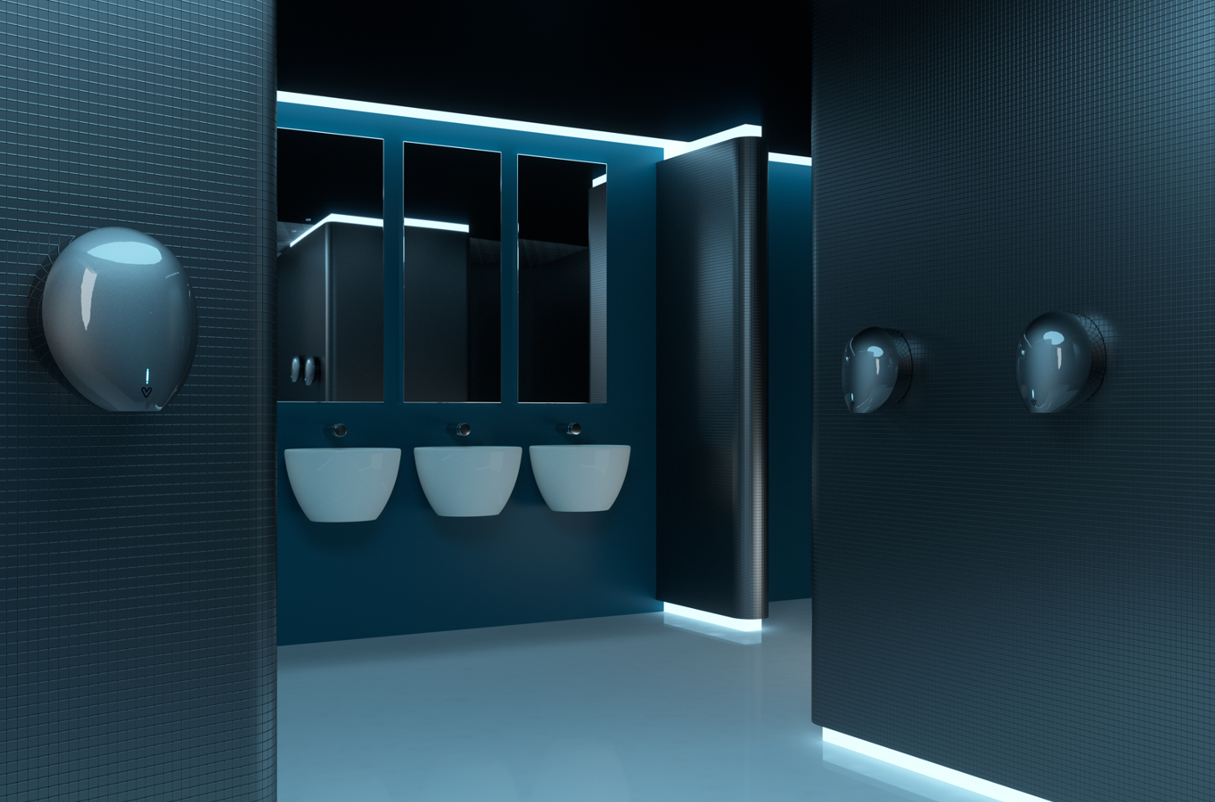
A leading manufacturer of hand dryers has experienced accelerated growth after introducing its innovative ‘Plug & Play’ technology to the electrical wholesale market. The trade brand of Velair, ‘Everything Hand Dryers’ has successfully revolutionised the hand dryer industry over the last 18-24 months with the launch of its unique Pebble range of hand dryers and impressive ‘Plug & Play’ technology – which enables users to easily replace, service or upgrade their hand dryer via a unique Docking Station called Terra4. In transforming both the installation and maintenance of hand dryers, Everything Hand Dryers has now secured partnerships with over 200 electrical wholesalers across the UK – increasing its sales by an impressive 249% within the last 12-months. Matt Anderson, Founder and Director of Everything Hand Dryers, explains: “Since introducing Everything Hand Dryers to the electrical wholesale market, we have received nothing but positive feedback about the innovation behind the Terra4 Docking Station and now supply over 200 wholesalers - accelerating the installation of Pebble hand dryers in washrooms across the country, including those of Lakeside shopping centre, Starbucks and KFC. "With new dryer models to be launched in the coming months, I am excited to continue to cement both existing and new commercial partnerships and believe wholesalers to be fundamental to our long-term growth.” The Everything Hand Dryers’ Pebble range boasts a sleek and modern design with a high-gloss, scratch-resistant UV coated finish and antimicrobial protection, together with an IK10 impact rating. Headquartered in Hampshire, Everything Hand Dryers plans to expand into international markets within the coming months.

Five steps to staying alive
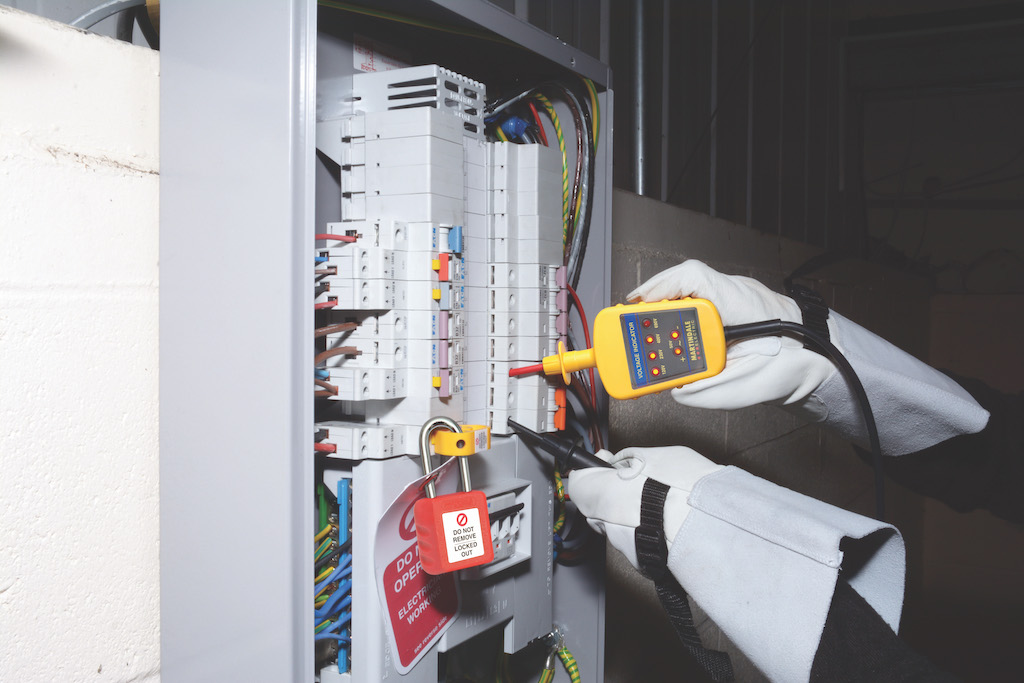
Over 16 years since the tragic death of 26-year-old electrician, Michael Adamson, there sadly remains unacceptable levels of accidents and fatalities related to electrical working. Michael was an experienced electrician who lost his life in a preventable electrical incident in 2005 when called to an ‘all hands on deck’ job to help get the gym within a large sports shop up and running. Cutting a cable marked ‘NOT IN USE’ which was, in fact, wired into a distribution board and not safely isolated, Michael suffered a fatal electric shock, robbing him of his future. In an effort to prevent such fatalities, various approaches to electrical safety and safe isolation have been developed over the years, including a comprehensive guide created by the Electrical Safety Roundtable which proposes that the all-important lock-off kit should be included in the essential PPE list for electrical workers. Now, in an ongoing bid to safeguard workplaces – and protect the lives of anyone working on or near an electrical installation – Martindale has created a new, simplified version of its more extensive and detailed process in the hope that its memorable acronym – ‘ALIVE’ - will help to prevent injuries and save lives. Steve Dunning, Managing Director, Martindale, explains; “We need to acknowledge that, in terms of the safety of individuals, there is a difference between the activities that should take place prior to working, such as gaining permission and permits, for example, compared to the activities that are totally critical in terms of preventing accidents and fatalities. For instance, a risk assessment is a critical element of any job, but it is not core to safe isolation in terms of staying alive. The same is true for activities that take place after working on an electrical system, such as safe re-testing and start-up. “We and the Electrical Safety Roundtable have both defined clear and comprehensive 12 step procedures that are well-documented, but lives are still being lost – totally needlessly. “In creating our ‘ALIVE’ message, we are distinguishing between good working practice (such as our complete 12 step approach and the Electrical Safety Roundtable’s guidelines) and shining a spotlight on the five vital steps that absolutely must be carried out for your own protection and to prevent loss of life. The 12 step approach will include activities that should certainly take place, particularly in terms of compliance; both sets of process and procedure are valid and, in fact, complementary, but by streamlining the message and focusing on the most vital elements, following the ‘ALIVE’ process is what will, quite literally, keep you alive.” ALIVE: Five fail-proof steps to safe isolation A - Approved Kit Before starting, make sure your equipment meets all legal safety standards (BS EN61243-3). L - Lock Out Identify the point of isolation - lock it off - and place warning tags onto the equipment. I - Initial Prove Test your Voltage Indicator against the proving unit to make sure that it’s working properly. V - Voltage Test Use your Voltage Indicator to confirm that there are no dangerous voltages in the circuit you are about to work on. E - Ensure Prove and re-test the Voltage Indicator against the proving unit to ensure it is working, before you start working on the circuit. All Martindale electrical testing products will now be sold with a hard copy of the memorable ‘ALIVE’ message to ensure that it is shared as widely as possible and that the handy card remains accessible at all times to anyone working on or near electricity. Steve Dunning continues; “There are no reasonable circumstances in which you should be working with live equipment. By making this process as straightforward as possible, our hope is that more maintenance engineers, more technicians, more operatives, more hard working people will go home safely to their families at the end of their working day. It really is as simple as that. Every life lost to such incidents is absolutely tragic. It is all of our responsibilities to prevent this from happening and we will not stop sharing this message until such fatalities are a thing of the past.” Downloadable ALIVE resources for electrical contractors and engineers are available on the campaign page at the company’s website.

GE announces investment to create new generation of UK Engineers
General Electric (GE) has announced a five-year, $3.5 million (£2.5m) investment in the UK as part of its global Next Engineers programme, to increase the diversity of young people entering engineering. The UK programme will be based in Staffordshire, where GE operates three sites that design, develop, and service products used throughout the power and renewable energy industries. Next Engineers aims to inspire more than 3,500 local students aged 13-18, providing first-hand experiences of engineering, and awarding financial support to pursue further education in engineering. Kevin O’Neill, President & CEO, GE UK, says: “Our growing global economy will require more engineers to solve society’s most pressing challenges – from clean energy to quality healthcare and more sustainable flight. Next Engineers will provide a platform for Staffordshire’s young people from different backgrounds to bring their unique perspectives to engineering and help address these important issues, enthusing and introducing them to the hands-on learning experiences they will need to pursue engineering careers.” Staffordshire is one of four global locations so far announced by GE, joining Johannesburg, South Africa, along with Cincinnati and Greenville in the United States. Theo Clarke MP, Stafford, comments: “Having an initiative like Next Engineers coming to our community is fantastic for young people locally. We were already fortunate to have a top global employer like GE in the region, but local students now have the opportunity to explore viable engineering careers that they had previously thought were unattainable. It really is an amazing opportunity for our young people.” Next Engineers is a signature programme of the GE Foundation, an independent charitable organisation funded by GE. The GE Foundation is partnering with MyKindaFuture, the UK’s leading HR tech company specialising in engaging and onboarding underrepresented talent, to implement Next Engineers in the UK. Next Engineers will offer one-hour sessions and hands-on activities for the youngest (Year 9) students. Weeklong Engineering Camps will be run during the school holidays for those in Year 10. There will also be an Engineering Academy providing three-years of out of school coaching for Year 11-13 students. Those accepted onto engineering apprenticeships or engineering degrees will also receive a funding contribution from the GE Foundation. The Staffordshire investment is part of a $100 million, long-term, international Next Engineers programme which GE Foundation unveiled earlier this year, designed to reach more than 85,000 students across 25 locations globally over the next decade.

New Elucian consumer unit brochure and catalogue now available
Scolmore completed its offer in the wiring accessories category earlier this year with the launch of a comprehensive Consumer Unit and Circuit Protection range - ‘Elucian by Click’. The company has now updated the original Elucian brochure and product catalogue to include a raft of new accessories that has recently been added to the extensive range. The glossy A4 Elucian brochure and the handy A5 Elucian product catalogue are designed to provide designers, installers and specifiers with a comprehensive guide to the full Elucian range. They both include detailed information on how the range is designed to ensure compliance with BS 7671 and the product catalogue includes a dedicated technical section which provides all the technical information and mounting dimensions needed for the consumer unit and protective devices products. The new accessories that have been added to the range and incorporated in the literature include terminal bars and support clips and screws; busbars, busbar clips and din rails; SPD cartridges, SPD tail packs, neutral link cables and combined live link cables; grommet strips, mains clamp & screw, mains clamp plate and adhesive labels. The extensive Elucian range of metal consumer units covers a broad range of installations and offers a number of features and benefits that will enhance the products’ convenience, flexibility and safety properties. The Elucian consumer unit range comprises a total of 58 individual lines which fall under five main product groups: 100A Mains Switch Consumer Unit. Dual RCCB Consumer Unit – 100A Mains Switch + 2 x 80A Type A RCCB. Dual RCCB/SPD Consumer Unit – 100A Mains Switch + 2 x 80A RCCB + 2 Pole SPD. Combination Unit – 100A Mains Switch + 2 x 80A RCCB. RCD Incomer – Mini Board – RCD. The Elucian circuit protection range comprises Mains Isolator Switches, RCCBs, SPDs, MCBs, RCBOs and blank modules: Katie Plumstead, marketing manager for Scolmore Group, says: “We are continually adding to our portfolio to introduce new and innovative products that contractors are seeking, to help them with quicker and easier installation and ensure they comply with the changing regulations. We know from our wholesaler customers and the contractors we engage with that, as well as the ability to browse the product range on our website, there is a demand for a hard copy version that they can flick through when away from their screens.”

Aico receives a Royal visit
Aico were honoured to receive Her Royal Highness, Princess Anne to their headquarters on Friday 8th October, in recognition of their impact as a prominent business in Shropshire. Her Royal Highness The Princess Royal arrived at Aico headquarters in Oswestry, Shropshire and was met by Aico’s Managing Director Neal Hooper, alongside local dignitaries Mandy Thorn, Deputy Lieutenant of Shropshire, Councillor Vince Hunt, Chairman of Shropshire Council, Owen Paterson, North Shropshire MP, Councillor Mark Jones, Mayor of Oswestry and Ruth Jones, Mayoress of Oswestry. Neal Hooper then commenced an in-depth tour of Aico’s building and facilities, providing Her Royal Highness with an insight into the company’s history, their pioneering innovations within home life safety and their award-winning Corporate Social Responsibility programme. Each of Aico’s four bespoke Mobile Training and Demonstration Units were on display, as The Princess Royal was informed of how the company’s ethos of education, quality, service and innovation drives all that they do; enabling the delivery of their mission statement as the leaders in home life safety, promoting best practice and engaging with communities to deliver safer homes. After meeting with all Aico | HomeLINK colleagues and discussing the significant work the company does for the UK housing sector, as well as the support they afford the local and wider community, Her Royal Highness was presented with a gift – a horse headcollar adorned with an Aico monogram. Her Royal Highness The Princess Royal concluded the visit with the unveiling of a commemorative plaque that will reside in Aico’s dramatic atrium. Managing Director of Aico Neal Hooper comments “At Aico, we are committed to providing the highest quality in all that we do and this is evident in our passionate people, continued innovation, exceptional service and unrivalled support. Our philosophy has provided a foundation for growth, constantly driving forwards, seeking novel ways of doing things which has proved to be the essence of our approach to Corporate Social Responsibility. To receive this recognition from Her Royal Highness is nothing short of an absolute honour, we are privileged to have been able to share Aico’s ethos with The Princess Royal.”

Support through testicular cancer with the Electrical Industries Charity
November is men’s month, and the Electrical Industries Charity is highlighting how important it is to be in the know about testicular cancer. Testicular cancer is mostly diagnosed in young men and men who have undescended testes at birth or have a family history of testicular cancer are most at risk. Being diagnosed with cancer can be incredibly scary. James, a power station worker, was diagnosed with testicular cancer aged 27. James contacted the charity after being diagnosed with stage one testicular cancer. James had managed to catch his cancer early and was advised his cancer had not spread – a positive sign, but the first treatment option was to remove his right testicle. Understandably, James was distraught at the prospect of surgery and was struggling to cope with the impact surgery may have. James believed post operation he would be less of a man and unable to have children. James and his fiancée had always wanted a family and he feared he would be left infertile and their relationship irrevocably damaged. James had not spoken to his doctor, his partner or family about his concerns and instead had let them bottle up inside of him – he was riddled with anxiety and stress and was increasingly tearful. The Electrical Industries Charity encouraged James to speak to his doctor to understand the likelihood of infertility and impotence. James had done his own research but found himself overwhelmed whenever he read about testicular cancer. The Charity welfare team understood James’ fear but told him knowledge is power. Although there may be a chance of infertility or impotence the doctor is the best person to advise and help him understand further treatment options. James was also anxious to speak to his fiancée, he feared rejection should he be infertile and felt his place as the protector and solid support structure would be destroyed. The charity team also funded counselling sessions to give James a safe non-judgemental outlet while he was struggling to speak to his partner and his family. Through counselling James worked through his grief and anxiety and after two sessions he opened up to his fiancée. James’ fiancée reassured him they were a team, and they will remain a team to find the best support possible. James’ partner then attended the doctor’s appointment with him to establish the likelihood of infertility, impotence and return of cancer. James’ doctor advised that by removing James’ right testicle his chances at making a full recovery are greatly improved and his sex life and fertility should not be affected. About one in 50 will get new testicular cancer in their remaining testicle but in such circumstances, there is the opportunity to only remove part of the testicle. With James’ fears eased and his fiancés' support, James underwent surgery and a single dose of chemotherapy to eradicate the cancer. Post operation, James attended two more charity funded counselling sessions and felt equipped to face life post cancer with the support of his fiancée. Since, James’ doctor has confirmed the cancer was successfully eradicated and he is now having bi-yearly follow up appointments. James and his fiancée married in the summer and are now thinking about adding to their family. The Charity continues to check in on James and should he need further support the Charity would be more than happy to help.

JTL launches free bite-size course on smart lighting
JTL is continuing to support the professional development of electricians with the launch of its latest, free bite-size digital course, ‘An Introduction to Smart Lighting.’ Part of JTL’s Power Up series – an initiative designed to further support the building services engineering sector by offering free advice and educational resources – the course is intended to help both apprentices and qualified electricians identify the best methods for the practical installation of smart lighting systems. As part of this course, learners will gain an understanding of the different components of smart lighting systems, how they work and how they can be controlled via the use of a smart meter or tablet. This course also explores the standards and definitions required for safe installation of smart lighting systems, as well as how learners can apply the open system protocols of KNX during practical installations. Designed to take a minimum of 30 minutes to complete, the course has been produced to facilitate the learner’s journey towards Continuing Professional Development (CPD) and improve workplace competency. Liam Sammon, Director of Learning and Innovation at JTL, says: “We’re delighted to be able to add to our Power Up series with this latest, bite-size course on smart lighting. As a leading electrical training provider, JTL is committed to providing electricians with a comprehensive set of resources and believe that this course will equip learners with the skills needed for their continuing professional development, as well as to help maintain workplace competency. “In its emphasis on installation and the components of smart lighting systems, this course makes for an excellent supplement to some of JTL’s other Power Up courses, such as our ‘Inspection and Testing’ and ‘Smarter Homes’ modules. Our latest course, along with the others in JTL’s Power Up series, can be accessed via mobile, tablet or desktop, meaning that participants can complete the course wherever and at whatever pace or time suits them.”