2 November 2026
Product of the Month: Amari Floodlight range by Aurora Lighting
 
12 November 2026
Schneider Electric transforms Southampton hospital estate
 
12 November 2026
GTEC Training opens new education facility in North Yorkshire
 
11 November 2026
Energy, AI and smart buildings: register now for EMEX 2026
 
11 November 2026
Solar and batteries could cut electricity costs by 40%, data finds
 

Latest News


SELECT urges youngsters to embrace the electrical revolution
As youngsters prepare to receive their exam results across Scotland this week, Scotland’s largest construction trade association is encouraging school-leavers to make their future an electric one. Thousands of teenagers will currently be mulling over their life choices – and SELECT says an electrical apprenticeship is the first step to an exciting and fulfilling career that offers significant potential and rewards. The trade body points to recent figures that showed a record intake of 738 apprentices for the electrical sector so far in 2021 and says an increasing number of ambitious youngsters are choosing an apprenticeship over traditional higher education routes. Fiona Harper, Director of Employment and Skills at SELECT, says: “Young people are very aware of the world around them and they can see the direction of travel as far as desirable skills and qualifications are concerned. “Prominent among them is acceptance that the future will be driven by electricity rather than fossil fuels. From electric vehicles and battery storage to heat pumps and the Internet of Things, more youngsters are realising that the complexities of modern electrotechnology will put electricians in pole position in the employment market. “There’s never been a more exciting time to be an electrotechnical professional, and the opportunity to be at the forefront of the technology of tomorrow is one that we hope will be willingly embraced by Scotland’s current cohort of school-leavers.” Ms Harper, who is also The Secretary of the Scottish Joint Industry Board (SJIB), adds: “It’s clear that youngsters are recognising that becoming a qualified electrician can provide an extremely rewarding and highly remunerative career. “As part of this, the opportunity to ‘earn while they learn’ and gain practical skills in a real-life setting while studying is also an extremely attractive proposition for many. “The number of young people who have been taken on by companies this year has not only defied the pandemic but also suggests that more young people are seeing electricians as custodians of the future – an image we would heartily endorse.” Ms Harper said it is heartening to see an increasing number of female trainees picking up the tools – highlighting the case of Caitlin Kearney, an apprentice at SELECT member company Quinnergy Group Ltd in Strathaven, South Lanarkshire. The 21-year-old starred in a video for Scottish Apprenticeship Week in March, telling viewers: “Apprenticeships are the way forward and the future for people leaving school. I’m learning things every day and a trade is the best bet for me.” Ms Harper also said the sector is hearing more stories like that of aspiring young electrician, Paul Maxwell, who changed his initial career choice and now works with established Glasgow-based electrical contractors A Alexander & Son. The 27-year-old recently told SELECT’s stakeholder magazine CABLEtalk: “I studied marketing at university but soon realised it wasn’t for me. Becoming an electrician gives you a skill for life; it’s probably the best decision I’ve ever made.”

Misconceptions are holding Brits back from electrification
More than one in three Brits wouldn’t consider purchasing an electric vehicle (EV), due to a perceived lack of charging points, according to new research from myenergi. 36% of those questioned felt that the charging network in the UK was unsubstantial, a figure that increased to 46%, almost one in two people, among those aged over 55. However, statistics released by the Department of Transport in May reveal that the UK’s public EV charging infrastructure has grown by over a quarter, to almost 23,000, in the past 12 months alone. With most drivers only commuting between 20-30 miles per day, and the UK’s public charging infrastructure only set to improve, myenergi argues that a simple lack of awareness is holding back our national transition to electrification. Jordan Brompton, co-founder and CMO of myenergi, comments: “The adoption of EVs is accelerating fast, with more than 215,000 pure-electric vehicles and 455,000 plug-in hybrids now registered on UK roads. However, education is critical to maintaining this momentum, driving further uptake and supporting the transition away from dated fuel types. “While driving, maintaining and charging an EV is really simple, we need Brits to feel confident that the charging infrastructure is sufficient. Unfortunately, there is still a misconception that EVs have a short range and public charging points are few and far between. “This couldn’t be further from the truth. In fact, the average range of a modern EV is 211 miles and there are now more publicly-accessible charging points than petrol stations! With most drivers commuting far less than their full EV range every day, topping up charge at home or at work is a simple task.” Oli Bennett, EV advocate and driver in the XITE ENERGY RACING powered by myenergi Extreme E team, adds: “When buying a petrol or diesel car, most drivers don’t check their fuel tank size or worry too much about running out of petrol. As a driver in the world’s most extreme electric racing series, I want people to understand just how practical, capable and efficient electric vehicles can be. “The research conducted by myenergi makes for concerning reading. EV charging is so much easier, cheaper and faster than you may believe. Range anxiety certainly sits in the past when it comes to EVs thanks to the continuous expansion of chargers like the myenergi zappi. Don’t let misinformation prevent you from joining the electric revolution!” The public charging network is augmented by the rising prevalence of home charging, facilitated by products such as myenergi’s zappi unit, the best-selling device that benefits from charging modes allowing Brits to utilise 100% green energy from wind or solar generation.

A Level results day 2021: School leavers look to 'jobs of the future'
This A Level results day, school leavers across the UK are re-evaluating their career priorities after the COVID-19 pandemic. More than plugs and sockets ‘Jobs of the future’, that will deliver Net Zero Carbon by 2050 and fight the effects of the climate crisis, are growing in appeal to school leavers. With the right training, electrotechnical professionals can help the UK significantly reduce its carbon emissions through their day-to-day work. Successful careers in this field often start with an apprenticeship and on the job learning, yet school leavers lack information on the best route to follow. Apprenticeships are often overlooked in favour of a university degree. Perceptions among A Level students are skewed, as careers advisors, teachers and parents rarely promote them as a viable option or alternative to a university degree. “Young people enthused by calls to halt and reverse climate change need more encouragement to consider a career designing, installing and maintaining UK’s new low carbon infrastructure,” says Andrew Eldred, ECA’s Director of Employment and Skills. “Electrotechnical and engineering services knowledge and skills are essential for the successful roll-out of nearly all low carbon technologies, including solar PV, heat pumps, battery storage and electric vehicle charging. “Apprentices are the bedrock of the electrotechnical and engineering services industry. Those employers able to retain and hire new apprentices can expect a healthy return on their investment, as well as longer-term benefits such as more sustainable business growth and stronger capability in new technologies.” Shifting priorities According to a study by housebuilder Redrow, more than a third of A Level pupils are less likely to choose a university education than they were before the pandemic. At the same time, almost half (42%) of young people say they are now more likely to consider on-the-job learning and apprenticeships. More than a third (36%) said they were concerned about their job prospects since the onset of the pandemic, and the proportion of young people offered information about apprenticeships via school was found to be at a four-year low – matching ECA’s own finding that only one per cent of school leavers were advised to consider an electrical or plumbing career by teachers, and two per cent by school career advisors. A survey carried out by ECA showed that a quarter of 18- to 24-year-olds thought low pay levels were a barrier to a career in the trades. More than a quarter also perceived a lack of opportunity for career progression. These notions could not be further from the truth: figures from the FMB show the average annual salaries for qualified plumbers and electricians range from £47,500 to £51,000. Meanwhile, the average graduate salary is around £23,000. Subsequent career progression into technician, management, commercial and professional roles can boost earnings further to £60,000 and above. New data from the Office for National Statistics (ONS) reveals that 18% of Brits overall have considered a trades career after the coronavirus pandemic. A further 18% found employment within a trade sector during the pandemic to pick up additional work or start a new career. Skills for Net Zero In 2020, ECA partnered with TESP, BESA, the Renewable Energy Association and Solar Energy UK to produce the Skills4Climate industry report, examining ways to ensure the electrotechnical sector has the required skills base to deliver Net Zero by 2050. The report found that 88 per cent of engineering services employers support a green recovery, yet a quarter (25%) said they would not be able to find competent workers to meet an increase in demand for net zero technologies. Almost three quarters (72%) said that poor careers advice for young people was the main barrier to new entrants to the industry.

New assessment from NET to accredit experienced fire industry workers
A new route for fire industry technicians to become accredited to the industry Level 3 standard has been launched by National Electrotechnical Training (NET). The FESS Experienced Worker Assessment is for people who have been working with fire, emergency or security systems for typically a minimum of five years. To ensure parity across the whole industry, it has been based on the same content as the FESS Apprenticeship, so both new entrants and existing workers are being assessed and accredited to the same standard. The assessment process involves a number of elements which must be completed within 12 months. Candidates will need to carry out and record a range of specified tasks in their workplace (covering health and safety, installation, commissioning, inspection and servicing) and upload the evidence to NET’s assessment system. These tasks will be verified by an authorised person to ensure it’s the candidate’s own work, then independently assessed and marked by a NET assessor to confirm they have met the Level 3 industry standard. NET will also carry out quality assurance audits once marking is completed. Then, in a NET-licensed centre, candidates also will need to complete safe isolation of a single-phase circuit, under controlled conditions. Finally, they will need to carry out a 90-minute online knowledge assessment in a NET centre, under observation. If they hold certain fire and security qualifications, they may be exempt from the online knowledge assessment. Successful completion of the Experienced Worker Assessment is recognised by the Electrotechnical Certification Scheme and can be used towards a FESS ECS Gold Card application. Work is underway to confirm arrangements for experienced workers who specialise in specific areas within the industry e.g. installation or maintenance. Development work on a route for the security industry will also start this month. To develop the assessment, NET worked with a group of industry bodies including the BSIA, FIA, FSA, FESS Employer Group, SELECT and SSAIB. Pat Allen, who chaired the industry working group, says: “The increasing external requirements on this safety-critical industry means our workforce need to be both professional and qualified – this new assessment complements the FESS Apprenticeship so now experienced workers as well as apprentices can now also formally recognise their skills and become accredited.”

Schneider Electric moves forward with its sustainability impact targets
Schneider Electric has published its half-year progress overview on setting up and advancing on its 2021-2025 sustainability impact targets. Schneider Electric, named as the world’s most sustainable corporation 2021 by the Corporate Knights Global 100 Index, announced the acceleration of its sustainability strategy in January, aligned to its commitments regarding climate, resources, trust, equal opportunities, generations, and local communities. Since then, the Group has successfully launched The Zero Carbon Project, its initiative to halve carbon emissions of its top supply chain partners by 2025, a call to action already joined by 91% of them. By engaging, training, and supporting the sustainable transformation of each of its 1,000 partners, the Group will sharply reduce its Scope 3 emissions. 917 suppliers have now been trained and are ready to drive climate action as part of this project. As the digital partner for efficiency and sustainability, Schneider Electric also continues to support its customers in attaining their own sustainability goals, with digital innovation and solutions. The Roca Group has recently opted for Schneider Electric's climate change consulting services to accelerate their transformation. Since 2018, Schneider has helped its customers save and avoid 302 million tons of CO2 emissions. “A successful sustainability program can only be built on trust and engagement.” says Olivier Blum, Schneider Electric’s Chief Strategy and Sustainability Officer. “It’s very encouraging to see such a high-level mobilization from our supply chain partners in our decarbonization journey, as well as that of our customers and employees – all of whom count on our unique expertise and experience in this field.” With regards to local initiatives, 100% of Schneider Electric’s country and zone presidents have identified and established all their local targets for 2025, confirming strong engagement and commitment from around  the globe to deliver always more meaningful sustainability impact. Detailed results and highlights of the Schneider Sustainability Impact (SSI) program are presented in the quarterly report, which includes the following overview:

Spelsberg stock holding is now prepared and at full capacity
Spelsberg UK has been well insulated against the supply challenges brought about by Brexit and COVID-19 travel restrictions. It has confirmed that its stock holding is at full capacity, enabling rapid supply to contractors, installers and OEMs across the country. “COVID-19, as well as delays at some Channel ports, have meant a longer than usual supply to the UK for a number of enclosure manufacturers,” says Chris Lloyd, Managing Director, Spelsberg UK. “However, thanks to our large UK warehouse and in-house machining and assembly services, we have continued to offer our usual lead time on standard and customized orders. Our stock level is at capacity and we can often provide installers and OEMs with same-day delivery across the range of enclosure requirements.” Spelsberg is also predicting an acceleration in sales as pent-up demand from the previous months is released across the year ahead. “Demand was tentative over the tail end of 2020, but we have seen a steady ramp up of orders in Q1 and we’re expecting this to carry on through the rest of the year. As industry begins a process of recovery it’s more important than ever before to remove any hurdles that could hinder projects or delay production. I know that some enclosure suppliers have struggled to keep up with demand, so it’s important our customers know that they can continue to rely on Spelsberg to deliver on time.” says Chris. Spelsberg’s range of highly durable industrial enclosures includes models suitable for outdoor protection at large scale including switchgear distribution, through to compact terminal housings for indoor installation at lower power. The range also includes dedicated enclosures for applications including pre-cast concrete installation through to fire protection systems. A benefit common to all Spelsberg’s enclosures is rapid installation, thanks to the flexible design allowing easy cable routing and component mounting. This flexibility is extended thanks to Spelsberg UK’s customisation service, implemented in-house at its site in the Midlands. With significant application experience, Spelsberg’s UK team provides enclosure system design and installation advice with services including on-site CNC machining to suit the requirements of bespoke installation. Enclosures can also be pre-assembled with customer-supplied components to speed up installation. Bespoke projects can be designed and delivered to site within five days and Spelsberg also provides rapid availability across its wide range including same-day dispatch with same-day delivery if required.

Eastbourne residents to benefit from power upgrade
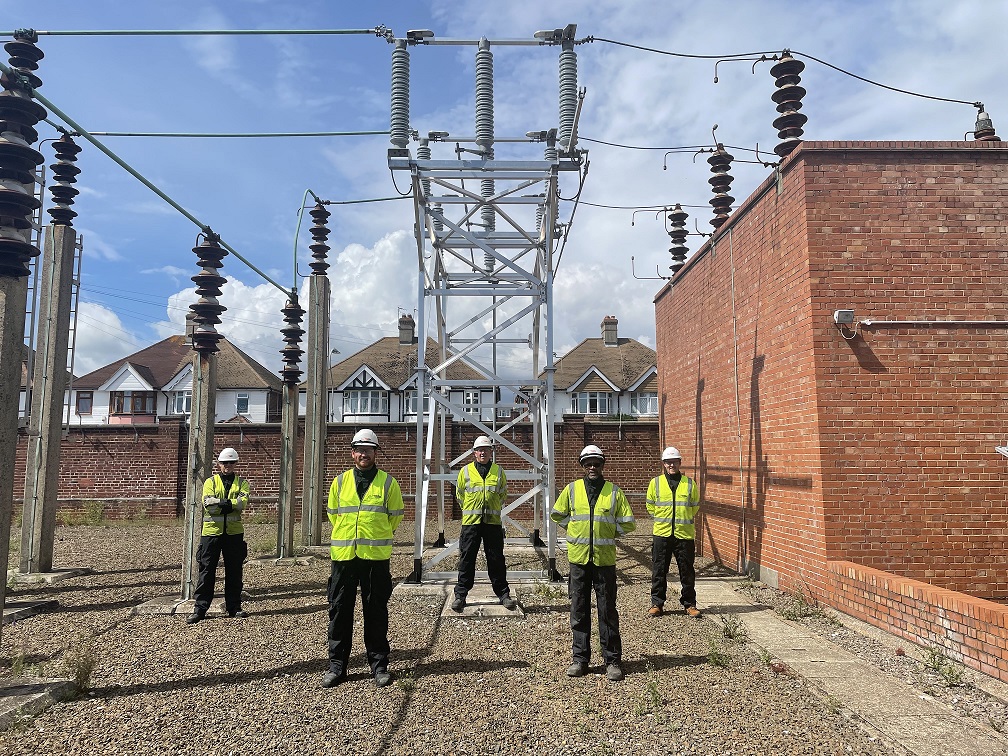
A power upgrade has boosted the resilience of electricity supplies for thousands of homes and businesses across Eastbourne. Engineers have installed the last of four new, remotely controlled switches to speed up reconnection of electricity supplies in the occasional event of a power cut. The final stage of the £560,000 investment was carried out recently, completing the upgrade at the electricity substation which started last year. Richard Coates, project manager at UK Power Networks, says: “The switches have been changed from manual to remote control. This means we can operate the switches remotely from our control centre in the event of a fault on the system, restoring supplies quicker and minimising the impact. “The last 18 months have been challenging for everyone, during COVID-19, but the team was fantastic and supported each other throughout the project. The work was completed without having any noticeable impact on the local community and will have long-lasting network reliability benefits for the town.” A team of experts worked on the upgrade including civil engineers, commissioning engineers, electrical fitters and electrical switching engineers. The Eastbourne project is one of several electricity network improvements taking place across the South East as part of a £600 million network investment this year to maintain reliable electricity supplies.

Scolmore has expanded its technical support team
Scolmore has welcomed two new members to its technical team. The appointment of James Hannon as senior technical lighting engineer and Mark Lagoe as technical support engineer will further strengthen the technical support department to meet the needs of the company as it continues to expand its products in all divisions. James’ experience includes five years working as a qualified electrician and eight years as a senior site services engineer with a leading manufacturer of commercial and industrial lighting systems.  As well as providing valuable technical support to contractors and wholesalers for Ovia’s existing range, James will play a key role in developing new products, with a particular focus on lighting controls which is an area of growth in the lighting sector. Mark has worked in the electrical industry for over 39 years and brings a wealth of experience to his new role.  As well as 20 years as a fully qualified electrician, he spent 19 years with a major manufacturer of electrical wiring accessories, circuit protection, cable management and control equipment. During this time, his areas of responsibilities included technical support, test reports, regulations compliancy and bespoke consumer unit design. In his new role with Scolmore he will be drawing on this vast experience to deliver technical support across the company’s ever expanding wiring accessories ranges.  With the recent addition of the Elucian circuit protection range to the Click wiring accessories portfolio, Mark’s expertise in this area will be a particular asset to the technical department.

Energy firm rated top for commitment to apprenticeships
Investing in a future workforce has led to UK Power Networks being named as the best energy and utility firm for apprenticeships, and second in the country among all companies. The firm, which delivers electricity to 8.3million homes and businesses across London, the East and South East has been voted top utility in this year’s TheJobCrowd listing. The company is employer of choice for its 6,000 geographically-spread, predominantly field-based workforce as well as future recruits, through providing dynamic opportunities which will help the UK transition to a low carbon future. The focus is on providing diverse workforce and investing in career progression, job satisfaction and recognition for delivering consistently high performance. Jazz Chaggar, talent acquisition manager at UK Power Networks, comments: “Apprentices are the future of our company. This is a great time to become an engineer, with the need to deliver the maintenance and asset upgrades plus new innovative engineering solutions to meet Net Zero.” Phil Beach CBE, chief executive of Energy & Utility Skills, says: “As a member of the Energy & Utilities Skills Partnership, UK Power Networks has repeatedly demonstrated its commitment to supporting apprenticeships and welcoming new talent into the sector. Congratulations on this well-deserved recognition." UK Power Networks was recently highly commended in the Regional Apprenticeship Awards 2020, hold the National Equality Standard and is rated a ‘Platinum’ employer by Investors in People. Its next intake of 21 apprentices are due to start in September

Double-digit growth forecast for construction for 2021
Construction output is forecast to rise by 14% in 2021 and 6.3% next year, according to the Construction Products Association (CPA) summer forecast. Private housebuilding and infrastructure are expected to be key drivers of construction growth in this year and next, although the outlook for the commercial sector remains subdued. CPA economics director Noble Francis says: “The key constraint to our forecasts remains the cost and availability of imported products and skilled labour. “The sharp recovery for both UK construction, and in places such as the US, has led to sharp cost increases and extended lead times for some key products such as paints and varnishes, timber, roofing materials, copper and steel. This is of concern particularly for SMEs, which account for 86% of construction employment.” He adds that SMEs often purchase on the day at builders’ merchants, unlike larger contractors and housebuilders who can plan and buy in advance as they have a pipeline of work. “This makes SMEs subject to greater issues if supply is limited or costs have risen significantly, particularly for firms working on fixed-price contracts,” comments Noble. Major housebuilders continue to report demand in the housing market and house price inflation continues to be robust. The Nationwide Building Society’s index showed a year-on-year house price rise of 10.5% in July, with a month-on-month decrease of 0.5%. Housebuilding set to boom in coming months The CPA forecasts housebuilding starts will rise by 21% this year and a further 9% in 2022, despite the tapering of stamp duty holiday and help-to-buy schemes. The outlook is particularly strong for houses outside major cities, owing to shifts in working patterns, and is likely to remain so for the next six to nine months, according to housebuilders. Changes in the way people work due to the pandemic have positively impacted private housing repair, maintenance and improvements, which has been the quickest sector to recover. Output in March this year was 19.3% higher than pre-COVID times, according to the Office for National Statistics. Most SME contractors are reporting projects lined up for at least the next six months. Broker Hank Zarihs Associates says development finance lenders were reporting increased demand for construction loans and fast bridging loans to accommodate healthy order books. Major projects such as the nuclear power station Hinkley Point C, the Thames Tideway tunnel, and the HS2 rail project are central to strong output in the infrastructure sector. The CPA has revised down its infrastructure forecast for 2021 from 29% to 24% growth but has upwardly raised its forecast for 2022 from 5.9% to 9.7%, owing to further delays and cost overruns on major projects. Its summer forecasts also report an increase in client hesitancy to sign off medium-sized projects leading to a slowdown in the near-term pipeline for the sector.