2 November 2026
Product of the Month: Amari Floodlight range by Aurora Lighting
 
12 November 2026
Schneider Electric transforms Southampton hospital estate
 
12 November 2026
GTEC Training opens new education facility in North Yorkshire
 
11 November 2026
Energy, AI and smart buildings: register now for EMEX 2026
 
11 November 2026
Solar and batteries could cut electricity costs by 40%, data finds
 

Latest News


REE automotive awarded £12.5 million funding from the UK Government
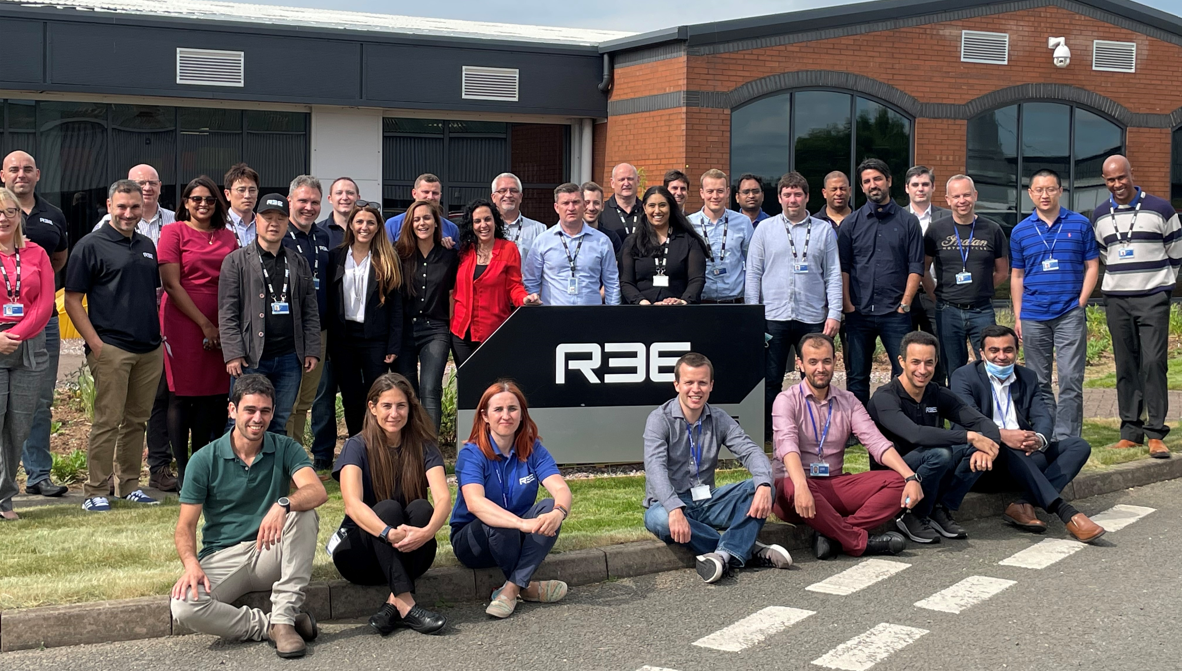
REE Automotive has announced that its REEcorner technology was awarded £12.5 million GBP funding from the UK government as part of a £41.2 million GBP investment, coordinated through the Advanced Propulsion Centre (APC). The investment is in line with the UK government’s ambition to accelerate the shift to zero-emission vehicles and de-carbonize the UK’s transport networks. The award funding follows an intensive vetting and selection process from which REE’s project and three other transformational projects were selected amongst dozens of companies. Together, the 4 projects could save nearly 32m tons of carbon emissions, which is equivalent to the lifetime tailpipe emissions of 1.3m cars. The investment will help drive energy-saving technology across a wide range of vehicles and propel forward a green economy recovery. The UK funds will allow REE to facilitate commercial production of its breakthrough REEcorner technology and ultra-modular electric vehicle platforms, including engineering design, validation, verification and testing and product homologation. REEcorner technology packs critical vehicle components (e.g. steering, braking, suspension, powertrain and control) into a single compact module located between the chassis and the wheel, thus enabling fully-flat EV platforms. REE’s ultra-modular EV platforms are designed to offer enhanced payload capacity by providing more room for carrying passengers, cargo and batteries and enhanced body design flexibility and autonomous capability. Ian Constance, Chief Executive at the APC says: “These projects tackle some really important challenges in the journey to net-zero road transport. They address range anxiety and cost, which can be a barrier to people making the switch to electric vehicles and they also provide potential solutions to the challenge of how we decarbonize public transport and the movement of goods. By investing in this innovation, we’re taking these technologies closer to the point where they are commercially viable, which will strengthen the UK’s automotive supply chain, safeguard or create jobs and reduce harmful greenhouse emissions.” Minister for Investment Lord Grimstone adds: “By investing tens of millions in the technology needed to decarbonize our roads, not only are we working hard to end our contribution to climate change, but also ensuring our automotive sector has a competitive future that will secure thousands of highly-skilled jobs. Seizing the opportunities that arise from the global green automotive revolution is central to our plans to build back greener, and these winning projects will help make the widespread application and adoption of cutting-edge, clean automotive technology a reality.” Mike Charlton, REE’s COO comments: “REE is honored to have been selected as recipient of the UK funding to support REE investment in the UK automotive ecosystem following an extensive vetting and selection process. With the opening of our Engineering Center in the UK in February this year, this reaffirms our commitment to the region and is in line with our plans for the mass production of our breakthrough REEcorner and electric vehicle platform technology. The UK is an ideal location for a pioneering automotive company like REE thanks to the country’s commitment to vehicle electrification which dovetails with our vision of propelling a zero-emissions, greener future for our generation and those to come.”

ECA questions new hydrogen strategy
The UK Hydrogen Strategy, issued by the Department for Business Energy and Industrial Strategy on 17th August, reveals that until 2030, hydrogen home heating will play only a marginal role in reducing carbon emissions. While initial publicity for the new Strategy has stated that 3 million homes will use hydrogen energy by 2030, further analysis of the Strategy suggests that less than 70,000 homes would be able to run on hydrogen by the end of the decade. ECA, the leading electrotechnical trade association, urges the early and ongoing roll-out of building insulation along with proven electrical and other engineering technologies as the best route to achieving the Government’s net zero targets. Luke Osbourne, ECA’s Emerging Technologies Advisor warns: “The recent IPCC Climate Crisis report underlines that we must not wait until 2030 before reducing carbon emissions from heating, which is the route map in this Hydrogen Strategy. Yes, we need to consider a range of zero carbon measures, but this Strategy may simply end up kicking the can down the road. We need to act now and roll-out the passive measures and technologies that we know will reduce carbon emissions, right away.” ECA supports the use of ‘green hydrogen’ (produced from water using renewable electricity) for specific energy applications. However, it is greatly concerned about the Strategy’s endorsement of ‘blue hydrogen’ which is derived from fossil fuels and which seeks to trap the associated greenhouse gas emissions. Last week a study by Cornell and Stanford Universities warned ‘blue hydrogen’ could be up to 20% worse for the climate than burning natural gas, owing to the escape of greenhouse gases during hydrogen production. Paul Reeve, ECA’s Director of CSR and Public Affairs adds: “Hydrogen may provide answers for some of our future industrial chemical requirements but, except at the margins, it doesn’t offer a viable route to a low carbon domestic or commercial heating, or for future vehicle transport. Low carbon electrical and energy storage solutions can deliver a more effective route to low carbon heating and transport, and these solutions can, and should, be brought into effect now”.

Fischer Future Heat introduces new electric vehicle charger
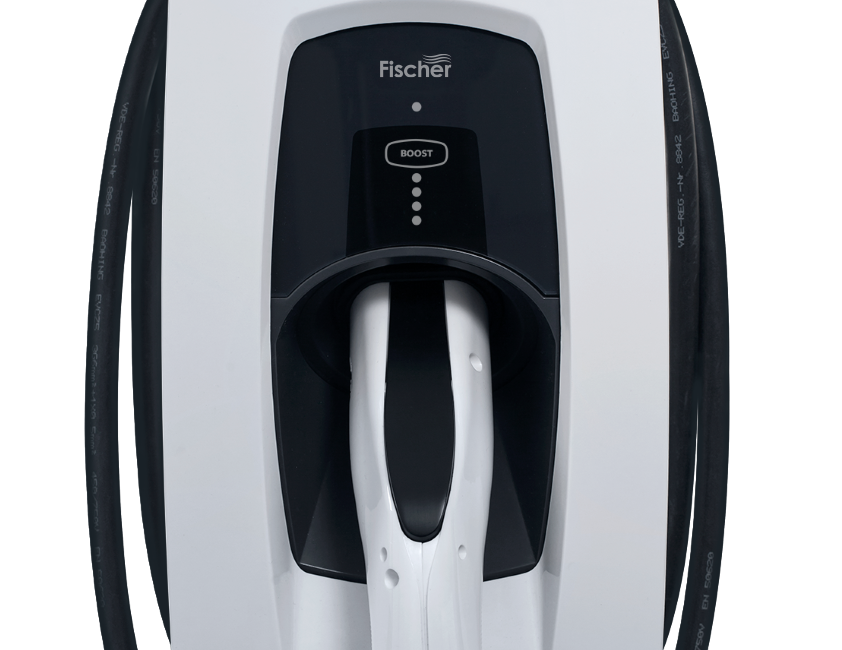
An electric home heating provider has supercharged its renewable status with the introduction of its new electric vehicle charger for homeowners. And the new smart system will enable customers to prioritise their electricity use depending on their needs. Fischer Future Heat, based in Leicestershire, has been a driving force in the push for an all-electric future. And boosting prospects on the renewable front, the business has now introduced the new Fischer EV – an electric vehicle charger that allows homeowners to lead a sustainable, clean energy lifestyle. As the government continues to work towards its net zero carbon targets, clean energy solutions are becoming an integral part of UK renewable plans. And with sales of EVs outselling diesel cars for the second month in a row in July, Fischer CEO Keith Bastian believes the new EV charger has come at a poignant point in time: “We are absolutely delighted to bring the Fischer electric vehicle charger to market,” says Keith Bastian, CEO of Fischer Future Heat. “As the passionate owner of electric vehicles, I understand how fundamental they are in achieving net zero carbon. It is our mission here at Fischer to provide the British public with innovative electric solutions that never compromise on performance or efficiency. Our new charger represents the next phase of this mission, and is a huge step in helping to build a clean energy future for all. “Our business is perfectly poised to help homeowners lead a more sustainable lifestyle, and our continuing innovation in the world of clean energy is a testament to that.” The Fischer EV is controlled via mobile app, providing homeowners with complete remote control of their vehicle charging. Working in combination with household needs, the system also allows users to input their electricity tariff details, ensuring vehicles are charged at the cheapest times in order to keep energy bills down. Furthermore, the new Fischer EV will enable customers to prioritise their electricity use depending on their needs using Dynamic Load Balancing technology, something no other electric vehicle charger offers as standard. The Dynamic Load Balancing technology will automatically adjust to balance against electricity usage in the home, for example the EV charger will switch to a low power mode when household appliances are on. Should motorists wish to prioritise their motoring needs, the Fischer EV charger also includes a boost feature, which temporarily overrides your charging schedule in order to ensure that your car is charged as soon as possible. Fischer Future Heat is working in conjunction with sister company Outfox the Market, to provide EV customers with renewable wind electricity. Fischer Future Heat is offering a Time of Use tariff exclusive to customers purchasing a Fischer EV charger. This exclusive tariff promises Fischer EV customers four hours of electricity at just eight pence per unit.

JTL launches free bite-size course on security systems
JTL is continuing to support the professional development of electricians with the launch of its latest, free bite-size digital course, ‘Introduction to Security Systems’. Part of JTL’s Power Up series - an initiative designed to further support the building services engineering sector by offering free advice and educational resources - the course is intended to help both apprentices and qualified electricians identify best practices for the installation of security systems. As part of this course, the learners will gain a comprehensive understanding around the wiring and configuration of security systems, as well as the knowledge surrounding system types and corresponding components. This course also explores the standards and definitions required for security systems, which will ensure efficient, safe conduct is upheld during installation. Designed to take a minimum of 30 minutes to complete, the course has been produced to facilitate the learner’s journey towards Continuing Professional Development (CPD) and is intended to increase workplace competency. Liam Sammon, director of learning and innovation at JTL, says: “As a charity geared towards helping electricians grow their skill-set, we are delighted to launch our latest, free, bite-size course on security systems. The course is highly practical and applicable and works well alongside additional JTL courses that may be of interest, such as our ‘Smart Homes’ and ‘Inspection and Testing’ courses. “At JTL, we are committed to helping both learners and trade professionals gain workplace competency and practical knowledge which will assist them in their professional development as electricians. The flexible, online delivery of the course is intended to make this course as accessible to as wide a group of people as possible, by allowing them to participate whenever and wherever is best for them. This, along with the other courses, can be accessed via mobile, tablet or desktop, meaning that each course can be completed at their own pace and at a time that suits them.” The Introduction to Security Systems bite-size digital course is now available on JTL’s new online learning portal.

£7.3 million power upgrade underway in Guildford
Investment is underway on a £7.3 million project to upgrade power supplies for thousands of residents in Guildford. UK Power Networks is future-proofing a local electricity substation that helps deliver safe and reliable electricity supplies to nearly 19,000 homes and businesses across the Surrey town. At an existing substation in the town centre specialist electrical engineering teams will build and equip a new electrical switch-house. The new equipment will then be connected to the existing network, which distributes electricity throughout the town. At the same time, two new large pieces of electrical equipment, known as transformers, will be installed and connected to the network. These play a crucial role in electricity distribution, stepping down voltage and safely delivering power to smaller electricity substations and properties. These transformers will increase the network capacity for Guilford, securing the future growth of the town. Anthony Griffin, project manager at UK Power Networks, says: “This is a major investment in the infrastructure for Guildford. This will help us to continue serving residents with reliable electricity supplies well into the future. “We are future-proofing the electricity network by modernising the equipment which delivers power to local homes and businesses. There will be automation on the equipment, so that it can be remotely controlled by our engineers, making power supplies even more resilient.” The work will take place within UK Power Networks’ existing substation and is due to continue until next autumn. As the new equipment is energised, the existing equipment will be switched off, having been well maintained and served the residents of Guildford for many years. The investment in Guildford is part of £600 million the company will invest this year in its electricity networks. UK Power Networks maintains the network of cables, substations and power lines that deliver electricity to 8.3 million homes and businesses (a population of about 18 million people) across the South East, London and East of England.

Plastic is cut by Sylvania as they embrace new regulations
The new measures will drive higher energy efficiency, over 1-tonne annual reduction of plastic packaging and 25% decrease in supply chain carbon footprint. New ground-breaking EU and U.K. legislation is on track to shake up the lighting industry. A ten-year European government review begins its implementation in a major move to improve product efficiency, protect the environment from plastic and boost sustainability for the benefit of consumers. Sylvania, a 100-year-old company with a heritage stretching back to the dawn of electric light, has a legacy of introducing energy-saving light sources, like LED Filament lamps and the first true retrofit LED GU10 with like-for-like dimensions and the same light output, compared to a 50W Halogen GU10. In complying with the new regulations Sylvania has triggered a comprehensive overhaul of its lamp products and packaging that is targeted to deliver clarity to customers and lower its environmental impact. The new Single Lighting Regulations (SLR) and Energy Label Regulations (ELR) will come into effect on 1st September 2021, effectively combining relevant past rules and encompassing all available new lighting technologies. The legislation now simply classifies lighting products as ‘light sources' (lamps, sealed-for life luminaires and modules) and ‘containing products’ (luminaires with replaceable light source or control gear), as opposed to ‘lamps’ and ‘luminaires’. Therefore, the new energy label regulation which is applicable for light sources – now also applies to lamps, and each light source will be given a new energy rating between A and G. A = 210lm/W through to G = < 85 lm/W. This replaces the existing energy label A++ to E. Reclassifying all lamp efficiencies. The SLR set new minimum requirements for lumen efficacy, lumen maintenance, survival factor, flicker and stroboscopic effect. This results in the upgrade of some existing LED lamp technologies and the phase-out of conventional lighting technologies that don’t meet the new requirements: Halogen low voltage lamps GU4, GU5.3, G53 as of 1st September 2021 Halogen R7s > 2700lm as of 1st September 2021 Compact fluorescent lamps with integrated control gear (E27, E14, B22) as of 1st September 2021 Halogen G9, G4 and GY6.35 capsules as of 1st September 2023 T8 fluorescent lamps (600mm, 1200mm and 1500mm) as of 1st September 2023 The environment and sustainability are at the core of the new Single Lighting Regulations and Energy Label Regulations. Although many LED lamps will have improvements to their efficiency, the most visible change is the recalibration of the energy rating scale that is displayed on the packaging. In an important adjustment, regulators have adopted a new scale to allow for a wider scope of efficiency performance. The current A++ classification will now score a mid-table ‘E’ within a revised A to G range. This will help the drive for even greater efficiency and integrate the principle of circular economy in product development. Lighting products classified as ‘containing products’ now applies to most luminaires and will no longer require an energy label and are expected to have the features of replaceability and refurbishment, either by the end customer, a qualified electrician, or by the manufacturer where necessary. The implementation of SLR and ELR has been welcomed by Sylvania, a major brand within worldwide lighting. Strategically the company has coordinated existing projects that target improvements in product efficiency and sustainability with the new legislation, to trigger an important pivot towards a greener future. In response to the new regulations and changes to the display of the energy rating scale, a major redesign of the company’s lamps product packaging was initiated reflecting feedback from both consumers and trade partners. Major environmental benefits have been driven by a move to a paper and card packaging solution, which uses no plastic. Additionally, this has entailed a move to abandon ‘blister packs’ that were used extensively, especially throughout continental Europe. Ingenious design has delivered all the benefits of Sylvania’s existing packaging using 100% recyclable materials and this will generate an annual reduction of over 1-tonne of plastic, reducing our carbon footprint even more. In keeping with the spirit of the new legislation to promote easy access to product information at the point of purchase, Sylvania has taken steps to make its LED lamp packaging more customer friendly. Colour temperature is displayed with an appropriate colour tab and a prominent ‘cap’ identifier is included to improve compatibility. Also, features like dimming functionality are clearly marked on the front of pack.

£91 million funding for low carbon auto tech, including car batteries
Electric car batteries with range similar to internal combustion engines and which can charge in as little as 12 minutes are among projects awarded over £91 million of government and industry funding to develop the latest green automotive technology. Four projects have been awarded funding through the Advanced Propulsion Centre Collaborative Research and Development competition, which supports the development of innovative low carbon automotive technology. Together they could save almost 32 million tonnes of carbon emissions, equivalent to the lifetime emissions of 1.3 million cars, and secure over 2,700 jobs across the country. These innovations will address motorists’ concerns about adopting electric vehicles by cutting charge times and boosting driving range. They will help to make electric vehicles more affordable, efficient and convenient. The projects awarded funding today are: BMW-UK-BEV, Oxford - £26.2 million to develop an electric battery that will rival the driving range of internal combustion engines, helping put concerns over how far electric vehicles can travel to rest Project CELERITAS, Birmingham - £9.7 million to create ultra-fast charging batteries for electric and fuel cell hybrid vehicles that can charge in as little as 12 minutes the BRUNEL project, Darlington - £14.6 million to develop a novel zero emission, hydrogen-fuelled engine to help decarbonise heavy goods vehicles REEcorner, Nuneaton - £41.2 million to radically redesign light and medium-sized commercial electric vehicles in Nuneaton by moving the steering, breaking, suspension and powertrain into the wheel arch enabling increased autonomous capability, storage space and design flexibility Minister for Investment Lord Grimstone comments: "By investing tens of millions in the technology needed to decarbonise our roads, not only are we working hard to end our contribution to climate change, but also ensuring our automotive sector has a competitive future that will secure thousands of highly-skilled jobs. "Seizing the opportunities that arise from the global green automotive revolution is central to our plans to build back greener, and these winning projects will help make the widespread application and adoption of cutting-edge, clean automotive technology a reality." The government has already announced the end of the sale of new petrol and diesel cars in the UK by 2030, putting the UK on course to be the fastest major economy to decarbonise cars and vans, and is currently consulting on phasing out the sale of new diesel and petrol heavy goods vehicles (HGVs) by 2040, as set out in the government’s Transport Decarbonisation Plan. The projects awarded funding today will help make the technological developments needed to meet these goals. CEO at the Advanced Propulsion Centre Ian Constance says: "These projects tackle some really important challenges in the journey to Net-Zero road transport. They address range anxiety and cost, which can be a barrier to people making the switch to electric vehicles and they also provide potential solutions to the challenge of how we decarbonise public transport and the movement of goods. "By investing in this innovation, we’re taking these technologies closer to the point where they are commercially viable, which will strengthen the UK’s automotive supply chain, safeguard or create jobs and reduce harmful greenhouse emissions."

AWE is the new distributor of Bowers & Wilkins
AWE has been appointed by Sound United, the global force in audio manufacturing, as the exclusive distributor for the renowned loudspeaker brand, Bowers & Wilkins, and audiophile electronics company, Rotel, within the UK custom installation (CI) channel. “AWE is the leading UK distributor to some of the custom installation trade's highest quality brands, including Denon, Marantz, and Definitive Technology,” says Jason Dear, General Manager, Sound United UK & IRE. “The company is acknowledged as setting the standard in the professional home technology sector for customer service with award-winning training and technical support.” He adds, “This move is in line with our commitment to better support the custom installation channel with premium demo facilities, technical assistance, and stock availability. We're confident that this partnership will live up to that commitment based on our previous success with AWE and the Denon, Marantz, and Definitive Technology product range.” Home technology integrators will benefit from the new partnership in four key ways. Substantial stock will be held by AWE with next day delivery Bowers & Wilkins and Rotel installers will have access to AWE’s impressive onsite demonstration facilities which are currently being upgraded to feature Bowers & Wilkins and Rotel products Bowers & Wilkins and Rotel will join Denon, Marantz, and Definitive Technology at AWE which will streamline dealers ordering efficiency An experienced product support team with a wealth of technical knowledge to assist you with product specification and system design “This move is great news for both Bowers & Wilkins and AWE customers,” comments Stuart Tickle, Managing Director of AWE. “It is our job to deliver the highest level of service to Bowers & Wilkins dealers and ensure that the performance-led brand has a dealer base to match.  This is a competitive and congested market with so many companies selling so many loudspeakers, but there is only one Bowers & Wilkins.  We are excited to add such a prestigious company to our portfolio and will deploy all our resources and experience to represent the brand and serve its dealers to the highest level.”

Balfour Beatty joins the United Nation's Race To Zero campaign
Balfour Beatty has announced that it has joined the Race To Zero campaign, backed by the United Nation's. This alliance sees non-state actors across the global economy committing to take rigorous and immediate action to halve emissions by 2030 and achieve net zero emissions by 2050 at the latest, in line with the global race to limit rising temperatures to 1.5°C. This latest pledge builds on Balfour Beatty’s Group-wide Sustainability strategy, “Building New Futures”, in which the company committed to minimising the environmental impact of its operations across the UK, US and Hong Kong. Having already reduced its carbon emissions by 54.7% since 2010, the company has now committed to halving its 2020 carbon emissions by 2030, including scope 3 emissions. As part of its journey to build a better, more sustainable future, the company is collating its carbon data for the official submission to the Science Based Target Initiative and is already taking action to achieve both its 2030 target and 2040 ambition to Go Beyond Net Zero Carbon; introducing electric vehicles and plant and implementing the first-of-its-kind retrofit exhaust technology to reduce its carbon emissions. The company also continually innovates and collaborates with its industry partners to develop new technologies such as Econet, a state-of-the-art technology to manage the power supply of site compounds reducing carbon emissions by up to 80%, and a carbon calculator which can automatically calculate embodied carbon from building information models. Leo Quinn, Balfour Beatty Group Chief Executive, says: “Today we’re joining the UN-backed Race To Zero campaign. On a global basis it reflects our own commitment: not only to move our business forward strongly and sustainably, but also to deploy Balfour Beatty’s green capabilities to help deliver the infrastructure for a net zero world”. Nigel Topping, United Nation's High Level Climate Action Champion, comments: “I’m delighted to see that Balfour Beatty, a leading international infrastructure company, has joined the Race To Zero through our Partner initiative Business Ambition for 1.5C. “I welcome Balfour Beatty’s commitment to the net zero agenda: its high ambition and leadership light the way for others in the industry to take action towards halving emissions by 2030. I hope that Balfour Beatty’s commitment will inspire others to also step up in this race towards a more resilient, zero carbon world.” Balfour Beatty has long been at the vanguard of sustainability having launched its first Group-wide strategy in 2009. Last year, the company introduced its refreshed sustainability strategy “Building New Futures”, which sets bold 2030 targets and 2040 ambitions to Go Beyond Net Zero Carbon, Generate Zero Waste and Positively Impact More than 1 Million People.

myenergi set to leave a lasting legacy after Arctic X Prix
myenergi is leading a project to leave a lasting legacy when the Extreme E championship descends on Greenland later this month (Arctic X Prix, 28-29 August). The company, which sponsors the XITE ENERGY RACING team, is working in partnership with event organisers and XITE to transform the energy supply at a local school. As part of the project, myenergi will install a ground-mounted solar array, battery storage system and eddi microgeneration diversion device. Wirelessly connected via a myenergi harvi, the set-up will collectively provide the school with free renewable energy and hot water – a completely carbon neutral utility solution. The project, which aims to act as a showcase of renewable connectivity, is part of the championship’s commitment to making a positive difference at each race location. Jordan Brompton, co-founder and CMO of myenergi, comments: “The Extreme E championship combines world-class motorsport with environmental activism to raise awareness of global warming and the climate emergency. As principal sponsor of XITE ENERGY RACING, we’re committed to taking sustainability to the masses and helping to inspire widespread behavioural change. “While being involved in the championship has provided an unparalleled platform to share our vision, we knew that there was more we could offer. Renowned for our eco-smart home energy technologies, having the opportunity to transform a local school into a hub for renewable energy demonstrates what the future could – and should – look like.” Cris Chapman, sales director at myenergi, adds: “Thanks to state-of-the-art renewable technologies, this project will enable the school to operate completely off-grid – zero carbon, zero reliance on mains supply, zero utility costs. It demonstrates precisely why embracing sustainability is such an important part of the global energy transition. “Alongside leading the installation, we’ll be presenting to the Extreme E team and championship drivers to explain the project in further detail and showcase the transformational capabilities of connected renewable technologies.” After the first two rounds of the 2021 Extreme E championship, XITE ENERGY RACING is sitting in sixth position, after impressive performances in both Saudi Arabia and Senegal. Led by team manager Juli Mundet Caballero and piloted by drivers Oli Bennett and Christine Giampaoli Zonca, the UK outfit is hoping for another successful weekend at Arctic X Prix later this month. Extreme E, the all-electric, all-terrain championship, sees SUVs race through some of the most demanding environments on earth, including the Arctic Circle and Amazon rainforest. The series aims to highlight the impact of climate change on some of the most remote and notably-affected locations.