2 November 2026
Product of the Month: Amari Floodlight range by Aurora Lighting
 
12 November 2026
Schneider Electric transforms Southampton hospital estate
 
12 November 2026
GTEC Training opens new education facility in North Yorkshire
 
11 November 2026
Energy, AI and smart buildings: register now for EMEX 2026
 
11 November 2026
Solar and batteries could cut electricity costs by 40%, data finds
 

Latest News


Creating inclusive workplaces with EIC
This pride month, the Electrical Industries Charity is focussing on ‘its OK to be you’. Within the construction industry, 71% of LGBTQ+ workers felt they had to hide their sexuality on site and 51% felt their sexuality prohibited them from career progression. Tom, a generation and renewables employee, had to hide his sexuality when he joined a new project. Tom’s workplace was an enjoyable environment and him and his partner often attended work functions together. After three years Tom accepted a new role in a different plant. Tom brought his partner with him to work drinks and he began to receive derogatory comments. Tom asked colleagues to stop but unfortunately, the prejudice continued. Tom spoke to his line manager, but he labelled the discrimination ‘workplace banter’. Tom then contacted the Electrical Industries Charity. The Charity encouraged Tom to speak to his line manager again. Tom’s charity caseworker also advised him to speak to the HR department. Tom spoke to his line manager again and he was extremely apologetic. Tom’s charity caseworker was contacted by Tom’s manager and together they ensured Tom was well supported. The Electrical Industries Charity recommended welfare and diversity training for staff and encouraged the plant to hold wellbeing sessions. The plant also appointed a wellbeing champion. The Electrical Industries Charity supported Tom so he could always be who he is, no matter where he is. The Electrical Industries Charity can support you with free and confidential advice. Contact the welfare team on support@electricalcharity.org or 0800 652 1618.

Aico promotes mental health and wellbeing at work
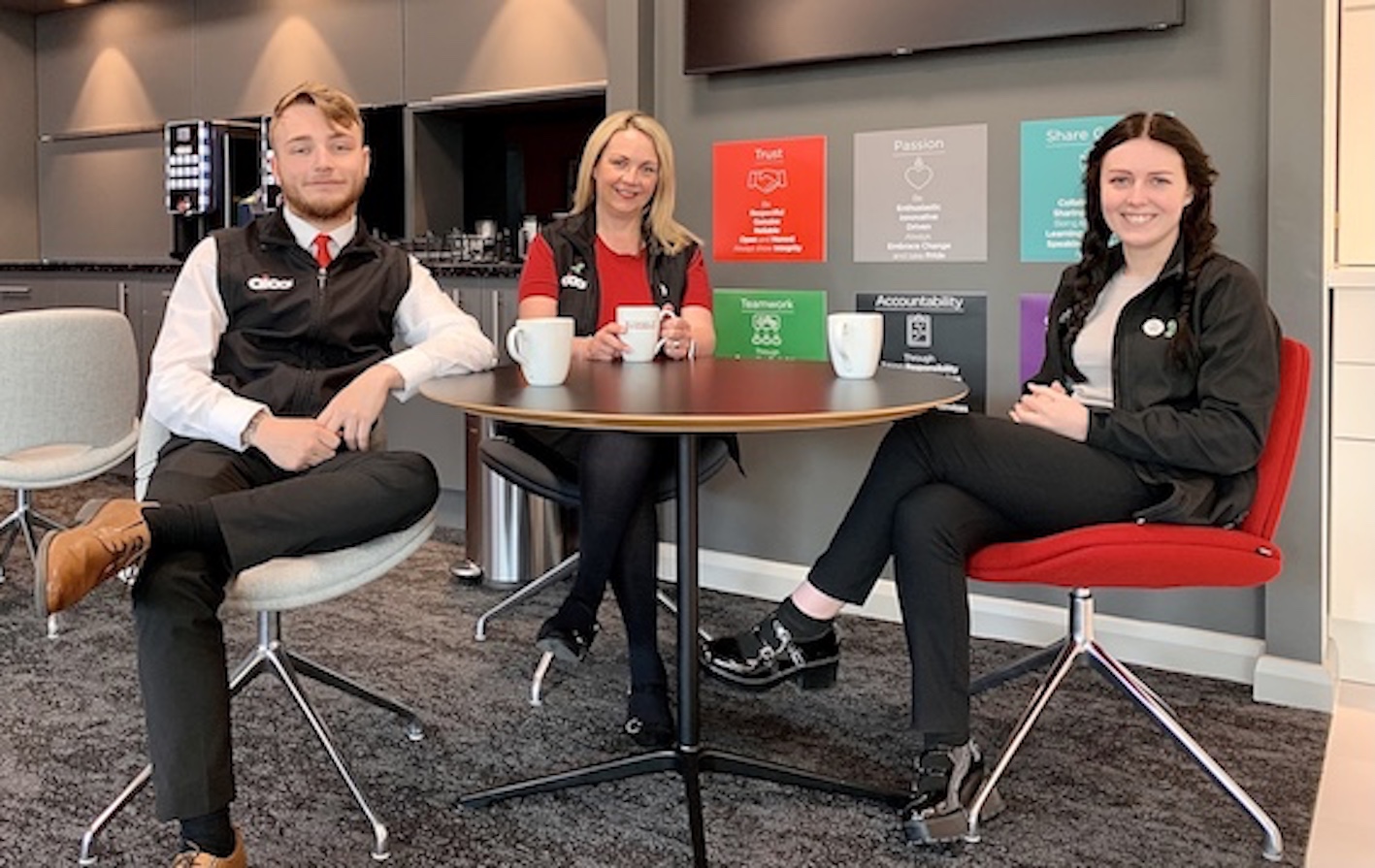
As part of Mental Health Awareness Week, Aico is continuing to raise awareness and reduce the stigma around mental health through its dedicated workplace programme. Mental Health Awareness Week is a national campaign to achieve change, fairness and respect surrounding mental health. The campaign is taking place from the 10-16 May, and in support Aico will champion the ‘Take 10 Minutes to Talk’ initiative launched by the Electrical Industries Charity (EIC) to encourage colleagues to talk about their mental health. Mental health awareness is an important subject for Aico, and the company strives to support its employees through its dedicated Mental Health Programme. Aico has four staff members who are trained Mental Health First Aiders for the business and provide support for colleagues. The team delivers monthly presentations to their colleagues, discussing topics such as financial wellbeing, caring for elderly relatives and staying healthy. The Mental Health Programme at Aico also encourages open conversations surrounding mental health, demonstrating the progressive, positive culture of the workplace. In a recent presentation, Owen Terry, a Technical Advisor for Aico, shared his own mental health experiences and the benefits of speaking to someone. Owen comments, “Talking openly about my experiences to my colleagues has been a massive benefit and has helped me overcome what I have been through and get over that last hurdle. Being able to challenge the stigma behind men’s mental health, showing that men also do suffer and that speaking to someone, either friend, family or work colleague can be life-changing.” Recently, Aico has signed a Mental Health Charter, created by The Shropshire Chamber of Commerce and Merulae, an organisation specialising in training, counselling and psychotherapy. Aico encourages Shropshire businesses to sign the Charter and make a pledge to recognise the importance of promoting good mental health and improving the wellbeing of colleagues, which is beneficial to organisations, employers and the business community of Shropshire.

Retractable suspended power sockets
Our Olson retractable suspended power sockets were specified by Sine Consulting of Durham for use in the redevelopment of the construction skills area within Derwentside College. Sine Consulting turned to us here at Olson to provide a solution to their overhead power distribution requirements. As a result they were introduced to our innovative retractable suspended power sockets Derwentside College is located just outside Durham in a town called Consett. The college is in the top 5% nationally for providing vocational education. They provide high quality education and training that focuses on developing the knowledge and skills needed by their students to progress into employment. During a period of remote learning Derwentside have invested in the construction skills unit, which will increase the capacity and usable space for their engineering and construction courses. Sine Consulting were appointed to carry out the electrical services design for the unit. They are an award-winning engineering and design consultancy focussed on sustainability and innovation in engineering design. A perfect match for our team who are enjoying their 60th year of UK based manufacturing. We are proud to offer our unique blend of skills as manufacturers, designers, and consultants providing standard or completely custom-made power distribution units to suit our customer’s needs. Sine Consulting turned to us here at Olson to provide a solution to their overhead power distribution requirements. Working closely with our experienced office-based sales team, they were introduced to our innovative retractable suspended power sockets available as standard or in a range of different configurations and supplied with either a fixed chain or our retractable solution. Sine Consulting specified a 2-way unit with 16 A BS 4343 socket outlets, complete with our orange sprung cable rated at 2.5 mm. This was provided as input power to the unit and would be run alongside the retractor. The input power lead is supplied in an orange colour to provide immediate identification, to help prevent any accidents and be visible to the students. During the installation, the Contractors used the bolt provided with the retractor, preventing the unit from holding its position. This option was introduced to the retractor in 2020 and will make sure the unit is always at its maximum height and out of the way. As this was not the requirement of the customer, they called Olson’s customer service team and provided pictures to sales@olson.co.uk. The issue was resolved in a fast and efficient manner. The retractable suspended power sockets were suspended from a higher-than-average ceiling. Therefore, we offered extensions for the retractor system for the units to be at a suitable height and within reach. The units can now be lowered by the user to their required working height and then retracted back when not in use. For more information please click here.

Connelly Security Systems partners with Skills for Security for employees
Connelly Security Systems (CSS) have partnered with Skills for Security to access its newly developed online technical Continuing Professional Development (CPD) courses to upskill their engineers. Over the next year, CSS intend to use Skills for Security’s online courses to upskill their workforce, starting with an initial ten engineers. The courses are aimed at installers, project managers, surveyors and maintenance engineers. The training will be delivered through a customised virtual training portal enhancing their knowledge of the latest British and European Standards for the design of electronic security systems, including video surveillance intruder detection, fire detection and access control.   As a BSIA member, CSS were also able to obtain a 20% discount. David Scott, Managing Director, Skills for Security, says: “The pandemic has changed the way we think of training. People want flexibility, high quality, and affordable courses. CSS pride itself on having a fully qualified and competent workforce. I have worked with CSS for many years now and have always admired their investment in training and staff. CSS have come to Skills for Security with the intent of showing both their workforce and the wider security industry that upskilling engineers and staff members are necessary and easy to do. “We are looking forward to implementing their bespoke training plan, which covers vital topics and all-important CPD accreditation.” Corrie Stewart, Training and Development Manager, CSS, comments: “We are delighted to be undertaking several commercial courses with Skills for Security ensuring all of our team are up to date with current rules, regulations in our ever growing industry”. Skills for Security is a wholly-owned subsidiary of the BSIA and is the largest UK provider in the delivery of fire and security training, priding itself in offering flexible and accessible provisions to ensure there are no barriers learning. In the last two years, Skills for Security has invested in its infrastructure and staffing to ensure the highest quality of training is guaranteed. Over 250 apprentices enrolled on their apprenticeship programme in centres in Warrington, Birmingham, Oxford and Southport.

Lighting the way in emergencies
Katrina Adamczyk, Manager of Category and Merchandising at ElectricalDirect explains the emergency lighting in schools, including regulations and what must be considered. Schools are often buzzing with staff, pupils, and visitors – keeping them safe is a critical concern within school management. Emergency exit routes must be carefully planned to aid quick evacuation; including the specification and maintenance of emergency lighting. It is a legal requirement under The Regulatory Reform (Fire Safety) Order 2005 that anybody – including those unfamiliar with the building layout – should safely and effectively be able to find their way out. There is a common misconception that schools would have plenty of light as they often operate during the day – however, often schools are filled with dark hallways and classrooms with little natural light. In addition, staff often stay behind after dark, and many schools rent classrooms for evening lesson or clubs. Schools also typically host parent’s evenings, after school clubs, or are rented out to others for use into late evenings; meaning the person in charge has a duty of care to all of these people, many of whom would be new to the school’s layout. Don’t be left in the dark The Regulatory Reform (Fire Safety) Order 2005, Article 14, stipulates that “(h) - emergency routes and exits requiring illumination must be provided with emergency lighting of adequate intensity in the case of failure of their normal lighting” – meaning in the event mains power fails, the emergency system can operate independently and ensure people will be able to exit quickly. To ensure this, it is important that a professional fire safety specifier, the person responsible for the premises, and the fire risk assessor in charge meet to inspect the building to dictate the requirements. British Standard BS 5266-1:2016 will outline detailed information on not only where lighting should be placed, but also how powerful the lighting should be and the minimum duration it should last in the event of a mains power failure – this is typically three hours for most premises. It recommends, for example, that for escape routes up to 2m wide, 50% of the route should be lit to a minimum of 1 lux, with wider escape routes being treated as a number of 2m wide bands. Power supply Self-contained – single point power supplies are preferential for emergency lighting. Installation is considerably quicker, creating less disruption for pupils and staff, and standard wiring material can be used for this application. This also provides a system with strong integrity, as each light will be independent of the others; if one fails, the rest will continue to operate as normal. This also means the system can easily be extended if required. LED lights are ideal for any emergency lighting network, offering superior illumination and lower power demand; providing sufficient light coverage whilst also saving energy costs for the school. It is crucial that a designated responsible person tests the system every month, and keeps a written log, as battery life can vary between two to 10 years dependant on the type of battery and application. Emergency signage and routes There’s a wealth of legislation surrounding signage alone for emergency routes that must not be overlooked, as it forms a critical part of the fire safety strategy. Clear and unambiguous signage is essential for building occupants, as well as persons who may be visiting and new to the premises, in order to escape quickly in the event of an evacuation. It is key to note that not every single emergency exit sign will require illumination, but that the route itself has to have adequate lighting for the signs to be seen. BS 5499:2013 “Safety Signs. Code of Practice for Escape Route Signing” will contain stipulations and calculations to ensure all signs meet requirements for colour, text, placement, and size. Under one roof The number of products required to adequately cover school premises can seem daunting. However, leading supplier ElectricalDirect has an extensive catalogue of compliant emergency lighting products from trusted brands, ensuring you only need order from one source. Order up to 9pm online or 8pm over the phone and receive your order next day – and it’s free over £45! Plus, ElectricalDirect can deliver to your home, job site or over 6,000 Click & Collect locations. It is a legal requirement to ensure escape routes in schools are adequately lit and signposted for safe evacuation in the event of an emergency. By working with professionals and reputable suppliers early on, those in charge of the premises can have peace of mind over the safety of all building occupants. For more information on ElectricalDirect, please visit www.electricaldirect.co.uk.

Materials shortage – companies warned to plan ahead 
Increasingly long lead times for many products has prompted ECA and SELECT to alert their Members to the extended delays and urge them to plan ahead and order early. The warning by the leading trade associations comes hot on the heels of a recent warning by BEAMA that demand was likely to outstrip supply for many months to come. The manufacturer’s trade association said a dramatic reduction in global steel production in the early days of the pandemic had led to severe shortages. It added that, since mid-2020, the call for the types of steel used in cable management products, along with other applications, has increased as businesses attempt to meet a growth in demand and complete unfinished projects. ECA’s CEO, Steve Bratt says: “When planning a project, bear in mind the world has changed. Delays in availability of some materials is impacting on cost and completion time. Our advice is to order the materials you need in good time to ensure you can finish as planned. We are in an evolving situation, our Member support will keep you informed as and when things change.” Alan Wilson, Managing Director of SELECT, says: “Shortage of materials is an issue that will affect all contractors, so it’s vital for everyone to plan ahead and take proactive measures now. “We join ECA in urging all Members to keep abreast of any updates and recognise that this could well be an issue as the year develops. Ordering well in advance and factoring in for potential shortages and rising costs will help if there is any ongoing disruption to the supply chain.” Both organisations are urging any Members who are experiencing issues or want to find out more, to get in touch. ECA and SELECT are committed to offering advice and finding solutions to help Members overcome yet another obstacle created by these unprecedented times. The joint call comes two weeks after ECA and SELECT met to identify key strategies and how to continue their close collaboration. The two leading electrical trade bodies discussed skills, training and the green revolution during the virtual meeting as they debated priorities for the second half of 2021 and beyond.

Half of UK tradespeople experience mental health problems due to work
Nearly half (49%) of UK tradespeople experience mental health problems due to work-related issues, a new study has found. The research, commissioned for Mental Health Awareness Week (May 10th-16th) by IronmongeryDirect, the UK’s largest supplier of specialist ironmongery, found that nearly three in five (58%) experience some form of mental health problem, such as stress, anxiety or depression, at least once a week. Money worries cause the most stress, with 38% of tradespeople blaming financial situations for giving them anxiety. Other issues, such as tensions with customers (31%) and suppliers (29%), are also major causes of concern for tradespeople. The 10 issues which cause the most stress for tradespeople:  Finances (38%) Tensions with customers (31%) Tensions with suppliers (29%) High workload (26%) Tensions with business partners (26%) Job security (21%) Doing the best job for customers (12%) Making mistakes (11%) Abuse from customers (6%) Lack of work (5%) Female tradespeople (57%) are significantly more likely to experience work-related mental health problems than their male counterparts (41%). Additionally, the main causes of stress and anxiety differ between the genders, with women more likely to feel stressed due to finances (39%) and tensions with business partners (29%), whilst men are more affected by high workloads (39%) and tensions with suppliers (37%). When it comes to age, middle-aged tradespeople experience the most work-related related mental health issues. Nearly three in five (57%) tradies aged between 45-54 report stress and anxiety due to work. Bricklayers are the most likely tradespeople to experience mental health problems, with a shocking 73% admitting to dealing with issues such as stress and anxiety. In contrast, surveyors (18%) are the trade least likely to have poor mental health. The trades which are most and least likely to have mental health issues are:  Bricklayer (73% say they have them) Joiner (62%) Builder (57%) Electrician (51%) Plumber (50%) Carpenter (49%) Landscaper (42%) Painter/decorator (36%) Plasterer (22%) Surveyor (18%) When dealing with mental health problems, nearly half (48%) of tradespeople said they choose to talk to friends and families about their issues. Less than a third (32%) choose to seek counselling, while more than a quarter (28%) take medication. The research also found that a similar number (29%) do not feel comfortable talking to people close to them about their mental health. Furthermore, more than a third (34%) do not know how to access support services. As part of the attempt to raise awareness of mental health amongst tradespeople, IronmongeryDirect is partnering with Mind, and will also donate £5,000 to the charity for its vital services. Emma Mamo, Head of Workspace Wellbeing at Mind, comments: “We know that issues like stress, anxiety and depression are common in all workplaces, but that there are some sectors where poor mental health is even more prevalent, including construction. “Because men generally find it more difficult to talk about how they’re feeling, in male-dominated industries such as construction, employees are often less willing and able to open up about their mental health and ask for support. This can be problematic because mental health problems often become worse if left untreated, and the consequences can be fatal. “We’re pleased to be working with IronmongeryDirect during Mental Health Awareness Week to launch our ‘Mental Health in the Trades’ report highlighting the scale of poor mental health across the sector, and urging employers within construction to create cultures where employees can speakopenly and honestly about their mental health.” Marco Verdonkschot, Managing Director at IronmongeryDirect, says: “It’s shocking and saddening to see that mental health problems are so widespread in the industry. “We feel that it’s vital for the stigma of mental health to be removed from the industry, and whilst we understand it can be difficult to open up, we encourage all tradespeople to talk about their problems. Whether this is with friends and family, your employer, or professional counsellors, speaking about your problems can often be the first step to addressing them.”

Legislation on Ecodesign broadly welcomed by lighting industry
The lighting industry has broadly welcomed new legislation which seeks to bring back the replaceable light source. However, many had concerns over how the market for replacement components would work in practice. Over 150 attendees from across the industry tuned in to listen to the second Recolight circular economy webinar. A panel of six discussed the impact of forthcoming EU and UK Ecodesign legislation, under which lighting manufacturers must incorporate removeable light sources and control gear in their products. This was a timely debate with the regulations due to be implemented in September 2021. On the panel were Ray Molony of the Build Back Better awards who also chaired the event, Peter Hunt of the LIA, Dee Denteneer of Zhaga Consortium, for end users perspective, Geoff Coffin of Store Maintenance Limited, representing lighting manufacturers Phil Muir of Designplan Lighting, and Sophie Parry of Zumtobel Group. The impact of Ecodesign regulations on lighting Introducing the event Ray Molony asked the panel “How will this work in practice? Some fear that the replaceability requirements will create a technical, interoperability and warranty minefield.” The legislation requires manufacturers to ensure that the light sources and control gear can be replaced with the use of commonly available tools. Manufacturers will be obligated to provide technical information on how the components can changed. In some cases, the light sources and gear can be changed by the end-user; in others, by a ‘qualified person’. Geoff Coffin said he would like to see replacement components that are easy to procure, install, and competitively priced. “We then need to educate users and prove that this can be done to the benefit of the environment and their pockets.” Phil Muir commented that “Maintainability has to be designed into new luminaires at the initial design stage.” Sophie Parry proposed that luminaire types should be segregated by market sector to prepare relevant guidance on technical, interoperability, warranty, on site repair or re-purposing issues. This proposal was picked up by Peter Hunt, who indicated that the LIA would consider options for guidance on this basis. Dee Denteneer hoped that eco-design rules would bring about greater awareness with end users/contractors about the need for re-use and recyclability. He added that interoperability is fundamental to Zhaga consortium members and many end users. In conclusion the panel agreed that: The Ecodesign regulations may move more lighting to a service model. This is the first step towards circular economy legislation – there will be more. The industry would benefit from guidelines that identify the best practice approach. Manufactures need be able to demonstrate extended life cycles, and the benefits this brings. This was the second in the 2021 Recolight webinar series focusing on Lighting and the Circular Economy. To view the replay and register for future events, please visit the Recolight Event Page  

CIBSE establishes engineering design software verification process with Trimble
Trimble has announced support for the Chartered Institution of Building Services Engineers, an international professional engineering association focused on the building services industry. The two organizations worked together to develop CIBSE's Software Verification Assessment (SVA), a certification process for software used to create building system designs such as mechanical, electrical and plumbing (M&E). The process checks the quality of calculations performed by M&E design software platforms, assuring design engineers' calculations are in accordance with CIBSE standards. In order to support CIBSE in developing an independent software certification process, Trimble has worked closely with other industry design software providers, as part of CIBSE's Digital Engineering Steering Group. As part of the software verification process, Trimble's engineering design software for M&E, Stabicad, now carries the CIBSE SVA certification for its ventilation calculations module and heating & cooling water systems calculations module. These modules are both a first to receive CIBSE certification in the UK. In addition, other Stabicad modules are expected to be assessed later this year. "Software that is being used to create building services system designs is getting more and more capable of performing calculations," says Carl Collins, head of Digital Engineering at CIBSE and lead behind the development of the SVA. "However, many engineers often wonder whether calculations are correct, especially in the case of new or updated software. To eliminate the need for lengthy and cumbersome testing of software calculations against manual calculations, CIBSE has worked with Trimble as one of the main partners, to create the Software Verification Assessment, or SVA. Through the SVA we can perform these tests and checks for our members. Any calculation bearing the SVA logo can be trusted to perform calculations according to CIBSE methods and provide the results expected." "Trimble is committed to the digital transformation of the construction industry," says Lawrence Smith, general manager of Trimble's MEP Division. "Trimble's strategy for the construction industry revolves around constructible, connected and content-enabled models. Independent verifications around the quality of data add to our customers? confidence and business result." Pete Foster is head of Business Analytics Systems Information Connectivity at Exyte Hargreaves UK, a leading construction engineering business. Exyte has taken a prominent role within the CIBSE SVA initiative. "The need to utilize continuous workflows across the design-to-manufacture environment is critical," comments Foster. "Revit is our design platform; however, it requires sophisticated software and content to meet the needs of the M&E industry. Trimble and the Stabicad solution bridge the gap within the overall constructible process, ensuring the data flow exists across these and other solutions and business needs, which makes data quality ever so important."

The sun has got its hat on - and so should you!
We all love a bask in the sun from time to time - especially if it's on a warm beach or in your garden on a summer's day. But when you work outdoors, overly warm weather may not be ideal for your health or for the projects that you're working on. Knowing how to protect yourself from sun damage is important at any time of year. Not only can too much time in the sun harm your eyesight and put you at risk of dehydration, but it can also cause severe health problems in the long term, like skin cancer and a suppressed immune system. Heat can affect your work area too, for example by warping tools and equipment. Zoro has put together these five tips for tradespeople looking to avoid the effects of sun damage. Wear the right clothing First things first, you need to make sure you have the right kit to keep yourself protected from the sun. When things start to heat up it can be tempting to remove your shirt to cool down, but this will only expose more of your skin to harmful rays. Instead, you should look for clothing and PPE that is lightweight, breathable, or moisture-wicking. These can circulate the air close to your skin, absorb sweat, and keep you nice and cool all while providing a barrier from the sun. While adding more clothing may seem counter intuitive, it is recommended that you wear a baseball cap or a hat with a brim to keep the sun off your face if your work doesn't require you to wear a hard hat. Some hats also include flaps that can cover your neck and prevent sunburn there, too. Protect your eyes Our eyes are often forgotten about when it comes to sun protection, but harsh light can cause discomfort and even damage to these delicate organs. It's worth taking the time to find a pair of sunglasses that are comfortable to wear and fit you properly - otherwise you may be tempted to remove them if they're irritating, or you might fail to replace them if they fall off and become damaged. If you are short or long-sighted, you could speak to your optician about reactive lenses for your current eyewear, so you don't have to carry two pairs of glasses around with you on site. Take breaks in the shade It's important to get out of the sun when you can, particularly in the middle of the day when it's at its brightest. Try and schedule your breaks between the hours of 11am and 3pm, so you can spend some of the hottest part of the day inside, plus grab a drink and re-apply your sunscreen (you should be topping it up every two hours). If you can't go inside, you should think about setting up a shaded area close to your workstation or requesting a tent or marquee from your site manager (if you have one). Your tools and equipment can suffer in the heat as well, expanding, warping, or melting in extreme cases. So, invest in some coverings that can keep the sun off them when you're taking a break or when they're otherwise not being used. Just like you would in frosty weather, cover masonry and other projects in polythene or hessian sheets to block the sun's rays. Practice proper skincare Skincare professionals usually suggest a minimum of SPF 15 to protect your skin from UV rays, but for extensive work out in the sun you might want to consider using a high factor of at least 30 to ensure you're properly protected. If you're not used to wearing lotions on your skin, don't worry - skin products have come a long way since the greasy creams and balms you might remember from your childhood. Many lotions, moisturisers and day creams contain sun protection while keeping your skin hydrated, so they're a good two-for-one to consider. It's a good idea to get into the habit of checking your skin for new moles and dark spots, particularly ones that are itchy or sore. The sooner you react to skin cancer the better, so be sure to get anything unusual checked out by your GP just in case. Stay hydrated Drinking plenty of water is recommended for everyone, not just outdoor workers. But being dehydrated is much more dangerous than many people think, and if you're labouring in hot weather without an adequate supply, you risk heat stroke, fainting, accidents, and much worse. So, make sure you have a refillable water bottle with you on every job. You should also consider drinking less fizzy drinks while you work, as well reducing the amount of tea and coffee you consume. This is because sugar and caffeine can often make dehydration worse. Instead, stick to water, sugar-free squash, or electrolyte-replacing sports drinks to stay hydrated.