2 November 2026
Product of the Month: Amari Floodlight range by Aurora Lighting
 
12 November 2026
Schneider Electric transforms Southampton hospital estate
 
12 November 2026
GTEC Training opens new education facility in North Yorkshire
 
11 November 2026
Energy, AI and smart buildings: register now for EMEX 2026
 
11 November 2026
Solar and batteries could cut electricity costs by 40%, data finds
 

Latest News


New appointments for ESP as business growth continues
As demand for its products across all categories continues to rise, ESP has made two new appointments within the sales team to strengthen its support for existing customers and continue to target and develop new business opportunities. Carl Darnell-Green has taken up the role of business development manager covering the London Region. A well-known face in the Scolmore Group, and a highly skilled business development manager with more than 30 years’ experience, Carl joins from his previous role with group company Unicrimp. His key responsibility will be to develop existing relationships and establish new connections with the contractors and specifiers who are key influencers in the decision-making process when it comes to specifying and procuring products from the ESP product portfolio. The full range currently comprises CCTV, access control, fire protection, emergency lighting and external surveillance systems, as well as the Sangamo range of heating controls and time switches. Darren Wiggs has been appointed area sales manager for the South East region. He brings with him a wealth of experience and knowledge, having spent 30 years with one of the industry’s leading electrical wholesalers, where he rose from van driver to group manager with responsibility for 13 branches and more than 70 staff. He will be using his expertise to promote and expand the growing ESP portfolio of products. As part of his remit, he will facilitate the delivery of contractor and wholesaler staff training to ensure that customers have a good knowledge of the breadth of products within the ESP range and fully understand the features and benefits – which is vital if they are to stay ahead in an increasingly competitive marketplace.

Fingerprint drug test used to support Nottingham CityFibre project
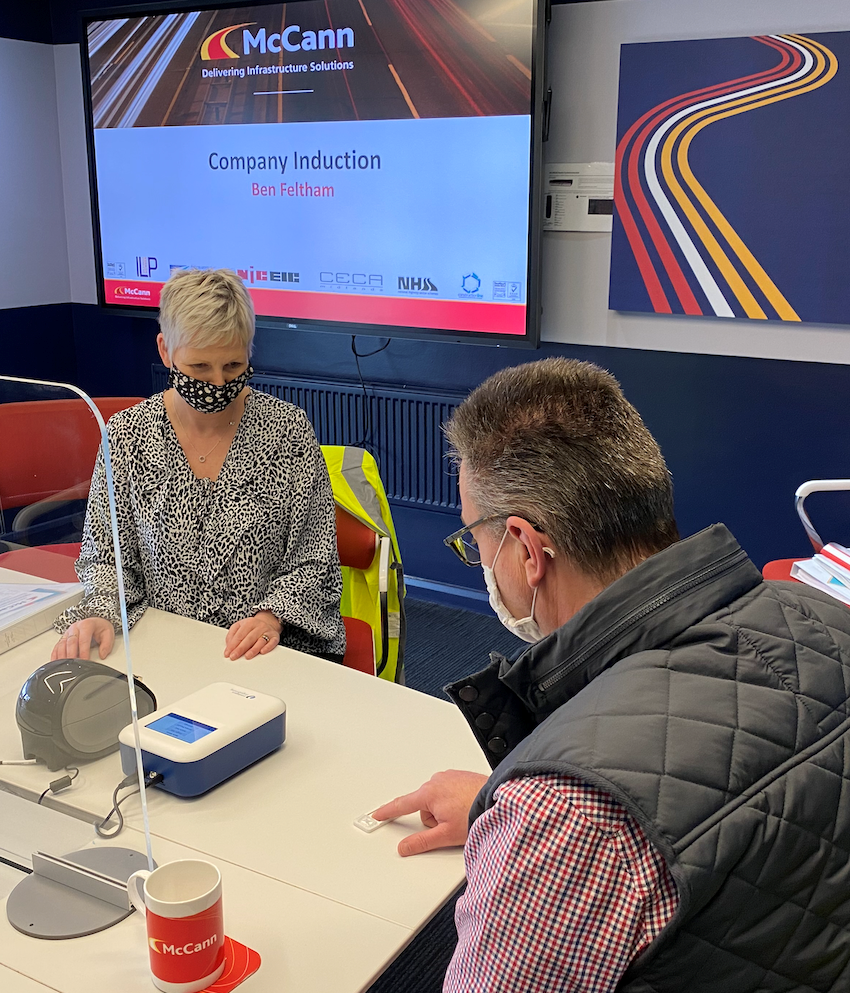
McCann, a Nottingham-based civil and electrical engineering construction company, is starting to use innovative fingerprint drug testing as part of its broader Health and Safety activities. This month McCann is starting to test new employees as part of the company’s induction process. Employees must pass the Intelligent Fingerprinting drug test before starting working on the major £60m Nottingham CityFibre contract, where McCann is supporting the delivery of the infrastructure to turn Nottingham into a Gigabit City with access to fibre. The Intelligent Fingerprinting test enables the entire drug testing process to be handled entirely in-house with results available within minutes – avoiding time away from site for testing. Candidates are simply asked to press each fingertip onto a small drug test cartridge to enable the rapid collection of a sweat sample. The cartridge is then placed in the portable DSR-Plus reader that analyses the cartridge and provides a positive or negative screening result for each drug in the test. McCann is screening for recent use of opiates, methamphetamine, cocaine or cannabis that could affect an employee and make them unfit for duty. The system is easy to use with virtual training for McCann’s team completed within an hour. Ben Feltham, Quality and Lean Manager of McCann says: “McCann operates throughout the UK on major road, rail and airport infrastructure projects for public and private sector clients. Our commitment to site safety has to be robust for both employees and the contractors under our responsibility. We previously used a saliva swab indicative drug test for initial for cause testing. If this proved positive, we then had to find an off-site 24-hour lab to provide a urine test for a final result. In some cases this has required a McCann HSEQ Manager being assigned to escort the operative being tested. As well as the obvious reluctance to carry out saliva swabs during a pandemic, there was a significant loss of time involved in escorting operatives for off-site second sample testing and waiting for results. “Also, we unfortunately encountered a contractor attempting to cheat the urine sample test at the offsite testing facility. With all of these negatives for traditional saliva- and urine-based drug testing methods, we were keen to strengthen our drug policy adherence by finding an alternative drug testing approach that would prove more robust against cheating. That’s why we were pleased to have discovered Intelligent Fingerprinting! “There are significant advantages with the Intelligent Fingerprinting drug test. We can bring the testing in-house – taking the samples and providing the results within minutes. In contrast to the offsite urine test method, we really can’t see any room for cheating to take place. It is also a relief not to have to handle saliva samples during a pandemic, particularly as this involved operatives having to remove their masks and inevitable close proximity. With Intelligent Fingerprinting’s method, face coverings can be worn at all times, while there’s no need for close contact or handling of biohazardous body fluids." Intelligent Fingerprinting’s drug testing system features a small, tamper-evident drug screening cartridge onto which ten fingerprint sweat samples are collected, in a process which takes less than a minute. The Intelligent Fingerprinting portable analysis unit then reads the cartridge and provides a positive or negative result on-screen for all drugs in the test in ten minutes. An introductory video demonstrating fingerprint-based drug testing in action is available here.

Siemens and DCS simplify switch to zero-emission fleets
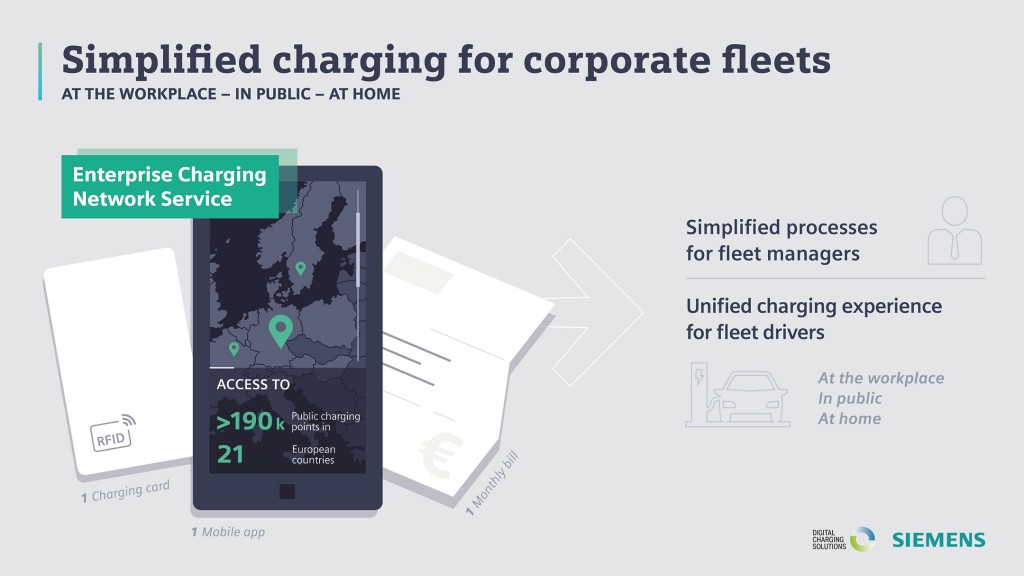
Siemens Smart Infrastructure and Digital Charging Solutions (DCS) are collaborating to help ease the transition to electromobility for drivers and managers fleets. The initial result of this collaboration is a new Siemens charging service called Enterprise Charging Network. This service provides a simple end to-end solution for charging at the company site, in the public and at home, thus standardizing the charging experience for drivers and reducing the effort for fleet managers. Simplified processes for fleet drivers and managers Drivers of company-owned electric vehicles can charge the same way wherever they are, using just one company charging card and app. They have access to the charging infrastructure at their own company sites as well as to over 190,000 public charging points in 21 European countries. All charging processes, regardless of where they take place, are billed via an integrated monthly invoice in the fleet portal. This gives fleet managers transparency over all operations while reducing the administrative overhead. The Enterprise Charging Network service is the initial result of the cooperation between Siemens and Digital Charging Solutions, which aims to make electromobility as accessible and usable for fleet customers as possible, thus promoting its adoption and expansion. To this end, the partners intend to connect electric vehicles, charging operations and the charging infrastructure intelligently and digitally to optimize the user experience for fleet drivers and simplify the processes for fleet managers. DCS brings Europe’s largest charging network with validated charging infrastructure point of interest (POI) data to the collaboration. “Electrifying corporate fleets comes with a variety of challenges. In addition to the management and maintenance of the hardware, the main thing is making charging and the associated processes as simple as possible. Charging corporate fleets needs to be as easy as charging a smartphone. Together with Digital Charging Solutions, we successfully launched a charging service that does just that,” says Jean-Christoph Heyne, Head of Future Grid at Siemens Smart Infrastructure. “In addition, we see potential in working with DCS and its OEM partners on on-board vehicle services because fleet drivers need a unified user experience – whether they’re using the charging app on their smartphone or an app in their vehicle. This is the only way companies operating large fleets will play a greater role in expanding electromobility over the long term.” Intelligently connecting electric vehicles and charging infrastructure “As an important player in the technology sector, Siemens is able to interconnect different areas, including charging infrastructure, distributed power generation and building technology. After all, linking electric vehicles and smart infrastructure doesn’t end at the charging station. While Siemens provides the right technology and services for EV charging at work and at home, we, as their partner, ensure a constantly growing public charging network. Together we integrate all charging processes, whether on the road, at work or at home, and offer companies a simple, reliable and convenient charging solution for their employees while at the same time creating the use cases of tomorrow,” explains Markus Bartenschlager, Managing Director of Digital Charging Solutions GmbH. Both companies are working on bringing additional joint solutions to the market. Over the last year, Siemens has continually expanded its portfolio of electromobility solutions. Its charging infrastructure portfolio includes solutions for slower charging during longer periods of non-use, including the Versicharge AC wall box, the depot chargers of the Sicharge UC family, and the Sicharge D fast charger for dynamic and parallel charging in between. This allows Siemens to provide corporate customers with the right solution for every application – be it at work, at home, in fleet depots or in public spaces. Customers can also take advantage of modular services such as operations and servicing, access and billing management as well as integrated charging management. The new Enterprise Charging Network service rounds out these offerings.

CICV calls for a Scottish Minister for construction in its first manifesto
In an unprecedented show of co-operation, commitment and collaboration, the construction industry in Scotland has come together to issue its first-ever manifesto detailing the crucial steps which need to be taken to secure a viable and sustainable future for the sector. Acting through the Construction Industry Coronavirus (CICV) Forum, a comprehensive range of trade associations, professional bodies, companies and individuals have signed up to the manifesto’s proposals. First among the proposals, published in the run-up to the Scottish Government elections in May, is a plea for a dedicated Government Minister for the construction industry, which would recognise its importance both to the recovery and to a net zero-carbon future. As well as a Minister for Construction, the manifesto proposes: A Chief Construction Adviser who would support the Minister and focus on delivery aligned with whole asset performance The development of an effective public sector maintenance and improvement programme The establishment of a VAT reimbursement fund for home repair and maintenance with a role for the Scottish National Infrastructure Bank Investment in affordable homes Development of the skills arena The introduction of a cycle network within the infrastructure investment plan The encouragement of conflict avoidance. The Forum points out that 175,000 people, including 10,000 apprentices, work directly in the sector in Scotland – 10% of the total workforce. It also contributes £21.5 billion to the country’s GDP and is a major economic multiplier, generating £2.94 for every £1 spent. Hew Edgar, Associate Director of Policy at the Chartered Institute of Building (CIOB), and Chair of the Forum’s Future Planning sub-group, says: “This manifesto is a declaration of intent, emerging from the environment of collaboration and co-operation which the CICV Forum has fostered during the COVID-19 pandemic. “This is the industry speaking with one voice, with an aim to benefit the future health, wealth and wellbeing of the country.” The manifesto is also designed to support the next government’s plans to meet Scotland’s ambitious targets on net zero, reduced energy use, decarbonisation, climate change, and other principal policy objectives around accessible, sustainable places and inclusive economic growth. He adds: “In offering these proposed policy initiatives, the CICV Forum and its members demonstrate that they will continue to engage positively with the next Scottish Government, representatives in Holyrood and the wider sector to provide intelligence, best practice and advice.” The manifesto is the latest initiative from the CICV Forum, which was established last March to protect and guide the industry through the ravages of the pandemic, Made up of trade associations, private companies and professional bodies, it has drawn on the collective expertise of its members to maintain a steady supply of information and practical advice to the sector.

How Computerised Maintenance Management is changing businesses
As a large business owner, with multiple premises, it can often be difficult to maintain oversight of the maintenance needs of each premises. This is where computerized maintenance management systems can really revolutionize processes, providing benefits such as increased visibility, reduced costs, efficient reporting, and maintained compliance. What is a Computerized Maintenance Management System? A CMMS is an accessible online system that hosts a range of facility management tools, from planned maintenance scheduling, to job tracking. Systems offered by facilities management companies, such as inSYNC from MSL Property Care Services, include various portals for your workforce to access and utilise. These can include portals to allow users to log jobs and request reactive maintenance work, management portals to show users how they are spending maintenance budget and wallboards, which display your live and ongoing tasks. How do they work? CMMS are created in line with your facilities’ needs, for a range of maintenance tasks. Once set up, they can be accessed 24/7 by business owners and their workforce to check for upcoming tasks, review live works, or to report any current issues to their facilities management provider. This can be hugely beneficial for larger businesses with multiple premises where employees can report issues at their site and management can have oversight of ongoing maintenance from head office. Benefits for larger companies Easy reporting With an CMMS, all relevant information is in one place. No matter which facility has an issue, the problem can be found and reported quickly and efficiently using the online system. Consequently, this reduces waiting times and minimises the effects of the issue as the request goes direct to your facilities management provider. Equally, having all your facility information online in one place means there is less complicated paperwork, so you’re less likely to lose important data, which causes delays in task completion. Better visibility A huge benefit of a CMMS is that those who have access can log in and track upcoming, ongoing, or completed tasks at all times of the day from wherever they may be. As a large business with multiple facilities and bigger workforces, this visibility is crucial for efficiency as it can be easy to miss small yet significant deadlines and information. With a CMMS, each member has a clear overview of the schedule and goals, allowing owners and their workforce to work cohesively to their best ability. Improved compliance One of the many amazing tools within a CMMS is scheduling, which allows you to clearly see every past, present and future facility inspection, and compliance certificates. Compliance is paramount to the smooth and safe running of facilities, yet often goes amiss when deadlines, certificates and tasks are not clearly visible. The online scheduling tool allows you to work with your facilities management provide to create an effective maintenance plan for each facility to ensure you are up to date with any required checks or legislations, ultimately avoiding expensive fines and other repercussions. Reduced costs As a result of these structured online maintenance schedules and improved visibility that come with an CMMS, businesses can act in advance, which in turn will reduce further expensive costs down the line. Additionally, if a maintenance issue suddenly occurs, the easy to report system means businesses can act accordingly and efficiently. This reduces waiting times, during which, the issue could potentially get worse, resulting in potential downtime and losses when your workforce could be in action. From the day to day running of facilities, to its long-term plans, investing in a computerized maintenance management system can truly revolutionize your large business.

How landlords and electricians can conduct EICR reports at home
The Electrical Installation Condition Report (EICR) aims to ultimately improve electrical safety across all UK homes. This comes as a response to the rising number of electrical fires in the UK.  According to data from the Home Office, over 53% of UK house fires were the result of electrical faults in 2019, as the nation’s fire and rescue service reported over 19,000 domestic house fires were caused by electrical issues alone.  In order to improve the standard of electrical safety in the private rented sector in England, the EICR is required for completion before the 1st July 2020 or from 1st April 2021 for existing tenancies. The report explains that landlords must hire a qualified professional to conduct an electrical inspection of their property/properties before the commencement of any new tenancy.  As a national requirement, all electrical installations (lighting and electrical sockets, etc.) in properties are subject to review, with the aim of this report to ensure that all electrical components work well and without any fault before any upcoming tenancies take place. To pass this test, landlords will have to conduct initial reviews and then report any potential electrical problems their property has to industry professionals who will then rectify any issue before the stated deadline date.  For tenants who fall into the category of vulnerable as a result of COVID-19, these in-person EICR tests will not be necessary and will instead be subject to alternative actions such as an online video walkthrough from a professional contractor. It must be noted that this will only be accepted if written evidence of the tenant’s unavailability is provided where it is clear that an inspection has been discussed and attempted.  Failure to contact and explain the situation to industry professionals will result in landlords with existing tenants having to allow contractors to enter the property and conduct the inspection regardless of the tenant’s health status. This could be an issue for many different reasons, so it is advised that landlords contact authorities as soon as possible to prevent this from happening. As health and hygiene standards need to be met, during the test, each professional should be wearing PPE equipment. They also should be following social distancing rules in an effort to maximise the safety of both the hired contractor and tenant. With new test methods are now becoming increasingly more common as a result of the coronavirus pandemic, professionals are choosing modern examination techniques to ensure the safety of landlords, tenants, and electricians from the virus. However, these new techniques need to be met properly for tests to be conducted thoroughly and to the highest standard. London Electricians 24/7 explains the different ways in which professionals and landlords can conduct these tests safely at home. Conducting a home electrical test “Stereotypically, in-person checks are seemingly the most suitable method of conducting electrical tests. Examining a house in person ensures that electrical assessments are conducted thoroughly on a property without any issue been missed. “As a result of the test being essential to the safety of future tenants, EICR reports should also take into account any coronavirus safety precautions. With this in mind, it is important for landlords to understand how to conduct any home electric evaluations correctly. This includes an understanding of general safety precautions regarding electrical safety and coronavirus. Landlords must also inform tenants to obey any rules or government guidelines when conducting checks and inspections under the pandemic measurements. “A new way of ensuring the EICR test takes place is via a self-service check-in. This approach involves tenants completing daily checks on their property to maintain the condition of electrical appliances and hotspots on a regular basis. “Live inspections are now a common occurrence and a popular way for contractors to virtually evaluate electricals at a property. This consists of property inspectors conducting evaluations via video link. These new socially distanced methods of performing home electrical tests are safe ways to not breach any coronavirus guidelines, however, with this comes some consequences. One of which is the increased chance of human error, with possible hidden issues getting missed. “For landlords or existing tenants, there is an element of pressure when conducting home checkups. It is fundamental that you must have a good knowledge and understanding of the dangers of electricity and how to conduct safe and thorough examinations. “A general ability to follow clear instructions given by a professional is essential as this will guide you clearly and accurately through important stages, helping you become aware of any possible dangers before and during the test. “After listening to detailed instructions by a professional electrician prior to the EICR test, in order to ensure yours and the electrician's safety, the electricity must be turned off for the test to take place. You will need to bear this in mind if there are already tenants in the property as failure to turn any electrical components off whilst conducting the test could prove fatal, so always double-check. “One main piece of equipment to have when conducting any electrical inspection at home is insulated and suitable clothing such as gloves and dielectric shoes. These will help prevent and absorb any electrical shocks from majorly harming you. For workers and tenants coming in contact with each other, wearing the correct PPE safety gear is crucial. Recommended items for maximum safety include PPE face coverings and safety glasses. “For electricians as well as landlords and tenants, when conducting an electrical test, despite any prior initial assessments, never assume that an electrical component you are handling in a residence is safe. Always run the necessary checks. To assess the safety of the property you should follow recommended steps of a visual test, earth test (for outdoor living), resistance test, and a leakage test. These can all help reduce the risk of electrical hazards occurring at home and in outdoor spaces. “Making sure you are 100% knowledgeable on the 18th Edition of the Wiring Regulations is also vital for conducting the EICR report. Not only will this help you locate hazards and faults, but it is also a requirement for properties to ensure these regulations are met when conducting the report and final test. “We know that having accurate and up to date industry knowledge is key to identifying the warning signs of electrical safety, but let's not forget it is also critical to know the best type of safety equipment for dealing with electrical faults. “It’s key to always have the most proven and advanced equipment for the job. An approved voltage indicator (AVI) is a key piece of equipment used for checking electrical currents within a property. This device is an absolute must as it determines the presence/absence of electricity in an area that you are unable to identify just by looking at it. Primarily used to detect AC voltages on sockets, switches, outlets, circuit breakers, when used correctly it could save your life. “Although the correct equipment which has been approved and verified by a professional is always a safety essential, the main advice is to always seek expert advice if you are unsure. A detailed review by a professional is always the safest option so if you are a tenant or a landlord, I would recommend maintaining a safe social distance from a contractor and allow them to conduct the test. "Even though following guidelines, procedures, and ultimately using your common sense is deemed obvious, it’s important to remember that these points are referenced to help you perform safe and inspections of properties with the intention of reducing the number of electrical fires happening at home. Equally as important, these rules and recommendations could also shield you from another threat - the global pandemic of coronavirus."

Fresh thinking: Direct Employment and the benefits of JIB membership
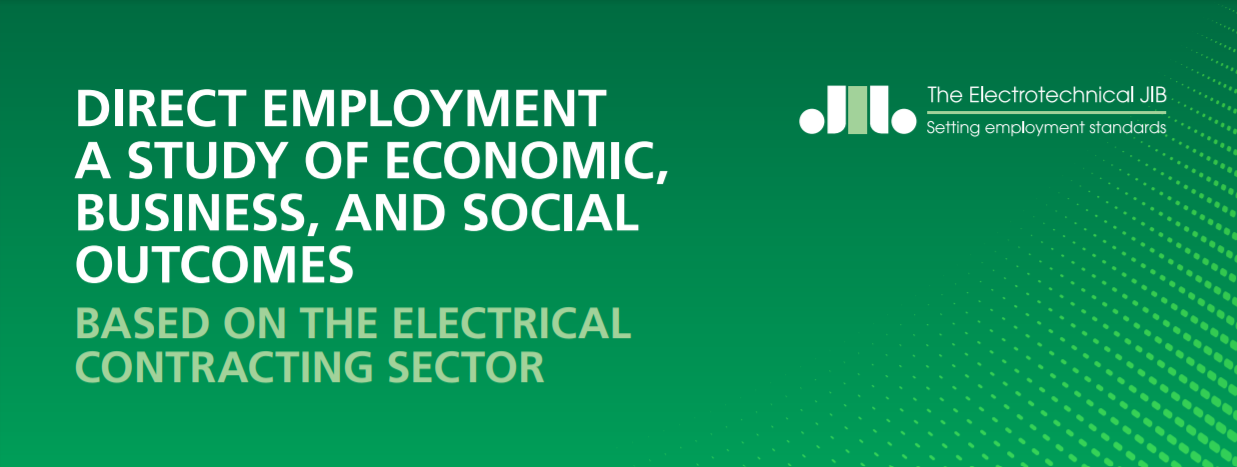
The Joint Industry Board (JIB) is pleased that its ‘authoritative and compelling’ report into  Direct Employment will act as a “stimulus to some fresh thinking.” The report, Direct Employment - A study of Economic, Business and Social Outcomes, authored by Howard Gospel, highlights the negative impact which the steady growth in non-direct, off-payroll working is having on the UK electrical contracting and construction industries. Over the past 30 years, the UK has seen levels of direct employment decline steeply – significantly higher than in any other comparable European countries. Direct employment improves productivity, protects the industry against future threats and underpins a safer and healthier workforce. It also allows for investment in people and results in better jobs and careers. It is for this reason that direct employment is a key foundation of the JIB agreement and why JIB membership is recognised as the mark of a quality employer. The recommendations made by Professor Gospel are a key focus for the JIB as it strives to promote the benefits of direct employment to clients, major contractors and public procurement. The JIB has already welcomed the Construction Leadership Council (CLC) skills plan, which calls on procurement practices to “demand direct employment within supply chains through pre-qualification questionnaires and tender criteria.” JIB members have a commercial advantage over their competitors as joining the JIB is considered by industry as a positive investment in an organisation’s workforce and seen as a mark of good employers delivering high quality results. In a 2020 JIB membership survey the top three membership benefits were listed as: -           Providing benefit and health schemes (including private healthcare and occupational training) -           Employment law, guidance and advice -           Training: Skills Development Fund and support for apprentices Benefits such as these and many others, including discounts on a number of services, are exclusively available to JIB members and are just one of the reasons why the JIB has been urging clients and large contractors to award contracts to firms that directly employ their skilled workforce, delivering a more productive and safer environment for the future. In a webinar organised by the JIB to promote the Direct Employment report, Andy Mitchell – Co-Chair of the CLC commented: “Time has come for action and we need to use the right model of employment to help support quality, innovation and safety.” Steve Bratt, CEO of the Electrical Contractors’ Association (ECA), added: “The defective and dysfunctional procurement practices need to change – direct employment can help to reverse these practices and it’s time to invest in skills to support innovation, quality and productivity.” Chairing the webinar, Sir Brendan Barber, JIB Board member and former General Secretary of the TUC, concluded: “This is an area where the benefits of making change will flow very positively to the whole industry, to society more widely as well as to the workforce. Things won’t change overnight but this report will hopefully be a real stimulus to some fresh thinking.”

Temporary renewals implemented for CSCS Cards
The Association of Technical Lightning & Access Specialists’ (ATLAS) Council has voted in favour of temporarily amending the standard CSCS card renewal requirements for its sector, due to coronavirus severely restricting access to training. This has meant the suspension of the requirement for an Anchors for Steeplejacks and/or Working at Height for Lightning Conductor Engineer course in order to renew blue or gold Steeplejack and/or Lightning Conductor Engineer CSCS cards. As a result, on a temporary basis, the Health, Safety & Environment Specialist Work at Height Test will be sufficient to renew a CSCS card, but this will be valid for one year only. As face-to-face training is significantly restricted, due to lockdown restrictions, the Anchors for Steeplejacks and Working at Height for Lightning Conductor Engineer courses are currently suspended. The courses were assessed for remote or eLearning conversion, but this created significant logistical challenges, which may take some time to resolve. ATLAS understands that the grace period of one-year on expired cards, offered by CSCS, is fast approaching for many at the end of March. To allow members to carry on accessing sites during this period, ATLAS has worked with CSCS to allow the issuing of short-term CSCS cards until training can resume, or alternative training formats can be implemented. The short-term CSCS cards will be valid for one year only, so operatives will then need to renew again, for their five-year CSCS card, when the relevant courses can resume. The cost to renew a CSCS card remains the same regardless of the duration, so the cost to renew will remain at £36.00. This temporary implementation comes into force from today (Monday 15 March 2021) and is expected to be in place for no longer than one year. Operatives are advised to access the relevant Anchors for Steeplejacks and/or Working at Height for Lightning Conductor Engineers courses as soon as they become available (which can be used for CSCS card renewals for up to two years following the course date). Any operatives who managed to attend the training courses, prior to the latest restrictions, will be able to obtain five year CSCS cards as normal (as long as the certificates are dated no more than two years before the renewal).

Don’t miss ECN Interactive Week next week!
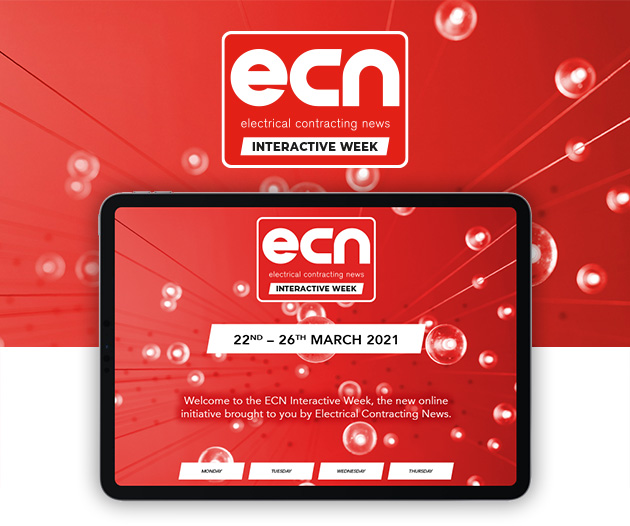
ECN Interactive Week is fast approaching! This initiative runs next week - from 22-25 March 2021 - and fills a void in the calendar left by the lack of live events due to COVID-19. The week-long initiative will consist of webinar style presentations delivered by major companies to live audiences, demonstrating key brands. There are live sessions running every day throughout the week and the electrical contracting community will be able to pick and choose which sessions they want to attend - there is no limit on how many sessions you watch, and they are FREE to attend. For a full synopsis of each session with times and dates, check out the ECN Interactive Week programme of events HERE.

SFP launches new guide to business survival
SFP, the restructuring and turnaround group, has published a new free Guide to Business Survival with a number of remedies to help electrical businesses navigate through the current crisis.   The Guide to Business Survival is set up in three clear stages of keeping or getting a business back on track. Part One explores the steps a business can take without having to resort to borrowing; Part Two outlines the various different funding options; and Part Three explores the restructuring and Insolvency processes.    Simon Plant, Chief Executive of the SFP Group, says the coming months are crucial for construction businesses: “With various ‘pinch points’ approaching that will impact cash flow, our Guide will inform business owners how best to navigate this current crisis, or how to restructure their business with the help of a licensed Insolvency Practitioner.”