2 November 2026
Product of the Month: Amari Floodlight range by Aurora Lighting
 
12 November 2026
Schneider Electric transforms Southampton hospital estate
 
12 November 2026
GTEC Training opens new education facility in North Yorkshire
 
11 November 2026
Energy, AI and smart buildings: register now for EMEX 2026
 
11 November 2026
Solar and batteries could cut electricity costs by 40%, data finds
 

Latest News


A prefabricated revolution: 'flat-pack' buildings with intelligence
According to Fortune Business Insights, the global modular construction market size was valued at $67.4 billion in 2019 and is projected to reach $106.22 billion by 2027. Prefabricated construction, a manufacturing process where the walls, roofs, floors, and modules of a building are built off-site in strictly regulated environments, offers many advantages compared to traditional construction methods. Chris Irwin, Vice President sales EMEA & VP Global Marketing J2 Innovations, explains: 'Modular building solutions have been gaining broader interest. By taking construction off-site and into the factory significant saving can be made. Waste is reduced and build times accelerated. Prefabricated buildings can be more cost-effective, sustainable and versatile. Modular building projects can be built some 30-50% quicker when compared with traditional methods. Time, ultimately, is money and prefabricated construction saves a lot of time' Irwin continues: 'Modular buildings also adopt the latest advanced manufacturing techniques and eco-solutions such as built-in plumbing, mechanical, solar panels, energy and control systems which will be shipped and assembled on site. As the market matures, there will be more opportunities for building-OEMS to pre-fit controls prior to shipping, akin to creating flat-pack building with pre-installed intelligence' In this scenario, building contractors arrange for the pre-installation of controls inside rooms, modules or zones. With the building assembled and control modules inter-connected, the use of smart building management (BMS) software would facilitate rapid system set-up - automatically discovering all the controls in a building on start-up. A microBMS for prefabricated construction J2 Innovations (J2) is a leading software platform company and creators of FIN Framework (FIN); an innovative open framework for smart buildings, smart equipment and IoT. They have recently created an application suite based on FIN called microBMS. This is an entry-level BMS system that enables OEM partners to develop easy to deploy solutions for efficient building management. Modular in design, FIN microBMS is ideally suited for the creation of control systems for prefabricated buildings. An integrated solution to manage lighting, HVAC, and utility metering can be built with numerous connectors available for seamless integration of KNX, BACnet, and Modbus devices. The Haystack open standard makes information self-describing for a range of applications. J2’s latest Edge2Cloud capability provides operators with a highly secure remote connection to the microBMS for accessing building data, servicing and upgrading of the system. Sites can be deployed and very easily connected to the cloud in minutes via web registration using QR codes. Discussing the future, Irwin predicts: 'The prefabricated building market is ripe for innovation. Adding automated controls whilst integrating sophisticated new technologies is going to streamline the installation and commissioning processes, saving energy, labour and resources'

New campaign asks workers to use a face mask properly in lockdown
With essential construction work set to continue during the latest lockdown, the Construction Industry Coronavirus (CICV) Forum is urging operatives to make a safe start to 2021 with a colourful new face mask campaign. The unique collective has launched an animation and downloadable infographic to remind workers that it’s vitally important to help protect everyone by following the rules and using the right face covering in the right way. It has also reinforced its ongoing reminders to workers about travelling and working in domestic projects safely and staying COVID aware in their social lives, as well as a reminder to the public to allow construction operatives to carry out their work unhindered. The latest initiative – headlined Mask for Task: Cover for Covid – follows the news at the start of the New Year that the construction industry in Scotland is to continue in operation despite restrictions in other areas. It emphasises in its easy-to-follow infographic that workers should wear the appropriate respirator or mask that the task demands and that a face covering of suitable material should be worn when moving around site. It also gives specific instructions on how to – and how not to – wear face coverings as well as instructions for taking care of personal protective equipment, such as storing masks in a sealable bag when not in use. As the industry picks up tools again after the festive break, the Forum is also reiterating the collective’s latest guidance on practical measures that contractors and workers can follow to protect themselves, their colleagues, and customers, friends and family. Driving home the message that we are In This Together, the Forum’s suite of guidance has outlined safety during domestic projects, guidance on returning to work safely, the importance of physical distancing outside work and giving contractors space to carry out essential work. Rebecca Crosland, Health and Safety Adviser at the Building Engineering Services Association and Chair of the Forum’s Health and Safety sub-group, comments: “With essential construction work being allowed to continue during lockdown, it is incumbent on everyone working in the sector to ensure that they are operating safely, whatever their capacity. “One of the most direct ways of doing this is to ensure correct mask use, which our latest infographic and animation promotes. The information is easy to follow and will help operatives protect themselves and their colleagues, customers, friends and family." “We are also repeating our other range of health and safety messaging about travel, social distancing and domestic work to ensure everyone is clear on exactly what behaviours are required at all times.”

MHCLG confirms BASEC as approved body 2661 for CPR testing
The Ministry of Housing, Communities and Local Government (MHCLG) designates BASEC as an Approved Body for UK Construction Products Regulation (CPR) testing as of 31st December 2020. Following the Brexit trade agreements, the question has arisen surrounding mutual recognition agreement off conformity assessments between EU & UK testing and certification bodies around the Construction Products Regulation. MHCLG position has been confirmed as below: “The agreement that was reached with the EU at the end of 2020 did not include a provision which would allow for mutual recognition of conformity assessment. Our understanding of the EU Commission’s position is that type test reports issued by UK notified bodies will no longer be valid for the EU market from 1 January 2021. Test type reports issued by UK Notified Bodies will continue to be valid for the GB market, and will allow manufacturers to affix the UKCA marking. The UK’s position is that it is down to individual UK bodies to decide whether or not to accept EU-issued type test reports to enable UKCA marking and ultimately whether or not retesting is required.” Details of confirmed designation refer to: The Construction Products Regulation 2011 (retained EU law EUR 305/2011) as amended by the Construction Products (Amendment etc.) (EU Exit) Regulations 2019 and the Construction Products (Amendment etc.) (EU Exit) Regulations 2020 Full contact details include: Name of body: British Approvals Service for Cables (BASEC) Address: Presley Way, Crownhill, Milton Keynes, MK8 0ES Telephone: +44(0)1907 267300 Email: mail@basec.org.uk Website: www.basec.org.uk Identification number remains: 2661. Status: Approved Body The period of validity: Unlimited Technical qualification of the body (accreditation or other official authorisation): Recognised by the UK Government as competent to carry out Technical Assessment of performance under the regulations as shown below (includes accreditation to ISO/IEC 17065:2012 and taking account of other standards under the EA Alternative Approach and taking into account EA 2/17 - EA Guidance on the horizontal requirements for the accreditation of conformity assessment bodies for notification purposes plus positive recommendation by UK national accreditation body). Compliance: Manufacturers and suppliers of BASEC approved cables can now confidently set and update Declaration of Performance (DoP) processes to fully comply with UKCA requirements, subject to valid a Certification or Certification of Constancy of Performance (CoCP) being in place. To ensure compliance to the designation which shall take effect from the end of the transition period. To summarise the position in respect to conformity assessments in compliance with the CPR/UKCA for cables destined for construction projects, approved by BASEC post Brexit, the below applies: • BASEC (2661) will be able to issue UKCA System 1+ & System 3 • BASEC Conformity Limited (NB 2851) will be able to issue CE System 1+ • Neither BASEC nor BASEC Conformity Limited will be able to provide CE System 3

SELECT secures services of construction industry professor Rudi Klein
In a boost for its member companies in the electrotechnical sector, SELECT has moved to secure the services of one of the UK's construction experts to guide its members. Scotland’s largest construction trade association has appointed Professor Rudi Klein to act as a consultant, in a move which once again significantly strengthens the service that it provides to its 1,250 member businesses. For more than 30 years, Professor Klein has championed the interests of all specialists in the construction sector, latterly as chief executive of the Specialist Engineering Contractors' (SEC) Group, a role from which he stepped down this month. As a tireless campaigner and major force in driving industry improvement, his wealth of experience will now be on tap for SELECT members as he assists the association on the reform of payment systems, encourages the uptake of project bank accounts (PBAs) and supports work on the reform of retentions and the regulation of electricians in Scotland. Alan Wilson, Managing Director of SELECT, says: “This appointment is a major coup for our organisation. Professor Klein is universally acknowledged as a foremost expert in his field and has worked tirelessly to improve the trading conditions of businesses large and small. “He has been a driving force for change as the leading UK authority on the use of PBAs and he has led calls for the reform of the practice of retentions in construction, a system increasingly regarded as obsolete. “Professor Klein and SELECT already have an established relationship and have worked together closely for more than three decades. He will now be available to provide enhanced support and guidance to members on relevant contractual issues, potentially saving them a great deal of time and money on dealing with complex problems.” A barrister by profession, Professor Klein is a former academic and visiting professor of construction law at the University of Wolverhampton. He developed the SEC Group into an influential lobbying body in both Westminster and the devolved administrations and was presented in 2016 with a Lifetime Achievement award by SELECT in recognition of his contribution to the industry. He will work with SELECT on one day a month, initially for one year, and will also assist in drafting briefing notes, producing advice, supporting necessary lobbying and will continue to prepare articles for SELECT’s website and influential stakeholder magazine, CABLEtalk. Professor Klein comments: “I am delighted to have the opportunity to work even more closely with SELECT and its members, working both face-to-face and behind the scenes to help improve the payment landscape for firms of all sizes. “The issue of late and withheld payments is one that continues to dog the construction industry, and hopefully I can offer guidance to hard-working business to help them receive the money they so rightfully deserve.”

Learning to combat anxiety with the Electrical Industries Charity
All of us experience stress and we all have different ways to deal with it and the strain it can put on our bodies. Some of us may use stress to motivate us but when it begins to feel overwhelming, stress can really alter our mental state. Stress can cause anxiety, depression, burnout and much more. Katy works for an electrical wholesaler and had been with the company for several years. Katy approached the Electrical Industries Charity for mental health support as she was struggling to cope with a diagnosis of Generalised Anxiety Disorder. Generalised Anxiety Disorder can manifest itself in different ways, but Katy was struggling with intense feelings of panic, intrusive thoughts, lack of focus, profuse sweating, and sleep disruption. Katy enjoyed work because it gave her a routine. For a lot of us routine can be a massive source of comfort and stability and when things upset our norm it can be difficult to cope. When the pandemic forced Katy to begin working from home her stress and anxiety became exacerbated as her normal routine had disappeared. The pandemic meant 49.5% of workers began to work from home and this change to the normal can feel really disorientating. The stress of a new routine coupled with Katy’s anxiety disorder meant her symptoms were worsening. During the pandemic, the Electrical Industries Charity provided 1,406 grants to those struggling with mental health and/or in need of financial assistance. Of the one in three mental health cases the charity support 76% are living with anxiety and/or depression, like Katy. Katy’s anxiety spiralled out of control. She began to catastrophize, and negative thoughts clouded her mind all the time meaning focusing on work became even more difficult. Her stress levels grew as she found coping with day-to-day life more difficult and was unable to escape her anxiety through a normal work routine. Katy reached out to the Electrical Industries Charity when she was close to breaking point. The charity assigned Katy a welfare caseworker from the team who sourced and funded a local therapist to provide therapy virtually. During these sessions Katy developed coping strategies to manage her anxiety and learned how to better cope with changing circumstances. Katy received 12 sessions of therapy and her Electrical Industries Charity caseworker stayed in regular contact with her. Katy’s caseworker helped to support her transition to home working and liaised with her workplace to ensure Katy had the right tools and resources to effectively do her role from home. Katy felt more in control after this and began to enjoy working from home and its benefits. Since finishing her therapy sessions Katy is enjoying a combination of working from home and in office working. Katy is fully committed to the therapy techniques and has applied them to her daily life. Katy feels empowered and better equipped to cope in what would have been anxiety triggering situations for her. The support of the Electrical Industries Charity has meant Katy is now feeling fulfilled and less anxious with an optimistic outlook on what the rest of the year has in store despite its ever-changing circumstances. If you need support to manage stress or anxiety, then please contact the welfare team on 0800 652 1618.

Safety first for firefighters near HV equipment
All six fire services across the East of England have signed up to a new agreement designed to keep emergency crews and the public safe near high voltage electrical equipment. Electricity firm UK Power Networks created a Memorandum of Understanding (MoU) which sets out procedures and responsibilities in the event of an incident involving electricity, to ensure safe working areas. The power company will work with the fire services to quickly make safe any electrical equipment which would pose a hazard, to so that emergency services’ works can be carried out without delay. In order to deliver electricity to homes and businesses, there are more than 69,000 substations based in communities across the East of England, as well as 62,000 kilometres of underground cable and 32,000 kilometres of overhead lines. The six fire services signed up (Bedfordshire, Cambridgeshire, Essex, Hertfordshire, Norfolk and Suffolk) can now see the locations of such equipment, and know to gain assurances about electrical safety when arriving at a site where there are ‘danger of death’ signs in place. Peter Vujanic, Head of Health and Safety at UK Power Networks, says: “Working safely and maintaining the safety of the general public and the people who help them such as the emergency services is our top priority. “This Memorandum of Understanding defines protocols which will ensure any incidents involving electricity and fire are dealt with in an effective manner providing a safe working area for firefighters.” Stuart Ruff, Chief Fire Officer for Norfolk Fire and Rescue Service, speaking on behalf of all six fire services in the East, says: “Agreements which help to enhance the safety of our crews and the public across the Eastern region are very welcome. “This MOU will help to ensure that in the event of incidents involving firefighting or rescues associated with the electricity distribution infrastructure, our work can be done safely and swiftly with the full support of UK Power Networks.”

Which tradespeople were the busiest in 2020?
Vanarama has surveyed 1,000 Brits, teaming up with Rated People to find out what 2020 looked like for tradespeople and who were the busiest. According to Rated People CEO Adrienne Minster: "People have turned to professional tradespeople this year to help them turn their visions into reality. We've seen an increase of 7% more jobs being posted for tradespeople, despite the pandemic." Almost two-thirds of respondents say that they'd called out for a tradesperson during 2020, 52% saying that more time around the house during lockdown had made them more aware of issues. The survey also investigated which trade was most in-demand and that Brits needed the most help with their plumbing and electrics, due to the rise in home-working. This demand led to some noticeable wait times, 29% claiming that they'd had to hold on for longer than usual to book in a tradesperson. The survey results lined up with what Rated People saw occur, Minster explains: "Overall, we've seen most demand for plumbers. We put that down to them being available for home emergencies and fixes that won't wait." Twenty per cent of respondents said they'd spent over £1,000 on work by tradespeople, with 10% even shelling out over £5,000. However, most people spent £100 or less, showing that it's odd-jobs that have been keeping tradespeople busy as opposed to large-scale work. Price isn't everything according to the survey, as only 12% of respondents would choose a tradesperson based on the amount they charge - whilst 70% are likely to rely on positive word of mouth. With restrictions keeping us apart and the risks of contact being emphasised, you would think there'd be hesitation in getting someone to do some work on your home. It's positive to see, that over two-thirds of respondents say that they were comfortable with tradespeople in their home – trusting their professionalism and responsibility. Minster was asked whether appreciation for tradespeople has risen during these times: "Yes, we'd like to think so. Trade businesses have offered homeowners support and assistance to make their homes comfortable and safe during an uncertain time and we've had a lot of happy homeowners leaving great reviews for tradespeople on our site in 2020, showing their appreciation." Getting a lot more use from people as we all stayed home, kitchens and bathrooms topped the list of rooms that needed work in 2020. The area that the survey identified as 'needing the most work', was the garden. With many people using their private outside space to make sure they kept up a healthy dose of Vitamin D – it seems that they noticed things could do with sprucing up. With the study finding that this year has had more of a positive outlook for trades than other sectors of the UK economy, here are Rated People's thoughts on how 2020 has played out for tradespeople: "Trade companies make up nearly 20% of UK businesses and it's been fantastic to see them recognised by the UK Government as playing a vital role in keeping the economy moving. Tradespeople have been largely able to continue working as normal in and around homes and are key to the success of the Government's new Green Homes Grant scheme."

UK heading for 'greenest year on record as renewables grow'
The UK energy supply is heading for its greenest year ever as record-breaking wind power generation helped to cut emissions, data from National Grid shows. The amount of carbon emissions produced for each unit of electricity –  the carbon intensity – plunged 60% between 2013 and 2019 as new renewable capacity has come online while coal-fired power stations have been decommissioned. National Grid's figures indicate the UK is on track for another new low in 2020 after a 15% reduction in carbon intensity compared to last year. In 2013, each kilowatt hour of electricity resulted in 529 grams of CO2 compared to just 181 grams so far this year. The government's target is to reach 100g per kWh by 2030. One kWh is approximately enough to power a standard hoover for an hour. Rob Rome, National Grid’s head of national control, says: “2020 has been a record-breaking year for Great Britain’s electricity system. The grid continues to transform at an astonishing rate as we harness the growth of renewable power sources. “We saw the highest ever level of solar generation in April, the longest period of coal-free operation between April and June, and the greenest ever month in May.” Storm Bella helped Britain to another record for wind power generation on Boxing Day. Wind farms generated more than half of the nation’s electricity in a 24-hour period for the first time ever, according to Drax Electric Insights. Its data showed that wind supplied 50.7% of Britain’s power with nuclear generating 21.1% of while fossil gas provided 14.6%. Wind speeds reached more than 100mph in the Isle of Wight as storms battered many parts of the country. Globally, offshore wind capacity has grown nine-fold since 2010 and is set to multiply a further eight times over the next decade to 215GW as companies and governments invest around $600bn (£442bn), according to analysis from Morningstar.

Freedom acquisition of HV services division of Fundamentals
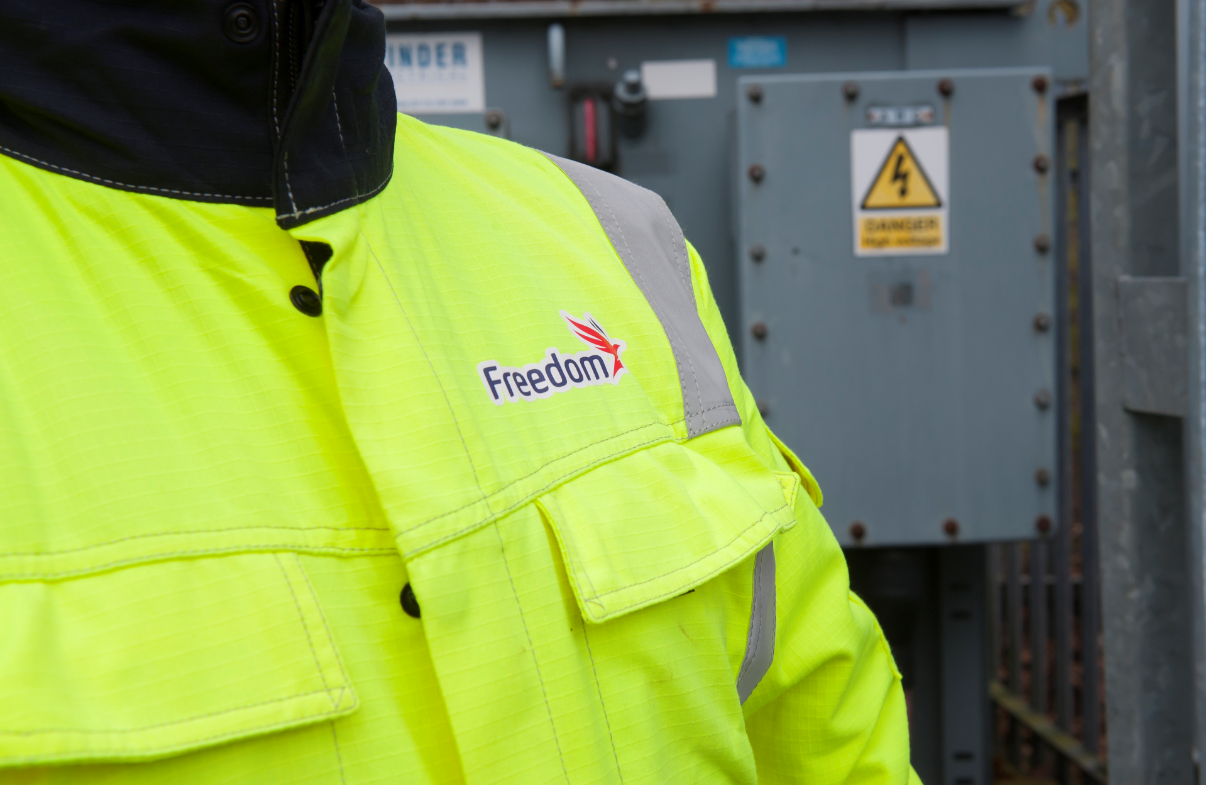
Freedom (an NG Bailey Group company) has completed the acquisition of the HV Services division of Fundamentals Limited. The HV Services division will join the Freedom Networks business unit. The acquisition provides an excellent opportunity for Freedom to extend its range of services in the electricity distribution network sector, including HV maintenance and renewable energy sectors.  It also allows Fundamentals to re-focus its service activities on its core business of grid voltage control and a developing technology portfolio The acquired HV Services team brings expertise in the electricity generation, transmission and distribution sectors. The team has over 40 years’ experience working on mission critical assets across the entire voltage range. Their customers include DNOs and private network clients throughout the UK. As part of the acquisition, 12 highly skilled employees will join the Freedom business. Peter Jones, Managing Director (NG Bailey Services), says: “Bringing the Fundamentals Limited HV Services division into the Group provides a natural extension to the range of services we already offer – particularly in network services and HV maintenance”. Jon Hiscock, Managing Director of Fundamentals Ltd, adds: “This transaction is part of our strategy to become an international technology business and secures a good future for the HV Services team whose extensive skill, knowledge and experience will complement that of Freedom”.

Understanding stress with the help of the Electrical Industries Charity
We all experience stress at some point in our life. Stress can be related to home, work, finances or relationships and is the body’s reaction to feeling threatened or under pressure. Stress can help us meet the demands of home, work and family life. But too much stress can affect our mood, our body, and our relationships – especially when it feels out of our control. It can make us feel anxious and irritable and affect our self-esteem. Within the UK, 74% of people reported in 2019 they have felt so stressed they have been overwhelmed or unable to cope and 51% of adults who felt stressed reported feeling depressed, and 61% reported feeling anxious. While at work, 79% commonly experience work-related stress and the electrical and energy sector is one of the most stressful industries to work within. 76% of those who seek mental health assistance from the Electrical Industries Charity are diagnosed with anxiety or depression, a lot of which is caused by stress and subsequent burnout. Mike, an employee of the electrical wholesale sector had been working within the sector for a few years. Retailing and wholesaling can sometimes generate a culture of stress with high targets, employee competition and unsociable working hours. Mike approached the charity after struggling with workplace stress. He had been signed off from work for a prolonged period due to exhaustion and had found he was dreading his return to store. While a period off work can sometimes be just what the doctor ordered, a prolonged instance of absence can lead to more stressful thoughts and anxious behaviours. You may think colleagues have been talking badly of you, anxious of inhouse changes or worried people’s behaviour may change towards you on your return. While these thoughts are mostly irrational, they can be huge factors in return to work anxiety. Mike had been struggling to cope inhouse with his team reduced and his workload increasing, and this had resulted in high levels of workplace stress. Mike began to work more hours to try and keep up with his workload but found his work/life balance was completely gone. Long working hours is one of the top 10 causes of workplace stress and 25% say it is one of their main stressors within the workplace. Upon reaching out to the Electrical Industries Charity, Mike was assigned a welfare team member to discuss his case. In the first instance the Electrical Industries Charity will offer a listening ear, help to establish what support you may need and then can guide you in the right direction. The charity spoke with Mike and sourced and funded therapy sessions to help him manage his stress and resulting anxiety. During therapy sessions Mike was taught tips to prevent and manage stress and was shown various ways to react differently to what may be stressful situations. Mike attended therapy sessions consistently and the charity kept in constant contact with Mike ensuring he was happy with his therapy and therapist. After 12 sessions Mike finished his therapy and felt he had been equipped with the necessary tools to prevent, manage and cope with workplace stress. Mike is now in a much better place since completing his therapy course and The Electrical Industries Charity have now closed his case. If you are struggling with workplace stress, exhaustion or burnout the Electrical Industries Charity are here to support you. The charity can act as a listening ear, source counselling sessions or provide workplace liaison.