2 November 2026
Product of the Month: Amari Floodlight range by Aurora Lighting
 
12 November 2026
Schneider Electric transforms Southampton hospital estate
 
12 November 2026
GTEC Training opens new education facility in North Yorkshire
 
11 November 2026
Energy, AI and smart buildings: register now for EMEX 2026
 
11 November 2026
Solar and batteries could cut electricity costs by 40%, data finds
 

Latest News


NICEIC and ELECSA Embrace Virtual Classroom
NICEIC and ELECSA, have bolstered their comprehensive training portfolio to include all-new virtual classroom options. Covering the most popular subjects, the virtual suite includes four expert-led courses, all of which mirror the learnings and outcomes of classroom-based alternatives. Hosted by live tutors and developed to work across multiple platforms, this latest introduction delivers a solution for those wishing to train remotely.  Hosted live by expert tutors the all-new virtual suite will initially focus on the following topics Electric Vehicle Charging, 18th Edition, Emergency Lighting Fundamentals, Fire Detection and Fire Alarm Systems. Mirroring the learnings and outcomes of class-room based alternatives, contractors will benefit from downloadable course materials and live interaction with the experts. “Our goal is to supply our customers with the tools they need to drive their businesses forward, and I firmly believe this introduction will do just that,” says Neil Vincent, NICEIC and ELECSA Head of Training. “Delivering first-class technical training is a cornerstone of our business and as such we have invested heavily to ensure we provide the right courses at this time. COVID-19 has certainly highlighted the need for remote training options, but thankfully this was an area we were already developing. As such, our courses have been meticulously developed and extensively tested to ensure they are fit for purpose. At a time when our face-to-face training has had to pause temporarily, it is fantastic that we can continue to support our customers by supplying compromise free virtual alternatives.”  The courses, which have been running in pilot mode since May, have been well received by customers. Following his attendance, on the virtual Electric Vehicle Charging course, Peter Ash of Taunton Electrical Solutions comments, “I could not fault the experience, having attended NICEIC and ELECSA courses in the past I was keen to try the new virtual product, and it did not disappoint.  “The tutor was excellent, the software was easy to use, and the support materials, which I now have saved for future reference, are going to prove very useful indeed. COVID-19 has impacted so much of what we as contractors do, I am pleased the NICEIC and ELECSA have taken steps to ensure it doesn't have to impact our ability to train”. To book yourself a space on upcoming courses, click here. https://youtu.be/V2M-PZqnsiI

Aico Acquires IoT Solutions Provider, Homelync
Aico’s acquisition of Homelync represents a significant milestone for social landlords looking to procure connected solutions.  Bristol-based Homelync is an award-winning, innovative technology firm that specialises in smart home integration and analytics technology.  Aico’s acquisition of Homelync will provide a complementary technology platform to present a synergistic approach to IoT, analytics and data management across the connected home arena. Aico’s innovative SmartLINK Gateway provides real-time data insight into Fire and Carbon Monoxide alarm systems across housing stock.  Social housing accounts for 20% of all UK homes and with smart technology and the connected home vastly becoming commonplace, managing data is becoming difficult with multiple, non-integrated dashboards resulting in fragmented data, loss of insight and limited scalability.  Homelync’s development of an IoT Analytics and Integrate Platform provides an innovative solution to these connected home issues. The platform facilitates the seamless, end-to-end integration of IoT technologies into one user-friendly dashboard, giving landlords more effective property management.  Commenting on the investment Aico Managing Director Neal Hooper says, “Aico and Homelync is a perfect partnership – Aico being the UK market leader in Fire and CO detection and Homelync complementing this with advanced data insight and analytics across associated housing environmental sensors including temperature, humidity, energy usage and gas boilers. Complementing Aico’s Gateway which provides real time data insight into connected Fire and CO alarms within a property, Homelync’s advanced machine learning and analytics of this collective data will provide our customers with state of the art data insight across their connected properties. We are extremely excited around the value this is able to bring to customers across the social housing sector and look forward to continuing innovations and progression across the Connected Home and IoT arena.” Through the partnership with Homelync, this valuable data can be integrated with analytics from associated environmental sensors providing complete, integrated, and effective asset management.  Speaking following the announcement, Homelync CEO Luke Loveridge acknowledged the significance of the investment and the future strategic partnership, “Our vision is to harness new technology to make social housing smarter, safer and more efficient. The strategic investment by Ei and the future close collaboration with Aico will help us accelerate our objectives in this regard.  The vendor agnostic, open sensor ecosystem we have developed is 100% complementary to what Ei offers its customers today. Add to this our team with decades of experience in software, hardware, machine learning and local government, and we believe we have the essential ingredients for a very successful partnership.”  

Green Homes Grant Will See Homeowners Given Up To £5K
Chancellor Rishi Sunak announced that hundreds of thousands of homeowners will receive vouchers of up to £5,000 for insulation and energy saving home improvements.  Set to launch in September, the £2bn Green Homes Grant will be targeted towards improving the energy efficiency of existing housing and other buildings, reducing fuel bills and creating green jobs, but this needs to be part of a much-bigger and longer-term strategy to improve our underperforming housing stock and to meet our net-zero targets. The £2bn grants form part of a wider £3bn green investment package announced in the chancellor’s summer ‘mini-budget’ statement to support efforts to rebuild the UK economy post-covid-19. The funding programme will also involve insulation in public buildings such as schools and hospitals and retrofitting low carbon heating technology to social housing.  Whilst, 8.5 million homes in the rental sector are excluded, the treasury has said at least 140,000 jobs will be supported by this new green recovery scheme. The Insulation Manufacturers Association cautiously welcomes the government announcement, which is an essential step towards the improvement of existing housing.  “Good insulation, properly installed, is the most cost-effective way to save energy in homes and buildings. However, this one-year retrofit scheme has a limited time-frame and cannot simply be a one-off. It is crucial that further incentives for energy saving are planned and introduced immediately this one comes to an end. As with all these initiatives, the devil will be in the detail,” says a IMA representative. “The issue of quality control and accountability will be extremely important throughout this scheme; it will be critical that all energy saving measures are professionally and correctly installed by accredited installers and perform to the required standard intended. These retrofit measures must also contribute to the government’s longer term aim of bringing all homes up to EPC Band C by 2035. “The role of PIR and PUR insulation in achieving energy efficient buildings, and therefore a sustainable future, must not be underplayed. By using PIR insulation with its high thermal efficiency, it will make a difference between a building’s success or its failure. With UK housing among the coldest and least efficient in Europe, many insulation manufacturers, from individual companies to trade bodies, are fully committed to adopting sustainable design and installation methods to help deliver better-performing buildings and help the UK achieve the ambitions of its net-zero climate change targets. “Whether new build or retrofitting, everyone has a right to live in a healthy home, fully insulated, with better ventilation, windows and doors and more efficient heating systems. This is essential if the UK is to meet the net-zero target.  We look forward to more to come from the government, not just in terms of addressing our energy-deficient rental sector but also in terms of ensuring the quality and energy performance of the whole of our housing stock.”

Chalmit To Spotlight LED Lighting For Hazardous Environments
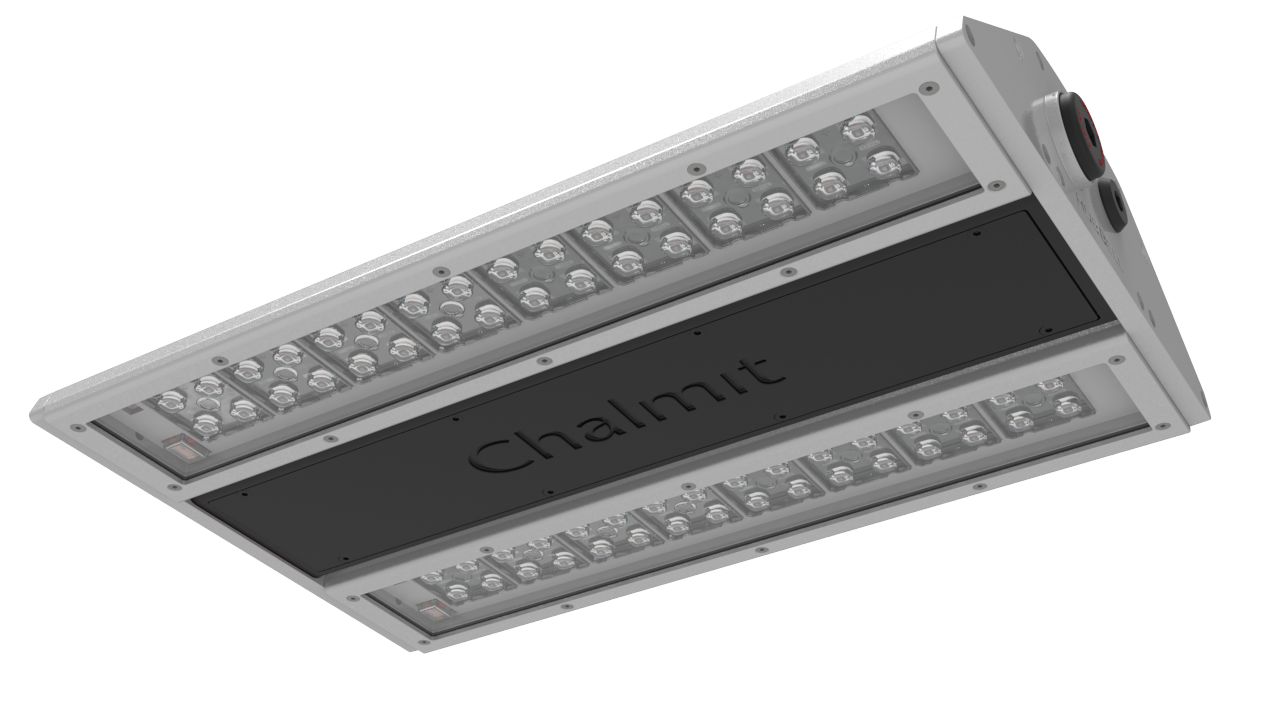
Chalmit & Killark, a division of the Hubbell Harsh & Hazardous Group and manufacturer of lighting for industrial sites, is hosting a live, interactive, online Q&A on how LED luminaires can be used to best effect in hazardous areas.  The 45-minute session, to be held at 3pm on Wednesday July 15, will be led by a panel of experts from Chalmit, who will answer questions submitted by attendees. The event is ideal for those responsible for hazardous environments such as oil refineries, chemical plants, and potentially explosive factories. The session is expected to span major LED topics such as maximising energy efficiency, maintenance, optimising performance, safety, and capital cost minimisation.  Mark Poutney, Technical Manager at Chalmit explains, “Lighting in hazardous environments presents real challenges which LED lighting can help address. This will be a unique opportunity for site managers from around the world to get their questions answered, check their lighting strategy is up to scratch and catch up on the very latest thinking when it comes to LEDs.”

Construction Kickstart Measures Must Lead To Long Term Recovery
Commenting on the recent Summer Economic Update from the Chancellor of the Exchequer, Brian Berry, Chief Executive of the Federation of Master Builders (FMB), says, “I strongly welcome the package of measures announced. While these initial investments will kickstart construction and training, the Government must build on these commitments in the Autumn to ensure that growth and jobs are sustained beyond next year.” On the Green Homes Grant, he adds, “Grant-funded vouchers are a step in the right direction to launching the retrofit market, and supporting consumers to build with confidence after the pandemic. We hope at the Autumn Budget the Chancellor will bring forward the rest of the £9.2bn manifesto commitment, and support the development of private finance initiatives that will ensure the market grows in a sustainable way. "We have an army of local builders ready to deliver these works to a high standard, provide local employment, and generate economic activity in each corner of the UK. The Chancellor has demonstrated his willingness to introduce targeted, temporary cuts in VAT. We hope he will retain, as a possibility, a cut to 5% for home improvement works to further boost demand.” Commenting on the support for jobs retention and creation, he furthers, “The schemes underpinning job retention, and traineeship and apprenticeship guarantees are welcome news for construction, which has persistently struggled to hire into key trades like bricklaying and carpentry. The Chancellor is right to highlight the need for a new generation of talent, and support should be directed toward this strategic industry. That 71% of apprentices in construction are trained by local builders, and typically over a three-year period, means the scheme must be accessible to small to medium-sized firms (SMEs). "Converting these short-term measures into long-term jobs requires careful matching of individuals to the right firm. While we train the tradespeople of tomorrow, it’s great news for SME construction firms that they will be able to access the new Talent Retention Scheme to reduce the risk of redundancy. This will protect against a repeat of the severe job losses experienced by construction during the last recession.” On Stamp Duty cuts, he stresses that, “Temporary cuts in Stamp Duty will boost the housing market and remove a black cloud that hangs over many second-time house hunters. I’m particularly pleased this is taking place with immediate effect, as we know that potential homeowners typically look for a new home in September. Today’s confirmation of the extension of the Home Building Fund targeted at SMEs is also welcome. Looking ahead to measures to rebuild the economy, investment in planning departments and streamlining of the planning application process will be needed to ensure we also bring forward new development to ease our housing crisis.”

Schneider Electric And Rexel Launch Wise Guy Challenge
Schneider Electric has teamed up with Rexel to offer electricians the opportunity to win up to £3,000 worth of Schneider Electric products in the Wise Guy Challenge. The challenge invites industry professionals to test their electrical knowledge against the clock to win various prizes. Players must answer 10 timed multiple choice questions, and every correct answer gets an entry into prize draws to win a £50 Amazon voucher, £100 Rexel voucher or a £3,000 product hamper. “We are delighted to offer electricians the chance to win some amazing prizes. The Wise Guy challenge will test industry professionals and hopefully educate them on the benefits and features of the new technology available. Good luck to all that enter!” says Tim Barber, Distribution Programme Marketing Manager at Schneider Electric. To enter, please click here.  

LEDVANCE Gets Full Marks With First VDE HCL Certificate
LEDVANCE has become the first to be awarded the HCL certificate with the best possible quality award (3/3 stars) from the independent VDE Testing and Certification Institute. The award was made for its new and advanced BIOLUX HCL system and it is the first time that a company has qualitatively fulfilled all existing requirements, norms and standards for an HCL system. “Previously, there was no qualitative testing of HCL systems by an independent authority,” explains LEDVANCE Head of R&D and Strategic Portfolio Management Dr. Ulrich Weiss. “We therefore very much welcome VDE's initiative to establish standardised HCL test-criteria based on norms and standards and incorporating measurement techniques. This is unique worldwide. We are very proud that our BIOLUX HCL system has received the best possible quality award from VDE and fulfils all requirements to positively support the human biological rhythm, showing activity and performance during the day, supporting good sleep at night and increased well-being.” “The collaboration with the technical experts from LEDVANCE has been excellent,” says Dragana Zdravkovic-Stojanovic, technical expert for luminaires at VDE Institute. “Our criteria for being awarded with three stars were by no means easy to implement. I am looking forward very much to further joint projects.” LEDVANCE’s HCL system is designed to positively support the human biological day-night-rhythm, increase well-being and performance during the day and improve the quality of sleep at night. The evaluation by the VDE Institute was based on various criteria regarding light quality, correct simulation of the course of daylight, energy and cost efficiency, safety, ease of installation and commissioning, usability and compliance with national, EU and global norms and standards. The VDE mark is synonymous with safety and quality in electrical devices, components and systems. The independent test engineers carry out product, quality and safety tests on more than 100,000 devices per year before the VDE Institute awards the test mark. The VDE Institute has now developed a new standardised catalogue of test-criteria to evaluate HCL systems with regard to quality, safety, performance and usability. Compliance with these criteria is confirmed by a three-stage certificate. The LEDVANCE BIOLUX HCL system consists of wirelessly connected components. The intelligent BIOLUX control unit ensures - as the heart of the system - that the corresponding BIOLUX LED luminaires simulate the natural course of daylight in terms of light colour and intensity. Unique to the BIOLUX HCL system is the possibility of manually adjusting light to different situations using five predefined light modes. While the NATURAL mode simulates the natural course of daylight, the BOOST and FOCUS modes support concentration and productivity. RELAX provides relaxing light during breaks and with CREATE brainstorming sessions are encouraged. The built-in safety mechanism has been particularly positively evaluated by the VDE Institute: The five different light modes always follow the curve of natural daylight and thus ensure that the effects on the biorhythm are positive at all times. This makes the BIOLUX HCL system particularly suitable for offices, meeting rooms, hospitals, doctors’ surgeries as well as elder care and nursing homes.  After connection to the power grid, the LEDVANCE BIOLUX HCL system can be installed and commissioned in five to 10 minutes in an uncomplicated, fast and wireless manner using a smartphone app. The system automatically determines the time of sun rise and sunset based on the geographical location and autonomously configures all settings based on the course of daylight. As the system works independently and configures itself, no complicated programming or integration into existing lighting management systems is necessary. This keeps costs low and contributes to a particularly economical use. A total of up to 20 luminaires can communicate with the intelligent control unit, which can be added to the system simply by scanning the QR code. The complete communication of control unit and luminaires is securely encrypted and no user data is transferred. The user can set the five lighting modes in no time at all via the control unit.  

The Lighting Designer Software Launches
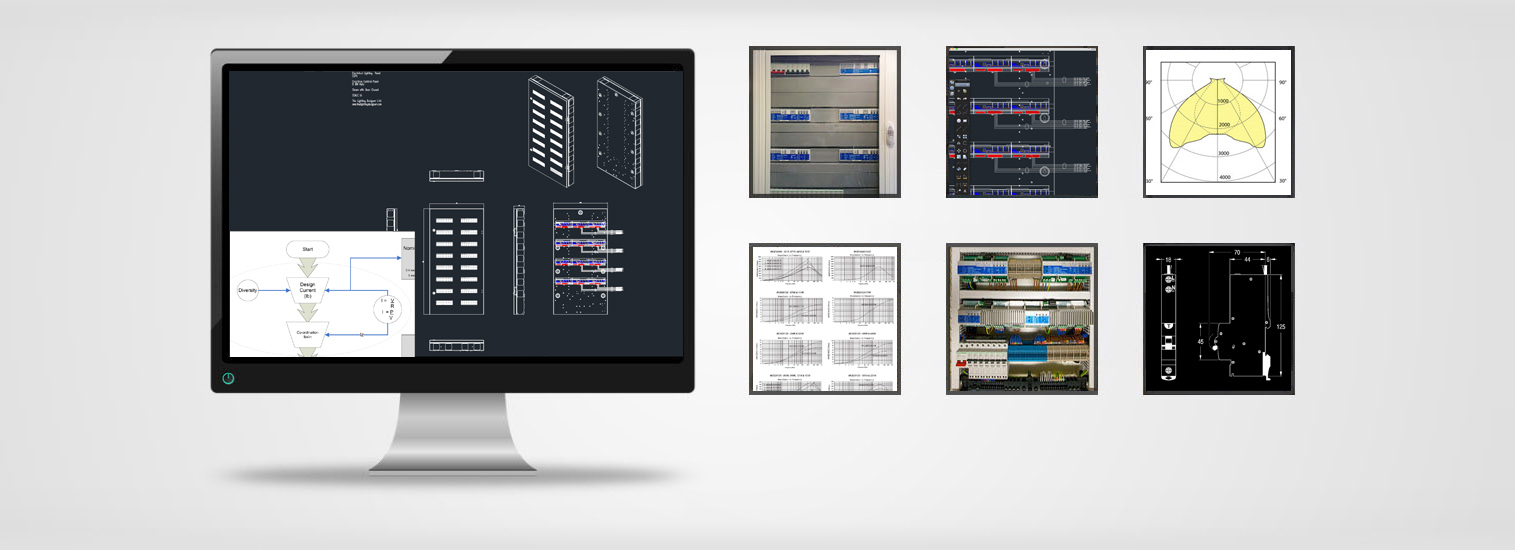
The Lighting Designer (TLD) software has launched – a new cloud-based design and specification tool that aims to revolutionise the lighting design industry and increase business profitability by producing technically correct and compliant designs in a matter of minutes. Created by the team behind The CEDIA Designer software (formerly known as The Cinema Designer), TLD brings together electrical design, lighting control systems and lighting fixture specification. This is to allow professionals from different fields to create detailed technical designs and ensure a smooth collaborative approach on projects. “The industry is seeing that end users are putting great emphasis on lighting design, meaning that this segment of the market provides a great opportunity for integrators,” says TLD inventor, Guy Singleton. “Knowing how long it takes to design a lighting scheme inspired me to develop TLD. I’ve been working on the software for three years and am now excited to launch it and see it change the way in which integrators work.” Lighting design tends to require input from designers, electrical contractors, M&E engineers and technology integrators. While lighting designers focus on fixtures, colour temperature and colour rendering indexes, electrical contractors and M&E engineers understand the mathematics and the requirements for electrically correct and safe electrical systems. Meanwhile, technology integrators deal with lighting control systems, installation and specific lighting control systems. TLD has been created to pull these three disciplines together, reportedly making it the only software available that covers every element of a lighting design. To start a new project, users have the option of importing their lighting system programmes or manually inputting the information into the software. From here, the user works through an easy step-by-step process of selecting fixtures, drivers and cable lengths. TLD has developed a large catalogue of fixtures, however, there is the opportunity for users to build their own library of fixtures by adding new additions to the software. Once all information has been entered, TLD works out how many modules are required and the panel locations, and automatically designs CAD drawings. TLD’s PDF output includes everything from load schedules to photometric data, specification cut sheets to CAD drawings, a bill of materials and much more. It pulls in the manufacturer information of the panels, drivers, ballasts, interfaces and modules – creating a presentable document that’s full of data and panel diagrams in only a few seconds. The pdf can be shared with the lighting designer, electrical contractor and M&E engineer so that everyone working on the lighting project has access to the same information. Interoperability and compatibility issues are also taken care of. TLD eliminates the possibility of lighting design mistakes by specifying incompatible drivers and fixtures, incorrect IP ratings and inaccurate load calculations. Using TLD is said to ensure that professionals know exactly what is required of them when designing, installing, testing and inspecting any project and provides confidence that the system is both electrically correct and compliant.

Misleading Government NDRHI Extension Causes Damaging Market Confusion
A press release from Government announcing a tariff extension to the Non Domestic Renewable Heat Incentive (RHI) has brought market confusion and threatened the financial support for thousands of shovel ready low carbon schemes, as the true nature of the announcement has been revealed by industry.   Described as a ‘boost for renewable heat projects as government confirms tariff extension’, the reality of the extension is only applicable to those in receipt of tariff guarantees or to those that apply for a tariff guarantee and are able to provide evidence of Stage 2 Financial Close before March 2021, earning the applicant one extra year – until March 31 2022 – in which to get the installation work completed. The deadline of March 2021 however remains for all other applicants to the Non Domestic RHI.  Experts at the Kensa Group, a ground source heat pump manufacturer and installer partner, have been quick to identify the announcement has been widely misreported as an extension to the Non Domestic RHI scheme (which remains due to close in March 2021), leading to widespread confusion, as David Broom, Sales Director of Kensa Contracting comments, “Misinterpretation of the Government’s announcement has understandably led to clients wrongly assuming the Non Domestic RHI has been extended, and thus taking the pressure off applications. The truth is the Non Domestic RHI has not been extended – the extension only applies to tariff guarantees, which will not be applicable to the majority of our clients due to tariff guarantees eligibility criteria for projects in excess of 100kW capacity; many social housing schemes will fall below this threshold. “With the Non Domestic RHI on course to end in March 2021, the confusion surrounding the tariff guarantee extension could be significantly damaging to pipeline schemes in the renewables industry, which would otherwise bring immediate carbon savings, vital if we are to achieve our 2050 objectives. Any delay now could be financially and environmentally damaging.” Presently there is a hiatus between the end of the Non Domestic RHI on March 31 2021 and any future scheme of at least one year. In two recent Consultations with industry the Department for Business, Energy & Industrial Strategy (BEIS) has proposed a narrow range of options for low carbon heat support beyond the Renewable Heat Incentive and it is seeking views on its proposals in a consultation that is due to close on July 7 2020.  The Future Support for Low Carbon Heat, proposes a £2.2bn Green Gas Support Scheme (GGSS) and a £100m Clean Heat Grant to support the installation of Heat Pumps. Parallel to this Government is seeking opinions on a series of reforms to the NDRHI scheme, prior to its closing in March 2021, ‘in order to deliver ongoing value for money to the taxpayer’.  Karl Drage, Director of Business Development at the Kensa Group comments, “A follow-on scheme to the RHI is an opportunity to ensure that the transition to renewable heat is appropriate, cost effective and achieves the aims of getting closer to net zero across the building stock.  Government led schemes, to date, have failed to make significant progress, and this is a critical time on the path to 2050. “All stakeholders in the heat sector are looking towards the transition to low carbon, renewable heat.  Which will entail the large-scale replacement of fossil fuel burning boilers by heat pumps powered by an electricity grid with a low carbon factor.”

Construction Talent Retention Scheme Announced
The Government has moved to secure vital talent needed to build the UK's recovery from COVID-19, protecting employment for thousands of people working in the construction sector. The Chancellor of the Exchequer, Rishi Sunak, today announced the launch of the Construction Talent Retention Scheme, a partnership between the Government and industry to secure essential talent in the UK construction sector. The Construction Talent Retention Scheme, to formally launch later this month, will be an online portal that supports redeployment of staff at risk of redundancy across the sector, while also enabling temporary employee loans between businesses. The scheme gives displaced workers from other sectors a route to find new employment in construction. ECA CEO Steve Bratt, who is a member of the CLC coronavirus taskforce, comments, “ECA supports the construction talent retention scheme as a further mechanism for keeping people employed and retaining valuable skills within the industry. The key to ensuring this works for employers will be in the detail, which we look forward to contributing to. Engineering and electrotechnical skills are vital for delivering housing and infrastructure, as well as decarbonising and digitalising the economy. It is therefore key that as many skilled workers as possible are retained in employment or active work within the industry.” Construction Leadership Council (CLC) Co-Chair, Andy Mitchell, adds, “This is a great example of what we can achieve when we work collaboratively with Government and we look forward to continuing in this spirit when the proposals and recommendations of our broader Roadmap to Recovery are published. In the meantime, we will work with our members and industry stakeholders to encourage the scheme’s use and success.” Association for Consultancy & Engineering (ACE) Chief Executive, Hannah Vickers, says, “This is a proven solution with a strong track-record in other sectors, cross-industry support and pledges from our leading employers. It is vital we keep the skills in our sector to avoid a talent drain and is the only way we will be able to ramp-up activity to lead the recovery of the wider economy and deliver growth through new buildings and infrastructure.” Group Chief Executive of Mace, and Skills Workstream Lead at the Construction Leadership Council, Mark Reynolds, adds, “The CLC’s Construction Talent Retention Scheme will offer a critical lifeline for the construction industry, and it will help the industry retain and share our exceptional talent needed to deliver vital infrastructure and support the country’s recovery plan. The scheme is a great example of Government and industry collaboration during these challenging times for the construction sector. We are delighted to support the initiative as a real solution to protecting employment for thousands in our industry, continuing to build a better future.” The not-for-profit programme now has funding secured until the end of the financial year, providing a free online platform for any organisation looking to hire, while ensuring that candidates’ skills and experience are given a prominent platform within the industry. Businesses can register their interest in the scheme at: www.trs-system.co.uk/construction.