2 November 2026
Product of the Month: Amari Floodlight range by Aurora Lighting
 
12 November 2026
Schneider Electric transforms Southampton hospital estate
 
12 November 2026
GTEC Training opens new education facility in North Yorkshire
 
11 November 2026
Energy, AI and smart buildings: register now for EMEX 2026
 
11 November 2026
Solar and batteries could cut electricity costs by 40%, data finds
 

Latest News


VIDEO - Scolmore's Type C USB Sockets Available In All Ranges
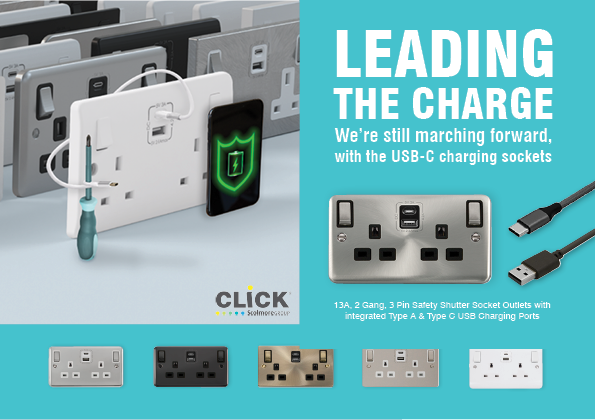
Last month, Scolmore expanded its wiring accessories range to include 13A two-gang socket outlets with integrated Type A and Type C USB charging ports, to meet growing demand and developments in the market for charging solutions. Originally available in the popular Click Mode range, the new socket outlets are now available in all wiring accessories ranges – Polar, Metal Clad, Part M, Deco, Deco+, Define and Definity. By integrating both Type A and Type C on the same socket, the range will have broader functionality and cover charging options for the widest possible range of devices that now use different sized ports. Used independently, the Type C USB has a charging output of 5V DC, 3A, while the Type A USB has a charging output of 5V DC, 2.4A (independent charge). When both USB ports are in use, the 4.2A charge is shared, with Type C given priority to output its full 3A, with Type A reduced to an output of 1.2A. The charging ports have a new location - moved from above each independent socket outlet to a central position above one another, allowing the rocker switches to be moved to an ‘outboard position.’ Type C USB is the connector of the future. Already available on a number of devices, it is likely to eventually replace USB Types A, B and Micro USB on all new products and systems. Smaller and thinner than its predecessors, Type C USB is reversible and can be plugged in either way with no risk of damage. As with all Scolmore Group products, the new USB sockets have been independently tested, and they are fully compliant with the most up-to-date set of USB test standards. Typical applications will include education and training settings, offices, domestic dwellings, hotels, hospitals and healthcare settings. https://youtu.be/OUDKwzN6WMg For further information, call Scolmore on 01827 63454 or visit www.scolmore.com.

Lithium-Ion Batteries: The Future of Data Centre UPS Systems
By Rob Mather, Director at Power Control. It is strange to think that battery structure has not really changed for over 50 years. However, with the market shifting and demand for greater lifespan, efficiency and reduced footprint becoming more prevalent, battery manufacturers have upped their game with lithium-ion battery solutions. The data centre sector in particular is welcoming lithium-ion battery solutions with open arms. When paired with an uninterruptible power supply (UPS) a far more efficient energy storage system can be achieved - reducing power consumption and maintenance costs. Whilst initially the outlay for a lithium-ion batteries may be more than standard VRLA, the lifespan is far greater so requires fewer battery replacements. However, this cost is slowly being driven down by the increased Li-ion manufacturing capacity. Over the past ten years a wave of new factories across the globe have already caused an 85% drop in price. As the market grows more comfortable with lithium-ion, a further 603.8GWh is expected to be achieved in the next five years, encouraging the development of the technology, rather than adopting something else. Why is lithium-ion used in a battery? Without going too much into the chemistry of a battery, lithium is a very small element, the third smallest in fact after hydrogen and helium. This gives lithium-ion batteries a much better energy density than incumbent technologies such as VRLA. It is also a highly reactive element and rechargeable, making it an ideal material to get a current running through a battery. Advantages of Lithium-ion batteries in UPS: Longevity – A lithium-ion battery lasts up to 10 years under normal circumstances, which is twice as long as a typical VRLA battery. They hold their charge much better and can handle hundreds of charge/discharge cycles. The longevity ensures a return on your investment on the technology. Low Maintenance – Lithium-ion batteries have a longer service life and can go longer intervals between servicing. Although they do still require maintenance, the servicing methods are simpler. Size/weight ratio – When compared to VRLA batteries, lithium-ion batteries have a 50% smaller footprint for the same power output. Recharge time – Where VRLA batteries typically take 6-12 hours, a lithium ion battery takes 30 minutes to one hour. They also hold their charge much better. Temperature tolerance – Due to their molecular structure, a lithium ion battery can work reliably at wider temperature ranges than other rechargeable batteries. What does this mean for data centres? As the cost barrier for lithium-ion technologies is eroded and new technologies flood the data centre market, data centre owners look to ways of making their infrastructures more advanced, more efficient and more environmentally friendly. The adoption of lithium-ion technology falls alongside other 2020 industry trends such as that of innovative cooling technology, intuitive monitoring software and the drive for data centres to provide their customers with infrastructure resources that would have been unthinkable in previous decades. Firstly, the amount technologies now being squeezed into modern data centres leaves little room for the necessary critical infrastructure. The overall footprint of a data centre is already vast and in cities where land is at a premium, batteries that occupy large areas affect the economic benefits. The smaller, lighter and more temperature tolerant lithium-ion UPS solutions are an ideal innovation for reducing the amount of space required for power protection. Secondly, peak shaving is key for keeping grid connection fees to a minimum, lithium-ion batteries provide an ideal solution for reducing this overall spend and therefore produce economic benefits. Finally, with the initial cost of lithium-ion batteries decreasing, the integration of this technology is becoming more attainable. This coupled with the longer battery lifespan, reduced maintenance costs and refined recharge time make them an ever more appealing integration for the data centre sector battery market.

LuxLive 2020 Postponed Until November 2021
Clarion Events, owner of Revo Media, has announced that due to the ongoing COVID-19 pandemic and its impact on large scale events, the LuxLive 2020 trade exhibition will be postponed until November 2021. The organisers of LuxLive believe that even if a green light is provided to run trade shows this year, there is not enough time remaining to deliver the high-quality event that the industry expects and deserves. However, the organisers are pleased to announce that in the absence of a physical LuxLive trade event, it is launching two exciting new digital events, scheduled to take place in September and November. Taking place on September 22 will be a special LuxLive Digital Kicker Conference on the timely and urgent topic of UV-C lighting and its role in helping building managers ensure the highest levels of safety and wellbeing. Taking place during the original LuxLive dates of November 11-12 will be the LuxLive Digital Festival, representing the most ambitious and comprehensive digital education programme ever seen in the industry. The festival will have a central theme of health and wellbeing. Stressing that the lighting industry has a huge opportunity to be seen as a major facilitator of health and wellbeing to communities and societies, the organisers of the LuxLive Digital Festival have announced four strands to the event – Emergency Lighting, Smart Lighting, Workplace and the Lightspace Festival, focusing on lighting in architecture. Each strand will take centre stage at certain times throughout the two-day festival and will deliver compelling educational headline content. In addition to the headline acts, the festival will also offer sponsored keynote presentations as well as case studies and interactive learning. The event will also allow one-to-one meeting facilities, roundtable discussions, video presentations, live polling and Q&A sessions throughout. The Lux Awards will close the festival as it makes its digital debut edition in the award’s celebrated history. James Samuel, Portfolio Director of Clarion Events, states, "It is obviously disappointing that running LuxLive in it physical state will not be possible this year. Having seen so many events in the sector cancelled or postponed there was a real sense of excitement about bringing the industry together in November. "Unfortunately, the Government’s current position where no restart date has been given to large events means that running the physical event is not going to be possible. However, in preparation for this scenario, the team has been working hard to ensure that the industry can still come together. "I am delighted that LuxLive will still bring the great and the good of the lighting industry to share, connect, learn and motivate each other through the LuxLive Digital Festival in November and, prior to that, via the very topical LuxLive Digital Kicker conference on UV-C Lighting." On the announcement of the event’s themes, Samuel adds, "The topic of health and wellbeing is so important now more so than ever. I am really looking forward to sharing with the industry our headline speakers, and other compelling initiatives that will allow the LuxLive Digital Festival to play a significant part in the lighting industry calendar. "In addition, I cannot think of a better way to finish the festival with the iconic Lux Awards where the industry can take time to celebrate outstanding achievement in what has been a very challenging year. LuxLive will be different this year but what remains is our commitment to provide unparalleled learning, discovery and connections. "We invite everyone to be part of our digital gathering to really promote how the lighting industry will take the lead in providing health, wellbeing and safety to our communities and societies at large." For further information on how to be involved as a sponsor or contributor, please click here.

Electric Vehicle Takeup Expected To Increase Demand For Power
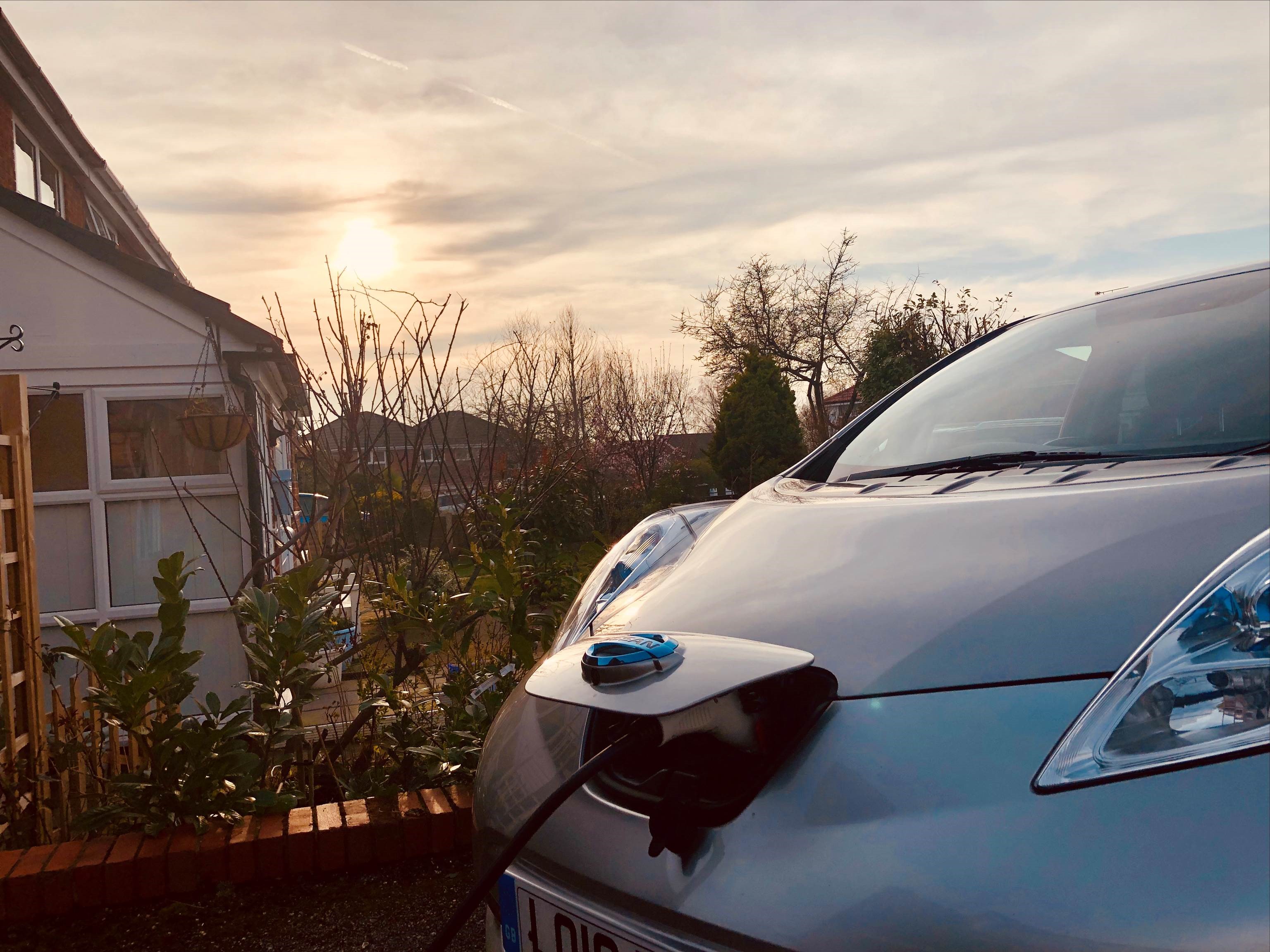
Working with Western Power Distribution, EA Technology is modelling the network impact of the Electric Nation Vehicle to Grid (V2G) trial.  The growing number of people using electric vehicles (EVs) is expected to increase the demand for power, especially if households have more than one vehicle. The V2G trial will show how this technology can resolve any potential issues with electric grid capacity.  Of the 200 applicants wanting to take part in the trial, 21% already have two or more EVs at their property. Furthermore, 48% of applicants are likely to purchase a second EV. These figures show that the applicants are particularly knowledgeable and enthusiastic about EVs.  On the one hand this is encouraging, but also illustrates the scale of challenges ahead for electricity network operators: charging each additional electric vehicle at home is similar to connecting an extra house to the electricity network (in terms of power and energy required).  Already, this data shows that the clustering of EVs (i.e. more than one per household) is more prevalent than previously assumed. It appears that many drivers liked their first EV so much that they either already have a second EV or are considering getting one in the near future. Such clustering will place further load on the local electricity network. However, by using V2G technology, EVs can return energy back into the grid at peak times, reducing the need for extra electricity generation or expensive network reinforcement.  The Electric Nation Vehicle to Grid trial is a coordinated initiative between four project partners. Western Power Distribution (WPD) is the project Distribution Network Operator, CrowdCharge is leading the project and DriveElectric is helping with recruitment of trial participants. EA Technology is modelling the network impact, using its powerful software platform to understand and optimise V2G operation for Distribution Network Operators.  Dave Roberts, Technical Director at EA Technology comments,“As a key partner in this project, we will be able to deploy and test our cutting-edge research and in a practical setting. The data we are gathering is vital to understanding how EVs will deliver benefits not only to drivers, but also to all energy users by reducing electricity network costs. The success of the project will raise the profile of EVs nationally, and hopefully encourage more drivers to take advantage of V2G charging.” EA Technology helps its clients understand this constantly evolving energy landscape by defining business strategy and establishing the benefits of adopting novel approaches. It shapes trials and pilot projects on the distribution network, and takes outcomes from innovative projects, to develop business-as-usual practices for instant adoption in the everyday world.

Ventilation Key In Preventing COVID-19 Spread In Hospitality Sector
Experts have said that ventilation is a key factor in preventing the spread of COVID-19 in the hospitality sector, following UK pubs and restaurants opening Saturday July 4. As pubs and restaurants around the UK prepare to open for the first time since lockdown on Saturday, trade association BEAMA has today issued clear ventilation guidance for the hospitality sector to help prevent the spread of COVID-19. The guidance, which stresses the need for effective ventilation alongside social distancing measures inside UK pubs and restaurants, provides six key recommendations to help keep premises COVID-secure. It considers optimal settings for mechanical ventilation systems, effective toilet ventilation, centralised systems, ventilation maintenance and ventilating without a mechanical system. Ever since the Government announced plans to ease off restrictions to allow pubs and restaurants to reopen, businesses have been doing all they can to minimise the risks of COVID-19 transmission. Guidance from the Health and Safety Executive and CIBSE has stressed the need for good ventilation, but there is a need for easy-to-follow direction for the hospitality industry, many of which are small, independent businesses who urgently need to re-open but are conscious of avoiding the spread of COVID-19. With businesses opening to sell food and drink, the need to manage the risks of COVID-19 to both workers and customers is top of the agenda. Given the risk of transmission is considerably higher indoors, it is essential that hospitality venues are well ventilated to prevent airborne transmission of the virus.  Sneezing, coughing and even talking can emit virus particles which can soon spread throughout a building where ventilation and indoor air quality is poor. It is in response to this considerable risk that BEAMA has issued the guidance to assist the hospitality sector in minimising the risk of COVID-19 transmission.  Commenting on the new guidance, Colin Timmins, Director of Member Services says, “With these guidelines, BEAMA aims to assist the hospitality industry in getting back to business. We recognise the significant risk posed by COVID-19 indoors and the concerns many pubs and restaurants will have for their employees and customers as they open their doors for the first time since lockdown. This guidance seeks to alleviate those fears by providing clear and key recommendations for good ventilation to help minimise the risk of virus transmission.” To view the guidance in full, please download the infographic by clicking here.

Stay Safe And Make The Switch With Contactless Lighting
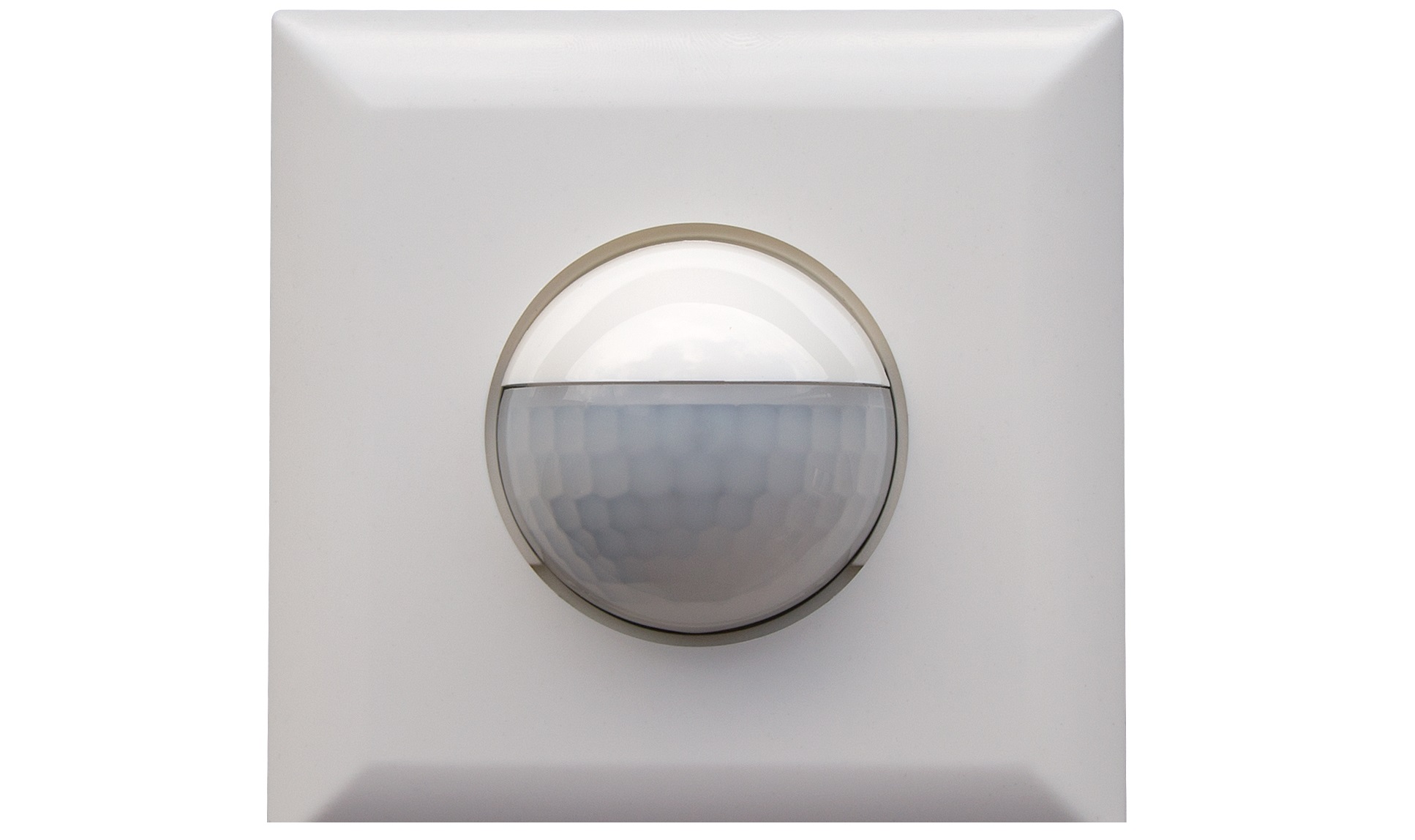
BEG Lighting Controls is highlighting the importance of safer ‘contactless light switching’ to electrical contractors and their customers - and is also explaining how it can help deal with the COVID-19 pandemic. Scientists have made it clear that the coronavirus can live on surfaces for hours, and light switches is one of the many ways the disease can be transmitted. However, as businesses look at introducing products to the market which can help slow the spread of the virus and avoid a ‘second wave’, manually touching light switches can easily be avoided by automatic motion or occupancy sensors. BEG Lighting Controls has a range of wall-mounted sensors with different features. The German manufacturer’s products include the BEG Indoor 180-R motion detector with acoustic sensor and relay version, the BEG Indoor 180 KNX with integrated KNX BUS coupler and up to three additional switching channels, and the Indoor 180 2C with acoustic sensor and additional potential free contact for the added control of the HVAC. This innovative product set means electrical contractors, specifiers and lighting designers are equipped to offer a safe and practical contactless light switching solution to end users. The BEG Indoor 180 range is ideal for businesses as well as for schools, colleges and universities and more. Paul Jones, Sales Director for UK & Ireland at BEG Lighting Controls, says, “It’s a fact that if many different people have to use the same light switch, there is a health risk associated with it - but contactless light switching solves this issue. “It was concluded very early on during the pandemic that COVID-19 is extremely contagious, so by converting light switches to contactless, this is a much more hygienic solution for businesses in order to keep staff and customers safe, and in an educational environment, for teachers and students. “That is why at BEG Lighting Controls, we are doing all we can to raise awareness about contactless light switching to electrical contractors, and to our electrical wholesaler and distributor partners. “Unlike standard light switches, BEG occupancy sensors activate the lighting as soon as movement is detected, so touching the product is not necessary at all. Likewise, the motion detectors are designed to switch the light on and off automatically by motion detection. There is also the added benefit for organisations during this difficult financial time that occupancy sensors and motion detectors have also been proven to result in making energy savings.” Paul confirmed that BEG staff at its central warehouse continue to work in accordance with Government regulations, and all orders are still promptly being dispatched in the UK. He feels the health crisis will only strengthen relationships with its trusted partners. He adds, “We have strived to be at the side of our partners in these troubled times. This crisis will further strengthen our partnerships and make us more determined to share the opportunities that we have working together.” For more information visit: https://www.beg-luxomat.com/en/solutions/keep-the-distance/.

NAPIT Welcomes Clean Heat Grant Plan
NAPIT has welcomed the UK Government’s consultation on the new Clean Heat Grant Scheme (CHGS), which is set to replace the Domestic Renewable Heat Incentive (RHI) Scheme in time. The CHGS is proposed to start in April 2022, lasting for two years, and is consulting on offering £4,000 grants to businesses and domestic properties that install low carbon heating technologies such as heat pumps and biomass boilers in limited circumstances.  The Department for Business Energy and Industrial Strategy (BEIS), are proposing a voucher system being introduced, and the grants will be issued on a first come, first served basis within quarterly grant windows – to help guarantee that budget caps are not surpassed. Indicative industry figures suggest it will support the installation of around 11,000 heat pumps per year, for two years.  NAPIT’s Chief Operating Officer, David Cowburn comments, “The consultation detailing the new Clean Heat Grant Scheme is very much-welcomed and has provided us with some much-needed clarification regarding the Government’s commitment towards the low carbon heating industry. We see ourselves in unprecedented times right now and it’s great to have initiatives like this to provide reassurance to our Microgeneration Certification Scheme registered installers regarding the longevity of their business as they return to work.  “Although this is a welcome initiative, we a somewhat disappointed by the lack of ambition when compared to the scale of installations considered necessary to ensure compliance with the new legislation committing the UK to a legally binding target of net zero emissions by 2050.” The CHGS’s aim is to encourage home and business owners to install low carbon heating technology in their properties by reducing the often-costly upfront fees. Moving forward NAPIT hopes this grant scheme will boost consumer confidence in low carbon heating technology and provide growth in this area. The Clean Heat Grant consultation closes on July 7 2020. 

Scolmore Group Unveils New Specification Solutions Brochure
Scolmore Group has produced a comprehensive ‘Specification Solutions’ brochure, which brings together products from across the brands operating within the group – Click, ESP, Ovia, Unicrimp and Sangamo. It is designed as an essential guide for specification teams working on a range of building projects, helping them to quickly identify the right products and solutions for any given application, whether based on cost efficiency, speed of installation, energy savings, sustainability credentials, legislative compliance, or health and safety.  The brochure is divided into six sections that cover the full spectrum of building environments: Residential, Healthcare, Hotel and Leisure, Education, Commercial and Industrial. Each section then highlights those products and ranges that are most suitable for the particular sector in question, with details of the specific features and benefits of those products that make them the best choice for the job.   It offers an all-inclusive approach to the build process, bringing in all the relevant products, which can include wiring accessories, lighting including emergency lighting, CCTV, access control, exterior security lighting, cable accessories, heating controls and thermostats. This highlights the ability of the Scolmore Group of companies to offer a one stop shop approach to a vast range of solutions.   There is also a dedicated training section which draws attention to the training and support available for the specifiers and installers of the Scolmore Group range of products. A number of CPD and CIBSE certified modules are available, allowing professionals to develop and enhance their skills.  They can take part in training workshops, conferences and events, e-learning programs, best practice techniques and ideas sharing.  Direct access from the Specifications Solutions brochure to the BIM libraries of each group company is available by scanning the relevant QR code for Click, ESP, Ovia, Unicrimp and Sangamo – which are all printed on the back page.    

Van Drivers Urged To Give Vehicles Post Lockdown Check
Motoring experts are urging van drivers to check their vehicles before heading out on the roads and back to work. LeaseVan.co.uk is encouraging drivers to give their vans a post lockdown check. It is important for vans and cars to be checked regularly to ensure they’re running well, but even more so if they’ve been parked up for the last three months. The company suggests a check on tyres, the engine, lights, doors and windscreen as a starting point and a thorough check inside to make sure brakes and steering are as they should be. A spokesperson for LeaseVan.co.uk says, “If your van has been parked up with very few miles covered then it’s important to give it a good check before you head out on the road. “We’ve detailed the basic points like checking tyres, lights and other essentials but if anything concerns you or doesn’t seem to be running right, it’s worth getting it checked out by a mechanic. If your van is key to your business, it’s worth doing these checks as often as once a week to make sure you pick up on any problems before they become too costly.” LeaseVan.co.uk’s basic tips are as follows: Check your tyres Tyres need to be checked regularly for wear and tear. Keep an eye out for any cuts and bulges in the sidewalls, check wheel nuts are secure, tyre pressure is correct and the tyre has enough tread. Remember, UK law requires a minimum tread of 1.6mm with 3mm recommended for optimal performance. Under the bonnet It’s worth trying to check the engine weekly. Check the oil levels and make sure you have the optimum levels of fluids like coolants, power steering fluid and brake fluid. Also keep an eye on screenwash levels. Doors Often overlooked, but make sure rear doors are oiled often and open as far as they’re supposed to. If you have sliding doors, make sure they’re aligned on the runners. Van lights It is easy to forget to check the lights and drivers often only spot a problem when someone else tells them about it. But failing to make sure they’re functioning as they should, could land you in trouble. Check by turning them all on and walking round the van. If there’s a problem, get it checked out. Also keep lights clean and dust free for good visibility. Windscreen maintenance Good visibility is a must. Keep windscreen fluid levels topped up and the washers are pointing to the windscreen. If the wipers leave streaks or squeak, then they need changing. Keep a lookout for any chips or cracks in the windscreen too. Inside the van Remember to check brakes, steering, indicators, seat belts and everything else you find inside the van. If your van has been stationary for a few months, it’s important to make sure these basics are all in good working order. Keep it clean Your van is your way of promoting your business so think about how you want to look to potential customers. Keep it clean – this will improve the image you portray and will protect the paintwork. Also remember to keep it tidy inside.

Key Components For Automation and Machine Builders
Foremost Electronics, the engineering-led Essex based importer and specialist distributor of electromechanical components, has a wealth of experience supplying components to designers and manufacturers of automation systems and machine builders. Key components in this market include rugged and reliable HMI solutions including emergency-stop switches and status indicators, secure rugged and flexible cable entry systems and connectors. Emma Kempster, Key Account Manager of Foremost Electronics, comments, "Industrial automation systems and machine building require high quality and rugged components to ensure reliable operation over long periods of time. Safety of operators and protection of machines from damage are also critical design considerations. Foremost has been working with machine and automation system designers for over 30 years and has an unsurpassed range of HMI, cable access and safety components which greatly simplifies our customer’s sourcing process. For more details on all product ranges, please visit www.4most.co.uk call +44 (0)1371 811171 or email sales@4most.co.uk.