2 November 2026
Product of the Month: Amari Floodlight range by Aurora Lighting
 
12 November 2026
Schneider Electric transforms Southampton hospital estate
 
12 November 2026
GTEC Training opens new education facility in North Yorkshire
 
11 November 2026
Energy, AI and smart buildings: register now for EMEX 2026
 
11 November 2026
Solar and batteries could cut electricity costs by 40%, data finds
 

Latest News


CENTIEL Achieves ISO 14001:2015 Environmental Management System Accreditation
CENTIEL UK has announced it has been awarded ISO 14001:2015 Environmental Management System accreditation by the BSI.  ISO 14001 Environmental Management is the world's most recognised environmental management system, and CENTIEL UK now adds this to its BSI accredited ISO 9001:2015 Quality Management System and its BSI accredited OHSAS 18001:2007 Occupational Health & Safety Management System certifications. David Bond, chairman, CENTIEL UK explains, “We are now one of the very few companies in the UPS industry in the UK to hold all three of these key BSI accreditations, enabling us to deliver more than regulatory compliance and the ability to meet supplier requirements.  “BSI has received the official UK accreditation status from UKAS, which means it has  been assessed against internationally recognised standards. This status also means that the certificates issued by the BSI, are both credible and impartial. “The BSI route was challenging but we wanted to provide the highest level of certification to complement our commitment to product and service quality. The accreditation process required a great deal of investment in terms of both time and resource. However, as Theodore Roosevelt once said, ‘nothing worth having comes easy,’  therefore, we are delighted to gain the ISO 14001 Environmental Management accreditation which completes our BSI “tick & crown collection’.” Karen Rough, service and compliance manager, CENTIEL UK confirms, “Our ISO 14001 Environmental Management System certification needed us to consider and document multiple aspects of our business in relation to the environment.  This included recording processes about how we purchase, manage, store and dispose of certain products such as batteries for example, and how we work to reduce our impact on the environment on a company-wide basis.  BSI attended our offices to survey our systems and will continue to do so every year.  We needed to show working examples of our processes and records and how all staff adhere to the detailed management system we have in place. “For tenders and proposals, the BSI accreditations we now hold tick many boxes, but they also serve as reassurance to our valued customer base that our “Swiss quality” approach to best practice runs right throughout our organisation.  As well as underlining our continued commitment to providing the best possible service and inspiring trust, it offers our customers complete peace of mind and we anticipate the certification will help us attract new clients and expand further within the UPS marketplace.”  CENTIEL’s additional certifications include: Safe Contractor status; CIPS Sustainability Index and Constructionline gold level.

BS 5839-6:2019 – Are You Up To Date?
With revisions to the standard for domestic fire detection introduced last year, Neil Baldwin, Managing Director at ESP, takes a look at the key updates that contractors need to be aware of to ensure that they are fully compliant when installing fire alarm systems. The BSI’s recent update of the domestic fire detection and alarm system standard, specifically Part 6 of BS 5839, outlines the code of practice for the design, installation, commissioning and maintenance of fire detection and fire alarm systems in domestic properties. The standard is aimed at architects, engineers and other building professionals, enforcing authorities, installers and others responsible for implementing fire precautions in domestic premises. It provides the latest recommendations for fire detection and fire alarm systems in both new and existing domestic premises in order to make them safer to live in. The main revisions include: Re-grading and revision of statistics and recommendations Updating guidance to take all other standards in the BS 5839 series into account New table on testing and servicing by grade of alarm system New recommendations for ensuring alarm signal transmission required within social care and sheltered housing settings function accordingly Increased protection in sheltered housing and supported housing New recommendation that communal fire alarm systems should not normally be installed in purpose built blocks of flats The key standard for domestic premises The BS 5839 series of standards began life with the publication of BS 5839-1 in 1980. It has since grown into nine parts, splitting domestic and non-domestic premises and also dealing with a range of specific systems in detail. Part 6 has become the key standard for domestic premises. The document supplies guidance and recommendations on planning, designing, installing, commissioning and maintaining detection and fire alarm systems. The recommendations refer principally to fire detection and fire alarm systems installed for the purpose of life safety but also include recommendations for systems that are intended to protect property. The standard covers homes designed to accommodate a single family; HMOs comprising a number of self-contained units, each designed to accommodate a single family; and sheltered housing, including both the dwelling units and the common areas. It applies to both new and existing premises. Its recommendations can be applied to the fire detection components of combined domestic fire and intruder alarm systems, or fire and social alarm systems. The standard also includes recommendations for routine attention. The systems it covers range from those comprising a single self-contained smoke alarm to systems of the type described in BS 5839-1. New recommendations have been added for fire detection in supported housing in particular, whilst revised guidance on the installation of communal fire alarm systems in purpose-built blocks of flats has also been introduced. The Standard has also been updated to reflect the updates made to Part 1 in 2017, which addresses non-domestic premises, combined with any other updates made to other Standards since the last full revision. Below is an outline of the key changes to BS 5839-6 and the areas to be aware of to ensure residents are offered the highest standard of fire protection throughout all types of domestic properties. This applies to property managers, architects, building professionals, installers and enforcing authorities. Revised system grading for fire detection and fire alarm systems Whilst BS 5839-6 has previously been split into six varying Grades, each outlining the level of protection appropriate for certain properties and their corresponding levels of risk, the new update has altered the six sections, removing Grade B and Grade E, whilst Grade D and Grade F have been split into Grade D1 / Grade D2 and Grade F1 / Grade F2 respectively. Grade C has been revised and its recommendations expanded. The new grading system is as follows: Grade A Separate detectors, sounders and central control and indicating equipment with back-up power supply that conforms to British Standards BS EN 54. Grade C Separate detectors and sounders that are mains powered with back-up power supply and central control equipment. Grade D1 A system of one or more mains powered detectors, each with a tamper proof standby supply consisting of a battery or batteries. Grade D2 A system of one or more mains-powered detectors, each with an integral standby supply consisting of a user replaceable battery or batteries. Grade F1 A system of one or more battery-powered detectors powered by a tamper proof primary battery or batteries. Grade F2 A system of one or more battery-powered detectors powered by a user replaceable primary battery or batteries. These grades need to be adhered to when designing, constructing and managing fire detection and fire alarm systems in domestic properties. Attention also needs to be given to the revisions made to Table 1 of the Standard, which outlines the minimum grade and category of system that should be installed to provide protection of life in typical premises. The updates have been made to reflect current living conditions. In conjunction with Table 1, a new table has also been created, which outlines the recommended testing and servicing by grade to prevent the blocking or delaying of fire alarm signals transmitted via social alarm systems in sheltered housing to an alarm receiving centre. Three categories for fire detection and fire alarm systems With regard to categories, the standard of protection in sheltered housing flats has been increased from Category LD2 to Category LD1, positioning it as a higher potential risk. To meet LD1 requirements, the installation of a fire detection system is required throughout the premises – this includes all rooms (and circulation areas that form part of the escape routes) except toilets, bathrooms and shower rooms. The three categories for fire detection and fire alarm systems are listed below and outline where fire detection systems should be installed: LD1 Maximum Protection – all areas where a fire could start Alarms in all circulation spaces that form part of escape routes and all areas where a fire might start, but not bathrooms, shower rooms or toilets, such as: hallway, landing, living room, kitchen, bedroom, airing / meter cupboards, loft and garage. LD2 Additional Protection – circulation spaces and high-risk rooms Alarms in all circulation spaces that form part of escape routes and rooms or areas that present a high fire risk, such as: hallway, landing, living room and kitchen. LD3 Minimum Protection – escape routes only Alarms in all circulation spaces that form part of escape routes, such as the hallway and landing. Around 80% of UK fire deaths and injuries happen in domestic premises. Tragically, that adds up to over 300 deaths and around 9,000 injuries each year caused by fires in people’s homes, where they should feel safe. The latest changes to BS 5839-6 are designed to ensure that the systems being installed are fit for purpose for current living environments within domestic premises, and means that individuals are provided with the highest forms of protection available, contributing to the reduction in the number of fire deaths and injuries that occur each year.

C.K Strengthens its Range of Insulated T-Handle Hex Keys
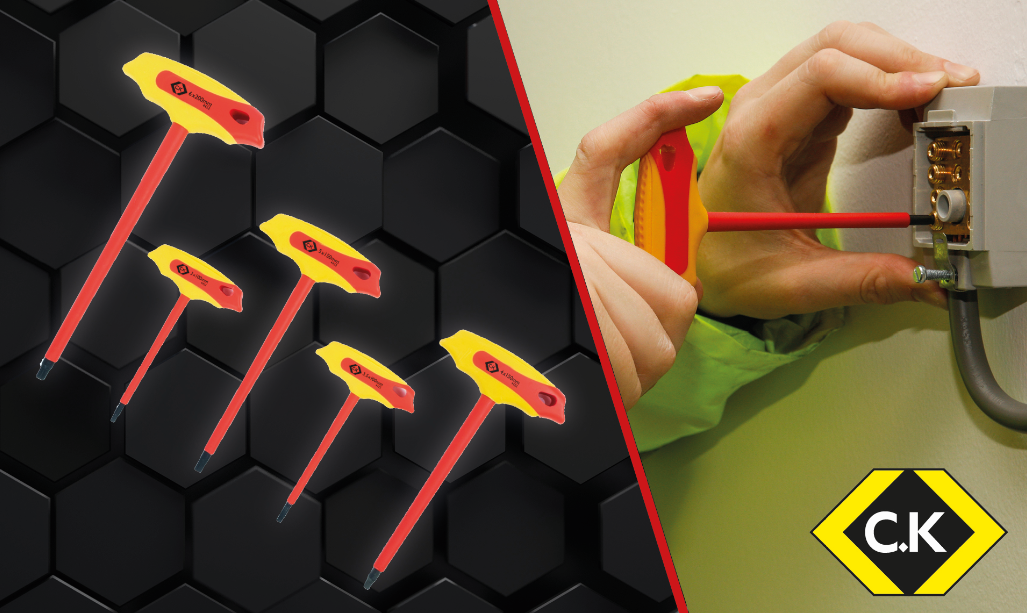
A good quality set of T-Handle Hex Keys can make all the difference when it comes to completing a whole range of tasks quickly and easily. Following recent market research and valuable feedback from professionals, C.K has introduced more product sizes to its already popular Insulated T-Handle Hex Key (4mm). These include the innovative C.K five-piece Insulated T-handle Hex Keys Set (T4422 SET – 3, 3.5. 4, 5 and 6mm), plus two of the most frequently used Insulated T-Handle Hex Key sizes 3mm (T4422 03); and 3.5mm (T4422 035), which can be purchased separately. Fantastic features and benefits Regularly working with professionals also gives C.K great insight into what works best to get the job done quickly and efficiently. The new C.K Insulated T-Handle Hex Keys are designed to do just that, combining high quality with a great range of features and benefits. Take a look at what’s new: C.K five-piece Insulated T-Handle Hex Keys Set (T4422 SET) - Comprises the most requested insulated T-Handle hex key sizes in one handy set (3, 3.5, 4, 5 and 6mm). Ideal for those needing a range of sizes to complete their work, the set is: VDE approved – individually tested to 10,000V for safe working up to 1,000V; features premium quality S2 steel blades, tempered and hardened for exceptional strength and durability; and a dual component, ergonomic handle for ease of use. C.K Insulated T-Handle Hex Key 3mm (T4422 03) and 3.5mm (T4422 035) - These are two of the most commonly used insulated T-Handle hex keys and feature the same C.K quality specifications.  Perfect for a range of applications such as Henley blocks and meter box cut outs, these versatile insulated t-handle hex keys provide the best hassle-free solution around. Find out more about the C.K T-handle Hex Keys at https://www.carlkammerling.com/products/ck_tools/electricians_tools/insulated_thandle_hex_keys/

SELECT Puts Its Hands Together For NHS In New Video
Staff and office bearers at the electrical trade association SELECT have saluted the work of the NHS and key workers by putting their hands together in a new film for the weekly ‘Clap for our Carers’ event. The isolated workers filmed themselves clapping in a special compilation video that was screened on social media as part of the now-regular #clapforourcarers initiative. Among those taking part were SELECT President Kevin Griffin, vice-president Donald W Orr and office bearers Alex Guyan, Alistair Grant, David Smith, Jim Cooper, Graeme Anderson and Paul Erasmuson. Also shown clapping while they work at home were SELECT Managing Director Alan Wilson, Director of Technical Services Dave Forrester, Director of Employment and Skills Fiona Harper, Director of Resources John McGhee and Director of Membership and Communications Iain Mason. Mason says, “We wanted to show our appreciation for everything the NHS and other key workers are doing throughout the COVID-19 outbreak, so we thought we would make a film that would help us join in the weekly national clapping event that’s been organised in their honour. Many of us know key workers working in the front line, so it seemed fitting for us to show our appreciation like this.” https://www.youtube.com/watch?v=dGYuAb3HXTk Staff and office bearers provided clips on their phones, which were then collated and edited together by Simon Organ of video production company, Skills Player. Mason adds, “With staff continuing to work in isolation, it was also a good way to do something together and see our friends and colleagues again. It was an enjoyable experience and we hope to do more in the future.” Others seen clapping in the video are Training Manager Jenny Cryans, Technical Standards Adviser Bob Cairney, Training and Development Officer Malcolm Duncan, Technical Adviser Stuart McKelvie, Certification Scheme Administrator Mary McSporran and Technical Administrator Susie Liddle. Also taking part were Membership Manager Sandra Bennett, Events, Marketing and Communications Coordinator Linda Rolfe, Membership and Communications Administrator Anita Horeckyj and Membership Representatives Diane Hales and Emma Paterson. ICT Project Manager Carolynn Shaw also contributed a clip to the video, along with Employment Affairs Adviser Nicola Jengaenga, Employment Affairs Administrators Gilian Hogarth, Riki Gillespie and Nicky Deighan, Temporary Support to Employment and Skills and the SJIB Alex Kerr, and Receptionist Adrienne Thompson. Thursday’s event was the fifth week in a row that the initiative has taken place, with the first ‘clap for our carers’ held on March 26. While the first event was held in honour of the NHS, the 8pm event now pays tribute to all key workers including NHS staff, supermarket workers and teachers. During the current pandemic, SELECT has created a dedicated COVID-19 hub, offering open source advice and guidance to contractors. It is also a key member of the Construction Industry Coronavirus (CICV) Forum, a collective of 16 industry bodies offering vital information and lobbying for protection of cashflow and jobs.  

Survey Results - Electrical Wholesale Sector Is Open For Business
Despite the COVID-19 challenges to business, well over 90% of UK electrical wholesalers are continuing to trade, with only a handful taking the decision to temporarily close completely, according to the Electrical Distributors’ Association (EDA) following a recent survey. The EDA recently polled all 245 wholesaler members on their opening status, the results of which are published in the Associations’ newly created online COVID-19 Hub, which also provides a range of information, resources, and downloads for members and affiliated members. Even with the obvious alterations needed to accommodate social distancing, most member businesses are fully operational from all branches. Swift to react to necessary constraints of COVID-19 changes, many businesses have established 'keep your distance' collection services to ensure their contractor customers are supplied with essential products – many of whom are responding to critical infrastructure and emergency projects. Margaret Fitzsimons, CEO at the EDA comments, “Electrical wholesalers are an essential link in the supply chain, keeping contractors supplied with the products they need to keep the UK’s critical infrastructure safe and operational. There have been many inspirational stories of huge efforts by our members to get resources to where they are needed most, and we’ve shared as many of these as we can on our social media channels. “Swift to respond, our members have adapted their business operations to ensure safe working practices for their employees, customers and suppliers. In the medium to longer term, there is no doubt that both manufacturers and wholesalers will want to explore their e-commerce and data harnessing capabilities. As social distancing looks set to be with us for some time, wholesalers will be looking for how best to integrate online efficiencies with the trade counter expertise that we know is so important to contractors.” Also planned for the EDA’s COVID-19 Hub is information on the operating status of the 80-plus manufacturer affiliated members. Margaret promoted the EDA’s COVID-19 Hub in a webinar run by the ECA earlier this week. The 53-minute webinar can be viewed below: https://www.youtube.com/watch?v=baKP9Ts9VWY&feature=youtu.be  

Watch Scolmore's Brand New YouTube Training Videos
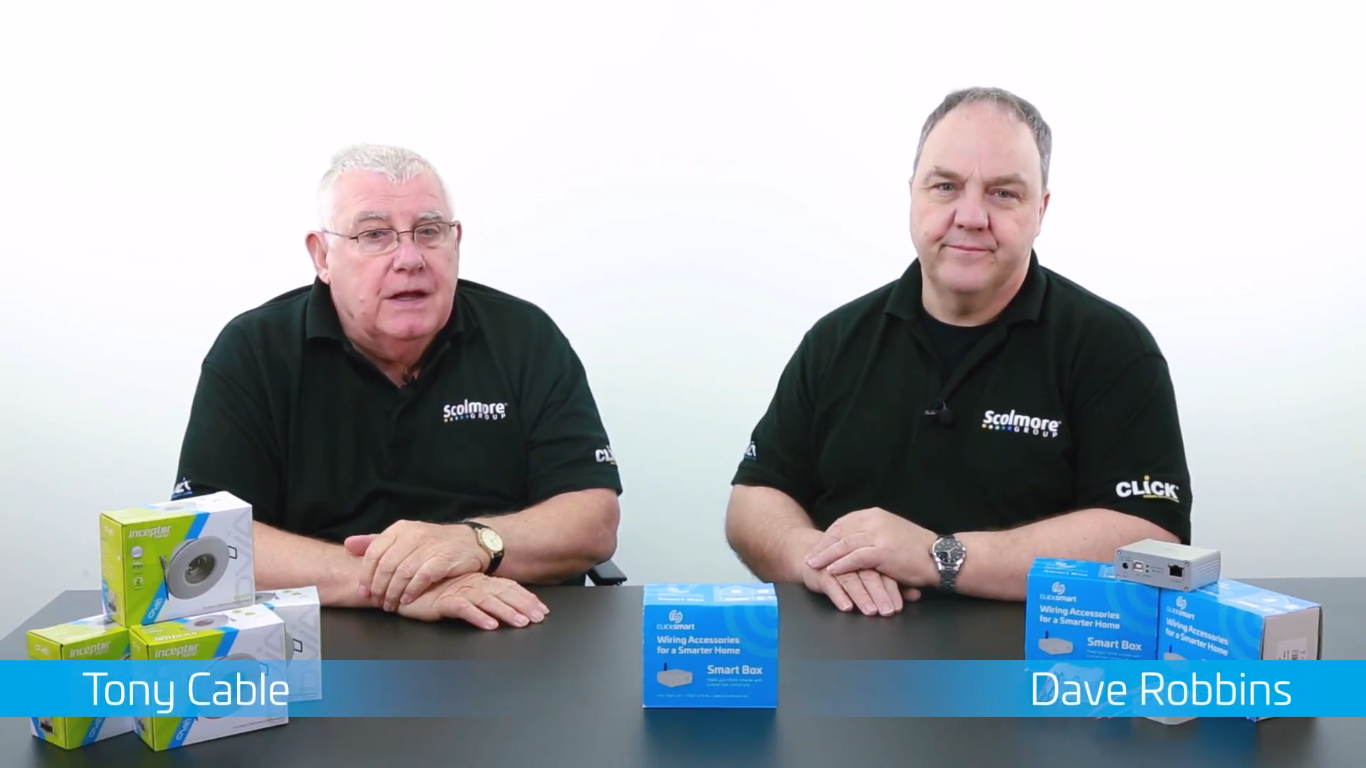
Scolmore has posted a series of short YouTube training videos on the Click Smart product range of smart and wireless wiring accessories. They have been created by Scolmore’s Product Trainer, Dave Robbins, in conjunction with renowned industry figure, Tony Cable. With a total of five videos in the series - along with an additional clip covering the Cloud function - these videos will prove ideal for electrical contractors seeking to develop their skills and keep up-to-date with the latest products and technologies during this time. The videos, along with further information on the Click Smart range, can be viewed below: https://www.youtube.com/watch?v=3VYQyW5XZd8&t= https://youtu.be/Yn5ryjnHhHo https://youtu.be/I1BMgD-XNr0 https://youtu.be/oiyVZy1yC8g https://youtu.be/aj1n1fpYPqI https://www.youtube.com/watch?v=hEiETNOm9cc&t=   Designed with simplicity in mind, the Click Smart Box and app can be easily integrated into a new or existing Click Smart installation and just requires broadband connection. It provides an easy, quick and relatively inexpensive way to adapt and update a home to provide extra security, energy saving, comfort and control. Installation of Click Smart is simple and flexible, with no additional cables or wall cutting needed. Receivers can be installed behind light fittings or into suitable installation boxes and can be utilised with existing wiring. Comprising three basic components, Click Smart Box, RF Receivers and a Smart Phone, the system is high end, professional and very competitively priced, and it has been designed with installers in mind. It can add functionality to already installed Click Smart receivers, or it can be installed from scratch on a brand new build, and it enables automation via phone for the whole family or team. Unlike competitor products, critical information is stored within the Smart Box, not the phone, making it easy if a phone needs to be upgraded or other users added - without affecting the settings. With all the settings stored on the Smart Box, there is no need to programme and install all the elements onto each individual phone. Multiple users can use the system to control their home or building premises. The smart box and applications enable up to 40 receivers to be controlled by up to eight paired phones/tablets. Up to 40 Click Smart receivers can be assigned to one Smart Box and up to 40 rooms/locations can be added.  This makes the system suitable for a range of installations, from small to large. Click Smart receivers can be controlled on an individual basis, and up to 20 receivers can be controlled with a single press using the ‘scene’ setup. With up to eight smart devices being able to control the receivers through one smart box, and up to six smart boxes controlled through one application, the flexibility to customise this system is clear to see.  For a large installation, for example, multiple smart boxes can be used, all controlled by the same phone and app – up to 240 receivers from six smart boxes. Scolmore’s app for the Click Smart range has the added benefit of ‘cloud function’. This provides access to Click Smart installations through the internet, allowing secure control of devices from anywhere in the world – from simple dimming and switching, to more sophisticated controls like live status, scenes and schedules. Previously, access to Click Smart through any smart device or tablet was only really possible when you were local to the network. With the added cloud function, it doesn’t matter where in the world you are -  simply get online and control your Click Smart installations using Wi-Fi or 4G. For further information, visit www.scolmore.com.

C.K Japanese Pry Bar 10” – The Professional’s Tool Bag Essential
Designed to complete a multitude of tasks quickly and effectively, C.K’s new premium quality Japanese Pry Bar 10” (T4312) also conveniently slots into any tool bag for easy transportation. Hot forged from a carbon steel alloy and hardened for exceptional strength and durability, this superior Japanese Pry Bar features a 46mm wide tip for precise removal with minimal damage of mouldings, skirting boards, cavity wall nails and is also perfect for quickly prising apart floor boards and other materials. Regularly working with professionals gives C.K valuable insight into what works best, allowing the launch of innovative products that can be relied upon to do the job quickly and efficiently. This uniquely designed Japanese Pry Bar is no exception, offering fantastic features and benefits to meet the demands of busy professionals. Precision engineered to offer maximum torque and leverage, the C.K Japanese Pry Bar combines optimum performance and superior durability, with a solid construction built to withstand pressure and wear. Ideal for a multitude of tasks, whether electrical, building renovations/DIY work, or for industrial applications, the C.K Japanese Pry Bar (T4312) is set to become an essential addition to any professional’s tool kit. For more details visit www.carlkammerling.com

Data Centres Must Prepare For Heatwave
Data centre operators must prepare their facilities for the warm summer months by implementing the correct level of temperature control and power generation equipment, following confirmation that 2019 was Europe’s hottest ever year on record. As data centres continue to see an unprecedented increase in demand – due to more people working from home - added pressure is being placed on critical infrastructure within facilities, according to leading temporary solution provider Aggreko. However, the forthcoming rise in temperature – as seen across Europe during the Easter weekend – must also not be overlooked when it comes to protecting equipment in data centres and preventing downtime during critical periods.  In order to prepare for the summer temperatures, data centres must ensure that they have a robust HVAC and electrical infrastructure to cope with the additional demand, if they haven’t already. The message from Aggreko is that while many companies believe they have a contingency plan in place, quite often this is not regularly updated and therefore may pose further risk in the event of an emergency. Any recent change to personnel or building extension, for example, could jeopardise any existing plan in place Temporary solutions offer an opportunity to alleviate any potential issues that a data centre may encounter for the exact duration it is required. Saving large amounts of capital cost for building, operating and maintaining permanent supplementary critical infrastructure, data centre operators can take advantage of a cost-effective alternative for the summer months. “We have seen huge increases in data centre usage over the recent months, as more people work from home and stream media in their homes, and organisations in all industries are working with crucial data for their important work,” says Nick Osborne, Data Centres Specialist at Aggreko. “This high demand is likely to continue and, with temperatures already on the rise and set to continue to do so, we want to make sure data centre operators globally have prepared their facility as we approach the summer. “At Aggreko, we already work with many data centres across the globe to ensure they have plans in place to mitigate the changing weather and that suitable temporary equipment is in place to alleviate it,” he adds. “Whether it is cooling systems in place to supplement the existing infrastructure for the summer months, or generators to make sure there is enough power to ensure the facility doesn’t reach its limit, we can provide the exact level of equipment for the time that a data centre needs it, making sure there is no downtime in this critical time.” Working closely with data centre operators and providers, Aggreko’s global data centre team can offer expertise as well as equipment to ensure that there are effective and safe plans in place to ensure hot weather does not cause outages and costly downtime.

NHIC Launches Second COVID19 Impact Survey
Following its successful COVID19 impact survey, the National Home Improvement Council (NHIC) has launched its second nationwide industry survey to better understand the impact the COVID19 pandemic is having on householders. The COVID19 impact survey, launched on April 9 2020 saw 85% respondents comment that they were seeing an increase in consumer detriment as a result of the pandemic, and that 50% believe opportunism by rogue traders neglecting Public Health England (PHE) safe working guidance and social distancing rules was a significant risk especially in vulnerable households. “Current PHE and Government safe working guidance for construction makes no differentiation between occupied and unoccupied buildings or sites and states that work can continue, but that safe working guidance and social distancing rules must be followed,” says Anna Scothern Chief Executive at the NHIC.  “This can be extremely challenging for professionals in the home improvement and RMI sector who primarily work in customer homes while householders are in residence and as a result many of our member companies have made the decision that work cannot continue safely and have closed their doors for the duration of the lockdown.  This leaves the door open if you like for rogue traders to target households with the promise of works completed; often for cash, with no warranty or insurance backed guarantee and not delivered by a member of a competent person scheme and we believe this puts householders at significant risk of consumer detriment.”  “This our second in a series of surveys will help understand the scale of the problem so we can work across our membership with government and partners to provide an evidence base with which to develop cross industry and consumer protection solutions.”  The NHIC is an ambassador for collaborative action working to improve the home improvement and RMI sector. Representing 100,000 home improvement and RMI professionals while working across the sector, wider industry and consumer groups to raise all homes up to modern living standards while inspiring and supporting householders to renovate, refurbish and improve their homes with confidence. The consumer detriment survey can be found at here and will be live until April 30 2020. The full COVID19 impact survey findings can be viewed here.

BCIA Launches Lockdown Learning Courses
The Building Controls Industry Association (BCIA) has announced the launch of online training for its full suite of training courses to enable professionals to learn during lockdown. The BCM01-06 training courses cover a wide range of topics which incorporate the latest technical information from the building controls sector which helps engineers, installers, and building owners to further their knowledge and skills within the industry. All of the six courses will be run via an online platform over two days, in the same way that they have previously been run at training centres around the UK. Terry Sharp, President of the BCIA, says, “The BCIA has been working hard to make our full suite of training courses available online to allow delegates to continue with their professional training and development during this period of lockdown.  “Training is a very important part of our industry and the BCIA has long been a supporter of the benefits of continuous training to ensure we are meeting the demands of the industry both now and in the future. This move to online training is just another way that the BCIA is responding to the demands of the industry and the needs of everyone within it.” The first online courses will be running in May 2020 and further courses will be added to the calendar over the coming weeks. For further information, course dates and to book your course please click here to be taken through to the training website.