2 November 2026
Product of the Month: Amari Floodlight range by Aurora Lighting
 
12 November 2026
Schneider Electric transforms Southampton hospital estate
 
12 November 2026
GTEC Training opens new education facility in North Yorkshire
 
11 November 2026
Energy, AI and smart buildings: register now for EMEX 2026
 
11 November 2026
Solar and batteries could cut electricity costs by 40%, data finds
 

Latest News


Antimicrobial wiring accessories – helping to fight infection
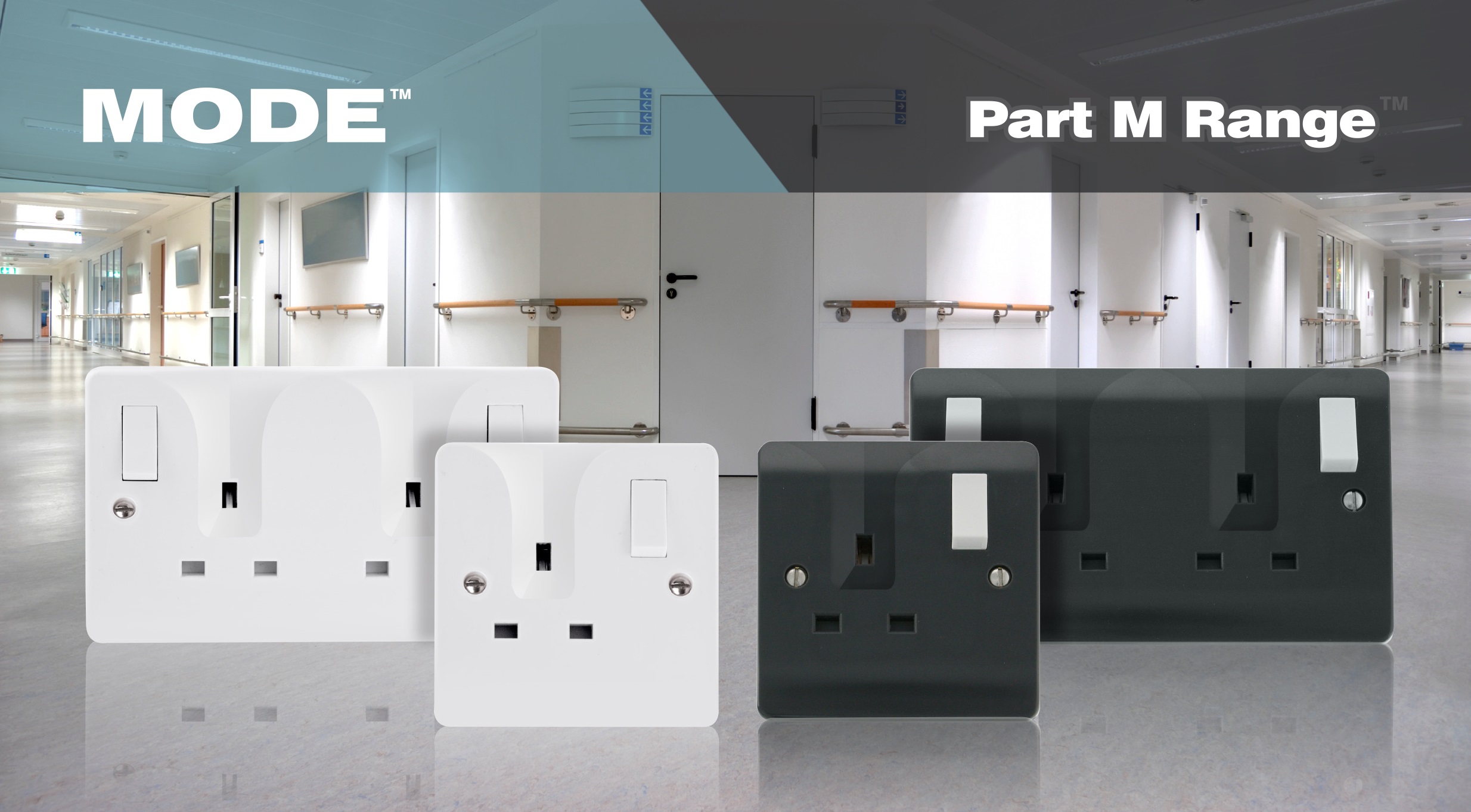
Infection control is one of the biggest challenges facing the healthcare sector. Healthcare associated infections (HCAI) are infections that occur in a healthcare setting that a patient didn't have before they came in. Anyone operating within and supplying to this sector is required to work with products that meet the demands for hygiene and safety, and that includes electrical products. Switch plates, such as light switches, dimmers and sockets have one of the highest touch rates in any environment, so are likely to hold a significant number of microbes on their surfaces. Whilst regular and rigorous cleaning of these settings is essential, the use of products with antimicrobial properties will also have a part to play to help inhibit the spread of infection. Scolmore’s antimicrobial wiring accessories - Mode, Mode Part M and Polar - are all manufactured using Urea Formaldehyde, which has similar inherent properties to antimicrobial additives that inhibit the growth of infectious diseases. When independently tested, all products achieved a 99.99% kill off rate across all four types of the strains of bacteria – MRSA, E-Coli, Salmonella and Klebsiella Pneumonia. Mode is a range of contemporary, white wiring accessories that was developed as a high quality, flexible and modern solution for virtually any domestic wiring requirement. The smooth lines of the accessory plate will fit easily into traditional and contemporary designs alike. Mode Part M is a range of visually contrasting wiring accessories, in anthracite grey, that comply with current Building Regulations Part M. Polar is a premium range of bright white electrical accessories, which was developed to meet the demand for a different accessory colour. As with Mode, the Polar range is modular in design and allows installers unprecedented flexibility in creating dedicated wiring solutions. Products from the Mode, Mode Part M and Polar ranges have been specified and installed across a huge range of applications including schools, hospitals, care homes, hotels, offices and leisure complexes. All products within the ranges are covered by a ‘No Quibble Guarantee’ against any fault in materials or manufacture experienced at any time within 20 years of the date of supply. https://www.youtube.com/watch?v=b3mj8dHD0q0

NAPIT Introduces Lead Generation Service
NAPIT has launched a brand new and exclusive white label service for members. The new platform, NAPIT Leads powered by eSalesHub, has been developed over the past few months to help support NAPIT members in generating inbound sales leads. The platform enables members to have a bespoke local landing page connected to a local search to help generate and transform sales leads. Over 70% of local searches call for local services, as a result the new service has been created to help generate leads using artificial intelligence.  Local electrical businesses that predominantly receive phone calls can be tracked in real-time to be made aware of which leads turn into quotes or sales.  How the platform works: A customer carries out a search on Google for a solution to a problem - e.g. emergency rewiring.   The Google search engine result displays a registered NAPIT tradesperson local to their area.  The consumer clicks through to the landing page and then calls the NAPIT tradesperson to discuss their requirements and arrange a callout. No more sharing! The leads generated are exclusive to each member, there is no ‘set up’ fee for NAPIT registered members using the service. We pay for Google, You pay per lead. A reporting / analytics tool is provided to help you keep a real time track on all leads and spend. “The slowdown of the economy resulting from the coronavirus pandemic can have lasting effects on many businesses,” says Mike Andrews, NAPIT Group Chief Executive. “We understand how crucial it is for members to have a continuing stream of customers to keep their businesses viable. We also appreciate that advertising their services can be expensive. By working with eSalesHub we are providing support to members, at a time when many members will be looking for additional business. With NAPIT Leads, you can now get access to high-quality, exclusive sales leads without paying large amounts for Google advertising.” "eSalesHub are delighted to be partnering with NAPIT,” adds Mark Taylor, eSalesHub Chief Executive Officer. “For several years now, we have been working with many trades from Electricians, Solar PV Companies, Boiler Installers, right the way through to Kitchen & Bathroom installers. Our approach is to take the risk out of Google advertising to allow our clients to pay per lead. By not sharing sales leads, the conversion levels we are able to achieve result in a far better ROI. We look forward to working with you." 

CP Electronics At The Centre Of Things
CP Electronics recently supplied controls to the Centre Building, a new state of the art, flexible and highly sustainable academic and teaching building in the London School of Economics and Political Science (LSE) complex.  The brief was to provide accurate and easy adjustment of light levels, something vital for today’s places of learning, particularly the lecture areas which have to cater for both traditional teaching and technical presentations.  LSE has created this new landmark building and Public Square at the heart of its campus on Houghton Street which will become a world-class home for the political sciences. The design has been zoned vertically, with the most public and highly-serviced facilities located on the lower levels which helps to animate the newly-created LSE Square and Houghton Street.  The more private academic departments,- to which access is controlled, are located on the upper levels. The Centre Building also houses meeting rooms, a 200-seater flat auditorium which can be used for both lectures and events, and an LSE style lecture theatre that allows traditional style teaching as well as collaborative group work and a ground floor café. To control the lighting in the buildings’ multiple use spaces, from lecture theatres to individual offices, CP provided the company’s RAPID System with a control strategy that includes daylight linking, presence detection and timers. CP’s RAPID System was specified for the project to control all of the lighting throughout the building, including a hardwired 3 x network area controller with Ethernet, 64 address hardwired DALI gateway modules, scene modules, a DALI network ceiling PIR and a RAPID computer graphics package. The DALI gateways and Area Controllers were built into panels offsite, to allow for future expansion when required.  The Centre Building offers purpose built spaces and facilities that will support and inspire the people who work within it and their ideas to transform the world through social-science research and education. CP products are already in use across multiple buildings around the LSE campus, with products that meet the requirements of flexibility and ease of use.  

How To Store Waste Lamps And Electricals During The Corona Crisis
Organisations providing essential services during the lockdown continue to operate, although in a difficult environment, whilst applying appropriate social distancing requirements. Such organisations can be expected to continue producing waste lamps, electricals and batteries.   Recolight has announced help with storage of the additional waste, and the Environment Agency has published guidance for sites that may exceed their permits during the current lockdown period. The Recolight Network for dropping off small quantiles of waste lamps and luminaires is temporarily closed. This may result in some waste containers reaching capacity. In such situations, Recolight can supply an additional container to allow the safe storage of additional waste.  In addition, on 6 April, the Environment Agency announced that where a collection point operates a permitted site, that site may temporarily store more waste than the permit allows, but only for wastes covered by the permit.  Recolight collection points that do not operate under an S2 exemption will benefit from this change. The Recolight team of WEEE experts are available to offer specialist waste storage advice and can be contacted by email via info@recolight.co.uk.  

Scolmore Comments on Launch of EDATA
Scolmore Group is one of 15 manufacturers and ten wholesalers who have signed up as Founder Members of EDATA, a new ‘by the industry for the industry’ product data pool. EDATA is the latest strategic initiative from the Electrical Distributors’ Association (EDA) under its EDA Data Services banner. E-commerce and digital transformation are inextricably linked to the availability of the highest quality product data, and EDATA offers manufacturers a central ‘single source of truth’ resource for uploading product information, technical data and images which wholesalers can download and serve up on their customer-facing e-commerce channels. Martyn Walley (pictured above), Group Technical Director with Scolmore Group, comments, “We are delighted to have been invited to be a founding member and get involved in this latest initiative from the EDA. We welcome any opportunity to help provide a valuable resource to the wholesaler.” Margaret Fitzsimons, CEO at the EDA, adds, “The EDA is delighted to have Scolmore Group as a Founder of this new initiative. EDATA gives the UK’s electrotechnical supply chain the opportunity to say goodbye to the heavy workloads created by processing data through multiple channels and hello to enhanced ecommerce infrastructure.” EDATA currently holds information in three categories: Manufacturer Master Data, the core data needed to identify a product; Digital Assets, such as images and data sheets; and Technical Attributes including dimensions, suitability and performance characteristics. The Technical Attributes held in EDATA will be structured in accordance with ETIM, the international data model for the standardisation and classification of technical product data enabling wholesalers to enhance their websites with powerful product searches and filters. The EDA has led the ETIM initiative for the UK’s electrotechnical sector since 2017.

Industry Leaders Issue Statement on Payment and Contractors
An open letter has been written to the Government by a range of industry leaders, including from the ECA. The letter expresses concern about payment in the supply chain, the need to manage contracts responsibly, and to collaborate across the industry. The letter was signed by the Construction Leadership Council (CLC), as well as the members of the Construction Industry Taskforce (see below for the full list of participants). Here is the letter in full: In response to managing the impact of COVID-19, the Construction Leadership Council (CLC), working with our Government Partners BEIS and IPA, has recently focused on ensuring that we can keep our people safe and enabling construction sites to operate in accordance with PHE guidelines. A 12-strong Construction Industry Task Force has been assembled to develop a number of initiatives to support the needs of the sector, including: • A letter to the Prime Minister, summarising urgent industry support needs. • Developing Site Operating Procedures based on Public Health England guidance. • Industry-tailored guidance for the Coronavirus Job Retention Scheme and Self- employed worker scheme. • Supporting firms to access to Government backed loans schemes for business. • Organising a call for industry leaders with the Minister for Construction. • Producing a daily newsletter for the industry. • Issuing good practice guidance on temporary suspensions of site activity. These initiatives have been developed collaboratively by industry representatives. The success and impact of this work highlights the critical importance for the industry of continuing to work together as we respond to the crisis. The CLC is increasingly concerned about the management of payment in the supply chain, and the risk that clients and firms will seek to invoke contractual clauses to the detriment of other firms. We are clear that all construction businesses should continue to pay in accordance with agreed contractual terms. Similarly, firms should not be threatening to invoke penalty or other contractual clauses, when it should be the priority of all clients and firms to sustain the industry. Our actions at this time will be remembered. All firms should think hard about how their reputation could be damaged by not doing the right thing. In our letter to the Prime Minister, we highlighted the importance of maintaining cashflow to ensure the financial health of our industry. This applies to all businesses in the sector, including those in the materials and products distribution supply chain. As a result, every business, large and small, has a critical role in the making sure that cash continues to flow throughout the industry. However, our Construction Industry Task Force colleagues have brought to our attention that there are number of businesses that have chosen to unilaterally delay payment or extend credit terms. We do not believe this is acceptable or appropriate – particularly at this time of great stress. Many organisations have taken steps to support their supply chains through their collaborative administration of contracts. Government has led the way through the implementation of PN 02/20, under which public-sector clients will continue to pay suppliers at risk due to Covid19 until at least the end of June 2020. We should all follow the example set by our largest client. In our letter to the Prime Minister, we called for an unprecedented range of support measures to ensure that cash continues to flow to and through the industry. The construction sector can only justify such support if cash continues to flow and liquidity is maintained. Our common enemy is Covid19, and we need to unite, and work collaboratively to resolve shared problems. We owe it to our sector and the country to take all steps necessary to ensure that the industry is in good health to support the recovery, when it comes. It is everyone’s responsibility to keep money moving in the sector and vital that all businesses play their part by maintaining payment and by managing contracts responsibly. Andy Mitchell Chief Executive, Tideway, and Chair of the CLC Construction Industry Task Force Membership Andy Mitchell, Chief Executive, Tideway, and Chair of the CLC Richard Beresford, Chief Executive, National Federation of Builders Brian Berry, Chief Executive, Federation of Master Builders Steve Bratt, Chief Executive, Electrical Contractors Association Peter Caplehorn, Chief Executive, Construction Products Association Ian Fletcher, Director of Policy (Real Estate), British Property Federation John Newcomb, Chief Executive, Builders Merchants Federation Suzannah Nichol, Chief Executive, Build UK Jim O’Sullivan, Chief Executive, Highways England and Chair, Infrastructure Client Group Alasdair Reisner, Chief Executive, Civil Engineering Contractors Association Mark Reynolds, Chief Executive, Mace, and CLC Skills Lead John Slaughter, Director of External Affairs, Home Builders Federation Hannah Vickers, Chief Executive, Association of Consultancy and Engineering Graham Watts, Chief Executive, Construction Industry Council

Ellis Flexes Its Quads
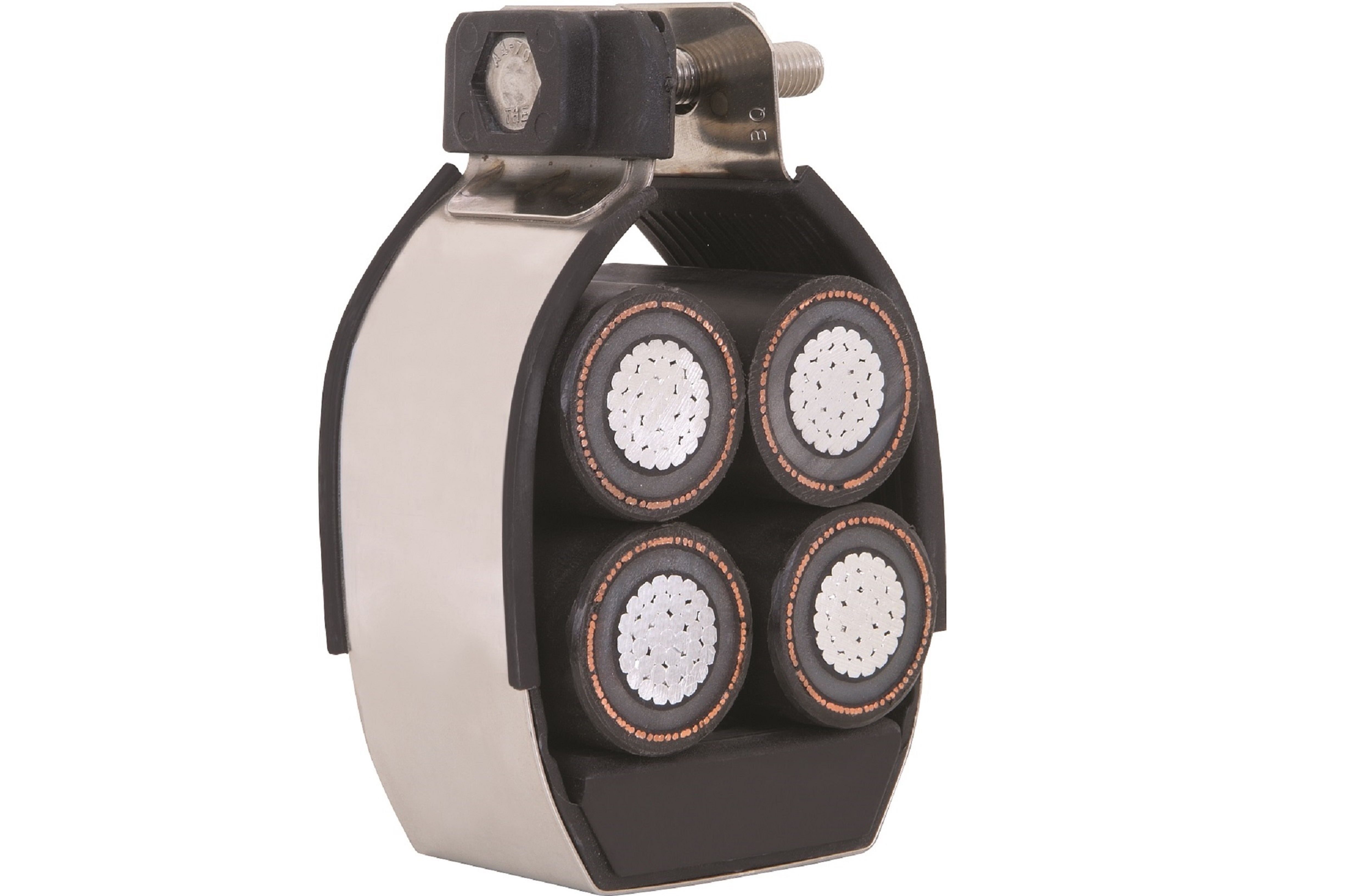
Designed to safely secure single cables in a quad formation, Ellis Patents’ Vulcan+ Quad cable cleats are in high demand across a wide range of industries around the globe. The Vulcan+ Quads, which were designed and developed in-house at Ellis’ North Yorkshire headquarters, were launched in 2000 and are now firmly established as the number one choice for specifiers, contractors and installers. Stephen Walton, Ellis’ Technical Director, says, “The market has changed dramatically in recent years; and while that’s good from the point of view that the vital importance of correctly specified cable cleats is fully appreciated, there is a drawback in the fact that customers are now presented with numerous products of remarkably similar appearance. “Competition is, of course, good - as it gives a customer choice and helps to drive product development. But unfortunately, in the cable cleat market, this isn’t really the case. In many instances, these new products are being brought to market as computer renderings before they actually exist. And while they say that imitation is the best form of flattery, it certainly makes a customer’s job harder when they have to sort fact from fiction in the specification process.” Designed, developed, tested and manufactured in accordance with IEC 61914, Ellis’ Vulcan+ Quads are available in a range of sizes, ranging from Ø23mm to Ø70mm. The frame of the cleat is manufactured from corrosion resistant 316L grade stainless steel, while the cables are supported by an integral liner manufactured from a low smoke zero halogen (LSOH) material. The cleats are available with a range of adapters, including C-clamp and ladder rung fixings, ensuring they can be utilised in more quad and quadplex installations than any other similar product. For further information on Ellis’ Vulcan+ Quad cable cleats, visit www.ellispatents.co.uk/products/vulcan-quad-cable-cleat/.

The Housing Forum Calls for Partnership Working
How does the housing industry manage the implications of suspension of works in response to the current public health crisis; which current actions will best assist the resumption of work, and where should longer term stimulus to the market be applied to best effect? Around the sector, the picture is mixed; volume house builders have generally closed sites with some exceptions. Design and build contracts for housing associations are continuing in some areas and some larger housing associations and build to rent developers are moving ahead with development plans. Chief Executive of The Housing Forum, Shelagh Grant, says, "Our members tell us the aim should be to achieve balanced outcomes for all parties. Regular contractual arrangements and reactions do not apply in these circumstances. We need to re-frame the relationship through partnership." Many in the housing sector are taking difficult decisions to close development sites, temporarily suspend works and/or reduce construction services to only the essential maintenance services to be provided to residents. Looking forward, planning for a managed return and securing products and materials supply is critical to all. The Housing Forum review urges: "As decisions are made, the relevant contracts must be reviewed to understand how risks of suspension and site closure can be shared between the parties. For the industry to benefit from recommended measures to deal with the housing supply interruptions, it will need greater clarity from government on how construction can operate safely during this period of social distancing, and this needs to be at a level which the whole supply chain are prepared to operate on." Stephen Teagle, Chair, The Housing Forum, adds, "Government and, in particular, Homes England, have a track record in encouraging partnership solutions and in designing market interventions at points of market stress to support the housing industry. The Housing Forum will share its proposals and work with Homes England to support housing supply and provide resilience across the supply chain." As well as providing a legal and consultants' Thought Leadership Group view on its website, the Housing Forum provides a five point plan for connecting the whole team: Many suppliers have had to make the decision to close distribution networks. Priority has to be staff safety and closure has been made necessary due to the lack of clarity from the government on which work should or should not stop. Those supplying into the social sector have developed strategies including five day bulk phone orders and drop off points. Suppliers could support housing providers more effectively if there was a common/shared definition of emergency repairs. Looking forward, the paced management of the return to construction work is in all our interests as, if reserve stocks deplete too quickly, the manufacturing and import sector could struggle to match demand. Procurement timescales, which can be 12-16 weeks, will hold back the return to productivity and raise questions about value in procurement and what this actually means. Specialist consultants in areas like design, engineering and energy are an integral part of the supply chain. Site closure has just as suddenly affected their work flow and cash flow. Clients could restructure payment time to provide forward visibility and phased payments. For further information, visit the Partnership Working Never More Important story on The Housing Forum's website.

NICEIC And ELECSA Partner With Electrical Industries Charity, Focus On Mental Health
The NICEIC and ELECSA, the nation’s leading certification bodies for the electrical industry, have chosen the Electrical Industries Charity as their official charity partner for 2020. The partnership is a natural fit for the NICEIC and ELECSA who champion the EIC’s fantastic work in supporting members of the electrical contracting industry. The announcement marks the start of a year-long fundraising campaign by the NICEIC and ELECSA to raise much-needed funds for the charity who exist to provide free, confidential, practical support to those working in the electrical contracting industry. “We are delighted to partner with the Electrical Industries Charity," says Kevan Parker, NICEIC and ELECSA, Managing Director. “The work the charity undertakes on behalf of the industry and its members is truly remarkable, the service they provide offers a lifeline to so many, and we are proud to support them as they strive to help our colleagues and contractors in times of need. We all need a helping hand from time to time, now more so than ever, and knowing there is an organisation such as the EIC out there supporting our people is a great source of comfort.” Offering a broad spectrum of services, including but not limited to, counselling and mental health support, general legal support, debt support and financial relief in immediate need; the EIC protect the health and wellbeing of anyone associated with our industry. "It is wonderful to have the NICEIC and ELECSA onboard," adds Tessa Ogle, Electrical Industries Charity, Chief Executive Officer and Managing Director. "We are incredibly proud of the support we provide and the positive impact we have on so many lives.  People turn to us for many reasons, and thanks to the hard work of our many supporters, we are able to offer much-needed assistance. Having partners such as the NICEIC and ELECSA, will, I am sure, provide a real boost to our efforts and we very much look forward to working with them moving forward." One of the charity's most in-demand services is their mental health support package.  Operating a confidential helpline, the charity receives thousands of calls from people needing help. Working closely with the individual trained professionals develop programmes to best suit their needs.   These programmes may include a series of telephone counselling sessions, face to face family group therapy, or Cognitive Behavioral Therapy. The tools are wide-ranging and provide vital relief to those who need them. If you are a member of the electrical Industry and you or a family member need assistance, please reach out to the charity to see what options are available.  You can do this by logging on email on at support@electricalcharity.org or by calling their confidential helpline 0800 652 1618.

The responsibility of recycling
With the construction industry having a vital role to play in turning the tide on the UK’s environmental impact, it is important electrical contractors do their bit too. Jon Chamberlain, Sales Director at Marshall-Tufflex, discusses how a meaningful impact can be made with ease. The construction industry is one of the largest contributors to waste in the UK, creating approximately 120 million tonnes (almost 60% of all UK waste) from construction, demolition and excavation each year – with 25 million tonnes of this sent to landfill. With the devastating impact landfill has on the environment, this is an unacceptable figure and one the entire industry must take responsibility for. According to a report by the UN Intergovernmental Panel on Climate Change (IPCC) released in October 2018, urgent changes are required to tackle climate change – and this must be done within the next decade, before the damage is irreversible. In October 2019, the government introduced a new bill that addresses key environmental issues to lower carbon emissions, improve air quality, manage waste and optimise the use of resources. Specifically mentioned is a move towards a circular economy, and this is where the construction industry could have a major impact. Every little helps, and the sustainability of products at any level should be considered – and this includes the environmental credentials of cable management solutions. A greener alternative Understanding the ‘cradle to grave’ impact of a product is crucial to making a more environmentally responsible purchasing decision – and within the cable management sector, a product’s impact is largely down to the origin of the PVC-U used within manufacture. To put this into context, in a study undertaken by the University of Manchester, a PVC-U window using recycled content offers a 20-fold reduction in embodied carbon, compared to products manufactured with virgin plastic. It’s therefore no surprise that environmentally conscious cable management manufacturers have been seeking ways to introduce more recycled content into their own production processes. For example, Marshall-Tufflex has invested in a compounder machine, which alongside post-industrial waste (waste and off-cuts from PVC-U window production) can also process post-consumer waste (from PVC-U windows removed from buildings at the end of their lives). This enables them to manufacturer PVC-U conduit and trunking systems with an average of 80% recycled content – with some using 100% recycled material. This increased use of recycled material within the manufacturing process prevents the equivalent in weight of 300 double decker buses of PVC-U going to landfill each year. If other manufacturers that used PVC-U in the production process took this stance, it would have a huge positive impact on the environmental performance of the sector – however, realistically this cannot happen unless the demand is there. Electrical contractors therefore have a substantial role to play by considering the recycled content of the products they specify, championing the environmental benefits. No compromise on quality There is the widespread myth that a ‘greener’ alternative might mean a decline in quality and durability – and this simply isn’t true. By using post-industrial and post-consumer waste from PVC-U window frames in the production process, the products benefit from an increased robustness, as the grade of PVC-U had originally been designed to withstand external elements. Additional rigorous quality control processes will also ensure a high quality, gloss finish, so each product will look great and there will be the guarantee of colour consistency throughout the project. If a product does not meet the stringent standards required, it can simply be recycled back into chips and undergo further refinement and processing, to re-enter the production process. REACH for standards Electrical contractors should also be aware of, and specify products from, manufacturers who meet Registration, Evaluation, Authorisation and restriction of Chemicals (REACH) standards, which concerns the production and its use of chemicals and their impact on both the environment and human health. In addition, the ISO 14001 Environmental Management Accreditation demonstrates that manufacturers have taken steps to reduce their impact on the environment throughout their business. Calculating the benefits It is crucial to increase supply and demand by supporting manufacturers who are totally transparent about the recycled content in its products, and its recycling initiative. Marshall-Tufflex, which boasts an award-winning Reassuringly Recycled campaign, recognised the need for transparent specification. As such, the business has introduced free online tools, such as the Recycled PVC-U Calculator, to accurately illustrate how much recycled content is used in the products specified, and how much PVC-U in kilograms will be saved from going to landfill. It is clear that everyone has a responsibility to prevent further damage to the environment, with the construction industry in particular primed to make a significant impact. By making informed specifications and supporting manufacturers who are vocal about their environmental commitments, the difference would be huge. - This article originally appeared in the April 2020 issue of ECN.