2 November 2026
Product of the Month: Amari Floodlight range by Aurora Lighting
 
13 November 2026
Rexel and Denmans open nominations for EFL grassroots initiative
 
13 November 2026
Exclusive: how homeowners use Google to find electricians
 
12 November 2026
Schneider Electric transforms Southampton hospital estate
 
12 November 2026
GTEC Training opens new education facility in North Yorkshire
 

Latest News


GiGaFuse White Paper Revealed
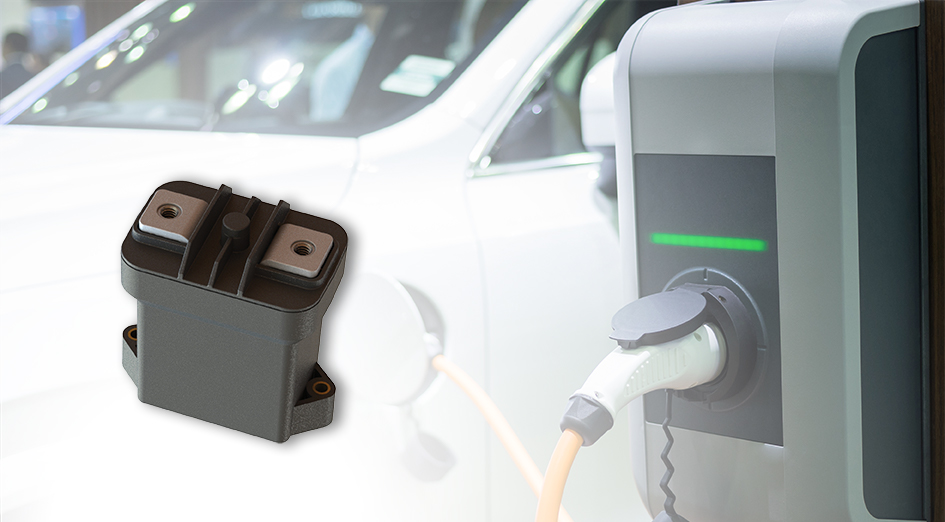
Sensata Technologies has launched a new white paper – How the GigaFuse Helps Maximise Safety in Advanced Battery Systems.   Advanced battery systems need advanced circuit protection solutions for a variety of reasons - ranging from improving battery safety and performance to encouraging greater market acceptance of Electrical Vehicles (EVs).  “The high current levels and power densities in next-generation battery systems demand equally high-performance, highly precise safety components,” writes Sensata’s Markus Beck, the White Paper’s author. “If the safety systems do not work quickly and reliably, the entire battery system can suffer a catastrophic failure that could seriously impact the product and its user.” Markus says that ‘catastrophic failure’ includes ‘thermal runaway’ – better known as fire:  “The increasing level of publicity given to EV fires has brought more attention to the danger, which is why safety concerns must be addressed in order to avoid adversely impacting public EV adoption.” This new whitepaper covers the ever-increasing demand for improved stored energy systems, the role of fuses and contactors, as well as faster and more precise next generation technology solutions for protecting EV batteries and power systems.  It shows that only by designing systems that are robust and safe, and using high-performance components such as fuses and contactors that can handle short circuits, can an EV manufacturer ensure reliability over a given vehicle’s lifetime.

Solihull Hospital’s Fire Alarm System Gets Live Upgrade
Static Systems Group (SSG) recently completed a ‘live’ upgrade of the fire alarm system at Solihull Hospital. The contract to replace the hospital’s existing closed protocol fire alarm network and panels with an open protocol solution was awarded to electrical contractor Harrold Jones Services (HJS) in January 2019.  Having previously worked with SSG on a fire alarm upgrade at Alexandra Hospital in Redditch, HJS appointed SSG to supply, commission and maintain the hospital’s new fire alarm system, adhering to the Trust’s requirement that the existing detection devices were to be reused where possible. The hospital was also already acquainted with SSG as they had been contracted to upgrade the site’s nurse call systems over the past four years.  Managed by the University Hospitals Birmingham NHS Foundation Trust, Solihull Hospital is an acute general hospital in the West Midlands. The facility provides general and specialist hospital and community care for the residents of East Birmingham, Solihull, Sutton Coldfield, Tamworth and South Staffordshire.  The hospital has 229 beds, around a quarter of which are single-bed rooms.  Brian Rowley, Managing Director at HJS, comments, “Having worked with Static Systems on a previous fire alarm upgrade, we knew they would deliver the same professional level of service on the Solihull Hospital project. This, coupled with their product offering and ability to deliver a cost-effective solution, made it an easy decision to include them as a named supplier in our tender submission.”  Matt Thompson, Senior Account Manager (Healthcare) at SSG, comments, “We were involved from the outset of the project, offering support to the Trust and IBSEC (the Trust’s chosen M&E Consultant) in terms of formulating the planned scope of works. This involved producing an initial site report of the existing system and then outline proposals for moving the project forward.  “Our engineers undertook a number of site visits as part of their investigation works as only limited information was available on the existing system and its operation. This ensured a thorough understanding of the original system’s cause and effect and enabled us to replicate it with the new panels and, where appropriate, offer additional suggestions for improvement.” The solution recommended by SSG was a networked fire alarm system comprising 19 sector panels, two repeat panels and four graphics displays from the company’s Evo2 product range, as well as a BMS interface to the Drax System. The Evo2 system is ideally suited to large multi-panel sites such as hospitals as it provides true peer-to-peer networking.  One of the areas to be connected to the network was a remote building which would ordinarily have required extensive groundwork in order to install cabling. To avoid this costly and disruptive exercise, SSG provided wireless connectivity between the fire alarm panel in the remote area and the nearest panel connected to the network. Having installed a new network and the new panels, SSG put the system on soak test for a week before starting the process of transferring the existing Apollo detection circuits to the new fire panels. Then, once all the detection was transferred across, engineers undertook the cause and effect testing to prove that the new network and panels were up and running, and that the software was working correctly.  This work took place within a live hospital environment, with very little disruption. Most of the work was undertaken during normal working hours, however the swap out of the existing detectors in a couple of the departments had to be undertaken out-of-hours. Similarly, commissioning in the hospital’s theatres was also carried out out-of-hours to avoid any disruption to operations. Commissioning ran very smoothly, as did the installation works which took place over a 10-week period.  SSG provided maintenance support to the hospital throughout the changeover from the old to the new system.  Neil Turnbull, Electrical Estates Officer at University Hospitals Birmingham NHS Foundation Trust, adds, “SSG’s commissioning engineers were highly experienced in working in a live hospital environment, which was vital for this particular project. They also communicated with the hospital’s departmental staff when carrying out the detection changeover and testing, which further aided a smooth transition.”  Matt concludes, “Having previously undertaken a number of nurse call upgrades at Solihull Hospital, we were delighted to be tasked with upgrading the fire alarm system. We worked closely with HJS and the Trust’s project team throughout the planning, commissioning and installation process, which helped to ensure clear communication and very efficient project delivery. As a result, the Trust now has a full understanding of how the system works and is wired. They also have peace of mind that the system is open protocol and, importantly, have the flexibility to carry out elements of work themselves or involve thirds parties should they wish.” The new system is fully HTM 05:03 compliant and the Fire Alarm Panels are EN54-2:1997 and EN54-4:1997 compliant.  SSG will continue to provide ongoing support and maintenance as part of its contract with HJS and the Trust. 

Say Goodbye To Zinc Whiskers!
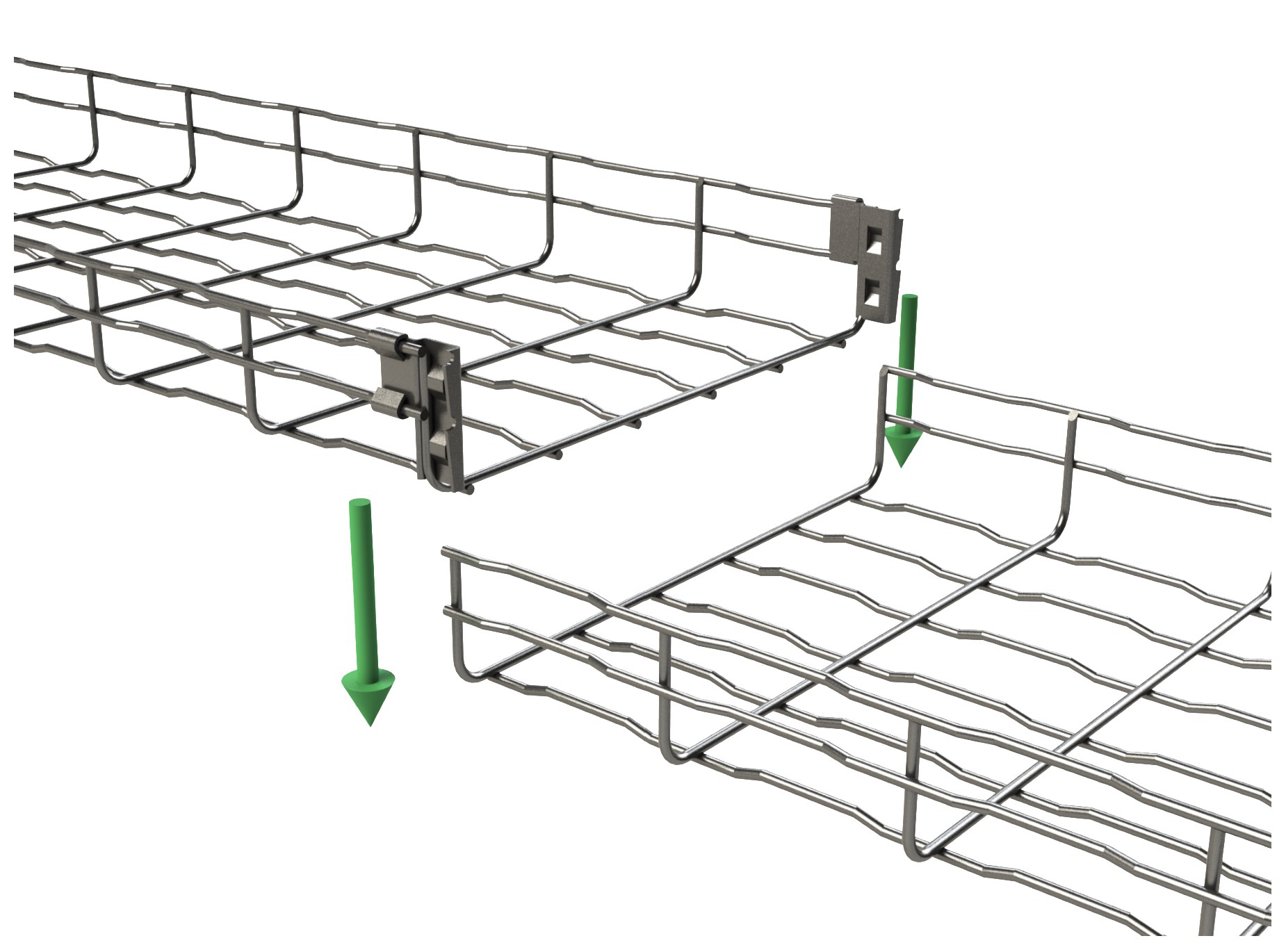
The long-standing uncertainty surrounding zinc whiskers faced by end users and contractors across the UK can now be mitigated when installing a Univolt Basor wire basket. Using a special acidic galvanising process, any presence of whiskers is now a thing of the past. Steve Davis, National Business Development Manager of Univolt explains, “Zinc whiskers essentially grow on steel surfaces that have been finished with an ordinary coating of Zinc to prevent corrosion, however, it can expand potentially forming the damaging whiskers.  “There are various types of zinc processes where whiskers can grow, however, Univolt Basor baskets can avoid this by using a special process which negates the growth of zinc whiskers. Under laboratory conditions a test sample of wire basket was continually monitored over a 16 month period using an electron microscope at a magnification of 400X which indicated no presence of whiskers during the entire test.” “Minimising any issues surrounding zinc whiskers marks one of the many added benefits for users opting for the Univolt Basor wire basket range, eradicating any confusion between finishes i.e. powder coated, pre-galv, or stainless steel, which can add to project costs, or longer lead times.” As part of a complete wire basket solution, Univolt offers a range of quick fit self-coupling wire baskets and accessories to speed up, enhance and secure on site in seconds rather than minutes. Products are available in a range of sizes from 35mm, 65mm and 105mm in depth and from 60mm- 600mm in widths. Steve continues, “The addition of a full wire basket range helps us complete our cable containment range, ensuring specifiers, contractors and wholesalers can confidently work with us, utilising Univolt as a one stop shop for all cable containment needs.”  

Managing the Issue of Digital Age Business Continuity
Business Continuity Made Easy Any interruption to business continuity represents high risk. In this new digitisation era, equipment downtime equates to information systems network downtime. The immediate expense of disruptions to business continuity (unplanned downtime) is significant. Revisiting the state of infrastructure and facility management resiliency across the enterprise plays an important role in assuring business continuity. A continuous and stable supply of clean power is essential. Power protection has never been more important than in the current environment, with companies trying to increase the pace of business in order to meet challenges and take advantage of opportunities in the cloud/Internet of Things era. They count on not just their IT systems, but office computer systems, manufacturing plant machinery, retail point of sale systems and other work environment equipment to be fully functional at all times. Schneider Electric has designed an easy solution for you! It offers first-class power protection, and now comes with smart battery modules included. Galaxy VS UPS is the EcoStruxure Ready, three-phase, compact backup that innovates against downtime. It is now available with internal smart battery modules or external batteries. The Galaxy family of UPSs delivers highly efficient, simple-to-deploy, compact three-phase UPS power protection. With innovative ECOnversion mode, Li-ion options and a range of 10 kW to 1500 kW, the Galaxy UPS seamlessly integrates into the electrical, physical and monitoring environment of customers operating data centres, industrial applications or facilities. Power protection as innovative as your business • Double conversion mode delivers up to 97% efficiency. • 99% efficient with ECOnversion mod. • The UPS you can rely on, with durable Lithium-ion batteries and our expert Digital Services offer. • Modular architecture for maximum availability. • Cloud -based, open platform allows for seamless integration and future-proof adaptability. Learn more by clicking here.

Construction Bodies Call For Urgent Action During Coronavirus Crisis
A group of construction industry bodies, who between them represent the majority of contractor business in Scotland, have suggested a number of simple actions which the Scottish Government could introduce immediately to help with cash flow and protect jobs against the background of coronavirus. SELECT, the Scottish and Northern Ireland Plumbers’ Federation (SNIPEF), the Civil Engineering Contractors Association (CECA Scotland) and the Scottish Building Federation (SBF) are among the 10 organisations who have sent a joint letter to Fiona Hyslop, Secretary for Economy, Fair Work and Culture, urging her to support the Scottish construction sector. The group, which also includes the Federation of Master Builders (FMB), the Lift and Escalator Industry Association (LEIA), the Building Engineering Services Association (BESA), the Scaffolding Association, the Stone Federation and the National Federation of Roofing Contractors (NFRC), said that without immediate action, the industry would face “business closures and loss of jobs and skills”. In its letter, the group – which calls itself the Construction Industry Coronavirus (CICV) Forum – says: “Most of Scotland’s economy is made up of micro and small businesses, many of whom are already facing the closure of construction sites and a reduction in domestic work. This will undoubtedly lead to business closures, loss of jobs and skills at a time that Scotland can least afford and would seriously dent Scotland’s future economic growth. “However, what we would need the Scottish Government to do, in this unprecedented time, is to use its influence with clients to ask that payments are accelerated as quickly as possible to ensure that the flow of cash will continue. “It is also vital that clients ensure that payment must be cascaded down the supply chain to ensure that everyone who is legitimately due cash is paid more quickly. We would also request that all public sector clients immediately release any retentions due to boost cash flow in the sector.” The CICV Forum is also asking the government to allow public sector clients to:            Suspend the use of open tenders           Use the Quick Quote method of tendering where possible           Ask public sector clients to provide clarity on existing contracts and on the contractual position regarding delays           Keep the momentum going to ensure the industry survives. Alan Wilson, Managing Director of SELECT, the electrical contractors’ trade association, said: “We are at the beginning of what is likely to be a prolonged and very difficult time for a sector which has already been struggling during recent years. “If the Scottish construction industry is to survive this crisis, it is absolutely vital that the Scottish Government and public sector clients continue to procure a steady pipeline of work. “Given the unprecedented challenges ahead, we would urge the Scottish Government to relax current procurement rules and procedures, in the short term, to help industry and public sector clients overcome the inevitable staffing issues all employers will face over the coming months. “We’re also requesting that the government adopt a light touch, because the private sector may not have the staff to compile large specifications and the public sector won’t have the staff to mark it.” Vaughan Hart, Managing Director of the SBF, added: “We are already seeing a significant impact on the way the industry is having to alter its mode of operations and we are sure there will be many more issues to be dealt with as things develop. “Cashflow has always been a major factor for companies operating within the construction sector and this is even more important now, as work streams are restricted and the potential impact on future workload is unknown. “Any measure which improves cash flow and easies the route to future work opportunities has to be looked at seriously in these times, otherwise we may not have the industry we will need to grow the economy, once the worst of the impact of the coronavirus is over.” Fiona Hodgson, Chief Executive of SNIPEF, said: “These are desperate times for everyone. If we go into lockdown, firms will simply not be able to afford to keep staff on and with redundancies comes a loss of a skilled workforce which is already in short supply. “The new CICV Forum will now share views weekly and feed into the Scottish Government. It is vital therefore that members keep us abreast of the issues they are facing as they develop.” The move comes after Aileen Campbell, Cabinet Secretary for Communities and Local Government, this week announced a package of measures to help Scotland’s communities cope with the “worldwide public health emergency”. This included an additional £350 million for local hardship funds, £45 million for the Scottish Welfare Fund and a £20 million Third Sector Resilience Fund to help organisations cope with cash flow. Ms Campbell also urged the UK Government to reconsider its approach to welfare and increase levels of Universal Credit, statutory sick pay and reverse its cap on children, saying these were “not normal times”. Mr Wilson said: “We have now set up an online advisory group where CICV Forum members will share intelligence, advice and information across the whole sector. We will also use it to keep the government informed. “These are not normal times, which is why it is vital that the construction industry is helped with these vital issues, just as other areas are being assisted. “Now is the right time for Scottish Government to show leadership and take bold and decisive actions as quickly as possible to keep the industry afloat.”    

Working From Home Due To Coronavirus Means Wellbeing Must Be Considered
Employers’ concern for staff wellbeing must now go well beyond the traditional workplace, says Tamlite Lighting. Tamlite Lighting believes that the rapid increase in the number of people working from home as a result of coronavirus (Covid-19) means employers now need to consider the home environment their staff are working in – and in particular their access to appropriate lighting. A long-time champion of the benefits of more ‘human centric’ approaches to building services, Tamlite Lighting is leading the call for greater awareness of this issue.   Debbie-Sue Farrell, the company’s Head of Wellbeing, comments, “We are living through unprecedented times. With more and more people now working from their own homes, we believe there needs to be a new shift in thinking about how employers can support and maintain their health and wellbeing of their staff. “Specifically, there is no getting away from the fact that the lighting in our homes was designed for everyday life and is therefore unsuitable for creating a functional working environment. As a result, many home-based workers could well find themselves suffering from eye strain, poor posture and headaches, and in some cases lack of motivation as a direct result of insufficient or gloomy lighting. In order to remain healthy and productive, it is absolutely vital that workers have access to the right lighting, as it is proven to offer a way to enhance their daily experiences.” Tamlite says there are simple measures that can be taken, such as providing employees with simple, tunable solutions such as its Starlite Connect. This technology – which is ideally suited to the domestic office, or makeshift working environment - allows users to choose the right light for the right activity. It is an intuitive, easy-to-install and flexible lighting system that is backed up by the latest connected lighting technology from WiZ Connected. “At Tamlite, we stand ready to support and advise any businesses concerned about lighting for their home-based workforce. Even small improvements can make a massive difference to personal performance, creativity, mood and function. These are extraordinary times we want to support companies in any way we can – we’re all in the same situation.” For more information, visit https://starlite.co.uk/.

BS 7671 -722 Amendment 1: RCDs & RDC-DDs
By Chaz Andrews, Technical Manager of Doepke UK Effective RCD protection for electric vehicle (EV) sockets relies on the correct specification of the associated EV charging equipment and the RCD. Don’t leave it until the installation is being tested to understand the revised requirements. Amendment 1 - 722.531.3.101 relates to Mode 2 and 3 charging equipment standards. For Mode 4 charging equipment, refer to the manufacturer’s recommendations for RCD selection. Background Product Standards Product reference standards for Mode 2 and Mode 3 charging equipment covering 6mA DC fault current detection, enabling the safe use of Type A or F RCDs upstream, changed in 2018. When selecting charging equipment, check that the appropriate standard / edition applies to the product you are purchasing. IEC 62752:  In-Cable Control and Protection Devices (IC-CPD) for Mode 2 charging cables. Updated in 2018, to include a 6mA DC detection and switching feature within the IC-CPD. IEC 62955:  Residual Direct Current Detecting Devices  (RDC-DD)* for Mode 3 charging. New standard published 2018 defining product formats and performance requirements. *Doepke Technical Publication 18, dated October 2018 (available online), gives further detail. Amendment 1 clause 722.531.3.101 RDC-DDs & IEC 62196: Are generally associated with Mode 3 charging. However, there are instances where this feature may have to be provided separately for Mode 2 charging cables, if they do not include 6mA DC detection – see Mode 2 charging below. Type F RCDs: Refer to (ii) and Note 3 under 722.531.3.101. Certain designs of EV battery charging technology, produce mixed frequency leakage currents – see Figure 1 (at the top of this page) to see Leakage current tests performed on a small EV. In this example, the majority of the leakage current is generated at frequencies greater than 50Hz. High frequency leakage currents can saturate Type A RCD magnetic circuits, resulting in a change to the tripping characteristics. Refer to the EV manufacture for advice on RCD selection. Mode 3 Charging Manufacturers of Mode 3 charge points can include an RDC-DD in the charge point, or recommend an alternative solution, external to the charge point -see (ii) and Note 3. For example, Tesla specify the use of an AEV RCCB for use with their Mode 3 chargers. RDC-DDs manufactured to IEC 62955, for use with separate RCDs, must operate within 10s at 6mA DC. They must not operate when subjected to an AC residual current of 30mA. In the event of someone touching a live conductor and earth, the associated 30mA RDC must operate first and electrically isolate the circuit i.e. an RCD-DD operating a standard contactor in a Mode 3 charge point, does not provide electrical isolation. Doepke’s Type A-EV has been independently certified by VDE to IEC 62955 and provides 30mA protection for use in Mode 3 applications, providing effective isolation. Mode 2 Charging IC-CPDs used in mode 2 charging cables, manufactured to IEC 62752 – 2018, should include a 6mA smooth DC detection / disconnection feature. Refer to the labelling on IC-CPD or the manufacturer’s information to check that the cable includes this feature. A single Mode 2 charging cable incorporating 6mA smooth DC detection can be safely connected to a circuit protected by a Type A or F RCD. For Mode 2 charging cables that do not include this feature, a Type AEV or Type FEV RCCB can be used to provide the required level of protection – as per clause 722.531.3.101 (ii). Understand → Check → Specify → Purchase → Install → Test → Sign off Effective RCD protection for an EV socket relies on the correct specification of the associated EV charging equipment and the RCD - see BS7671 clause 133.1.1 , 2 and 3. If you specify and purchase incompatible equipment, it may not become apparent until the testing and sign-off phase. Testing a 30mA RCD to verify the tripping characteristic is common practice. There are conflicting views relating to the need to test the RCD-DD feature. It may be appropriate and reasonable to test / verify this feature during commissioning, as it has a direct impact on the ability of the associated RCD to perform its safety function. The 6mA test feature included in test instruments suitable for testing / commissioning EV installations is a simple test, and if the RCD-DD is working correctly, should only add minutes to the time to test. Conclusion The selection of any associated RCD 'Type' should take the following into account. Certain EVs may have specific charging requirements – for private installations, refer to the EV manufacturer’s information before you quote for the job. Charging Mode 2 or 3? Check that the features you expect to get in the charging equipment are provided in that version and the associated RCD is the correct type. Equipment that fails to meet the revised regulations creates a hidden danger, as it will not provide the expected level of protection. Check before you purchase and install. For more information, visit www.doepke.co.uk or email sales@doepke.co.uk

Over 90% Of Engineering Services Businesses Fear Impact Of Coronavirus
Over nine in 10 engineering services businesses (93%) say they are ‘concerned’ or ‘very concerned’ about the impact of coronavirus on their business over the next six months, according to initial responses to a major new ECA / BESA / SELECT engineering services survey. Over 60% of respondents are ‘very concerned’ about coronavirus while 1%t of respondents suggested they were ‘unconcerned’. Half of the engineering services respondents (51%) said that they have already encountered ‘delays and disruptions to current projects’, with 61% of larger businesses reporting current disruption.  Around half of respondents already report ‘delays and disruption to future work’. Over half of respondents (53%) said they were now ‘preparing business contingency plans’ as a result of developments, a figure which rose to 71% in larger businesses. The most commonly cited business activity in response to coronavirus to date is ‘reducing business travel’ and ‘asking or allowing staff to work from home,’ followed by ‘business contingency planning.’  However, around 10% of businesses say they have ‘shut down at certain premises or sites’, and over 10% of respondents also say they are ‘updating their contracts’ and ‘looking into alternative suppliers’. “Coronavirus is already having a significant impact across our industry and wider society. ECA is aware that many businesses are already encountering work delays, site access issues and cancellations,” says ECA CEO, Steve Bratt. “We are actively working with industry bodies and Government to represent the concerns and interests of the industry. Key to this is ensuring that Government understands that early, significant and practically useful support is needed to help our industry with cashflow, but also to provide as much certainty as possible.” “Though these are just preliminary findings, the sheer scale of the disruption to the sector is alarming,” adds BESA Director of Legal and Commercial, Debbie Petford. “We will be working around the clock to provide as much guidance as possible to our members, and calling on the government to keep providing additional stimulus and support as the situation evolves, to ensure businesses make it to the other side of this crisis in one piece.” “This is clearly an extremely worrying time for SELECT Members and the wider industry,” says SELECT Managing Director, Alan Wilson. “Each day brings fresh concerns, with the threat of shutdown still looming large. “Like ECA and BESA, we are taking proactive measures to help electrical professionals address their concerns at this unprecedented moment in history. The knock-on effects of this pandemic could be catastrophic for the industry, particularly when it comes to payments, so it’s essential that vital cash flow continues.” The survey, which is still live, has already received over 600 responses from across the industry, including nearly 180 from larger businesses in the sector. The coronavirus situation is fast moving and further survey responses are expected to show increasing impact on the industry in the days ahead. Engineering services play a critical role in developing and maintaining the UK’s built environment - which includes businesses, housing, hospitals and care homes, and the UK’s wider infrastructure, and is fundamental to employment and keeping the UK economy moving. The survey is live and closes on Friday March 27 2020 at 4pm.

J S Wright Awarded £11M Castle Park View Contract
J S Wright has secured a contract of approximately £11 million to fit out a new energy efficient housing development in Bristol. The Birmingham-based company, which has an office in London, will install all the mechanical and electrical services for Castle Park View, the first private housing scheme to be connected to Bristol City Council’s heat network. The commission from Bouygues UK involves providing the services for 375 new homes and communal areas across the 180,000 sq ft development, which is being built in the city centre on the site of a former ambulance station. Bookended by buildings of 26 storeys and 10 storeys, the scheme will comprise 300 private rented apartments managed by M&G Real Estate and 75 affordable apartments owned by Yarlington Housing Group, as part of a four-way partnership with Homes England and Bristol City Council. The mechanical works to be carried out by J S Wright will include providing each apartment with low-pressure underfloor hot water heating fed via a heat interface unit in a system connected to the Bristol heat network. The company will also provide boosted cold water from a cold-water plant room. J S Wright will make use of its in-house prefabrication facility to deliver the heat interface units on easy to fit utility cupboards, saving construction time and reducing the number of trades on site.  In addition, J S Wright will equip the development with mechanical ventilation heat recovery and mechanical extract ventilation systems that will reduce energy costs. The company will also supply and install sanitaryware as well as fit an internal rainwater system and above ground drainage. The brief also includes installing domestic sprinklers, smoke and environmental ventilation, and wet and dry risers in all areas including underground parking.  J S Wright will also carry out the electrical installations, including lighting, fire alarm, power and TV infrastructure in each apartment. The company will also install solar photovoltaic panels, security and access control systems, and M-Bus credit metering to record energy usage in individual apartments. The company has already begun initial internal work on site with completion scheduled for December 2021.  “We are delighted to have been awarded this ground-breaking project by such a prestigious company,” says Phil Leech, Managing Director of J S Wright. “Our work will result in Bristol   

HUBER+SUHNER Take The Wheel, Sparking Electric Vehicle Innovation
With increasing consumer demand for Electric Vehicles (EVs), manufacturers face the challenge of creating high-performing vehicles on mass scale. While high-power charging infrastructure is essential, there is also a vital demand on the performance of high voltage (HV) distribution within the EV in order to efficiently conduct, hold, distribute and use electric power after charging. HUBER+SUHNER has years of experience in addressing the challenges of powering EVs and delivering high voltage solutions to EV customers worldwide. Addressing several EV requirements, HUBER+SUHNER appreciates that a co-ordinated system of integrated solutions is the way forward for electric vehicles. Resisting current issues The number of EVs on the road is increasing as businesses work towards a more fuel-efficient workforce to reduce costs and maintain sustainable values. However, as consumer demand rises and enterprises roll out more EV fleets to meet targets, EV technology faces the challenge of delivering resilient performance. To withstand the high voltage nature of the vehicle, EV operating systems are known to deteriorate rapidly, leaving transport susceptible to damages. Such issues are especially prevalent under harsh conditions such as mechanical abrasion, weather, moisture and temperature when travelling; elements that are unavoidable in transit. The inefficiencies that failures such as this cause in EVs is disruptive to travel and has become a salient issue across industry sectors as they struggle to sustain satisfactory performance levels. Damages inflicted by poor EV cabling across entire fleets can prove costly, and the reduction of the vehicle’s running and charging performance can interrupt business operations, losing businesses time and money. This is a rising issue, and manufacturers must combat this by implementing performance-enhancing innovations to their models. This is the only way to deliver efficient and reliable EV vehicles in order to stay competitive on the market. Technical innovations that effectively and evenly distribute the HV through all EV components, means the vehicle can run more safely and with stronger resilience. The RADOX modular High Voltage Distribution Unit 2nd Generation (mHDVU Gen.2), developed by HUBER+SUHNER, offers just this; a specialised solution to increase the longevity of EVs in the commercial sector.  The driving force of the solution  The implementation of end-to-end interconnected systems which use high voltage cables can eliminate the concerns surrounding shortage and failure in entire EV fleets. In the development of the RADOX system, HUBER+SUHNER has combined cutting-edge technology to ensure consistent performance levels over the lifespan of the vehicle. By utilising their High Voltage Distribution Unit (HDVU), safety and efficiency can be guaranteed with the ability to withstand heavy duty application. With the average HDVU technology being able to manage 400-650 Volts DC, the RADOX mHDVU can carry up to 800 Volts DC. The increased capability roll-out will be housed in lightweight aluminium, making the solution even more cost effective for customers. This makes the HUBER+SUHNER HDVU the leading solution in the industry, and the most effective one in extreme cases of heavy usage in harsh environments, e.g., EMC protection, etc. By eliminating the likelihood of cable damage, the RADOX HDVU can better serve customer needs, saving companies significant amounts in repair and delay costs. The RADOX mHDVU Gen.2 is quality assured. Its in-built weight and space saving solution makes for compact installation without contributing to increased fuel consumption, whilst its housing is certified with the International Protection (IP) marking, guaranteeing its effectiveness in protecting against dust, moisture and accidental contact intrusions. Such features are invaluable to any large-scale business with a high EV demand, ensuring that reliable and sturdy operating systems are in place to allow for uninterrupted journeys. The HDVU is available in two versions for different uses. 500 Volts DC covering all voltage levels up to 500 Volts DC and the 800 Volts DC variant covering the voltage level between 500 and 800 Volts. The flexibility offered by HUBER+SUHNER puts them at the forefront of the industry and exemplifies their dedication to customer satisfaction. Their engineering service allows for solutions to be provided to customers rapidly and with exact precision, and the communication between their engineers and customers ensures that the solution is suitable and correct. Powering EVs with the combination of three Being in such high demand and receiving positive feedback, the RADOX mHDVU Gen.2 is proven to be a resilient solution for the requirements of EVs. The configurable nature of this modular technology is a great benefit and contributor to this, with the box being able to fit among any existing systems due to its Original Equipment Manufacturer (OEM) compatibility and complete interoperability. In case additional functions and components are required, HVDUs can also be designed to the exact needs and dimensions a customer would need, resulting in a fully customized HVDU. Though not exclusive to the HUBER+SUHNER brand, optimum performance is achieved by using the RADOX HDVUs alongside the latest innovation by HUBER+SUHNER in cable systems; RADOX EV-C. The high voltage cable system compliments the HDVU, being able to withstand its superior voltage capability, whilst the EV-C ensures a very reliable operation over lifetime.  By investing in the complete HUBER+SUHNER RADOX EV system, customers will benefit from shortened installation time and flexibility of lead time to provide a single, finalised solution. Another major benefit of combining all three RADOX components is the HUBER+SUHNER certification guarantee. This assures that the appropriate operation qualifications are readily provided by the system as it comes, with no further action necessary to officiate its certification status. When used with other outsourced components, clients will have to certify the technology again as the use of the HDVU with OEMs may need to be qualified to different standards. This can be costly in terms of money, time and effort as clients would have to fund the certification process themselves to ensure the appropriate EMC protection and resistance levels are met. The HUBER+SUNER promises pre-certified compatibility in the form of the RADOX system offers reassurance and convenience for every customer without limiting customization capability.  EV technology is ever advancing, and innovation is needed to help the industry sustain high performance under high demand. HUBER+SUHNER offers this by way of their RADOX HDVUs and its other systems, providing complete solutions to overcome industry challenges and improve overall performance to benefit businesses worldwide. Committed to developing high-quality, consistent products and providing rapid, flexible and reliable customer service worldwide, their focus on meeting specialised demands puts them at the forefront of the industry.  By Malte Frohberg, Head of Automotive Product Management, Low Frequency division at HUBER+SUHNER.