2 November 2026
Product of the Month: Amari Floodlight range by Aurora Lighting
 
12 November 2026
Schneider Electric transforms Southampton hospital estate
 
12 November 2026
GTEC Training opens new education facility in North Yorkshire
 
11 November 2026
Energy, AI and smart buildings: register now for EMEX 2026
 
11 November 2026
Solar and batteries could cut electricity costs by 40%, data finds
 

Latest News


House-Builders Use Wondrwall Smart Home Tech To Reach Carbon Neutral Targets
In order to meet the UK’s net zero target for greenhouse gas emissions by 2050, the government have issued ambitious plans in their latest Future Homes Standard review, including a ban on gas heating in new homes by 2025.  Existing house-builders will now have to decide whether to go beyond the government’s standards to try to futureproof their investments, avoiding the need for costly retrofitting given that it seems inevitable that standards will only be set higher in the future.  Building the foundations for greener housing has some significant economic benefits to developers too, beyond meeting lower emission targets. By omitting the need for gas, complicated piping does not need to be laid which makes the building process cheaper and faster. Choosing an energy efficient electric heating and hot water solution over heat pumps can further reduce the need for complicated groundwork, as well as the complexities and costs of wet heating systems.  It has been well publicised that energy efficient homes powered by solar energy have a much broader market appeal, making these new homes easier to sell and let by highlighting the benefits of incredibly low household bills. The coveted nature of an eco-friendly home also means they’re likely to possess a higher resale value in the future, standing the test of time.  “We’re seeing a real shift in consciousness of people wanting to do something for the planet, so this is a crucial time for the future of new housing,” says Daniel Burton, Chief Executive and founder of home automation company, Wondrwall. “Growing up in an eco-conscious society, those in their 20s and 30s who are buying houses today are asking developers whether solar is installed, how efficient their future home is and how much energy bills will be. The more developers know about green technology that’s on offer, the better they can assist customers in advising and assessing their needs. Green millennials are our future and we should be tapping into that demand, as well as us all taking responsibility to safeguard our environment from climate change.” Burton’s company supplies intelligent electric heating and hot water solutions that can cut home energy use for heating and hot water by 50%, making a significant contribution to tackling the climate emergency by being completely gas-free. Cost-effective to install, it is an ideal solution for housebuilders, as well as landlords and homeowners looking for affordable, energy efficient and environmentally friendly heating solutions for their homes. It works by combining whole-home smart technology that intuitively adapts to how occupants live and use the home, as well as its environmental performance to avoid wasting energy, with efficient infrared panel heating and an intelligent hot water cylinder all powered by solar panels.  Wondrwall’s solution is a light switch that houses 13 different sensors covering temperature, humidity, power, motion, luminosity and sound. Replacing standard light switches throughout the home with Wondrwall switches creates a network of over 100 sensors with predictive modelling and machine learning, automating habitational patterns, as well as the home’s overall efficiency and performance. According to a study by the Fraunhofer Institute for Building Physics, smart thermostats like Wondrwall can reduce energy consumption and costs by up to 31% by not heating empty homes. Wondrwall takes this a step further by detecting when a room is empty, automatically reducing energy consumption and lowering the overall cost for heating by up to 50% without sacrificing comfort. Wondrwall infrared heater panels are also more efficient as they heat the occupants and objects in the home such as carpets, ceilings and furniture. Every 1°C reduction in a home’s air temperature can save as much as 10% on its heating bills. Since the infrared panels heat the occupants and objects in the home rather than the air, they keep the occupants warm at a lower air temperature than standard heating. Conventional hot water tanks heat all the water in the tank, regardless of how much is needed. The Wondrwall hot water cylinder monitors and learns how much hot water is used and only heats as much as needed, significantly reducing energy consumption. Around 14% of UK greenhouse gas emissions come from our homes, and a ban on gas heating in new homes by 2025 has already been announced to help cut carbon emissions caused by traditional gas boilers.  Wondrwall now offers a smart alternative to both gas boilers and more expensive and less effective alternatives such as heat pumps. The Wondrwall solution costs the same to install in new homes as current gas heating and hot water solutions and considerably less than alternative electric heating solutions. One of the worries about the government clamp-down on gas and other fossil-fuel boilers is that electric alternatives are generally more expensive to run. Research conducted on behalf of the National Infrastructure Commission estimated that the ban on gas heating would cost families up to £300 extra a year on energy bills. Wondrwall’s smart energy generating technology, however, ensures that the system is used optimally to provide a comfortable living environment, cut energy usage and keep bills down. It’s not only new-build housing schemes that can benefit from the Wondrwall solution. The system can be retrofitted to a three-bedroom house from £4,990, bringing those same advantages within reach of every householder. Burton has seen demand for his product increase tenfold in the past 18 months:  “The network of partners we are working with is expanding rapidly, our latest being Keepmoat, Sigma, Tailored Living Solutions, Sassy, McCulloch and Shanly Homes. By combining clean energy generation, storage and AI powered home automation in one unique streamlined system, they can create a USP for their buyers and it’s paying off. “Our mission with our system has been to give the home a brain and the intelligence to control itself to help improve people’s lives. I never built this company to make a huge amount of money. I built it to make a difference to the world - to build homes that create their own energy, store it and use it.” Craig Murphy, regional managing director of Keepmoat Homes, adds: “Climate change is a key challenge facing everyone and that’s why we’re not only proud to support a zero carbon future, but also help find practical solutions that tackle the rising energy costs of our customers.” Robert Cox, recently purchased a Watkin Jones house in Macclesfield with his partner, that has Wondrwall technology installed throughout.  “When we purchased our new home and the sales advisor took us through Wondrwall, it really intrigued us,” said Cox. “We had Alexa before, and could instantly see the appeal. It helps save money on energy bills, but the real impact is just the ease of having everything on autopilot. We live busy lives and the time saving ability is huge. If I had two houses like for like, the Wondrwall system would be the deal maker.”

2020 Budget’s Carbon Emissions Reduction Measures Do Not Go Far Enough, Says ECA
ECA, the electrotechnical and engineering services trade body, has responded to this week’s 2020 Budget announcement by Chancellor Rishi Sunak. “ECA is broadly supportive of the Government’s ambition to boost spending on infrastructure and clean growth,” says ECA Director of CSR, Paul Reeve. “Major commitments to build new homes and boost broadband infrastructure, and to rollout a fast charging network for electric vehicles will support jobs and enhance the UK’s prosperity and productivity. “However, the measures proposed for carbon emission reductions simply do not go far enough or move fast enough. For instance, there is no strong commitment to energy efficiency retrofitting and the proposed £100 million heat pumps grant scheme from 2022 is nowhere close to the level of funding required to roll this technology out across the country.” “ECA broadly supports the announcement of new spending on further education, adult retraining and T Levels,” adds ECA Director of Employment & Skills, Andrew Eldred. “However, employers need to be actively involved to make sure this delivers value for money. A  review of how well the Apprenticeship Levy works for smaller employers is also welcome. “However, if the Government’s ambitions for infrastructure, housing, net zero and 5G are to be realised, we need a major increase in engineering skills capacity. ECA will be working closely with Government and industry partners on this agenda.”

The Hyde Group Utilise Aico’s Gateway To Manage Smoke Alarms
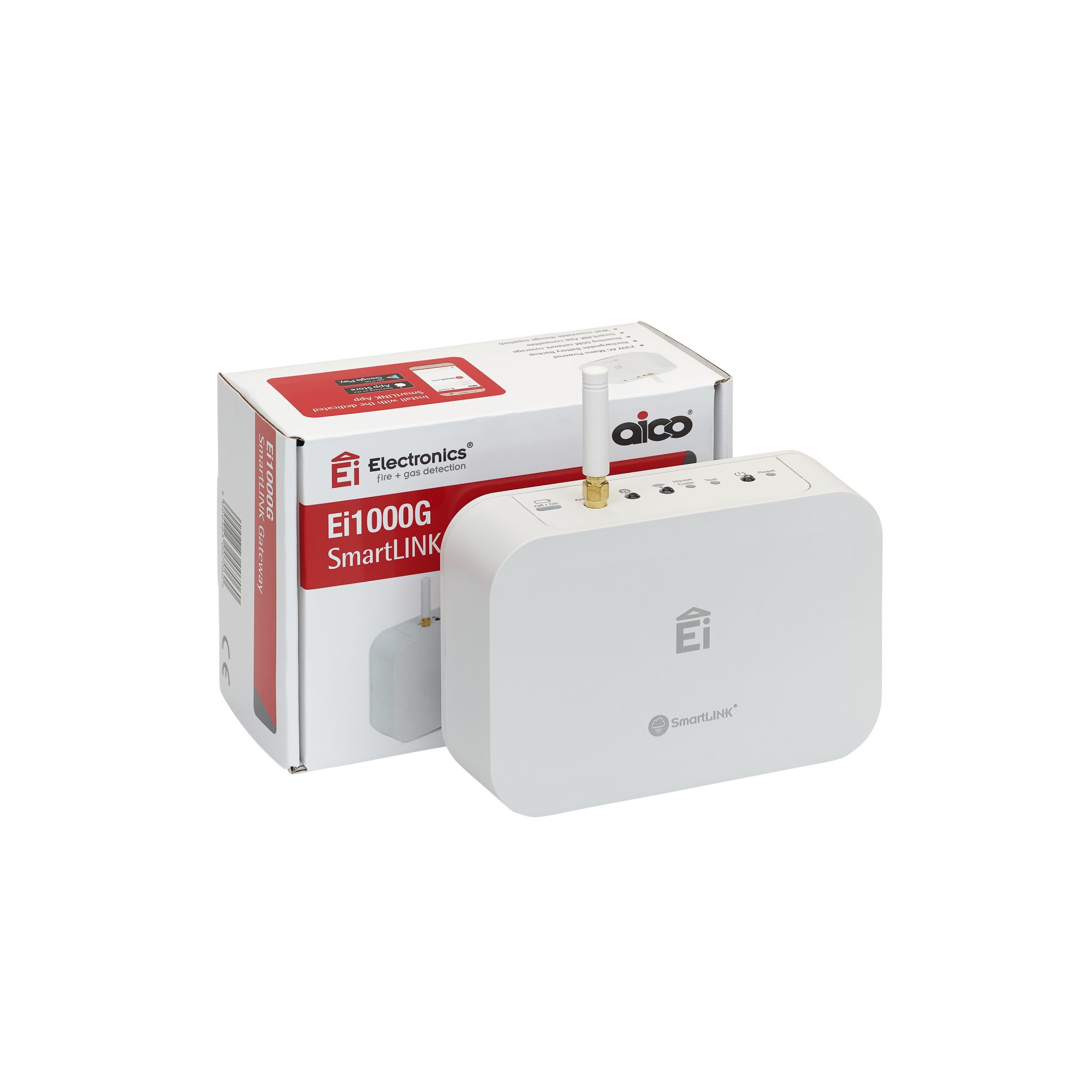
The Hyde Group is utilising Aico’s Ei1000G SmartLINK Gateway to provide a solution-focused approach to asset management that assures the safety of its tenants. With over 50,000 homes across London, the south and south east of England, the Hyde Group is taking a proactive approach to the management of its housing stock. Hyde ensures that as many of its homes as possible are occupied, redeveloping those that are not and improving the efficiency of operations through strategic asset management. Keeping all residents safe from fire is paramount and asset management is a route to achieving this.  In order to mitigate risk and monitor the alarm systems within their properties, Hyde collaborated with Regional Specification Manager of Aico, David Cunningham to provide a solution that was cost effective, met the requirements for Hyde and ensured minimal disruption for their tenants.  The installation of the new Aico SmartLINK Gateway was recommended to provide real-time data insight into the fire alarm system, reporting events such as alarm head removals and fire alerts. Each of the properties have now been fitted with an Ei3024 Multi-Sensor fire alarm and Ei1000G Gateway, giving Hyde a proactive approach to fault-finding, defining any trends in alarm activations and maintenance requirements, while drastically minimising the issue of property access. The Ei1000G SmartLINK Gateway utilises Aico’s next generation of wireless technology to interface the SmartLINK Gateway with Aico alarms, assuring easy installation and reliable connection. This allows full visibility of connected RF systems via an online, cloud based SmartLINK portal system.  By having this information in real time, it enables an effective, reactive approach, meaning safer homes.  “The Aico Ei1000G Gateway system enables us to proactively monitor smoke alarms in our homes,” says Compliance Contract Manager for Hyde, Jack Bernard. “The location we initially installed the system in requires an enhanced monitoring function because it suffers from false alarms and tampering. The Gateway enables us to monitor the system in real time, providing specific and usable information to offer a truly safer home.” “In the Hyde Group’s case, they were experiencing large numbers of false-alarming and tampering with the smoke alarms in their properties, resulting in an increase in callouts, maintenance, repairs and disruption to tenants,” adds David Cunningham, Regional Specification Manager for Aico.  “The SmartLINK Gateway is the perfect solution because real-time notifications alert you to any alarm activations or when an alarm is taken off the ceiling. This data insight can enable Hyde to look for trends, identify any issues quickly and rectify these with minimal disruption to the tenants.” With the Aico SmartLINK Gateway, Hyde can ensure the best quality, fit-for-purpose homes that are easier and more efficient to maintain and are fully compliant with safety requirements.

Tamlite Lighting Eliminates 10,000kg Of Plastic Waste
Tamlite Lighting has announced that it has eradicated more than half a million plastic bags from entering the supply chain over the last 12 months. The leading independent lighting manufacturer says the move to reduce its reliance on plastic, which has saved the equivalent of 10,000kg of waste in just one year, is part of its ongoing award-winning circular economy strategy. The project has seen the company invest in alternative sustainable packaging materials, such as recycled cardboard corners or shredded cardboard. In order to make such substantial savings, plastic packaging has been removed from a number of products, including LED batten and flat panel lighting ranges. With sales of these involving very substantial quantities of fittings every year, the savings rapidly add up. In addition to this, Tamlite is taking steps to ensure that all new products are plastic free, including its new downlight products. “We are witnessing an enormous global shift in attitudes in tackling climate change and protecting natural resources,” says Tamlite’s Managing Director, John Allden. “As a responsible manufacturer, we take pride in leading by example so it’s incumbent upon us to drive positive change within our operations and processes in a bid to reduce any negative impacts on the environment. “Our aim is to build a circular economy for the lighting sector. We have a responsibility to ensure our processes and products are in line with our commitment to ensuring a healthy planet for all. This is why reducing our reliance on plastic is an important part of our strategy and will help us make real strides in being more sustainable. “We have always acted responsibly with regards to recycling but we felt it was paramount to remove any non-essential plastic, as well as other non-recyclable materials, from our products. Making this change has had significant benefits, reduces our reliance on landfill, and most importantly, is helping reduce our impact on the planet.”

Brewers Say Goodlight And Go
Goodlight has announced that Brewers Decorator Centres are seeing a visible saving in energy consumption after installing high performance, energy efficient LED lighting solutions.  A total of 27,600sq-ft of showrooms are now illuminated with products from the Goodlight LED range, reportedly giving energy savings of 70-80% per fitting, reducing carbon footprint, saving maintenance costs and enhancing customer experience. Brewers opened its first shop in 1904 and has enjoyed successful growth ever since. Its centres stock a range of wallpapers, paints, varnishes and soft furnishings, supplying decorating products to tradespeople and the general public alike.  The first five stores to upgrade to Goodlight LED lighting were Haslemere, Lewisham, London Victoria, Sevenoaks and Surbiton. Energy hungry fluorescent tubes and metal halide high bays were replaced across the stores with Goodlight G5 LED Battens, GX1 LED High Bays and Eco LED Panels. In addition to the significant energy cost savings, the guaranteed five year, 50,000 hour service life of Goodlight LED luminaires produces considerable maintenance cost savings compared with the rated 20,000 hour life of typical fluorescent tubes.  “Since installation, our running costs have reduced and the lighting levels across our sales areas have improved dramatically,” says Paul Dennington, Premises Manager at Brewers. “The Goodlight LED lighting provides bright, welcoming illumination allowing customers to accurately evaluate our products. We are certainly considering future installations.” Goodlight supplied Brewers with 4ft 40W G5 LED Battens as a direct drop-in replacement for the outdated twin 4ft T8 fluorescent battens drawing 72W in its Haslemere store, producing electricity cost savings of 80%. Delivering very high levels of output and offering 110 Lm/W, the G5 features a 120° beam angle for optimal light spread. Available in daylight, natural and warm white colour temperatures, the G5 is glass-free and maintains an attractive appearance for showrooms as well as being robust and durable in workplace environments.  The Lewisham and Surbiton showrooms were fitted with the highly reliable GX1 High Bays, in 120W, offering up to 125Lm/W.  These replaced the inefficient metal halide high bays that were in-situ previously, reducing electricity consumption by up to 70% per fitting.   Goodlight supplied Brewers Sevenoaks and London Victoria stores with ultra-thin, 600mm square Eco LED Ceiling Panels that draw just 40W, replacing quad 2ft T8 fluorescent tubes drawing 72W per fitting, to give energy cost savings of up to 80%. They are designed to slot easily into existing ceiling grids and offer beautiful, even illumination.  These LED Ceiling Panels deliver up to 100Lm/W brightness and are ideal for retail spaces. “Brewers’ energy running costs have been reduced since installing Goodlight LED lighting,” Dennington adds. “In addition, the longer life of the Goodlight LED light fittings will reduce our maintenance costs. Our aim as a company is to improve our carbon footprint, and the installation of environmentally friendly LED lighting supports this policy.”  “It is exciting to see how Brewers are realising significant and on-going reductions in their business overheads as a result of replacing inefficient lights with best in class Goodlight LED products,” concludes Saima Shafi, Sales and Marketing Director at Goodlight. “Our products are already proven in trade centres across the country and we are confident that Brewers Decorator Centres will continue benefiting from ongoing annual savings in both energy consumption and maintenance costs, alongside unrivalled, high quality lighting levels. Consistency and reliability are assured with all Goodlight LED lighting products.”

Most Public Sector Jobs Still Paid Alarmingly Late
The latest quarterly sector-wide Building Engineering Business Survey, sponsored by Scolmore, shows that payment conditions in the industry remain poor, with the majority of public sector work being paid for after more than 30 days. The survey, which included data from leading industry trade bodies ECA, BESA, SELECT and SNIPEF, found that, in Q4 2019, 65% of direct public sector and 84% of indirect public sector jobs were paid for after more than 30 days. Around half (49%) of respondents said that, in their organisation’s public sector work, clients typically inserted under-30-day payment clauses. Ensuring payment within this time frame is mandated under public sector payment rules. "It is hugely disappointing that, after all the great progress made by the public sector in integrating payment initiatives, and in the face of challenges like Brexit, flooding, Coronavirus, IR35 and Reverse VAT, Government are unable to ensure their own payment data meets basic legal compliance obligations,” says ECA Director of Legal and Business, Rob Driscoll. In addition to consistent late payment, the survey also showed that almost two-thirds of respondents (64%) were facing cash retention. “In Q4 the industry once again demonstrated its resilience but as we face more turbulent economic headwinds from unexpected shocks like the Coronavirus, construction SMEs should be shielded from unnecessary burdens like systemic late payment or the abuse of cash retentions,” adds BESA Director of Legal and Commercial, Debbie Petford. “The Government must prioritise establishing a retention deposit scheme and ensure the public sector leads by example through mandatory prompt payment.” “We have been carrying out extensive lobbying amongst members of the Scottish Parliament to encourage them to support legislation to ring-fence retention monies. This culminated in a recent Scottish Government consultation that both SELECT and its Members participated in,” says Alan Wilson, Select Managing Director. “Our message was clear: Cash retentions must be put in a ring-fenced account or scheme. In this way we are more likely to see the end of a 200-year-old measure that’s been abused to the detriment of small firms which often wait years to get retentions released.” “Along with other trade bodies, we have been campaigning for a long time on the issue of payment abuse. The knock-on effects of these payment conditions, not only stunt business growth but also impact the mental health of business owners. We need the Government to take action,” concludes SNIPEF CEO, Fiona Hodgson. In spite of this, sector growth overall appears to have remained steady in the fourth quarter of 2019. Reported actual turnover stayed the same or increased for three quarters (75%) of respondents versus Q3 2019. Turnover decreased for one quarter (25%) of respondents. The survey received 489 responses from companies across the multi-billion-pound industry, mainly regarding their performance in Q4 2019 (1 October to 31 December 2019).

Schneider Electric ‘Delighted’ To Be Part Of EDATA
Schneider Electric has issued a comment after becoming one of 15 manufacturers and 10 wholesalers that have signed up as Founder Members of EDATA, a new ‘by the industry for the industry’ product data pool. EDATA is the latest strategic initiative from the Electrical Distributors’ Association (EDA) under their EDA Data Services banner. E-commerce and digital transformation are inextricably linked to the availability of the highest quality product data, and EDATA offers manufacturers a central ‘single source of truth’ resource for uploading product information, technical data and images which wholesalers can download and serve up on their customer-facing e-commerce channels.  “We are delighted to be a part of an initiative that will provide manufacturers with up to date data,” says Nico van de Merwe, Vice President of Home & Distribution at Schneider Electric. “This will ease their workloads and provide a space where technical knowledge can be shared. We are looking forward to seeing how the data pool will strengthen their work in the long term and encourage all wholesalers to use the tool.” “The EDA is delighted to have Schneider Electric as a Founder of this new initiative,” adds Margaret Fitzsimons, CEO at the EDA. “EDATA gives the UK’s electro-technical supply chain the opportunity to say goodbye to the heavy workloads created by processing data through multiple channels and hello to enhanced ecommerce infrastructure.” EDATA currently holds information in three categories: Manufacturer Master Data, the core data needed to identify a product; Digital Assets such as images and data sheets; and Technical Attributes including dimensions, suitability and performance characteristics.  The Technical Attributes held in EDATA will be structured in accordance with ETIM, the international data model for the standardisation and classification of technical product data enabling wholesalers to enhance their web sites with powerful product searches and filters.  The EDA has led the ETIM initiative for the UK’s electro-technical sector since 2017.

Scottish Government Announce Climate Emergency Projects
Ivan McKee, The Scottish Trade Minister, has announced funding for two new climate projects. The projects will demonstrate businesses, academic and public sector collaboration in transitioning the country to a low carbon economy and will be spearheaded by the University of Edinburgh and the University of Glasgow in collaboration with Schneider Electric. Following the Scottish Government’s £500,000 climate emergency collaboration project investment, the two largest universities in the country have been tasked with improving existing and future building’s performance with Schneider Electric’s smart building technologies. The University of Edinburgh’s project, titled ‘Building capacity for zero and low carbon innovation in construction and the built environment’ - will aim to improve the way buildings of the future are designed and built to reduce the impact on the climate. It also wishes to demonstrate that a 25% energy reduction in peak demand can be achieved by advanced analytics of building performance. Project partners will work together to improve the way buildings are designed and constructed in the future to minimise their impact on the climate. They will also develop and test tools that reduce emissions by improving the energy performance of buildings once they become occupied. “The severity of the threat posed by climate change and the urgency with which responses are needed cannot be overstated,” says Dave Gorman, Director for Social Responsibility and Sustainability at the University of Edinburgh. “As one of the biggest global emitters of carbon, emissions from construction and the built environment must be significantly reduced if we are to reach net zero emissions in Scotland by 2045. The public sector has an important role to play in leading this transition and this is the challenge that we and our partners will address through this ambitious project, by developing innovative solutions and fostering effective and sustained partnership working”. The announcement was made in Glasgow at a tenement property in the city where a high-tech, green retrofit will be evaluated to understand how to reduce carbon emissions from existing housing stock. Project leaders predict there is the potential for energy savings of between 75% and 90%. The University of Edinburgh project aims to increase capacity for zero and low carbon innovation in construction and the built environment. “We are delighted to be part of this project that will help define the future of smart buildings in Scotland,” adds David Evans, Schneider Electric’s Education Segment Lead. “We have two priorities: first, we will look at how buildings technologies can be applied to new build projects to minimize the carbon burden of estate expansion; and secondly, we need to look at how technology can reduce carbon emissions from existing buildings.” Speaking at a launch event, McKee said: “We are facing a global climate emergency and one of the major challenges is not only how we build in the future but reducing carbon emissions from existing housing stock. As these projects demonstrate, innovation plays a key part in this and will help us reach our ambitious, world-leading target to reach net-zero by 2045. We continue to engage with public bodies, businesses, communities and individuals at every opportunity to address the challenge we all face.” Professor Kenneth Gibb, Director of the UK Collaborative Centre for Housing Evidence and the academic lead for the University of Glasgow project concluded: “We are delighted to make a potentially big contribution to addressing the climate emergency in Scotland through SFC funding for this important project. “Older housing is a key source of the carbon challenge, especially our pre-1919 tenements. This demonstration project allows us to both learn about this particular form of retrofit and to assess how to scale up and provide replicable solutions across the range of Glasgow tenements.”

More Needs To Be Done To Encourage Female Electrical Apprentices
A group of respected industry bodies have praised the recent rise in female electrical apprenticeships, however say more should be done to encourage other women to pick up the tools. The Scottish Joint Industry Board (SJIB), Scottish Electrical Charitable Training Trust (SECTT), SELECT and Unite the Union all welcomed recent figures which showed that 13 female apprentices are currently training to be electricians in 2019-2020, compared to seven in 2018-2019.  This increase in female applicants overall in 2019/2020 saw 70% of those applying being taken on to the Electrical Installation Modern Apprenticeship. “In the month that we celebrated both Scottish Apprenticeship Week and International Women’s Day, it’s heartening to see more young women than ever taking up electrical apprenticeships in Scotland,” says Fiona Harper, The Secretary of the SJIB and Director of Employment and Skills at SELECT. “It’s also heartening to see that all these women are there on merit. Like all apprentices, they were required to pass an assessment before they were accepted onto the apprenticeship programme, and each demonstrated the aptitude and competence to do so. There is clearly a growing realisation among young women that being an electrical professional is a viable career. “The rise of renewables and the next generation of electrical technology is making our industry more attractive to would-be electricians of both genders, so it is now up to all of us to tap into this enthusiasm and ensure we keep a pipeline of talent – both male and female – coming through.” “These figures, although modest, are extremely encouraging and show a definite upward trend in women wanting to become electricians,” adds Anne Galbraith, CEO of SECTT. “It is a testament to the hard work of the SJIB and SECTT that these young women are now succeeding in their apprenticeships and are working side-by-side with their male counterparts. Female apprentices always do extremely well both on site and at college and are respected by their colleagues. “Over the past 30 years we have helped 20,000 apprentices realise their potential. Today we have 3,000 electrical modern apprentices, work closely with 22 approved training centres and enjoy 800 employer partnerships. However, there needs to be a concerted effort to attract even more women to take up this extremely rewarding career.” Unite the Union claimed that the Scottish Government should be doing more to encourage young women to take up electrical apprenticeships.  “Seeing the rise in female apprentices is encouraging – but just think what could be achieved if Holyrood encouraged our young women to do so,” said Scott Foley, Regional Officer for Unite the Union. “We know that there is an untapped seam of female talent out there – what we need is a concerted government campaigns and programme of investment to inspire them. If the Scottish Government was to actually help encourage more young women to become electrical apprentices, the benefits would be two-fold. “Firstly, we would help to address the skills shortage that currently affects the sector. And secondly we would demonstrate that Scotland is a progressive, forward-thinking country that encourages its young women to break down boundaries and succeed in what is perceived as a traditionally male-oriented industry.” Founded in 1969 by Unite the Union and SELECT, the SJIB regulates between employers and employees, providing benefits for people engaged in the industry, and stimulating industry progress. It also has oversight of employment, skills and proficiency, health and safety competence, wages and welfare benefits across the electrical industry in Scotland. SECTT was established in 1990 by SELECT and Unite the Union to manage the SJIB Training Schemes and today runs the only industry approved training scheme for electrical apprenticeships in Scotland. SELECT is Scotland’s largest trade association. Founded in 1900, it has nearly 1,250 member businesses with a collective turnover of approximately £1bn, employing more than 15,000 people and 3,500 apprentices.

ABB adds Cylon Controls to its smart buildings portfolio
ABB has agreed to acquire Cylon Controls. The acquisition enhances ABB's Electrification business’ position in the commercial buildings segment. Dublin-headquartered Cylon, which has approximately 100 employees, provides building automation and HVAC control solutions, delivering operational efficiency, energy and comfort solutions for commercial and retail buildings, schools and healthcare facilities. Speaking about the portfolio additions to the smart building business, Oliver Iltisberger, ABB’s Head of Smart Buildings, says, “The acquisition will further enhance our portfolio of solutions for the commercial buildings segment, with a particular focus on delivering new innovations in energy optimisation and comfort.” Sean Giblin, Chief Executive Officer of Cylon, adds, “We are very excited to become part of ABB, a company that shares our commitment and passion for increasing comfort, energy and operational efficiency within buildings.” The parties agreed not to disclose the purchase price.