2 November 2026
Product of the Month: Amari Floodlight range by Aurora Lighting
 
12 November 2026
Schneider Electric transforms Southampton hospital estate
 
12 November 2026
GTEC Training opens new education facility in North Yorkshire
 
11 November 2026
Energy, AI and smart buildings: register now for EMEX 2026
 
11 November 2026
Solar and batteries could cut electricity costs by 40%, data finds
 

Latest News


LCL Awards helps plug the EV demand
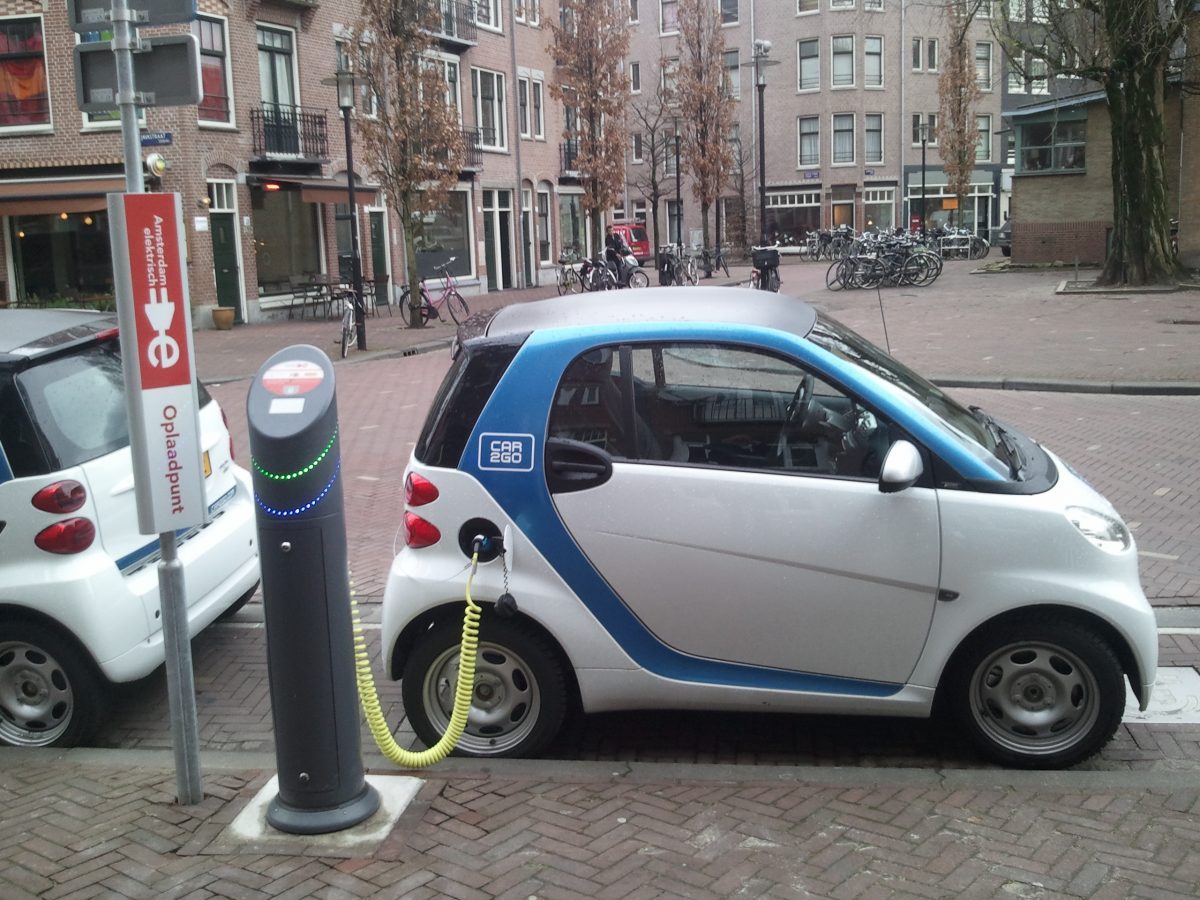
In response to a growing demand for electric vehicles, LCL Awards has developed a new EV charging qualification titled 'Level 3 Award in the Installation and Commissioning of Electric Vehicle Charging Equipment in Domestic, Commercial and Industrial locations'. The course has been introduced to help electricians take advantage of a marketplace that has grown significantly over recent years. The government is aiming for at least 50% of new car sales to be ultra-low emission by the year 2030, with £400 million invested to accelerate the roll-out of charging infrastructure, creating many more jobs for suitably trained installers. Other factors driving demand include the Government's recently published consultation document that proposes a change to building regulations that would see EV charging points mandatory on all new domestic and non-domestic buildings, and all existing non-residential buildings. There's clearly an urgent need for electrical engineers with the skills to fit a the EV charging network. The Level 3 Award in the Installation and Commissioning of Electric Vehicle Charging Equipment in Domestic, Commercial and Industrial Locations is aimed at practising electricians, electrical technicians and engineers with experience in electrical installations and associated testing. The qualification covers the installation of dedicated charging equipment for electric and plug-in hybrid road vehicles (PHEV), and extended range electric vehicles (E-REV). Both AC and DC charging equipment is included, complying with BS EN 61851 and "The Code of Practice for Electric Vehicle Charging Equipment Installations". LCL Awards' new EV charging qualification is available from its approved centres throughout the UK.

London furniture shop in the spotlight
When furniture shop, Davidson, wanted to change its LED lighting system at its showroom in Chelsea Harbour, London, it opted for Yori Evo fittings from Reggiani. Davidson is a family-run company that designs, manufactures and installs bespoke, high-end furniture. It works with interior designers, architects, project managers and private clients to provide elegant, unique pieces worldwide. The original lighting system incorporated wide-beam spotlights that created unwanted glare on the furniture on display and didn’t show the exquisite pieces to their best potential. Lighting Design International (LDI), based in Hammersmith, was approached with a brief to find the right specification of spotlight to eliminate the glare issues and literally show the space in a new and better light. LDI chose Reggiani’s Yori Evo Box system for its colour rendering index (CRI), a good range of beam angles, and the assortment of accessories to choose from to achieve the perfect illumination via honeycomb louvres and softening lenses. Working closely with Reggiani, LDI devised a system using a mixture of narrow and medium-beam matt black spotlights that would ‘pinspot’ and highlight each piece of furniture and decorative artefacts on display to make them stand out and provide real impact throughout the showroom. Using a three-circuit track clip-in system in two and three metre lengths, the medium-beam spots were interspersed between narrow spots over the furniture, specifically arranged to highlight each individual display area within the showroom. Spotlights equipped with a softening lens were used on the wall art, with some spotlights fitted with honeycomb louvres for other areas in the showroom to diffuse any glare.

EDA publishes state-of-the-sector research findings
Research released by the Electrical Distributors’ Association (EDA) shows that in-person support offered by wholesaler trade counter teams is still a highly valued resource for electrician and contractor customers, despite the proliferation of ecommerce channels. This is just one of the findings in the EDA’s Sector Survey 2019, the Association’s latest piece of substantial research. Manufacturers, wholesalers and contractors were asked to share their views on six themes: biggest business challenges; product quality and new competitors; quality, price and validation; ecommerce attitudes; challenges of digitalisation; and information channels. Ecommerce channels dominated the results, presenting the biggest concern for wholesalers, with contractors and manufacturers more troubled by issues surrounding product availability, quality and price. A significant disconnect occurs between wholesalers and contractors on the subject of price: 88% of wholesalers said their customers asked for the lowest price even if the brand was unfamiliar, with 80% of contractors declaring the opposite. Margaret Fitzsimons, CEO at the EDA, comments, “The survey results, analysis and commentary will spark discussion and dialogue along the three-step supply chain, as businesses wrestle with the challenges and opportunities presented by ecommerce and the buying habits of millennial contractors and electricians. “Wholesalers have an opportunity to leverage their trusted-intermediary status, providing vital support to their customers as part of a multi-channel presence that also delivers the high levels of service and efficiency that we are all so used to as consumers. “There is also trepidation about the quality and reliability of products available on the market, particularly the unfamiliar names, with all three audiences scoring high levels of concern. “The results provide interesting topics on which the industry can work together, and we look forward to collaborating with trade associations above and below us in the electrotechnical supply chain.” The EDA Sector Survey 2019, which includes comments from the EDA’s President, Chris Gibson, and the CEOs of ECA, BEAMA, the LIA, and the British Cables Association, is available to download from www.eda.org.uk and is also published in the EDA’s Yearbook, which is available from mid-October.

Ellis clamps help to secure Bahrain's infrastructure
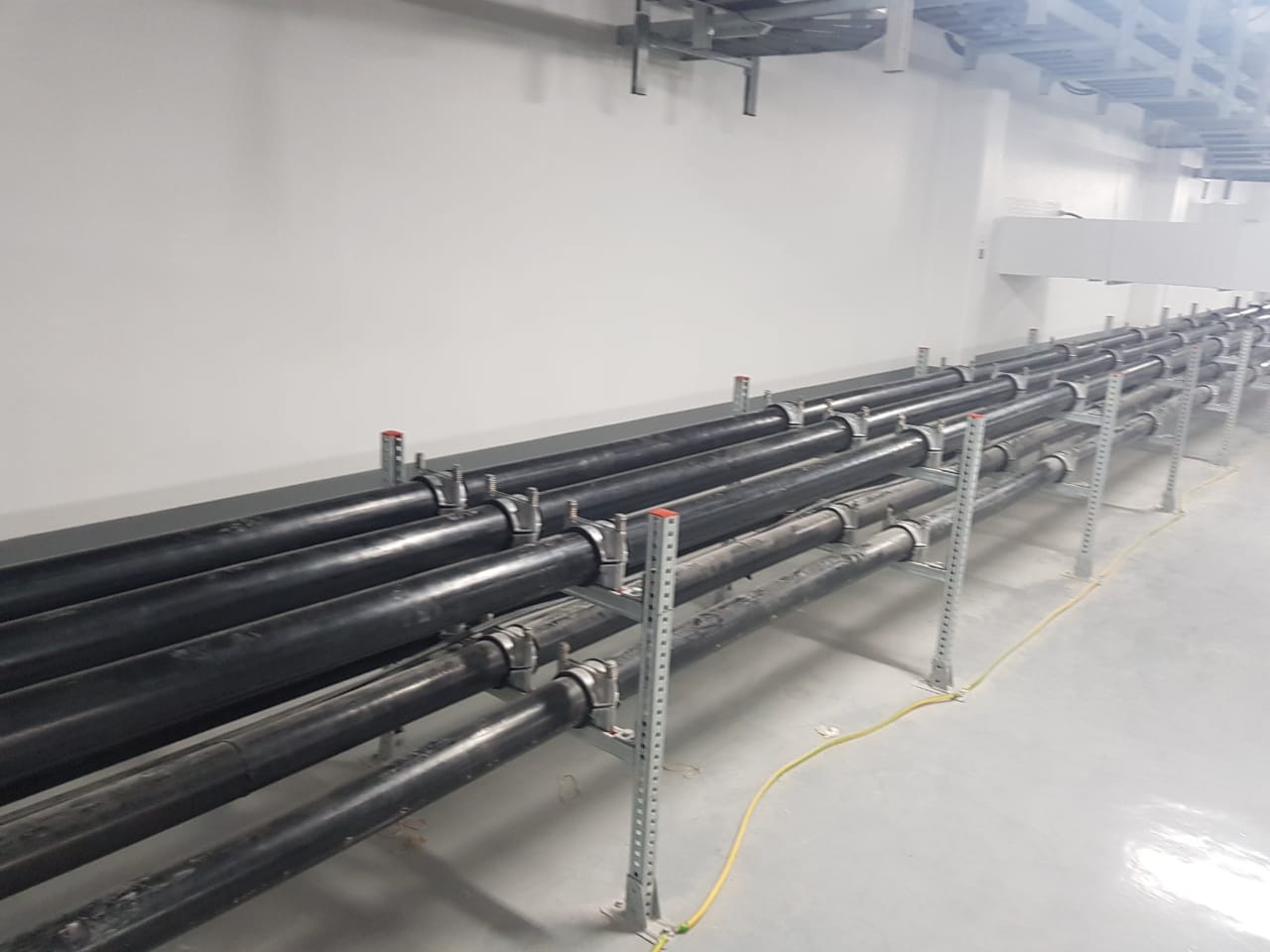
Cable clamps designed and manufactured by Ellis in North Yorkshire have been used to secure electrical cables in Bahrain that are being laid as part of a $4 billion (£3.2bn) project to enhance the Middle Eastern kingdom’s water and electricity networks. Aimed at enabling Bahrain to comfortably accommodate its growing population and support its economic progress, the project involves an upgrade of the main backbone transmission network to 400kV, with three main transmission substations being built in Hidd, Umm Al Hassam and Riffa. Ellis’ 2A Aluminium cable clamps and special compression springs were specified through Bahrain-based distributor, Amad Baeed Electrical WLL, by Korean cable specialist, LS Cable and System. Tony Conroy, Ellis’ Sales Director, comments “The scale of our export operation really does differentiate us from the majority of our competitors, and this project shows exactly why – a UK designed and manufactured product, sold to a Korean contractor and installed in Bahrain. “At present, we have distributors in 39 countries and actively export to more than 40, meaning that we can confidently state that whenever a major project comes to being specified, our name will always be in the frame.” Ellis’ 2A Aluminium cable clamps are manufactured from LM6 aluminium and are available in sizes ranging from 38mm to 168mm. Primarily used in transmission and distribution projects in unpolluted environments, they can also be supplied with an epoxy coating for use in harsher environments, and Neoprene liners for additional cable protection. Amongst the key benefits of Bahrain’s 400kV upgrade is that it will raise the capability and reliability of the kingdom’s power network, and importantly reduce the issues of the high short-circuit levels in various parts of the network to a safe level. When short-circuit faults do still occur, Ellis’ cable clamps will ensure the affected cables remain in place and that any supply downtime is kept to a minimum. The Riffa substation where Ellis’ cleats are currently being installed is due to be in operation in late 2020 or early 2021.

Bureau Veritas issues direct current warning on RCDs
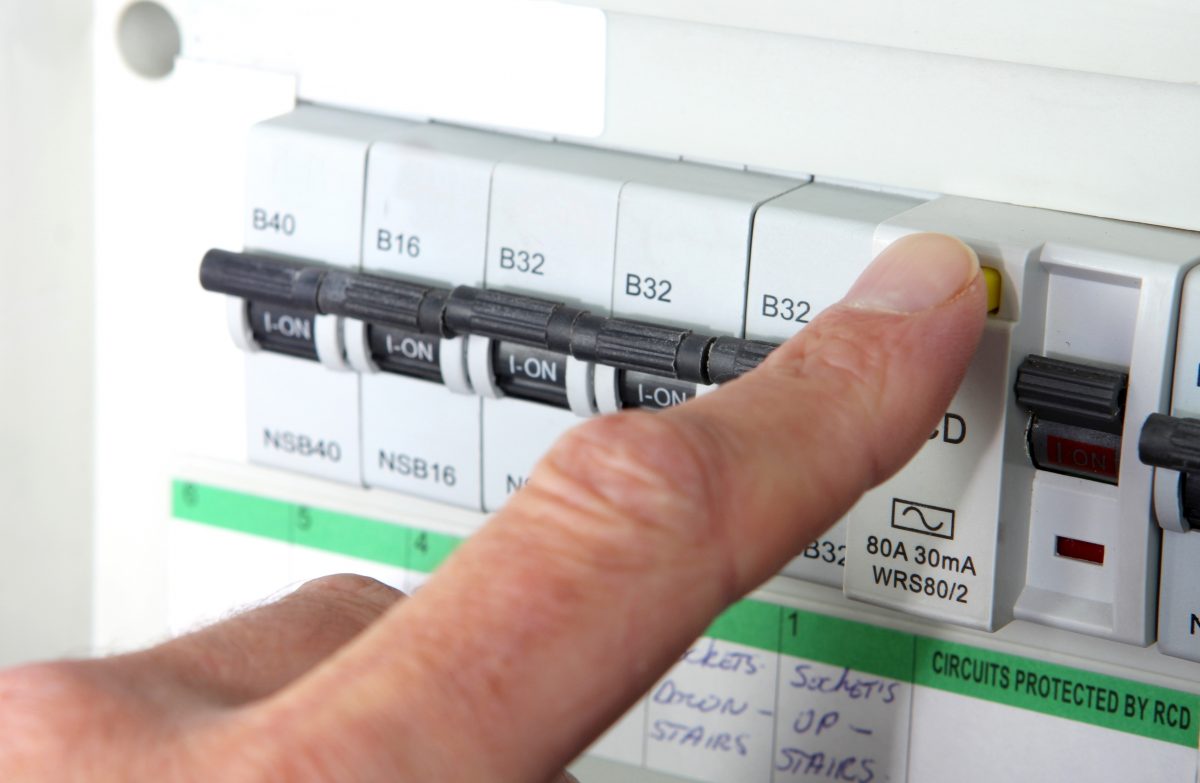
With the 18th Edition of the IET Wiring Regulations including updated guidance on the use of various types of residual current devices (RCDs), Bureau Veritas is warning that a rising number of AC type RCDs are being adversely affected by direct currents (DC) from electronic devices and renewable energy sources. It comes amid the growing use of RCDs over the years, with AC type RCDs often promoted as the first choice, particularly since 2001 where the 17th Edition (amendment one) directly stated that AC type RCDs should be used for sockets that might supply outdoor equipment. However, according to electrical safety expert, Bureau Veritas, as more and more homes, commercial and industrial sites are now using electronic equipment and installing renewables such as solar PV, many of these RCDs may well be not fit for purpose – putting an increasing number of people at risk. Michael Kenyon, Technical Manager at Bureau Veritas, explains, “Modern electrical installations are now, more than ever, incorporating technologies and products that manipulate the current wave forms. These devices such as Solar PV and electric vehicle chargers could be leaking (direct current) back into the electrical system and saturating the iron core of the AC type RCDs which are not designed to handle it. “This is a particular problem when dealing with poor quality electronic equipment or substandard installations, as DC leakage current can be created by faulty equipment such as solar PV, EV chargers, variable speed drives, and even faulty mobile phone chargers or USB sockets. Inevitably, we’re seeing RCDs being increasingly affected by DC – putting many people at risk.” As an independent electrical specialist, Bureau Veritas suggests the industry, instead, looks at using A or B type RCDs that are specifically designed to offer protection against alternating and pulsating direct – as stated in the recent rewrite of 531.3 of BS7671. Kenyon continues, “The rewrite of 531.3 has certainly led to an increased awareness of the different type of RCDs on the market. But in terms of promoting best practice, at the moment, it just doesn’t go far enough in recommending the use of A type RCDs. In fact, regulation (531.3.3) still states that for general purposes, type AC RCDs should be used coupled with disincentive that type A RCDs are still much less readily available. “From our experience, we’d recommend A type RCDs for general use, although going forward this will need to be supported by regulation, the industry and even manufacturers, as nine out of 10 devices found online were still AC type and the A type devices remain significantly more expensive. “Specifying the correct RCDs can be a technical and complicated area, and currently there’s a knowledge gap within the electrical industry about the risks of using AC type RCDs in modern installations. That’s why it’s important, now more than ever, to ensure every electrical installation is safe and fit for use – and the best way to do this is through regular testing and inspection.” Bureau Veritas offers a range of testing and certification services to support customers in managing compliance around electrical safety in general for new and existing installations or for specific areas, such as electric vehicle charging points.

UK Construction Week Survey Reveals Half Of Construction Industry Suffering With Mental Health Issues
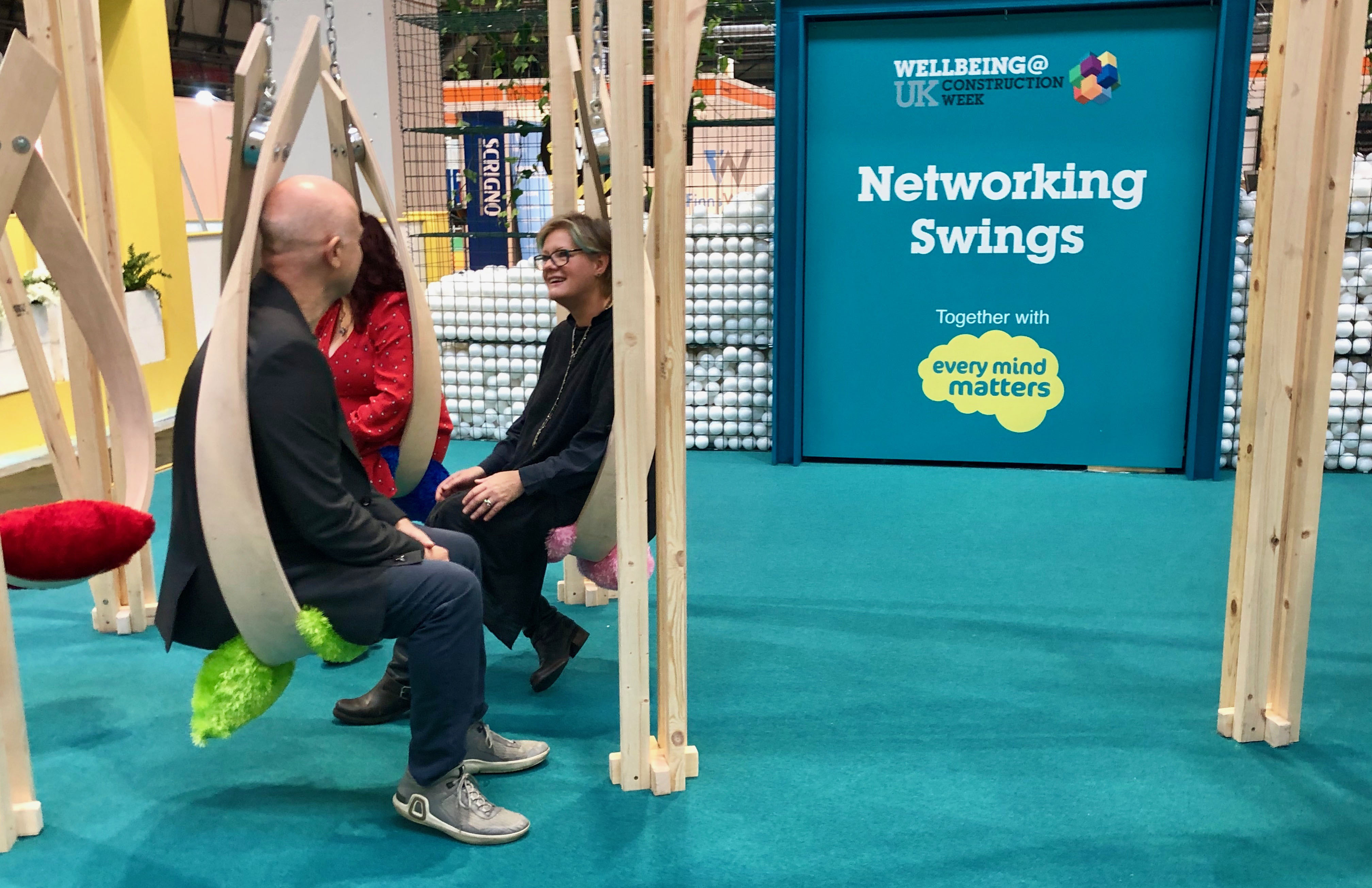
The largest event in the history of the UK construction industry to address mental health issues in the sector opens today (Tuesday 8 October), as part of UK Construction Week. The focus on mental health and wellbeing at this year’s show is in response to the latest research results which paint a picture of an industry that desperately wants more mental health support. The most recent survey conducted last month on behalf of UK Construction Week revealed that over half of people in the construction industry have suffered mental health problems at one point in their lives. Six out of 10 people (58%) working in construction have suffered from mental health problems due to their work, most often stemming from financial issues (45%), long hours (41%) and the physical strain of the job (41%). Despite this, only four out of 10 (44%) have actually spoken out about it at work – and this figure rises to 71% for those aged over 55. Over a third of respondents (37%) admitted that they had taken time off work due to their mental health, with only 64% of those telling their employer the reason why. The problem is particularly acute among the 18-34 age group. When asked who they would turn to if they were to experience any mental health issues, most construction professionals felt they would be most comfortable talking to a dedicated mental healthcare professional (30%), followed by someone who they get on well with at work (27%). A chat with a friend is considered the most effective mood-booster for a bad day at work, according to respondents (50%), followed by music (46%), exercise (38%) and food (32%). However, most importantly, over half of all respondents (56%) felt there was more their organisations could be doing to support the mental health of workers. Of the support services that they thought would be most beneficial, top of the list was free counselling (39%) or flexible working (39%), followed by a dedicated trained person to speak to (35%), an on-site quiet space (27%), and an anonymous helpline (24%). Interestingly, there were differences between men and women in the industry about what was needed most.  Women are more likely to prefer allocated wellbeing days (30% vs 17%), an on-site quiet space (34% vs 24%), and flexible working (52% vs 35%) when it comes to tackling their mental health at work. Men are more likely to prefer anonymous helplines (26% vs 21%). Some of these support services are provided by the mental health charities working in the construction industry, including Mates in Mind and the Lighthouse Club’s Construction Industry Helpline. Nathan Garnett, event director at UK Construction Week, said: “Awareness about the importance of mental health has grown throughout the construction industry in recent years. However, the industry still has a way to go in normalising open discussion about this aspect of health and wellbeing. That’s why we put together the Wellbeing Zone at this year’s UK Construction Week. We’re using the country’s largest construction event to host the industry’s biggest discussion and support initiative on mental health, swapping hard hats for hard chats. Through signposting to counselling, free employer advice and the simple sharing of stories, right through to yoga and meditation sessions, exercise and sporting challenges, this year’s UK Construction Week is designed to help as many people as possible, culminating on Thursday 10 October to celebrate World Mental Health Day.”  Wellbeing features at UK Construction Week include: An installation of relaxing swings made by master craftsman Carwyn Jones, in a Wellbeing Zone full of advice and information on mental health support run in association with the NHS’s new Every Mind Matters initiative. The launch of the Mind Your Head campaign, which features a ‘Material Support’ gallery, a collection of artwork made from construction components. There will be mental health experts who work in construction and practical advice available from an onsite therapist.   A multi-sports tournament and cup involving football, netball and touch rugby, organised with STEAM, a mental health charity which promotes wellbeing in construction through sport and exercise. Free yoga and meditation sessions every morning of the show. Free advice workshops for employers in the Working Well Together Theatre , including sessions on how to manage the issue of alcohol and drugs effectively in the workplace and mental health in the workplace - an industry perspective.   UK Construction Week (UKCW) finishes on 10 October, which is World Mental Health Day, so the theme runs strongly throughout the three days.    UKCW is one event with many sections, including Build sponsored by Easy-Trim, Building Tech, Civils, Energy and HVAC, Surface and Materials, and Timber. It also features Concrete Expo (8-9 October only) and Grand Designs Live (9-10 October only). Single registration gives free access to all areas of the show. Last minute tickets are still available via the website www.ukconstructionweek.com. 

Red Arrow Trading rebrands with focus on lighting
Red Arrow Trading has been rebranded as Red Arrow Electrical Distribution (RAED). In addition, the company has opened a new manufacturing centre in China, which promises to offer customers a full lighting design service. Previously Managing Director of Crompton Lamps, Michael Crossley has acquired Red Arrow Trading and is transforming the business into a streamlined, quality-focussed manufacturer and distributor fit for today’s marketplace, with a key focus on lighting. After rebranding as Red Arrow Electrical Distribution (RAED) in May this year, the company's 4,000 plus customers can still expect competitively priced products, but they will now also benefit from superior quality and much faster service delivery. ECN spoke with Crossley, and his Sales Director, Graham Lewis, to find out more about the new business transformation. Starting with the removal of the less popular trading items, Crossley assures us that customers will now enjoy easier access to RAED’s 3,000+ strong product range, as well as an exciting new selection of lighting products planned for 2020. He comments, "We are in the process of integrating ISO9001/14001 accreditation and streamlining our offering. By removing some trading items, we can develop our key area of strength - lighting. This means we are now able to offer all our customers a full lighting design service.’ Plus, with a complete overhaul of both stock management and delivery across the brand, RAED can ensure much faster and more reliable delivery services. "We have moved from a third-party service offering to operating our own supply service via our specialised distribution point near Milton Keynes," Crossley adds. "Holding more than £5m worth of stock in more than 100,000 square feet, this has vastly improved our service delivery." Working alongside Crossley is Graham Lewis, Sales Director at RAED, who is eager to "service electricians the best we can through our increasing network of distributors across the UK and Ireland". And leading this transformation with Lewis is RAED’s new management team: a group of lighting industry experts with 60+ years’ experience working for companies such as OSRAM, Siemens, Cooper Lighting, Crompton Lighting and Crompton Lamps. "We want to work closely with existing and new customers to show them how dedicated the RAED team are, and how the changes we’ve outlined will benefit them," Lewis enthuses. "And thanks to our new manufacturing plant in China – which is managed by a team of highly experienced supply chain and compliance specialists – we’ll be introducing better quality product offerings to the marketplace very soon." But it’s not all change at Red Arrow Electrical Distribution. The website’s URL, contact details and core staff have remained the same – minimising any potential disruption for customers.  

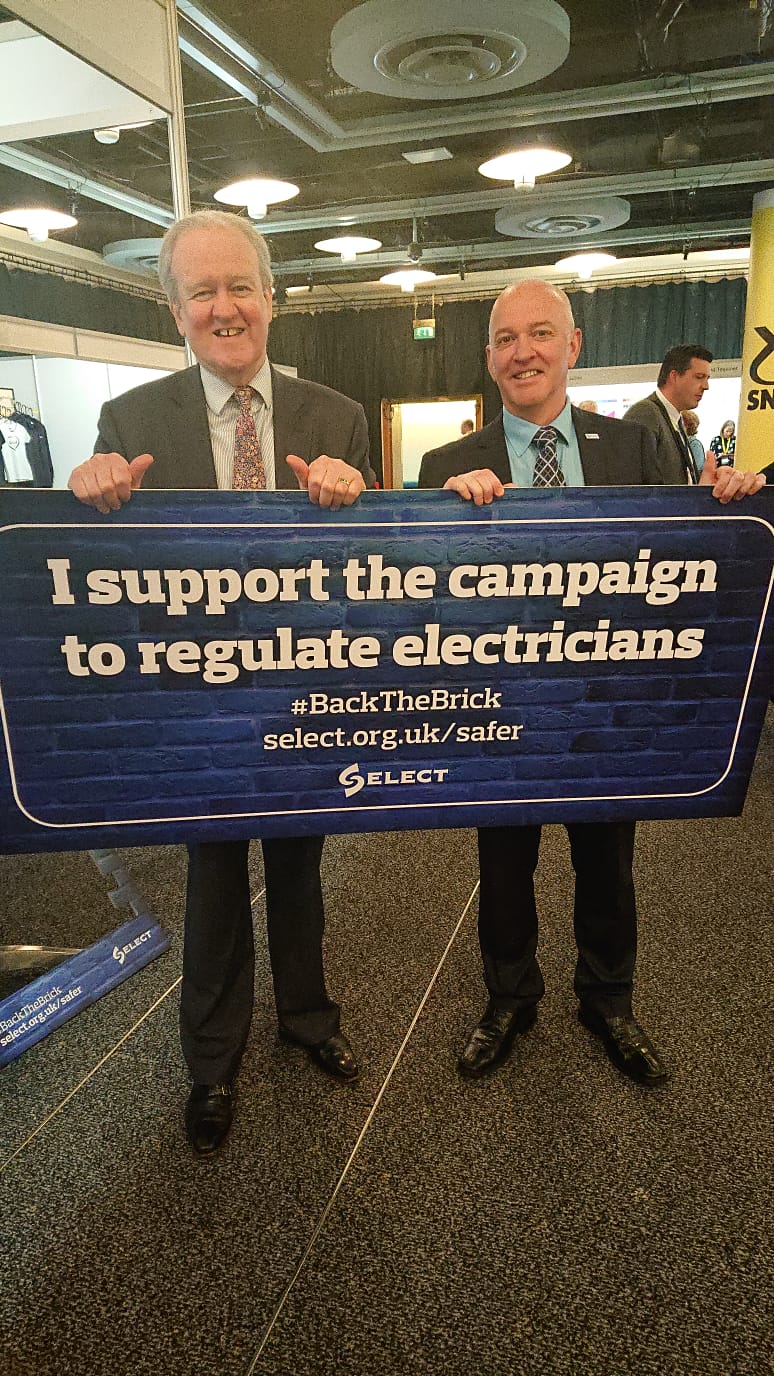
North East MSP Backs Call For Professional Electricians’ Standards In Scotland
MSP Stewart Stevenson has called for support for better regulation of the electrical trade across Scotland by making sure that anyone calling themselves an electrician is actually qualified to carry out the work. It has been estimated that as many as 16% of all domestic electricians operating in Scotland are either unqualified or under-qualified. The representative for Banffshire and Buchan Coast has given his backing to the long-running campaign led by trade association Select for the recognition of electricians as a profession. The SNP member joins MPs and MSPs from the Liberal Democrats, Conservatives, the Greens and his own party on Select’s Wall of Support. “I am delighted to add my support to Select’s campaign urging for the regulation of all electricians in Scotland,” said Stewart. “It is important for both safety and professionalism that we ensure anyone calling themselves an electrician holds appropriate qualifications. Introducing a title of recognition will create greater trust between consumers and industry and should be standard practice in all types of construction work, be they multi-million-pound contracts or small domestic jobs.” Mr Stevenson’s endorsement comes amid a growing swell of support for the campaign. As part of its 2019-20 Programme for Government released last month, the Scottish Government has pledged to publish a consultation on the regulation of electricians. “We would like to thank Mr Stevenson for adding his support to this vital cause,” said Alan Wilson, Managing Director of Select. “Improving the regulation of electricians will not only better help to protect people’s lives, but also has huge benefits for the wider Scottish economy. We are also delighted that the Scottish Government has committed to examining this issue, but continue to urge prompt action – this needs to happen sooner rather than later.” Others who have contributed a brick to the ‘Wall of Support’ include the Scottish Joint Industry Board, Unite the Union, Electrical Safety First, The Royal Institution of Chartered Surveyors (RICS), the Scottish Association of Landlords (SAL), the Specialist Engineering Contractors’ Group (SEC) and the Energy Saving Trust.

J S Wright Secures 70-Apartment £1.5M Development Contract
Mechanical and electrical building services provider, J S Wright has secured a deal worth more than £1.5 million for a major new development of affordable housing in east London. The Birmingham-based company, which has an office in central London, is to fit out all 70 apartments and communal spaces at Jolles House on Bromley High Street in Tower Hamlets. The one to three-bed all-affordable scheme is being developed within two linked six-storey buildings by housebuilder Hill to help meet a growing local need for high-quality affordable accommodation. J S Wright will design and build the heating, hot and cold water, drainage and ventilation services for the landscaped development on the site of the previously demolished Jolles House and Blue Anchor public house. The energy efficient and carbon-reducing systems and services will include a low-pressure hot water (LPHW) heating system with distribution pipework to feed radiators in all the apartments, as well as a cold-water plantroom to deliver boosted cold water as part of the domestic hot and cold-water services. J S Wright will also supply and install a heat interface unit (HIU) in each apartment as a bridge to deliver instant hot water on demand and hot water to the radiators at low return temperatures. The installation of sanitaryware, above ground drainage and internal rainwater systems are also part of the commission.  In addition, the company will fit a mechanical ventilation heat recovery (MVHR) system, which recovers outgoing air from each apartment to heat incoming fresh air, and dry risers and domestic sprinklers for fire protection. It will also provide building management controls, including a pre-payment billing system for each apartment’s energy use, and 12 months’ maintenance. Work on site on the 12-month project is scheduled to start this month (October 2019). The contract follows a recent £5million commission from Hill for J S Wright to design and build the mechanical services for 201 affordable apartments in the fourth and biggest phase of its New Union Wharf development on the Isle of Dogs, for housing association L&Q, which is due for completion in late 2021. Phil Leech, Managing Director of J S Wright, said: “We are delighted that a development partner with whom we enjoy an excellent association has again turned to our design and build expertise to help meet the growing need for high-quality affordable homes as part of east London’s ongoing regeneration.” Established in Birmingham in 1890, J S Wright was voted one of the UK's Top Ten Specialist Contractors to Work For in the 2016 Construction Enquirer Awards and was a finalist in three categories in the 2018 H&V News Awards.

IET urges electrical industry to have its say on IET Wiring Regulations
The Institution of Engineering and Technology (IET) is calling on the electrical industry to have its say and influence the content of Section 722 – Electrical Vehicle Charging Installations – as part of Amendment 1 of the IET Wiring Regulations, following the release of the Draft for Public Comment (DPC) for BS 7671:2018+A1:2020. The amendment follows advances in technology enabling a more practical solution for electric vehicle charging installations. The amendment, which is due to be published in early 2020, will be free to view on the IET and BSI websites and will form part of a consolidated version of BS 7671 following the next major amendment, expected in 2022. The DPC is available on BSI’s website, and industry is invited to view the draft and submit comments by the deadline of November 30, 2019. Dan Palmer, Associate Director of Committees at BSI, comments, “The UK is leading the electric revolution with ambitious plans to deliver cleaner air and a better environment by committing to 50% of new car sales to be ultra-low emission by 2030. The built environment and electrical infrastructure is the first step on the journey to making these green plans possible. "BS 7671 Requirements for Electrical Installations (the IET Wiring Regulations) has been updated in Section 722 to make the installation of electric charging points quicker, easier and less costly. It will help to make electric charging common-sight on UK streets and fuel the growth of the electric car usage.” Mark Coles, Head of Technical Regulations at the IET, is proud of the way that the technical committees have been able to respond to the changes in technology. He explains, “Technical committees have been able to address a new opportunity for electric vehicle charging installations that provides a practical solution benefiting industry, consumers and government alike, to help the UK lead the way in the roll-out of infrastructure to support the electric vehicle revolution. “This update to the IET Wiring Regulations puts the electrical industry at the forefront of driving technological innovation to ensure the installation of practical, safe charging points that are accessible to all. “By producing Amendment 1 to BS 7671:2018 as a standalone, free-to-view document, this updated Section 722 will reach industry much quicker than a full, consolidated amendment would allow, enabling installers to take advantage of BS 7671:2018+A1:2020 as soon as possible.” More information can be found at theiet.org/updates.