2 November 2026
Product of the Month: Amari Floodlight range by Aurora Lighting
 
12 November 2026
Schneider Electric transforms Southampton hospital estate
 
12 November 2026
GTEC Training opens new education facility in North Yorkshire
 
11 November 2026
Energy, AI and smart buildings: register now for EMEX 2026
 
11 November 2026
Solar and batteries could cut electricity costs by 40%, data finds
 

Latest News


Non-compliance with WEEE requirements an increasing issue
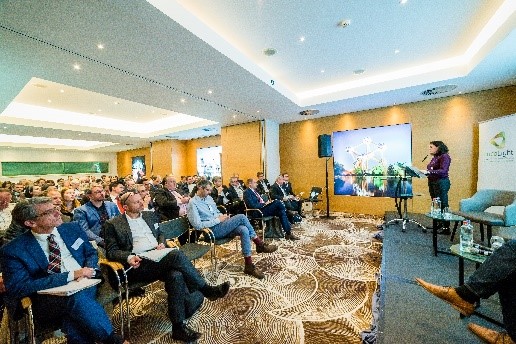
The results of a multi-national study into non-compliance of products sold through online marketplaces were revealed at a workshop hosted in Brussels on November 6, 2019 by EucoLight. EucoLight, the European Association for lighting WEEE compliance schemes, undertook a study of over 4,200 products made available for sale through online marketplaces in 10 EU countries. The results showed an exceptionally high level of non-compliance with national WEEE requirements. The non-compliance was evident across a wide range of product groups. However, smaller products, such as LED lightbulbs, were particularly problematic, with non-compliance in the range of 78-100%. Recolight CEO, and former EucoLight Vice President Nigel Harvey, says, “The high level of evasion of WEEE obligations this study has uncovered is truly shocking. This is non-compliance on an industrial scale. “It was therefore very pleasing to hear that a number of countries, including the UK, are considering a range of different solutions to address the issue. This patchwork approach could make compliance more awkward for the online marketplaces, but it is the only way to address the problem quickly.” Natalia Sierra Conde, Director of Institutional Relations of Ambilamp Spain, and Chair of the EucoLight Policy Working Group, adds, “Making multi-seller online platforms responsible for compliance is the simple solution. There are far fewer organisations reporting data, which makes audit checks and monitoring easier. And the risk of avoidance of financial obligations is much reduced.” Commenting on the outcome of the discussions, EucoLight Secretary General Marc Guiraud notes, “When considering which approach to adopt, EucoLight actively encourages all member states to require online marketplaces to fulfil the role of producer, in respect of all product brought into the national territory via their platform.”

Success for Aico’s apprentices in customer service module
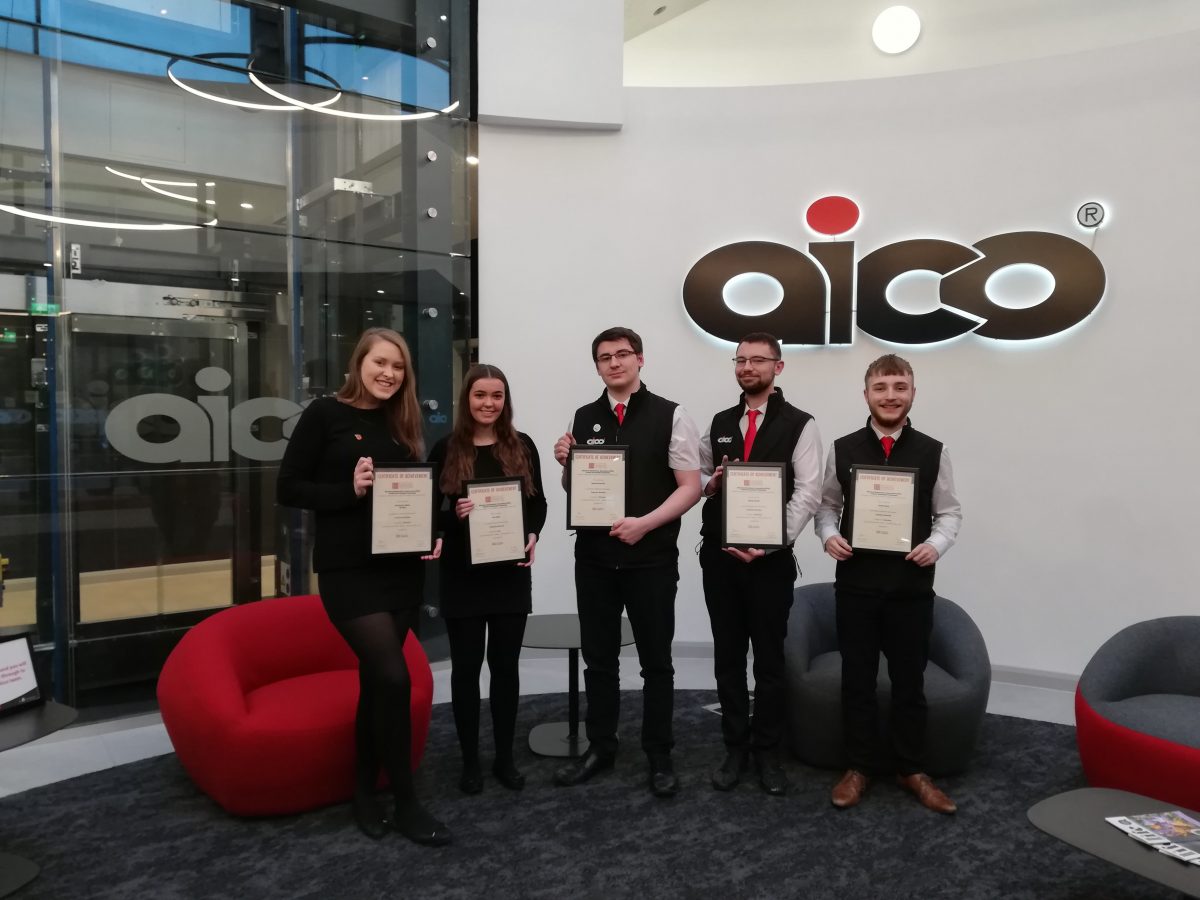
It is important to help young people in their career by supporting them with training. With this in mind, at the start of June 2019, Aico enrolled its apprentices onto the Electrical Distributors’ Association (EDA) customer services training module. The EDA is the trade association representing wholesale distributors of electrotechnical products in the UK. The EDA’s programme of 12 distance-learning training modules is available to members and affiliates and is suitable for both new recruits and for experienced professionals wanting to improve their product skills. Each module delivers professional training on an electrotechnical subject or product area, with businesses free to choose the number and combination of modules that best suits their team. Aico has had great success with the modules with all five of Aico’s apprentices not only completing the modules, but also passing with distinctions. Apprentices studied ‘What constitutes great customer service’, ‘Why getting it right first time is critical’ and ‘How to speak with more confidence to your customer’. Owen Terry, Technical Services Advisor for Aico, says, “The module has helped me to talk to customers on a day-to-day basis. I am able to use the information I learnt from the module to collect and communicate information more effectively, which has helped boost my confidence when talking to customers.” Margaret Fitzsimons, CEO at the EDA, adds, “Congratulations to all of the Aico apprentices for achieving the top grade in their first EDA module. This is a great start to your careers, and we’ll watch your progress with interest.” Aico is an affiliate member of the EDA and Michael Wright, Product Development Manager for Aico, has contributed to the content of the ‘Fire, Safety and Security Systems’ module which apprentices will be undertaking next. SBC Training supports and provides Aico with its apprenticeship training schemes and further supported by providing the learning environment for these modules. Colin Thaw, Managing Director at SBC Training, notes, “It has been great to see Aico investing in the development of their apprentices by enhancing each apprenticeship programme via the use of the EDA training modules. The success of each apprentice has been a great endorsement of their commitment to their own personal growth. The customer service module has been useful for all of the apprentices and underpins the customer driven company ethos that is paramount in the relationship that Aico has with all of its customers and suppliers, we look forward to continuing the successful rollout of the programme with other apprentices in the future”.

Business owners depressed and suicidal due to late payments
A remarkable nine out of 10 business owners across construction suffer a range of mental health issues due to payment and other business pressures, according to a survey run by leading engineering services trade bodies, ECA and BESA. The new survey, conducted in association with 25 other construction trade bodies, found that business owners have an array of significant mental health problems due to the pressures of late or unfair payment, including: • Stress (80%) • Depression (36%) • Extreme anger (38%) • Anxiety and/or panic attacks (40%) • Insomnia (36%) • Suicidal feelings (10%) Unfair payment practices also have a significant impact on employees right across a business, including CEOs, directors, managers and executives. Of all the respondents, four said they had attempted suicide as a result, while 80% reported a mental health issue. Furthermore, over four in 10 (41%) of all respondents said that payment issues had strained their relationship with their partner, with 5% reporting it caused it to breakdown entirely. ECA Director of CSR, Paul Reeve, comments, “Everybody expects business to deal with everyday pressures, but stress and other mental health impacts come from sustained and excessive pressure. It’s absolutely clear from these findings that poor payment is a serious cause of mental health issues across the industry and that the problem, far from being isolated to certain individuals, is commonplace among top management. “These problems quickly knock on to employees and families alike. Findings such as these mean that clients and other buyers need to greatly improve their approach to supply chain payment, and it’s a sad reflection on the industry that it will probably take legislation to achieve it.” BESA CEO, David Frise, comments, “Systemic payment abuse causes broken lives and broken buildings and must be stamped out. The economic damage of these practices is well known, but this survey has shed light onto its devastating human cost. Thousands of owners and workers of SMEs have struggled and suffered with this abuse for too long, and with a General Election underway, they will be reflecting upon who will most likely represent their concerns.” Over nine in 10 respondents (92%) said their business had faced payment issues. Almost two-thirds (65%) said they were paid late frequently or very frequently. The survey was held in association with the Prompt Payment Directory. Survey supporters cover a range of construction activity, including electrical, plumbing, building, scaffolding, roofing, civil engineering, fire safety, painting and decorating, and interiors. They include Select, the Scaffolding Association and Chartered Institution of Civil Engineering Surveyors. The survey supporters are all part of a wider industry coalition pressing Government to reform the practice of cash retentions in in construction. Cash retentions is widely considered to be one of the most unfair and abused payment practices in the industry. ECA Director of Business, Rob Driscoll, concludes, “The next Government must take immediate action on cash retentions and other payment abuses, by legislating for change. Doing so will help to address the serious findings in this survey and actually help construction to achieve its aspirations of delivering excellence for clients and being an industry that’s attractive to new talent.”

Buzz Electrical to host first ever charity ball
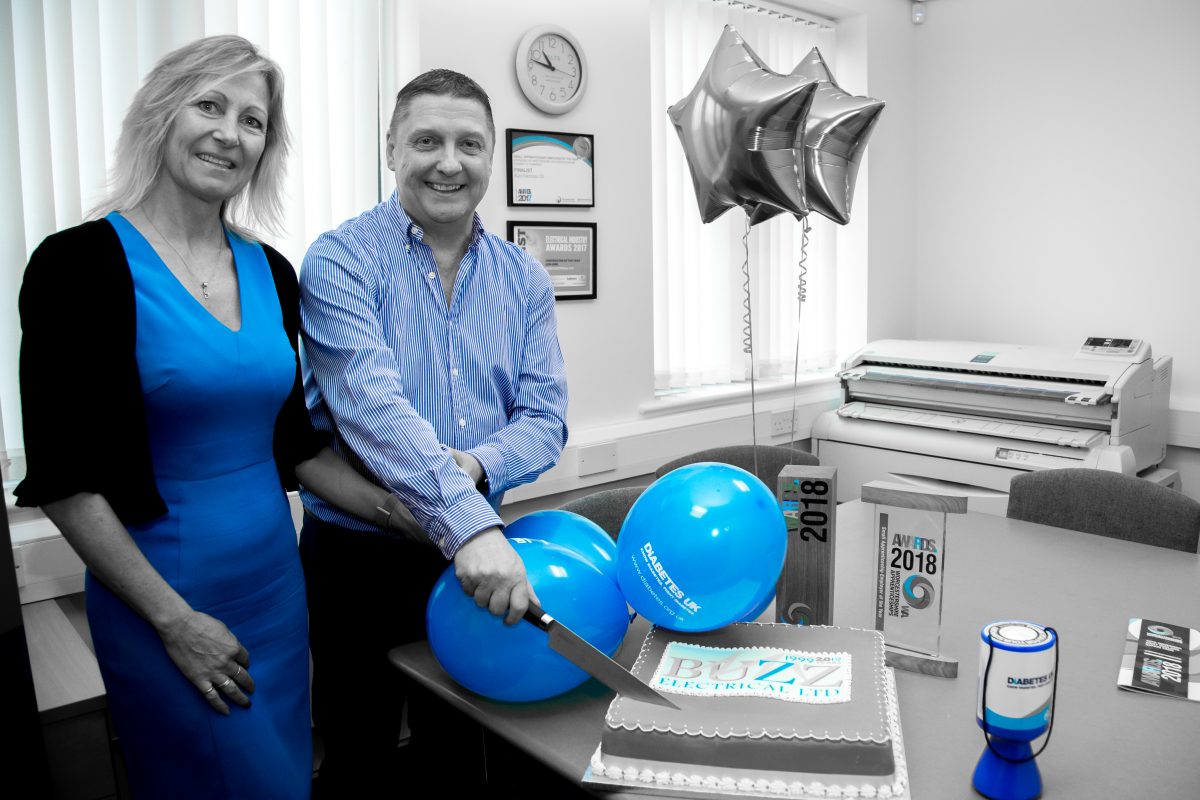
Evesham-based electrical company, Buzz Electrical, is hosting its first ever charity ball to celebrate 20 years in business, and 100 guests including customers, industry contacts, friends and employees of Buzz are invited to celebrate this special occasion. The black tie ball will take place at 7pm on November 8, 2019, at Wood Norton Hotel, near Evesham in the Orangery. The evening will include a drinks reception with live entertainment, followed by a three-course dinner, raffle, auction and dancing, all in aid of Diabetes UK, the foremost diabetes charity in the UK, and JDRF, the world’s leading type 1 diabetes research charity. Buzz is hoping to raise around £3,000 for the combined charities, and some excellent prizes have been donated by local businesses. Steve Owens, Managing Director of Buzz Electrical, says, “2019 is a momentous year for us, and we felt it was important to do something special and support a cause which is close to our hearts. This year marks the anniversary of 20 years of Buzz Electrical, and we are delighted to be celebrating with customers, suppliers, friends and our team. Having a fantastic team and working closely with our customers over the years to build strong relationships has resulted in our excellent record of customer retention and growth for the company. “The anniversary ball promises to be enormous fun, with a chance to raise awareness and funds for two Diabetes charities, which have a special meaning to us. We have been incredibly fortunate to have had local business support the event by donating some very generous prizes, and we are looking forward to Wood Norton Hotel hosting our very special evening of food, entertainment and much more.”

Fluke offers a kit solution for testing EV charging stations
Fluke and Beha-Amprobe have introduced a kit offering comprehensive testing of electric vehicle (EV) charging stations. Saving money versus buying the units separately, the installation tester/adapter kit provides access to the socket-outlets of vehicle charging stations to perform safety and functional tests, while simulating the presence of an electrical vehicle as required to be able to measure outputs. More information can be found at authorised Fluke distributors. The market for EV charging stations is growing rapidly. By introducing installation tester/adapter kits, Fluke offers a solution for testing EV charging stations. They are ideal for electricians, electrical utilities and EV maintenance companies for safety testing, functional testing and troubleshooting/repair of charging stations. The new 1664 UK-EV kit includes a Fluke 1664 FC multifunction installation tester and a Beha-Amprobe EV-520-UK EV charging station test adapter. The EV-520-UK is designed to give access to the socket-outlets of vehicle charging stations to perform safety and functional tests while simulating the presence of an electrical vehicle. The unit is designed to test function and safety of charging stations mode 3 for AC charging in combination with a Fluke 1664 FC. Main features and functions of the test adapter: Suitable for vehicle charging stations with charging mode 3 EV-connectors for type 2 and type 1 PE Pre-Test – to test the PE conductor for possible presence of dangerous voltage against earth Proximity Pilot (PP) state ‘Cable Simulation’ – enables simulation of various current capabilities of the charging cables Control Pilot (CP) state ‘Vehicle Simulation’ – enables various charging states to be simulated Separate phase indication – to check voltage is present Installation tester safety and functional tests using L1, L2, L3, N and PE measuring terminals enable connection of the installation tester Electric power meter check – a mains socket allows an external load to be connected to check the power meter works and counts correctly Simulations of CP and PE errors Terminals for CP signal output to check communication between adapter and charging stations The kit also includes an EVC-20 test cable with connector for the more common charging stations type 2 (while a Type 1-EVC-13 is also available separately). This easy-to-use connector combines both ‘socket outlet’ as well as ‘fixed cable with vehicle connector’ options in one. The test adapter is also available as a standalone unit.

ECA Warns Risk Of Major Fire Tragedy Remains After Grenfell Tower Fire
The risk of further residential fire tragedies, following the fatal Grenfell Tower fire, has been raised by engineering services trade association ECA, in its response to the ‘Raising the Bar’ consultation. In the aftermath of the blaze at the Grenfell Tower high-rise block in West London, several inquiries have concluded that installer competency is fundamental to public safety. This is particularly the case in buildings such as residential tower blocks, care homes and hospitals. However, within the electrotechnical industry, many individuals are claiming to be competent electricians despite having trained, in some cases, for only a matter of weeks. Commenting on the ECA response, ECA Director of CSR Paul Reeve said: “This week’s publication of the inquiry findings into the Grenfell tragedy underline the urgency and vital importance of ensuring that everyone who works in and on buildings, where there are vulnerable residents, must be sufficiently competent. “We should all remember we are talking about ensuring residential fire safety. It’s time to stop messing around with low levels of electrical and fire safety competency, and in particular it’s high time to say a final goodbye to so-called ‘five-week wonders’ - wrongly regarded by some as competent to design and install electrical work in residential and similar premises. ECA has mapped the way forward for our sector in our response – we need to avoid settling for lower competencies, which risks another major fire tragedy in the UK.” ‘Raising the Bar’ was prepared by the Steering Group on Competence for ‘Building a Safety Future’. Within its response, ECA supports five recommendations regarding the competence of installers:       There should be accredited third-party certification of all enterprises       All individuals must have Level 2 or 3 Ofqual-regulated and competence-based qualifications. ECA strongly advocates technical apprenticeships for new entrants       The electrotechnical sector should use the Electrotechnical Certification card Scheme (ECS)       CPD should ensure workers are up-to-date with the latest regulations and other developments       All installers should have core, relevant knowledge of fire safety in buildings, with standardised and mandatory training The ‘Raising the Bar’ consultation follows the Dame Judith Hackitt Review into the Grenfell Tower fire.

Yorkshire Water appoints Smith Brothers for £55m framework
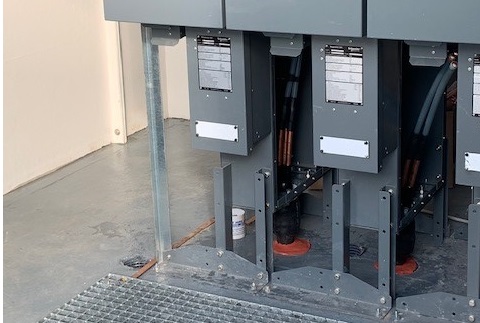
Electrical engineering firm, Smith Brothers Contracting, has secured a position on Yorkshire Water’s high-voltage (HV) electrical design, build, and specialist studies services framework – which carries a total forecast value of up to £55m. The framework will deliver high-voltage electrical works and services – including design, build, installation, refurbishment and support – alongside routine planned and reactive inspection and maintenance to Yorkshire Water’s existing high-voltage equipment. The Elland-based power contracting firm will take responsibly for all projects in the west region, for a minimum of four years – to February 2023 – with the first being the design and build of a new 11kV customer substation, and the replacement of a motor control centre (MCC). Dave Ogden, Managing Director at Smith Brothers, says, “We’ve worked with Yorkshire Water for several years, and we’re incredibly proud to have been selected to join such a significant framework. “Our reputation for providing end-to-end services across numerous EPC and maintenance projects undoubtedly worked in our favour, and we’re looking forward to a successful partnership.” Martin Priestley, Senior Engineering Project Manager at Yorkshire Water, adds, “We are confident these appointments will contribute to the consistent and efficient provision of safe, quality, reliable assets, that will in turn help us to ensure we provide the level of service our customers expect and value.” Smith Brothers is a high-voltage power engineering contractor and accredited ICP, specialising in delivering turnkey network connection packages across an array of sectors – including renewable energy, utilities, industrial and commercial.

Hamilton Launches CPD On Smart, Intelligent Lighting Control
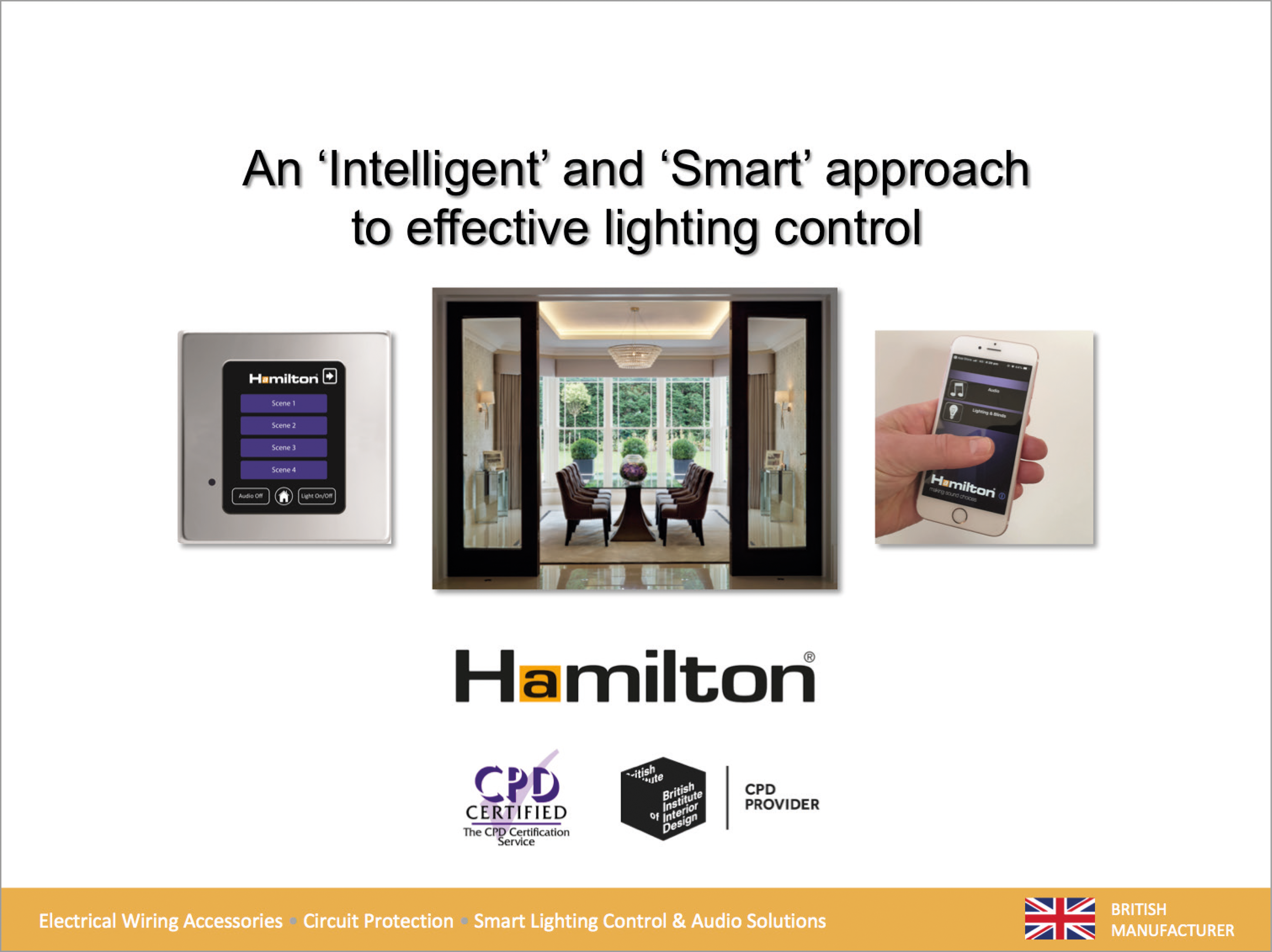
Hamilton Litestat has launched a Continuing Professional Development (CPD) training programme entitled: An ‘Intelligent’ and ‘Smart’ approach to lighting control. Accredited by ‘The CPD Certification Service’, its aim is to educate about new technologies and help trainees and qualified electrical wholesalers/installers up-skill in the area of smart lighting control.   With technology moving at such a fast pace, CPD training helps to ensure that academic and practical qualifications do not become obsolete. Hamilton’s CPD focused on smart lighting control is designed to encourage proactive learning as well as help identify and capitalise on valuable new business opportunities within the growing smart control sector.  The CPD provides an overview and history of the lighting control sector; an appreciation of where it can be used; an introduction to smart lighting control and the different protocols currently on offer; the integration of other smart control applications such as blind control, and an introduction to smart audio control. “During its 50 years, Hamilton has played a leading and forward-thinking role in the development of lighting control technologies – from the simple switch through to intelligent dimming and today’s smart controls. The company is well-placed to provide CPD training to both qualified and trainee installers,” said Gavin Williams, Hamilton’s Head of Marketing. “The CPD provides details on the latest lighting technology to suit the residential, hotel, commercial and retail sectors, as well as exploring smart audio control solutions too, which are increasing rapidly in popularity.” The programme, which takes one hour plus questions, is delivered by Hamilton’s knowledgeable staff and can be undertaken at the company’s Bristol headquarters or London showroom.  To book this accredited CPD module, contact Alison Osmond on 01747 860088 or email her on cpd@hamilton-litestat.com The CPD training programme is part of Hamilton’s on-going commitment and investment in training, supporting installers to upskill and keep abreast of the latest smart control technological developments, as well as helping those undergoing their initial training in order to help bridge the industry’s current skills gap.  The family-run British business recently became a member of CEDIA and is now an approved Continuing Education Unit (CEU) Provider. Its training courses held at its Mere facilities contribute four CEUs towards the 30 CEUs CEDIA-certified professionals need within three years. 

HSL Safety Outlines 7 Steps Towards Fall Protection And Certification
Stuart Pierpoint, UK Sales Manager at HCL Safety, explains why professional inspection and certification is key to preventing falls from height. Health and Safety Executive statistics show that falls from height remain the leading cause of workplace fatalities and have been for a number of years.  Inspections can’t be missed Annual or bi-annual inspections are vitally important. Not only are they a legal obligation, but ultimately, they help save lives. That’s why it pays to partner with professionals with the necessary experience and competency to inspect and certify your fall protection equipment.  2. Can you afford not to? There is a wide spectrum of potential issues that may arise when inspecting fall protection systems and PPE, all of which need to be addressed. After all, by its very nature, fall protection equipment can be exposed to the harshest conditions. It’s also important to remember that the general state of PPE and systems can often be influenced by the competency of the person that has used the system and how frequently it has been used. 3. Approach to quality inspection Some initial questions to consider when inspecting systems and PPE should include: Has a system been accurately installed within the manufacturer’s guidelines? Has it been configured properly with the right components? Are calculations that help ensure safe levels of load absorption accurate? If the answer to any of the above questions is “no”, then those working at height could be exposed to an unacceptable level of risk. Some key issues that quality inspection should cover include: Inspection of all energy absorbers Checking the cable for damage/signs of wear and tear Any signs of corrosion Re-tensioning of the cable if required Inspecting lanyards and harnesses for cuts, fraying or breaks in the stitching Looking for signs of damage to fittings  4. Potential issues By no means does quality inspection stop there. Sometimes, for instance, inspection may reveal that the system and equipment in place is not right for the application. It is imperative that the PPE used by an operative is suitable for the type of system they are connecting to. Remember, as well as inspecting and certifying it, a high-quality fall protection expert should also be able to help you specify and install the right equipment at the very outset of a project. Systems exposed to poor weather conditions can degrade over time and while to a certain extent this is a natural process, how quickly it occurs depends on the quality of the materials that make up the fall protection equipment. Not only does this reiterate the importance of regular, quality inspection and certification, but it should also be a timely reminder to invest in high quality equipment. While the initial financial outlay may potentially be higher, ultimately you will likely reap the benefits of a lower total cost of ownership. 5. Good preparation begins with quality training While safety for those that work at height sits with the site manager and/or health and safety officer (or equivalent), the operative themselves should be able to take responsibility for their own safety. Unfortunately, however, some people still lack the appropriate knowledge and/or training required to be able to accurately identify whether PPE or a fall protection system is safe to use. This is troubling, as failure to do so could be lethal. That’s why quality training is often the best form of first defense. 6. Remember the fundamentals Getting the right equipment in place and remembering regular quality inspection and certification is important, of course. But it counts for little without all required risk assessments and safety methods in place. All equipment should also undergo thorough pre-checks. Businesses with employees that work at height can employ an external company to come in and check PPE and systems. Some will train people within the company to check equipment themselves. Either way, proper checks need to have been done before use. 7. More than just a tick-box exercise Inspection and certification are critically important, but unfortunately people still see it as a compliance issue, rather than the life-saving obligation that it is. You can’t and wouldn’t drive a car without an MOT, for example. Why should fall protection equipment be any different? If you own, specify or use fall protection equipment, you have an ethical and legal responsibility to ensure that inspections are carried out in an accurate and timely fashion. Lives may depend on it.

Certsure Raises £26,000 For Alzheimer’s Research UK With Skydive And Machu Picchu Trek
Certsure, the organisation that operates the NICEIC and ELECSA brands, has raised £26,000 for Alzheimer’s Research UK (ARUK). In September 2017, Certsure employees chose to partner with ARUK, Europe’s leading dementia research charity, as its official charity. Since the partnership began, employees have taken part in any charity and fundraising opportunities including charity auctions, sweepstakes, fantasy football competitions, bake sales and charity runs. Some of the biggest donations have come from a charity skydive in 2018 which raised over £10,000 and a trek to Machu Picchu earlier this year, raising over £7,000. Katy Abraham-Hall, regional corporate partnership officer at ARUK said: “It has been a fantastic two years working with Certsure. I am so impressed, but not surprised at how much money you they have raised. Certsure’s support is helping to power pioneering research that will lead to the breakthroughs we need to discover life-changing treatments for dementia. Thanks to the wonderful people at Certsure, we’re even closer to bringing about the first life-changing treatment for dementia and transforming the lives of everyone affected by the condition.” There are currently 850,000 people in the UK living with dementia and it is set to rise to one million people by 2025. It is only through vital research carried out by ARUK that finding a solution to the problem is possible.