2 November 2026
Product of the Month: Amari Floodlight range by Aurora Lighting
 
12 November 2026
Schneider Electric transforms Southampton hospital estate
 
12 November 2026
GTEC Training opens new education facility in North Yorkshire
 
11 November 2026
Energy, AI and smart buildings: register now for EMEX 2026
 
11 November 2026
Solar and batteries could cut electricity costs by 40%, data finds
 

Latest News


One In Four UK Universities Has Received Fire Safety Complaints From Students
According to figures released by Eaton, the majority of UK universities are failing to invest in new technologies that reduce the risk of electrically ignited fires. This new data was obtained through a Freedom of Information (FoI) request, issued to 134 universities across the UK, with 76 of them responding. The data revealed that more than one in four universities (28%) have received complaints from students, staff or the public in the last five years regarding fire safety or building evacuation procedures.  Despite technological innovation today and the widespread availability of proven fire safety and evacuation solutions, many universities are abiding by the minimum standards required by regulation but not yet aware of or investing in existing technology which can improve safety standards for their students and staff. Modern universities are always-on environments. They are experiencing and catering to growing demand for energy given the increase in connected devices used on campus and both students and employees’ requirements for 24/7 uptime. Today’s increase in electrical device usage means the need for fire safety measures to protect against electrically ignited fires has never been more important.  Research has previously revealed that 54% of all fires in England are caused by an electrical defect. As UK universities invest in technology to support their always-on, connected learning environments, they will also need to consider the potential consequences of this shift – including how best to safeguard against electrical faults that have the potential to spark fires.  This FOI revealed that many universities have not yet invested in proven fire prevention solutions which can avert an electrically-ignited fire. For instance, the majority (63%) of responding universities do not have Arc Fault Detection Devices (AFDDs) in place.  AFDDs are considered the best practice in circuit protection due to their ability to digitally monitor the wire for specific frequencies that can indicate an arc fault. While current UK electrical regulation remains below the level required to maximise protection against electrically ignited fires, the 18th Edition to the IET Wiring Regulations – published in July 2018 – is a step in the right direction.  This new national standard included recommendations for the installation of AFDDs to mitigate the risk of fire due to the effects of arc fault currents.   Marc Gaunt, segment lead, commercial buildings, Eaton comments: “Given how recently UK regulation has recommended the use of AFDDs, it's likely that even the early adopter universities are yet to fully grasp the benefits of AFDD technology or implement it across all of their higher-risk buildings. For facilities managers balancing all the demands within a building, from maintenance to security, getting a close grip on the latest safety technology available or even the ins and outs of regulation beyond bare minimum standards can be tricky. Yet with lives at risk, it’s vital that building owners and facilities managers consider the huge safety advantages which come with implementing technology which not just detects fire but can prevent it in the first place.” The majority of UK universities (72%) today communicate their evacuation procedures proactively through written mediums. The FOI also revealed that two thirds (66%) communicate through passive written materials – for example posters in buildings – while 64% use passive digital materials, such as their website. However, this widespread focus on ensuring students and staff are aware of the evacuation procedures is not yet supported by implementing technology which helps individuals to exit a build as quickly as possible depending on the type and location of risk.  Almost all (92%) of responding UK universities do not currently have adaptive evacuation signage in place, which uses digital technology to switch between a number of predefined routes in a given circumstance and guides people towards the safest available exit. For example, the directions displayed by exit signage would change in the instance of fire on the fourth floor versus a flood on the second floor.  While 16% of UK universities plan to implement adaptive evacuation signage in the coming three years, there is a clear opportunity for facilities managers to look into the benefits of this technology – creating a safer environment for students and staff as well as reducing the likelihood of complaints around evacuation standards in future.  “Adaptive technology that responds to specific circumstances to ensure safe evacuation of occupants is particularly important for universities, considering the size and complexities of many campus buildings,” commented Gaunt.  “The changing nature of risk in today’s buildings means there are a wide range of reasons for an evacuation – from fires, to floods and terrorism. It’s important university management and facilities managers are constantly re-evaluating the evacuation procedures and newest technologies to help protect students and faculty. This means knowing where the risk is located and not falling back on a ‘stay put’ strategy. “New technologies are available that help avoid congestion or unintentionally guiding people towards the threat when trying to evacuate. In a university, where the safety of students is of the utmost importance, it’s imperative facilities managers are continually educating themselves on the newest evacuation technologies and that they are sharing this knowledge with key stakeholders.”

Heatrae Sadia Launches Love Your Cylinder Campaign
As part of its Love Your Cylinder campaign, Heatrae Sadia has launched a  digital advice series to help answer some common questions for installers.  A rise in multi-generational households means that cylinders are an increasingly appropriate choice for homeowners, and with research highlighting the boost that a boiler and bathroom renovation can bring to a home’s value, this trend looks set to continue. Despite this, there remain a number of recurring questions amongst installers, on topics such as how they work, when they should be installed, and the level of training required.   David Cook, Residential Sales Director, UK & Ireland at Heatrae Sadia, comments: “Hot water cylinders present a brilliant opportunity to add value to a plumbing and heating business. The increase in multigenerational living and the aspirational appeal of high-performance water systems means that installers will come into increasing contact with hot water cylinders.  “But we also know that installers are incredibly busy, which is why we’ve created a downloadable and concise set of FAQs that can be taken on-the-go, providing a handy reference tool whenever it is required.” The guide follows the results of an online quiz that was hosted on the Heatrae Sadia website, which helped to highlight potential gaps in heating engineers’ knowledge. For example, only 37% of respondents were aware that plastic pipework can be fitted to a hot water cylinder. The quiz also found that nearly 1/5 of participants were unaware installers must be G3 certified to fit a hot water cylinder. The FAQs guide addresses this, alongside covering a range of key points, such as the difference between vented and unvented. It then goes into more detail by outlining the questions that an installer should ask ahead of specifying a cylinder, which entails assessing how much water a household needs (dependant on a range of factors, including number of occupants).  Finally, the guide moves on to the nitty-gritty of installation, before emphasising the importance of servicing, recommending timescales and the process that needs to be followed. David concludes: “The Love Your Cylinder campaign is designed to do just that – to get installers and homeowners talking about hot water cylinders and the value they can bring to a property. The guide aims to create a greater awareness of the benefits of a cylinder, and provide advice on the process of fitting one.”

Fluke Offers Extensive Troubleshooting Advice For Motors And Drives
Fluke has developed a wealth of background information relating to preventive maintenance and troubleshooting motors and drives. The user is immediately offered the opportunity to contact and speak to a Fluke motor drive specialist for advice on optimum approaches and the ideal tools. Ten illustrated pages, Introduction to motors and drives, provide information about the basics of motors and drives and the sort of Fluke tools that are ideal for taking measurements, such as thermal imagers, motor drive and power quality analysers, and vibration testers and shaft alignment tools. Four detailed Customer stories describe in detail the problems faced by industrial users and how they solved them using Fluke products including motor drive and power quality analysers. Seven detailed checklists and guides provide information on best practice approach to preventive maintenance to keep a plant up and running and to minimise downtime.  The Troubleshooting motors and drives page also includes two short videos: one a case study showing the application of a Fluke 438-II Power Quality and Motor Analyser to regularly monitor motors and thus minimise downtime, and the other showing how intuitive Fluke MDA-510 and MDA-550 Motor Drive Analysers are to use, even if on an irregular basis.

Ferret WiFi Celebrates Double Award Win
Super Rod and The Cable Ferret Company are celebrating a double victory for the Ferret WiFi inspection camera and cable pulling tool after it was awarded Best New Product of 2019 at the Select Awards in Scotland and the Trade Tool of the Year accolade at the Electrical Industry Awards 2019 in London.  Designed by New Zealand tech company Cable Ferret, the Ferret WiFi was launched to the UK in May 2019. The Ferret WiFi uses the latest electronics technology to stream high resolution video to a smart device in real time, making it the ideal tool for fast and accurate close up visual inspections and troubleshooting in places which are too confined or hard to reach. The camera has six adjustable bright white LEDs on the front to provide crisp, clear 720p images, even in complete darkness. The product was named Best New Product 2019 at the Select Awards on October 11, at a special ceremony held at the Radisson Blu in Glasgow. The Ferret impressed a panel of industry experts to scoop the top product prize and Super Rod’s  National Accounts Manager Adrian Heffernan was there on the night to accept the award on behalf of Super Rod and Cable Ferret.  The Ferret WiFi was also awarded Trade Tool of the Year at the 27th annual Electrical Industry Awards which took place on October 24 at the Royal Garden Hotel, London.  Malcolm Duncan, Super Rod Managing Director was there to collect the award. “We are extremely honoured to accept these awards on behalf of The Cable Ferret, and for the innovative Ferret WiFi to be recognised by the UK electrical industry with not one, but two awards this year. To receive this sort of recognition from the industry is a credit to the work put in by Super Rod in partnership with Cable Ferret to put the product on the map in the UK.”  The two UK awards cap off a fantastic year of industry accolades for Cable Ferret after the company won two other prestigious industry awards in the US – the 2019 EC&M Product of the Year Category Winner for Speciality products, and the Platinum award in the 2019 Cabling Installation & Maintenance industry awards.   Cable Ferret distributes the Ferret in the UK, New Zealand, Australia, USA and Canada, Japan, and South Africa and is continuing to expand the global market reach. 

How to choose the right RCDs?
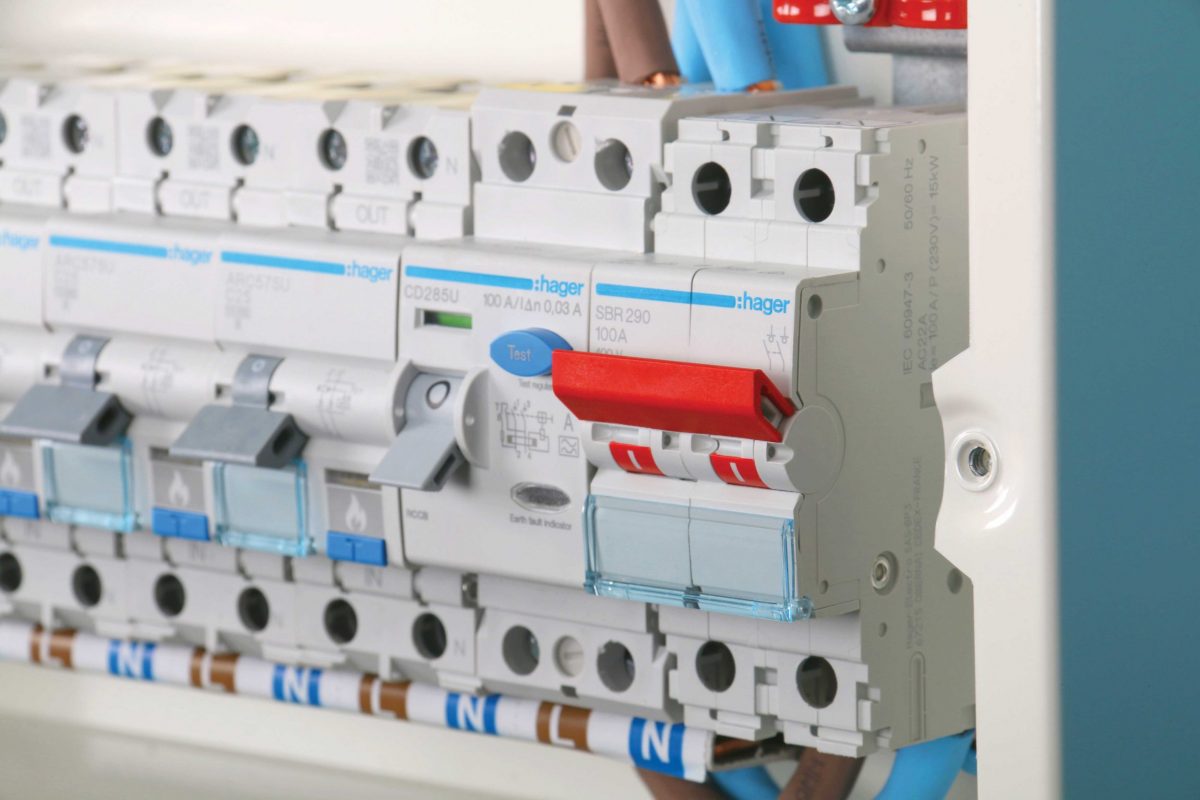
RCD selection is an important aspect of any installation, ensuring adequate protection against potentially fatal electric shocks. Paul Collins, Technical and Training Manager at Hager, tackles FAQs from contractors. What type of RCD should I use? RCD use has been in existence for a long time, and the revised 18th Edition regulations clarified their selection and specification to further enhance safety standards. Electrical contractors need to carefully consider the type of RCD required depending on the type of equipment which may be connected in the installation. There are four types of RCD, with each reacting differently depending on the presence of DC components or different frequencies. In order for contractors to specify the correct product, the different types of RCD can be classified as: - Type AC RCD – general purpose use. Type AC RCD can detect and respond to AC sinusoidal residual current only. - Type A RCD – equipment incorporating electric components. Type A RCD can detect alternating sinusoidal residual current and residual pulsating direct current suddenly applied or smoothly increasing. It is important to remember that Type A is also suitable for Type AC applications. - Type F RCD – equipment with frequency controlled speed drives. Type F RCD can detect and respond to high-frequency residual current, as well as pulsating DC residual current. - Type B RCD – electric vehicle chargers, PV supplies. Type B RCD can detect and respond to all types of residual current including smooth DC residual current. What does Hager recommend? Due to the style of circuits, the nature of loads connected to these circuits and the frequent use of RCDs to protect a group of circuits, Hager believes that the majority of electrical circuits in residential and commercial applications will require a Type A RCD solution. What type of equipment/load is best protected by a Type A RCD solution? Single-phase with electronic components which would typically comprise items such as: Single-phase inverters Class 1 IT and multimedia equipment Power supplies for Class 2 equipment Appliances such as a washing machine that is not frequency controlled Lighting controls such as a dimmer switch and home and building electronic systems Induction hobs Electric vehicle charging where any smooth DC fault current is less than 6mA. - This article originally appeared in the November 2019 issue of ECN.

This Small Device Prevents Electrical Fires
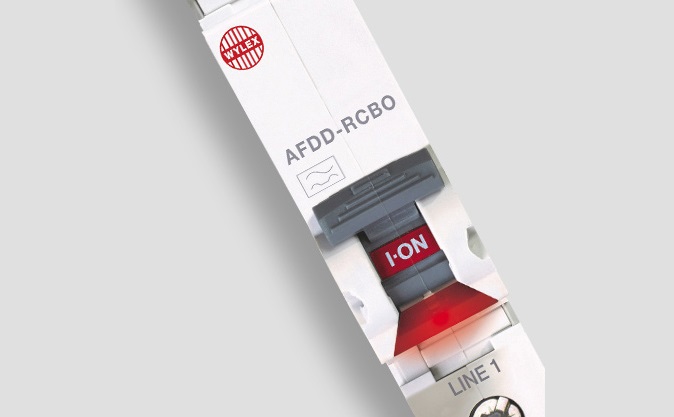
In a recent survey on Arc Fault Detection Devices (AFDDs), the majority of respondents agreed that the technology can help to prevent electrical fires. Here, Wylex explains everything you need to know before your next installation. What is an arc fault?  It’s a fault in the electrical installation that produces sustained arcing (in or between conductors). This could be caused by insulation faults in cables, defective electrical connections or faulty electrical appliances. In serious cases, arc faults can cause overheating, igniting surrounding flammable material and causing a fire. What are the benefits of using AFDDs? AFDDs detect and disconnect dangerous arc faults which would otherwise go unnoticed by older technologies, such as circuit breakers and RCDs. They fit into consumer units or distribution boards, just like MCBs. Using AFDDs reassures you that your installation is fully compliant (but to a higher standard than before the 18th Edition became effective). Are AFDDs proven? AFDDs have been developed and tested using the same process that brought about RCDs and RCBOs. This process is robust, reliable and recognised by British, European and International electrical standards organisations. Do AFDDs nuisance trip? No. Each AFDD will respond to the characteristics present on the circuit the AFDD is connected to. The product standard (BS EN 62606) includes a range of tests to ensure that AFDDs will not respond to ‘operational sparking’ which occurs in equipment such as vacuum cleaners and washing machines. Do AFDDs work on ring circuits? Yes. AFDDs detect dangerous arcing faults on ring circuits, spurs, radials and leads – whatever the mode of connection. How do I test an AFDD? Wylex AFDDs carry out a self-test function when initially powered up, and the AFDD repeats this self-test function regularly. They also have a test button (just like an RCDs or RCBOs), which you can use during the initial verification or EICR. Model certificates now include AFDDs among the devices listed, with space for test results. How easy is it to find a fault? The process is broadly the same as for an RCD or MCB. For added precaution, coloured lights indicate the type of fault that has occurred. Will I need to install a larger consumer unit? No, absolutely not. In fact, sometimes a smaller consumer unit is used. This is because Wylex AFDDs have integral RCDs, meaning there is no need for separate RCDs. Can AFDDs be retrofitted to existing installations? Yes, Wylex AFDDs can be retrofitted in the majority of cases. However, if the Wylex balcony-style busbar is used, it’s wise to talk to Wylex technical services. What do the guidelines say? The 18th Edition of the Wiring Regulations outlines the need to protect against the dangers of insulation faults, high temperatures, arcing, burning and ignition of fire. We’ve outlined some of the key information you need to know. Chapter 13 (Fundamental Principles): The requirements of this chapter are intended to provide for the safety of persons, livestock, and property against the dangers and damage which may arise in the reasonable use of electrical installations. Regulations 131.1 lists several risks. The following applies: In electrical installations, risk of injury may result from: Shock currents Excessive temperatures likely to cause burns, fires and other injurious effects Arcing or burning 421.1.7 deals directly with AFDDs: Arc Fault Detection Devices, to BS EN62606, are recommended as a means of providing additional protection against fire caused by arc faults in AC final circuits. Important: The term ‘recommended’ suggests there is scope for choice. However, if a decision is made not to follow the recommendations, that decision must be justified by the user of the standard. The Wylex Single Module AFDD is half the size of its predecessor, and combines the benefits of AFDD, MCB and RCD technology in one. Talk to a Wylex engineer before your next installation. - This article originally appeared in the October 2019 issue of ECN.

New low voltage distribution board removes unnecessary wiring
Schneider Electric, the global specialist in energy management and automation, has launched the Acti9 Isobar P. The latest addition to its Acti9 range of low voltage (LV) distribution boards, Schneider Electric’s Isobar P is a smart solution that helps its customers install quicker, whilst incorporating more protection and connectivity during installation. Acti9 Isobar P is a comprehensive range of distribution boards, RCBOs and pan assemblies that, when installed, provide electrical power to commercial and industrial equipment, providing protection in the event of system faults. They are ideal for electrical contractors and panel builders to perform installations as quickly, reliably and effectively as possible. Isobar P is the first LV distribution board to have a plug-on RCBO (residual-current circuit breaker with overcurrent protection) capability. RCBO neutral and functional earth connections are usually wired into the neutral and earth terminals inside the distribution board, costing significant time by introducing additional wiring. With the new Acti9 Isobar P, installers can simply plug their RCBO directly into the board. This eliminates the need to cut, straighten or dress any excess wiring, therefore reducing installation time by half. The new Acti9 Isobar P is designed to facilitate all the benefits of Schneider Electric’s EcoStruxure architecture. It works with the full range of connected devices, including Schneider Electric’s PowerTag sensor that fastens easily to the plug-on RCBO. When used together, end-users will be able to monitor the health and energy usage of their distribution boards, enabling preventative maintenance by detecting irregular usage patterns before they grow into serious problems. Over time, this extends equipment lifespans, improves performance and reduces downtime, leading to lower operational costs. Made in Britain at Schneider Electric’s Swindon manufacturing plant, Acti9 Isobar P also offers full IP2X internal shrouding for maximum protection. Its core design promises installation efficiency, reliability, performance, enhanced protection, connectivity, and compliance with the latest regulations. Ken Shepherd at G&H Group says, ”The Acti9 Isobar P is very easy to use; it’s plug-on RCBO functionality makes installing faster than ever. Not only does faster installation allow for substantial financial benefits, the swift completion of contracts also allows for installers to perform other installations and spend more precious time offsite securing new work for their business.” ”The Acti9 Isobar P is a revolution in installation and asset control,” adds Leandro Souza of Schneider Electric. ”By harnessing the power of connectivity, the range enables precise asset management and maintenance for customers. Above all, the range gives both installers and customers the highest level of protection available.” Acti9 Isobar P is currently available for purchase in the UK and Ireland. Around 5% of the range is sold directly to electrical contractors and panel builders, with the remainder distributed through wholesalers. For more information on Acti9 Isobar P or Schneider Electric’s EcoStruxure platform, click here.

Win a £100 pre-paid Mastercard with MK Electric
MK Electric is offering 100 electricians the chance to win a £100 pre-paid Mastercard in celebration of its centenary. Following the success of Switch On MK in 2018, MK Electric has returned with a special prize draw promotion to commemorate its centenary year and celebrate the iconic Logic Plus K2747WHI - 2G switchsocket outlet. It’s simple to enter in just three easy steps: Buy 10 x Logic Plus 2G switchsocket outlets (K2747WHI) from a participating wholesaler Get a MK100 scratchcard in branch* Visit www.hwll.co/MK100 and enter your scratchcard code. Speed is key, because everyone who has entered by November 20 will also have the chance to win one of 10 £100 Amazon or Sports Direct vouchers in the mid-campaign prize draw. Emma Segelov, EMEA Marketing Operations Manager at MK Electric, comments: “Over the last 100 years, MK Electric has been at the forefront of electrical safety and innovation, beginning in 1919 with the Multy Kontact socket, which was safer and easier to use than anything else on the market at that time. The year 1996 saw MK Electric set the standard yet again with the Logic Plus K2747 switchsocket outlet and its unique and patented three-pin, child-resistant shutter system, as well as captive and backed out terminal screws. “MK Electric remains committed today to quality and is unwavering in its determination to find ever better and safer ways to meet the needs of its customers, now and in the future. This includes USB integrated charging sockets and our new MK Essentials value range, designed to make our products more widely accessible. “This offer is our way of celebrating 100 years of MK and thanking our customers for their continued support over the last century. Whether you’d spend your £100 on a meal out with loved ones or a festive treat, we wish every applicant the best of luck for the top prize.” The closing date for entries is December 6, 2019. For more information and terms and conditions, please visit www.hwll.co/MK100. *Participating distributors only

Scolmore Joins SkillELECTRIC 2019 Judging Panel
As part of its commitment to support the electrical industry and to help develop the next generation of electricians, Scolmore Group has become an official partner with SkillELECTRIC to support the organisation’s competition to find the UK’s best young electrician.   The event, which is run in conjunction with WorldSkills UK, is designed to promote and showcase high standards and skills across the electrotechnical industry. It is organised by National Electrotechnical Training (NET). With the eight finalists for this year’s competition now confirmed, Scolmore will play a part in the judging process for the head-to-head stage of the competition which takes place at WorldSkills UK LIVE, the UK’s largest skills and careers event, at the NEC Birmingham (21-23 November 2019).  In the quest to be crowned SkillELECTRIC champion, contestants will have to install a complicated two-day practical task set to a strict timescale and against rigorous marking criteria. Scolmore Group’s Martyn Walley, group technical director and Lee Taylor, exhibition manager, will be joining the judging team to help decide on the overall winner: “It was a fantastic experience to be involved with the WorldSkills final last year and we are looking forward to another thrilling final stage again this year,” he said. “It was great to see such a high standard of competitors from the industry showcasing their skills and knowledge throughout the tasks. The level of workmanship and professionalism of the competitors was very high throughout the competition and we are looking forward to another highly competitive event that really showcases some fantastic talent and commitment from the next generation of electricians.” SkillELECTRIC is the only UK electrical competition aligned to the WorldSkills UK network. Those who score most highly will have a chance to compete at the next WorldSkills competition taking place in Shanghai in 2021. Earlier this year past-SkillELECTRIC finalist Thomas Lewis competed internationally in Kazan, Russia and received a Medallion of Excellence in recognition of his work reaching the international skills standard. Now in the second year of its three-year agreement, Scolmore Group will once again be providing the competition with a range of products including sockets and switch accessories, Click Smart lighting controls and ESP video door entry systems.   Competitors will be using the products as part of a two-day practical challenge to install a complicated set of four circuits with various components and equipment. Scolmore will also be filming live at the event with footage to be shown on the company’s recently launched YouTube channel – SGTV. “SkillELECTRIC provides a fantastic platform to showcase the best young talent working in the industry and also to highlight the range of opportunities that becoming an apprentice electrician can provide.”

CONIAC Produces Safety Steps Guide For Working At Height
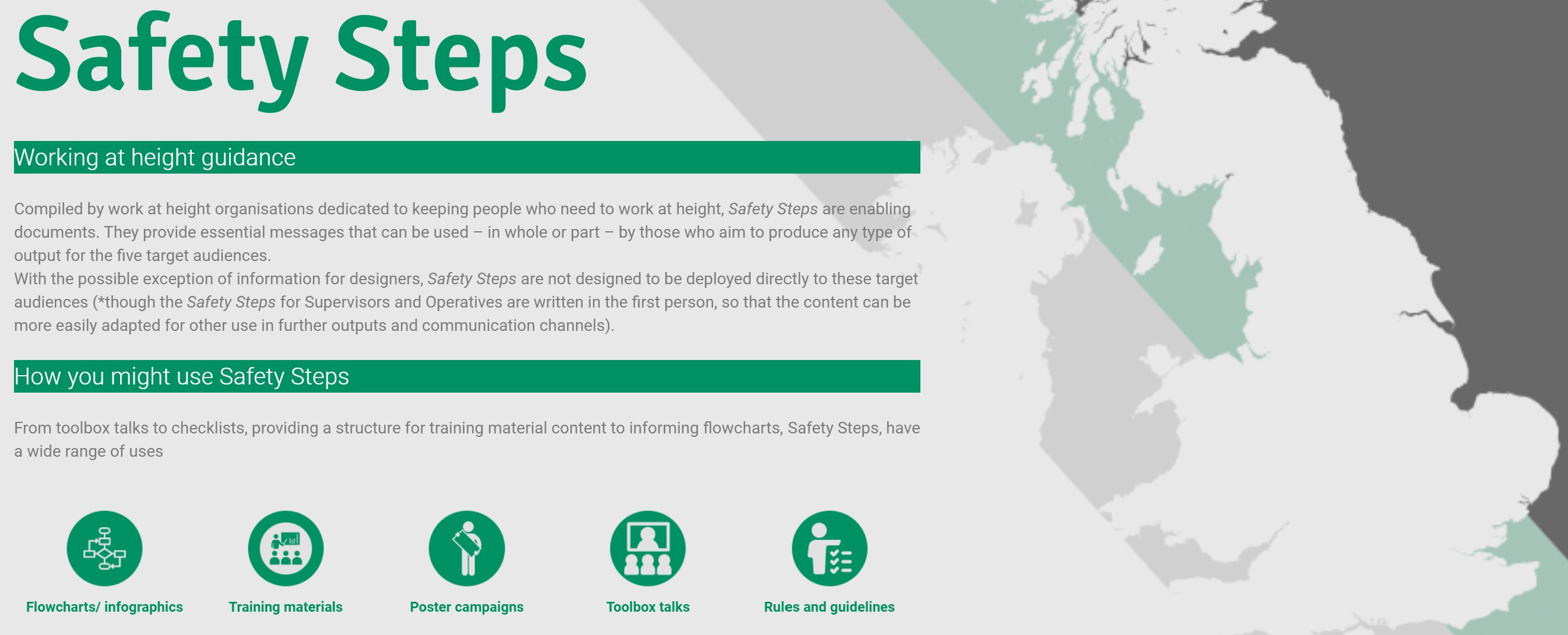
Construction industry body, CONIAC (the Construction Industry Advisory Council) has produced a guide entitled ‘Safety Steps’, designed to help anyone looking to ensure safe work at height.  ‘Safety Steps’ is aimed primarily at five key work at height audiences: designers, clients, managers (those who manage work at height), supervisors and operatives.  The document has been produced by the ‘Managing Risk Well’ Group, a safety group within CONIAC. Safety Steps can be used freely - in whole or part - to help produce any type of output for the five target audiences shown above, such as:       Training materials       Flow charts/infographics       Toolbox talks/checklists       Poster/sticker campaigns       Social media campaigns       Rules and guidelines       Articles   Paul Reeve CFIOSH, chair of the sub-group that produced ‘Safety Steps’, commented: “’Safety Steps’ provides the essential safety messages for the five key groups involved in work at height in construction and maintenance. It’s designed as an ‘enabling’ guide – meaning it can help anyone to produce, or just check, virtually any type of output that’s looking to support safe work at height”.  ‘Safety Steps’ covers general, rather than task-specific, messages (e.g. using scaffolding, mobile work platforms or working on roofs). However, its essential messages underpin any type of work at height activity.  A key aim of the document is to help do away with continually redefining or looking for the essential messages for ensuring safe work at height. ‘Safety Steps’ provides the key messages in one place, making it a valuable, long-term reference point for industry.  Peter Bennett OBE, chair of the AIF, commented: “‘Safety Steps clearly explains - for everyone involved in the stakeholder chain - what they need to know about safe working at height, all in one easy to access, easy to use resource. We are pleased to host Safety Steps on the AIF website and we believe it could become a long-term ‘go to’ resource for the industry.”  Sarah Jardine, Acting Head of Construction Division, HSE, added: “I am grateful to the CONIAC Managing Risk Well Group and in particular the Work at Height sub-group, for developing the Safety Steps guide. This is an excellent example of the construction industry and HSE working together.”  Safety Steps is free to access and use, and it is hosted at: accessindustryforum.org.uk/safety-steps