2 November 2026
Product of the Month: Amari Floodlight range by Aurora Lighting
 
12 November 2026
Schneider Electric transforms Southampton hospital estate
 
12 November 2026
GTEC Training opens new education facility in North Yorkshire
 
11 November 2026
Energy, AI and smart buildings: register now for EMEX 2026
 
11 November 2026
Solar and batteries could cut electricity costs by 40%, data finds
 

Latest News


Schneider Electric launches 'Rethink Energy' initiative
Schneider Electric UK has launched its ‘Rethink Energy’ initiative, a programme which aims to change business, consumer and government attitudes to energy waste and help combat climate change. Whilst other forms of waste such as plastics, fast fashion and food are highly visible, energy is frequently overlooked. A Schneider Electric commissioned study of 2,000 UK adults and over 600 UK businesses revealed that just 10% of consumers want to do more to curb their current energy use, while 74% believe they already do enough. In the same report, 68% of business leaders reported their organisations wasted energy, particularly in the form of inefficient building and office space. Under half (43%) of company chiefs also shared their organisation had not implemented any measures aimed at tackling these inefficiencies in 2018. To launch its initiative, Schneider Electric held a panel debate at Tottenham Hotspur’s new stadium, one of the world’s most energy efficient stadiums.  Schneider Electric is THFC’s official energy management partner. The debate focused on three key areas: The role for energy in achieving a zero-carbon economy by 2050 £1 trillion price tag – cost or opportunity What will drive change in the UK’s demand for energy The panellists included: David Joffe, Team Leader at theUK Committee on Climate Change Ben Golding, Director, Energy Efficiency and Local,Department for Business, Energy & Industrial Strategy James Diggle, Head of Energy & Climate Change,the Confederation of British Industry (CBI) Mike Hughes, Zone President,Schneider Electric UK & Ireland Mike Hughes, Zone President, Schneider Electric UK & Ireland comments, “We need to bring energy front of mind.  The market needs to take an activist approach to advocate for and instil efficiency and build an investment mindset if we are to achieve the 2050 net zero goal. As energy waste becomes more visible, businesses will increasingly be held accountable.” He continues, “HM Treasury recently suggested it could cost the UK around £1 trillion to achieve carbon neutrality by 2050, but it’s not about cost, it’s about huge savings. Sustainability is a cost that pays for itself and technology and innovation will be key to meeting the energy efficiency challenge.” Also speaking at the event, David Joffe, Team Leader at the UK Committee on Climate Change says,“How do you encourage people to change their behaviour? 1) give people enough information to make decisions, 2) make it a desirable (almost competitive) thing to do, 3) enable people to take action”  “Much of the problem with energy efficiency is measurement, you need to know how the measures you have put in place are performing,” he adds.

Flicking the switch to LED lighting
As awareness of the climate crisis intensifies, switching to LED-based lighting systems makes sense from both environmental and economic perspectives, writes Tamlite Lighting's Managing Director, John Allden. With the amount of evidence pointing to an escalating climate crisis growing by the week, there is a feeling that businesses everywhere need to be doing more to reduce their carbon footprints. One of the most effective ways in which they can do this is to make the switch from traditional light sources to next-generation LED-based systems – a move that can often reduce lighting-related energy consumption by up to 90%. Sadly, not all businesses are yet aware of the benefits of LED lighting, so there is an important (and potentially rewarding) opportunity for contractors and suppliers to steer companies towards upgrading their systems to the latest LED-based solutions. In the UK, the imperative to act now seems especially strong given that it recently became the first major economy to pass laws to end its contribution to global warming by 2050. Agreed in June 2019, the legislation stipulates that all greenhouse gas emissions must be brought to net zero by the middle of the century – compared with the previous target of at least 80% reduction from 1990 levels. Meanwhile, multiple major organisations and trade associations have been making moves towards a more energy efficient future. The Royal Institute of British Architects (RIBA) is a case in point: having voiced support for the UK Government’s 2050 plan, it recently confirmed that it would develop a five-year action plan to embed sustainable industry standards and practices, and seek to reduce RIBA’s own carbon footprint. Consequently, the feeling that businesses of all sizes and shapes should ‘do their bit’ to help meet these ambitious – but very necessary – targets has never been stronger. Fortunately, there are some relatively straightforward steps that can be taken to reduce a company’s overall carbon footprint – not least making the move from traditional lighting types to highly efficient LED-based systems. Making the case for LED lighting From a steady stream to a flood – there is no doubt that the transition towards LED-based lighting has accelerated dramatically during the past five years. But for contractors and suppliers working with the as-yet-unconverted, it doesn’t take long to construct a compelling case for them to review their use of lighting. What follows is a roll-call of some of the main points that need to be made. First and foremost, it is not uncommon for LED lights to use 90% less energy than a typical incandescent bulb. As a result, in even the case of a relatively modest lighting infrastructure, there can be a significant reduction in a company’s primary carbon footprint, as less fossil fuels will have to be burned to produce it. Then there are the benefits to what is frequently termed secondary carbon footprint. With the latest-generation systems, LED lights can offer a life expectancy that is 20 times longer than a traditional bulb. The result is that many LEDs only need to be replaced once every 50,000 hours – that can represent more than 17 years of typical annual use in many applications. Attendant to this vastly improved efficiency and life expectancy are multiple other potential cost reductions. Fewer replacements equals less need to call on maintenance staff – spelling significant savings on third-party contractors and/or increased capacity for internal support personnel. Switching to long-life LED systems also translates to reduced stoppages for replacement work that could put whole areas of an office complex or factory out of action. Mind you, that’s not the only potential benefit for productivity of adopting LED lighting. There is now a substantial body of study that indicates its ability to generate improved and more consistent lighting levels is conducive to better health among employees. As the UK Health & Safety Executive has observed, “Poor lighting can not only affect the health of people at work causing symptoms like eyestrain, migraine and headaches, but it is also linked to Sick Building Syndrome in new and refurbished buildings.” In the context of the above, it is hard to see the encouragement of companies by contractors and suppliers to move across to LED as anything but a win-win. On one hand, it can deliver dramatic carbon and energy-expenditure savings to businesses; on the other, it can contribute to a healthier environment for personnel and thereby reinforce companies’ credentials as eco-conscious organisations, with all the positive PR implications which that brings. With the cost of even the higher-end systems steadily falling, there has never been a better time to embrace the benefits of LED lighting. For further information, click here.

Riello UPS shines light on potential electricity grid failure
Riello UPS, a manufacturer of uninterruptible power supplies (UPS), has published a report entitled ‘The Blackout report’, which explores the likelihood of the UK experiencing a nationwide electricity grid failure. Only last month, a massive power failure across Argentina, Paraguay, and Uruguay left nearly 50 million people without electricity. According to the report, official government risk assessments state there is a 1-in-200 chance of the UK power grid experiencing a similar complete shutdown in the next five years. The company’s in-depth report explores the most likely causes of such an incident, from the increased threat of extreme weather including flooding or gales knocking out the network infrastructure, to terrorism, industrial accidents, and geomagnetic space weather storms that play havoc with satellite systems. It also poses the question as to whether the shift towards ‘smart’ energy grids heightens the UK’s vulnerability to cyber-attacks – similar to when Russian hackers shut down 30 substations in Ukraine in December 2015, leaving 250,000 people without electricity. State-sponsored hackers, believed to be the Russian-based Dragonfly group, are said to have already infiltrated the UK grid on June 8, 2017 – the day of the General Election. The report addresses this and the rise in fears of an escalating ‘cyber cold war’ – where countries including the US can insert high-grade malware inside energy networks which could potentially be used to turn off entire electricity supplies at a moment’s notice. The report goes on to examine the process for rebooting the electricity network if a complete system failure ever occurs. Known as a ‘black start’, worst-case contingency planning is that it could take up to five to seven days for power to be fully restored. Such an incident is likely to be accompanied by rota disconnections, which essentially ration power by cutting off electricity for blocks of three hours at a time. This was last seen on a wide-scale basis in the UK back in the 1970s, notably during the infamous ‘three-day week’. The Blackout report also investigates the catastrophic consequences of a world without power: mobile phone coverage lost within a couple of hours; transport systems grinding to a halt; hospitals and care homes overwhelmed as electrical devices stop working; businesses crippled as electronic payment systems go offline. Leo Craig, General Manager, Riello UPS, comments, “We’ve never been as reliant on the internet and interconnectivity, but without the electricity to power this digital world, our whole way of life falls apart at the seams.” “Many will look at the recent blackout across South America and think ‘that could never happen here’. It’s not necessarily complacency, more perhaps the belief that our infrastructure is more robust and that we’ve committed enough resource towards planning for the worst,” he adds. “The Blackout report investigates whether these assumptions are true. By thinking the unthinkable, it also poses some critical questions for the Government, the power industry, and wider society, such as whether we’re truly prepared for the ever-changing threats to our electricity supply.”

C-Tec launches new BS 5839-6 CPD seminar
C-Tec, an independent manufacturer of quality life safety electronic systems, has launched a new CPD-certified seminar. Entitled ‘A guide to BS 5839-6 2019 domestic fire alarms’, the company says its topical and informative seminar highlights what’s new in the recently updated code of practice for the design, installation, commissioning and maintenance of fire detection and fire alarm systems in domestic premises – with particular emphasis on the revised system of grading for such systems. Andy Green, Marketing Manager, C-Tec says, “Our new CPD-certified seminar is free-of-charge and an absolute must-attend for anyone involved in the design, specification and installation of domestic fire alarm systems.” At the end of the seminar, delegates will also have the opportunity to see demonstrations of C-Tec’s range of life-safety systems including Hush Pro, its new BS 5839-6 grade C domestic fire alarm system. The UK-based manufacturer says its new system has been designed to seamlessly integrate domestic fire systems with communal/landlord fire system.

Recolight recommends changes to the WEEE system
At an event marking the 12th anniversary of the commencement of the WEEE regulations in the UK, Recolight’s CEO Nigel Harvey took the opportunity to recommend changes to the system. [caption id="attachment_16897" align="alignleft" width="269"] Nigel Harvey, CEO, Recolight[/caption] “Over the last three years, there has been a material decline in the tonnage of waste lamps collected in the UK, along with other WEEE.  Fresh thinking is needed reverse this decline,” says Harvey He proposed three areas in which change is needed... More ways for consumers to return their waste Consumers currently have limited options for correct disposal of WEEE – largely limited to their local household waste recycling centres.  “That is clearly no longer sufficient.  We need to give consumers more options.  Those options should include providing kerbside collections of WEEE and requiring high street retailers to takeback WEEE instore.” Many of these changes, Harvey suggests, can be achieved by a review of the distributor takeback scheme, which currently allows retailers to opt out of providing a WEEE takeback service. Tackle online freeriders However, implementing these changes could increase costs for some producers, and retailers.  As a result, Harvey recommends tackling non-compliant producers selling through online marketplaces. “The level of non-compliant product sold through online marketplaces and fulfilment houses is truly shocking.  We found that 76% of LED light bulbs offered for sale on one marketplace were not WEEE compliant.  Those producers avoid the costs incurred by companies that follow the law.” He continues, “We are delighted that the government has now consulted on making online marketplaces responsible for the packaging compliance of product for which they facilitate the import into the UK.  What is now needed for government to adopt that same approach for WEEE.” “Ensuring that online retailers, and all producers bear their fair share of WEEE costs should minimise or even eliminate any additional burden on compliant producers and high street retailers.” More enforcement powers for agencies Harvey also suggests that the UK’s four environment agencies need more enforcement powers to drive compliance. “If we change the law to tackle freeriders, it is also vital that the agencies have better enforcement powers.  That should include statutory fines for free-riding producers.  The existence of an annual compliance fee every year since 2013 means it is possible to calculate, to the nearest penny, the costs avoided when producers do not comply.  That creates the ideal base cost for a statutory fine.  Implementing this mechanism would, at last, create the fair system that compliant companies crave.”

Zumtobel powers creative aspirations
The redevelopment of a derelict building into a new centre for printmaking production for Edinburgh Printmakers, has included the installation of a range of innovative lighting solutions from Zumtobel. Edinburgh Printmakers’ new creative hub is located within what once was the headquarters of the North British Rubber Company (NBRC), the only surviving structure of the once large and important 19th century Castle Mills Industrial Complex. Zumtobel worked with building services consultancy, Harley Haddow, Edinburgh and architects page\park, as the design of the lighting was critical to achieving the aspirations for developing an industrial aesthetic for the new interventions, while preserving the character and quality of the existing building. Zumtobel’s Tecton Black continuous row lighting system has been used across multiple areas of the building, allowing all functions – such as power supply, lighting control and connection with emergency lighting – to be quickly installed and seamlessly integrated into the multifunctional trunking system. With a luminaire efficiency of up to 168 lumens per watt, Tecton also offers key economic benefits. Less maintenance work means fewer interruptions and reduced costs thanks to lower energy consumption.  In addition, Tecton has an optimal colour rendering index of Ra 80 and an excellent service life – so that even after 50,000 hours of operation, 90% of the initial luminous flux will still be achieved. Tecton was chosen for the project not only for its flexibility in modularity but also its architecturally clean lines and aesthetically pleasing appearance.

ESP provides CC-Tea-V security solution
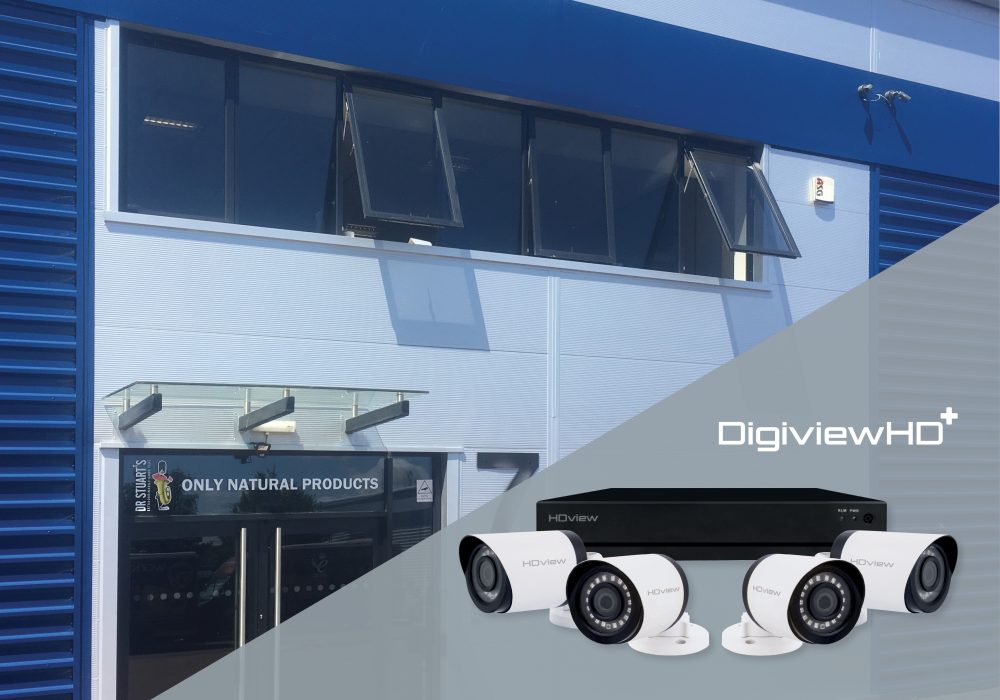
When it came to replacing an old and faulty CCTV system at its manufacturing and warehouse site in Quedgeley, Gloucestershire, Richard Green, Engineer at The Tea Factory, was keen to source a system which utilises the latest 4MP technology. Security specialist, ESP, was able to provide the desired solution. Following a site survey conducted by ESP Area Sales Manager, Scott Phillimore, at the 30,000 square foot, purpose-built premises, it was recommended that products from the HDView 4MP CCTV range would provide the ideal system to protect the site. An eight-channel, full HD 1TB CCTV DVR, with four 4MP cameras in grey, were selected for their ease of installation, relatively low cost and the technical back-up available from ESP. The HDView systems offer features such as motion, continuous and schedule record, with simple footage playback and backup method of distributing essential footage. As standard, it is packed with remotely accessible functions, including live view by smartphone app, email triggering, cloud ID connection, and storage. The tailor-made ESP HDView app is free to download, is compatible with Android and iOS operating systems, and enables quick and simple remote viewing. Richard Green comments, “When Scott came to do a survey of the premises, we had already been looking at other CCTV suppliers and had some initial quotes. Scott conducted a very thorough survey of the whole site to satisfy our requirements, for both external CCTV protection as well as internal monitoring of equipment. His advice was invaluable, and we were very pleased with the highly competitive cost for the HDView 4MP CCTV system. We found it very easy to install and are pleased with its performance.  The added assurance of the technical back-up team at ESP made this an easy decision.” Established in 2009 by Only Natural Products and a Queens Award Winner in 2016 and 2019, the Tea Factory manufactures and distributes all formats of tea production throughout the UK and Europe. Having successfully completed the installation at the manufacturing site, there are plans to install another of ESP’s HDView 4MP CCTV systems at the second unit on site, which acts as a warehouse and storage facility.

Positive prospects for the electrical wholesale market
According AMA’s latest electrical wholesale research report, prospects for the electrical wholesale market are taking a positive turn, and a lot of it is credited to a growth in online sales. Despite the uncertainty that came with Brexit in 2016 and a slower output growth in 2018, the research report suggests that the market has undergone a steady period of growth.  In 2017, for instance, the market saw improved growth particularly in the domestic sector. Factors supporting the market include sales growth in niche markets; innovation in product development; the establishment of new, specialist services and non-core products; and new legislation and regulations leading to a requirement for higher specification of products. The research report highlights the factors which are negatively affecting market growth to be: continued public-sector budget constraints; uncertainty over the outcome of the Brexit process; price competition with many products in the mature phase of their life cycle; threat from other distribution channels, and longer product life-spans which have affected the replacement market. Online sales of electrical products, however, are becoming an increasing important area of the electrical wholesale market. The growth in online sales between 2012 and 2017 was around 300%, compared to around 20% for the electrical products market as a whole. Forecasts indicate that online sales growth will continue to perform strongly and achieve double digit growth each year from 2019 to 2021, when they are predicted to account for over 10% of all electrical product sales having represented just 3% in 2012. The growth of e-commerce solutions among electrical wholesalers has aided the large nationals in particular, as they move towards adopting multi-channel sales. Most of the large national wholesalers now offer electronic versions of catalogues online and are operating online trading facilities.

AEI Cables supports sprinkler campaign
Specialist in fire performance, AEI Cables, is supporting the campaign for increasing the use of sprinkler systems, as new research reveals the benefits they bring in the interests of lives and property. The latest national research carried out by the National Fire Chiefs’ Council and the National Fire Sprinkler Network reveals that the danger to life, injuries and damage to buildings is “significantly reduced” when sprinkler systems are fitted. The NFCC has called on the Government to make sprinklers a statutory requirement in all new high-rise residential structures higher than 18 metres on a risk assessment basis. Cabling which ensures continuous power to these systems is a key component of improving fire safety in the wake of disasters, including Grenfell Tower and fires in high-rise tower blocks elsewhere in the UK, says Graham Turner of AEI Cables. He explains, “The fire safety industry is committed to sprinkler systems as a way forward to improve protection of lives and property in the event of a fire, but the quality of cabling supplying power to these systems is critical. If the power fails for whatever reason, these systems – however efficient they are – simply won’t work, and the results can be catastrophic.” The Royal Institute of Chartered Surveyors (RICS), the Royal Institute of British Architects (RIBA) and the Chartered Institute of Building (CIOB) have made calls to make the installation of sprinklers mandatory in all residential buildings, hotels, hospitals, schools and care homes taller than 11 metres. The same organisations have also called for sprinklers to be retrofitted where possible. Turner says that buildings such as tower blocks, hospitals, schools, shopping malls, airports and those areas with large numbers of people moving about need cabling which will continue to operate in a fire and provide power for the highest fire protection of 120 minutes. The new generation of AEI Cables’ fire performance cabling ensures that critical fire-safety circuits can continue to operate in the event of a fire from 30 minutes up to 120 minutes. Using the very latest in technology and science, the Firetec Total Fire Solutions range from AEI Cables offers enhanced fire performance cabling, accessories and technical support from one source. All of AEI Cables products are supplied with approvals from independent bodies, including BASEC and LPCB, covering design, manufacture and supply. It also holds approvals from organisations including Lloyds, the MoD, Network Rail and LUL and works to international standards around the world.

Somerset spark answers DIY SOS call
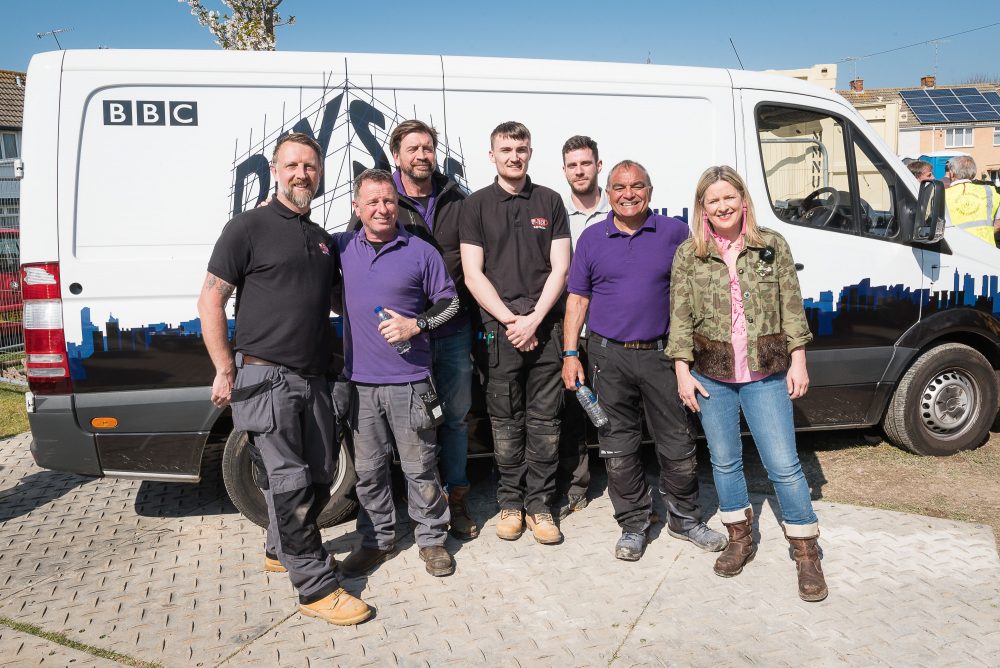
A Somerset-based spark has praised the camaraderie of tradesmen and women who came together recently to help out on an episode of BBC's DIY SOS. Matt Francis (pictured far left), of NICEIC registered M Tech in Bridgwater, was part of a group of tradepeople who helped create a two-storey extension for a family of five in Weston-super-Mare. He led all the electrical design and installation work on the project after volunteering his company’s services at a registration event earlier in the year. He comments, “It was tough, as it involved nine straight days [of work], but it was such an amazing project to be a part of. There was a bit of pressure to get it done in time, but everyone got involved and there was such a good buzz on site. “Normally on a project like that, the trades would all come in at different times, and you might not see each other. So it was interesting to see the entire process from start to finish, with everyone working in conjunction.” Francis, along with three other electricians from his company, were on site for the entire build. They worked alongside other electricians from the area on the electrical installation, which included supplying power for an internal lift and hoists in each bedroom. It also meant working with the show’s resident electrician, Billy Byrne, who became a real friend to Francis. He adds, “Billy was brilliant and a real gentleman. We all went out for a game of golf after the build. He also went around all the wholesalers afterwards and thanked them for their assistance. There was a real appreciation for the efforts everyone put in.” Francis is a fan of show and wanted to get involved after seeing an advert looking for tradespeople in the area. “I have always watched it and said I would like to get involved. When you see what that family has to go through, it makes you realise how lucky we are and that it could happen to anyone. It was great to give something back, and a really rewarding thing to be a part of.” - The episode is due to air on BBC One later this year.