2 November 2026
Product of the Month: Amari Floodlight range by Aurora Lighting
 
12 November 2026
Schneider Electric transforms Southampton hospital estate
 
12 November 2026
GTEC Training opens new education facility in North Yorkshire
 
11 November 2026
Energy, AI and smart buildings: register now for EMEX 2026
 
11 November 2026
Solar and batteries could cut electricity costs by 40%, data finds
 

Latest News


Training award for J S Wright apprentice
An apprentice design engineer with mechanical and electrical services specialist J S Wright has won a major award for his outstanding commitment to training. Danny Buckley, who works from the Birmingham HQ of the 129-year-old company, was presented with the Higher Education Construction award at the annual South and City College’s Sir Doug Ellis Apprenticeship Awards, held at the city’s Macdonald Burlington Hotel. The 22-year old from Solihull received his trophy in front of 200 guests from the local business community at the ceremony, which celebrated the key role of apprenticeships in the UK’s skills and employment strategies. Danny completed his BTEC Level 3 National Diploma in Building Services Engineering through South & City College, and is now in the first year of his Level 4 HNC course in Building Services Engineering at the Birmingham college. As well as being supported by his college tutor, Mark Price, Danny has been a member of the J S Wright Academy since joining the company three years ago. He is also being mentored by design engineer Tom Hollywood on J S Wright’s 'experience' programme, which helps the company’s technical apprentices fast-track their way up the career ladder. Mark Price comments, “Danny’s attendance, motivation and work ethic in pursuit of his academic qualifications have been outstanding. Credit must also go to J S Wright for the excellent structure and support of its apprenticeship scheme, which enables its young people to pursue their apprenticeships to the best of their ability.” The J S Wright Experience programme, which was launched last year, matches the company’s mechanical and electrical apprentices with mentors who support them in understanding and experiencing J S Wright’s values, processes and procedures, and help them develop their leadership and communication skills.

New London office for BG Energy Solutions
BG Energy Solutions (BGES), an independent BMS and energy management company, has strengthened its national presence in the UK with the opening of a new office in London. The business has been headquartered in Sheffield since it was established in 1995, where today it employs over 50 experienced engineers. With strong roots in the building controls arena, the BGES team offers impartial and expert guidance on using technology to make buildings smarter and more efficient. The company’s new London office has been opened in response to a growing number of clients and opportunities in London and the South of England. Heading-up the BGES London team is Lewis Locke, who has joined as Regional Manager. Locke is a highly experienced figure in the controls and built environment sector, having worked at George Birchall, Chartwell Controls and Eton Associates. He brings with him a wealth of local contacts and experience – and has already made a significant contribution to the business. Locke is also one of the shortlisted finalists of the BCIA Awards’ Young Engineer of the Year accolade. Gareth Barber, Managing Director of BGES, comments, “We are really excited to be able to expand our national reach with new offices in London. Being ‘on the ground’ at client sites is a crucial part of managing projects seamlessly and getting to the heart of our customers’ energy management challenges. Our new base in London gives us a firm foundation for future growth and it further strengthens our position as one of the UK’s leading energy management companies.” Alongside its London opening, BGES anticipates strong growth throughout 2019 and says it will continue to make investment in its Northern base, near Sheffield.

Electrical safety heats up
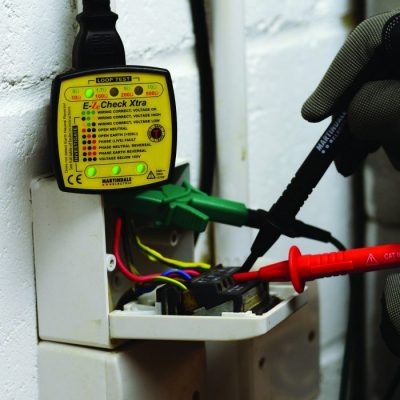
Martindale Electric, a manufacturer of electrical test equipment, has supplied Baxi Heating with testers for checking appliance wiring and earthing, together with locking off devices to ensure circuits can be safely isolated before carrying out any work. The tools keep their gas service engineers safe when installing and servicing heating equipment, and are essential for achieving compliance with the latest Gas Safe Register guidance TB118 2018 and ensure best practice for electrical safety. The changes mean new test procedures are now required to keep service engineers safe from electrical hazards. In addition to carrying out safe isolation procedures to prove that circuits are dead and locked off, the new guidance now requires verification of mains earthing. After researching the market, Baxi Heating has provided 250 of its trainers and engineers with a range of Martindale Electric equipment, which includes the EZ650 earth loop and polarity checker for socket and spur testing. The EZ650 simplifies the process for identifying a satisfactory earth, by combining a basic socket tester with an earth loop check that uses clear red / green LEDs, making it easy to interpret the results and see whether the earth loop value is within acceptable limits. The EZ650 socket and loop tester can be used on both 13A sockets and fused spurs to quickly identify a hazardous earth before starting work. This approach offers a simple solution to complying with TB118 and keeping service and maintenance teams safe.

Electrical contractor leads the way with ISO accreditation
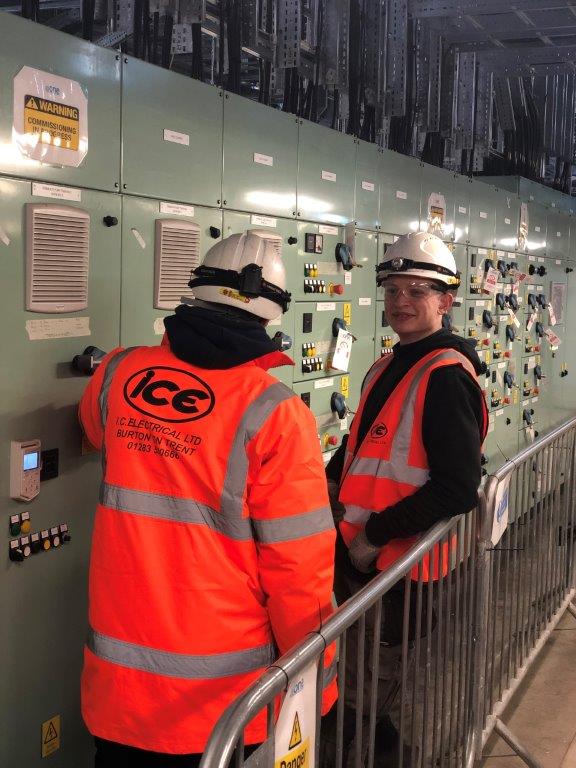
Burton on Trent-based electrical contractor, I. C. Electrical, has been awarded ISO 45001:2018 accreditation, which covers occupational health and safety. The business, which is one of only a handful in the industry to be awarded this standard, has been working towards the accreditation for a number of years. ISO 45001 requires businesses to introduce a framework to help improve employee safety and reduce workplace risk. In order to be awarded the standard, applicants must be able to demonstrate that management systems are in place across the business which adequately assess, manage and mitigate against workplace risks. The new standard was introduced in March 2018, and it replaces a number of older accreditations. For businesses such as I.C. Electrical, which operate on an international scale, being able to demonstrate the achievement is essential when it comes to standing out from the competition during the tender process for large projects. I.C. Electrical, and its parent company, Finland-based VEO Group, designs and produces systems and control panels for a number of industrial environments and sectors, including manufacturing, power distribution, renewables and oil and gas. The business is one of the only ones within the wider electrical engineering space to hold this accreditation, being awarded it just 12 months after its introduction. Andy Connolly, Health and Safety Manager at I.C. Electrical, said, “Being awarded this new accreditation is a significant achievement for the business, and is the culmination of a lot of hard work. With the standard gaining increased global recognition as a marker of excellence in occupational health and safety, it will unlock even more doors for us in terms of high-profile, international work. “More and more, we are seeing these top-tier standards being listed as requirements on international tenders – as clients want to be sure that the contractors they have on their site are up to scratch in terms of their health and safety practices. Being able to demonstrate that we are working at the highest level is essential for maintaining our strong pipeline of international projects.”

Video: In-sure lever wire connectors
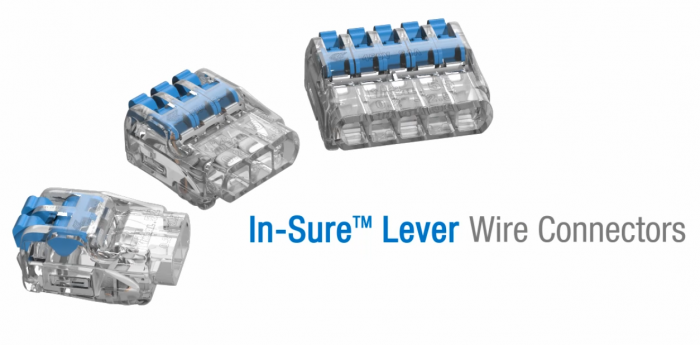
Ideal Industries, a producer of connectors, hand tools, testers, and meters for the electrical and telecommunications industries, has published the below video to explain the benefits of its In-Sure lever wire connectors. The connectors are a versatile, tool-free alternative to traditional connector strips for joining solid, stranded or flexible conductors. Utilising a combination of push-in and lever clamp technology, the innovative design securely retains both rigid and flexible conductors whilst allowing them to be easily removed if required. Featuring a compact clear housing, which permits visual inspection of the connected wires, they take up less room in junction boxes. There is also a check port for continuity testing. Watch the below video to find out more. https://youtu.be/07Mtt9qzhAA For more information, visit www.wire-connectors.co.uk

Lighting up the rails
Tridonic is helping Future Designs to meet Crossrail's exacting specification requirements for an LED future. The company explains how the project unfolded. If an entire infrastructure project is to be buried underground, then lighting is of paramount importance. This is certainly the case with London's Crossrail line (also known as the Elizabeth Line), which will significantly reduce journey times across London for millions when it opens in 2019. "The decision to go LED on Crossrail was based on industry evidence that the benefits of reduced energy consumption and maintenance requirements would deliver a reduction in whole-life costs for the project," said Paul Kerrigan, Crossrail MEP engineer (lead electrical). The brief was for the lighting to emphasise the spatial envelope, rather than draw attention to the luminaires themselves. All in the design The company tasked with meeting the design and performance requirements was Future Designs, and it called upon Tridonic's technical expertise to help create a suitable bespoke lighting solution. The decision to use LEDs exclusively will significantly reduce energy consumption and maintenance costs, which will ultimately lead to a reduction in the whole-life cost of the project. Future Design's concept uses the light grey, matt-textured, glass-reinforced concrete lining of the station and escalator tunnels to reflect light onto the passenger areas, to create a sense of spaciousness within the underground environment. The company created the following luminaires specifically for the Crossrail project: An uplighter for indirect illumination The Ikon uplighter luminaire has been created to sit on top of wayfinding totems. This powerful luminaire is designed to illuminate the area via the ceiling, which then reflects the light back down to the floor. To provide this level of light, Future Designs utilised Tridonic's proven driver, LCAI 150W 350mA-1050mA Eco Industry drivers, along with the LLE 24 x 280mm 2000lm 830 EXC modules, operating at a current of 950mA. The space between each of the totems bearing the uplighters is between seven to 11 metres, and therefore, these luminaires needed to produce 58,000 lumens / 850 watts (as a comparison, typical office lights are 5,000 lumens / 32 watts). Weighing in at 80kg per unit, and measuring just 685mm x 185mm across the lit face, the high wattage of Ikon generates an enormous amount of heat from such a small area which needs to be dissipated, and the most critical area of the design was calculating the precise dimensions and area of the bespoke heatsink to ensure that heat was drawn away from the LED system, regulating the device’s temperature. Critically, as heat rises, the heat sink design had to draw the heat down, away from the LEDs of the unit, which sits on top of the totem. Testing and prototyping for this specific section of the design took more than 350 hours, and a series of original prototypes were built so that thermal tests could be carried out to establish that the heatsink would control the LED temperature correctly and safely. Emergency luminaires and anti-glare uplighters Ikon Emergency luminaires are designed to automatically illuminate in the event of a power failure, helping to guide Crossrail passengers to safety. The design features high and low-level lights mounted on the sides of wayfinding totems and horizontal luminaires mounted on the front faces of the totems to spread light in all directions and throw the light across a large distance on the floors. Each emergency system is 35,000 lumens / 230 watts, and the lights are operated from a 230-volt generator. Ikon Emergency and the Ikon totems will be installed in Crossrail stations at Tottenham Court Road, Farringdon, Liverpool Street, Bond Street and Whitechapel. Plinth luminaires are located within the deck area between individual escalators. The uplighters are specially designed to diminish visual glare to passengers travelling on the escalators, preventing a direct view of the LED source and providing well balanced lighting. The positioning of the LED at a low level in the fixture and a black louvre at high level ensures dark light anti-glare illumination. The luminaire is sealed to IP68 with a high level clear glass panel. Due to the proximity of passengers using the escalators, safety elements required that the glass panel had to withstand a 1,000N load applied over a 50mm x 50mm area. Plinth will also be installed in all five of the Crossrail stations. One of the challenges with this fitting was ensuring that faces would be illuminated when viewed on CCTV, but at the same time, ensuring that passengers were not dazzled as they travelled on the escalators.

Schneider supporting home improvement initiative
Schneider Electric is sponsoring an initiative by the British Home Enhancement Trade Association (BHETA) to encourage UK homeowners to make their homes safer, smarter and more stylish. National Home Improvement Month, running throughout April, is designed to reignite homeowners’ pride and encourage them to commit to at least one home improvement project this month. Over half (63%) of Brits don’t love the home they live in, with one third admitting they lack the skills to make the improvements they want. BHETA and the country’s major suppliers – including Schneider Electric – will help homeowners by delivering educational content and how-to guides. They will also connect consumers with skilled tradespeople, enabling them to complete their dream home improvement project. Schneider Electric stands ready with a wide range of wiring devices and accessories to inspire creativity and satisfy the latest safety requirements during National Home Improvement Month. Whether they prefer the modern style of the Ultimate range, or the traditional profile of Lisse Screwless Deco, the company offers consumers a wide range of switches and sockets to enhance their home. The customisable Ultimate Transparent range of switches can even be styled to match any wall surface and allows users to create their own bespoke designs. Wiser, the smart home heating system from Drayton by Schneider Electric, is easy to install from app to thermostat, and allows homeowners to control the heating in their homes remotely. It delivers complete home personalisation by allowing users to control temperature room-by-room, boosting comfort and enabling fuller control over energy bills. Finally, Schneider Electric’s range of Easy9 and Resi9 residential circuit protection offers complete protection from shock and electrical fires. Circuit breakers and surge protection devices detect leakage current and power disturbances, ensuring optimal electrical safety and giving homeowners peace of mind. Jocelyn Golding, Category Manager of Home and Distribution at Schneider Electric, says, "There’s never been a better time to be house-proud. Smart technology and the latest solutions give users unprecedented choice in creating their ideal home. However, a lack of technical skills shouldn’t be a barrier to entry. For the safest, highest-quality installations, homeowners should use a qualified electrician, for which our Partner Locator is here to help". To learn more about BHETA’s National Home Improvement Month campaign, visit bheta.co.uk/news/industry-news/2019-nhim/

Distributor illuminates sites with Goodlight LEDs
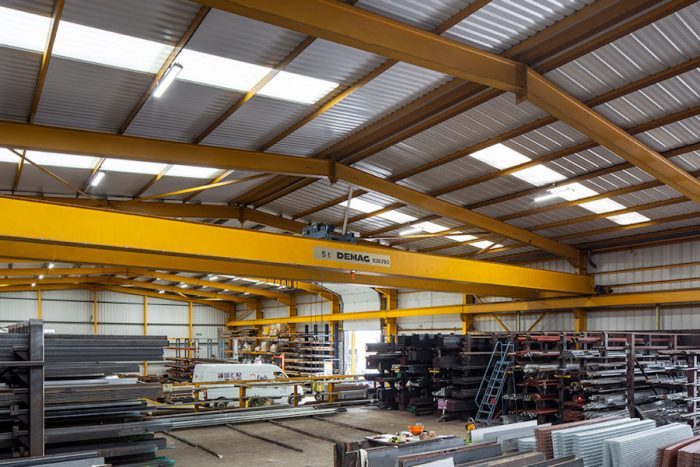
LED lighting brand, Goodlight, has announced that FWB – an established supply chain partner – has replaced the outdated fluorescent lights across its three strategic sites in Stoke-on-Trent, Wrexham and Truro with linear LED high bays, LED battens and Eco LED ceiling panels. A total of 8,200 square metres of warehousing, trade counters and offices are now illuminated with long life, energy efficient Goodlight LED lighting. FWB chose Goodlight for the quality and value of the products as a distributor, and made the switch to save costs, reduce carbon emissions and improve the workplace environment. FWB provides a diverse range of products, including pipeline and fittings, fasteners, tools and workwear to the industrial, infrastructure, construction and public sector markets. FWB was looking to replace all of the inefficient lighting in its three trade counters and offices to save on energy and maintenance overheads; and thus selected Goodlight Eco LED ceiling panels, which have been designed to slot into existing ceiling grids with ease, making them the thinnest, most lightweight panel on the market. The Eco is a modular LED ceiling panel that delivers up to 95 Lm/W, providing reliable colour consistency that transmits over 95% light efficiency. The Eco is compliant with LG7, providing a good luminaire balance between task areas, walls and ceilings. Lighting for the warehouses included G5 battens and GX2 linear LED high bays, both of which deliver very high levels of light output, offering 110 Lm/W and 130 Lm/W respectively. The G5s and GX2s are rated to IP65 (waterproof) and provide further protection from dust, ice, heat and corrosion ingress. Both LED fixtures are completely glass-free and shatterproof, making them suitable for busy, working warehouse environments. All Goodlight products are guaranteed for five years and are rated at 50,000 hours. Sarah Lee, Marketing Manager at FWB, comments, “As a business with multiple branches, our energy costs were significant. After seeing the successful installation of Goodlight LED lighting at a number of our customers’ premises, we made the decision to replace the old lighting in all our sites. The installation was straightforward and completed within two months, and the service from Goodlight has been first class from start to finish.” Lee continues, “We decided to upgrade to LED lighting not only for the substantial reduction in energy costs and carbon emissions, but also for the improved light quality, and the added health and safety benefits.  The high ceilings in our warehouses are difficult to access, and we were changing light bulbs constantly. These long-life LED lamps will reduce maintenance drastically. We now have consistent light levels and can see everything easily. The results are outstanding, and everyone is happy.”

Over 12,500 new electricians needed by 2023
A new labour market report on the electrotechnical industry has estimated that between 12,500 and 15,000 additional skilled electricians will be needed over the next five years to accommodate forecasted growth. Within this figure, the research suggests that even if an extra 5,000 new apprentices qualified by 2023 (representing a 33% increase), this would still leave a shortfall of 7,500-10,000 electricians needing to be sourced from elsewhere. These workforce predictions are based on meeting demands solely due to sector expansion, and do not cover the additional staff turnover occurring from leavers and retirement. Emerging and future technologies are expected to be major drivers for this increase in skills needs over the next decade, with smart technology, e-mobility and Wi-Fi technology named as the top three forces for change. Other areas that are likely to influence the sector include changes to regulations and public policy, in areas such as energy efficiency and fire safety. Whilst the largest proportion of the UK workforce is between 25 and 49 years old, in England and Wales, only around 15% of the workforce is under the age of 25; compared to 24% for Scotland and Northern Ireland. Commissioned by The Electrotechnical Skills Partnership (TESP) and co-funded with industry charity, National Electrotechnical Training (NET), the report is the first to provide an in-depth analysis of electrotechnical skills needs in over 10 years. Research specialist Pye Tait compiled the report after surveying almost 450 electrotechnical companies, with around 19,000 employees. The report confirmed that apprenticeships are still highly rated across the sector and, based on up-to-date calculations published in this research, there is clear potential for a return on investment for those who recruit apprentices. However, the number of apprentices currently recruited each year is insufficient to meet projected demands, and employers identify various barriers to further recruitment, including some candidates’ attitudes and behaviours. They believe more needs to be done to widen the potential pool of applicants, and the calibre and diversity of new entrants - for example, through improved industry engagement with colleges and schools, and further development of alternative routes into the industry for college leavers, career changers and others from older age groups. In response to the report and its findings, TESP is now developing an industry action plan to tackle the issues and recommendations raised. Work is already underway in several areas, including the development of new careers resources, promotion of industry-recognised qualifications and activity to forge closer ties between industry, schools and further education. The action plan will also take account of the large numbers of small and micro businesses in the industry, including sole traders, and how these might be better supported in future. Ruth Devine, Chair of TESP and Managing Director of SJD Electrical, says, “The TESP survey – the first of its kind in over a decade – offers not only a useful snapshot of where the electrotechnical industry and its skills-base are now, but also a vital insight into the scale of the challenges we face in the immediate future. The organisations which form TESP all have a crucial part to play in shaping and coordinating the industry’s response to these challenges, and the priorities for action defined in the survey report represent an important first step. Future success will, however, also hinge on the active participation and support of other stakeholders, including government departments and agencies, clients, training providers, other sector bodies and of course individual businesses – especially the small and micro businesses who make up our industry’s core.” The Electrotechnical Skills Partnership (TESP) is a not-for-profit industry partnership formed by the ECA, Joint Industry Board (JIB), National Electrotechnical Training (NET), Select and Unite the Union to support electrotechnical employers to develop and drive the industry's skills agenda. To read the full report, click here.

Video - New animation shows journey in becoming a qualified electrician
A new animation showing the journey in becoming a fully qualified electrician has been developed in partnership between Select and the Scottish Joint Industry Board (SJIB). The video, which you can view at the end of this article, plots the route of someone starting their career as an apprentice electrician, and follows them through to becoming a company owner. Brought to life by animators at Connect Communications, it is designed to be screened at events and conferences to explain the career choices available in today’s fast moving electrotechnical industry. Speaking about the film, which will be hosted on the websites of both organisations, Fiona Harper, The Secretary of the SJIB, says, “Together we’ve created an informative and engaging communications tool that can be used to attract apprentices to the industry. The journey is a long one, but it is very rewarding for those who acquire the necessary skills along the way.” The film’s release comes on the back of a long-running campaign by Select and the SJIB for better regulation of electricians to ensure the highest of safety standards across the industry. Both organisations are calling for the introduction of 'Protection of Title', which would ensure that anyone calling themselves an electrician in Scotland would hold suitable qualifications. Select's wall of support for this campaign has gathered backing from politicians (from all parties), as well as industry bodies representing surveyors, housebuilders, professional bodies and trade unions. Crucially, the new film details milestones – such as SJIB grading and FICA accreditation – that an apprentice will pass along the way. Alan Wilson, Acting Managing Director of Select, comments, “Consumers deserve the assurance of knowing that any electrical work carried out in their home will be completed safely and to the highest industry standards. Ours is an immensely rewarding industry, as modern-day electrical installations are extremely complex, requiring highly-skilled professionals. We are keen to attract the brightest into this field, and we are committed to ensuring those individuals have all the training required to carry out the highest calibre of work.” https://youtu.be/YZaWjbhDRJI