2 November 2026
Product of the Month: Amari Floodlight range by Aurora Lighting
 
25 November 2026
Scolmore helps rejuvenate Tamworth Cancer Support Centre
 
25 November 2026
Leicester apprentice crowned 2026 SkillELECTRIC champion
 
24 November 2026
JTL celebrates opening of new Tyneside training centre
 
24 November 2026
LiGHT 26 welcomes record number of visitors to fifth event
 

Latest News


Have you adopted changes from the IET Wiring Regulations?
It’s been five months since the new amendment to the IET Wiring Regulations was published. Developed in partnership with the Institution of Engineering and Technology (IET), the British Standards Institute (BSI) published BS 7671:2018+A2:2022 back in March of this year. From a new requirement for Arc Fault Detection Devices (AFDDs) and the requirement for the fire safety design of buildings to be documented, to the addition of a whole new chapter on Prosumer’s Low Voltage Electrical Installations (PEI), these changes, along with others in BS 7671:2018+A2:2022, ensure advanced safety and sustainability in electrical installation environments. Following the launch of the amendment, there has been a six-month transition period. This has been in place to allow time for electrical contractors to understand and apply the new changes to their ways of working. However, this transition period is almost over. From September 2022, anyone working in the electrical sector must comply with the latest regulations set out in Amendment 2. As a result, The IET and BSI are now urging all electrical professionals to ensure they are familiar with the changes. What is the impact of the amendment? BS 7671 is first and foremost a safety standard to provide a framework for the electrical industry in the UK and for the many other countries that have adopted its requirements. Its specification focusses on the whole of product and installation safety and international compatibility. The benefit of adopting the new changes extends beyond safety. It plays an important role for EU and international trade of equipment and materials, as well as for the UK’s journey towards achieving net zero. For designs to be compatible, manufacturers need to design to a common standard so that their designs can be installed in accordance with installation standards of the countries they intend to market their products to. As installation standards and product standards are intertwined with one another, it is therefore essential that the standards are aligned for practical application. The IET Wiring Regulations also now cover prosumer electrical installations (PEI), including energy efficiency measures, the interface with the smart grid, the management of electricity consumption, the management of renewable sources of electricity, and energy storage. This change is an exciting step into the future of managing renewable sources of energy and their integration into our lives. In addition, BS 7671: Helps users stay up to date with new and innovative technologies Improves the efficiency of installations The product of consensus among a comprehensive group of stakeholders BS 7671:2018+A2:2022 is currently available to buy from the BSI Shop online. Get your copy of BS 7671:2018+A2:2022, here. www.theiet.com www.bsigroup.com

Charging up installer knowledge: electric vehicles
With Transport Secretary Grant Shapps indicating that electric vehicle charge points will become a ‘British emblem’ in the coming years and electric vehicle uptake increasing by 71% in the last year, Frank Bertie, Chief Technical Officer at NAPIT Group, discusses the government's increased policy focus on electric vehicles, and highlights how installers can play a role in the journey towards decarbonisation. The government pledged to end the sale of new petrol and diesel cars by 2030 in November 2020, marking a historic step on the journey towards net zero. The two years following this announcement have seen an increased focus on preparing the necessary infrastructure, workforce, products, and skills to meet the 2030 target. Installers of electric vehicle charge points are expected to be in high demand as the deadline for meeting the target approaches. Regulations The December 2022 uplift in building regulations supports the government’s commitment by requiring the installation of electric vehicle charge points (EVCPs) in all new homes and buildings, ensuring that all EVCPs installed going forward have smart functionality. This is critical for building long-term sustainable infrastructure, as the EVCPs’ smart capability charges an electric vehicle when there is less demand on the grid or when more renewable electricity is available. This requirement also helps to mitigate concerns about grid capacity, load control and adequate electricity supply to buildings. Not only do these regulations alleviate some of the industry’s concerns about grid capacity, but ‘smart chargers’, as they are dubbed, must also meet certain device-level requirements, enabling a minimum level of access, security, and information for consumers. This enables effective monitoring of usage and customer behaviour, which will aid in identifying any issues and allow any future policy to be based on empirical evidence. Grants In addition to regulating in order to increase the rate of EVCP installations, the government is providing grants for flat owner-occupiers and landlords to encourage further installations. The EVCP grant covers 75% of the cost of installing a single charge point. Landlords can receive up to 200 grants a year for residential properties, and a further 100 for commercial properties. This grant replaced the Electric Vehicle Homecharge Scheme, which was designed to help homeowners, and provided funding for 291,549 domestic charging devices before concluding in April 2022. To qualify for the EVCP grant, the installation must be completed on the consumers' behalf by an Office for Zero Emission Vehicles (OZEV) registered installer. Being a member of an Electrical Competent Person Scheme and providing proof of public liability insurance are prerequisites for becoming an OZEV authorised installer. Other government funding options for EVCPs include the Workplace Charging Scheme, a voucher-based scheme that assists eligible applicants with the upfront costs of purchasing and installing an EVCP in England, Wales, Scotland, and Northern Ireland. Furthermore, local government can take advantage of an on-street residential charge point scheme to help them support and deliver the EVCP rollout more effectively. The scheme’s goal is to increase the availability of on-street charge points on residential streets where off-street parking is unavailable. Creating a competent EVCP installation workforce The government’s commitment to improving EV infrastructure necessitates a skilled workforce of competent EVCP installers. NAPIT has a dedicated training provision to assist in the development of a competent EV installer workforce through a two-day training course offered at multiple NAPIT training locations across the country. The City and Guilds-approved course covers the Design and Installation of Domestic and Small Commercial Electric Vehicle Charging Installations. NAPIT Training delivered EVCP courses to over 500 of the next generation of EVCP installers in 2021. Whilst qualifications must be held and demonstrated, installers must also keep up to date with the latest developments as part of their Continuing Professional Development. Recent OZEV-commissioned audits of EVCPs installations revealed several common oversights made by installers that are often simple to correct. NAPIT’s 'Top 10 Tips' guide for EVCP installs, helps those installing charge points identify and avoid common mistakes. Along with providing technical guidance, NAPIT is continuing to collaborate with OZEV and the broader industry to raise standards in this area. www.napit.com www.OZEV.com

simPRO announces pay rise as part of ‘Do the Right Thing’ program
simPRO has announced the debut of its new ‘Do the Right Thing’ benefits program for employees in the United States, Australia, New Zealand and the United Kingdom. While some companies tighten their purse strings in an economic downturn, simPRO’s program introduces unique, innovative benefits designed for a new era of work - one that is global and distributed in nature. With this new program, simPRO is stepping forward as one of the first international technology companies to model a human-centred approach to leadership, and pledge this level of support to employees, creating a paradigm shift in the way companies think about their employees and the future of work. The program’s headlining benefit is an inflationary pay increase of up to 10% for every employee that earns less than $120,000 (£69,000) per year to combat the impacts of inflation on simPRO’s employees. “At simPRO, every decision we make is based on our philosophy of doing what we believe is right,” says Sean Diljore, simPRO CEO. “By investing in our employees' mental and physical wellbeing, we help them prioritise their personal lives so that they can be the best, healthiest version of themselves. When our employees are the best versions of themselves, the entire business thrives.” In addition to the pay increase, simPRO is implementing Flex4 - a four-day, 32-hour work week with no change in pay for full-time employees as part of the ‘Do the Right Thing’ program. simPRO initially piloted Flex4 with global non-profit 4 Day Week Global and has since made Flex4 a permanent fixture for the entire company, worldwide. Also included in the program is a generous new parental leave policy for team members in every country: 24 weeks of 100% paid leave for a primary caregiver and eight weeks of paid parental leave for a secondary caregiver, which is more than the required time in all of the countries in which simPRO operates. simPRO will monitor the performance of the ‘Do the Right Thing’ program and plans to publish data on the impact of the program later this year. In response to the Roe v Wade Supreme Court decision, simPRO also recently announced a $5,000 grant for any US employee who must travel more than 100 miles for any medical procedure, including abortion, for themselves or their immediate family. The grants will be managed by a third party to protect the employee's privacy. "We are in a new era of the employer/employee relationship - what matters to today's workers cannot be addressed using traditional approaches. Employees need to feel that the employer is truly invested in them and in their careers,” says Rod Lacey, Chief People Officer. “At simPRO we choose to be curious and to truly listen to our employees. Responding quickly to our employees' most pressing concerns is the foundation of our ‘Do the Right Thing’ program. We believe in doing what we can to support simPRO employees at all times, through rain or shine.” www.simprogroup.com www.4dayweek.com

Top 10 tips for marketing a trade business
Recent research by ElectricalDirect found that less than one in five (18%) UK tradespeople feel confident running marketing activities for their businesses, and that the vast majority still don’t know how to effectively promote their services. With this in mind, ElectricalDirect spoke to the PR and marketing experts at Jaywing to provide their top marketing tips for trade businesses, so that you can start to grow your customer base. 1) Create your own website “In today’s world, the vast majority of people will turn to the internet as their first port of call when looking to hire a tradesperson. Therefore, it’s really important that you are visible online, and having your own website is the perfect starting point. Make sure it lists your credentials, your contact details and all of the services you offer. Images and customer reviews are also beneficial.” 2) Be SEO savvy “Search engine optimisation (SEO) is a highly effective marketing strategy. Make sure your website is structured in a way that’s easy to navigate, allowing anyone who visits to find what they’re looking for. Adding as much useful information as possible to each page will make sure you’re starting with a solid foundation in SEO.” 3) Be active on social media “About 85% of people use social media, so having an active presence on channels like Facebook and Twitter is a great way to reach potential customers. Create pages specific to your businesses, post interesting and useful content, and shout about the great work you do. Try to also engage with community groups and keep an eye out for people requesting trade services. “Social media is often used to look for recommendations, so share positive customer reviews and photos of jobs to establish trust.” 4) Register for local listings services “Sites like Google My Business, Bing Places, and Apple Maps are hugely influential, so it’s important to have an account that features your up-to-date company information. Create a business profile and then add your working hours, address, service area, and contact details. If people search for trade services in your area, your business will then be more likely to appear.” 5) Collect and promote case studies “Customers are heavily influenced by image-led content, so remember to photograph your best jobs to visually display your services. Before and after images are good for showing the impact you can have, and these can be used both on your website and social media channels to spread awareness.” 6) Actively seek reviews “One in nine tradespeople say that they are heavily reliant on review websites for their businesses, and the importance of positive feedback cannot be overstated. Trust is critical in the industry, with customers wanting to know they can feel safe with tradespeople in their homes and be confident that the job will be done well. “Ensure you continuously ask clients to leave comments on sites such as Google My Business to create positive associations for your company and draw people to your services.” 7) Be visible in your local community “If possible, you need to be visible both off and online, and that involves getting your name out into your local community. Offline marketing can take many forms, from putting up posters in supermarkets or on noticeboards, to dropping leaflets in people’s letterboxes. It’s also worth investing in a vehicle wrap, and buying a sign that you can leave outside properties where you’re working.” 8) Network with other tradespeople “If you get asked to quote for a job that falls outside of your skillset, chances are that you’ll recommend someone you know who would be more suitable. If you connect and network with other tradespeople in your area, you increase the likelihood of people sending work your way when they can’t do it themselves.” 9) Create and share useful content online “A great way to increase your visibility online is to create content that you know people are searching for and want to read. Use tools such as Answer the Public to identify frequently asked questions in your area and create blog posts or guides for your site that provide answers. By establishing your site as a hub for useful content and a source of expertise, your website will start to rank better on Google and attract more customers.” 10) Consider investing in paid marketing “To further increase your online presence, you can invest money to boost the reach of your website and the content you create. This could involve paid advertisements on social media, which can be targeted at certain demographics, or utilising Pay Per Click marketing, which helps you appear as the sponsored posts for certain Google searches.” www.electricaldirect.com www.jaywing.com

AT Series connectors now available through Powell Electronics
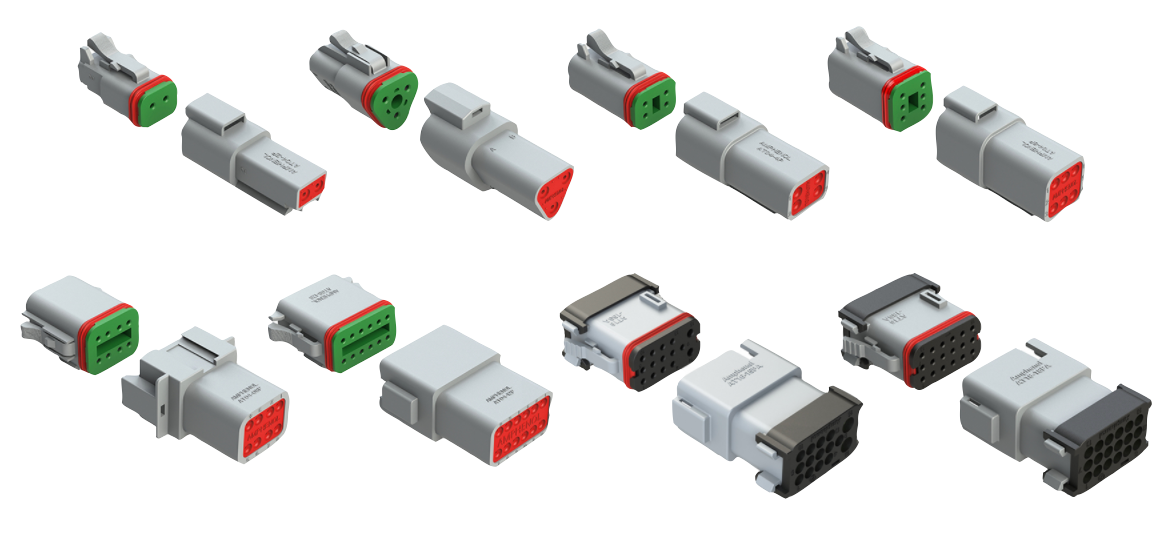
In stock at Powell Electronics are high-performance and cost-effective AT Series connectors from Amphenol Sine Systems. IP68/69K rated when mated, the devices offer superior environmental seals and seal retention capabilities for a variety of applications such as: heavy duty, transportation, marine, diagnostic, military, alternative energy and agricultural. AT Series connectors are available in two, three, four, six, eight, 12, 13 (mixed), 15 (mixed) and 18 positions and incorporate an integral latching system, ensuring a definitive electrical and mechanical connection. Wedgelocks guarantee proper contact alignment and retention. The connector housings are manufactured from a thermoplastic material that is not only durable, but offers excellent UV resistance, dielectric/mechanical properties and is fully RoHS compliant. The devices also benefit from a wide range of end caps and strain relief options and are compatible with all other existing standard products industry-wide. The operating temperature range is -55°C up to 125°C. www.powell.com

Skilled trades must go digital to attract the workers of the future
Europeans respect and value skilled tradespeople, finds 3M’s 2022 State of Science Index (SOSI). However, 70% of people across the continent are not attracted to pursue a trade career themselves, with 20% of Europeans saying that they were dissuaded from pursuing a skilled trade because they do not see career growth. An outmoded perception of trades While 92% of Europeans believe that the workforce needs more skilled workers, such as plumbers, electricians and carpenters, there is a lack of understanding when it comes to the opportunities on offer for those that take up a skilled trade. Addressing this understanding is critical with the ongoing skills shortage hampering employers across EMEA. It is not as clear cut as there just being less economic incentive - 64% of Europeans believe they would earn the same in a trade as in a career requiring a university degree, although this is significantly behind the 71% global average. Europeans’ reticence to take up a trade seems to correlate to a widespread misunderstanding of the progression of a trade career, and how the digital skills required in other industries come into play. The STEM/digital divide With 51% of Europeans concerned that they lack the digital skills to keep a job in the current market, it is clear that technology is a core component of the skilled trade sector. Tradespeople are required to embrace digital solutions for monitoring, implementing and performing remote maintenance on a daily basis. Indeed, 62% agree that skilled trade jobs rely on a STEM education. “The skilled trade economy, like all industries is being transformed by the latest technological innovations and there is an opportunity for the digitally savvy trade worker to thrive,” says Sarah Chapman, Technical Leader and Advocate for Diversity in STEM. “This data shows that trade schools, apprenticeship schemes and trade employers must do more to ensure vocational training and opportunities meet the demands of the modern world. We must bring the world of STEM and skilled trades together”. Creating opportunities To address the need for more skilled tradespeople in society, 3M has committed to creating 5 million unique STEM and skilled trade roles globally, through its Skilled Trades partnerships. This also includes ‘reverse mentoring’, which sees workers help to upskill older employees on digital competencies. To continue growing the respect and attraction of skilled trades jobs, training schemes must put STEM at the heart of this sector. www.3m.com

Toolstation announced as headline sponsor for the 2022 On The Tools Awards
Toolstation has been announced as the new headline sponsor of the 2022 On The Tools Awards. The On The Tools Awards relaunch for 2022 to recognise the skill, innovation and resilience of UK tradespeople. Following a two-year delay due to the COVID-19 pandemic, the awards set out to celebrate the very best of UK construction. The awards are being held on the 18th November at Edgbaston Cricket Ground in Birmingham. Caroline Roper, Senior Brand Marketing Manager, Toolstation, says: “We know that work in this sector is characterised by long hours, time spent away from family and many stresses, so the chance to recognise tradespeople for the invaluable work that they do is a great opportunity. “They are unsung heroes and work hard to keep the nation warm, dry and secure, especially in such challenging times. We’ve no doubt that there will be thousands of great entries and can’t wait to get a closer look at them.” During the pandemic, identified as ‘key workers’, many tradespeople continued working; helping to build COVID hospitals, repairing plumbing, heating and electrics, and carrying out essential maintenance to keep the country going. The awards offer a way of celebrating the achievements of the best and brightest in the construction industry during this period and recognise the tough two-years they experienced. Lee Wilcox, CEO of On The Tools, says: “Tradespeople are too often under-appreciated for their hard work and dedication. The On The Tools awards aims to give them the recognition they deserve. We’re especially excited to be able to re-launch after a very difficult pandemic, where tradespeople really were some of the unsung heroes. “The stories from the construction industry during this time are important to share - there was no choice for many of them to stay home, they were out and getting their hands dirty and putting themselves at risk to keep things going. The awards tell those stories, and with the help of Toolstation and our other partners we are able to reward tradespeople who went above and beyond.” www.toolstation.com www.onthetools.com

New IP65/IK08 BED door enclosures for industrial and commercial applications
For tough situations, the BED Range of door enclosures from BCL Enclosures provides excellent protection for electrical and electronic installations. This high-quality enclosure series is manufactured from ABS-HB material in Grey RAL 7035, with the option of either solid doors in ABS or transparent doors in polycarbonate. BED Door Enclosures are IP65-rated and protect their contents from solid particles such as dust or dirt and against low-pressure water jets from any direction. IP65 protection is the most common level of protection for outdoor lighting installations that will be exposed to all weather conditions, for example, in addition to being suitable for many industrial and commercial applications such as marinas, leisure spas, etc. Along with providing IP65 protection, these robust BED enclosures are also rated IK08 for mechanical impact - they can withstand a 1.7kg object dropped from a height of 300mm - which provides protection against common accidental blows and dropped objects, plus IK08 is a common rating used to denote a degree of resistance to vandalism. BED Enclosures are supplied complete with galvanised steel back plates and mounting brackets, plus either one key lock (BED001 and BED011) or two key locks (all other sizes), thereby providing everything an installer could require. There are 16 models available, in sizes ranging from the smallest BED001, which measures 130mm x 200mm x 300mm, up to the largest model, BED020, measuring a generous 250mm x 50mm x 700mm. www.bclenclosures.com

Transport for London banks on Ellis Patents
Transport for London (TfL) has installed Ellis Patents’ innovative Pegasus cable hangers in its £500 million Bank Station capacity upgrade project. Specified through ETS Cable Components, the hangers were chosen because their modular design meant they could be manufactured to the project’s very specific requirements. Noman Shabir, Ellis Patents’ National Sales Manager, says: “TfL wanted hangers that could be supplied to meet a variety of radii because of the changing curvature of the operating tunnels running in and out of Bank Station. In addition, they needed a product that featured pre-drilled holes so that they could accept cable cleats for signal cables.” “Traditional cable hanging systems wouldn’t have coped with these requirements on the basis they come in set sizes and configurations. Our thinking when we designed Pegasus was that no two rail projects are ever the same and as such project-by-project flexibility was vital.” As with all of its products, Pegasus was designed and developed completely in-house by Ellis Patents. Featuring an aluminium spine that can support any number and configuration of polymer cable hangers, the modular cable hanging system is not only more adaptable than similar products, but also stronger and lighter; making it quick and easy to install. Ellis Patents manufactures Pegasus cable hangers using LUL approved materials, which are suitable for installation underground and within tunnels, as well as UV stabilised materials for installations above ground and trackside. The Bank Station capacity upgrade project was aimed at relieving heavy passenger congestion during peak hours and has seen the construction of a new southbound platform tunnel and associated length of running tunnel for the Northern line.  It also incorporated the construction of connecting passageways to the existing station tunnels and the provision of step-free access from King William Street. It is due to be complete and fully operational in the Autumn. www.ellispatents.com www.tfl.gov.com www.etscablecomponents.com

Team of experts lead Greenwich ground source heat pump study
A team of experts has launched a pioneering project in Greenwich to assess the feasibility of switching gas-heated, owner-occupied homes in high density areas to low carbon heating in the form of networked ground source heat pumps. The aim is to develop an innovative methodology for the coordination of high-density heat pump deployments, which will support urban communities switching to a low carbon technology that will reduce energy demand, improve air quality and mitigate against rising energy costs. The work supports the Royal Borough of Greenwich Council’s carbon neutral plan to reach net zero carbon emissions by 2030. The Greenwich Thermal Infrastructure Motivating Electrification (Greenwich TIME) project is funded under the Heat Pump Ready Programme stream one, phase one, which is part of the BEIS £1 billion Net Zero Innovation Portfolio (NZIP), which aims to accelerate the commercialisation of innovative clean energy technologies and processes through the 2020s and 2030s. The partners include Element Energy, Kensa Contracting, Nationwide Building Society, UKPN, OVO Energy, Heat Geek and DG Cities. Networked ground source heat pumps have been identified as the technology Greenwich will use to trial its innovative methodology, if the project is successful in phase two of the programme. Networked ground source heat pumps have the potential to provide the lowest cost, lowest carbon decarbonisation pathway in a majority of situations, especially in high density urban areas, where the model allows whole streets to rapidly switch to low carbon heating technology. The key barrier in adopting the technology has traditionally been the cost of installing the underground infrastructure needed to extract renewable heat from the ground. The Greenwich project will explore the potential to decouple the up-front capital cost barrier of the ground side installation from customers via financing mechanisms, similar to how existing domestic services (such as gas and electricity) are already funded. The Greenwich TIME project aims to enable consumers to replace their boilers with a networked heat pump in a way that is affordable and simple to understand that would be adopted and completed with minimal household disruption. This can be used as a blueprint for the deployment of heat pumps at scale within other urban communities across the UK - in line with government targets to have 600,000 heat pumps installed per year by 2028. Trevor Dorling, Managing Director of DG Cities, says: “We know from our previous research that there are many hurdles to the widespread adoption of heat pumps. In our recent survey, 70% of people said they were ‘highly unlikely’ to buy one in the coming year. We’re looking forward to working with Greenwich residents to understand, in greater depth, exactly why this is. Our focus will be making sure our heat pump offering is innovative, builds confidence in the technology and reduces the barriers to adoption, including reducing upfront costs to households. We’re part of a great team of project partners and can’t wait to get started in the borough.” Sam Foster, Partner at Element Energy, comments: “Achieving widespread rollout of heat pumps in homes up and down the country is key to the UK reaching net zero. The government’s Electrification of Heat project has recently demonstrated that heat pumps are technically compatible with essentially all housing types. The key challenge is now to engage households and bring together the delivery partners - including equipment providers, installers, suppliers and finance - to make heat pumps attractive, affordable and convenient for all. We are delighted to be working with a brilliant team on the TIME project to develop and test innovative approaches to encourage and enable a heat pump community in the heart of Greenwich.” James Standley, COO of Kensa Group, says: “We are very excited to be involved in this study of a potential community-scale urban ground source heat pump solution for decarbonising the nations’ heating. Kensa believes that the combination of low carbon technology and renewable infrastructure proposed in Greenwich is a key contender for the lowest system cost route to achieving net zero in the UK, and we are therefore keen to work with the project partners to explore the proposals.” www.department-for-business-energy-and-industrial-strategy.com www.element-energy.com www.kensacontracting.com www.nationwide.com www.ukpowernetworks.com www.ovoenergy.com www.heatgeek.com www.dgcities.com