2 November 2026
Product of the Month: Amari Floodlight range by Aurora Lighting
 
26 November 2026
Thorn scores second Highland football lighting installation
 
26 November 2026
Segen pens exclusive distribution contract with M-Rack
 
25 November 2026
Scolmore helps rejuvenate Tamworth Cancer Support Centre
 
25 November 2026
Leicester apprentice crowned 2026 SkillELECTRIC champion
 

Latest News


Ansell Lighting achieves LIA certification for luminaire testing laboratory
Ansell Lighting has achieved LIA Laboratory Certification 003 for its Warrington-based luminaire testing facilities. The laboratory is one of just six in the UK to have achieved the accreditation, enabling Ansell to validate the quality and performance of its new and existing products in-house. The LIA stamp of approval follows a £x investment in a state-of-the-art goniophotometer, the Gonio Tunnel, for the laboratory. This enables Ansell to test components, new product design prototypes and existing products, to ensure complete accuracy and compliance with industry standards. Lumen tests carried out using the Gonio Tunnel can also be cross-checked and verified by the LIA as an added assurance of quality. Mark Abbott, Managing Director at Ansell Lighting, says: “The LIA Laboratory Certification acknowledges our testing capabilities as being on a par with those at the LIA’s own testing facilities at Telford. “We underwent a stringent evaluation process, covering everything from test equipment and procedures to our quality management system and independence and impartiality, and are delighted to have earned our place among an elite group within the luminaire community.” He adds: “Being approved to carry out lumens testing in-house, rather than having to outsource testing, enables us to streamline and enhance product development and speed up route to market. “Crucially, the ‘LIA Lab Certification’ logo delivers instant assurance to Ansell customers that our products adhere to the highest industry standards.” The LIA Laboratory Certification applies to all LED lamps for display, amenity, commercial, industrial, floodlighting, emergency and smart lighting.

Nexans strengthens its worldwide production capacity for the wind energy industry
Nexans strengthens its global wind network and increases its production capacities to meet the growing demand for clean energy and electricity in the world. Nine months after the company opened a similar facility in Poland, Nexans extends its presence in China and unveils a new cable harness production facility in the city of Tianjin. The opening has been marked by an official ceremony on June 30. The facility will increase Nexans’ production capacity in the country and help bolster China’s clean energy supply chain during a time of unprecedented market growth. The facility has 3,000 square meters of production and storage space and will manufacture a wide range of wind cable products and solutions. Each product will go through six stages of control from raw material to finished goods, ensuring all products are made to the highest standard. Solutions produced at the facility will include M12 sensor cables, valve connectors, and customized solutions specific to OEM needs. Julien Hueber, Executive Vice President Industry Solutions & Projects, says “It’s an exciting time for wind power in China. The country’s wind sector is currently the same size as the rest of the world combined - and it continues to grow as the country commits to reducing its CO2 emissions. Furthermore, the falling cost of wind power, efficiency increases, and attractive policies are expected to boost growth even further. One of Nexans’ top priorities is to electrify the future by connecting the world’s renewable energy sources to ensure electricity supplies are secure, reliable, and efficient. Our new facility means Nexans is perfectly positioned to help local original equipment manufacturers drive China’s wind power revolution as more wind turbines are built in the country.” The three facilities in China, Denmark and Poland are part of Nexans’ extensive offering in the Industry and Solutions business, supporting a wide range of clients with customized cabling and connectivity solutions. Nexans now has a total production capacity of one million harnesses every year. It also has over 15,000 square meters of global production and storage facilities and a wind power team of over 150.

Aurelius Investment Group completes agreement to buy SSE Contracting
Aurelius has completed the purchase from SSE plc of its Contracting business. Aurelius has a track record of investing in public and private companies to enhance their growth potential. SSE’s sale of its Contracting business to Aurelius was first announced on April 1st and is part of SSE’s strategy to focus on its core networks and renewables businesses, supported by businesses clearly complementary to that core. It is also designed to give the business a strong platform for future success outwith SSE. Stuart Chaston, Managing Director of SSE Contracting and Rail, says the news was another key milestone for the Contracting business. He comments: “I’m pleased to confirm that we have now completed the sale process with Aurelius. Since we first announced the sale was taking place on April 1st, we’ve made huge strides working with Aurelius to move the Contracting business forward. “Today’s news confirms that our journey as a standalone business begins in earnest from today. Aurelius has a proven record of supporting the companies they work with, so this partnership confirms an exciting era of growth for our business.” SSE Contracting is one of the biggest contracting businesses in the UK providing mechanical, electrical and street lighting services. It is the largest street light contractor in the UK and its HV [high voltage] engineers install energy infrastructure for clients including schools, hospitals and substations. Its rail division delivers mechanical, electrical and civils activity for the likes of Transport for London and Network Rail. The completion of the sale process confirms that around 1,900 Contracting employees will now work under the new Aurelius ownership. SSE has a clear strategy to refocus investment on its core networks and renewables businesses, with plans to invest £7.5bn mainly in low-carbon energy infrastructure over the five years to 2025, and to treble its renewable electricity output by 2030. In September 2020 SSE announced in its half year results that the SSE Contracting and Rail business would be part of the group’s overall disposals programme. Since then the Contracting management team have focused on ensuring the business can thrive as a standalone company and capitalise on growth opportunities under its new ownership.

Customers and communities at the heart of UK Power Networks' £4.5bn plan
Placing customers and communities at the heart of Net Zero is the driving force behind UK Power Networks’ £4.5bn draft Business Plan for 2023-2028, which is now available to view online. UK Power Networks has now published its draft Business Plan with a raft of commitments to maintain its position as the best performing network company in Great Britain. The Business Plan will deliver a 10% reduction (in real terms) in its part of the energy bill whilst increasing investment in the electricity networks by 7%. UK Power Networks is forecasting up to 2.7 million EVs connected to its networks by 2028, up from just 150,000 in its regions today, as well as an additional 700,000 heat pumps over the same period. At the core of UK Power Networks’ strategy, is to have the flexibility to adapt so that the electricity network is an enabler of low carbon technologies like heat pumps and electric cars, regardless of the speed and scale that they are adopted by the public. Its Business Plan argues that this flexibility will avoid needless price increases for consumers to pay for assets that don’t get used. Under the Business Plan, UK Power Networks has included £4.5bn of investments that it is highly confident will be needed. It has forecast an additional £1.1bn of potential investment if the highest case scenario of people switching to electric vehicles and heat pumps, as defined by the Committee of Climate Change in its Sixth Carbon Budget, materialises. As part of its ambition, UK Power Networks will encourage energy efficiency, network flexibility and using competitive markets powered by technology and data to encourage the use of electricity when it is cheaper and greener to do so. Experts at the utility company have undertaken extensive consumer research and stakeholder engagement involving over 26,000 people across London, the East and South East, to create a Business Plan that delivers on their future needs and priorities. Key highlights include: Establishing a dedicated team to work with local authorities to develop local area energy plans that help communities to transition to Net Zero Proposing innovative approaches to help unlock public on-street charging to tackle one of the key consumer barriers to buying an electric vehicle and ensuring fairness across all communities. This will increase the current levels of on-street public chargers by 25% Setting an ambitious goal to achieve Net Zero in its own operations by 2028. It is the first network operator to get its plan verified by the Science Based Targets Initiative A total of £67m worth of benefits to support customers experiencing fuel poverty and making clear commitments to play its part in delivering the UK’s Levelling up Goals as part of its Social Contract. Chief executive officer Basil Scarsella, says: “The 2020s will be a decade of transformative change in the energy system and in our society, as we decarbonise every aspect of our economy, and a time when Net Zero becomes real for millions of our customers. It will bring major change to the lifestyles of people and communities; from the way we refuel our vehicles to heating our homes and using energy wisely. “That is why we have undertaken our most extensive ever consultation and engagement exercise, responding to what more than 26,000 people have told us and creating a Business Plan with customers and communities at its heart. I would like to invite anyone who would like to feed into our Business Plan, to view it online or attend one of our planned events to let us know what they think.”

Research finds construction suicide rates on the increase
The Lighthouse Construction Industry Charity commissioned Glasgow Caledonian University to carry out research on suicide statistics from 2015 to 2019 and alarming results show that suicides have increased in construction. Analysis of suicide victims by occupation revealed the number per 100,000 for construction workers rose from 26 to 29 in the four years to 2019. The data shows no change in historical ratios, with those in the construction industry three times more likely to commit suicide than in other sectors. The findings also identified variations between certain occupational groups. Those working in non-manual occupations, such as managers and professionals, have lower rates, which have also seen an overall drop in rate from just under 7 in 2015, to just under 5 per 100,000 in 2019. However, unskilled workers, such as labourers, have seen their rate rise from 48 to just over 73 suicides per 100,000. The research, led by Professor Billy Hare has also helped develop a ‘dashboard’ which identifies measurable data on construction safety, health and wellbeing. It will be updated yearly, allowing industry organisations, policy makers and researchers to view trends, track the progress of industry initiatives, and inform future decision making. Bill Hil, CEO of the Lighthouse Construction Industry Charity says, “It is worrying that our support is not reaching the ‘boots on the ground’ workforce. This could be because about 53% of our workforce are self employed, agency or zero hour contractors and we are simply not getting our message down the supply chain. Even more worrying, is that these statistics are pre-pandemic so the full impact of this won’t be revealed until further data is released in October of this year." Professor Hare comments, “This occupational group (unskilled workers) is usually higher than average for committing suicide, but the sharp rise and widening gap over the period analysed, in contrast to their non-manual colleagues, is concerning and may indicate recent initiatives are not reaching these more vulnerable sectors of the industry." In 2017 the Thriving at Work report commissioned by the government and undertaken by Lord Stevenson and Mark Farmer highlighted poor mental health in construction. Since then, the industry has been engaged in many initiatives to improve the overall wellbeing of the sector. But sadly, this latest research highlights that mental wellbeing initiatives aimed at protecting our construction workers may not be reaching those who need it the most. The Lighthouse Construction Industry Charity has been providing free emotional and wellbeing support through three main channels including their free 24/7 Construction Industry Helpline, a supporting helpline app and free wellbeing training, but in immediate response to the research findings the charity is redoubling its efforts with even more pro-active initiatives to ensure that no construction worker or their family feels alone in a crisis. Help Inside the Hard Hat Awareness Campaign The charity’s current campaign to raise awareness of mental wellbeing in our industry, Help inside the Hard Hat encourages the construction community to think about what is going on inside the hard hat and signposts to all the support available from the charity. Posters and hoardings artwork are free to download. Lighthouse Beacons The charity is developing a nationwide network of ‘safe places’ for the construction community to talk in a confidential environment about their issues. These will be volunteer led and will deliver a network of self-help groups run by facilitators that have lived experience. Supporting Apprentices Piloting a mental wellbeing support programme with London Colleges to instil a positive appreciation of mental wellbeing at the start of a construction career. The charity will be providing mental health awareness training to 1000 apprentices and mental health first aid training to 100 tutors. The charity is also collaborating with the Rainy Day Trust to offer free tool kits and laptops to apprentices that are failing their apprenticeship due to affordability of tools or IT equipment. Mind Builder A new project with Building Mental Health and Samaritans, funded by the CITB. Mind Builder will deliver a central hub of high-quality wellbeing assets and learning. This project will also link up with the Supply Chain School for enhanced learning.

Rako launches supply partnership with QMotion UK
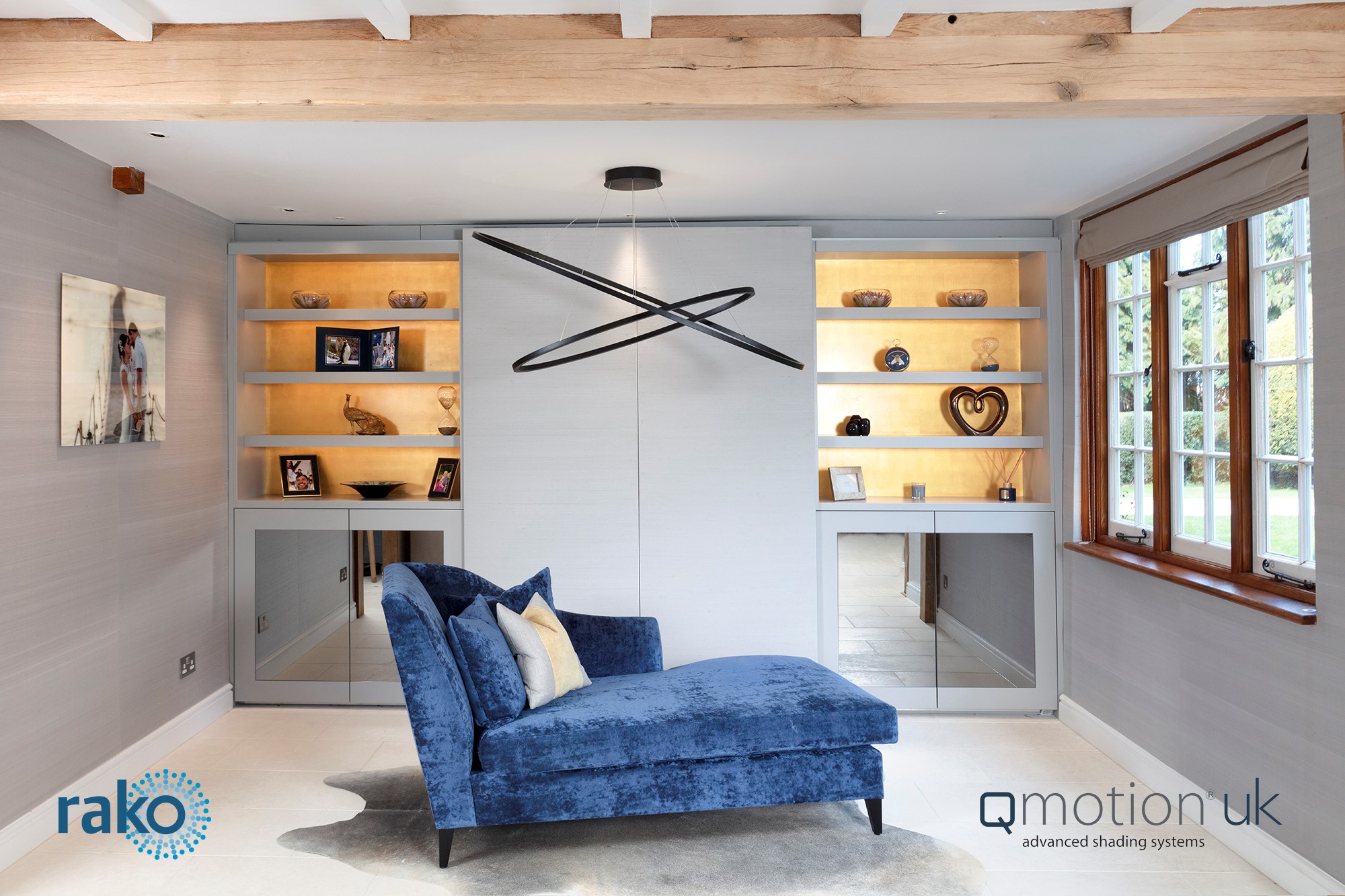
Rako has introduced a new partnership offering automated wireless blinds, powered by QMotion UK, a specialist in premium quality automated window coverings. This partnership builds on the established synergies between these two complementary brands and will provide dealers with a seamless experience when specifying and installing lighting and wireless blind control on a project. QMotion FM Roller and Roman blinds can already be natively integrated via the Rako RK-HUB or WK-HUB into Rako wired and wireless lighting control systems, without the need for special drivers or additional interfaces. Now, Rako customers will be able to access QMotion wireless shading solutions via Rako as well as training, sales, technical support and additional window treatment offerings. Industry leading wireless shading systems from QMotion feature a patented, single tube design which offers the most aesthetically refined, slimmest and unobtrusive blind solution on the market, perfect for windows ranging from 400mm to 3800mm in width. This elegant, single tube design also houses the alkaline batteries which drive the motor to support the low energy QMotion counterbalancing mechanism operating the blind. As a result, battery lifetime typically extends for up to three years with the batteries fully recyclable, when depleted, and easily accessible for replacement through the tube compartment. “We’re all about making life easier and more efficient for our dealers and their end clients,” says Paul Wafer, Director at Rako Controls. “Lighting control and automated window treatments work seamlessly together to increase comfort, security and well-being for clients in many modern smart homes. Since Rako and QMotion UK shading systems integrate so effortlessly with each other, and because QMotion’s wireless blinds are clearly the best in the sector, it’s a natural step to offer a one-stop sales and support solution for wireless shading that will help our dealers. This will save them even more time and hassle when specifying and installing on site.” “We’re delighted to support Rako’s dealers with high quality, automated wireless blind technology that’s backed by exemplary service, powered by QMotion UK,” adds Ian Claxton, Director at QMotion UK. “This move will deepen our alignment, provide strong benefits for Rako dealers and, ultimately, leave the client delighted with the best looking, most reliable and sustainable wireless blinds on the market.”

Nissan Gigafactory essential to UK EV battery supply chain development
Nissan’s commitment to the UK automotive sector’s electrified future is essential for the development of the UK’s EV battery supply chain and of major importance to both the UK government’s domestic decarbonisation of mobility strategy and post-Brexit industrial policy. From a practical perspective, it is essential to the competitiveness of UK automotive production that the largest domestic automakers commit to producing EVs in the market and manufacturing their costliest and most politicised component (the battery) internally, in Nissan’s case through an extended joint-venture with Envision, who already produce battery cells for the Nissan Leaf at the Sunderland plant. The 1bn investment, which is expected to create up to 6,200 new jobs and is thought to have received specific financial support from the UK government, takes the UK’s planned and operational battery-cell production capacity to around 43GWh, accounting for around 6.3% of the European total. As part of the agreement, Envision has the option to future-phase investment in the expansion of the site where potential capacity could be as much as 30GWh by 2030. We expect to see more details on the development of a localised battery materials supply chain for UK gigafactories (all of which that have been officially announced are in the North-East of England) over the coming quarters, as automakers seek to limit their exposure to external commercial and political supply-chain pressures. This focus on localisation is creating sub-regional hubs for EV battery manufacturing – we contend that the North-East of England is fast becoming one. Home to all 3 of the UK’s formally announced gigafactories, including a 30 GWh site from start-up Britishvolt, the region’s increasing prominence in this sector supports our contention that the primary pull factor for battery manufacturers will shift from low labour costs to the availability and cost of renewable energy. Battery manufacturing and recycling are energy intensive processes. Increased automation, an increasingly restrictive emissions environment and increased ESG-related considerations among policymakers, manufacturers and consumers has and will continue to drive this shift. The region along England’s North-East coast will therefore continue to benefit from its access to a diverse energy basket that includes the increasingly decarbonised grid, offshore wind and a North Sea link to Norwegian hydropower. The announcement will be heralded as a vote of confidence in the UK’s post-Brexit industrial future and will help Nissan as it mitigates the onset of increasingly stringent local content requirements for EV components agreed in the EU-UK Trade and Cooperation Agreement (TCA) over the coming years. We have previously highlighted how the TCA commits to a phasing-in of local content requirements for EVs, EV batteries and their components, though does not allow for diagonal cumulation with common trade partners, creating risks to the long-term competitiveness of UK EV exports. From 2027, in order to qualify for tariff free export to the EU (by far the UK automotive sectors largest export partner accounting for around 58.0% of total UK vehicle exports in 2020), 100.0% of battery materials must be sourced in the UK or EU. This is emblematic of the European region’s target to attain strategic autonomy in the EV battery supply chain, which has become heavily politicised and of critical importance both to domestic EV penetration prospects and the development of the energy storage industrial sector which is essential to broader decarbonisation initiatives. We expect the battery chemistry focus to remain on a dominant high-nickel variation of the NMC (Lithium Nickel Cobalt Manganese Oxide) which has been used in the long-range Leaf to date. We expect to see details emerge pertaining to the UK government’s support for the investment, which we have noted must become increasingly specific. Lastly, we expect to developments in the associated supply-chain over the coming quarters, specifically for raw materials extraction, refinement, processing and recycling after use. While geology will limit the extent to which the extractive element of the upstream can be localised, we expect the strategy of regonalising EV supply-chains to sustain.

Aico host Shropshire Fire and Rescue Service Business Education Seminar
Aico recently welcomed members of the Shropshire Fire and Rescue Service to their headquarters in Oswestry to host their Business Education seminar. Hosted in Aico’s flexible meeting room, in accordance with Government guidelines, the seminar was held for the purpose of educating local business owners and responsible persons on the legislative requirements around fire safety. Aico, the European leader in home life safety, has the primary aim of making homes safer, and strive to educate and inform the community, from electrical contractors to landlords and their residents. Aico were pleased to support their local Fire and Rescue Service in raising fire safety awareness. This opportunity arose from Aico’s new campaign, which aims to increase support to the Fire and Rescue Service across the UK. The campaign launched in September 2020 with the focus of offering increased support to each of the 52 Fire and Rescue Brigades across the UK, through the provision of Aico’s Fire Industry Association approved CPD training based on BS 5839-6:2019+A1:2020, use of Aico’s Mobile Training and Demonstration Units and access to office space at their Centre of Excellence, as well as homeowner and tenant safety packs. Martin Huckle, Watch Manager and Inspecting Officer for the Shropshire Fire and Rescue’s Protection Department adds “This is a busy time for all sectors of business as we emerge from the pandemic, and we were really pleased that local businesses took time out to come and listen to the presentation and hopefully take something away to make their premises safe for the people who use their buildings. Although we have made the presentation available online these live seminars provide the best opportunity for businesses to engage with the Fire Service in an open session of questions and answers to help employers have a better understanding of how to make their premises safe and comply with Fire Safety Legislation.” Aico’s Operations Co-ordinator Ryan Evans who joined the session commented “It was great to see so many local businesses engaged and learning about fire safety, it is really encouraging to see them taking time out of their busy schedules to keep up to date with the latest changes. As restrictions ease, we look forward to welcoming more of the community to use our facilities here in Oswestry”. As the government moves towards lifting all restrictions, Shropshire Fire and Rescue Service will be planning further live seminars.

Ansell Lighting expands senior team in Warrington
As part of its ambitious expansion plans, Ansell Lighting has made two senior appointments to its Warrington headquarters. Pete Blackburn has joined the business as Head of Product Development and Jane Rylands has been named Head of Marketing. Pete joins Ansell with more than 15 years’ experience, starting his career as a lighting designer at Whitecroft Lighting, before progressing to Global Product Manager at GE lighting and most recently, Global Product Manager at ACDC Lighting, part of the Zumtobel group. In his new role he will be responsible for leading the development of innovative new Ansell lighting products for the UK and international markets. Newly appointed Head of Marketing Jane Rylands joins Ansell from manufacturing giant Glen Dimplex Home Appliances, where she was Head of Marketing Communications, overseeing the marketing strategy for household names Morphy Richards, Stoves, Belling, Lec and Britannia Living. Jane will lead the development and implementation of Ansell’s marketing strategy both domestically and overseas. Mark Abbott, Managing Director at Ansell Lighting says: “Both Pete and Jane are at the top of their respective fields and their appointments are a demonstration of our ambitious growth plans for Ansell Lighting and the Ansell brands. I have every confidence that Pete’s innovative approach and Jane’s strategic expertise will push us forward in achieving our commercial goals for the business.”

54% of Brits confused about upcoming UK green home targets
As the UK government looks to transition to net zero greenhouse gas emissions by 2050, a number of green deadlines are approaching. Recent research from Checkatrade has shown that awareness of these upcoming changes amongst homeowners is low, with 54% of respondents admitting they find the concept of ‘greener’ homes confusing and believe there needs to be more clarity around what this means. With a plan already in motion to ban the sale of gas boilers in UK homes by 2025, currently only one in four Brits (24%) know exactly what the proposed boiler ban means and how it will affect them, showing a lack of awareness around the upcoming deadline. Additionally, by 2035 all social housing should be achieving between A-C rated Energy Performance Certificates, indicating high energy efficiency and lower running costs of heating, lighting and hot water. According to the Checkatrade study, only 22% of respondents stated that they understand what this deadline means and how it will affect them. However, despite this confusion, over half of respondents (55%) stated they were interested in undertaking sustainable improvements on their homes, and 56% would be interested in hearing about what changes they can make to their homes now to make them more sustainable. The findings also revealed that there are more benefits to making sustainable changes to the home aside from increasing energy efficiency and saving money, as 40% say they would be happy to pay more to buy a home that is ‘greener’. The top ‘green home’ features that Brits would consider installing include: Solar Panels – 55% Smart Thermostat – 52% Heat Pumps – 49% Electric Vehicle Charging Points – 47% Electric Boilers – 46% Biomass Boilers – 44% Ceiling Insulation – 43% Wall Insulation – 34% Double or Triple Glazing – 30% Meanwhile, 63% of respondents also agreed that they would need an expert tradesperson that is well-versed in sustainable home upgrades to carry out these improvements. CEO of Checkatrade, Mike Fairman, says: “Demand for energy efficiency-related projects has risen greatly in recent years – at Checkatrade we’re seeing a huge uptick in searches for sustainable home improvements, including a 28% increase this most recent quarter. It’s likely that consumer interest in sustainable homes will continue to increase, as protecting the environment becomes a larger focus for the public. However, there is a clear need for education amongst consumers on the concept of greener homes– this is where skilled tradespeople can play a key role to help raise awareness. With the UK’s upcoming green deadlines, it’s more important than ever for homeowners to have access to vetted professional to successfully implement these green changes – such as installing electric heat pump boilers – in their homes to comply with rules and regulations.’’ To help ease consumer confusion around green homes, Checkatrade has created a range of useful cost guides on everything from eco-friendly building materials to installing solar panels, giving Brits a helping hand on their journey to creating sustainable homes.