2 November 2026
Product of the Month: Amari Floodlight range by Aurora Lighting
 
26 November 2026
Thorn scores second Highland football lighting installation
 
26 November 2026
Segen pens exclusive distribution contract with M-Rack
 
25 November 2026
Scolmore helps rejuvenate Tamworth Cancer Support Centre
 
25 November 2026
Leicester apprentice crowned 2026 SkillELECTRIC champion
 

Latest News


ProGrAnalog heads to Cornwall as UK tech sees rapid growth
ProGrAnalog, has recently made the move to Cornwall, using the Tremough Innovation Centre in Penryn as it’s hub for European expansion.   This comes as Tech Nation reports that in 2021, the UK is more attractive to international investors than ever; with 63% of investment into UK tech coming from overseas in 2020 - a 13% increase over 2016.   Tapping into the growing technology cluster in the region, the move to Cornwall offers ProGrAnalog an exciting opportunity to expand in a way that the big UK cities cannot provide, and in turn strengthens Cornwall's position as a leader in innovation – a position also highlighted in Tech Nation’s annual report, which cites that not only has investment in UK regions remained strong throughout the pandemic, but the South West has posted record years.  ProGrAnalog already serves a diverse global client base from its headquarters in Portland, Oregon. Supplying its in-demand transient load testing product LoadSlammer to big-name technology providers like AMD and Xilinx.  LoadSlammer is a unique offering in the technology sector  – helping companies to test the power requirements of semiconductors in development of their products. For many technology brands, equipment like LoadSlammer is critical for ensuring safe and reliable product performance.    Rob Misselbrook, Head of UK Operations at ProGrAnalog says: “Cornwall offers us an alternative way to access the European technology market without relocating to the city. We’re paying almost a quarter of what we would for office space in places like London and Oxford, and the high quality of living in the region is helping us attract some great talent.” ProGrAnalog is currently building its UK team, offering flexible, remote working opportunities for all employees. Hitting the ground running, they have already filled a full-time sales role and part-time marketing role and the company is planning to source junior graduates from within and outside the region. Rob adds: “The Tremough Innovation Centre has given us a great starting point in Cornwall. We can rent our office space on a month-by-month basis, and it has the strong connectivity we need to serve our global clients.” If you would like to find out how your business could relocate to Cornwall, get in touch with the Cornwall Trade and Investment team today.

Surge protection: what you need to know
Dominick Sandford, Director of Merchandising & Marketing at ElectricalDirect looks at the requirements for surge protection, installer responsibilities and how to select the correct surge protection devices. Electrical and electronic equipment of all types, from computers to industrial machinery to medical devices, are now a central part of our lives and crucial to business operations and public services. However, they are vulnerable to power surges, also known as transient over-voltages. While these high voltage spikes can last just a fraction of a second, they can degrade, damage or even destroy equipment attached to the power supply. Around 35% of transient over-voltages come from external events such as lightning strikes, utility grid switching or electrical accidents. The other 65% come from sources within the building, most commonly electrical switching within appliances and equipment. This is where the energy stored in the magnetic field generated by electrical equipment is suddenly released when the current is interrupted and dissipates as a high voltage transient. Surge protection requirements Successive versions of the Institution of Engineering and Technology (IET) Wiring Regulations (BS 7671) have updated the guidance on surge protection devices (SPDs). The current 18th Edition, released in July 2018 and applicable from January last year, outlined new criteria for where SPDs should be installed and provided revised advice for contractors. The new regulations introduced a simplified assessment for when SPDs are required. It states that: “Protection against transient over-voltages shall be provided where the consequence caused by over-voltage effects: Results in serious injury to, or loss of, human life or; Results in interruption of public services and/or damage to cultural heritage or; Results in interruption of commercial or industrial activity, or; Affects a large number of co-located individuals.” Furthermore, any commercial, industrial or public building that is supplied by overhead lines also requires surge protection. This means that the majority of buildings will require surge protection because one or more of the criteria apply. While single residential properties are not included if the value of equipment does not justify the protection, apartment buildings would fall under the category of affecting a large number of co-located individuals. Single dwelling properties are not required to have surge protection, therefore it is up to the homeowner to decide if they want to take preventative measures. Often the deciding factor will be the level of risk and the value of the equipment that the devices would be protecting. In these situations, installers have a role in advising the homeowner on the best course of action. For non-residential properties that do not fit into these categories, a risk assessment must be carried out. This process has been simplified in the 18th Edition and details of how to calculate the level of risk can be found in section 443.4 of the IET Wiring Regulations. Where this risk assessment is not conducted the regulations require that surge protection is implemented. It is important to note that Overcurrent Protective Devices (OCPDs), such as circuit breakers and fuses are not intended to provide over-voltage protection. They are designed to protect homes, businesses and human life from the dangers of a short circuit or overload and serve a different function to SPDs in the electrical installation. Selecting and installing SPDs All SPDs work by diverting surge currents to earth to reduce the over-voltage to a level that will not damage the components of the system or equipment connected to it. There are three types of surge protection device. A Type 1 SPD is designed to provide protection against surges caused by direct lightning strikes. These often feature spark gap technology which can handle very high voltages by creating a short to ground when a level of current is reached. A Type 2 device offers protection against over-voltages from switching and indirect lightning strikes. This type more commonly uses a metal oxide varistor (MOV) to divert the current away. Type 3 SPDs provide local protection for sensitive equipment. As these have a relatively low discharge capacity, they should always be installed in addition to a Type 1 or 2 device. These are available as hard-wired components but are also commonly found in surge protected sockets, adapters and extension leads. A Type 1 or 2 must be installed at the origin of the installation, where the power supply enters the building. However, determining which type is required depends on whether there is a structural lightning protection system (LPS) installed. A Type 1 should always be installed where there is an LPS, as it forms part of the system, and a Type 2 can be fitted where there is not. To determine the location of other SPDs, the lightning protection zones (LPZ) have to be considered. External zones (LPZ 0a and 0b) are areas where there is a threat of full lightning voltage or electromagnetic field. The internal zone (LPZ 1) are sections protected from full lighting surge voltages by an SPD at the boundary. LPZ 2 is an area deeper inside the installation that is protected by additional layers of surge protection. A surge protection device should be installed whenever a cable crosses to an internal zone from the external LPZ. SPDs are also required where a cable crosses an internal zone boundary. Combining different stages of surge protection in a ‘cascade’ will maximise protection as it improves the system’s diversion capacity, whilst maintaining a low voltage. For example, a Type 1 or 2 will provide broad protection against the highest voltage spikes, while further Type 2 or Type 3s installed close to the equipment will provide an additional buffer. These secondary or tertiary levels also provide protection against electrical switching from within that zone. Protecting electrical installations from the threat of over-voltages is essential to ensure the safety of building occupants and the longevity of the equipment connected to the system. The requirements of the updated wiring regulations will undoubtedly mean that a large proportion of buildings will now need surge protection measures to be installed. ElectricalDirect stocks a range of surge protection devices. To find out more visit www.electricaldirect.co.uk.

Forging career connections with armed services
Engineers from two power firms are helping people considering leaving the armed services to explore career paths in the electricity industry. UK Power Networks, Britain’s biggest electricity network, together with UK Power Networks Services, which provides infrastructure services for the Ministry of Defence and other clients, are helping people serving in the military into the electricity industry. The companies are providing new work experience placements (known as Civilian Work Attachments) to help military personnel move into civilian jobs. Anita Boye, recruitment specialist at UK Power Networks, matches future service leavers with employees who can give them an insight to the electricity industry. UK Power Networks and UK Power Networks Services, which currently employ 70 military veterans, have hosted four attachments, with two more in the pipeline. Anita says: “Service leavers are excited to work with people who understand their background and can give relevant advice to support their future career development. They want to follow in their footsteps and we try to pair them up with people in roles they aspire to. We try to find the common ground, between the individuals who reach out to us and the people in our company’s armed forces community. If they are seeking operational work, we pair them with a field staff supervisor to guide them and this includes which qualifications they should pursue.” Alastair Smith, currently serving as a military engineer electrician with the Royal Engineers, says: “Opening the lines of communication and establishing that early engagement on my resettlement journey with UK Power Networks Services has been vital. This has enabled me to shape a very specific resettlement plan. My aspirations will be to leave the Army with the HNC Electrical Engineering and to gain employment with UK Power Networks Services.” UK Power Networks Services manages the electricity networks for six Army garrisons across Bulford, Aldershot, Larkhill, Perham Down, Tidworth and Warminster. Alastair’s mentor is Ross Corbishley, a project engineer for UK Power Networks Services in Aldershot, who has a deep connection with the military, as his brother is ex-Army Royal Engineers. Ross comments: “We have managed to build Alastair a target plan. This shows him getting a few courses done before he leaves the Army that would mean he would come to us for interview with relevant courses already complete. Whilst there is no guarantee of employment, I wouldn’t hesitate in working with him until the time comes, to give him the best opportunity to make himself the most employable candidate when he does apply to UK Power Networks Services.” Alastair adds: “Ross is a perfectly matched mentor for me, a consummate professional and he delivered both civilian work attachments professionally and with a tremendous amount of passion for the job and company.” Matt Carter, from Battle, East Sussex who is in the Army Royal Signals, joined UK Power Networks Services for a day to learn about becoming a cable jointer. Matt says: “It was a valuable experience offering a unique insight into what UK Power Networks Services does. The work attachment has aided me in choosing a new career outside of the Royal Signals, and this has helped give me direction regarding my resettlement. I would like to thank Ross and the team for an enjoyable day.” Matthew Hodges, from Basildon, currently serving 3rd Battalion The Royal Anglian Regiment, spent two days working in the Cambridge area with Alan Rigby, a field staff supervisor at UK Power Networks. Matthew says: “It was absolutely brilliant, I had a really good time and learnt a lot. The team I worked with were very helpful and patient and were really good at explaining things and showing me what they do.” His power industry mentor, Alan Rigby, comments: “Having Matthew join us at Waterbeach for two days has been a tremendous success. He now has a good knowledge of how UK Power Networks operates, our excellent safety culture and high expectations of all employees across all parts of the business.” Stuart Sadler, from Edmonton, North London, serving in the Corps of Royal Engineers, spent four days with a network operations field team in the Enfield area. He plans to return to gain an insight into electricity network design, which the company is trying to facilitate. He says: “I shadowed engineers, linespeople and jointers for the week. It was an educational experience and a great insight into what UK Power Networks does. The teams both in the office and on the ground were welcoming and answered every question I could think to ask. I thoroughly enjoyed my time on the placement and would fully recommend it to others who are considering leaving the military.” His power industry mentor was Luke Harvey, a field engineer at UK Power Networks, based in Enfield. Luke says: “Stuart was involved in works from pulling cables to assisting the linespeople with pole holes. He saw a couple of shutdowns and cable jointing, asked questions and even stayed late to see jobs through.” UK Power Networks earned Investors In People ‘Platinum’ status, and signed the Armed Forces Covenant in 2015, to show support for fair treatment of the armed forces, their families and veterans. Its commitment to the armed forces earned a silver award in the Ministry of Defence’s Employer Recognition Scheme. The company has benefitted from a long-standing relationship with the Career Transition Partnership (CTP), which is the MoD’s official provider of resettlement, supporting all leavers of the Armed Forces.

CTEK launches new 4-socket EV charging solution
Established in Sweden, CTEK is a leading global brand in battery and vehicle charging, supplying the UK market with a wide range of market-leading electric vehicle (EV) charging products and innovative solutions that support the transition to greener mobility. Its most recent development is a 4-socket EV charging solution that makes the swift, cost-effective installation of robust, reliable charging networks easier than ever. This unique solution features two dual socket CTEK Chargestorm Connected 2 AC chargers, mounted back-to-back on steel brackets on a standard 60mm diameter pole, so four EVs can plug in and charge at the same time. As you only need one pole and one hole for every four charging points, installation is quicker, easier and more cost-effective, as well as saving on space and construction materials. The chargers can be used inside and out, and they’re built using robust, top quality components and materials for maximum reliability and reduced maintenance. This innovative, space saving charging solution is ideal for small parking areas, including businesses looking to provide charging facilities for their clients, customers and staff. For larger installations, like major public car parks, the sets of four chargers can be linked together in networks of up to 500 individual chargers on 125 poles. This is particularly useful in double row ‘bay’ parking situations, where vehicle are parked ‘front to front’. All CTEK chargers integrate seamlessly with other manufacturers’ chargers and systems through Open Charge Point Protocol (OCPP). And, as demand inevitably grows, more chargers can be added cost-effectively, without any need for system upgrade. CTEK’s market-leading EV charging solutions range from individual EV charge points to larger corporate and commercial installations with multiple charging stations that integrate seamlessly with monitoring and payment equipment. When it comes to EV charging, whatever the requirement, CTEK has the solution.

UK construction companies increase R&D spend by £70 million
UK construction companies are increasing their investment in innovation, with research and development (R&D) expenditure rising by £70 million, according to new figures released by HMRC. Analysis by IronmongeryDirect, the UK’s largest supplier of specialist ironmongery, has revealed that in the first part of 2018/19, construction firms spent £1.36 billion on qualifying projects. Even though many claims have yet to be submitted for that financial year, this is already 5.4% more than the whole of 2017/18 (£1.29 billion). Using the government’s R&D Tax Credit Scheme, companies can claim back up to 33p for every pound spent on R&D activity. This includes any project that aims to advance the industry by researching or developing a new process, product or service, or improving an existing one. For such work completed during 2018/19, construction companies have already claimed £235 million of Corporation Tax relief. More companies in the sector are starting to take advantage of the scheme, as the latest data shows overall number of claims is also on the rise. So far, construction businesses have made 3,340 claims for R&D funding, which is a year-on-year increase of 1.8% (60). The industry now represents 5.7% of all R&D claims in the UK. The majority of the construction-related R&D projects are classed as ‘specialised construction activities’. These account for two-thirds (66%) of the sector’s claims, way ahead of ‘construction of buildings’ in second place (21%). However, the most valuable construction R&D claims are those labelled as ‘civil engineering’. Across the whole industry, the average R&D claim in 2018/19 was worth £70,359 - almost 5% higher (£3,286) than the year before (£67,073) - but the figure is far greater for civil engineering projects. The typical amount of tax relief awarded to such work is £129,412. The totals also vary significantly across the UK. The most innovative area is London, with more claims made in the capital than any other part of the nation (455). But it is Northern Ireland where construction represents the greatest percentage of a region's total R&D claims. More than one in ten (11%) of the country’s qualifying projects fall within the industry (180/1,605). Despite only making the fourth highest number of claims, construction firms in the North-West of England are investing the most money in innovation. Its businesses have already registered £145 million of R&D spend for 2018/19 – more than any other area. The regions which have made the most and least claims for construction R&D funding for 2018/19, so far, are: 1) London – 455 claims (£55m) 2) South East – 425 (£85m) 3) East of England – 400 (£5m) 4) North West – 375 (£145m) 5) West Midlands – 295 (£10m) 6) Yorkshire and the Humber – 255 (£85m) 7) South West – 250 (£10m) 8) East Midlands – 215 (£10m) 9) Northern Ireland – 180 (<£5m) 10) North East – 165 (£40m) 11) Scotland – 165 (£10m) 12) Wales – 155 (<£5m) Dominick Sandford, Director and Head of Merchandising & Marketing at IronmongeryDirect, says: “It’s encouraging to see that so many UK construction companies are taking advantage of the R&D Tax Credit scheme. Our businesses are world-leaders for innovation and the HMRC initiative is designed to reward them for their pioneering work. “The tax relief can provide a welcome boost for construction firms and any money saved can even be reinvested to finance further research.”

ECA calls for urgent energy price reform
The ECA has warmly welcomed the urgent reform of electricity pricing recommended by The Climate Change Committee (CCC). The latest CCC report to Parliament recommends that future energy pricing must remove current fiscal disincentives to electrification, boosting the deployment and use of low carbon electrical energy across the UK. The CCC report also recommends examining existing energy taxes, such as the Climate Change Levy, to standardise carbon prices, noting that energy price incentives and carbon pricing will lower the current price barriers to electrification. Steve Bratt CEO of ECA, welcomed the recommendations in the CCC report. He says: “There’s no doubt that the UK is undergoing an electric revolution. We urge the government to act on the latest recommendations of the CCC report and to urgently reform electricity pricing. This will speed up the switch to an electric, low carbon future.” The CCC also supports a national electric vehicle (EV) charging strategy, with a widespread infrastructure of fast public charging points. In particular, it wants to see a better customer EV charging experience with more access to smart-charging. Steve adds, “We need an integrated plan to install a comprehensive UK charging network to ensure that customers make the switch to EVs in the numbers required and over a timescale that will help to rapidly decarbonise UK transport.” More widely, the CCC applauds the UK’s ambitious climate targets but says the UK government needs clear policies and better application to achieve its goals.

New appointments for ESP as business growth continues
As demand for its products across all categories continues to rise, ESP has made another new appointment within the sales team to strengthen its support for existing customers and continue to target and develop new business opportunities. Joe Ryder has been appointed area sales manager for the Home Counties region. His career in the industry started when he joined one of the country’s leading electrical wholesalers on their graduate scheme and worked his way up to manage one of their most successful branches. He has also spent time with a lighting manufacturer, reaching new business development manager level with responsibility for some major city centre lighting schemes. He will be utilising this valuable experience in his new role with ESP, where he will be helping to promote and expand the growing ESP portfolio of products which currently includes CCTV, Access Control, Fire Protection, Emergency Lighting, Essentials and Sangamo. A new member has also been added to the expanding purchasing department, with Elliss McKenna joining the team as purchasing and logistics co-ordinator. She will be an important asset to help meet the demands on the department as the business continues to flourish.

Renewable duo shortlisted for prestigious UK award
Jordan Brompton and Lee Sutton, co-founders of eco-smart technology pioneer myenergi, have been named as regional finalists in the EY Entrepreneur Of The Year 2021 UK programme. For more than 20 years in the UK, the programme has been celebrating the UK’s most exciting entrepreneurs and business leaders. Recognising their ambitious journeys, disruptive thinking and commitment to making a positive impact on the economy, each finalist has been chosen for their relentless drive to bringing new innovations to market. Representing the ‘North’ region, Jordan and Lee are joined by entrepreneurs from a diverse range of industries, each renowned for their game-changing businesses. Four regional judging panels will convene virtually in June to select the regional winners. These entrepreneurs will then progress to represent their region at UK judging in October and the EY Entrepreneur Of The Year UK overall winner will be announced in November. Jordan Brompton, co-founder and CMO at myenergi, comments: “When Lee and I founded myenergi, the vision was simple – create a positive impact, push the boundaries of possibility and change the world through pioneering green technology. “I’m so proud to have been named as a finalist in the Entrepreneur Of The Year programme– it’s a real honour. Being nominated alongside my business partner Lee is a true reflection of our dynamism, passion, enthusiasm and the success story that we’ve collectively created. “As society transitions away from fossil fuels and towards the zero-carbon world of tomorrow, we want to provide the technologies to make eco-smart home management simple and achievable. Our innovative products are built on a commitment to circularity and a vision of sustainability for generations to come.”

Aico's mobile training and demonstration units are back!
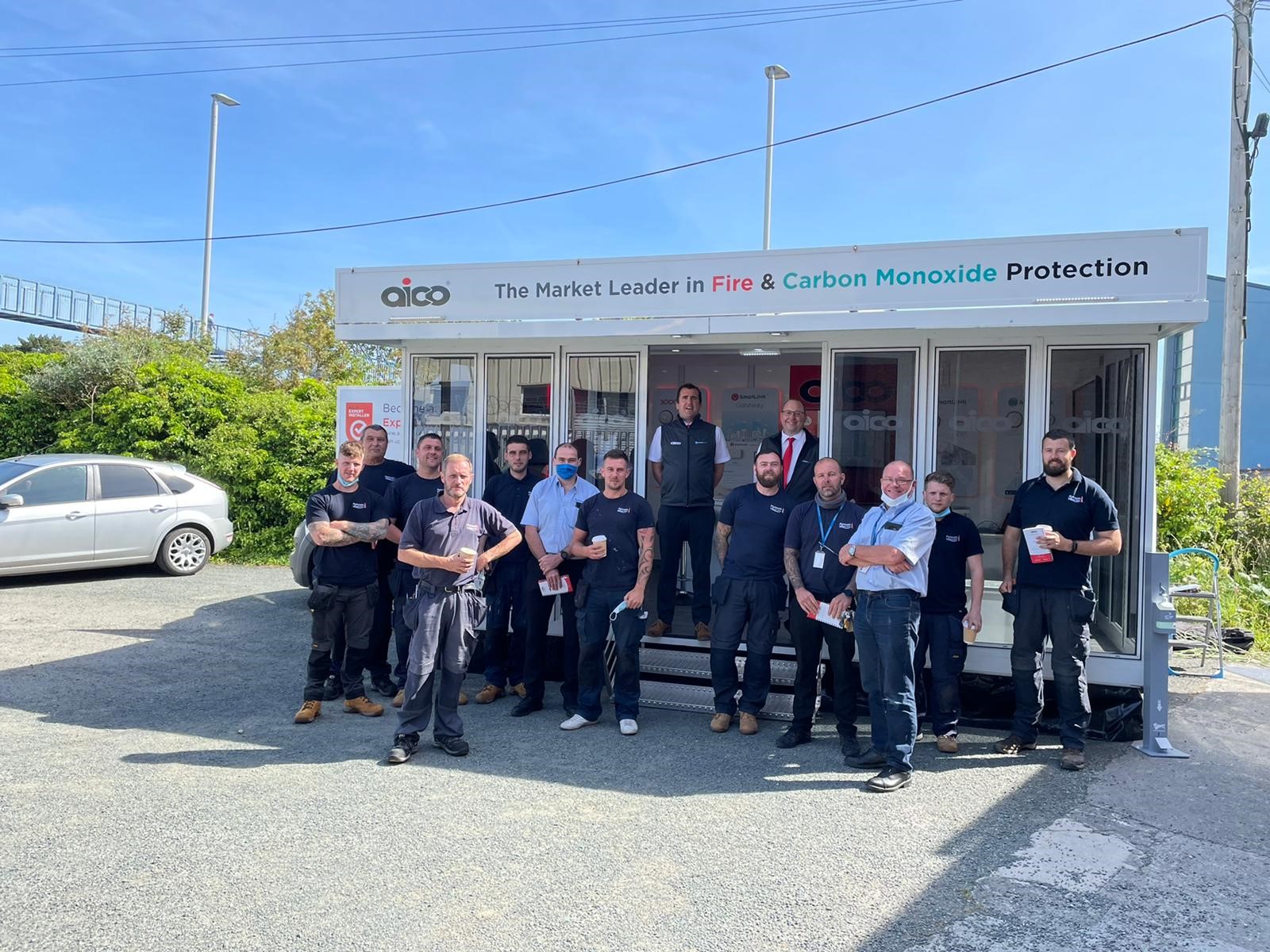
After having the breaks on for the past 16 months, Aico’s bespoke, state-of-the-art Mobile Training and Demonstration Units are back out on the road. Since acquiring their first Mobile Unit in 2017, Aico have expanded their fleet to four units, that cover the length and breadth of the country. Each of the units are fully equipped for hands-on training, providing customers with a complete overview of Aico’s products and technologies and enables the delivery of their award-winning Expert Installer training. Education is part of Aico’s core ethos, and their Mobile Units are also utilised across the UK to engage, educate and inform members of the public. Fire safety sessions to promote awareness of fire and Carbon Monoxide within the home are vital to encourage active involvement from children and students, as well as residents. Aico also take their Mobile Units on tour, travelling to various locations throughout the country to raise awareness in support of key campaigns such as Gas Safety Week, highlighting the dangers of Carbon Monoxide and the importance of alarms. To date, Aico’s Expert Installer training scheme has trained over 30,000 industry employees in domestic Fire Alarm specification and installation and is FIA approved with many of the modules CPD accredited, enabling installers to earn CPD time. 2020 saw the Expert Installer training go digital, with the unprecedented times caused by the pandemic. However, this week Aico were able to return to in-person training across different locations including City Electrical Factors Dartford, Edmundsons Electrical Torquay and Fife College. Aico colleagues have strictly followed the Government COVID-19 guidelines in order for their customers to use the Mobile Units and facilities safely. Daren Newcombe of Plymouth Community Homes who utilised the Mobile Unit on Tuesday 15th June says “We have specified and installed Aico alarms for the past 15 years and this is the third time we have had the Mobile Unit, this is an excellent opportunity for our engineers. We always receive first class support from Steve Bulley who is our local Regional Specification Manager (RSM), who has extensive knowledge and is always there when we need him.” RSM for the South West Steve Bulley comments “Plymouth Community Homes are a key partner of Aico in the South West. They are a fantastic organisation to work with, who always put safety and well being at the forefront of all they do. I would like to thank Roger Hewit, Daren Newcombe and all the engineers for the attendance and support on the Mobile Unit.” Thursday 17th saw RSM for the West Midlands Julie Weaving visit City Electrical Factors in Stafford delivering an Expert Installer session. Julie was delighted with response from customers and said, “Having the Mobile Unit back out and about again this week after 16 months, delivering our CPD training face-to-face and having the interaction from electrical contractors has been fantastic.” Nick Edwards from JNR Contractors Ltd who attended the Expert Installer session says “Great CPD training, very informative and interactive, in a fantastic setting – thank you to Julie Weaving and Aico.”

30 not out! BCIA celebrates landmark anniversary
This year marks the 30th anniversary of the Building Controls Industry Association (BCIA), which has grown from 11 members in its earliest days to around 120 members, accounting for 80% of the UK’s building controls market. Originally launched as the Building Controls Group (BCG) by Secretary of State for Energy John Wakeham in 1991, the BCIA has become a single voice in the Building Energy Management Systems (BEMS) sector to promote better understanding, application and use of building controls. Before its inception many companies operating in the controls sector had felt for some time that there was no single focus for their efforts to strengthen and develop the technology. It was subsequently decided to set up a new group within the Energy Systems Trade Association (ESTA). The new group’s key objectives were to establish a professional Code of Conduct, and advance technical standards, contract conditions and training and marketing the benefits of controlling energy usage and making potential users aware of the technology available to them. These core aims are still at the heart of the BCIA’s activity 30 years later, something which the organisation is proud to celebrate annually with the BCIA Awards, first hosted in 2007 and now attracting record breaking numbers of entries and guests year after year. A number of well-known celebrities have also appeared as guest speakers at the Awards, including presenter Steph McGovern and comedians Lucy Porter and Holly Walsh. BCIA President Terry Sharp believes the 30th anniversary is something for all BCIA members to be proud of: “For the BCIA to be going strong after all these years is a tremendous achievement only made possible by its members and their devotion to its cause,” he says. “Not only are we still going, but the rate at which the BCIA has expanded and increased its presence and influence within its own sector and in the wider industry owes a huge credit to the efforts of the members, committees and working groups involved in its ongoing success.” There have been some interesting industry developments during this period. For example, soon after the Association started, a second group of control system specialists was formed amongst the then installers of BEMS. Back then, the market was dominated by the controls manufacturers and names like Satchwell, Honeywell, Landis & Gyr, Staefa and Tour & Andersen held the majority share. These days over three-quarters of controls installations and servicing is done by the independent sector and most controls manufacturers focus on product development and distribution. Technological advancements have also changed the marketplace, as Sharp observes: “Perhaps one of the most marked areas of progress is the emergence of affordable open communications standards that allow hybrid systems and brands to coexist within a BEMS. Gone are the traditional motor control centre (MCC) panels which housed the starter gear and large data gathering outstations of the early BMS. These days smart plant, often with individual remote controllers, share operational data over IT networks or edge-technologies directly to the cloud.” In recent years, one of the BCIA’s most significant contributions to government policy has been towards a review of the proposed changes to Part L of the Building Regulations. This year also saw the launch of the BEMS Controls Engineer Apprenticeship Standard, in partnership with training provider Group Horizon, designed to address an industry wide shortage of BEMS Controls Engineers who will use the technical skills they learn on the Apprenticeship to keep the buildings of the future running efficiently. Terry Sharp concludes: “The BCIA has played a crucial role in shaping our built environment. I am proud of the organisation’s past, motivated by its present and excited for its future. It is my hope and firm belief that in 30 years’ time somebody will be in my shoes heralding the 60th anniversary of the BCIA!”