2 November 2026
Product of the Month: Amari Floodlight range by Aurora Lighting
 
26 November 2026
Thorn scores second Highland football lighting installation
 
26 November 2026
Segen pens exclusive distribution contract with M-Rack
 
25 November 2026
Scolmore helps rejuvenate Tamworth Cancer Support Centre
 
25 November 2026
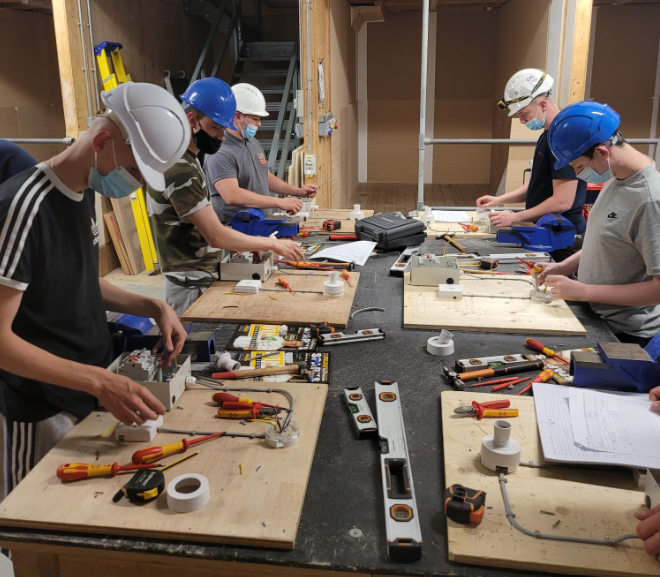
Leicester apprentice crowned 2026 SkillELECTRIC champion
 

Latest News


SELECT opens its Wall of Support to industry contributors
Campaigning trade association SELECT has welcomed a number of new additions to its Wall of Support which promotes its ongoing crusade for regulation of the electrical industry. Scotland’s largest construction trade association has responded to demand from those who work in the industry by allowing qualified electricians to add a digital ‘brick’ to the online resource to show their support for protection of title. Several electrical businesses and individual electricians have now put forward their names to show their support, including: Atalian Servest AMK Stensons John Noble Electrical Contractors Ltd. Calder Electrical David W H Smith Heating and Electrical Services E Rae & Son A E S Electrical Ltd Robert A S Crockett & Partners Ltd Unitech Services Ltd Macform Ltd Ness Electrical 2 Core Electrics Alistair Grant Electrical Powertec Electrotechnical Services Ltd Logic Systems Electro Installations (Scotland) Ltd GP Services (Dumfries) In addition, leading trade bodies the National Federation of Roofing Contractors and The Scaffolding Association have also added their names to the online Wall. These new signatories join more than 50 politicians, trade unions, professional bodies and other organisations that have already indicated their support for SELECT’s campaign for regulation of the industry. Their public stance underlines their backing for legislation in Holyrood which would make it an offence for someone to call themselves an electrician when they have no, or inadequate, qualifications. Alan Wilson, Managing Director of SELECT, says: “We are delighted that these key organisations, electrical businesses and individual electricians have joined our campaign by showing public support for regulation of the industry. “Our campaign has already made a huge impact, not least in its progress through the Scottish Parliament, and it is imperative that we continue to build momentum. “To this end, we are widening access to the Wall of Support, in order that that the groundswell of opinion in favour of regulation which we know is out there is able to achieve its maximum expression. “By taking a brick in the Wall, individuals and businesses will be able to show the strength of feeling that exists over this issue and the immediate need to improve safety for both domestic and commercial consumers across Scotland.” As well as more than a third of MSPs, other bodies that have contributed a brick to the wall include the Electrical Safety First, The Royal Institution of Chartered Surveyors, the Scottish Association of Landlords, the Specialist Engineering Contractors’ Group and the Energy Saving Trust. SELECT has been campaigning with other leading industry bodies, such as the Scottish Joint Industry Board (SJIB), Unite the Union and the Scottish Electrical Charitable Training Trust (SECTT) to make sure that those who work in the industry do so in a safe and competent manner.

Carl Kammerling International - Supporting ‘Bright Sparks’ of the Future
Carl Kammerling International remains fully committed to supporting the next generation of professional electricians, and was delighted to receive a ‘Business Recognition 2021’ award for its work with Leicester College. ‘Bright Sparks by CKI’ college sponsorship scheme began in 2003, and has provided Leicester College with quality hand tools and training resources to help students develop their skills. ‘Bright Sparks by CKI’ has a great future and this year exciting new elements will be added allowing students to benefit even more during their studies. About the ‘Bright Sparks by CKI’ Scheme Since the ‘Bright Sparks by CKI’ scheme began in 2003, Carl Kammerling International has supported over 50,000 apprentice electricians and now provides sixty colleges across the UK and Ireland with free professional standard C.K tools for use in their workshops. The Bright Sparks by CKI initiative continues to flourish and supports the continued development of students whose aim is to become the best professional electricians within the industry, whilst also providing and promoting the importance of the use of professional standard hand tools. A Course Tutor’s Insight Neil McManus, Construction T level Programme Area Manager at Leicester College comments: “The Bright Sparks scheme helps to support students by providing them with C.K industrial standard tools made of high quality materials to use in our workshops. This makes learning new practical skills easier to achieve, and enables the College to support and sponsor students with tools for use on site or into employment. The scheme also builds student confidence to carry out electrical skills by using first class tools. They look professional and the insulated tools keep students safe on site. “Access to the Productwise website at Carl Kammerling International supports learners with knowledge, which hopefully helps them to attain high grades in their final exams. The website also supports CPD for staff and students and provides certificates of achievement for students to use when applying for work.” What’s New About Bright Sparks by CKI? This year Bright Sparks by CKI is set to be further enhanced, to enable students to get the most out of the scheme.  There will be a strong focus on educational aspects, which will continue to provide C.K hand tools for practical lessons, with the addition of knowledge designed to support theory-based lessons. A series of educational posters will be available, as well as full access to Productwise, a great online learning resource packed full of useful information. Staying connected will become an integral part of the Bright Sparks by CKI scheme, bringing together a community of Bright Sparks colleges using social media to highlight student progress, news of special events, such as award ceremonies with presentations of C.K Tool kits and certificates for exceptional students, in recognition of their efforts and progression during the college year. Next year will see Carl Kammerling International celebrate its 20th year in partnership with Leicester College, and they are looking forward to continuing that successful relationship to help support the professional electricians of the future.

Mercedes-Benz Dealer Orwell Truck & Van makes all the right connections
A winning combination of fixed costs, product reliability and good honest customer service means highways services specialist Electrical Testing has now resolved to switch its entire fleet to Mercedes-Benz vehicles from Dealer Orwell Truck & Van.   The manufacturer’s representative in East Anglia has just supplied the Norwich-based  company with eight small Citan vans. Another 12 are scheduled to enter service before the end of July, with six more ordered for the autumn. Orwell Truck & Van has also delivered 11 larger Mercedes-Benz Sprinters over the last year. Established more than 25 years ago, Electrical Testing’s success has been based on foundations of trust, performance and unparalleled customer service. A significant independent player in the world of electrical inspection and testing of street lighting in cities and on roads across the country, it works with a range of clients including local authorities, main contractors and consultants. All of Electrical Testing’s new Citan vans, and all but four of its Sprinters, are the subject of flexible, competitively priced Operating Lease agreements with Mercedes-Benz Finance. Those that work from the company’s head office are being maintained by the workshop team at Orwell Truck & Van’s Norwich branch, while others allocated to field-based operatives around the country are serviced by the most conveniently located Mercedes-Benz Dealers. Electrical Testing operates more than 50 vans in a range of sizes and configurations, that work throughout most of the UK. Traditionally, the fleet has been split between leased and short-term ‘spot-hired’ vehicles, with a number of brands represented. Recent business ‘wins’, though, have prompted a change in acquisition policy. Operations Director Ben Humphrys explains: “We’ve picked up more longer-term contracts so the need for spot-hire flexibility has diminished. This, coupled with the fact that many of our vehicles were coming to the end of their terms, has allowed us to commit to more lease agreements with Mercedes-Benz Finance. “We were looking to sign-up to a 12-month replacement programme with fixed rates and a delivery model that suited our needs, but other suppliers were unable to meet our timescales – some were quoting lead times of six months or more, and were unable to guarantee rates beyond the first year. Frankly, I became bored of hearing Brexit given as an excuse for delayed delivery and fluctuating prices. “There were no such issues with Orwell Truck & Van, though. Sales Executive David Wooldridge was willing and able not only to support our requirements for fixed pricing, but to hold vehicles for delivery until the optimum time for us. “It was this flexible and honest approach from the Dealer, initially during negotiations over the Sprinters, and then with the Citans, that convinced us to award it our business. Our experience with Orwell Truck & Van has been so positive that we now plan to switch the entire fleet to Mercedes-Benz over the next two to three years.” Electrical Testing’s Sprinters are 314 CDI models, with long L2 bodies and fuel-efficient 143 hp 2.0-litre engines. They are assigned to jointing teams, which carry out connections to electricity mains for replacement street lights. The Citans, meanwhile, are 109 CDI PURE models also have long L2 bodies, while their 90 hp engines offer outstanding economy of up to 65.7 mpg. These are driven by electricians, and structural testing operatives, who carry out routine inspections and tests on street lights. All of these vehicles are fully ply-lined, and fitted with LED beacons and high visibility ‘Chapter 8’ chevron markings. “In the year or so that we’ve been dealing with Orwell Truck & Van we’ve been very impressed,” continues Mr Humphrys. “David’s support has been excellent, and we’ve benefited from the fact that senior colleagues of his have also taken a keen interest in our business. It’s a level of engagement I’ve never experienced with any other supplier. “Our Sprinters have proved significantly more reliable than the vehicles they replaced, and I’m confident the same will be true of the new Citans. As a business, it’s important that we provide our operatives with vehicles they can trust, with high levels of comfort and safety that encourage them to look after their vans. They’re delighted with Mercedes-Benz, and so are we.”

FOI reveals half of NHS trusts are charging ahead with EV infrastructure
According to figures released today by power management leader Eaton, half (51%) of NHS trusts in the UK have installed EV Charging Infrastructure (EVCI) on-site for their staff, patients and the wider community. While this is a positive step towards a low-carbon future, a similar proportion (53%) of NHS trusts are either behind on decarbonisation targets or do not have a clear set of emissions reduction goals in place. This new data was obtained through a Freedom of Information (FOI) request, issued to 173 NHS Foundation trusts across the UK, with 142 of them responding. Gearing up for more EVCI installations While half (51%) of NHS trusts already have EVCI on-site, a further 43% either plan to install charging facilities on-site within the next five years or are in early stage planning around how best to integrate such capabilities. In fact, just 6% of NHS trusts had no plans to introduce EVCI at the moment. This promising trend towards upgrading facilities to meet the public’s changing needs while reducing overall emissions is positive news for consumers thinking about switching to an electric vehicle. Marc Gaunt, segment lead, commercial buildings, Eaton, comments: “Concerns around the UK’s lack of EV charging infrastructure have inhibited EV adoption due to range anxiety: the fear that an EV would have insufficient range to reach its destination and leave the driver stranded. Yet EVs and their underlying infrastructure are a vital piece of our route to a low carbon future. EVs offer a cleaner mode of transport while smart charging infrastructure not only powers the future of travel but embeds more flexibility into our energy grid to enable decarbonisation at a national level.” Falling behind on decarbonisation targets, but measures are in place The FOI revealed that over half (53%) of NHS trusts are currently behind on their decarbonisation targets or do not have clear emissions reduction targets in place. Just two fifths (38%) are on track to meet their goals while only 5% are tracking ahead at the moment. However, when asked about the decarbonisation measures currently in place, the vast majority of NHS trusts reported that they have either already installed, or will be installing, lighting upgrades (93%), increased building control and automation (90%) and upgrades to insulation (69%) within their facilities over the next five years. Only one responding NHS trust reported having no initiatives in place or planned at all. More opportunity within EVCI When asked about the impact of EVCI on existing electrical infrastructure, half (53%) of NHS trusts flagged that they would need greater electrical capacity, while two thirds (41%) said it may incur additional energy costs through greater peak demand. Just a quarter (24%) recognise the potential to create new revenue streams from new charging facilities. Vehicle to grid (V2G) technologies allow electric vehicles to store energy and discharge it back to the electricity grid when it is most needed, creating a bi-directional relationship that offers up new opportunities for estate and facilities managers. The FOI revealed that very few NHS trusts (11%) are currently participating in selling energy back to the grid through energy storage technologies. One fifth (23%) plan to use energy storage to start selling energy back to the grid in the next five years, but two-thirds (65%) have no plans to do so. Marc concludes: “Estate and facilities managers often consider building energy first when considering decarbonisation, but travel and transport is a vital consideration. NHS trusts are adopting EVCI rapidly and offering staff, patients and visitors a cleaner alternative to significantly lower their total carbon footprint. Public and commercial buildings will need to follow suit. Every building – not just hospitals – will need to play its part if we are to meet the challenges presented by the rapid adoption of EVs and accelerate the UK’s path to a low carbon future.”

Economic upturn masks mental health crisis
The economic recovery is concealing a growing mental health epidemic among construction SMEs, according to a new online survey carried out by pollsters YouGov. Despite an upbeat forecast for growth across the UK economy this year and a rapid recovery for construction and its related sectors, firms are continuing to report serious conditions amongst workers, including panic attacks, insomnia, and depression. Employees in construction SMEs are more than twice as likely to have suicidal thoughts as people employed in other sectors. Displays of extreme anger resulting from late payment are also 50% more likely in SME construction firms, than in businesses of a similar size in other industries, according to the survey. Construction is reporting its fastest rate of growth in almost seven years with house building and infrastructure work moving at record pace; and repair and refurbishment projects also picking up fast. Although most firms are optimistic about their short and medium-term business prospects, many SMEs are also reporting rising levels of mental health problems among staff and management. Rather than improving the situation, the speed of the sector’s recovery seems to have added to the stress experienced by many construction SMEs and the perennial problem of late payment is the main culprit. Late payment The survey, which was commissioned by the Building Engineering Services Association (BESA) and the Electrical Contractors’ Association (ECA), during Mental Health Awareness month, revealed a strong link between late payment practices and serious mental health issues. It showed that extreme responses, such as suicidal thoughts, depression, and panic attacks, in construction SMEs are now 6% higher than in sectors experiencing a slower economic recovery. More than a third of SMEs in construction, who responded to the survey, reported chronic mental health conditions in their workforce. Poor mental health increase physical health and safety risks putting even more lives in danger. Many constructions sites remained open during the pandemic, in particular smaller sites where, social distancing was easier. Construction workers were, therefore, less affected by mental health triggers such as isolation, but the YouGov research still showed that mental health in the industry was at “crisis point”. A further worrying finding showed that construction workers were more than twice as likely to have a harmful response to restlessness as a result of furlough, by misusing drugs or alcohol, than those in other sectors. Larger construction firms are taking steps to address the problem by introducing ‘Mental Health First Aid’ courses, for example, but cash flow issues mean that smaller firms lack the financial stability to be able to provide the right level of support to staff, according to the trade associations. “This is a hugely worrying situation,” says BESA chief executive officer David Frise. “It is to be expected that the extreme situation of lockdown would have a negative impact on mental health, but we certainly hoped the start of the economic recovery would have improved things. “Yet, at a time when we should all be pulling together to support the recovery and encouraging better working practices, we are once again grappling with the late payment culture of some that leads to untold levels of human misery. The government really needs to get much tougher on this issue and quickly.” Steve Bratt, chief executive officer of the ECA, said he was very concerned to see members and others struggling because of the way construction does business. “Good mental health and wellbeing is fundamental to the long-term success of the recovery. We must start treating mental health as we would treat a physical illness. The health of our people is the basis of a resilient, innovative, and economically buoyant economy,” he adds. You Gov asked ‘Which, if any, of the following health issues has anyone at your business experienced as a result of late or unfair payments?   Construction SMEs Other SMEs Suicidal feelings 5% 2% Extreme anger 12% 6% Harmful response to furlough restlessness (e.g. misuse of alcohol, drugs, etc.) 7% 3%  

Jobs of the future: Are robots coming for your job?
A new study by electrical supplier, ElectricalDirect, reveals the UK jobs most likely to be replaced by robots over the coming years as a result of the rise of Artificial Intelligence and automation. By analysing 20 million jobs from around the country, ElectricalDirect discovered which roles are most likely automated based on whether they contained repetitive or routine tasks which would be carried out quicker by a robot. The rise of AI poses an existential threat to the UK jobs market, as it starts to make a large number of jobs a thing of the past. It’s an inevitable and controversial change to the way our economy works, which has only been sped up by the forced automation brought on by Covid, as businesses were limited in their ability to have customer-facing roles. Waiting staff have the highest risk of automation   The 10 jobs most at-risk of automation (%) 1 Waiters/Waitresses 72.81% 2 Shelf Fillers 71.70% 3 Retail Assistant 70.69% 4 Bar Staff 70.66% 5 Kitchen/Catering Assistants 69.20% 6 Farm Workers 69.05% 7 Sewing Machinists 68.64% 8 Cleaners 68.13% 9 Tyer, Exhaust and Windscreen Fitters 68.07% 10 Vehicle Valeters 67.77% Waiters/waitresses top the list by having a 72.81% probability of being replaced by robots. Food service and hospitality industries are the most likely to be hit hard by the rise of automation, with the introduction of touch screen menus and instant contactless payment methods. Supermarket shelf stackers come in second, facing a 71.7% of automated replacement, while shop floor retail assistants face a 70.69% chance of replacements. This in an industry already rocked by technology, through the rise of online retail. Stores such as Amazon Fresh already function without tills, and therefore without cashiers. Medical professionals and those in education are least likely to be replaced by machines   The 10 jobs least at-risk of automation (%) 1 Medical Practitioners 18.11% 2 University Lecturers 20.27% 3 Senior Professionals in Education 20.56% 4 Secondary School Teachers 20.61% 5 Dental Practitioners 20.78% 6 Psychologists 20.87% 7 Medical Radiographers 20.99% 8 Physiotherapists 21.23% 9 Occupational Therapists 21.48% 10 Nursery/Primary School Teachers 22.03% Those who work as medical practitioners are least likely to be replaced, with only an 18.11% chance of automated replacements taking their jobs. This is due to the intense training required, alongside the variety of the day-to-day role. In second and third are university professionals and senior education professionals. It is difficult to automate roles within the education field as students require personalised help with their studies. Secondary school teachers come forth, while nursery/primary school teachers come in tenth, suggesting we won’t see robots teaching our kids anytime soon! All other professions in the top ten are medically related, demonstrating that education and medical care are areas which still require a human touch, and are most likely to for some time. Which trades are safe from automation?  What about electricians? Do you need to worry that your work will be done by a robot, with all the tools attached to its gadget arm? Well, not just yet. Electricians face a 50.75% chance of becoming automated, with the skills you need to perform your work unable to be replicated by a machine for the time being. If you work in construction the chance is even smaller, with automation only 25.70% likely, while plumbers (52.11%) and carpenters (53.43%) face a slightly higher risk of robots taking over. While advancements in electrical tools will certainly make your job easier, they certainly won’t make it go away. Dominick Sandford, Director ElectricalDirect says, “No longer the stuff of fantasy, the technological revolution has brought within reach what many Sci-Fi writers long predicted - an automated workforce led by AI enabled robots. It may not look or feel quite how it was imagined, with COVID-19 ushering in many forms of automated services which may already seem like they’ve been here forever. However, in the long term, such huge technological leaps forward in the way our services are provided and consumer demands are met could change the entire nature of our workforce and our entire economy."

NAPIT EXPO Roadshow is now to return for 2021
In anticipation of events set to take place again later this year, NAPIT have officially released the rescheduled dates and locations for the NAPIT EXPO Technical Roadshow for 2021/22. The Roadshow is a networking and CPD event for like-minded people in the industry, open to both members and non-members free of charge. On the day of the events support will be available including on-site technical, training and membership advice. View the schedule of dates and locations below: PRESTON 1st September 2021 DURHAM 2nd September 2021 HULL 5th October 2021 COVENTRY 6th October 2021 BRACKNELL 27th October 2021 SWANSEA 28th October 2021 DARTFORD 10th November 2021 NORWICH 11th November 2021 MILTON KEYNES 1st December 2021 CHESTERFIELD 2nd December 2021 CORNWALL 9th February 2022 EXETER 10th February 2022 ROMFORD 9th March 2022 BRIGHTON 10th March 2022 Supporting partners; NAPIT Trade Association, NAPIT Insurance, Megger, EPSON, Hager, Scolmore, Surge Protection Devices, GARO, CHINT, AICO, DEHN, eSales Hub, BASEC and TradePoint will be joining each event and on the day visitors can browse the latest products and services, receive live demos and take away free gifts. Mike Andrews, NAPIT’s Group Chief Executive commented: “We are looking forward to re-opening the doors to our NAPIT EXPO Technical Roadshow and meeting our members face to face again this Autumn, following the go ahead from the Government providing it is safe to do so. It has been a tough year, so getting out to network with like-minded industry professionals will be a welcomed change. Visitors at our events can expect on-site technical, training and membership advice as well as exclusive technical CPD masterclasses hosted by our experts. It won’t be one to miss!” As always, the Technical Roadshows are FREE to attend for both NAPIT members and non-members. All visitors will receive a digital CPD certificate of attendance. The new seminar schedule will be announced soon. All relevant COVID Health & Safety protocols will be adhered to making both the exhibitor and visitor experiences as safe as possible. Should restrictions change nearer the time NAPIT will continue to keep visitors informed of any date amendments.

Opening a portal to greater network visibility
EA Technology has worked together with two key partners to develop an innovative power grid web portal, the Network Visibility project. Aligning with Cheshire and Warrington Local Enterprise Partnership (LEP) and SP Energy Networks, EA Technology has created a web portal where data being monitored from around 600 substations across the region can be shared. The aim is to maximise the visibility of the capacity and usage across the network, which will enable the acceleration of the journey to net zero emissions in the UK, through the increased use of electricity over fossil fuels. This network in the north west of England, is one of the most monitored networks of its type in the world. EA Technology’s portal will help reduce the emission of carbon and other environmentally damaging pollutants, by enabling operators and customers to identify quickly and easily where there is capacity available on the local grid. This four-year, £1.65 million Network Visibility project, which has been jointly funded between Cheshire and Warrington LEP and EA Technology, enables substation data from SP Energy Networks to be available to the general public from a newly developed web portal for a minimum of three years. Graphs show load and voltage in near real time, with only a 24-hour delay. The portal allows network operators and people looking to make connections to find the most suitable location. It will be especially helpful connecting renewables or EV charging points. This data analysis can help industries change their processes and move towards greater electrification, helping them achieve their decarbonisation targets. The data and portal are curated and operated by EA Technology, with the project website providing loading data in an accessible manner, using graphs, with transformer demand and voltage shared. It can also be analysed for use on a commercial basis. The website was unveiled in a soft launch in April, with further phases planned, including a virtual tour of its capabilities. The website will be useful for different groups, including Planners and Local Authorities, EV charge point providers, renewables connections/flexibility providers, industrial users and other LEPs (to introduce or replicate the information share and data analysis). It will also be available to universities – for the ongoing study of power engineering – and community groups, who can see how power is used and distributed within their own local areas. Liam, O’Sullivan, SP Manweb Director at SP Energy Networks comments: “We are pleased to be working with EA Technology and the Cheshire and Warrington LEP on this project, which is an example of how data sharing and digitalisation can really accelerate the decarbonisation of the energy landscape. The ambitious Net Zero targets set by government mean pioneering initiatives like this are critical, and by sharing greater visibility of energy usage, we enable better informed decision making as the uptake of low carbon technologies continues to increase.” Robert Davis, CEO at EA Technology adds: “The ability to micro analyse data is proving invaluable, as ways of cutting emission and power usage are under constant scrutiny. The drive to net zero is finding new ways to streamline power generation and waste. We’re very pleased to be part of this initiative and for our expertise to facilitate the future success of this project. We hope many more power providers and LEPs see the advantages of this portal and implement it across their own regions.”

Good news for geese- Gaywood skyline changes for the better
There is a new skyline and a clear view at Gaywood, near Kings Lynn today, as the familiar sight of electricity cables over the A149 and across the fields have disappeared. A £3 million project to remove the 50-year-old poles and install new cables underground has now been completed by UK Power Networks. It is also good news for geese as it has removed the risk of them flying into power lines after feeding nearby. The project to remove 68 poles and lines that stretched across almost four kilometres in Gaywood, Snettisham and Little Massingham, began in July last year and involved cabling under fields, crossing land next to Gaywood River and drilling beneath the A149. It means the power supplies to around 20,000 customers in the area will continue to be reliable in the future. Project manager Ivan Churchman says: “It’s great to show everyone the improved views. The final poles and cables went last week marking the culmination of an investment project that will maintain reliable electricity supplies for the residents, businesses and communities we serve in the Gaywood area. “Putting the cables underground will improve the quality and reliability of the electricity supplies and provide a clear skyline for the views adjacent to the Bawsey Ruins of the Church of St James.” UK Power Networks delivers electricity to 18 million people across the East of England, London and the South East through cables, substations and power lines, and invests around £600 million each year in running safe and reliable networks.

British Cables Company gains framework agreement with Network Rail
British Cables Company (BCC) has gained a 5-year framework agreement to supply a range of specialist cables to Network Rail. The agreement, which was confirmed in April this year, met Network Rail’s key objective to create an industry-leading supply chain, focused on infrastructure reliability, safety and financial efficiency. Nick Bowman, BCC’s Sales Director comments, “We are exceptionally pleased about becoming just one of three suppliers appointed to the framework, with our products supplied directly to Network Rail’s 9 regional distribution centres across the UK. “The framework requires us to supply telecoms, power, signalling and fibre cables and these will be delivered to support either quick reaction maintenance jobs or longer-term projects. “This is significant recognition for our business which has been designing and manufacturing cables at our Manchester factory since 1895. Our commitment to producing the highest quality products, backed up with excellent logistics, customer service and technical support, has contributed significantly to BCC gaining such a prestigious contract. “We are looking forward to developing our relationship with Network Rail”, Nick concludes.