2 November 2026
Product of the Month: Amari Floodlight range by Aurora Lighting
 
26 November 2026
Thorn scores second Highland football lighting installation
 
26 November 2026
Segen pens exclusive distribution contract with M-Rack
 
25 November 2026
Scolmore helps rejuvenate Tamworth Cancer Support Centre
 
25 November 2026
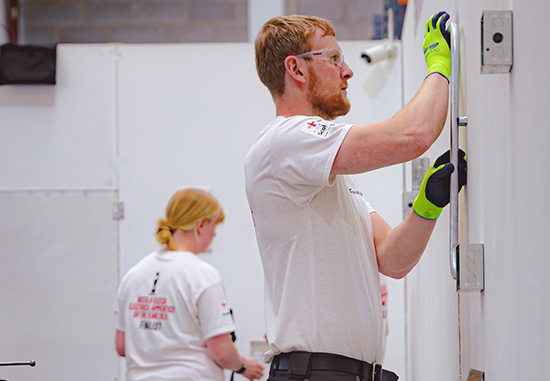
Leicester apprentice crowned 2026 SkillELECTRIC champion
 

Latest News


Government Announces Electrical Checks For PRS
Responding to the announcement of the imminent introduction of mandatory electrical safety checks in the Private Rented Sector (PRS), Martyn Allen, Technical Director at Electrical Safety First, comments: “Today’s commitment by the Government to bring mandatory electrical safety checks into force, is a success for millions of renters and their landlords in England.   “It is long overdue for the dangers posed by electricity in the home to be taken as seriously as that of gas, so this legislation provides essential protection for millions. But, while we welcome this crucial step in protecting tenants, electrical safety should not be a ‘tenure lottery’. Electrical Safety First would like to see this regulation extended to the social housing sector in the very near future.   “We have heard harrowing tales of fatal accidents caused by unsafe electrics in rented properties. This new regulation – which we believe will benefit tenants and landlords by protecting both people and property - will help ensure such tragedies don’t happen again.  Tenants will finally be able to hold landlords to account for the safety of electrics in their rented homes. And, while most landlords already ensure their properties are safe, this new law offers clarity and helps private landlords protect their assets through regular upkeep of the electrics in their properties. But it is essential the new regulation has teeth and the enforcement body has the resources to take action effectively.” Mike Smith, Technical Director of the ECA has also welcomed this new commitment to electrical safety. He adds: “The dangers posed by electricity need to be taken seriously and they should be properly managed. It’s vitally important that landlords have the information they need to fully understand and carry out their new legal obligations. And that testing and inspection is carried out by an enterprise that’s been certificated by a reputable third party as competent to carry out these activities. ECA has long been working with its industry partners to raise safety standards in the PRS and we will now work with our members-  and the wider industry - to help ensure that the electrical safety of all PRS properties get the professional attention they need.”  These views have been echoed by John O’Neill, Technical Director at NICEIC & ELECSA, who states: “I am pleased that the new Government has taken action in this important area.  We look forward to working with landlords to ensure they understand the benefits of using registered electrical contractors to undertake the testing and inspections that will be vital to keep tenants safe.  We remain committed to working with industry partners and other stakeholders, to raise standards both in the PRS and across the industry generally.”   

First Stage of the Electrical Apprentice of the Year Competition Ends
The first stage The Electrical Apprentice of the Year competition has now closed. Running between September to Christmas Eve, more than 540 electrical students across the UK took part in the first stage of the competition – an online exam comprising of 40 multiple choice questions relating to electrical installations. A panel of judges are now working their way through all the entries to see who goes through to the next phase of the competition. Darren Staniforth, Group Senior Technical Presenter for NICEIC and Elecsa, says, “This is the fifth year we have run The Electrical Apprentice of the Year competition and we are delighted to see so many young apprentices take part. “The standard of apprentices taking part each year is also improving. Looking at the results from the last three years, applicants are using the time to really think about the questions. This has had a notable impact, with average scoring being the highest it has ever been and, for the first time ever, four of our applicants achieving 100%. “All of this good work has only been made possible by our partners, The Scolmore Group and Voltimum, and the determination of employers and colleges who understand the importance of promoting electrical apprenticeships to the next generation.” The top 20% of entrants from stage one will go on to the second heat of the competition where they will take part in a two-hour written exam, which will be held at several locations across the UK. Details on stage two locations will be announced in the coming weeks. The top eight students from the second heat will go on to take part in the grand final on June 2, 2020, at the headquarters of one of the competition partners, The Scolmore Group, where they will complete a series of practical tests followed by a technical interview with NICEIC and Elecsa technical experts. Marie Parry, Group Marketing Director for The Scolmore Group, says, “We are very proud to continue to play a key role in this competition which is growing in stature year on year. It takes a lot of confidence for the trainee apprentices to put themselves through the rigours of online tests and exams and ultimately a live final, so I commend them. It is this confidence and determination that we need to see in the electricians of the future.” For more information about The Electrical Apprentice of the Year competition, visit www.niceic.com/apprentice.

An Understanding Of PoE: What’s Ideal?
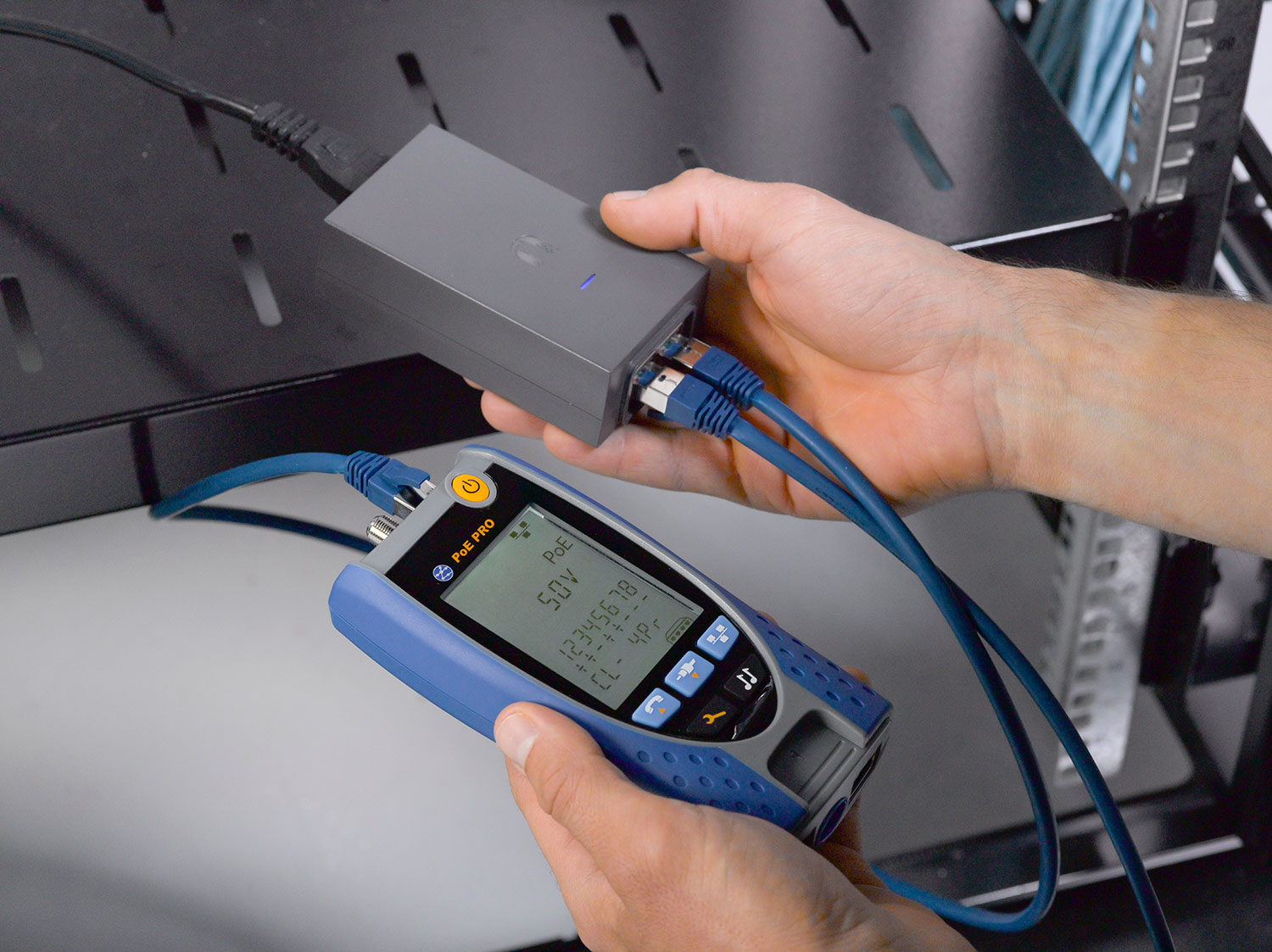
Ideal Networks is urging electricians to master new skills and equipment now to cope with the growing use of PoE (Power over Ethernet) in intelligent lighting applications.  In particular, PoE testers can help electricians to conduct quick, accurate PoE validation, eliminating guesswork and getting the job done faster.  “In just a few short years the use of PoE has migrated from IT devices into building systems like lighting, HVAC and access control,” says Tim Widdershoven, Marketing Director for IDEAL Networks. “However, the growth of PoE presents issues for electricians, who may have never had cause to work on anything other than traditional electrical cable infrastructure. “PoE offers clear benefits in many applications, not least that installing just one set of cabling infrastructure is less disruptive and generally more cost effective,” he continues. “So, to stay ahead of clients’ demands, it’s crucial for electricians to learn the necessary PoE testing and troubleshooting skills now.” In 2018 a new standard, IEEE 802.3bt, was ratified and provides the specifications for PoE equipment to provide up 90 watts of power to devices over twisted-pair Ethernet cabling. This amount of power combined with high-efficiency LED light fixtures makes PoE lighting practical. With 60-90 watts of power available, multiple luminaries or troffers can be daisy chained from a single port on a PoE Ethernet switch, greatly reducing the total system cost and simplifying the installation.  “Electricians installing or servicing PoE lighting systems need to be familiar with the components of PoE lighting systems to ensure proper operation and easily troubleshoot any problems that arise,” says Widdershoven. “Even when live a PoE system is not always energised, so this means that familiar, standard electrical testing tools cannot be used to test PoE systems.” Instead, there is a range of PoE testers on the market, from simple LED voltage detectors (like a neon electrical outlet checker) to testers which measure voltage and power available to the Powered Devices (PD) on a circuit.  For example, the PoE Pro multi-function PoE tester from IDEAL Networks, which measures and reports PoE Class, voltage/voltage drop, watts and injector type, making it easy to see how much power is available.  Previously electricians would have needed to understand all the various standards, device power outputs and cable lengths to be sure a device will operate successfully. However, with PoE Pro, instant, easy to read test results are shown on the large backlit screen, up to a maximum of 90W, regardless of cable length, cable quality or other factors.  PoE test equipment, such as Ideal Networks’ PoE Pro, can also be used to highlight issues with cable quality. For instance, electricians may encounter copper-clad aluminium (CCA) cable which is constructed primarily of aluminium conductors coated with a thin skin of copper. CCA has a much higher resistance than solid copper cable and should not be used in PoE applications, but due to its very low comparative cost, can often be found in intelligent lighting installations. As well as being an effective PoE tester, PoE Pro also offers all the features of the IDEAL Networks VDV II Pro LCD cable verifier so there is no need for two separate testers, helping electricians to keep the cost of purchasing new equipment down. “The rise of PoE presents electrical contractors with a fantastic opportunity to confidently expand their service offering,” concludes Widdershoven. “Electricians who are equipped with the right testing tools and a functional knowledge of PoE systems will be able to both ensure that new installations deliver the expected performance and quickly identify faults when troubleshooting.”    

TESP Lights Up The Imagination
The whole electrical industry is being called upon to share knowledge, insights and the reality of roles across the sector to inspire the next generation, in a new campaign from The Electrotechnical Skills Partnership (TESP). Under the launch banner of ‘Light Up Their Imaginations’, the campaign will feature a series of messages aimed at electricians and electrical contracting firms, to encourage them to get on board with a wide choice of activity to promote electrical careers through face-to-face involvement with schools and colleges. Ranging from simply giving an hour for a careers talk, mentoring or workplace visits, to setting work-based projects and supporting careers events, the opportunities to get involved are varied and can fit around the time that can be spared. From apprentice electricians to business owners and all roles in between, the campaign is seeking people across all sizes and types of organisation, to highlight the variety of occupations available and the diverse progression that can be achieved once an electrical apprenticeship is completed. In addition to inspiring students making career choices and supporting those already working towards an electrical career, TESP is also asking electricians to consider helping to teach and assess apprentices, to aid the assessor and tutor shortage also affecting the industry. With the forthcoming introduction of T Levels, the Government is asking employers to support 16-18 year-old students with industrial placements. Teachers will also need greater exposure to industry, to bring students’ learning to life with real-world work examples. “Attracting enough young people of the right calibre to work in the sector is an increasing challenge which we are working to address with the support of the electrical community,” says Ruth Devine, Chair of TESP and Managing Director of Milton Keynes contracting firm SJD Electrical. “This is an inclusive campaign that calls for heroes from all corners of the industry to step up and play a part in making a change. TESP is working hard to produce relevant careers resources, and we need people at the grass roots to spread the message, share their experiences and feedback to us so we can tailor our future campaigns. “There are many highly-skilled, passionate people working in this industry; they are best placed to inspire and motivate young people to show what a career in the industry is really like, and what skills and qualities are needed to succeed. We need to encourage wider representation across society too, that means challenging assumptions and stereotypes at an early age. We would love people across the industry to step up and play a role in their local area, however small, to help spark an idea in the minds of tomorrow’s electricians, designers, estimators and contracts managers.” TESP is initially asking people to look at the range of opportunities to get involved on their website and get in touch to find out how they can take part in their local community.

Healthcare hot water guidance aims to ease compliance
In an effort to improve hot water provision in the healthcare sector, a new guide has been launched that outlines the most important technology to look out for when complying with Health Technical Memorandum (HTM) 04-01. Created by Heatrae Sadia, Taking the pain out of hot water in healthcare highlights the key considerations for NHS management, care home professionals, facilities managers and estate managers on how to ensure safety for patients, visitors and staff via hot water technology. Healthcare professionals have a number of water provision issues to consider, including the rise of Legionnaire’s disease, keeping energy bills and maintenance to a minimum by investing in new and improved equipment, and preventing ‘never events’ from happening – including serious incidents such as scalding. HTM 04-01 addresses all of these technicalities, covering design, installation, commissioning and operational management, paying close attention to the risk of waterborne pathogens such as legionella. However, its commitment to covering every aspect of healthcare provision in minute detail makes HTM 04-01 a challenging and sometimes inaccessible document. Simon Russell, National Sales Manager at Heatrae Sadia, says, “With many technicalities to be aware of, there is an increasing need for simple and compliant solutions. We’ve aimed to develop content that ticks all the boxes in an easy and understandable format, saving invaluable time for busy healthcare professionals. “It’s important that those in healthcare are aware of the major risks surrounding water, and how best to prevent any issues from taking place, including infection, the growth of legionella, scalding and burns, or problematic break downs.” Water is a critical element of recovery, particularly for those who are already at risk of diseases. Within a healthcare environment, it has many uses, including hand washing, to simply hydrating throughout the day. As technology evolves at pace, Heatrae Sadia is urging healthcare professionals to opt for solutions that are simple to use in order to reduce downtime. Built-in inspection hatches and tapless outlets are examples of useful features to keep maintenance times to a minimum and ensure upkeep is as straightforward as possible. To access the guide, visit www.heatraesadia.com/healthcare

Recolight Welcomes Electrical Waste Collections
Defra has now confirmed that from the end of 2020, most retailers will be required to provide in-store WEEE takeback. The new requirement will apply to all retailers and wholesalers with annual sales of electrical items above £100,000. Online retailers without physical retail premises, and retailers with sales below the cut off, can avoid the need to provide in-store WEEE takeback, by joining the Distributor Takeback Scheme. Commenting on the news, Recolight CEO, Nigel Harvey, says, “For several years, the UK’s recycling rates for waste electricals and lamps have stalled. It is well established that to increase rates, consumers must have access to convenient drop off points. But until now, an opt-out meant that virtually all retailers could avoid their legal obligation to provide instore collection. The removal of that opt out at the end of this year should do much to increase WEEE and lamp collections.” He adds, “The legal obligation to collect only applies where a customer buys a similar product to that being returned. However, the challenge of enforcing this strictly probably means many will simply offer the service to all customers. “This change means that, from next year, any retailer selling lamps will be required to provide a waste lamp takeback service. That is good news. And although the requirement will also apply to electrical wholesalers, most of them already offer Recolight’s waste lamp takeback service.” Announcing the decision, the Government’s spokesperson notes, "This decision has been taken in the context of new approaches being required to meet the more ambitious and challenging collection targets in 2020 and beyond.”

Hello Wembley! Univolt Goes Large
Contractor, Roc Electrical, recently specified Univolt's maxi-trunking as part of the firms M&E works on the latest phase of Quintain’s Wembley Park development, ‘EO5’. Forming part of the development’s 85-acre project which sees the transformation of an abandoned industrial area into a public facing mixed use space, EO5 includes the construction of three tower blocks ranging between 10 and 21 storeys high, and encompassing 458 apartments. Roc Electrical will be delivering much of the mechanical and electrical installation, using in excess of 500 lengths of Univolt's 150 x 100 maxi trunking. The products will be installed in all apartments supporting the feed to the consumer unit and data cabinet via the riser cupboards. Unique features at the development includes a ‘Mad Hatter’s tea party’, dog garden, urban croquet and a sky lounge with the longest sofa in the UK. The sky lounge, which wraps around a courtyard on the 16th floor is accessible by a slide, and there are also rentable rooftop caravans with a hot tub. Steve Davis, National Business Development Manager at Dietzel-Univolt comments:  “This is a massive project that once completed will become the largest single site of Build to Rent homes in the UK, it also marks an incredibly important regeneration scheme that will ultimately transform the area. We’re incredibly pleased to have been specified as part of the scheme, recognising our products meet the standards expected of a high spec development in terms of both aesthetics and performance.” Located within close proximity of Wembley Stadium, the development also benefits from features including basement bicycle and car parking, coach parking at ground level and two levels of accessible stadium parking as well as 7,755 square metres of outdoor amenities. Works are planned for completion in spring 2021.

Contractors Energised at TechTalk Events
With eight shows still to go, NICEIC and Elecsa’s latest TechTalk series has already been attended by a record number of electricians. Over 1,700 contractors have registered to attend the 15 regional shows happening across England, Wales and Northern Ireland. The NICEIC and Elecsa team are now gearing themselves up for the second phase of the series, which will see them visit the final eight locations of the series. Darren Staniforth, Group Senior Technical Presenter for NICEIC and Elecsa, says, “We’ve had a great response to the series so far. This is solely down to the willingness of our contractors, who want to expand their knowledge and progress in this forever changing industry. Our TechTalks are a great opportunity for our contractors to talk to us directly and discuss the latest developments in the industry and find out first-hand issues they want us to look at”. More than 200 contractors attended each event in Wadebridge, Norfolk, Leeds and Chelmsford with other locations also proving popular. This year’s TechTalk series are now CPD accredited, meaning attendees can use information from the day as part of their ongoing professional development. Topics on the agenda include: BS 5839 part 6; OLEV registration and EV update; EICR coding, in line with the 18th Edition of the Wiring Regulations; a technical Q&A; and much more. Tickets cost just £25 and can be booked online at www.shop.niceic.com/events or by calling 0333 015 6626. Each event starts at 8am and finishes at 1pm. Every delegate that attends gets a breakfast roll and refreshments throughout the day, a complete set of 18th Edition electrical pocket guides, and a personalised CPD certificate. For more information, or to enquire about exhibiting at TechTalks, you can email events@certsure.com. The remaining dates and locations are as follows: January 22 - Swansea (Liberty Stadium) January 23 - Bristol (Ashton Gate Stadium) January 24 - Cheltenham (Cheltenham Racecourse) February 12 - Fontwell (Fontwell Park Racecourse) February 13 - Maidstone (Kent Event Centre) February 26 - Wolverhampton (Wolverhampton Racecourse) February 27 - Leicester (Leicester Racecourse) March - Llandudno (Venue Cymru)

Watch Gira’s New KNX Smart Home Video
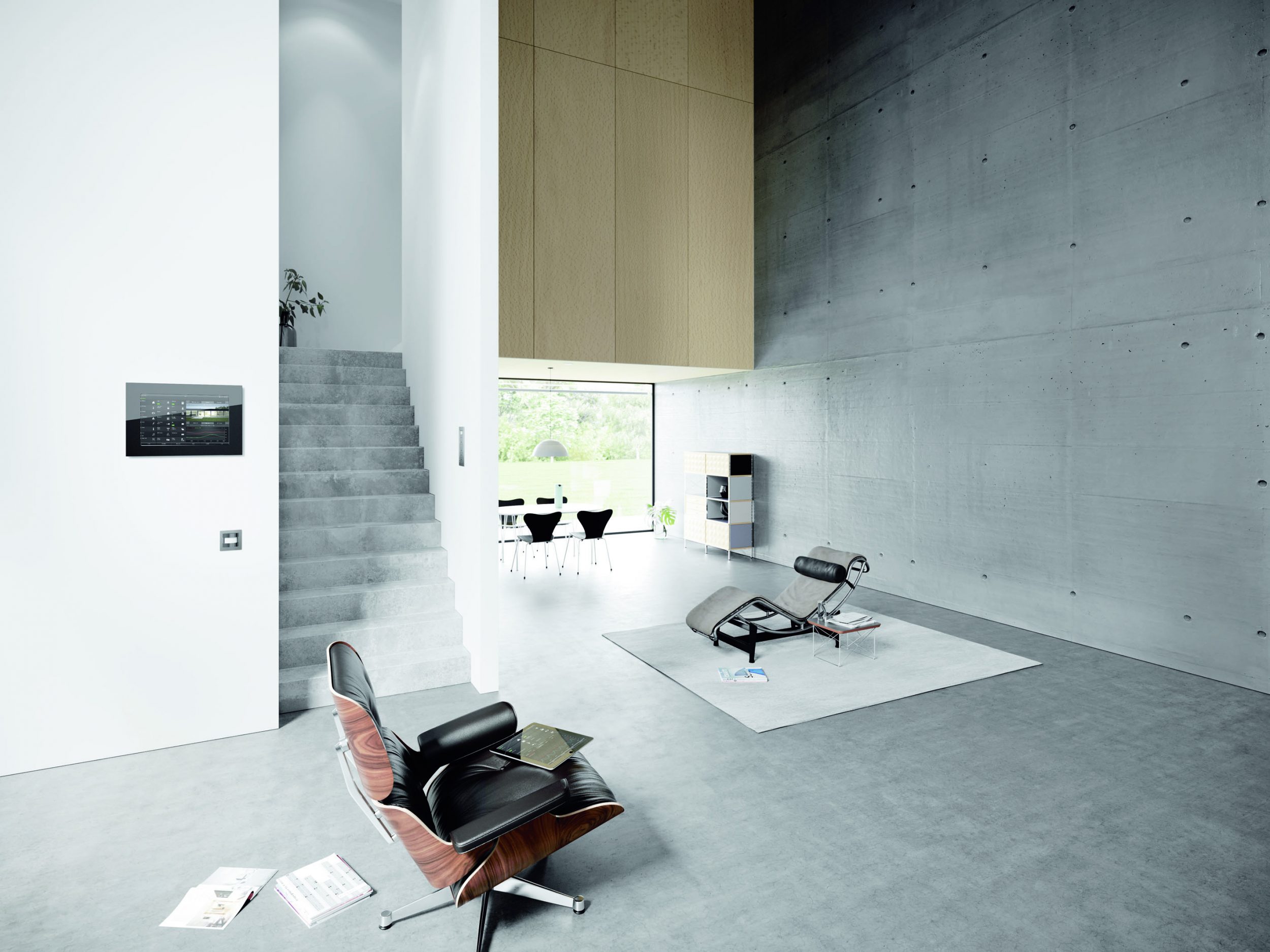
Gira has released a new video highlighting the benefits of a KNX Smart Home by Gira, smart building technology that is convenient, secure and economically future-proof. Mark Booth, Managing Director, Gira UK says: “Everyone seems to know the term ‘smart home’, yet the mainstream is still grappling with the true meaning of this ever-expanding market. There are technically two options for intelligent build specification - isolated and system solutions – however, as the name suggests, isolated solutions are independent mini-systems, which can very quickly reach their limits. “In light of this, Gira wanted to introduce a new and highly informative video that anyone can access online (via YouTube) to offer a clear understanding of the virtues of KNX building technology versus conventional, purely electromechanical solutions.” The progression of KNX system technology throughout the home has made linking devices much less complicated, so that a variety of devices can share one single, simple network and work together as required. Therefore you can offer more ways to control and influence lighting protocols depending on the type of smart living experience the end user aspires to. “Autonomous technology is definitely a sign of the future, with the ability to anticipate individual behaviours and scenarios without instruction and ultimately, user control. Smart technology is more than just functionality, it has become a lifestyle choice and one that many end users are exploring as solutions become more advanced,” adds Booth. Fittingly, Gira is a founding member of the European Installation Bus Association (EIBA), later known as the EIB and now the KNX Association. From the very beginning, Gira has been involved in the development of intelligent building products and systems - almost 30 years ago.  Now recognised as the worldwide standard for all applications in smart home design and building control, KNX governs lighting and shutter control to various security systems, heating, ventilation, air conditioning, monitoring, alarming, water control, energy management, smart metering as well as household appliances, audio/video and more. The new video detailing a KNX Smart Home by Gira is now available on YouTube and is a great resource for luxury specifiers, architects, designers and installers who want to demonstrate how with the help of Gira, they can enhance all aspects of their customers project. With KNX, all isolated devices or systems are able to talk to each other and can be controlled through just one central system over multiple control centres. KNX can be installed in to new or existing developments, be it a new build or retrofit project, residential or commercial. With wired, wireless, IP and power line communication mediums it is possible to use the system within any building type. [embed]https://www.youtube.com/watch?v=WInEVdXfrwo[/embed]

Mode Provides a Healthy Solution for Grand Designs Project
Living with a suppressed immune system following a bone marrow transplant and treatment for leukaemia, Toby Leeming, who recently appeared on Channel 4 programme Grand Designs, was determined to fulfil his long-held ambition to build his dream family home. This would require some careful consideration, particularly when it came to choosing materials and fittings that wouldn’t compromise his health, and Scolmore’s Mode antimicrobial wiring accessories provided a fitting solution for the electrical installation for his ambitious build. In 2012, Toby Leeming was a musician in an up and coming band that had just released its first album. A year later, just as he had embarked on a tour of the US with his band, he became critically ill and was diagnosed with leukaemia. With more than a year of life-saving treatment to follow, during which time he was confined to hospital, he had a lot of time to think and dream about the ideal home he would like to build. Six years later and free of leukaemia thanks to a bone marrow transplant, he and his wife and young daughter moved from London to a cottage in rural Suffolk - a much healthier environment for Toby who has a suppressed immune system and therefore prone to infections. The dream to build a home for his young family continued to drive him, and following the purchase of 4.5 acres of land just 200 yards from their cottage, the dream started to become a reality. The house was designed to incorporate features beneficial to Toby’s ongoing well-being and health. With some 370 square metres of accommodation to contend with, a huge quantity of wiring accessories was needed for the electrical installation. After much research, Scolmore’s Mode wiring accessories were personally chosen by Toby specifically for their antimicrobial benefits, and switches and sockets have been installed throughout the six-bedroom, single-storey courtyard house. Toby comments, “I had been considering other options to work with the interior décor, such as copper accessories. However, as well as being very expensive, they didn’t provide the much-needed protection health-wise that Scolmore’s Mode accessories offered. As well as meeting those vital health requirements, they are very smooth, stylish looking products that look really good everywhere we have had them installed. We are grateful for all the advice and support we had from Scolmore to ensure we selected all the right products for the different functions that were required.” More than 80 x 13A sockets, 22 x 5A sockets, plus a quantity of one, two, three and four gang switches, dimmers, new media sockets, shaving sockets, oven switches and extractor fan overrides from the Mode range have been installed. For a couple of feature walls, Toby opted for black switches from the Definity range to provide a striking contrast. The Mode range of contemporary, white wiring accessories remains Scolmore’s best-selling wiring accessories collection to date. The range was conceived and developed as a high quality, flexible and modern solution for virtually any domestic wiring requirement. The modular design allows installers unprecedented flexibility in creating dedicated wiring solutions. All of Scolmore’s white moulded and Mode Part M wiring accessories are manufactured using urea formaldehyde, which has similar inherent properties to antimicrobial additives that inhibit the growth of infectious diseases. All products independently tested achieved a 99.9% kill off rate across all four types of the strains of bacteria – MRSA, E-Coli, salmonella and klebsiella pneumonia. Scolmore has continued to invest in this range since it was originally launched, introducing products in visually contrasting versions to meet with Part M regulations. In 2016, the company added the award-winning Mode locating plug socket to the range. It was designed to assist people with impaired vision or poor hand to eye coordination to more easily insert a plug into a socket. Other innovations for the range include the addition of USB sockets – now available in one- and two-gang, and single and twin USB options. In 2018, a three-pin safety shutter socket, which exceeds the required safety standards, was launched. For Toby’s ambitious build project, sourcing the right electrical accessories was a minor hurdle when considering the main challenge that the couple faced with the project. At the heart of the plot of land was a huge, ancient oak tree, and the idea was to design a building that would wrap around the tree which would provide much needed shade and protection for Toby; whose condition has also left him susceptible to skin cancer. The challenge was to balance high architecture and health with a comfortable family home. An architect worked up Toby’s sketches for a nature healing home into a full scheme. Covering some 370 square metres, it spreads across four separate, steel-framed buildings placed in a horseshoe around the oak tree. To build around and near it with traditional foundations would compact the soil, damage the roots and threaten its survival. So the couple employed a main contractor who developed a lightweight construction method. It used small concrete pad stones to support the steel buildings which effectively float above the ground, thus leaving the roots of the oak tree uncompromised. The four, interlinked barn-like structures are externally black clad to emulate the local Suffolk black barns that are famous in the area. The first block houses a work shop, a music studio for Toby and a utility room. Next door is the main living building – housing a boot room and double height kitchen/diner with high level windows to allow lots of indirect light in. Down the hall, sliding partitions reveal a core block of small rooms - a play room for his daughter, an office for his wife, as well as a snug. At the end is a large sitting room with views over the countryside to the west. A glazed link leads to a building for the sleeping quarters, made up of four bedrooms and including a suite for Toby and Libby. Finally, there is a self-catering annexe for visiting family or for potential use as an income-providing B&B. The end result is a stunning and unique six-bedroom home which, with a little help from Scolmore’s Mode accessories, is providing peace of mind to Toby and his family, being specially adapted to his needs following his recovery.