2 November 2026
Product of the Month: Amari Floodlight range by Aurora Lighting
 
25 November 2026
Scolmore helps rejuvenate Tamworth Cancer Support Centre
 
25 November 2026
Leicester apprentice crowned 2026 SkillELECTRIC champion
 
24 November 2026
JTL celebrates opening of new Tyneside training centre
 
24 November 2026
LiGHT 26 welcomes record number of visitors to fifth event
 

Latest News


Schneider Electric Spearheads Net Zero Home Programme
Schneider Electric has partnered with Sustainable Ventures in a bid to help create the carbon neutral home. According to the Climate Change Commission (CCC), the UK will not meet its zero carbon goals without almost entirely eliminating greenhouse gas emissions from Britain’s 29 million homes.  Schneider Electric has created the Net Zero Home Programme in partnership with Sustainable Ventures to boost innovation and help accelerate time to market for sustainable smart homes and ‘plant to plug’ solutions. From May 11 2020, start-ups and SMEs in the sustainable home and net zero sector can apply to undertake trials and proof of concepts (PoCs) using their innovations with Schneider Electric. Sustainable Ventures will host the competition call and shortlist entries.   Successful applicants will be invited to participate in a Net Zero Home workshop before pitching to Schneider’s Innovation Team and Mike Hughes, President of UK&I. They will each receive a £5,000 cash Net Zero Home Grant, along with access to Sustainable Ventures’ flagship site (Bankside, London) complete with co-working space, event space and testing facilities.   From August 3 2020, the top three companies will work with the Sustainable Ventures team for three months to fully explore the potential impact of their technology in developing net zero homes and plant to plug solutions, with design and cost trials, before presenting a business case for funding to Schneider Electric. The successful start-up will work closely with Schneider Electric to develop and scale their solution and achieve mass-market deployment, with access to Schneider’s extensive channel and partner network. “As net zero targets draw closer, electrification will continue to grow. By 2050, electricity use in homes is set to more than double, outstripping industry, as well as commercial and transport use combined. This growth will see bills increase, pilling pressure on consumers as well as national infrastructure,” says Katie Mills, Head of Innovation at Schneider Electric. “To meet this challenge, the net zero home is needed today. Homes must become smarter, more connected and more efficient. Consumers, businesses and governments need to be able to optimise household energy use, from heating and lighting to energy generation, consumption and storage. We’re developing our business to meet these challenges and ensure that we’re best placed to create the net zero home – we want to work with cutting edge innovators to make this vision a reality.”  Arsha Branson, Head of Innovation Services at Sustainable Ventures comments, “The Net Zero Home Programme represents an unmatched opportunity for cleantech start-ups and SMEs to achieve mass-market deployment of their innovation. Access to our deep venture development expertise as well as Schneider Electric’s global reach of 250 million homes and 205,000 trained electricians, is unparalleled. We believe that this programme could have a lasting impact on the industry and inspire the next generation of sustainable solutions.”

Zumtobel Transforms BDP With LINETIK Luminaires
Zumtobel Lighting recently undertook a turnkey project for the supply and installation of its LINETIK luminaires at architect BDP’s offices in Clerkenwell, London together with project management and assistance with the commissioning.  Zumtobel worked to the lighting designer’s brief which required the retention of existing track, the addition of new track and installation of special variant LINETIK pendant luminaires with neutral white uplight and slightly warmer downlight - so as to coordinate with the existing illumination strategy.  Located in a converted brewery in the heart of Clerkenwell, BDP’s London office is their largest, with an interdisciplinary community of 350 architects, engineers, designers, and urbanists. The building also serves as a hub with flexible meeting, restaurant, event and exhibition spaces.  Zumtobel developed a pendant variant of LINETIK with a track-mounted control gear enclosure so it could be mounted to existing and new lengths of three-phase universal track.  LINETIK has a minimal form with advanced LED optics and integrated sensors, making it a good choice for a workplace luminaire with visual comfort. LINETIK has a discreet form that uses unique lighting technology to deliver direct/indirect illumination for maximum effect. The uplight and downlight components were customised for this job at 4,000K and 3,500K, respectively. This high-performance design with a luminous flux of around 6,000 lumens ensures that light is distributed evenly across shared workplaces. With EN12464 compliant luminance distribution this lighting solution features anti-glare characteristics. With 60% of the light output being indirect, a comfortable and stimulating room brightness distribution is achieved. DC String technology by Tridonic has also been used on the installation and allows power and data to be transferred through the cable, along with separate control of the direct and indirect components. The wireless solution allows adjustment of the lighting with complete flexibility to suit the space, the suspension distance and the reflectance of the ceiling.

Introducing SolderM8 - An Innovation To Aid LED Strip Lighting
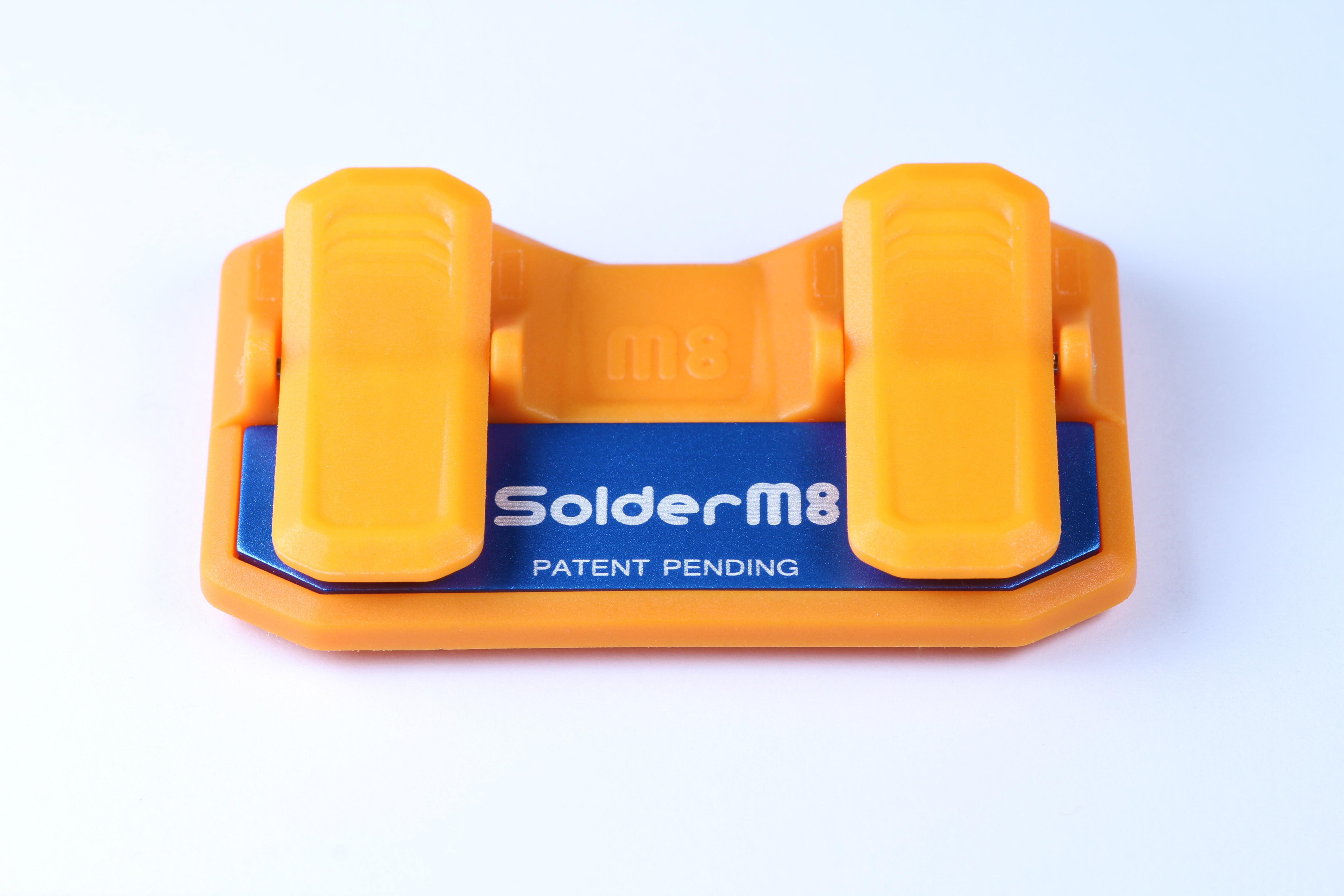
Connleth Mulholland, of San Francisco-based Mulholland Electric, explains the problems with installing LED strip lights, the costly faults that can develop, and how they have solved a common problem. About 10 years ago, LED strip lighting was thought of as a luxury choice, or a passing fashion; however, there are no signs of any decline in demand for this look. In fact, the opposite is now the case. LED strip lighting has become a part of the mandatory code here in California and it is now more or less a standard element in the majority of residential and commercial projects throughout Europe and further afield. Along with this, however, has come one of the electrician’s most fiddly, time-consuming and very often the most frustrating task of the trim phase. The problem is that the process of installing these strips remains to be fully developed in order to enable the electrician to present a professional and robust finish that they can be confident will not cause them expensive call-back problems due to faults developing. Having spent a lot of time installing the strips, I have noted that most electricians choose to use connectors. These little gadgets are great in the unskilled DIY setting - and yes, they are a handy option for some electricians - but we found they were often the reason for costly call-backs. Mulholland Electric My brother and I set up ‘Mulholland Electric’ in 2008 after recession hit and we found ourselves laid-off from the large company we had been working for. From those shaky beginnings of the recession days, we are now a well established small contracting firm employing a handful of qualified electricians and apprentices. The approximate split in our work is 75% residential and 25% commercial, and I’m proud to say we have earned a reputation for providing high standard jobs and a professional service. However, like every small or large firm, it is vital to keep a close eye on those all-important costs. Our LED Experience When we began installing LED strip lights, like most of our colleagues we used connectors which were bulky and added to costs, and - to be frank - we found that they were often the reason for being called back to a project some months later. We identified this as a problem which could quickly make that particular element of any job unprofitable. We found that when called back, the problems were mainly due either to the connector becoming faulty or the connection within it becoming unstuck. We concluded that these faults were going to be inevitable because the heat generated by the lights being turned on and off eventually breaks down the plastic connector. So we had to face facts and admit that soldering was the only real answer which would provide the home or business owner with a mechanically sound connection, a professional looking finish and, more importantly, one that is going to stand the test of time and not eat into profits by having to return to correct recurring faults. Sometimes I hear, "But soldering is only for the experienced electrician. We can’t give that job to an apprentice; it’s messy and time consuming." I agree - it is all of these things, but it is also the method that ensures durability and - let’s face it - it’s the method that provides a high quality professional finish. Truthfully, electricians find themselves between a rock and a hard place every time they install LED strip lights. Either you pay for bulky connectors which don’t give the best finished look and that you know in your heart of hearts that, in about 50% of cases, you will have to fund a call-back; or, you spend the money paying your most experienced employees to solder. Profit margins in both scenarios will be hard to find! The biggest problem we as electricians face when soldering strip lights to each other or to the feed is that it is not always possible to lay both ends on a flat surface. This is the reason most people avoid it and go down the connector route. After we had one very expensive episode in which our best apprentice spent two full days messing up six solder joints on an LED strip - which admittedly were particularly awkward as they had to be installed above a picture rail - we then had to pay an experienced electrician to redo each connection. As you can imagine, there was no profit left on that part of the job. Clearly, we could not afford to have this sort of thing happen too often, and yet we were not willing to compromise on the quality of the work we produce. Determined to solve the problem, I set about creating a tool which had to be easy to use, light and portable for the toolbox and something that could be used in any location where you find yourself installing LED strip lights. Using these criteria and spending a lot of time trying out various designs, learning about patenting, getting prototypes made and tested, we have now finally arrived at a simple solution which we are really excited about sharing with our colleagues in the trade. We decided to name the tool ‘SolderM8’ because, put simply, this compact, economical little gadget will be a great mate for any professional electrician to carry with them. A bonus is that it is simple to use, so we discovered that even our least experienced apprentice was soldering expertly in a very short space of time. So how does ‘SolderM8’ work? Firstly, the gadget will stick to any surface regardless of the texture or angle you are working at. It has an almost magical underside - which I spent a long time researching so I could get it right - it even works upside-down! You then insert both ends of the tape or wire and it holds it firmly while you dab on your solder and, hey presto, it's job done. We are now able to finish full lengths of soldered strips in a fraction of the time and which looks sleek and professional. Best of all, we can do this without the frustration, tantrums and call-backs. My latest news is that having tested the tool thoroughly and being delighted with its performance, the first batch of SolderM8’s for sale has now arrived from the manufacturer. You can find out more, watch a demo video and order your own at www.SolderM8.com.

Schneider Electric Announces ‘Advanced Buildings’ Webinar Series
Schneider Electric, the leader in digital transformation, energy management, and automation, has announced a series of webinars that explore the benefits and pitfalls of incorporating modern technologies into building systems. Schneider Electric is looking to support facility managers to develop strategies for creating the next generation of buildings. The ‘Advanced Buildings’ webinar series includes three interactive, digital webinars, led by industry experts, advising industry professionals on incorporating technologies that create more efficient, sustainable and secure building systems. The three webinars include: Cyber Security Tuesday 12th May, 11:00 BST - Delivering Sustainable Buildings with a Cyber Supported Infrastructure Workplace Technology Thursday 14th May, 10:30 BST - Workplace Utilization Management for Data-driven Decision-making Thursday 14th May, 14:30 BST - Creating Seamless Tenant Experience via Modern Technologies Kas Mohammed, VP of Digital Energy at Schneider Electric, comments, “When it comes to real estate portfolios, exploiting space to its fullest is crucial. However, maximising the profitability of buildings needn’t be at the expense of sustainability. To align the two, embracing technology that enables data-driven decisions is imperative. “We hope the educational series will provide tenants, workplace professionals and building owners with an understanding of modern building management systems and their potential.”

New Posters To Protect Employees On-Site
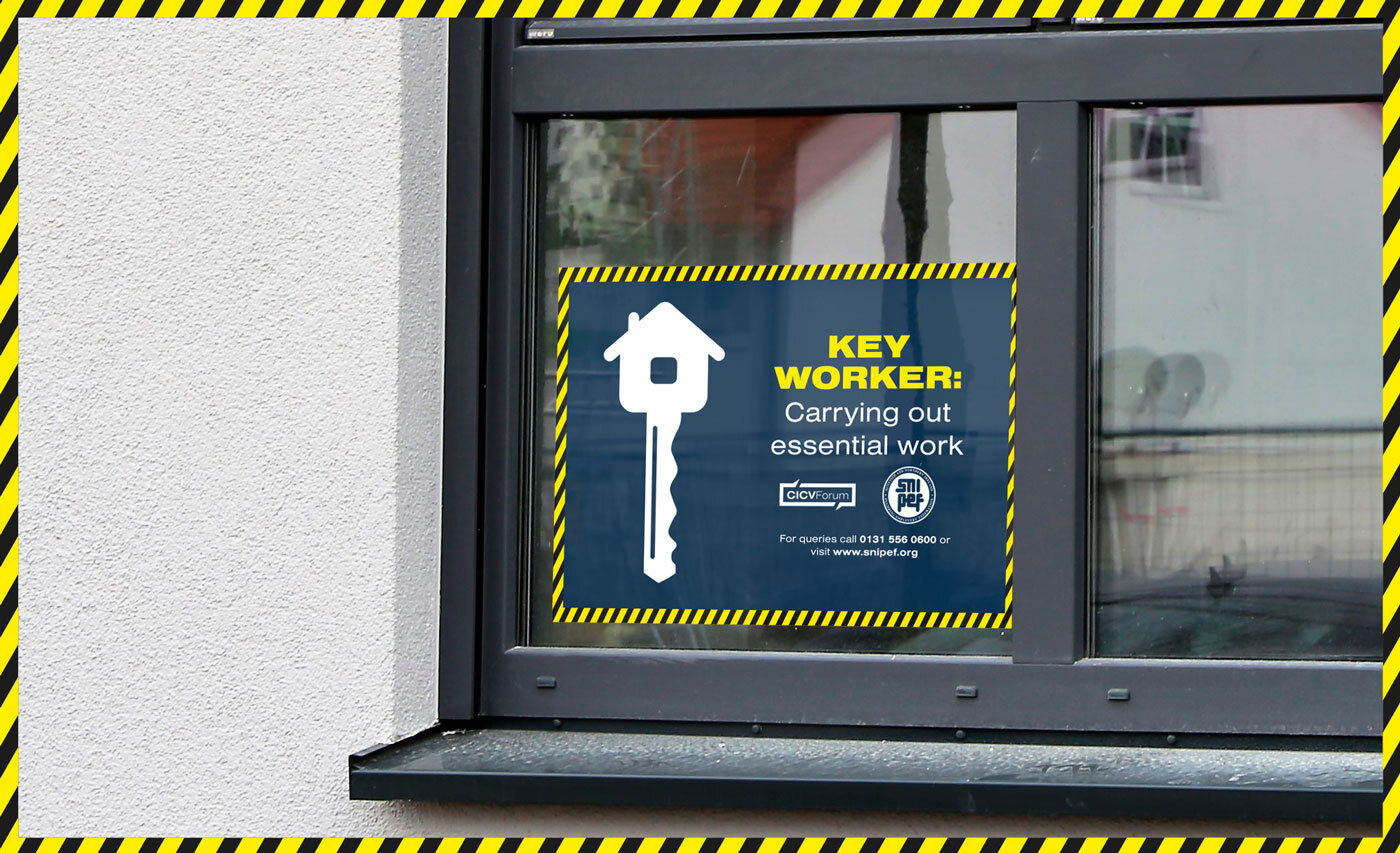
In another initiative to support the construction sector in Scotland during the COVID-19 pandemic, the Construction Industry Coronavirus (CICV) Forum has started distributing protective signage for key workers carrying out emergency and essential projects. The posters, designed to be displayed on sites or on vans, carry the legend – Key Worker: Carrying out Essential Work. They are designed to deflect reported harassment and abuse which has been directed at employees by members of the public. The Forum, made up of 23 trade and professional bodies as well as scores of companies and individuals, has been lobbying vigorously on the industry’s behalf since Holyrood shut down the construction sector, apart from work on hospitals and emergency interventions. The signage will alert the public to the fact that workers they see in the streets or on sites are not flouting the rules but instead are performing vital roles, in line with guidelines, to ensure that the fabric of the country remains in good condition during the lockdown. John McKinney, Secretary of Forum members the National Federation of Roofing Contractors, the Stone Federation and the Scottish Contractors Group, says, “As a consequence of mixed messaging from government, there has been some confusion among certain members of the public about what is essential working. “However, that is no excuse for harassing people who are going about their legitimate business, and we hope these signs, which carry an information helpline number, will help clarify the situation.” Ian Honeyman, Commercial Director of the Scottish Building Federation, adds, “This is a time when we should all be working together and the Forum is keen to reduce any possible tensions between key workers and misinformed members of the public. “In a period when the Scottish Government is asking people to remain in their homes, it is important that these homes are watertight, safe and have essential working facilities, such as water, gas and electricity, and that is what the construction sector’s key workers are ensuring.” The CICV Forum, which was set up two months ago, now has 23 trade and professional bodies as full members. A further 27 organisations have input on its seven influential sub-groups, dealing with mission-critical aspects such as health and safety, skills and future planning.

Heat Pumps – Type F or Type B RCDs?
By Chaz Andrews, Technical Manager of Doepke UK Inverter speed controlled pumps and compressors circuits require specific types of RCD. The characteristics of the equipment will determine if you require Type F or Type B RCDs and any associated restrictions on RCD sensitivity. Check with the manufacturer before quoting for the installation. Equipment design characteristics Appropriate planning at the quotation stage saves time and unforeseen expenses on site at a later date. The installation design, equipment to be connected and any RCD requirements including the 'Type' and 'Sensitivity' must be considered together, not in isolation. Equipment may be self-contained for small installations or have sperate units with standalone inverter drives for larger installations. Inverter based equipment connected to three-phase supplies, that does not include an isolating transformer (see manufacturer's information) can only be used with type B RCDs - see BS 7671 531.3.3. This is explained in detail in Doepke Techpub-17 – http://doepke.co.uk/download/download.html. For single phase equipment, the use of  type F or B RCDs is governed by the level of smooth dc residual current produced under certain fault conditions. This fault current is related to the value of the “dc link voltage” (see below) i.e. it is function of the equipment design. The operational leakage current (PE current), must be compatible with the installation design and associated RCD sensitivity – see 531.3.2. Take into account the possible addition of leakage currents when adding new equipment to an existing installation. The addition of three-phase non-linear loads increases the harmonic content and associated leakage currents - see PDS (Power drive system) – RCD Sensitivity. DC link voltage -  Type of RCD Figure 1 (below) gives a generic example of a single phase combined compressor and fan unit. The dc voltage output from the rectifier will be a minimum of 1.41 x ac rms voltage. Some designs may have a step-up voltage section, to increase the dc voltage, before it is fed into the control section. A capacitor connected across the dc bus provides a power reservoir (smoothing), for the control section during the non-conducting period associated with the AC supply. A fault to earth on the dc link section results in a smooth dc residual current flowing in the PE conductor, back to the source earth and returning via the line conductors through any upstream RCDs. For smooth dc residual current < 10 mA (defined by the manufacturer of the equipment), you can use Type F RCDs – see BS7671  531.3.3 (iii) Note 2. For smooth dc residual > 10 mA or it is not defined i.e. the manufacturer does not specify the type of  RCD, 531.3.3 (iv). Note 3 refers to the use of type B RCDs. PDS  - RCD sensitivity Elements of the PDS and the associated environment e.g. filters, inverter, motor cable, motor, existing supply quality, harmonics and ambient conditions, determine the total leakage current present during fault free operation of the equipment. This results in the fluctuation of the leakage current, consequently 531.3.2 (ii) recommends that you do not exceed 30% of the RCD sensitivity to achieve reliable operation of the equipment. Type F and Type B RCDs are designed to respond to the sum of the leakage / residual currents generated at various frequencies by inverter controlled equipment  – see Figure 2 (below). Before making a final selection and purchasing equipment, check the installation manuals to verify the type of RCD and the minimum sensitivity requirements. If it is not in the manual, ask the supplier to provide this information before you purchase. Operational leakage currents BS7671 543.7.1 places limits on the operational leakage current, based on the method of connection: Conventional 13 amp plug <3.5 mA and suitable for connection to a circuit protected by the appropriate Type of 30 mA RCD. Equipment with leakage currents > 3.5 mA requires permanent connection to the supply, or the use of 60309-2 plug and socket – see 543.7.201. This equipment may not be compatible with the appropriate Type of 30 mA RCD. Relatively small inverter setups may require a minimum of 300 or 500mA RCDs, but check first - don’t make assumptions. See 531.3.2 with regard to the design of the installation to avoid unwanted tripping. Note the points about the accumulation of earth leakage currents and consideration for separate feeder circuits, protected by the correct Type of RCD i.e. you cannot install Type F or B RCDs down stream of Type A or AC RCDs. Conclusion Check the details first - don’t guess or make assumptions.

Bureau Veritas Encourages Locked Down Electrical Industry To Upskill
As the electrical industry, as all others, continues to adjust the new ‘normal’ of life during lockdown, Bureau Veritas is keen to remind any homebound electricians, duty holders and property managers on how they can use the extra time at home to their advantage by upskilling.  Inherently, by the nature of electrical work which typically involves working in people’s homes or commercial, industrial and building sites, the majority of which are now temporarily closed, many electrical firms have had to either limit work or place it on hold altogether for the duration of the lockdown.  In response, leading electrical safety expert, Bureau Veritas is keen to remind those electricians, duty holders and property managers who are homebound, either in working at home or having been furloughed for the present time, of the opportunity to use the extra time to invest in their own professional development.  Michael Kenyon, Technical Lead at Bureau Veritas says, “These are certainly testing times as we continue to try to navigate our way through this unchartered territory – and our sympathies remain wholly with those workers who have been affected.  “While we eagerly await further details from the Government, our priority remains on helping support the electrical industry in whatever way we can. With this in mind, we are actively encouraging electricians and other industry professionals to make the most of the vast learning resources available to them.  “From free training courses, webinars, podcasts and live Q&As, there is currently a plethora of great online content emerging due to the lockdown. Many industry experts are creating digital content, easily available on social media and other platforms, which has been designed to help those at home to enhance their knowledge base at this time. “At Bureau Veritas, for example, we are holding a free webinar on the 20th May specifically designed for electricians, supervisors, managers and business owners on the complex world of electrical compliance, including duty holder responsibilities. Plus, we recently launched a new electrical guide designed to support duty holders in understanding how to reduce risks within an organisation – a great tool for electricians to have in their armoury when making compliance recommendations.” This latest activity comes as the electrical industry continues to adapt to a fast changing climate, such as with the ongoing introduction of new renewable, low carbon technologies and the movement towards electrification, particularly Electrical Vehicle (EV) adoption. Kenyon adds, “The modern electrician’s task is a complex one. Not only do they need to manage the complexities of electrical installations but they must also have a thorough grasp of new technologies, the different offerings and benefits of each, as well as an understanding of the impact of new legislation on both them and the customer. “With this comes greater onus on investing in upskilling to ensure they remain fully informed. As such, we would urge all those electricians that remain at home to use any extra downtime to their advantage by taking stock of the wealth of support out there – in that way they can ensure they are one step ahead of the competition and ready to take the lead when works recommence in a post-coronavirus UK.” Details of Bureau Veritas’ upcoming Understand Electrical Duty Holder Responsibilities webinar, due to take place on 22 May at 12pm can be found here. Meanwhile, the new Electrical Safety Guide is available to download here.

WEEE Announces Interest Free Loans
The Waste Electrical and Electronic Equipment Fund (WEEE Fund) has announced its WEEE Support Grants and Loans Package to support waste electrical and lamp recyclers during the coronavirus crisis.  With many household waste recycling centres closed and other waste electrical collections reduced, the flow of electricals and lamps for recycling has significantly reduced. The new facility will provide up to £5million of interest free loans to waste electrical and lamp treatment facilities.   The loan finance derives from the WEEE Compliance Fee, which is paid by WEEE schemes that do not meet their WEEE collection targets. Scott Butler, Executive Director, WEEE Fund, says, “This is a fund that has been made available to provide rapid help and support the electrical waste recycling sector as a result of the impact of the coronavirus. The loans will be 100% backed by the WEEE Fund -funded by producers of electricals.” Environment Minister Rebecca Pow adds, “Right across the waste sector, I’m hugely grateful to the enormous effort being put in to keep crucial services running; and in such unprecedented times I understand the pressure the industry is under. This fund will help the sector to weather the effects of the coronavirus outbreak. Crucially it will also enable people to do the right thing and recycle more as we move towards a more circular economy.” Nigel Harvey, Recolight CEO adds, “Recolight has worked hard to help set up this new loan scheme.  When the coronavirus restrictions are lifted, the WEEE system will need a dynamic and competitive WEEE recycling market, with the capacity to cope with any post-crisis spike. The loans should help to minimise the risk of WEEE recycling business closures, and a rapid start-up of operations when this is required.” Recolight has previously contributed to the fund which finances the loans but is not eligible for a loan. Applications are open now and can be accessed by emailing info@weeefund.uk Applications are open until the end of May 2020.  

Gary Worrall Named New ECA President
Senior business manager and engineer, Gary Worrall, has become the new President of ECA, the UK’s leading engineering services trade association. Over 30 years ago, Worrall became an engineer for Lorne Stewart Engineering, a prominent M&E business and longstanding ECA Member. He progressed through the business to become CEO of Lorne Stewart PLC’s engineering division, having held several senior management roles along the way. Worrall takes over the ECA Presidency from Jim Pridham, who played a key role during the past 12 months, most notably through his promotion of industry training and apprenticeships. Worrall comments, “As someone who is passionate about electrical and engineering services, I’m delighted to be taking over this prestigious ECA role as an industry advocate and leader. The industry currently faces unprecedented challenges, and I am determined to play a role in supporting ECA Member businesses and the industry through these extremely difficult times.” The full ECA Presidential team for 2020/21 is as follows: • President – Gary Worrall (Lorne Stewart) • Senior Vice President – David Lewis (Chancery Contracts) • Vice President – Steve Murray (WT Jenkins) • Immediate Past President – Jim Pridham (JR Pridham Services) ECA CEO, Steve Bratt, adds, “We are delighted to announce Gary Worrall has become our new ECA President. The entire ECA team looks forward to working with Gary to further develop what the ECA delivers for its members, and in support of the wider engineering services sector. “I would also like to welcome long-standing ECA advocate Steve Murray to the role of Vice President, and to thank Jim Pridham for his valuable contributions to ECA’s national and regional activity during the past year, and for his support for the ECA team.” The new ECA Presidential team was confirmed on May 6, 2020, and first publically announced on May 11, 2020.

Lighthouse Construction Industry Charity Offers Free Wellbeing Workshops
This year’s Mental Health Awareness Week is 18-24 May, and to support the campaign’s theme of ‘kindness’, the Lighthouse Construction Industry Charity is hosting a series of free online lunchtime mental health training workshops.   From mindfulness and meditation, to resilience and controlling stress, anyone working in construction can take part in these bite-sized online sessions, The interactive courses will start at 13.30 each day and last for 45 minutes.  To take part all you need is access to an email address and the internet, whether via smartphone, tablet or laptop. Course Information: Monday 18th May -Coping with stress – covers pressure and stress, causes, coping mechanisms, and how we can build our resilience to stress. Tuesday 19th May -Work, life balance – what is good ‘work life balance’ and how to achieve it. Wednesday 20th May -Mindfulness – what is mindfulness about and how you can implement mindfulness into your day. Thursday 21st May - Resilience –  how to build resilience and top tips to take away to implement to keep your resilience growing. Friday 22nd May - Meditation -A simple introduction to meditation from a construction professional explaining how a consistent practice can benefit your mental health every day. Compared to this time last year, calls to the charity’s 24/7 Construction Industry Helpline have increased by 55%, reflecting the rising levels of anxiety and insecurity within the construction industry and the dramatic impact of the COVID 19 pandemic.  Bill Hill, CEO of the Lighthouse Construction Industry says, “Our mission is to ensure that no worker feels alone in a crisis and as part of our charitable giving we look after the physical, mental and financial wellbeing of our construction community in the UK and Ireland. Now, more than ever we need to ensure that our construction families in crisis receive the support that they need and so the theme of ‘kindness’ for this year’s Mental Health Awareness Week resonates perfectly with us. We are delighted to be able to offer our wellbeing workshops completely free of charge to help our industry during this very difficult time.  If you need support now, or know someone that does, the charity provides a 24 /7 Construction Industry Helpline; UK 0345 605 1956 and ROI 1800 939 122 which is the first point of contact to access a range of free and confidential support services including; emergency financial aid, advice on welfare and mental wellbeing and support on legal, tax and debt management matters. If you’re not ready to talk then there is the helpline mobile app which helps people experiencing stress, anxiety or depression as well as providing access to other areas of support such as anger management, drug and alcohol dependency, debt management, legal advice, and emergency financial aid.  Book your workshop now.