2 November 2026
Product of the Month: Amari Floodlight range by Aurora Lighting
 
25 November 2026
Scolmore helps rejuvenate Tamworth Cancer Support Centre
 
25 November 2026
Leicester apprentice crowned 2026 SkillELECTRIC champion
 
24 November 2026
JTL celebrates opening of new Tyneside training centre
 
24 November 2026
LiGHT 26 welcomes record number of visitors to fifth event
 

Latest News


Volkswagen Transporter Sets New Nürburgring Lap Record
A Volkswagen Transporter has set an unofficial lap record of the Nürburgring Nordschleife in the hands of HMS Racing British Touring Car driver Rob Austin. The lap time of nine minutes 58 seconds, beats the benchmark time set by TV presenter and professional motor racing driver Sabine Schmitz, of 10 minutes and 8 seconds, in 2005. The production-standard Volkswagen Transporter was supplied by Northgate Vehicle Hire, and is powered by the mid-range 150 PS diesel engine. The attempt, filmed on home soil for Volkswagen Commercial Vehicles, set out to beat the 10-minute barrier and the time set by Schmitz on the same track 13 years ago. Northgate Vehicle Hire sponsors Dunlop MSA British Touring Car Championship (BTCC) team HMS Racing. A spokesman said, “This feat by a professional racing driver was an unusual way to showcase the quality and durability of one of our most popular vans, the Volkswagen Transporter.” Kate Wright, national rental manager, Volkswagen Commercial Vehicles, commented, “The Transporter has won a host of accolades throughout its history, but this is perhaps one of the most unusual. We’re really excited to be part of this record attempt which shows just what our vans can do. Most customers choose them because they’re reliable, cost-effective and offer some of the best technologies available, but maybe this is another good reason to choose one!”

Recolight Celebrates Recycling Milestone
Lighting WEEE compliance scheme Recolight has announced a major milestone, having funded the recycling of 300 million fluorescent and LED lamps and luminaires since the WEEE regulations were implemented in 2007. Recolight has the only dedicated open collection point network for consumer and business waste fluorescent and LED lamps. With 3,000 collection points, the Recolight network contributes to the continuing increase in the UK’s lamp recycling rate – up from 39.5% in 2012 to 48.5% in 2017. Nigel Harvey, chief executive of Recolight said, “Our members can be very proud that they have helped to achieve this 300 million milestone; it is they that have made it possible and it is a testament to their dedication to improve lighting recycling in the UK. Their role is helping the UK to meet the national recycling targets set out in the recast WEEE directive.” Recolight has extended their recycling service to collect more waste electricals covered by the WEEE regulations. Suzanne Castine, marketing manager at Recolight added, “It’s great to be in a position to offer this complete WEEE recycling service. Feedback from our collection partners told us they wanted more. The success of our lamp and luminaire service over the years has made this possible. “

Contractor Gives Away Van To Help Apprentices
An NICEIC registered contractor is giving away his van to set up a fund for apprentice electricians. Thomas Nagy, who runs a YouTube channel showcasing his electrical work in and around London, came up with the idea after deciding to get a new van for his business. Thomas commented, “With new laws surrounding emission levels in central London, I have had to look at getting a new more eco-friendly van. “Normally, I would just look to trade in the old van but to be honest I have had it since new and it has served me well so I thought, why not try and do something different? “A new van can be a major cost for someone just trying to make a start in the sector and so hopefully it will be put to good use.” He estimates the old van, which is fully racked out, is worth around £4,000. It will also come complete with a brand new toolkit, courtesy of ITS Tools, which is worth £400 alone. The competition requires visitors to his site to answer a simple question and pay £5 to be in with a chance of winning the van. The competition has raised more than £5,000 already and will run until November 4. Thomas is going to donate the proceeds from the competition to a bursary fund specifically for young apprentices who need a hand to make a start in the sector. He has asked NICEIC to help facilitate the fund. Paul Collins, communications manager at NICEIC, said, “Thomas got in touch and told us about the idea we were only too delighted to try and help. “It is a great idea and a very generous gesture that will give something back to the industry – particularly apprentices, who often find the cost of just getting started very prohibitive.” NICEIC already runs its own 'Jobs for the Girls' bursary which aims to give young women, who are under-represented in the electrical industry, a helping hand. The Thomas Nagy apprentice fund will be run in a similar format with young apprentices able to apply for a certain amount of funding to help them with tools, training, or other associated costs. More details will be available in January 2019 when the bursary fund opens. To enter the competition visit Thomas’ fundraising page.

AMA Releases Active Fire Protection Market Report
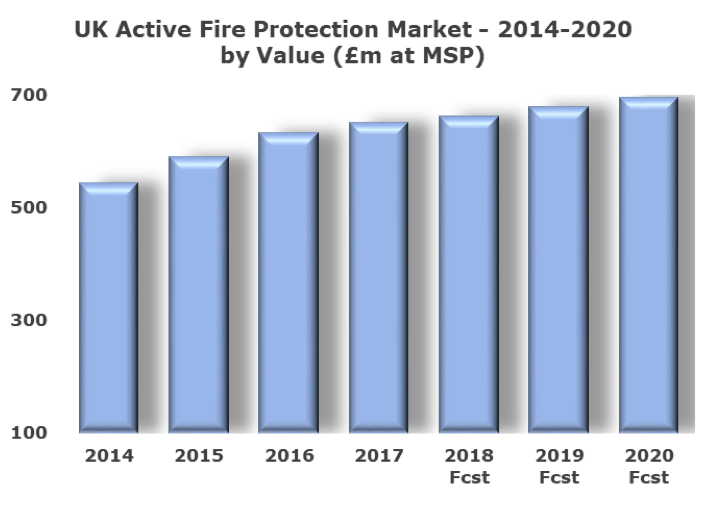
According to a report by AMA Research, the total market size for active fire protection systems in the UK saw good growth to 2016 at between 7% and 9% per year, in-line with higher levels of construction output across key end-use sectors such as education and offices. However, AMA’s estimates – which exclude installation, service and rental income – suggest weakening growth to 3% in 2017 and 2% in 2018, due to a fall in overall business confidence, with medium term forecasts to 2020 also moderate. The sector is mature and – in the absence of any significant changes to Building Regulations and Standards in recent years – has been primarily driven by the wider performance of the UK building and construction market. That said, publicity and interest surrounding the fire protection industry has increased following the Grenfell Tower tragedy, and it is likely that the sector will see additional investment in the medium term. In the wake of the Hackitt Review, Fire Industry Association members have reported a significant increase in enquiries relating to fire safety, although the latest feedback provides limited evidence that this is leading to increased new orders for fire protection products, with no formal legislation in relation to this introduced at this stage. In terms of product mix, the active fire protection market is comprised of alarms or detection systems and suppression systems and equipment. Alarms and detection systems account for around 62%, with the majority of installations of products and systems going into the non-domestic sectors, while domestic smoke alarms account for a smaller percentage of the market in value terms. A key feature of the market is technology and increasing integration with fire and security systems. Improvements in wireless capability has led to further growth in the use of wireless smoke detectors, particularly for retrofitting within existing areas that may be hard to wire, such as historic buildings. IP functionality is now standard in many fire control panels, and many smoke detectors have wireless capability. The greater use of IP within fire protection products has also enabled the use of video fire detection, where CCTV images are analysed by mathematical algorithms to detect smoke or flames. A key driver of innovation has been the industry’s desire to continue reducing the likelihood and number of false alarms, and the majority of innovations has been in detection technology rather than suppression. Developments have included improved capability of sensor technology in smoke detectors that can detect more quickly, with greater reliability and with a greater degree of differentiation between different types of smoke and vapours. Another trend is the growing installation of voice evacuation devices to replace traditional sounders and sirens. The active fire protection market continues to experience price competition and a strong focus on the lifetime cost of fire and security systems, and many suppliers are offering additional services including maintenance and service contracts to improve revenues and generate repeat business. “Forecasts suggest slower growth over the next few years for the fire protection market,” said Hayley Thornley, market research manager at AMA Research. “With no immediate significant technical changes expected in the regulatory aspect of fire protection as a result of the Hackitt Review, the main driver of future growth will be the moderately positive outlook in construction activity in general, and in particular non-residential construction, with some output sectors which generate significant demand for fire protection products are forecast to slow down in the next few years.” Key end-use sectors for the active fire protection market include industrial and office markets, and annual construction output in both of these sectors is forecast to decrease between 2017 and 2019, and have a negative impact on demand for active fire protection, particularly on the suppression sector. Strong growth is however forecast in the UK data centres market, which may generate particular demand for inert and synthetic gaseous suppression systems, and though the domestic sector is not a major source of demand, the growth in high-rise construction may provide a stimulus for sprinkler-based systems. The Active Fire Protection Market Report – UK 2018-2022 report is available now and can be ordered online on the AMA website.

Man Jailed After Falsely Claiming To Be NICEIC Registered
A Lanarkshire man has been sentenced to prison after falsely claiming to be NICEIC registered. The man, from Belshill, was ordered to spend 11 weeks in prison and fined £675 at Hamilton Sheriff Court. He pleaded guilty to running a fraudulent scheme by pretending he was an NICEIC Approved Contractor and authorised to issue NICEIC certificates and reports, which resulted in him obtaining money by fraudulent means. He also claimed he was a SELECT Approved Contractor and a Building Standards Approved Certifier. The action was taken by the North Lanarkshire Council Trading Standards team following a joint investigation with NICEIC. Michael McPake, of North Lanarkshire Council, commented, “I am delighted at the success of this case, which shows the continuing diligence of the council’s trading standards staff who pursue criminal enterprises, protecting consumers and the interests of legitimate trade. “We will continue to take a zero tolerance approach to individuals who rip off residents or businesses within our community.” NICEIC has urged anyone who is suspicious about using a registered electrician to check his or her details at the NICEIC website. It contains a full list of all those contractors who are legitimately registered with NICEIC. “This latest prosecution shows how seriously we take misuse of our logo,” commented NICEIC CEO Emma Clancy. “It also sends out the message that anyone thinking about using our logo fraudulently will be caught and dealt with appropriately by the courts. “The NICEIC name is associated with quality and we will work with the appropriate authorities to protect those contractors who are legitimately registered with us and have the quality of their work assessed on a regular basis.”

Over 200 MPs Support Aldous Bill
Almost one in three MPs (207) now support the Aldous Bill, following major efforts by BESA and ECA to secure support for reforming cash retentions in construction. The backing comes alongside an unprecedented coalition of over 80 industry bodies and trade associations, representing over 580,000 businesses and sole traders. This is the largest fair payments campaign ever formed in the UK. Following the collapse of Carillion in January, the Aldous Bill has drawn endorsement from political hitters including MPs John McDonnell, Ken Clarke and Sir Vince Cable. While the bill has secured broad cross-party support, Labour (96) and Conservatives (76) make the majority of parliamentary support. Alexi Ozioro, BESA public affairs & policy manager, said, “I think we will see more MPs getting behind Peter’s Bill. Carillion put late payments in the public view and we have grown a campaign that 76 Conservatives and MPs from every other party all back. We have a great opportunity for industry unity and to finally solve a problem that has plagued the industry, economy and SMEs for far too long.” ECA deputy director of business policy & practice Rob Driscoll added, “The current cash retentions system is extremely unfair to hard-working small and medium-sized businesses in construction. Given this unprecedented level of support for a pragmatic reform and the Sector Deal’s ambition to create sustainable business models, it’s time for government to back legislative reform.” Peter Aldous MP also commented: “I am very encouraged by the support that 200 colleagues across the House have indicated for my Bill and the construction industry; it is an important milestone to have reached. There is more work to be done in persuading government to adopt the bill, but I am confident that vital momentum is being gained, showing the appetite within Parliament for the Aldous Bill to succeed.” Peter Aldous introduced his Bill to put retentions in secure deposit schemes six days before Carillion collapsed, and second reading is due to take place after the party conference season on October 26th.

BEAMA Releases Ventilation Whitepaper
BEAMA has published its first ventilation whitepaper, entitled Better Ventilation, Better Homes, Better Health, with a raft of measures aimed at solving the issues facing the industry and helping to deliver better indoor air quality in UK homes. The whitepaper identifies two main issues facing the industry: · The lack of a joined-up approach towards energy efficiency and ventilation · Poor-quality installations which are ‘plaguing the industry’ The paper calls for compulsory assessments of ventilation provision following the installation of energy efficiency measures, a revision of Building Regulations to refocus on ensuring ‘in-use performance and end-users’ needs’ and asks government to make it compulsory that all ventilation installations are undertaken by an installer who is a member of a competent persons scheme. BEAMA also call on the government to make indoor air quality a government priority by financially incentivising the installation of ventilation improvements and undertaking public education campaigns on the health risks of indoor air pollution and the simple steps that homeowners can take to improve their own home air. Poor indoor air quality is responsible for thousands of deaths a year and millions of pounds worth of healthcare costs. It is linked to a range of serious health diseases including cancer, cardiovascular disease, chronic obstructive pulmonary disease and mental health conditions. In the shorter term it reduces cognitive ability and exacerbates allergic and asthmatic symptoms. As successive governments strive towards zero carbon homes, the installation of energy efficiency measures and the building of modern airtight homes has not been met with an equal consideration of the need for corresponding ventilation improvements – meaning that pollutants are becoming trapped inside homes putting householders’ health at risk. The whitepaper details four overarching steps that government should take, and outlines how these can be achieved, in improving ventilation and indoor air quality in UK homes: 1) Improve the focus on Indoor Air Quality in the Building Regulations 2) Improve compliance with the current Building Regulations 3) Avoid problems of poor air quality following refurbishment 4) Make IAQ a government priority. Commenting, Keith Ritchie, chairman of the BEAMA Ventilation Group, said, “As homes are becoming ever more airtight, we need to focus on ensuring that the ventilation industry plays its part in helping to deliver good indoor air quality. Energy efficiency improvements are being made in isolation without due consideration to the unintended consequences of sealing up homes and where installations of ventilation are being made, they are often not up to scratch. Our whitepaper aims to tackle all of these issues with a few simple steps that government could take to help ensure better indoor air for all.”

Rexel Achieves ISO Standard For Occupational Health & Safety Management
Rexel has achieved certification to the new and internationally recognised ISO 45001:2018 Occupational Health and Safety standard (OH&S). ISO 45001, which supersedes OHSAS 18001, makes integration with other management systems simpler than before, because it shares the new common structure defined by Annex SL. This is a structure created by ISO to provide organisations with the right information needed to comply with more than one management system standard. It also streamlines the integration process, supporting the continual improvement approach of all ISO standards. Businesses with the OHSAS 18001 are required to migrate to ISO 45001 to maintain the validity of certification within a three year period. NQA, a leading third party certification body, is one of the first certification bodies to achieve accreditation from UKAS to this new international standard and supported Rexel with its migration from OHSAS 18001. Rexel is NQA’s first client in the electrical industry to achieve accredited certification to ISO 45001:2018. Rexel began its certification journey with NQA in 1994 and has previously been successfully certified for: environmental management system (ISO 14001); quality management system (ISO 9001), energy management system (ISO 50001) and health and safety management system (OHSAS 18001). Clive Bolland, head of safety, quality & environment from Rexel said, “We are delighted to have achieved this certification and it certainly is a testament to the team’s hard work in defining clear management structures, objectives for improvement and a structured approach to risk assessment and reduction. Laura Fletcher, commercial director at NQA, added, “Rexel is setting an example and leading their industry in a new and exciting direction. Successfully migrating their OHSAS 18001 certification to the new ISO 45001 standard so efficiently shows remarkable determination and leadership. Congratulations from all at NQA.” ISO (International Organisation for Standardisation) is an independent, non-governmental membership organisation, and the world's largest developer of voluntary International Standards.  

Rexel Opens The Doors On Revamped Branch In Bedford
Electrical professionals in Bedford are being invited to come on down to their new Rexel electrical distributor branch on Barkers Lane, following its recent re-opening to the trade. The recent launch event proved highly successful featuring free calibration, helping trade professionals to ensure their testing equipment is performing accurately, as well complimentary food and product demonstrations from key suppliers. The former Wilts branch has been revamped and rebranded under the Rexel brand name. The transformation will see Rexel grow its nationwide coverage to 250 locations, helping to position it as one of the nation’s largest electrical distributor networks. Branch manager, Craig Whitworth, said, “We hope that installers will like what they find in their new Rexel branch, which has been designed specifically to cater to their professional needs. We have a wide range of products, which is growing all the time, and a commitment to services which ensure those products are in-branch when our customers demand them. We would welcome any local electricians to come and see what we have to offer.” All branches previously branded Newey & Eyre, WF Senate, Wilts and Parkers Merchanting have been brought under the Rexel umbrella.

Webinar Captures Highlights Of New BSI Kitemark For Commercial Lighting
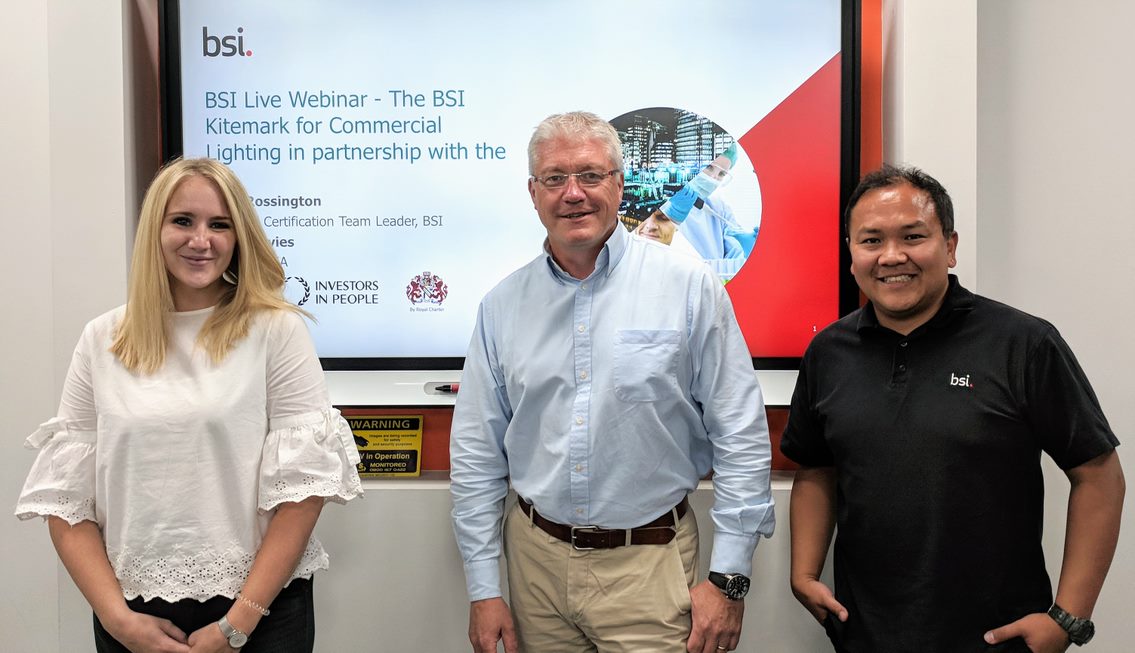
The recording of the live webinar of the BSI (British Standards Institute) Kitemark for Commercial Lighting is now available to watch online at the LIA (Lighting Industry Association) website. The webinar was recorded live on July 23 to supplement the launch event of the new BSI Kitemark on June 27 held at the LIA offices in Telford. The new scheme launched in partnership between the BSI and the LIA is designed to increase product safety and quality of the lighting products, and at the same time help drive up standards and further reduce the risks of product recalls and returns. The webinar was presented by the BSI’s electrical certification team leader, Holly Rossington, and supported by the LIA’s CEO Steve Davies. In the webinar, Holly and Steve explain the scheme, educating on the value of the Kitemark and how to get involved to avail its advantages for their business. The video is peppered with industry polls and concludes with a Q&A session, generated from the audience questions from the launch event, and those asked by the webinar attendees. The BSI Kitemark for Commercial Lighting was born out of lighting industry concerns relating to the reported increase of low quality products being placed on the UK and EU markets. The webinar can be viewed on the LIA website.