2 November 2026
Product of the Month: Amari Floodlight range by Aurora Lighting
 
25 November 2026
Scolmore helps rejuvenate Tamworth Cancer Support Centre
 
25 November 2026
Leicester apprentice crowned 2026 SkillELECTRIC champion
 
24 November 2026
JTL celebrates opening of new Tyneside training centre
 
24 November 2026
LiGHT 26 welcomes record number of visitors to fifth event
 

Latest News


JIB looks to build on long-term strategic priorities after decisive response to coronavirus
After taking a proactive approach to the coronavirus pandemic, the Joint Industry Board (JIB) is aiming to build on its longer-term strategic priorities of raising employment standards, achieving significant business growth and creating a safer built environment. To help its members during lockdown the JIB announced the introduction of a Temporary Furlough Benefits Credit, which gave employers the option to purchase a reduced level of cover for operatives on furlough. It also announced a temporary suspension of National Working Rule 16 to allow furloughed employees (including apprentices) to use their electrical skills to good effect, including performing socially valuable voluntary work. The JIB is an impartial organisation that sets the standards for employment, welfare, grading and apprentice training in the electrical contracting industry. As the UK went into lockdown in March, the JIB worked collaboratively and took clear and decisive action by implementing flexible and supportive measures to ensure jobs and businesses are fully protected. The JIB was one of the first organisations to boldly take clear and decisive action to support the industry and its workforce by introducing flexibility to allow access and use the government’s job retention scheme option to purchase reduced benefits for furloughed staff and allowing staff to undertake socially valuable voluntary work. Now, JIB Chief Executive, Jay Parmar, says this year has been an important time in which the industry can take stock and reflect on how it runs itself. Parmar explains: “The speed and spread of the virus took us all by surprise, not only threatening lives, but livelihoods – impacting on how we work, live and learning the new norms. For me, it brought to light a lot of things about our industry that we DO get right but, like with everything, it also exposed areas that we could be managing a lot better. “Prior to lockdown, we were busy developing a comprehensive Business Plan for the JIB, which aimed to build on our longer-term strategic priorities. During its development I had no idea just how important it was going to be in helping us prioritise our support and engagement as the country was plunged into lockdown and the activities and plans for the construction sector being drastically curtailed. “We are all learning how to adapt to new ways of living and working and I remain confident that through resilience and innovation our sector will bounce back stronger and thrive once again. JIB will continue to ensure it remains at the forefront of recovery through increased engagement and support in these turbulent times.”

Half of public sector bodies not planning for net zero carbon
Over half of public sector bodies and quangos across the country (52%) are not planning for net zero carbon by 2050, according to research by ECA. Overall, just 30% of respondents said they were planning towards net zero carbon by 2050, while a further 18% said they were partially planning for the legally mandated requirement. The remainder either said there were not currently planning for net zero, or did not know if they were. In addition, over half of respondents (53%) did not know the 2018 carbon footprint of their organisation’s HQ building. ECA energy advisor Luke Osborne comments, “These findings show that many public sector bodies have major work to do if they are to meet the government’s legally binding commitment for net zero carbon by 2050. “ECA urges all public sector bodies to lead by example and get zero carbon done, by monitoring their energy usage, as well as quickly putting into place plans for the next 30 years.” Around half of respondents (47%) said they have a plan in place to generally reduce carbon emissions relating to their built assets, which include offices and other facilities. Around one in five (18%) said they did not have a plan, while the remainder (35%) said they did not know. Overall, 78 public sector bodies and quangos responded to ECA’s freedom of information request earlier this year. Respondents included 12 executive agencies, 52 quangos, and 14 non-ministerial departments. Last year, the government brought in legally binding targets for greenhouse gas emissions to reach net zero by 2050.

Select Introduces New Conditional Membership Level
Select has introduced a new enrolment scheme that allows firms to join Scotland’s largest trade association and enjoy the benefits of full membership, despite ongoing COVID-19 restrictions. The campaigning body has created a dedicated Conditional Membership category, which means companies can still join Select despite the suspension of in-person assessments due to strict social distancing measures. The move has been introduced in response to a surge of interest in membership since the pandemic struck, with companies recognising the wealth of guidance offered by trade bodies in a time of crisis. Alan Wilson, Managing Director of Select, says, “Coronavirus has brought into sharp focus the tangible benefits of being a member of a trade association like Select, as companies increasingly subscribe to the reality that we are stronger together. “With clear advice and information never more important, we are keen to ensure that electrotechnical businesses of all sizes can still become members of Select and enjoy the many benefits we offer. “Unprecedented times require unprecedented measures, and we think this is an innovative solution that demonstrates our willingness to listen to the industry and respond accordingly. “By introducing new criteria in lieu of physical assessments, we are able to maintain our high standards of membership and continue our ‘business as usual’ mantra, while at the same time protecting our staff, members and the wider public.” To be considered for membership, applicants must now satisfy two additional criteria – the nominated Qualified Supervisor must have a current SJIB (ECS) Grade Card and completed updated training in BS 7671:2018 Requirements for Electrical Installations 18th Edition. In addition, the technical assessments necessary for membership are now carried out remotely in two stages. Firstly, a Select Technical Adviser voice or video calls the applicant to conduct an office-based assessment, then directs a live virtual walkthrough of the site to see testing and meter readings. If successful, the applicant firm is made a Conditional Member with full access to all member services, subject to conditions. At the earliest opportunity, and when physical distancing conditions allow, an in-person technical assessment will be carried out to confirm full membership. Select has already welcomed ten new Conditional Members into the scheme since its launch, with dozens of other applications currently being processed and awaiting online technical assessments. Dave Forrester, Director of Technical Services at Select, says, “It is important that any qualified firms wanting to join Select are not disadvantaged by the restrictions in place, which may last for some time to come. “That is why we have introduced the concept of Conditional Membership until our normal regime of physical assessments can resume.”

JTL celebrates 30 years of training people
JTL, the national training provider for electrical and heating and plumbing apprenticeships, is celebrating its 30-year anniversary. Established in 1990 by the Electrical Contractors’ Association and what is now known as Unite the Union, JTL became a registered charity in 2000. Two years on, JTL started offering apprenticeships in plumbing, as well as maintaining its electrical opportunities, with professional short courses being introduced across the country in 2011. Over the years, JTL has also introduced a number of initiatives including a free tool kit scheme, celebrated the achievements of JTL apprentices at its annual Apprentice of the Year awards, as well as supporting and giving back to the building services engineering sector by offering free, bite-size digital courses through its new resource, Power Up. Today, JTL proudly works with over 3,800 businesses, training more apprentices than anyone else in the building services engineering sector, and supporting 8,000 young people across four apprenticeship disciplines (electrical, plumbing, heating and ventilating and engineering maintenance). JTL is an OFSTED recognised ‘good’ provider and, as a registered charity, every penny is reinvested back into the training it offers. Jon Graham, Chief Executive of JTL, said: “We have seen many changes in the industry over the last three decades, and 2020 has certainly been the most challenging to date with the outbreak of COVID-19. JTL recognises that this is a worrying and unpredictable time, so we are continuing to raise the profile and appeal of apprenticeships, as well as supporting both learners and employers, to ensure the pipeline of skilled tradespeople continues. “This year marks a truly special anniversary for everybody involved with JTL as we celebrate 30 years of training people, and continue our vision of supporting our learners with opportunities to build futures and change their lives. I would like to take this opportunity to thank everyone who has supported JTL over the years, from apprentices and staff to employers and industry bodies, plus all those working behind the scenes to help establish JTL as the leading training provider it is today.” JTL now offers apprenticeships in over 100 colleges, partnerships and its own centres in England and Wales. For more information, visit

Mandate electrical checks in social housing, urges ECA
Regular electrical safety checks by competent businesses should be mandated at least every five years across the social housing sector, according to leading engineering services body ECA. In addition, ECA is calling for both mandatory electrical checks and portable appliance testing in all higher risk buildings – which include high rise tower blocks – regardless of the type of tenancy or ownership. ECA adds that only competent enterprises should do electrical or fire systems installation work in higher risk premises and this means 'competent enterprises, employing fully qualified and competent individuals'. The proposals are part of ECA’s response to a consultation on the new draft Building Safety Bill, and they expand on recently introduced requirements for five-yearly electrical checks in the private rented sector. ECA director of technical Mike Smith commented: “ECA and the Fire & Security Association welcome the Draft Building Safety Bill, including new regulatory powers for the Health and Safety Executive and greater accountability for ensuring building safety. “Regular electrical safety checks are essential for ensuring that residential buildings are safe for tenants and homeowners. This includes preventing the risk of electrical fires from any source. “Any new regulatory regime, including the need for electrical installation and portable appliance checks, also needs to be backed by effective enforcement.” ECA has responded to the HCLG parliamentary committee, which is conducting a review of the Government’s Draft Building Safety Bill. The Building Safety Bill, alongside the Fire Safety Bill, aims to substantially improve building safety standards in the aftermath of the Grenfell Tower tragedy of 2017.

2020 weather data proves humidity concern for electrical contractors
Data showing spiking humidity levels on construction sites are a growing concern for electrical contractors working in the sector, according to a new report from temporary power company, Aggreko. The report reviews data from World Weather Online to compare mean relative humidity levels in the UK’s construction hotspots, showing an average of around 76% – well above the recommended levels of between 40-60% on a construction site. With a rise in humidity comes a rise in moisture which is infamously known for causing issues on electrical installations. With this pressing concern in mind, Aggreko’s new campaign, ‘The Hidden Cost of Humidity on Site,’ is aiming to generate awareness of issues surrounding temperature and moisture control. Those managing electrical risk during refurbishment work are being alerted to the fact that if the atmosphere on site is not controlled effectively, moisture, in the form of water vapor, can find its way into the smallest areas and spaces of any components. This in turn can leave corrosive deposits behind that continue to cause damage after drying. Over recent months the business has seen a sharp increase in enquiries to help solve humidity issues in construction, particularly for luxury residential developments and historical buildings. However, Ryan Stanley, a moisture control expert at Aggreko who is spearheading the campaign, is concerned that a number of misconceptions and incorrect information exists across the market that are causing further damage to sites. Stanley explains: “Moisture is inevitable in buildings and on construction sites, and its correct removal is a serious challenge. However, many companies that are tasked with the drying of a site do not make all of the necessary considerations to remove the moisture problem entirely. These incorrect processes can result in irreparable damage and huge costs for all stakeholders, not to mention risking reputations for years to come. “What may seem the quickest and easiest solution at the time could cause changes to the composition of materials within a building, resulting in longer term damage and large delays for reparation work. “As we know, 2020 has completely turned the industry on its head, which has resulted in pressure mounting for contractors to get back on schedule, minimise risk and reduce overheads. This is why I’m really keen to work with industry to help inform and educate so that we can expose and solve the hidden costs of humidity.”

Select Releases First-Ever Digital Annual Report
Select has released its first-ever digital annual report, outlining how its values of cooperation, collaboration and commitment have guided the organisation through one of the most challenging years in its 120-year history. Scotland’s largest trade association has used the online publication to reveal how it redoubled its efforts to provide support, guidance and information to help its 1,243 member companies and their workforces navigate the effects of the COVID-19 pandemic. Throughout the shutdown of the sector, the influential trade body reported that it had not only maintained a “business as usual” approach but had also introduced swathes of new services, including online training and new processes for dealing with membership applications. Alan Wilson, Managing Director of Select, says, “The past year has essentially been divided in two, with the first part dealing with life before COVID-19 and the second dealing with the response to the coronavirus crisis and the industry’s steps towards recovery. “As our first-ever digital annual report shows, we have dealt with both halves with equal determination, putting our members first every step of the way. We didn’t close our doors or ­reduce our services – instead we demonstrated the true value of trade associations by working harder than ever to offer a wealth of advice and information around the clock. “This association was established in 1900 by individuals who wanted to cooperate and collaborate in what was then a very new industry, and as our report shows, these values remain key to how we shape our actions today.” Replacing the usual printed publication, the 2019/20 Annual Report is the organisation’s first-ever purely digital round-up of the year’s activities, and was produced for its AGM on September 2 which was also its first virtual event, held via a Zoom webinar. Among the COVID milestones, the report reveals that, during the first six months of the pandemic, Select issued £329,405 in membership subscription refunds, fielded 600 calls to its employment and technical hotlines and issued 36 new employment guidance documents. In addition, it delivered 42 online training courses to 253 delegates, saw 1,062 calls handled by the Scottish Joint Industry Board (SJIB) and created 143 ECS electronic Health, Safety and Environmental Assessments Select's increased communication activity resulted in nearly 42,000 website visits to its dedicated COVID hub during the first six months of the pandemic, and also attracted 1,798 new social media followers to its social media channels – a rise of 202%. As well as issuing 141 updates via its own hub, the organisation also worked with the Construction Industry Coronavirus (CICV) Forum to produce 68 pieces of essential guidance between March 23 and August 31. Iain Mason, Director of Membership and Communications at Select, adds, “The COVID-19 crisis has been the biggest challenge Select and its members have ever faced but, thanks to our amazing people, we have been able to function efficiently throughout. “By making communication a key part of our strategy, we’ve provided members with essential information and advice as it happens, helping them to keep up with the latest developments to help them work safely and efficiently.” The report also reveals that Select helped distribute £525,000 in Electrical Engineering Training Foundation grants and disbursed 225,000 welfare credits. It has also launched videos aimed at women apprentices, designed and delivered new training courses and had new installation and modern apprenticeship frameworks approved, as well as driving numerous initiatives in technical, communication and employment areas. Income from membership subscriptions and application fees rose over the year, as did sales of products and services, which produced a profit of £466,371, up from £284,649 last year. - The 2019/20 SELECT Annual Report can be downloaded here.

NAPIT Responds To Release Of Amendment 2 BS 7671 2018 DPC
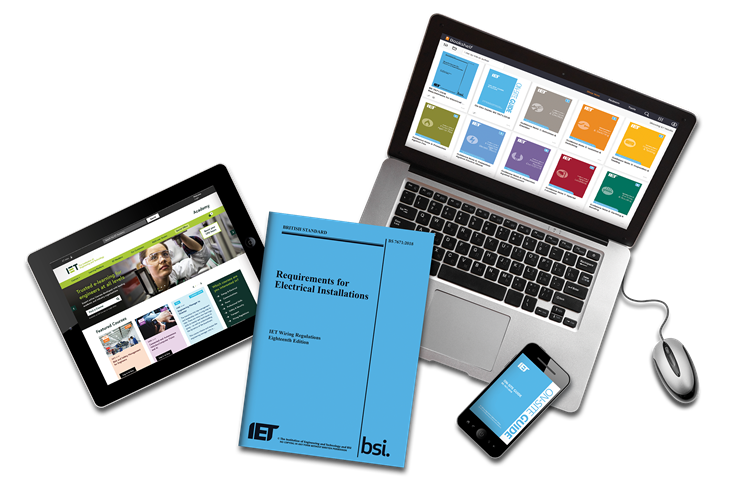
The IET and BSI (British Standards Institution), which co-publish BS 7671, have now issued the Draft for Public Comment (DPC) for Amendment 2, giving the electrical industry the opportunity to read through the proposed changes and provide feedback ahead of publication. The DPC period runs from September 21 to December 11, 2020. BS 7671:2018+A2:2022, which is expected to be published in spring 2022, will be the first, full, consolidated amendment to the 18th Edition of the Wiring Regulations, which was published in 2018. It will also include Amendment 1:2020, which was published as a standalone PDF in February 2020. What are the proposed changes? New Part 8 – Functional Requirements. This includes Chapter 82: Prosumer’s Low-Voltage Electrical Installations. Important changes to fire safety requirements are proposed in Chapter 4, covering the design of electrical installations in industrial, commercial and multiple-occupancy homes, as well as new information for ‘protected escape routes’. Additional changes are also proposed to the following areas: • Regulation 421.1.7 – further information on the use of Arc Fault Detection Devices (AFDDs) • Regulation 443.4 – further information on Overvoltages • A new Normative Annex (542) on Earthing Arrangements • Multiple changes within Section 7: Special Locations An overview of all of the changes proposed is included in the ‘Introduction to Amendment 2’ at the beginning of the DPC document. NAPIT will be hosting a live webinar on September 28 at 6pm, giving members a week to digest the information within the DPC. The webinar will go through the proposed changes and allow members with the opportunity to engage in Q&A with JPEL Committee representatives Frank Bertie, Paul Chaffers and Richard Townsend. Frank Bertie, Chief Technical Officer, (JPEL/64 member and deputy chair of Sub Committee A) at NAPIT, says, “This Amendment is the result of years of work by the JPEL/64 committee, the committee responsible for BS 7671, with which NAPIT have had strong representation on for over 20 years. It’s important that our electrical members keep up to date with the ever-changing technologies and ways of working to ensure they are working to the safest standards. I urge NAPIT members, likewise the rest of the industry, to read and comment where they feel appropriate on the new DPC”. To register your interest for the webinar, click here:https://buff.ly/32UlqGJ

NICEIC and Elecsa To Host Webinar On Amendment 2 DPC
Hot off the heels of the release of the DPC relating to Amendment 2 of BS 7671: 2018, which was published on September 21, NICEIC and Elecsa are set to provide guidance to registrants via an in-depth webinar dedicated to the topic. Taking place on Wednesday, September 23 at 8pm, the live broadcast will cover the main points of the DPC looking at the detail and assessing the potential impact for contractors should the changes come to fruition. To sign up for free, NICEIC and Elecsa contractors should visit the NICEIC website or click here. “The release of the DPC marks an important milestone as we edge towards the introduction of Amendment 2 of BS 7671: 2018,” says Jon Elliott, NICEIC and Elecsa Senior Technical Author. “This is the first step and our chance to shape the standards to which we will be bound to. It is vital that all contractors are up to speed on the detail and that they understand how to engage with the process. In this session, technical presenter Jake Green and I will guide registrants through the proposal and outline the process for submitting views. “I urge all NICEIC and Elecsa contractors to make the most of this opportunity; this DPC includes some significant updates which, if implemented, will impact us all. Make sure you know the facts." A recording of the broadcast will also be made available 24 hours after the live session. NICEIC and Elecsa customers can access this via their customer portals.

Major Changes To 18th Edition Open For Public Comment
A raft of updates are being proposed to the 18th Edition of the Wiring Regulations, with a consultation opened today to engage with industry on the potential for a second amendment. The changes, led by IET and BSI, have been proposed following ongoing discussions at committee level, which involve stakeholders including ECA. To help ECA Members and the wider electrotechnical industry respond to the draft for public comment, ECA has created a set of resources and guidance, available now at www.eca.co.uk/amd2. Gary Parker, ECA's Technical Manager, says, “With the ever-increasing pace of technological developments, it’s vital that the Wiring Regulations keep up-to-speed with new industry technology and methodologies. However, this must be balanced with a practical engineering approach. “The proposed changes could impact all ECA Members. Therefore it is vital that Members submit comments to BSI if they feel these changes could be overly onerous, lacking clarity or simply require refining.” Some of the key potential changes in AMD 2 include: • The mandating of AFDDs on circuits less than 32A • Removal of the risk assessment method for omitting additional RCD protection on socket outlets • Less paperwork for EICs • New cut-off date for complying with the 18th Edition • New energy efficiency and prosumer requirements • New SPD requirements • New foundation earthing requirements • New protected area requirements The DPC will remain open for comment until December 11, 2020. It is available via the BSI Standards development portal: https://standardsdevelopment.bsigroup.com/. In previous years, ECA Member comments have been directly responsible for improving the Regulations and ensuring that BS 7671 remains a practical and workable document, to the benefit of both customers and contractors.