2 November 2026
Product of the Month: Amari Floodlight range by Aurora Lighting
 
25 November 2026
Scolmore helps rejuvenate Tamworth Cancer Support Centre
 
25 November 2026
Leicester apprentice crowned 2026 SkillELECTRIC champion
 
24 November 2026
JTL celebrates opening of new Tyneside training centre
 
24 November 2026
LiGHT 26 welcomes record number of visitors to fifth event
 

Latest News


CENTIEL partners with Seahorse Electrical and Maintenance Services
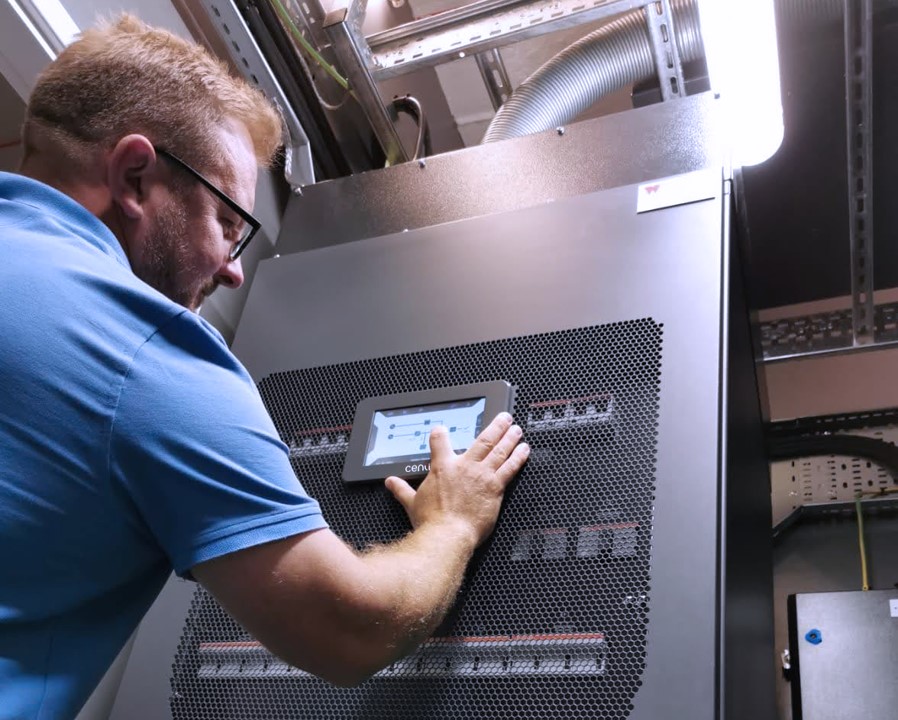
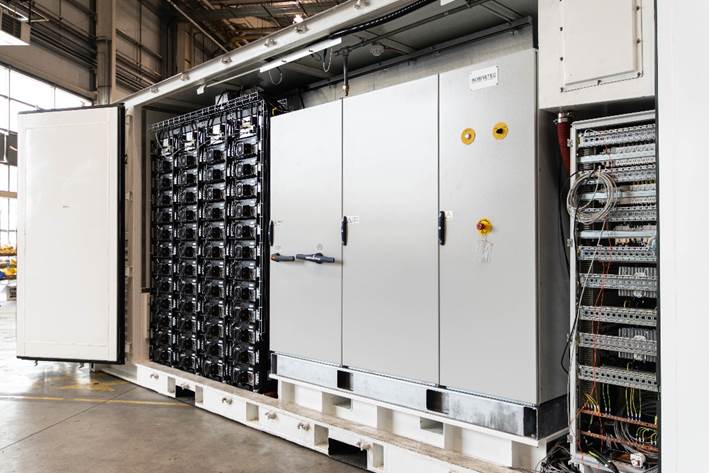
UPS manufacturer, Centiel UK, has joined forces with electrical sub-contractor Seahorse Electrical and Maintenance Services. Seahorse has now become one of Centiel's preferred partners for DC and AC works. Louis McGarry, sales and marketing director, Centiel UK explains: “We have a long-standing relationship with the team at Seahorse and have recently completed several large projects with them including a 7.2MW installation at a major medical facility. We are now delighted to cement this relationship on an ongoing basis. “Most recently we have worked with Seahorse to complete the installation of a new UPS to protect the power to a central London Venue. Located close to Covent Garden, the entertainment space is within an historical building used for dining, parties and drinks receptions, meetings and conferences for up to 1,000 delegates. The new UPS now supports the power for the entire building including lights, lifts, sound systems, a small gift shop, the internet, phone system and servers. “An outdated legacy UPS has been replaced with Centiel's fourth generation three phase modular UPS, CumulusPower,  which offers industry leading 99.9999999% (nine, nines) availability translating to just milliseconds of downtime per year. One of Centiel's top cable entry frame fitted with 5x50kW modules (200 N+1), along with 80 batteries now provides a 10 minute run time which then allows the switch over to a generator to ensure power is protected to the venue at all times.” McGarry continues: “For this central London project, Seahorse managed the full design and build, working with the main contractor and the client. This included UPS, switch gear, lighting, flooring, ceiling, fire dampeners, battery build, DC build, cable trays and all the cabling which included 100 metres from the plant room’s switch gear to the generator which was located externally.” Jason Gibson, director of Seahorse confirmed: “Due to the small size of the plant room, it was important for us to utilise every inch of space and so CumulusPower with its top cable entry option was chosen. The flexible, modular configuration of CumulusPower allows the inclusion of an input terminal to accept cables from above via steel wire armoured (SWA). It offered the perfect solution for the small plant room. The project was completed from strip out to commissioning of the UPS in 15 week “Working more closely with the Centiel team now means we have a reliable, experienced and trusted partner to support us with the delivery of major UPS installations.”

Top five fuel-efficient vans for tradespeople revealed
Van drivers who opt for the Mercedes-Benz Citan are getting the most bang for their buck, as it’s revealed to be the most fuel-efficient van to buy in 2020. That’s according to new research by Confused.com, which analyses some of the best vans on the market to discover the most fuel-efficient options across petrol and diesel. With so many vans on the market, choosing the right one to buy can be an overwhelming decision. Which van is the cheapest, and which costs the least to run? To help van drivers, Confused.com’s research calculates which vans will get drivers the furthest for their money, while also exploring some of the best electric van alternatives, for those who are environmentally conscious. The top five The Mercedes-Benz Citan takes the top spot as the most fuel-efficient van across all fuel types. The diesel model can reach 831 miles on a full tank and drive 123 miles further than the Volkswagen Transporter, which comes in second place (708 miles). Similarly, the Mercedes-Benz Citan also tops the list for the most fuel-efficient petrol van, with a range of 611 miles on a full tank. This is followed by the Ford Transit Connect and then the Volkswagen Caddy, which can both reach 580 miles and 541 miles per tank of fuel, respectively. At the other end of the scale, drivers who chose the Fiat Fiorino might be forking out more for petrol. With an MPG of 44, this petrol van can drive up to just 423 miles on a full tank. But how much does it cost to buy a fuel-efficient van? While it may seem the vans with the biggest fuel range might cost the most, Confused.com’s research proves this isn’t the case. In fact, the Mercedes-Benz Citan ranked as one of the cheapest petrol and diesel models on the list, costing £15,380 and £17,800 to buy outright, respectively. This suggests they truly are the most cost-efficient vans for drivers looking to save a few pounds on the initial outlay and the running costs. Electric alternatives The standard price of an electric van can put many buyers off, with a recent study finding that 60% of respondents felt that the high cost is the most significant barrier to ownership. The study also found that money off the initial cost would give people an incentive to buy an electric vehicle, with respondents asking for an average of £4,865 off the initial price. The current government plug-in car grant means drivers could be entitled to 20% off (up to a maximum of £8,000) the purchase price of some models, making it more affordable for the environmentally conscious. Ranking top for the most range-efficient electric van, the Iveco can drive up to 174 miles on a full eight-hour charge and has a payload of up to 1,652kg. This is, however, one of the most expensive models, and would set drivers back £100,000 to buy brand new. However, the LDV EV80 and the Nissan E-NV200 which rank in second and third places respectively for the most efficient electric vans are not only cheaper but eligible for the 20% government grant. Saving up to £8,000, drivers could be paying out just £52,000 for the LDV EV80 and £23,804 for the Nissan E-NV200. Not only is the Iveco the most expensive to buy outright, it is also the most expensive to charge. For a full eight hours of charge, drivers can expect to pay an average of £12.70. This is followed by the LDV EV80 which costs £7.80 while only taking seven hours to charge. Finally, the Nissan E-NV200 comes out with the cheapest figures, taking seven hours to charge up the battery, and costing van owners just £5.60 in total.

Employment experts to offer advice on redundancy and Job Support Scheme 
With the effects of COVID-19 beginning to impact businesses across Scotland, the Construction Industry Coronavirus (CICV) Forum is hosting two new webinars to advise and answer questions on redundancy, restructuring and other urgent employment issues. The UK Government’s new Job Support Scheme will also be on the agenda at the online discussions, which will again be hosted by leading industry experts and which follow the collective’s successful series of free commercial webinars. Held on Friday 23 October at 10am, the first webinar will advise on all aspects of organisational restructuring and redundancy, with advice on initial steps, the most important actions to take, and the pitfalls and what to avoid. The session will be presented by Vaughan Hart, Managing Director of the Scottish Building Federation, who will also answer queries in a Q&A session with Fiona Harper, Director of Employment and Skills at SELECT and Pete Walker, Director of Health, Safety and Training at the British Constructional Steel Association. The second session, on Thursday 29 October at 10am, will offer advice and guidance on the Job Support Scheme, with guidance from panellists Pete Walker, Stephanie Lowe, Human Resources Manager at SNIPEF, and Paul Mitchell, Head of Employment Affairs at the Scottish Building Federation. Vaughan Hart, who co-chairs the CICV Forum’s Skills and Workforce Sub-Group, said: “With no end in sight to the pandemic, the impact of COVID-19 is beginning to be felt by our industry, and redundancy and organisational restructuring is becoming a reality for many. “Such an unprecedented and tumultuous period throws up many questions and we are keen to advise our fellow professionals and support them however we can. “These webinars will not only deliver clear and relevant information about employment current issues, but also give delegates the chance to ask questions and receive the guidance they really need.” A fourth commercial webinar will be held on Tuesday 27 October and will cover giving notices, extensions of time, loss and expense, while a fifth on Tuesday 10 November will cover suspension and contract termination of contractors and sub-contractors. The topics covered in the final commercial session, held on Tuesday 24 November, will include conflict avoidance procedures, pitfalls and benefits of adjudication, the low-cost value adjudication process and expert determination. To register for any of the webinars, go to http://cicvforum.co.uk/webinars/ or mail info@cicvforum.co.uk

Shining a light for Irish construction workers
The Lighthouse Construction Industry Charity is partnering with the Construction Industry Federation to promote better mental health and wellbeing within the Irish construction industry. The charity launched its 24/7 Construction Industry Helpline and app in Ireland in June and it is the only charity providing free and confidential financial, physical and mental wellbeing support dedicated to the construction workforce and their families. The CIF’s recent ‘Mental Health Report’ called  for a number of actions to help support the mental health of workers, including ensuring resources are available to develop a positive mental health and wellbeing culture on construction sites. The report also found that only 13% of micro-enterprises have a formal reporting policy. This is despite half of all companies saying mental health issues affected absenteeism in the industry. 94% of companies believe it is critically important the industry improves management of employees’ mental wellbeing. The partnership will ensure that organisations are aware of all the free resources available to them including the 24/7 Construction Industry Helpline and app and a huge variety of mental health and wellbeing training. Bill Hill, CEO of the Lighthouse Construction Industry Charity said: “We are delighted to be appointed as the CIF’s charity partner and ensuring that our construction workforce get the support they deserve and need. Our mission is to ensure that no construction worker or their family is alone in a crisis and by joining forces we are able to deliver a clear and strong message to the industry that it’s time to talk and seek help. He added: “A large proportion of construction workers are sole-traders, micro-enterprises and SMEs. They do not have access to an employee assistance programme (EAP) for support so when things go wrong, the situation can quickly spiral out of control. By making all the services free, confidential and easily accessible, we aim to remove the key barriers to people reaching out for support” Dermot Carey, Director of Safety and Training at the CIF said: ”Mental health is now considered a safety issue amongst CIF members. It’s on a par with physical safety concerns on site. However, the industry has decades of learning and collaboration in developing a world class safety culture on Irish site in terms of physical safety. We are still on our journey to promote mental health and wellbeing in our industry but we are making great progress. Our partnership with the Lighthouse Charity indicates how important this is to the industry’s leadership. "From my interactions in the industry, I understand the Lighthouse Charity helpline has been warmly welcomed as a useful resource by CIF members and I have no doubt many workers will benefit over the coming years for this. When you start a partnership like this you’ll never know the true impact of having the resource, you can only hope that it helps someone at a difficult time and maybe influence them away from drastic harmful actions. That hope, that you show one person facing the dark, a light and a way to shore is enough.”

Recolight celebrates recycling third of a billion lamps
Recolight, the UK’s leading lighting WEEE compliance scheme, has announced a major milestone, having funded the recycling of a third of a billion fluorescent and LED lamps and luminaires since the WEEE regulations were implemented in 2007. This is enough waste to fill the Royal Albert Hall 12 times. This milestone has been made possible with the commitment and support of Recolight Lighting Producers Members, together with collection and recycling partners. Operating as a not-for-profit compliance scheme, Recolight’s funds are used to finance a free lamp collection and recycling service for all  business end users. A free luminaire recycling service is provided for Recolight’s Producer Members. This way of operating goes above and beyond the strict legal requirements of the WEEE regulations. Nigel Harvey, Chief Executive of Recolight said, “Our Members and collection partners can be very proud that they have achieved this milestone. Their role is integral in making sure we meet the Recolight recycling targets and it is a testament to their dedication to improve lighting recycling in the UK.” For Recolight, as for so many organisations, there has been no year like 2020. The critical task for the Recolight team as lockdown started was to maintain its service for the lighting producer members of its WEEE scheme, and for our collection partners. The company is proud to say that its waste lamp collection service continued almost uninterrupted – although clearly the number of collection requests received dropped significantly. That is particularly pleasing because it materially reduced the risk of any waste lamps being sent to landfill during lockdown.

IET increases match funding scheme for scholarships, bursaries and education programmes
The Institution of Engineering and Technology (IET) has increased its match funding scheme to £2 million in order to support and inspire more future engineers. The original target of £1 million, set as part of its 150th anniversary, has been met and the IET has agreed to continue matching donations for its Diamond Jubilee Scholarships, Engineering Horizons Bursaries and Education 4-19 programmes up to the value of £2 million.The match funding applies to donations from any source, including individuals, foundations, and corporate donors. It’s no secret that there is a skills gap in engineering. This is attributable to a number of factors, including the way in which engineering is perceived by young people, accessibility and routes to entry, as well as how well-resourced teachers are in the classroom and beyond. The IET’s STEM programmes address all these factors and its Awards support aspiring engineers and technicians at a crucial time in their education. Bhavini Bhatt, IET Fundraising and Campaign Development Manager, said: “Thousands more children and young people have been able to take part in the IET’s programmes thanks to generous donors. This is a wonderful opportunity for individuals and organisations to get behind the initiatives as any donation they make will be doubled by the IET.” The scheme first launched in 2018 with the IET receiving pledges and donations in support of its flagship programmes.

Waning grid supply emphasises need for decentralised energy
This week, National Grid explained that unplanned power outages and unusually low wind speeds have been major contributors in low levels of electricity. It is the second warning of its kind in the last month in the UK, highlighting the growing risk industry faces when relying on the local grid infrastructure. Following a warning of short supplies of electricity over the next few days from National Grid, Aggreko is advising industry still reliant on grid supply to look towards decentralised energy solutions. Decentralised energy solutions may offer an answer, according to Aggreko. Enabling users to generate energy on-site and lessen overreliance on the national grid, technologies such as solar power, combined heat and power (CHP) and battery storage, offer security of supply while lowering overall carbon emissions. Chris Rason, Managing Director, Aggreko Northern Europe, says: “We understand the challenges facing the industry when it comes to reliance on grid supply. As recently as August 2020, we found that grid limitations were a key cause of power outages in the data centres. Last year, in our report on decentralised energy, 82% of key energy decision makers told us that power continuity was a major or significant concern to their business. “Decentralised energy solutions offer a solution to remove reliance on the grid, freeing up the stretched energy supply. However, one challenge to overcome is the cost. We would encourage UK industry to consider long-term hire as a solution, ensuring that any plans to implement on-site generation are both successful and cost-effective.” The latest news follows the government’s pledge for a clean-energy revolution, which aims to power every UK home by wind within 10 years. According to Aggreko, the latest electricity shortages highlight the need for more ‘bridging gap’ solutions, as Rason explains: “October appears to be the month for wind power: highlighting both the benefits and risk of overreliance. If the UK is to successfully implement a wind energy strategy to its national electricity supply, bridging gap solutions will be critical. “One example could be battery technology. While it is not a new concept, it is still costly for many companies to purchase on an industrial scale. However, the good news is that it is more accessible now, when compared to three years ago, thanks to progress made in the rental space.” Battery solutions can help alleviate technical difficulties associated with early-stage decentralised energy schemes, mitigating issues such as low and transient loads, alongside voltage and frequency fluctuations.

Electrical installations expert named Midlands Engine Export Champion for third year
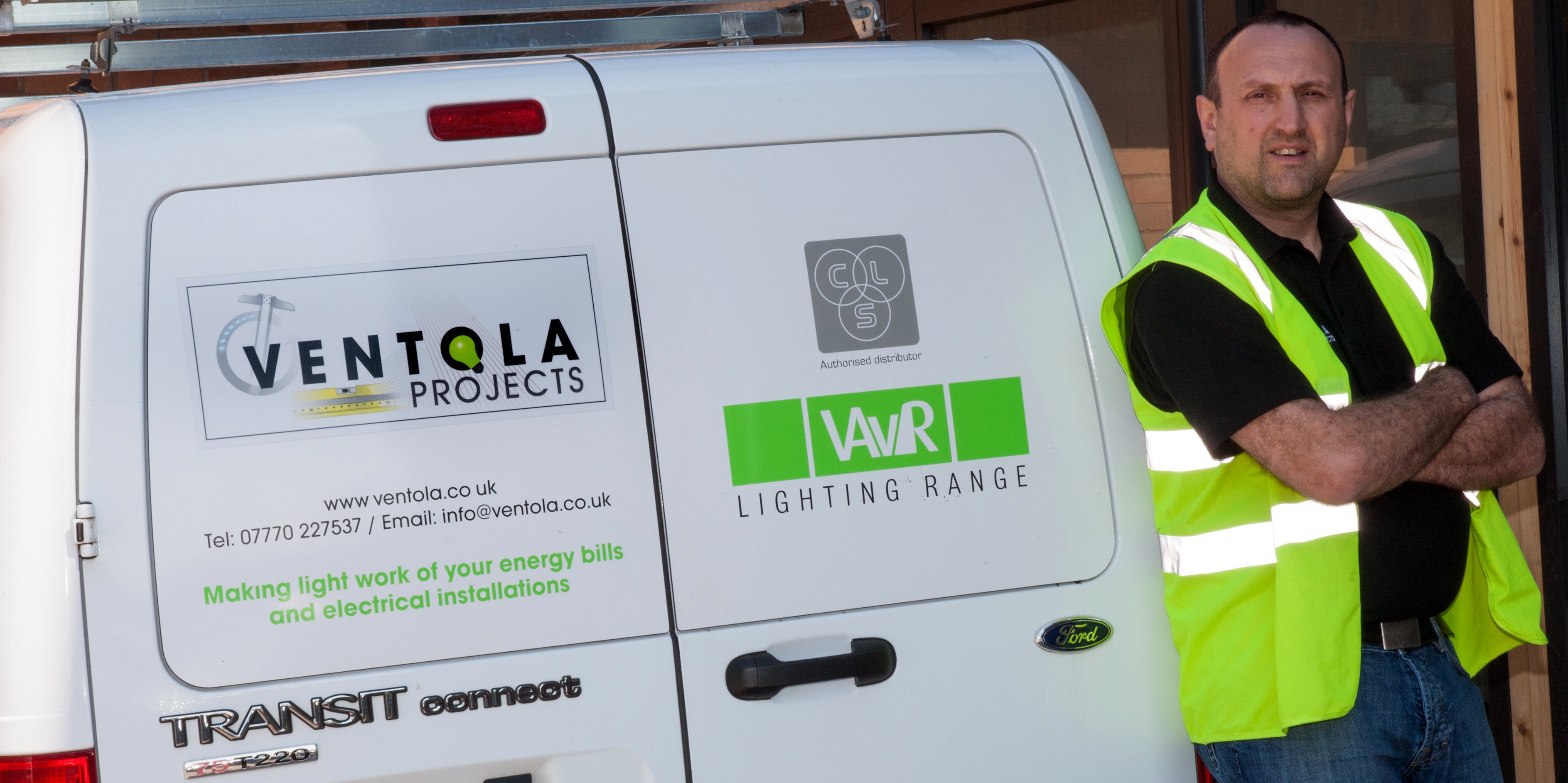
Mick Ventola, founder and managing director of Ventola Projects, a Leicestershire specialist in electrical and lighting installations, has been confirmed as one of the Department for International Trade’s (DIT) Midlands Engine Export Champions for the third successive year. The appointment is further recognition of his continued delivery of lighting projects in the US, the UAE, Germany and Saudi Arabia. First brought in as an Export Champion in 2018, Ventola has travelled the world flying the flag for British Exports at conferences, conventions and summits. He has also spoken to scores of Midlands businesses explaining the global opportunities available to businesses considering exporting their goods and services. Ventola lighting installations appear across the East Midlands, having worked with The Curve Theatre in Leicester and Loughborough University to name but a few, but also throughout the UK, for example, at Ten Entertainment Group venues. However, Ventola’s role as a successful exporter has seen him achieve and retain champion status. Despite the pandemic, he has continued to complete projects in the US, where he has forged a network of distribution and installation partners. Much of his work this year has seen Ventola assist businesses in a hospitality and entertainment industry looking to bounce back from pandemic shutdowns worldwide. Just last month, for instance, the ribbon was cut on Thunder Road, a new 30,000 square foot facility in Sioux Falls, South Dakota, where Ventola’s VAvR range of multifunction LED systems are the centrepiece of a 21st century bowling experience. Ventola described the weight of responsibility he feels at retaining the Export Champion role at this critical point in time. “We have two very big things going on at the moment in Brexit and COVID-19. The pandemic saw UK exports shrink by almost 20% between February and April. So, as the UK mounts an economic recovery and forges new trading partnerships around the world, it is vital we get exports moving again. “My role, then, is to share some of my knowledge and experience and inspire British businesses. There is an enormous world of opportunity out there. It’s no secret that the UK is among the most advanced countries in terms of skills and ingenuity but I’ll do my best to reimpress that on the people I interact with in different environments. “Obviously, this year is a little different. I won’t be collecting as many air miles as in previous years for understandable reasons but the DIT are lining up a number of virtual online events at which my colleagues and I can really start championing UK exports. “I’m looking forward to the release of the government’s new export strategy scheduled for later this year. That should breathe fresh momentum into the ongoing efforts of both the government and UK exporters and set out ways in which the DIT can help companies looking to establish an international presence.”

14% of the UK's electricians are more motivated to work amid second wave concerns
As we fast approach the winter months, millions of people across the country are hoping to get their homes in the best condition possible to prepare for the colder weather. Electrical problems, in particular, are unwarranted during this time of year and it is important that the wiring of houses is in the best possible condition - especially with concerns of a second wave of the virus. With millions of people continuing to remain in their homes as a result of the pandemic, many are finding issues with the current state of their homes, resulting in a home improvement boom. This is hugely beneficial, as the restoration of confidence has been pivotal for the recovery of consumers and tradespeople alike. In light of this, new nationally representative research from Powered Now, a mobile-based billing, invoicing and quotation application which specialises in trades, has unveiled the sentiment that Britons have towards ensuring the wiring of their houses is in the best possible condition post-lockdown and pre-winter. Key statistics: 16% of tradespeople agree that the threat of a second wave of COVID has influenced them to commence work on home improvements sooner rather than later 14%  of electricians agree 15% of tradespeople have seen their client demand increase post-COVID 17% of electricians agree 17% of tradespeople regularly work over 10 hours a day 18% of electricians agree 18% of tradespeople don’t have the time or motivation for new business development due to the sheer backlog of work they have 16% of electricians agree Ben Dyer, CEO of Powered Now - a mobile-based billing, invoicing and quotation application which specialises in trades - has offered insight into the increase in trade for electricians. "As the weather turns colder, Brits will need to make preparations to ensure that their homes will withstand the colder months. As the days become darker and shorter, more people will be using their lights and electrical appliances more, and ensuring these are in the best condition will guarantee a comfortable living environment during these months. In light of this, we are expecting one final push of trade in the coming month in the electrical sector. "The whole industry is still in catch up mode and projects delayed by the lockdown are taking priority. This has helped to spike demand and we expect it to continue in the short term. Our research has very much confirmed that Brits were eager to have home improvement jobs completed post-lockdown and pre-winter, treating themselves to a little home-based TLC. "Our SME customers are also talking about the pressure to complete jobs as people worry about a second wave. As we have seen from the sentiments established in this research, this could in fact help the trades bounce back even quicker as people will rush to hire a tradesperson for their desired work before the cooler months set in."

How can electricians earn themselves a five-star review? 
Electricians that are tidy, professional, punctual, friendly and courteous have the best chance of earning themselves a five-star customer review, new research shows. Electrical wholesaler ERF Electrical analysed 1,000 five-star Checkatrade reviews to discover the factors that make up an ‘excellent’ review. One in five customers (21%) gave top marks to those that cleaned up after themselves, with those living in Bristol valuing cleanliness above anything else. In Liverpool, Glasgow and Leeds, residents are more likely than anywhere else to praise those that are ‘on-time’; in Liverpool, punctuality was mentioned in 25% of top reviews. The research took into account 100 reviews across 10 major cities, which also included Birmingham, Edinburgh, Leicester, London, Nottingham and Sheffield. Tidiness and friendliness were among the top qualities mentioned in nine of the 10 cities. The highest-ranked qualities, according to the percentage of reviews they appeared in, were: Tidy/clean (21%) Professional (20%) Polite/courteous (20%) On-time (18%) Friendly (16%) Reliable (10%) Efficient (10%) Helpful (7%) The research also reveals that Leicester residents are most likely than anywhere else to praise those with good manners, with one in five (22%) of reviews mentioning the friendliness of an electrician. Dave Haywood, business manager at ERF Electrical comments: “This research really highlights the service levels that customer expect from electrical installers. Those working in the industry can use this analysis to their advantage; are you doing any of these things, which you can be proud of, or is there anything you can improve? “By focusing on these qualities and striving for the best possible customer service, electricians can give themselves the best chance of a glowing, five-star review.” Other five-star reviews gave credit to electricians they deemed to be knowledgeable, trustworthy and respectful.