2 November 2026
Product of the Month: Amari Floodlight range by Aurora Lighting
 
25 November 2026
Scolmore helps rejuvenate Tamworth Cancer Support Centre
 
25 November 2026
Leicester apprentice crowned 2026 SkillELECTRIC champion
 
24 November 2026
JTL celebrates opening of new Tyneside training centre
 
24 November 2026
LiGHT 26 welcomes record number of visitors to fifth event
 

Latest News


SECTT and ESF team up to deliver 650 free lockout kits
The Scottish Electrical Charitable Training Trust (SECTT) has once again teamed up with Electrical Safety First (ESF) to give free lockout kits to Scotland’s trainee electricians. In its 12th year, the partnership sees SECTT training officers visit colleges and training centres to give more than 650 kits to 3rd Stage apprentices and adult trainees, observing social distancing. Worth £30 each, the kits save lives, ensuring that electricity is turned off – and stays off – until work is completed. This process, known as safe isolation, is essential in preventing serious or fatal electric shocks. Among the recipients were trainees at Ayshire College and Perth College UHI, with other apprentices presented with their kits at 21 SECTT Approved Centres. Anne Galbraith, CEO of SECTT, says: “Adopting safe working practices and procedures is essential and embedding the right approach at the start of an electrician’s career is key. “Everything we do at SECTT is safety critical, so as an organisation we are proud to do everything we can to support this.” Lesley Rudd, Chief Executive of ESF, adds: “It’s vital that safe working procedures are undertaken, but to be effective they need to be established at the start of an electrician’s career. “These free kits don’t just provide essential safety equipment that will make safe isolation a habit, they make the difference between life or death.” Fiona Harper, The Secretary of the SJIB, states: “This handout demonstrates the industry’s ongoing commitment to safety and skills. Ensuring the next generation of electricians are educated in safe isolation is essential and sits alongside measures to ensure we have a properly trained and qualified workforce, such as the current consultation to introduce regulation of electricians.”  

ECA calls for tougher action on fair payment
Electrotechnical and engineering services trade body ECA has called on the government to further ramp up measures against late payers in the private sector supply chain. In its response to a government consultation on proposed changes to the Prompt Payment Code, ECA stated that Code signatories should commit to pay 95% of invoices from smaller businesses within 30 days. Furthermore, the ECA’s submission also calls for this approach to be backed up by an enhanced monitoring and reporting process. The ECA believes that those frequently breaching the Code should face fines, which could help drive compliance due to their own financial performance being impacted. The ECA also supports the use of a Prompt Payment Code logo by those following the rules, to highlight their responsible business culture. Rob Driscoll, ECA director of legal and business, states: “The introduction of a new 30-day requirement for payments to smaller business could represent a fundamental shift in the balance of power and liquidity of SMEs, who form the backbone of the UK construction industry. “A reformed Code will transform it to becoming a champion of small business and fair commercial behaviour in these challenging times.” Meanwhile, the Cabinet Office recently announced that contractors must be able to demonstrate that at least 85% of payments are made within 60 days, or be barred from bidding for contracts. The rules, coming into effect in April 2021, increase the current payment provision threshold of 75%, with a view to increasing it further over time, up to 95% – although no timeframe has been given for this. Steve Bratt, ECA CEO, says of the announcement: “While tightening the payment requirements is a positive move and is to be applauded, let’s not forget that the law already requires payments on public contracts to be made within 30 days. “Prompt and fair payment is essential to ensure the health of the construction supply chain, particularly in the current commercial environment, and 30 days should be the aspiration.”

It’s a £25,000 cracker!
With Christmas events cancelled across the country, the Lighthouse Construction Industry Charity has just the thing to lift the spirits of your employees, suppliers and sub-contractors. Many companies already opt for an e-card or ‘charity cards’ but this one comes with the opportunity to win a share of a £25,000 prize pot! With many people working from home, there seems little point in sending conventional cards or gifts by post this year and the Christmas cracker e-card is also environmentally friendly. What better way to spread some Christmas cheer amongst your employees, supply chain contacts and subcontractors than by giving them the chance to win a top prize of £10,000 whilst raising much needed funds for charity. Cards cost just £1 each and you can choose from five great designs. Or if you’d prefer your own design then you can simply choose a plain ‘cracker’. You will then receive your e-card with your personalised greeting, company logo and unique reference number. Forward this to your contacts and all they have to do is register the card for a chance to win top cash prizes. The prize pot consists of; 1 prize of £10,000 1 prize of £5,000 5 prizes of £1,000 10 prizes of £500 Bill Hill, CEO of the Lighthouse Construction Industry Charity says, “We know that many companies have already moved away from sending conventional Christmas cards, but we wanted to add an element of fun and excitement into the mix. Our e-Christmas cards not only spread seasonal cheer, they also give organisations the opportunity to support our charity whilst getting the opportunity to win some fantastic cash prizes! If we can sell 350,000 e-cards then we can replace the funds that we’ve lost as a result of having to cancel our hugely popular fundraising Christmas events across the country. Now, more than ever, we need to continue our vital charitable support to our construction community and ensure that no worker or their family is alone in a crisis.” The draw will take place on 18 December 2020 at 20:20hrs and it promises to be a party atmosphere too, so don’t miss out!

SJIB throws its weight behind consultation for regulation of electricians
The Scottish Joint Industry Board (SJIB) has voiced itself within the parliamentary consultation on regulation of electricians, claiming protection of the title ‘electrician’ would “significantly enhance consumer, client and public protection and safety while deterring unqualified individuals”. Founded in 1969 by trade association Select and Unite The Union, the SJIB’s duties include; regulating employers and employees, providing benefits within the industry, and stimulating industry progress. Additionally, it has oversight of, employment, skills and proficiency, health and safety competence, wages, and welfare benefits across the electrical industry in Scotland. The industry body also says any new scheme would bring economic benefits and assist in driving for a ‘sustainable skills base’. The SJIB makes its comments as part of a set of responses to the consultation on proposals for a Holyrood Member’s Bill on regulation, closing 10 November. Fiona Harper, Secretary of the SJIB, says: “The promotion of registered electrical contractors with industry-recognised qualifications would address the scale of defective and unsafe electrical work. “The SJIB administers ECS (Electrotechnical Certification Scheme), recognising the array of electricians operating the electrotechnical industry. With additional safeguards, the SJIB could develop a scheme at little cost.” The Board’s response follows answers from trade body Select and an exclusive interview, whereby bill sponsor Jamie Halcro Johnston MSP stressed it was in the interests of public safety. The consultation is the culmination of a campaign which has seen support on Select’s ‘wall of support’ , with more than 100 parliamentarians, industry figures and representatives of trade associations pledging their commitment. Harper states: “SJIB electricians voice their concerns that individuals who haven’t met the established standards and unqualified electricians are able to use the title of electrician. “In a highly-skilled occupation, this situation should be rectified, and the title protected.” She adds: “This would outweigh the long-term costs associated with poorly installed installations, including the human cost of deaths caused by electrical fires and electrocution.” A survey carried out in 2018 showed faulty installations caused 7.1% of fires in Scotland, with damage caused to property by fires averaging £9.6 million. Harper says: “Electricians will play a key part in the delivery of a carbon neutral future.” “The protection of the title of electricians contributes to the importance of the occupation and need for a sustainable skills base.”

Why obtain third party testing and certification on data cables
In a world reliant so heavily on data, poor quality and non-compliant data cables can have a catastrophic impact on the end user. It is crucial that structured cabling systems can accommodate data demand both now and, in the future, writes Mark Froggatt, Technical Director at BASEC. “Digital transformation is the process of using digital technologies to create new - or modify existing - business processes, culture and customer experiences to meet changing business and market requirements” Data cables – when quality matters It is becoming increasingly visible that the world is ever more reliant on digital technology. In fact, the world is in the midst of what is referred to as a ‘Digital Transformation’. “Today more than five billion consumers interact with data every day - by 2025, this will increase to six billion - 75% of the world population. In 2025, each connected person will have at least one data transaction every 18 seconds. Many of these transactions are because of the billions of IoT devices connected across the globe which are expected to create over 90zB of data in 2025” – IDC report There is great emphasis on reliable data transmission, both in respect to volume and also transfer rates. In short, consumers are demanding high levels of data and more than ever this data is required in real time. Whether in business or leisure, there is a forever increasing number of data transactions, both with human interface and with the increasing scope of the Internet of Things. Furthermore, with the expansion of the Industrial Internet of Things, these transactions will inevitability increase further. Indicators of performance quality Data network infrastructure quality should be carefully considered to assess whether or not it will be able to operate efficiently, both now and as technologies advance in the future. Data networks have been evolving since 1985. This is when the first voice grade copper cabling was used to transmit data, by means of a simple unshielded twisted pair cable, which managed to transfer data at a rate of 1Mbps. Of course, in 2020, the transmission requirements have significantly evolved, and now copper structured cabling specifications have progressed further. Increases in data demand has meant a far greater emphasis on cable design to reduce or eliminate the undesirable effects of electromagnetic interference (EMI). Pair geometry, choice of dielectric and shielding are all design considerations when manufacturers are looking to negate the impact. The progression of established standards IEC, ANSI/TIA and EN, which specify the requirements of structured cabling systems has imposed higher requirements, in respect to the measurement of data integrity and immunity to EMI. Test parameters have become more onerous. The key performance indicators for a data cable are attenuation and crosstalk, therefore in-depth tests have been developed to measure both. The tests determine the interference experienced, which in turn impacts the ability of the cable to transmit data without errors. To enable verification of cable, it is advisable to ensure that structured cabling is purchased from a manufacturer who is certified by third party approval company. Approved cable benefits the end user and installer alike, in that the likelihood of infrastructure failure down the line is significantly reduced. Approved cable products are assessed to ensure that they are produced using only high-quality components, and process, or factory controls are also audited as part of any certification to ensure standard’s compliance is maintained. During the certification process cables are measured against various performance parameters, which reflect those the cable will experience during operation, considering environmental challenges it may encounter during installation and its life span. For example, thermal aging and chemical resistance exposure are targeted tests used to qualify performance. These tests act to give both the installer and end user piece of mind that the cable being used can accommodate high demands for data, whilst withstanding external influencers which would otherwise compromise performance and, potentially the integrity of data for end users. The adoption of data cables in almost all industries has meant that transmission testing alone may not indicate the cables overall performance. For this reason, ANSI/TIA standards have developed a mechanical, ingress, chemical and electromagnetic (MICE) classification to determine the harshness of the cable’s surroundings. Helping you safeguard networks Any manufacturer going through the approval process is assessed on the basis of many contributing factors, including its quality management systems, how they validate design, how they purchase materials, how they deal with non-conforming product, down to how they train their teams, all of which contributes to the functioning of an effective cable manufacturing business. Additionally, there is a comprehensive audit where the key processes involved directly in the manufacture of structured cabling are assessed. Each method or system is reviewed in depth to ensure repeatability and high-quality output. In doing so this minimises the risk of product failures throughout every stage of the manufacturing process. Samples from each cable design are forensically examined to ensure that all relevant specification parameters are satisfied. The outcome of all of the above is to install confidence for both the manufacturer, installer and end user that the structured cabling system is suitable for its intended purpose. Cables form the building blocks of any IT infrastructure therefore high-quality product, proven to meet the required output performance levels is critical. Using a certified manufacturer takes the way any guesswork and enables you to be sure of product quality. It is critically important to ensure that the structured cabling installed within your infrastructure is tested and verified to meet all of the complex data transmission parameters, often demanded by todays telecommunications industry. In today’s data driven world any instance of system outages, data corruption or simple loss of time can cause businesses across the world a myriad of issues and problems. To conclude, data communication testing and certification helps you to ensure the level of quality, in line with the industry standards, or above this minimum can be successfully delivered to your end user. One, which a non-approved cable cannot guarantee. The responsibility for maintained levels of quality falls on every touch point of the supply chain, this starts right at the beginning of the telecommunications data network specification process, where independently approved cable should be outlined as a requirement. As the purchase power moves from this decision, project owners and procurement teams should also check for verified certification. Finally, care should also be taken at both the installation and once functioning in operation, so as to ensure unnecessary damage to the cable is not encountered. Third party certification offers continuous peace of mind, delivered through a rigorous auditing and product sampling schedule to ensure cables consistently meet the required standards. Data cable certification is essential to making sure structured cabling systems are reliable and efficient, accommodating the forever increasing data demand. For more information on third party data cable approval download your data cables testing and certification guide or contact the BASEC team today.

Five tips to take care of your mental health as an electrician
Today’s tradesperson knows that mental wellbeing is a key part of wider health and happiness and, unlike decades gone by, we’re no longer afraid to talk about it. Yet in spite of our appreciation for mental health, the data suggests we’re still not doing enough to take care of ourselves. In a recent study, it was shown that the risk of suicide within the building and construction industry is 1.6 times higher than the national average - meaning there’s still much more we can be doing to protect ourselves and our colleagues. That’s why electrical wholesaler ERF has teamed up with environmental psychologist and wellbeing consultant Lee Chambers to share five tips to help electricians protect and maintain their mental health. Don’t be socially distant… While this may seem contrary to current regulations, what Chambers and ERF are referring to here is the importance of social interaction. That means making time for friends and family, even when you might be feeling busy, or, indeed, not busy at all and therefore lacking in motivation. Simply chatting to people you care about is enough to improve your wellbeing. As human beings, we’re social animals and it’s those social interactions that help to release dopamine, the chemical known for making us feel happier. So even when you’re feeling down, isolated and times are tough, just picking up the phone for a conversation is enough to change the chemical balance in your body and make your mind feel better as a result. There are also a number of Facebook groups which have been set up for electricians where you can discuss any work-related concerns you may have with those who are likely to have been faced with similar problems. If you aren’t part of any at the minute, Electricians’ Community UK and Electricians Network UK are two to check out. Take care of your physical wellbeing As tradespeople, we may think our jobs make us more active than most office based roles. Even if this is the case, it’s scientifically proven that physical exercise is one of the best ways to lift your mood - through the chemical changes it creates as well as the focus and motivation it gives us to get up and go. This doesn’t have to mean signing up for the gym or subscribing to an expensive sports club. Something as simple as a walk or a jog around a nearby park or a few laps around the block can be a welcome relief from day to day tasks and a great way to improve your physical health too. For electricians that spend a lot of time indoors, getting out into nature and sunlight is vital, especially in the winter months, so try to take at least some of your exercise during daylight hours, perhaps during a lunch break or, where possible, by walking between jobs. Eat well As an electrician on the go, it’s easy to find yourself snacking unhealthily or stopping by the nearest fast food restaurant for a quick fix. But the importance of fuelling your body correctly cannot be understated; having a healthy, balanced diet, allows your body to function in the most effective way and gives you a clear and healthy mind too. As part of a well balanced diet, we should aim to drink between six and eight glasses of water per day. Better still, if you’re travelling around, treat yourself to a two litre drinks bottle and work your way through that during the day. You’ll feel much more alert for it. When it comes to snacking, the best way to avoid unhealthy options is to arm yourself with plenty of healthy alternatives. Fruit is an easy snack to carry around because in many cases (apples, bananas, oranges, pears) they come in their own handy ‘packaging’, while cereal bars, nuts and sandwiches are quick to grab even when you’re in the middle of a busy day. Do something for yourself You may feel - especially during busy periods - that you have no time to spare for yourself. But is this really true? There are plenty of ways to create ‘space’ in your everyday activities. This can be as simple as practicing being ‘present’, meaning that you’re conscious of yourself in the moment and can put distractions out of your mind. One simple way to do this is in the shower in the morning; rather than using shower time to think about what you have coming up in your day, try instead to focus solely on your own breathing and the feel of the water. Doing something as seemingly small as this can work wonders on your feeling of wellbeing throughout your day. You can also get mental wellbeing benefits from spending time on things you enjoy and are good at. For example, if you find fun in playing sport, in hobbies like painting or even just cooking a good meal, spending time on those things can give you a mental boost that energises and supports you for the days ahead. Be sure to make time for yourself, even when you’re busy. Seek help from a specialist  No matter how big or small your problem may be, you should never feel you need to go through difficult times alone. Here are some of the services you can turn to: Samaritans on 116 123 for 24-hour confidential, non judgemental emotional support Your local GP and ask for an emergency appointment You can also call 111 out of hours who will help you find the support and help you need Although you may feel hesitant about contacting somebody you might not have spoken to before, just a quick conversation with a specialist can put you on the right track to recovery.

New CICV Forum animation delivers essential travel guidance
The Construction Industry Coronavirus (CICV) Forum has released the latest in its series of engaging COVID-19 animations – this time offering essential advice on how workers should travel to and from work safely. Produced in response to sector feedback, the collective’s latest guidance outlines a range of practical measures that contractors can follow to protect themselves and help prevent the spread of the virus among their colleagues, customer, friends and family. Featuring male and female characters, the animation reminds workers to travel alone if possible, to open windows and turn off air conditioning systems and to clean all touchable surfaces in cars or vans. If workers must share, it instructs them to wear a face covering and sit apart, and emphasises the importance of sharing with the same people on all journeys. As well as private vehicles, the animation also gives essential guidance on using public transport safely, including reminders to avoid rush hour, observe physical distancing, carry hand sanitiser and use contactless payments where possible. Rebecca Crosland, Health and Safety Adviser at the Building Engineering Services Association and Chair of the Forum’s Health and Safety sub-group, said: “As the pandemic continues to affect us all, a number of contractors and operatives have requested additional clarification on travelling to and from work. “This new messaging is designed to outline the dos and don’ts of commuting clearly and concisely, setting out the measures that we all must take to keep ourselves and others safe when we’re on the move. “This new campaign continues to emphasise the Forum’s message that we’re all #RebuildingTogether and that everyone must take personal responsibility to help protect themselves, their colleagues and the wider community. “People not following this advice aren’t just putting themselves in danger – they’re also threatening the safety of their workmates, their customers and loved ones of all ages.”

Grants offered for electricity generators to boost local energy output
Electricity generators across the South East and East of England are being urged to claim thousands of pounds in grants to help boost local energy output - before the next funding window closes on 10 November. Funding is on offer to electricity generators that were connected before February 2018 to upgrade the hardware that connects to the network, in a move that will also provide a boost to renewable energy generators, by helping them export more energy onto the network. All distributed generation could be impacted by this change, ranging from large wind and solar farms to office complexes or hospitals with their own generating plants and even schools or universities with solar roof panels. Energy resources all use standard protection settings in their hardware when they connect to an electricity network. The protection settings safeguard both the generator and the electricity network from interruptions on the local system. The huge growth in renewable energy has changed the way the electricity system operates, and as a result updated protection settings are needed in generators’ hardware to maintain reliability by stopping older generators from tripping out and cutting off unnecessarily. All generators will be required by the Distribution Code to have up-to-date protection settings by 1 September 2022. UK Power Networks is strongly advising all distributed energy resources to check whether they need to make the changes or not. The protection settings that were applied to generation connecting before February 2018 are now too sensitive considering today’s generation mix and risk cutting out unnecessarily, inhibiting their ability to export supplies during normal electricity system events. The fund has been set up to offer generators grants for making the required changes as soon as possible. Grants are available to all qualifying generators but the current funding window shuts on 10 November, with no guarantee that the same level of support will be available in future. Grants will only apply to generators that were connected in accordance with a connection procedure called EREC G59. Matt White, network development and operability manager at UK Power Networks said: “There is a national drive to get as many generators as possible to upgrade their hardware and we’ve already seen a really good response, but we know that there are many more generators eligible for grants that have not yet claimed them. In particular we're urging large office complexes in London and public buildings like schools, hospitals and universities with their own generation plants to come forward. “The hardware upgrade is relatively straightforward and has already been performed on more than 4,000 sites nationwide. Ultimately it’s going to save generators and customers money, and contribute to a more resilient and reliable electricity system.” To apply for a grant if your generator is in London, the East or South East of England email G59protectionsettings@ukpowernetworks.co.uk and to find out more information visit here. If you are based outside of these areas you can apply for a grant via the Electricity Networks Association here: https://bit.ly/31zNfCZ

Renew your ECS Card and highlight your competency level
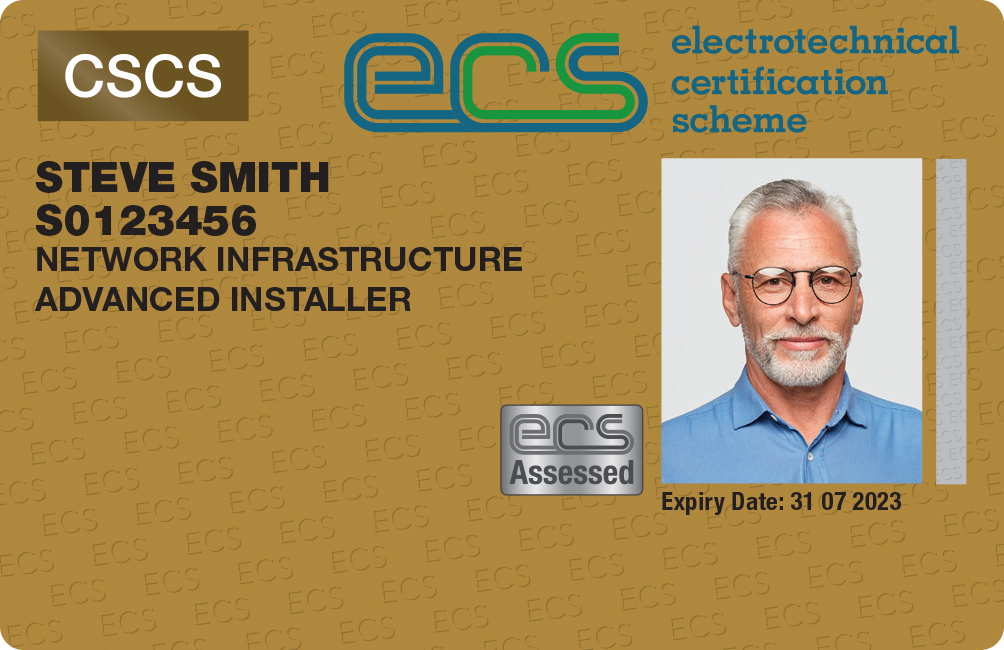
The Electrotechnical Certification Scheme (ECS) is urging ECS Card holders to renew their cards in order to show their competency level on site. Health, Safety and Environmental Assessment centres have been reopening since July as measures are put in place to make these Covid-secure. If your card has expired or if it has less than three months left, then it’s time to renew – and it’s never been easier! Existing cardholders can register for a MyECS account and renew online. Go to www.ecscard.org.uk and find the MyECS section. On MyECS you'll see any specific messages relating to your card, such as new criteria or if you need to renew with an ECS partner organisation. Employers can also apply or renew on behalf of their employees through the ECS Employer Portal. This service is free to access and there are almost 3,000 contractors using this UK-wide to manage their workforce’s ECS cards, qualifications and health and safety awareness. To be awarded with an ECS card you must have an up-to-date health and safety qualification. This is designed to prevent accidents and promote safety and quality of work, and to ensure all cardholders have a good level of health and safety awareness when on site. To check that you meet the Health & Safety requirements for your card, you can take the ECS Health, Safety & Environmental Assessment. A list of venues that are currently available to take ECS H&S assessments can be found at: www.ecscard.org.uk/content/Open-Assessment-Centres. If you already hold or are taking a separate qualification for your specific card you may be exempt from taking the ECS Assessment. Please check the website ahead of your application or renewal. Andy Reakes, Head of Operations, Employment and Skills, said: “More and more clients and contractors are recognising the benefits of ensuring they have qualified workers on their jobs and raising standards to achieve competence. Holding an ECS card proves your qualification status, main electrical occupation, identity, your health and safety awareness, as well as any additional disciplines in which you are skilled to work.”

Electricians urged to add their voice to consultation on regulation 
An MSP who is leading the call for recognition of electrician as a regulated professions has urged as many people as possible to add their voices to a parliamentary consultation on the issue before it closes on Tuesday 10 November. Speaking in an exclusive video interview with campaigning trade association Select, Jamie Halcro Johnston, MSP reiterated his view that regulation of the electrical industry in Scotland would help reduce death and injury, bring significant economic benefits and encourage more women and people from ethnic minorities to take up the tools. The MSP, who is the Scottish Conservative and Unionist party’s Shadow Spokesman for Education and Science, is proposing a bill which would be the culmination of a long-running campaign by Select and other industry bodies to safeguard the best interests of the public. Mr Halcro Johnston said: “I am urging all electricians and everyone associated with the industry in Scotland to have their say in the consultation process, not just to stress the benefits of regulation but also to take the opportunity to highlight the impact of faulty electrical work carried out by unqualified people.” A major survey carried out in 2018 showed that faulty electrical installations accounted for 7.1% of all fires in Scotland, and the damage caused to property by these fires cost in the region of £9.6 million. Mr Halcro Johnston said his proposed bill has cross-party support in the Scottish Parliament chamber, with individual members of all parties making clear their backing for regulation. He said: “I think there is a general appreciation that this needs to be done and that it is a good thing. I'm confident that it will get achieved in the next session of Parliament, which will be a fantastic achievement for both the sector and consumers. “We want a simple straightforward approach to this issue, with a clear, accessible register of accredited professional electricians to assure the public that the work of appropriately qualified and registered electricians can be trusted by the public. “And we certainly do not want to add extra bureaucracy to the existing workload of busy, highly-skilled firms and individuals.” Select, which has been leading the fight for regulation for several years, welcomed the latest update from Mr Halcro Johnston and echoed his plea for electricians to have their say before the consultation closes. The video interview can be watched at https://youtu.be/KGIu4QY0iu4. The consultation – which closes on 10 November – can be accessed at www.parliament.scot/parliamentarybusiness/Bills/115752.aspx