2 November 2026
Product of the Month: Amari Floodlight range by Aurora Lighting
 
25 November 2026
Scolmore helps rejuvenate Tamworth Cancer Support Centre
 
25 November 2026
Leicester apprentice crowned 2026 SkillELECTRIC champion
 
24 November 2026
JTL celebrates opening of new Tyneside training centre
 
24 November 2026
LiGHT 26 welcomes record number of visitors to fifth event
 

Latest News


JIB Invites Contractors To Take Advantage Of Skills Development Fund
The Joint Industry Board is encouraging members to take advantage of the JIB’s Skills Development Fund, which provides financial assistance for courses for those undertaking further education and training in the electrical industry. With the UK showing a commitment to tackling the climate crisis by setting a target to meet net zero emissions by 2050, the JIB is urging electrical contracting companies to evolve and broaden their skill sets.  The JIB believes that the increasing adoption of greener technologies presents contractors with a number of opportunities to upskill and open up their services to new markets.  Chancellor Rishi Sunak announced a £3bn boost to the UK green economy to be spent on decarbonising buildings and introducing modern systems to save homeowners on their energy bills and kickstart the sector.   The following green technology courses are accepted by the JIB Skills Development Fund as eligible courses:  ⦁ - Solar Photovoltaic Installation and Maintenance  ⦁ - Electric Vehicle Charging Point Installation (City & Guilds 2919-01) ⦁ - ONC/HNC/Degree courses in sustainable engineering Darren Crannis, Managing Director of CTS Electrical, was funded through the JIB Skills Development Fund to undertake the C&G 2919-01 (as well as obtaining European Social Funding), and he believes all electrical contractors can benefit by improving their knowledge on electrical vehicle charging equipment (EVCE). Crannis says, “The EV market is constantly evolving and it is going to play a crucial role if the UK is to succeed in hitting its net-zero target by 2050. It really makes sense for installers to become familiar with EV technology as early as possible and it has certainly opened up a profitable new avenue for our business. “The Level 3 City & Guilds 2919 is a two-day in-depth course on the design and installation of EVCE. There is access to funding via European Social Fund (ESF) from training providers and if you are a JIB company this course is eligible for JIB skills funding, which reduced the cost of the course significantly for me.” Andy Reakes, Head of Operations, Employment and Skills at the JIB, adds, “Given the direction of travel and the changes coming down the line, such as a push to use the restart following Covid-19 to focus on 2050 Net Zero and climate change, now is an ideal time for companies to move into new markets. The Skills Development Fund can help businesses upskill their workforce and diversify into new and emerging technologies, as well as the traditional careers progression routes, and thus increase their customer base. It is also open to those who have been made redundant so if your company has, unfortunately, had to reduce numbers in the workforce, the Fund may be able to provide grants to help increase the skills of those unemployed to re-enter the workforce.”

Animation Highlights Importance Of Construction Certification In Scotland, Post-Pandemic
Scotland’s building standards scheme providers have released a new animation explaining the vital role of certification to Scotland’s construction sector – and how it can help the industry rebuild and recover from the impact of Coronavirus. The 90-second film outlines the many benefits the group says certification can bring to the post-pandemic landscape, including:   Better health and safety, with reduced bodies on site Improved efficiency and productivity, thanks to fewer delays and hold-ups Increased peace of mind, with the highest standards upheld. The film has been jointly produced by Scotland’s six major scheme providers – SELECT, Structural Engineers Registration, BRE Global, RIAS, NICEIC and SNIPEF. Alan Wilson, Managing Director at SELECT, the campaigning electrotechnical association, says, “We are producing this film to shine a spotlight on the many benefits that certification services bring, including improved health and safety, greater efficiency and better peace of mind. “It creates a straightforward, easy-to-understand message that use of SBSC services can make construction safer, more secure and more skilled, and lead to a quicker and more efficient sector in Scotland.” Fiona Hodgson, Chief Executive of SNIPEF, the Scottish and Northern Ireland Plumbing Employers’ Federation, adds, “This is another step forward in proving that the various elements of the industry can work together for the common good, and that certification can help ensure best practice and uphold the highest possible building standards.” The initiative comes hot on the heels of a Scottish Ministerial intervention last month (June), which saw Kevin Stewart MSP write to local authorities to highlight the positive impact of certification. The Minister for Local Government, Housing and Planning said that certificates of design and construction provided by qualified building professionals could dramatically reduce the need for local authority verifiers on site and streamline the construction process. Robert Jopling, Chairman of Scottish Registration Board at Structural Engineers Registration, furthers, “It is vitally important that we continue to raise awareness of the work done by approved certifiers of construction and design. “This new animation will stress that building standards certification services are key to ensuring that construction can return in Scotland and be able efficiently to deliver new buildings and improved facilities across different sectors.” Dr Richard Atkins, Chartered Architect and member of the RIAS, comments, “Calculating energy use of buildings is complex but key to tackling a move to Zero Carbon. Certification of Design and Construction will contribute to raising and improving the quality of buildings across Scotland.” The past three months have seen the scheme providers working with the Scottish Government to identify and address issues during the COVID-19 lockdown and develop a strategy for the future. The move came after the Scottish Government’s Building Standards Division (BSD) set up a Building Standards Resilience Group to address short, medium and long-term issues created by the coronavirus outbreak. https://youtu.be/12w32sNXLJE

Draka Releases Bend-Insensitive Fibres Guide
Draka, a brand of Prysmian Group, has announced the arrival of a comprehensive new technology guide: ‘Bend-Insensitive Fibres: a key component of future-proof networks. Bend-insensitive single mode fibres (ITU-T G.657.A1 and G.657.A2) are the only fibres capable of securing the whole fibre spectrum, especially at the longer wavelengths (1625 nm and above), by minimising losses linked to macro and micro bends. These fibres enable the development of extreme fibre count and reduced diameter cabling solutions, to help meet today’s demand for the highest bandwidth capacity in duct installations. Each fibre optic cable within the Draka Universal Cabling System comes in a range of bend-insensitive fibres, manufactured in Draka’s European factories, that provide the necessary standard of cable density, and support the necessary fibre spectrum demanded by new PON technologies. BendBright fibres support the full use of transmission bands, covering the entire wavelength spectrum, from 1260 nm to 1625 nm for data transmission, and up to 1675 nm for network monitoring. The new Draka Bend-Insensitive Fibres guide looks at the evolution of network systems and puts the case for bend insensitive fibre - in particular, G.657.A2 - as being the unique answer to securing future systems, enabling the most potential to be gained from deployed networks. The guide provides a brief explanation of the types of bend-insensitivity before moving on to look at the latest developments in fibre coatings which virtually erase problems associated with bending, whilst also significantly reducing cable diameters and achieving high fibre density. A key focus of the guide is on the range of benefits bend-insensitive fibres bring. For manufacturers, and ultimately customers, bend-insensitive fibres provide a greater scope for product design and cabling solutions. For installers, installation is easier and smaller connectivity devices can be used to save space.  For network owners, using bend-insensitive fibre has considerable financial benefits, with optimised total cost of ownership and OPEX savings as a result of easier installation and robustness.  Ultimately, latest generation bend-insensitive fibres help future-proof higher capacity networks. To download a copy of ‘Bend-Insensitive Fibres: a key component of future-proof networks’, click here.  

NICEIC and ELECSA Embrace Virtual Classroom
NICEIC and ELECSA, have bolstered their comprehensive training portfolio to include all-new virtual classroom options. Covering the most popular subjects, the virtual suite includes four expert-led courses, all of which mirror the learnings and outcomes of classroom-based alternatives. Hosted by live tutors and developed to work across multiple platforms, this latest introduction delivers a solution for those wishing to train remotely.  Hosted live by expert tutors the all-new virtual suite will initially focus on the following topics Electric Vehicle Charging, 18th Edition, Emergency Lighting Fundamentals, Fire Detection and Fire Alarm Systems. Mirroring the learnings and outcomes of class-room based alternatives, contractors will benefit from downloadable course materials and live interaction with the experts. “Our goal is to supply our customers with the tools they need to drive their businesses forward, and I firmly believe this introduction will do just that,” says Neil Vincent, NICEIC and ELECSA Head of Training. “Delivering first-class technical training is a cornerstone of our business and as such we have invested heavily to ensure we provide the right courses at this time. COVID-19 has certainly highlighted the need for remote training options, but thankfully this was an area we were already developing. As such, our courses have been meticulously developed and extensively tested to ensure they are fit for purpose. At a time when our face-to-face training has had to pause temporarily, it is fantastic that we can continue to support our customers by supplying compromise free virtual alternatives.”  The courses, which have been running in pilot mode since May, have been well received by customers. Following his attendance, on the virtual Electric Vehicle Charging course, Peter Ash of Taunton Electrical Solutions comments, “I could not fault the experience, having attended NICEIC and ELECSA courses in the past I was keen to try the new virtual product, and it did not disappoint.  “The tutor was excellent, the software was easy to use, and the support materials, which I now have saved for future reference, are going to prove very useful indeed. COVID-19 has impacted so much of what we as contractors do, I am pleased the NICEIC and ELECSA have taken steps to ensure it doesn't have to impact our ability to train”. To book yourself a space on upcoming courses, click here. https://youtu.be/V2M-PZqnsiI

Aico Acquires IoT Solutions Provider, Homelync
Aico’s acquisition of Homelync represents a significant milestone for social landlords looking to procure connected solutions.  Bristol-based Homelync is an award-winning, innovative technology firm that specialises in smart home integration and analytics technology.  Aico’s acquisition of Homelync will provide a complementary technology platform to present a synergistic approach to IoT, analytics and data management across the connected home arena. Aico’s innovative SmartLINK Gateway provides real-time data insight into Fire and Carbon Monoxide alarm systems across housing stock.  Social housing accounts for 20% of all UK homes and with smart technology and the connected home vastly becoming commonplace, managing data is becoming difficult with multiple, non-integrated dashboards resulting in fragmented data, loss of insight and limited scalability.  Homelync’s development of an IoT Analytics and Integrate Platform provides an innovative solution to these connected home issues. The platform facilitates the seamless, end-to-end integration of IoT technologies into one user-friendly dashboard, giving landlords more effective property management.  Commenting on the investment Aico Managing Director Neal Hooper says, “Aico and Homelync is a perfect partnership – Aico being the UK market leader in Fire and CO detection and Homelync complementing this with advanced data insight and analytics across associated housing environmental sensors including temperature, humidity, energy usage and gas boilers. Complementing Aico’s Gateway which provides real time data insight into connected Fire and CO alarms within a property, Homelync’s advanced machine learning and analytics of this collective data will provide our customers with state of the art data insight across their connected properties. We are extremely excited around the value this is able to bring to customers across the social housing sector and look forward to continuing innovations and progression across the Connected Home and IoT arena.” Through the partnership with Homelync, this valuable data can be integrated with analytics from associated environmental sensors providing complete, integrated, and effective asset management.  Speaking following the announcement, Homelync CEO Luke Loveridge acknowledged the significance of the investment and the future strategic partnership, “Our vision is to harness new technology to make social housing smarter, safer and more efficient. The strategic investment by Ei and the future close collaboration with Aico will help us accelerate our objectives in this regard.  The vendor agnostic, open sensor ecosystem we have developed is 100% complementary to what Ei offers its customers today. Add to this our team with decades of experience in software, hardware, machine learning and local government, and we believe we have the essential ingredients for a very successful partnership.”  

Green Homes Grant Will See Homeowners Given Up To £5K
Chancellor Rishi Sunak announced that hundreds of thousands of homeowners will receive vouchers of up to £5,000 for insulation and energy saving home improvements.  Set to launch in September, the £2bn Green Homes Grant will be targeted towards improving the energy efficiency of existing housing and other buildings, reducing fuel bills and creating green jobs, but this needs to be part of a much-bigger and longer-term strategy to improve our underperforming housing stock and to meet our net-zero targets. The £2bn grants form part of a wider £3bn green investment package announced in the chancellor’s summer ‘mini-budget’ statement to support efforts to rebuild the UK economy post-covid-19. The funding programme will also involve insulation in public buildings such as schools and hospitals and retrofitting low carbon heating technology to social housing.  Whilst, 8.5 million homes in the rental sector are excluded, the treasury has said at least 140,000 jobs will be supported by this new green recovery scheme. The Insulation Manufacturers Association cautiously welcomes the government announcement, which is an essential step towards the improvement of existing housing.  “Good insulation, properly installed, is the most cost-effective way to save energy in homes and buildings. However, this one-year retrofit scheme has a limited time-frame and cannot simply be a one-off. It is crucial that further incentives for energy saving are planned and introduced immediately this one comes to an end. As with all these initiatives, the devil will be in the detail,” says a IMA representative. “The issue of quality control and accountability will be extremely important throughout this scheme; it will be critical that all energy saving measures are professionally and correctly installed by accredited installers and perform to the required standard intended. These retrofit measures must also contribute to the government’s longer term aim of bringing all homes up to EPC Band C by 2035. “The role of PIR and PUR insulation in achieving energy efficient buildings, and therefore a sustainable future, must not be underplayed. By using PIR insulation with its high thermal efficiency, it will make a difference between a building’s success or its failure. With UK housing among the coldest and least efficient in Europe, many insulation manufacturers, from individual companies to trade bodies, are fully committed to adopting sustainable design and installation methods to help deliver better-performing buildings and help the UK achieve the ambitions of its net-zero climate change targets. “Whether new build or retrofitting, everyone has a right to live in a healthy home, fully insulated, with better ventilation, windows and doors and more efficient heating systems. This is essential if the UK is to meet the net-zero target.  We look forward to more to come from the government, not just in terms of addressing our energy-deficient rental sector but also in terms of ensuring the quality and energy performance of the whole of our housing stock.”

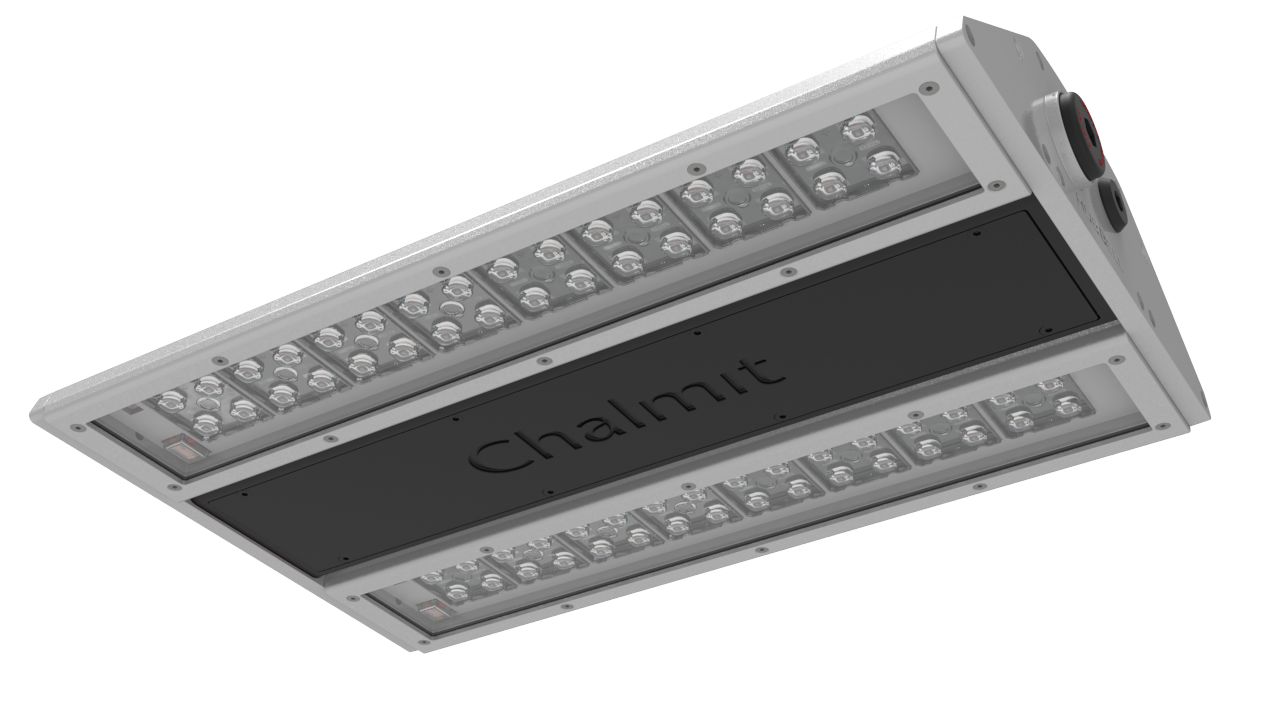
Chalmit To Spotlight LED Lighting For Hazardous Environments
Chalmit & Killark, a division of the Hubbell Harsh & Hazardous Group and manufacturer of lighting for industrial sites, is hosting a live, interactive, online Q&A on how LED luminaires can be used to best effect in hazardous areas.  The 45-minute session, to be held at 3pm on Wednesday July 15, will be led by a panel of experts from Chalmit, who will answer questions submitted by attendees. The event is ideal for those responsible for hazardous environments such as oil refineries, chemical plants, and potentially explosive factories. The session is expected to span major LED topics such as maximising energy efficiency, maintenance, optimising performance, safety, and capital cost minimisation.  Mark Poutney, Technical Manager at Chalmit explains, “Lighting in hazardous environments presents real challenges which LED lighting can help address. This will be a unique opportunity for site managers from around the world to get their questions answered, check their lighting strategy is up to scratch and catch up on the very latest thinking when it comes to LEDs.”

Construction Kickstart Measures Must Lead To Long Term Recovery
Commenting on the recent Summer Economic Update from the Chancellor of the Exchequer, Brian Berry, Chief Executive of the Federation of Master Builders (FMB), says, “I strongly welcome the package of measures announced. While these initial investments will kickstart construction and training, the Government must build on these commitments in the Autumn to ensure that growth and jobs are sustained beyond next year.” On the Green Homes Grant, he adds, “Grant-funded vouchers are a step in the right direction to launching the retrofit market, and supporting consumers to build with confidence after the pandemic. We hope at the Autumn Budget the Chancellor will bring forward the rest of the £9.2bn manifesto commitment, and support the development of private finance initiatives that will ensure the market grows in a sustainable way. "We have an army of local builders ready to deliver these works to a high standard, provide local employment, and generate economic activity in each corner of the UK. The Chancellor has demonstrated his willingness to introduce targeted, temporary cuts in VAT. We hope he will retain, as a possibility, a cut to 5% for home improvement works to further boost demand.” Commenting on the support for jobs retention and creation, he furthers, “The schemes underpinning job retention, and traineeship and apprenticeship guarantees are welcome news for construction, which has persistently struggled to hire into key trades like bricklaying and carpentry. The Chancellor is right to highlight the need for a new generation of talent, and support should be directed toward this strategic industry. That 71% of apprentices in construction are trained by local builders, and typically over a three-year period, means the scheme must be accessible to small to medium-sized firms (SMEs). "Converting these short-term measures into long-term jobs requires careful matching of individuals to the right firm. While we train the tradespeople of tomorrow, it’s great news for SME construction firms that they will be able to access the new Talent Retention Scheme to reduce the risk of redundancy. This will protect against a repeat of the severe job losses experienced by construction during the last recession.” On Stamp Duty cuts, he stresses that, “Temporary cuts in Stamp Duty will boost the housing market and remove a black cloud that hangs over many second-time house hunters. I’m particularly pleased this is taking place with immediate effect, as we know that potential homeowners typically look for a new home in September. Today’s confirmation of the extension of the Home Building Fund targeted at SMEs is also welcome. Looking ahead to measures to rebuild the economy, investment in planning departments and streamlining of the planning application process will be needed to ensure we also bring forward new development to ease our housing crisis.”

Schneider Electric And Rexel Launch Wise Guy Challenge
Schneider Electric has teamed up with Rexel to offer electricians the opportunity to win up to £3,000 worth of Schneider Electric products in the Wise Guy Challenge. The challenge invites industry professionals to test their electrical knowledge against the clock to win various prizes. Players must answer 10 timed multiple choice questions, and every correct answer gets an entry into prize draws to win a £50 Amazon voucher, £100 Rexel voucher or a £3,000 product hamper. “We are delighted to offer electricians the chance to win some amazing prizes. The Wise Guy challenge will test industry professionals and hopefully educate them on the benefits and features of the new technology available. Good luck to all that enter!” says Tim Barber, Distribution Programme Marketing Manager at Schneider Electric. To enter, please click here.  

LEDVANCE Gets Full Marks With First VDE HCL Certificate
LEDVANCE has become the first to be awarded the HCL certificate with the best possible quality award (3/3 stars) from the independent VDE Testing and Certification Institute. The award was made for its new and advanced BIOLUX HCL system and it is the first time that a company has qualitatively fulfilled all existing requirements, norms and standards for an HCL system. “Previously, there was no qualitative testing of HCL systems by an independent authority,” explains LEDVANCE Head of R&D and Strategic Portfolio Management Dr. Ulrich Weiss. “We therefore very much welcome VDE's initiative to establish standardised HCL test-criteria based on norms and standards and incorporating measurement techniques. This is unique worldwide. We are very proud that our BIOLUX HCL system has received the best possible quality award from VDE and fulfils all requirements to positively support the human biological rhythm, showing activity and performance during the day, supporting good sleep at night and increased well-being.” “The collaboration with the technical experts from LEDVANCE has been excellent,” says Dragana Zdravkovic-Stojanovic, technical expert for luminaires at VDE Institute. “Our criteria for being awarded with three stars were by no means easy to implement. I am looking forward very much to further joint projects.” LEDVANCE’s HCL system is designed to positively support the human biological day-night-rhythm, increase well-being and performance during the day and improve the quality of sleep at night. The evaluation by the VDE Institute was based on various criteria regarding light quality, correct simulation of the course of daylight, energy and cost efficiency, safety, ease of installation and commissioning, usability and compliance with national, EU and global norms and standards. The VDE mark is synonymous with safety and quality in electrical devices, components and systems. The independent test engineers carry out product, quality and safety tests on more than 100,000 devices per year before the VDE Institute awards the test mark. The VDE Institute has now developed a new standardised catalogue of test-criteria to evaluate HCL systems with regard to quality, safety, performance and usability. Compliance with these criteria is confirmed by a three-stage certificate. The LEDVANCE BIOLUX HCL system consists of wirelessly connected components. The intelligent BIOLUX control unit ensures - as the heart of the system - that the corresponding BIOLUX LED luminaires simulate the natural course of daylight in terms of light colour and intensity. Unique to the BIOLUX HCL system is the possibility of manually adjusting light to different situations using five predefined light modes. While the NATURAL mode simulates the natural course of daylight, the BOOST and FOCUS modes support concentration and productivity. RELAX provides relaxing light during breaks and with CREATE brainstorming sessions are encouraged. The built-in safety mechanism has been particularly positively evaluated by the VDE Institute: The five different light modes always follow the curve of natural daylight and thus ensure that the effects on the biorhythm are positive at all times. This makes the BIOLUX HCL system particularly suitable for offices, meeting rooms, hospitals, doctors’ surgeries as well as elder care and nursing homes.  After connection to the power grid, the LEDVANCE BIOLUX HCL system can be installed and commissioned in five to 10 minutes in an uncomplicated, fast and wireless manner using a smartphone app. The system automatically determines the time of sun rise and sunset based on the geographical location and autonomously configures all settings based on the course of daylight. As the system works independently and configures itself, no complicated programming or integration into existing lighting management systems is necessary. This keeps costs low and contributes to a particularly economical use. A total of up to 20 luminaires can communicate with the intelligent control unit, which can be added to the system simply by scanning the QR code. The complete communication of control unit and luminaires is securely encrypted and no user data is transferred. The user can set the five lighting modes in no time at all via the control unit.