2 November 2026
Product of the Month: Amari Floodlight range by Aurora Lighting
 
25 November 2026
Scolmore helps rejuvenate Tamworth Cancer Support Centre
 
25 November 2026
Leicester apprentice crowned 2026 SkillELECTRIC champion
 
24 November 2026
JTL celebrates opening of new Tyneside training centre
 
24 November 2026
LiGHT 26 welcomes record number of visitors to fifth event
 

Latest News


Select Stays By Your Side In New Behind The Scenes Publication
A new brochure has been produced that explains some of the vital work that Select carries out behind the scenes. The new publication, called By Your Side, outlines the many different ways that Scotland’s biggest trade association works to help improve the electrical landscape for both its members and the wider industry. It reveals how Select is a tireless campaigner for regulation, presses for payment change and carries out political lobbying in Scotland and beyond. It also explains the vital work the association does to raise industry standards, improve working conditions and aid skills development by building relationships and serving on respected industry bodies. Iain Mason, Select Director of Membership & Communications, comments: “Our experts promote our Members’ interests in a variety of ways, from advising on essential technical and employment matters to conducting political lobbying. However, this dedication often happens unnoticed behind the scenes – so this guide explains exactly how we’re always working on our members’ behalf. “It explains clearly how we work around the clock to give our members and the wider industry a strong collective voice, putting the needs of electricians first and creating a brighter future for us all.” A digital copy of the new brochure can be found here.

Red Arrow Tackles Emergency Lighting Legislations
Red Arrow Electrical Distribution is helping contractors install reliable and sufficient emergency lighting.  Defined by BSi as “the generic term for equipment that provides illumination in the event of failure of supply to the normal lighting,” emergency lighting is a complex area that generally requires a degree of additional wiring and expertise. According to Red Arrow, all commercial and industrial premises require mandatory emergency lighting, but with many businesses below standards due to poorly maintained or insufficient products. These days, all new builds have emergency lighting installed during construction – with design and type specified by an electrical engineer to meet Building Regulations and Local Authority requirements – but each site still has its own unique needs.  To support the general lighting in case of emergency, it’s important to address the differing levels of light required for varied needs and uses to ensure the appropriate amount of emergency lighting is installed.  Alongside different lighting specifications, risk assessments should also be carried out regularly, particularly if the structure or usage of a building changes. Failure to implement this legal requirement can result in many long-term problems, lengthy site revisits, increased workloads and costly repairs.  It’s also worth remembering that all those involved in designing, installing and manufacturing emergency lighting systems are responsible for complying to fire safety assessments and legislation, making the IET Electricians Guide to Emergency Lighting, BS 7671, BS 5266 and EN1838 essential reads for contractors installing emergency lighting. Relating to hotels, clubs, hospitals, nursing homes, schools, colleges, licensed premises, offices, museums, shops and multi-story dwellings, this focuses on: ⦁ Installing emergency lighting in accordance with regulatory requirements  ⦁ Testing the system  ⦁ Maintain ongoing inspection and necessary updates Which emergency lighting? According to the BSi guide to emergency lighting, there are two main types of emergency lighting:  Emergency escape lighting  Part of the fire safety provision of a building and a requirement of The Regulatory Reform (Fire Safety) Order 2005, this provides illumination for the safety of people leaving a location. Escape route lighting must be sufficiently lit to enable swift and safe evacuation of a building by illuminating its escape routes, such as corridors and stairways.   ⦁ LED Emergency Maintained Exit: Available with a three-hour emergency duration and IP20 rating. Ideal for offices, schools and hospitality. ⦁ Emergency LED Twin Spot: With a lightweight polycarbonate body for easy mounting and installation, this is designed for commercial sites, warehouses and retail units.  ⦁ Sentinel Emergency: Lightweight and compact, these professional emergency downlights are perfect for locations where higher EM illuminance is required  Standby lighting  Although not a legal requirement, standby lighting is often installed to enable normal activities to resume in the event of failure in the normal mains supply. However, it should be noted that as this type of emergency lighting is normally handled by Generators or a UPS (Uninterruptible Power Supply), battery-based products are not suitable alone.  ⦁ LED Emergency Maintained Recessed Lighting:  Perfect for leisure centres and hospitality, this lighting is available in 25W LED, with a 297 lumen output and an emergency duration of three hours.  With a range of exit signs, twin spots, popular bulkheads and downlights with specially designed escape route optics, Red Arrow are experts at providing emergency lighting, while supporting the growing demand that contractors are facing. 

Insulated jackets and trousers from Snickers Workwear
Street-smart, stylish looks and market-leading Gore-Tex and 37.5 fabric technology make these jackets and trousers from Snickers Workwear a must for winter on site or for outdoor leisure activities. You’ll stay warm and dry in this layered clothing that’s robust, waterproof and windproof too! The design and fabric combinations will keep your body in the optimum comfort zone as the weather conditions change on site. They’ve got all the features and functionality that you’d expect in Snickers Workwear jackets and trousers. They’re great looking garments that will keep you feeling comfy wherever you are and whatever you’re doing at work in cold weather. With a range of winter accessories to choose from as well, Snickers Workwear’s FlexiWork and ALLroundWork garments feature contemporary designs packed with must-have features that focus on fit, comfort and freedom of movement; as well as using innovative fabrics that deliver long lasting protection.

Almost 50% Of Local Authorities Do Not Know Their Own Carbon Footprint
According to a freedom of information request from engineering services trade body ECA, almost half of local authorities in England do not know their own carbon footprint. Overall, 93 out of 214 local authorities (43 per cent) say that they don’t measure all energy use in relation to their built assets, which include housing, facilities, offices and other council-owned buildings. While 47 per cent of councils say they do not have a plan in place for reducing the carbon emissions resulting from their built assets. “It’s highly concerning that almost half of local authorities do not know how much carbon they are responsible for or have a plan in place to reduce this amount moving forward,” comments ECA Energy Advisor, Luke Osborne. “Unless there is an imminent step change in their approach, it is inconceivable that councils are going to become carbon neutral in less than 30 years. There is a lot of rhetoric out there, but very few action plans.” The survey also found that council building energy usage is causing vast amounts of carbon dioxide (CO2) to be pumped into the atmosphere each year: Overall, councils responding say 252,978 tonnes of CO2 resulted from their main HQ buildings – which is the equivalent of 150,000 return flights from London to New York. The average annual carbon footprint of a council HQ building was 1,234 tonnes of CO2, however four produced more than 10,000 tonnes of CO2. The highest carbon footprint of a council HQ building was 18,200 tonnes of CO2, which came from a district council based in the East Midlands – which is the equivalent of 9,500 average train journeys. More positively, 166 councils (78 per cent) say they are planning towards net zero operation by 2050. Furthermore, 49 local authorities (23 per cent) stated that they would be carbon neutral by 2030. However, 11 of these 49 councils do not currently know their own carbon footprint. “It’s positive that almost one in four councils are seeking to radically exceed the Government’s net zero target by 20 years, but that figure needs to rise significantly,” adds ECA Director of Member Services, Helen Atkinson. “ECA and our Members stand ready to support local authorities and other building owners into getting zero carbon done.” The UK Government has committed the country into being a net zero carbon economy by 2050.

Shining fresh light on The Fitzwilliam Museum
Tridonic partner, Littledown, has played a key role in the provision and installation of the lighting control for the recently completed refurbishment of Gallery Three at The Fitzwilliam Museum. Opened in 1848, The Fitzwilliam Museum in Cambridge is the lead partner of the collections of the University of Cambridge Museums (UCM) and Botanic Garden. It houses a world-renowned collection of over half a million works of art, masterpiece paintings and historical artefacts. Littledown had already been involved in the refurbishment of the museum's main entrance, so was pleased to be involved in this next stage. The initial brief for the lighting in the gallery was to illuminate the gallery evenly, whilst providing the flexibility to control the ambiance of the gallery by the lighting. Specific requirements Steve Reid, Managing Director at Littledown, worked closely with Precision Lighting and Lighting Designer, Matthew Nourse, to devise a lighting solution which could accommodate these specific requirements. He explains, “There were four elements of the lighting which required consideration: Lower level, to illuminate the art objects. This was split into two options – the main track in the recesses, and the spotlights on the bulkheads. Mezzanine level, which may in future have objects, but none that are immediately planned. Therefore, the lighting would be dedicated to the ancient frieze. Barrel ceiling, with the best architectural features of the space, including the ceiling mouldings and illuminated to show the finer detail. And finally, the upper level where the statues stand between the window elements – the idea being to highlight each individual sculpture.” In addition, each of the lighting levels had to be individually controlled, and all must have the capability of dimming using a DALI system (this is an upgrade on the control system currently in most other areas of the museum). Colour rendering and light levels were also a key consideration for the curators. Reid continues, "This was a challenging project for us to work on. Not only did we only have a very short window for the installation, but the linear lighting that we were installing around the pelmets totalled 60 metres in length and is over 10 metres above floor level.” Tridonic's support and its ability to meet the tight deadlines for manufacture was vital to the success of the project, while the reliability of the components supplied also offered peace of mind. Artwork in the right light The LED linear lighting, which uses Tridonic control gear, was installed using specially designed, easy to mount brackets. The main components were LCA 50W drivers, LLE boards and LED covers, all of which have the Tridonic five-year guarantee. The drivers, meanwhile, have a nominal lifetime of 100,000 hours. The gallery’s entire lighting solution is fully controllable, and each individual fitting can be programmed to provide the optimum LUX levels for the artwork that is being illuminated. The standard lighting is a warm white with a colour temperature of 3000K, which matches the colour temperature in the recently refurbished entrance hall. By removing the old fluorescent fittings, not only has the lighting improved, with no flicker, but the museum is also anticipating making a significant energy saving and reducing the possible effects of UV on the artefacts. In addition to the illustrious artworks, the plasterwork on the ceiling – which is considered one of the most astonishing museum interiors anywhere – has been cleaned, freshened up and painted in parts, and the new lighting enables visitors to have a far better view of all the detail.

Centiel to Showcase Agile UPS Solutions at DCW 2020
Leading UPS manufacturer, Centiel UK, has announced it will demonstrate its agility by showing its industry leading, flexible UPS solutions at Data Centre World this year on booth D810. DCW will be held March 11-12, 2020 at Excel in London. Louis McGarry, Sales and Marketing Director at Centiel, comments, “With real-estate prices at a premium, plus the high costs of power consumption and the cost to maintain oversized UPS systems, the need to constantly right-size appropriate to the load has never been more important. For data centres looking to minimise running costs and maximise returns, an agile approach to system design is key. At DCW this year, we will demonstrate how to achieve a flexible approach through the use of true modular UPS systems. “We will be showcasing a 600 kW CumulusPower UPS frame populated with our fourth-generation, high-availability, high-efficiency, hot swappable 60 kW modules, offering 540 N+1 in a single footprint. We will also demonstrate one of our most popular frames, which maximises availability, achieving 75kW N+1 within a single footprint of just 0.59m². With up to 320 battery blocks internally, this solution offers a great option for facilities with limited space. “An innovative design also allows the larger CumulusPower UPS systems to be connected from either high or low level, without the requirement for a separate cable entry enclosure,” continues McGarry.  “This enables a more adaptable layout within comms rooms and data centres, accommodating the best use of space and potentially reducing installation costs too.” CumulusPower is known for its '9 nines' (99.9999999%) system availability and low total cost of ownership through its Maximum Efficiency Management (MEM) and low losses of energy. CumulusPower has now been installed in data centres and comms rooms in over 60 countries across five continents. More than 50 MW of critical power loads are now protected with CumulusPower in locations across the world, including: the UK, Singapore, Australia, Germany, Spain, the Czech Republic and the Channel Islands. McGarry continues, “CumulusPower is both a scalable and flexible UPS system that combines class leading availability and efficiency that makes it perfect for use in small, medium and large data centres.  However, not every application requires a modular UPS, so we will also showcase PremiumTower, our standalone UPS ideally suited to applications where facilities don’t want to compromise on quality while minimising total cost of ownership is a significant factor. With PremuimTower, the fans are located at the top of the UPS rather than the back, maximising the use of space: 'zero clearance'. “A flexible and agile approach is more important than ever when it comes to UPS design. True modular UPS systems can be easily right-sized, allowing data centres to ‘pay-as-they grow’. In addition, ongoing running costs are minimised with a correctly sized system, and initial CapEx is reduced too. “At Centiel, our design team has worked with data centres across the world for many years and we are at the forefront of technological development. We are the trusted advisors to some of the world’s leading institutions in this field. At DCW this year, our team and our UPS experts will be pleased to share their combined knowledge and discuss how to configure the most appropriate and resilient UPS system possible, to minimise both risk and budgets in order to protect the power to data centres and their valued client base.” For further information, visit Centiel at DCW or go to www.centiel.co.uk.

BEG to Showcase New KNX Detectors at Light & Building 2020
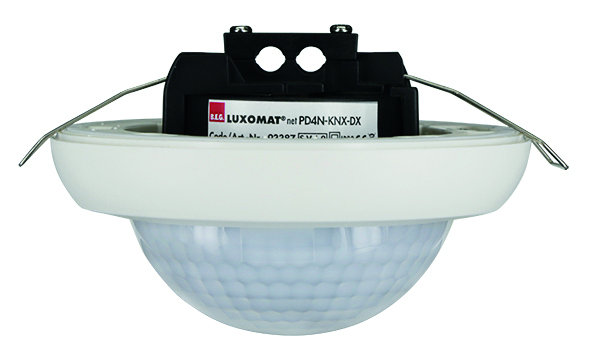
BEG Lighting Controls will be demonstrating its advanced range of KNX Generation Six Presence Detectors at Light + Building 2020 from March 8 to 13 in Frankfurt next month. Building on its well-proven range of presence and motion detectors, the German manufacturer has updated versions of its KNX range, including a Deluxe version that has built-in logic as well as sound and temperature monitoring - an industry-first for the KNX market. The Deluxe version will offer a premium solution for KNX integrators facing more demanding applications with extra functions, which can include a logic module, sound sensor and temperature sensor. BEG Lighting Controls KNX System Sales Manager, Stephen Payne, says, “We’re delighted to be appearing at Light + Building again this year and are keen to demonstrate our new KNX Generation Six Presence Detectors to the trade at this premier event. “The logic module in the new Generation Six sensors are independent of the detector operation and this has proved to be most useful to integrators. The integrated sound sensor can be used in areas where there are restrictions to the normal presence detection such as a toilet cubical. “If configured, the sound sensor will activate, but only after motion is detected. Run-on times are configurable. The built-in temperature sensor will send temperature reading to the KNX bus to be used by HVAC actuators. This means separate temperature sensor do not have to be fitted to the wall, which will save electrical contractors time and the end user expense.” The new KNX Generation Six Presence Detectors mean BEG Lighting Controls now offers flush fitting and surface mount options on nearly all of its devices with different levels of functionality, giving the widest choice of detectors on the market. All BEG KNX Generation Six detectors can be configured to be fully automatic or semi-automatic, via the ETS software or optional remote controls. The sensors include lens shields to obscure parts of the detectable area, which is useful when detection is not required in certain sections of the space. BEG Lighting Controls Sales Director for UK & Ireland, Paul Jones, adds, “BEG Lighting Controls is leading the way with the widest choice of presence detectors to suit all types of requirements in the UK and Ireland. Our new KNX Generation Six range offers more choice in operational height, detection area, installation and functionality than ever before. We even offer different colours. “BEG continues to be at the forefront of lighting control design and the BEG KNX Generation Six Deluxe versions is another excellent example of this. For the first time, there are products available on the market for KNX integrators to use, which can substantially reduce costs by sensing occupancy by presence and sound and then combining this with temperature monitoring and logic function. “We look forward to demonstrating the Generation Six range to our existing customers and new ones too when we appear at Light + Building 2020, where BEG will have its biggest presence at the show for years.”

Lighting and the Circular Economy Conference
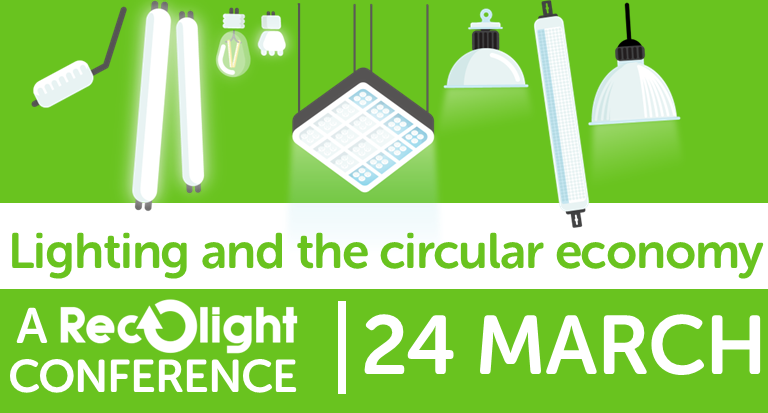
On March 24, 2020, Recolight will be hosting a conference to highlight how the lighting industry can adopt Circular Economy principles. The event, which takes place in London Docklands, is intended to highlight the commercial opportunities in ending waste and obsolescence for lighting products. The conference reflects the increased need for the industry to deal with the impact of its products and practices on the environment. The one-day discussion will bring together Government, manufacturers, specifiers, and end users to discuss the steps that all must take to improve their environmental performance. Delegates will also hear of the legislation and standards that is likely to drive these requirements. Why this is important to lighting Transformation to a circular economy is increasingly being seen as essential if manufacturing is to be sustainable. This will become ever more important as demand for resources rises, and energy costs increase. With changes to legislation, lighting producers should start considering how some of the principles might be included in the products they design and manufacture. The earlier companies start, the more likely they are to be able to meet/exceed the new requirements. Those companies that have embraced a circular approach are likely to be more competitive. A conference designed by lighting industry experts Recolight has worked with leading lighting industry experts to design an agenda covering all aspects of the Circular Economy for lighting. The conference will be introduced and chaired by Ray Molony, Independent Consultant to the Lighting Industry. He comments, “I can't imagine any topic that's timelier and more urgent than this one. Across the industry I'm seeing a real willingness to contribute to the wider decarbonisation of the economy. But our endeavours need to be joined up, and that's why this event is a really important start of the conversation. I'm delighted to chair the conference and am really looking forward to the debate.” The programme for the day The programme starts by introducing the Circular Economy, learning about the opportunities and a recycler's perspective. Defra, LightingEurope and Recolight will cover legislation - both what you need to do now, and future legislation for the UK and the EU. John Bullock of The Light Review will challenge participants to be more sustainable, and there will also be a panel discussion, led by Ray Molony, exploring the perspective of end users; and looking at how they can they be incentivised to use lighting that minimises material use and is both recyclable and reusable. The programme will be rounded off by presentations from lighting designers and lighting producers who have adopted circular economy principles into their projects and products. Book your conference place Recolight is a not-for profit organisation, funded by Lighting Producer Members. The conference is also operated on a not-for-profit basis, and any surplus will be donated to the Ellen MacArthur Foundation. The conference is free to Recolight producer members, and £75 for all other attendees. It’s supported by the Lighting Industry Association. To see the full agenda and to book your place, click here.

Government Announces Electrical Checks For PRS
Responding to the announcement of the imminent introduction of mandatory electrical safety checks in the Private Rented Sector (PRS), Martyn Allen, Technical Director at Electrical Safety First, comments: “Today’s commitment by the Government to bring mandatory electrical safety checks into force, is a success for millions of renters and their landlords in England.   “It is long overdue for the dangers posed by electricity in the home to be taken as seriously as that of gas, so this legislation provides essential protection for millions. But, while we welcome this crucial step in protecting tenants, electrical safety should not be a ‘tenure lottery’. Electrical Safety First would like to see this regulation extended to the social housing sector in the very near future.   “We have heard harrowing tales of fatal accidents caused by unsafe electrics in rented properties. This new regulation – which we believe will benefit tenants and landlords by protecting both people and property - will help ensure such tragedies don’t happen again.  Tenants will finally be able to hold landlords to account for the safety of electrics in their rented homes. And, while most landlords already ensure their properties are safe, this new law offers clarity and helps private landlords protect their assets through regular upkeep of the electrics in their properties. But it is essential the new regulation has teeth and the enforcement body has the resources to take action effectively.” Mike Smith, Technical Director of the ECA has also welcomed this new commitment to electrical safety. He adds: “The dangers posed by electricity need to be taken seriously and they should be properly managed. It’s vitally important that landlords have the information they need to fully understand and carry out their new legal obligations. And that testing and inspection is carried out by an enterprise that’s been certificated by a reputable third party as competent to carry out these activities. ECA has long been working with its industry partners to raise safety standards in the PRS and we will now work with our members-  and the wider industry - to help ensure that the electrical safety of all PRS properties get the professional attention they need.”  These views have been echoed by John O’Neill, Technical Director at NICEIC & ELECSA, who states: “I am pleased that the new Government has taken action in this important area.  We look forward to working with landlords to ensure they understand the benefits of using registered electrical contractors to undertake the testing and inspections that will be vital to keep tenants safe.  We remain committed to working with industry partners and other stakeholders, to raise standards both in the PRS and across the industry generally.”   

First Stage of the Electrical Apprentice of the Year Competition Ends
The first stage The Electrical Apprentice of the Year competition has now closed. Running between September to Christmas Eve, more than 540 electrical students across the UK took part in the first stage of the competition – an online exam comprising of 40 multiple choice questions relating to electrical installations. A panel of judges are now working their way through all the entries to see who goes through to the next phase of the competition. Darren Staniforth, Group Senior Technical Presenter for NICEIC and Elecsa, says, “This is the fifth year we have run The Electrical Apprentice of the Year competition and we are delighted to see so many young apprentices take part. “The standard of apprentices taking part each year is also improving. Looking at the results from the last three years, applicants are using the time to really think about the questions. This has had a notable impact, with average scoring being the highest it has ever been and, for the first time ever, four of our applicants achieving 100%. “All of this good work has only been made possible by our partners, The Scolmore Group and Voltimum, and the determination of employers and colleges who understand the importance of promoting electrical apprenticeships to the next generation.” The top 20% of entrants from stage one will go on to the second heat of the competition where they will take part in a two-hour written exam, which will be held at several locations across the UK. Details on stage two locations will be announced in the coming weeks. The top eight students from the second heat will go on to take part in the grand final on June 2, 2020, at the headquarters of one of the competition partners, The Scolmore Group, where they will complete a series of practical tests followed by a technical interview with NICEIC and Elecsa technical experts. Marie Parry, Group Marketing Director for The Scolmore Group, says, “We are very proud to continue to play a key role in this competition which is growing in stature year on year. It takes a lot of confidence for the trainee apprentices to put themselves through the rigours of online tests and exams and ultimately a live final, so I commend them. It is this confidence and determination that we need to see in the electricians of the future.” For more information about The Electrical Apprentice of the Year competition, visit www.niceic.com/apprentice.