2 November 2026
Product of the Month: Amari Floodlight range by Aurora Lighting
 
25 November 2026
Scolmore helps rejuvenate Tamworth Cancer Support Centre
 
25 November 2026
Leicester apprentice crowned 2026 SkillELECTRIC champion
 
24 November 2026
JTL celebrates opening of new Tyneside training centre
 
24 November 2026
LiGHT 26 welcomes record number of visitors to fifth event
 

Latest News


UK homeowners at risk due to electrical safety neglect
The Consumer Protection Alliance believes that when it comes to basic home safety, Brits are falling short and leaving their families open to potential dangers – with a lack of basic action putting their homes in peril. According to its research, over half of Brits (55%) do not unplug electric appliances that are not designed to be left on, while 52% do not know how to test their smoke alarm for functionality. Furthermore, 44% of Brits admit that they do not carry out annual safety checks on the electrical appliances in the home. Of those, 42% don’t know how to check them, over a third (34%) are not aware of which appliances need checking, and almost a quarter (23%) ‘can’t be bothered’ to organise the check. Aligned to this, 28% would wait until an appliance had completely broken down before being prompted to get it assessed, meaning that a simple check could develop into a major issue. More than a quarter (26%) would only organise a safety check-up when they heard about a friend’s misfortune, such as a boiler breaking down. Cheryl Cox, Public Affairs Manager at NICEIC and member of the Consumer Protection Alliance, said, “It’s worrying that the nation is turning their attention away from safety in the home, and that some wouldn’t even consider using the professionals in times of need. Gas and electrical safety is important year-round, but especially during the winter months when an extra strain is placed on our appliances in the home. We tend to forget that our appliances such as the boiler, gas hob and hot water cylinder are used so frequently that they need extra maintenance. Everyone needs to be aware of the dangers and we believe that safety is paramount, and education is key.” In response, the Consumer Protection Alliance has launched a national consumer safety campaign warning homeowners and landlords about the dangers lurking in the home. Each year, 350,000 serious injuries are caused by electrical faults. There are as many as 250,000 illegal gas jobs carried out each year and 40 people die from carbon monoxide poisoning annually. - The Consumer Protection Alliance is a group made up of Dispute Resolution Ombudsman, Gas Safe Register, NICEIC and Which? Trusted Traders. Its aim is to promote consumer safety and protection in the UK.

Warships contract for AEI Cables
AEI Cables has been chosen as one of three companies to supply cables for three of Britain’s new Type 26 warships for the Royal Navy. Working with prime contractor BAE Systems, AEI Cables will supply cable and wiring for the power, lighting and data communications circuits to the vessels, with 400 kilometres of cable being supplied for the first order. The Type 26 combat ships will replace the Type 23 frigates as a versatile multi-mission warship designed to support anti-submarine warfare, air defence, humanitarian assistance and general operations anywhere in the world. Stuart Dover, Commercial Manager for AEI Cables, said, “Supplying cables of this kind for such complex requirements means there can be no compromise in their quality and functionality. We’re proud to be supplying our products to BAE Systems for such an important programme.” The project specified cables to Defence Standard 02-526 (NES526) and 02-527 (NES527) in various core and screen configurations, as well as cables to Defence Standard 61-12 Part 25 and Part 27; and wires to Defence Standard 61-12 Part 18. First installation of the state-of-the-art range of naval power, instrumentation and communications wires and cables is scheduled, with the first warship expected to be in service in the mid-2020s. AEI Cables is already a supplier of defence cables and wiring product for the Royal Navy, including the Queen Elizabeth Class Aircraft Carrier (QEC) through prime contractor BAE Systems, including control cables, weapons cables and medium voltage propulsion cables. All AEI Cables’ products are supplied with approvals from independent bodies, including BASEC and LPCB covering design, manufacture and supply. It also holds approvals from organisations including Lloyds, the MoD, Network Rail and LUL and works to international standards around the world.

January gloom for self-employed electricians
Hudson Contract, a construction industry scheme payroll provider, is reporting that self-employed electricians saw their weekly earnings fall by £124 a week during January. The statistic is a direct comparison with December 2018 figures. “It sounds grim, but it’s exactly what we expect at this time of year,” observes Ian Anfield, Hudson Contract’s Managing Director. “After a hectic Christmas, many sites and their subcontractors take the opportunity to enjoy a well-earned break, and it takes until the end of January for everyone to get back into full swing.” Even with pay rates down by 12.2% for the month of January, the average electrical subcontractor continued to earn £1,016 a week – with earnings highest in the east of England at £1,117, and lowest in the South-West at £761. It’s worth noting that despite the drop in January earnings, year-on-year earnings are up £42 a week, a rise of 4.3%, which is almost double the rate of inflation. Hudson Contract seeks to deliver the most accurate indication of subcontractor pay trends across the construction industry, and uses payroll data for more than 2,200 UK construction companies.

Hamilton joins CEDIA as it continues to champion smart controls
Hamilton Litestat has become a trade supplier member of CEDIA as part of its commitment to educate and promote smart controls and home automation. As the international trade organisation and global authority on home technology, CEDIA’s members are important for Hamilton as it increases brand awareness amongst custom installers and professional electricians. “We are pleased to welcome Hamilton Litestat on board as a CEDIA member,” commented Matt Nimmons, CEDIA EMEA Managing Director. “We recognise that Hamilton has an outstanding reputation for delivering quality products, so to be able to add the company to our list of trade suppliers is fantastic.” The company’s solutions and its championing of the sector have been recognised, with Hamilton voted ‘Best Manufacturer 2018’ in the Voltimum Smart Solutions Awards 2018. Hamilton will be demonstrating its smart lighting control and audio solutions at EI Live!, which takes place in Farnborough from April 30 – May 1. The company will be positioned on Stand 56, and visitors are encouraged to ask about the free smart controls training courses at the newly-refurbished training centre in Mere. Attendees can also pick up a copy of Hamilton’s new 2019 catalogue. - To register for EI Live!, visit eiliveshow.com

Voice sounders chosen for busy high school
A fire safety system upgrade at Harwich and Dovercourt High School, a mixed secondary school and sixth form with academy status serving more than 1,200 students, has 110 Vimpex fire-cryer voice sounders at its heart to help protect students and staff. This extensive fire safety system upgrade, installed by life safety systems specialists Anglia Fire Protection, comprises 24 Vimpex wall-mounted fire-cryer and 86 high output midi fire-cryer voice sounders, with custom-built voice message controllers built to the customer’s specification. Such a busy, multi-use facility as a senior school demands a bespoke evacuation and warning system solution. Vimpex’s fire-cryer voice sounders can be programmed to produce bespoke messages and tones specifically designed for the educational environment. Vimpex’s fire-cryer is the only voice sounder system available with a range of discreet ceiling-mounted voice sounders through to high output IP66 voice sounders. The advantage of using multi-message voice sounders in schools is that traditional fire alarms can be mixed with everyday messages such as class change. It can be customary practice for schools to use the fire bells or sounders to announce class changes with the potential for confusion during an actual fire or routine test. The fire-cryer range is the most extensive range of voice sounders available on the market today, with five models to choose from and literally millions of message combinations, ensuring that any site requirement can be fulfilled. The units require no special wiring and can be retrofitted to existing installations. They can be fully synchronised and have a low current consumption allowing simple replacement of existing sounders and bells.

Study reveals a slowdown in engineering growth
The latest sector-wide Building Engineering Business Survey, sponsored by Scolmore, has revealed that in Q4 2018, a quarter (26%) of businesses reported increased turnover, while another quarter (26%) said turnover had fallen, compared to the previous quarter. Outlook for the first quarter of 2019 is also subdued. Three in four respondents (74%) said they expect their turnover to stay the same or fall compared to Q4 2019. Meanwhile, nearly two-thirds (61%) of engineering services organisations have seen their material costs rise in Q4 2018, compared to Q3, and almost half (48%) of respondents reported increased labour costs during the final quarter of 2018. ECA CEO, Steve Bratt, commented, “These latest figures indicate a squeeze on margins due to a downward trend in turnover and an upward trend in labour and material costs. The current business climate is challenging, with firms facing the knock-on effects of Brexit uncertainty, more challenging contractual conditions and ongoing payment issues.” BESA CEO, David Frise, added, “There is a pattern emerging here. The latest forecasts from the CPA, which we recently shared with our members, indicate similar findings with a market forecast of just 0.3% growth in 2019 and material prices going up by 5.1%. The challenge for contractors across the sector is maintaining cash flow in a climate where payment issues still reign. It is in times like this that the work of organisations like BESA, ECA, SELECT and SNIPEF is even more vital than ever.” SELECT Acting Managing Director, Alan Wilson, observed, “Payment remains one of the industry’s biggest issues. Often it starts at source, with clients delaying payments, which has a knock-on effect down the contractual chain. This is then compounded by delays in releasing retention sums. There has to be more transparency in the payment chain and national and devolved governments need to show leadership in making sure public bodies pay on time.” Payment and retentions remain a challenge. Almost three in four respondents (77%) said they are typically paid more than 30 days after a public sector project, and more than eight in ten (83%) are paid more than 30 days after a commercial project. Almost two-thirds (58%) said that up to 10% of their organisation’s turnover was tied up in retentions in Q4 2018 – a 6% increase on Q3 2018. The survey received 403 responses from companies across the multi-billion-pound industry, mainly regarding their performance in Q4 2018 (October 1 to 31 December, 2018), and expectations for Q1 2019.

New review site to tackle bad practice
A new online review platform has been launched to tradespeople and their customers to tackle the scourge of bad workmanship, late payments and bad debtors that cost the UK billions of pounds every year. The platform, recommendandshare.com, aims to create an environment of proper transparency, honesty and accountability for businesses and consumers everywhere by focusing on building relationships, rather than just leads. Users create free business or consumer profiles, where they can leave recommendations for either side following their experiences. Founder of the service, Garry Lewis, is himself a tradesperson with 30 years’ experience in the industry. He was inspired to launch the site after his experiences with dishonest people, businesses and banks almost cost him everything he had worked for. He now hopes this open, transparent and not-for-profit approach will show each side that the other’s intentions are genuine and honourable from the outset. Lewis commented, “We’re giving businesses and consumers a voice to make everybody accountable for their actions. This is about relationships and not leads. Other review sites are built to make money out of the trade through subscription fees or by charging for leads that in a majority of cases don’t turn into jobs and leave the tradespeople out of pocket. We want to change things for the better for tradespeople and the public, giving both sides the peace of mind and reassurance they need before committing to each other.” Recommend & Share is not-for-profit and is free to use for businesses and consumers.

New guide for smart home products
Electrical wholesaler CEF has published a new guide to smart home technology that aims to simplify smart home product selection for professional installers and buyers. Get Smart, Get Connected is a comprehensive, priced product directory and microsite featuring the latest products and innovations as well as insight, installation advice and guidance to help electricians take advantage of the smart home revolution. It’s estimated that £10.8 billion will be spent on smart home devices in the UK this year alone, with an increasing number of those products now requiring professional installation. The smart home market thus presents a huge opportunity for electrical contractors, but understanding the range of products available isn’t always easy. CEF’s guide outlines the possibilities of what can be automated in a home as well as the individual devices that make it all happen, enabling electricians to grasp the smart home opportunity and access the commercial potential of this lucrative market. Andrew Moseley, Commercial Director at CEF, explains, "The adoption of smart technology continues to grow, and this presents a great opportunity for tradespeople who are one step ahead – equipped with the right product knowledge and ready to advise their customers with market insight. With Get Smart, Get Connected, CEF is helping electricians to navigate the smart home landscape and ensure that they can take full advantage of this evolving market." The new product directory is available from CEF stores nationwide, and digitally via cef.co.uk/getsmart.

JTL ‘seriously concerned’ about apprenticeship barriers
Training provider JTL says that it is struggling to gain access to schools and their pupils, and as a result, young people may not be fully informed about their apprenticeship options upon leaving full-time education. Research by the Institute for Public Policy Research (IPPR) shows that despite the introduction of the Baker Clause – which was created to force schools to open their doors to further education providers – compliance has been very poor. One year on from the introduction of the clause, research shows that just two in five schools (37.6%) published a provider access statement. Despite this, the Department for Education (DfE) is yet to take formal action to enforce compliance. According to the findings, most technical education providers think that the Baker Clause has failed to deliver on its aims. Over 70% say that it is difficult to access schools in their area, and less than a third say that the situation has improved in the last year. Poor compliance is due to the lack of incentive for schools to retain their pupils and little enforcement of the Baker Clause. JTL’s Chief Executive, Jon Graham, explained, “Like many others, we were sceptical that the Baker Clause would have an immediate impact on allowing us and other providers to gain access to schools and their pupils to highlight their options. This appears to be the case, and combined with recent figures showing that there were only 195,200 apprenticeship starts across the board between April and November 2017 (representing a 40% drop compared with the corresponding period in 2016), it would seem that there is a requirement for serious action from Government to rectify this. Graham continued, “The Apprenticeship Levy does not seem to be working well either. According to the Local Government Association, the levy will generate £900 million less funding in the first four years than the Government previously stated. In addition, we continue to ‘bang the drum’ about the levy not being used as it was intended – and certainly should not, in our view, be used to fund senior management apprenticeships, providing university-level training to individuals already in work and already with professional qualifications. He concluded, “The apprenticeship scheme should, as a minimum, support apprenticeships that help fill skills gaps in vital industry sectors. We sincerely hope those who are making decisions and failing to enforce actions that have been previously agreed, will provide leadership at a time when we need to boost the number and quality of apprenticeships available to meet the demands of UK industries where skills gaps are evident at every level.”

Boosting productivity with smart CO2 controls
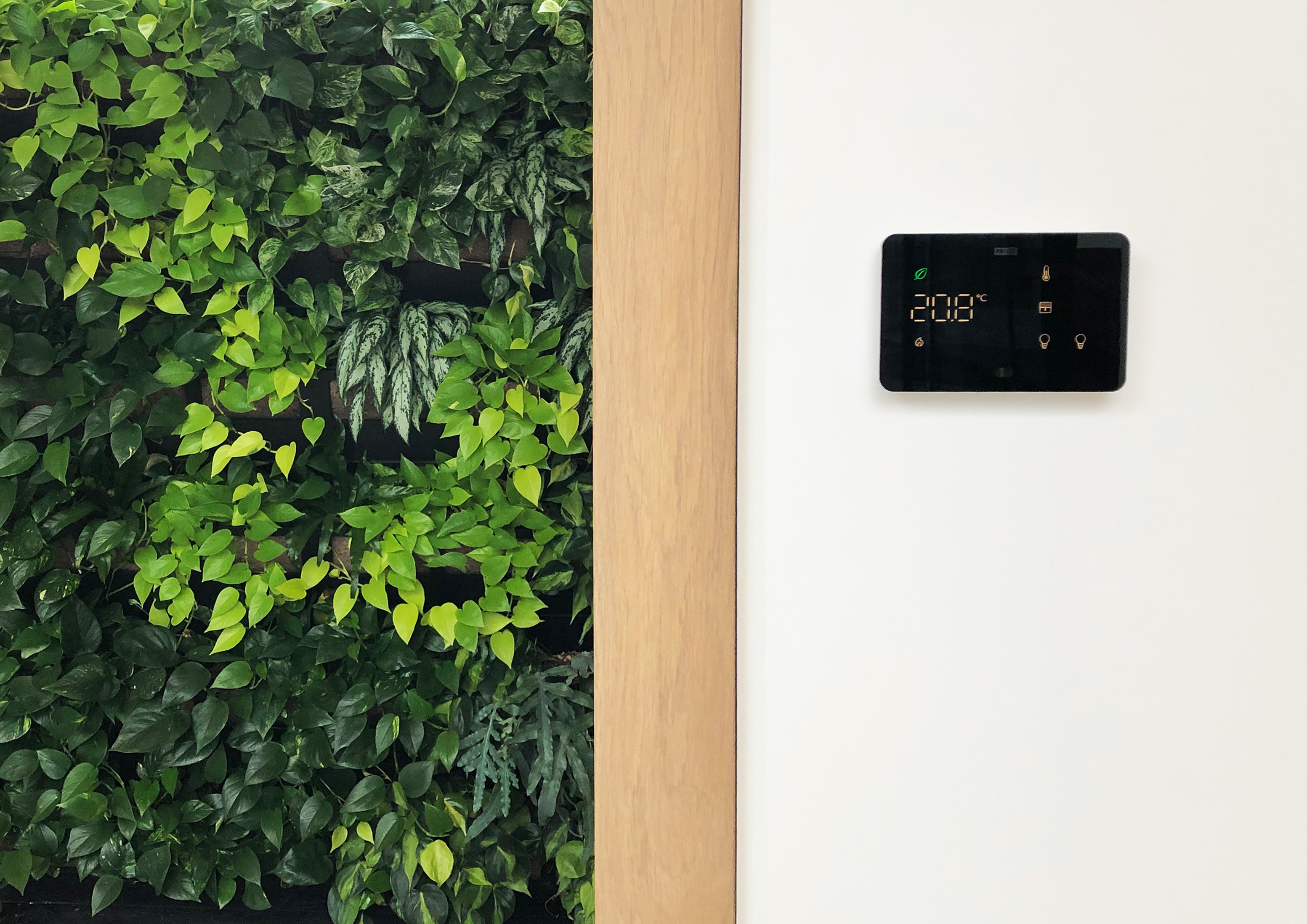
Building technology manufacturer, Priva, is highlighting its ability to provide a variety of solutions enabling the effective management and monitoring of primary building systems, including air-conditioning and ventilation, as a major new study asserts the importance of lower CO2 levels to the provision of comfortable and health-inducing workplaces. The new report, led by Oxford Brookes University and LCMB Building Performance, contends that CO2 levels in offices are “silently damaging UK productivity”. Monitoring levels and testing workers continually over a two-year period, the study showed that personnel are able to work up to 60% faster in environments with lower CO2 concentrations. In addition, increased intake of CO2 can lead to poor decision-making, slower reaction times and greater tiredness. With the rising number of days lost each year to ill-health in the UK already giving cause for concern, this report highlights the need for building owners and facilities managers to review the impact that primary building systems can have on employee wellbeing. Alongside lighting, heating and noise control, effective air monitoring and management technology should be a priority for any new-build or retrofit project, Priva says. Priva’s product family offers powerful control and monitoring of key building systems. Its Touchpoint One technology – which allows users to adjust room conditions including heating and cooling via a user-friendly user interface – constitutes the latest generation of powerful and aesthetically-pleasing operating units. The unit clearly highlights the status of CO2 levels with the help of clear graphical ‘traffic light’ icons. Recent data published by the UK’s Office for National Statistics indicates that UK productivity is 26.2% lower than Germany, based on GDP per hour worked. As the UK potentially moves into an uncertain economic period, there will inevitably be an onus on all organisations – public and private – to do everything they can to maximise output. “Providing workplaces with lower CO2 levels is one of the most direct routes possible to improving employee health/wellbeing and boosting output,” said Priva UK & Ireland Sales Manager, Gavin Holvey. “At Priva, we are ready to assist all types of enterprise that wish to prioritise CO2 control with guidance and a host of cost-effective systems that can help them to monitor and manage air quality quickly and efficiently.”