2 November 2026
Product of the Month: Amari Floodlight range by Aurora Lighting
 
24 November 2026
JTL celebrates opening of new Tyneside training centre
 
24 November 2026
LiGHT 26 welcomes record number of visitors to fifth event
 
23 November 2026
Advanced acquires communications specialist Baldwin Boxall
 
23 November 2026
Trades face 'skills squeeze' as apprenticeship demand soars
 

Latest News


Shattering the myths about jobs in manufacturing
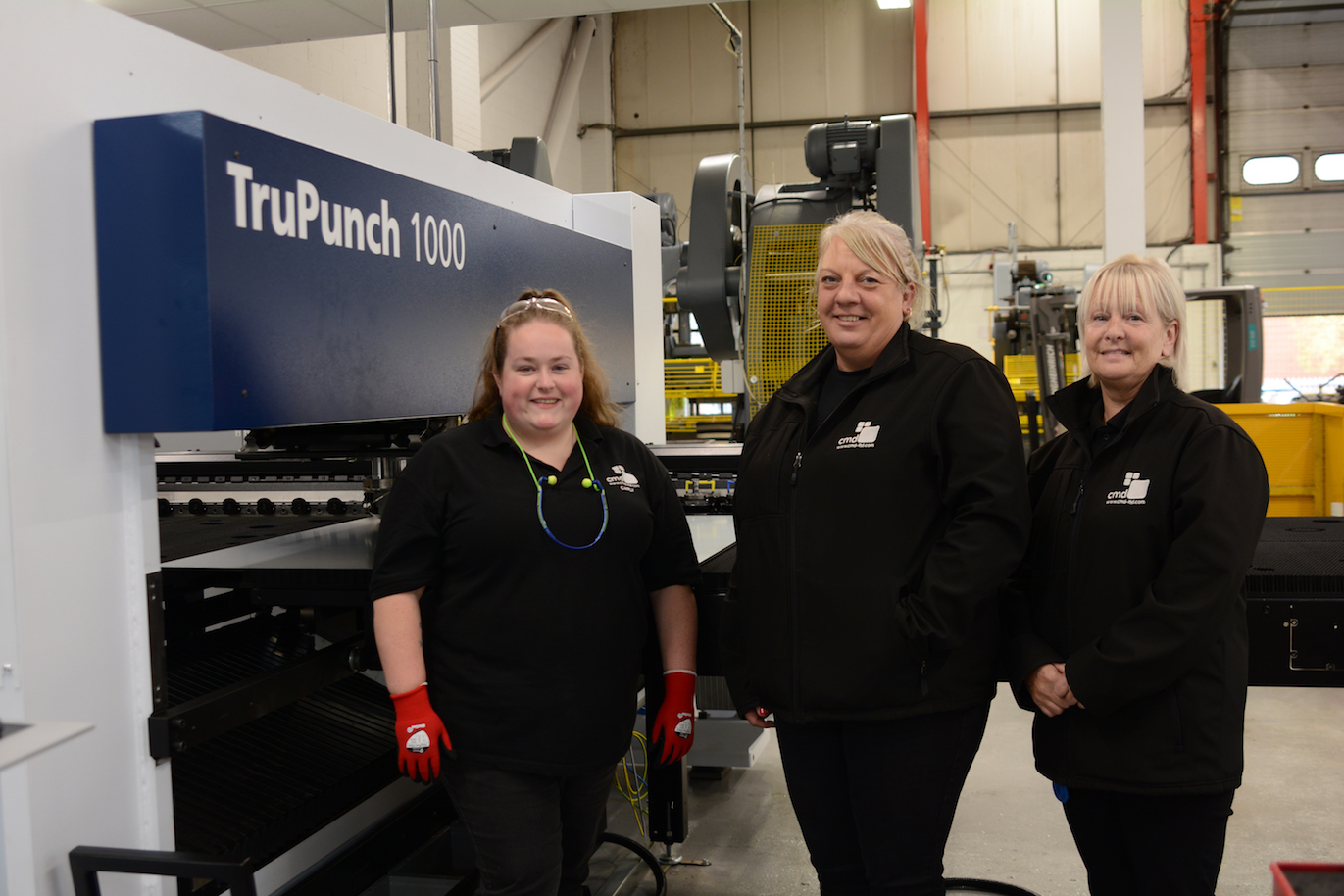
Increasing the UK’s manufacturing capabilities and capacity is a key element of the Government’s strategy for ‘building back better’ across both traditional and emerging industries. For Rotherham-based electrical manufacturer, CMD, which produces power distribution and workstation power products at its Rotherham factory, that’s a welcome commitment. The company understands, however, that reducing the UK’s reliance on imported goods involves delivering lean and efficient manufacturing operations, alongside recruitment and training of talented, career-focused individuals. Jon Holding, general manager of CMD Ltd explains: “Manufacturing has changed significantly over the past few decades, with equipment, lean management strategies and automation all playing a role in helping scale-up throughput and increase capacity. “But those have not been the only changes. We have also moved from a culture where manufacturing was seen as an aspirational career path to one where it is rarely a first choice for young people leaving school. We need to change that by demonstrating the opportunities the manufacturing sector offers for training, promotion, flexible lifestyles and job satisfaction in order to attract a more diverse workforce of people who see it as a long-term career, rather than just a job. Those are goals we are delivering at CMD.” Career path With a diverse range of roles, a clear pay structure and plenty of opportunities for progression, CMD makes a compelling case for working in the company’s Rotherham factory. One of the business’ factory floor team, Carly Glynn, highlights the potential for manufacturing roles to appeal to a wider demographic. Aged 25 when she joined the company, Carly had previously worked in an office environment as an HR supervisor. Her father and two of her uncles already worked in CMD’s factory and she was keen to follow in their footsteps in a hands-on role. “At school I’d wanted to go into mechanical engineering,” Carly explains, “but I’d been discouraged because I was a girl, and I ended up taking a very conventional route into an office job. I didn’t mind the role but it was always in the back of my mind that I wanted to do something more hands-on, so applied for a job in the factory.” Carly’s first role at CMD was in the production department making floor boxes for electrical installations. “People assume that if you work on a production line you’ll be doing boring, repetitive work,” Carly explains, “but, in my experience, that’s not the case at all. I learned new skills from day one, getting to grips with the technical aspects of production. One of the things I loved from the outset is that no two days are the same. CMD is an agile business that makes products to order, often tailoring the exact specification to meet the customer’s requirements, so my role was very varied from the beginning.” In addition to a formal induction and training, Carly worked alongside an experienced colleague for her first four weeks at CMD to ensure she had the opportunity to ask any questions and seek reassurance about the work she was doing. “From the outset I felt supported to succeed in the factory,” she continues, “which is a great motivator. Within three months, I was also given an opportunity for promotion, with responsibility for testing products. Because CMD’s factory is ISO 9001 certified, quality assurance checks are integral to every process and it felt great to be given such responsibility so early on.” Promotion Carly stayed in the same role for around a year and, when COVID-19 arrived, she trained in other disciplines in line with CMD’s strategy for maintaining production levels despite the challenges of staff absences due to the pandemic. When Carly caught the virus, she was forced to take several weeks off work and the experience made her more focused than ever on progressing her career. “By the time I returned from having COVID-19,” Carly explains, “I had plenty of experience under my belt and I really wanted to challenge myself to go beyond my comfort zone. I spoke to my manager and asked her if I could learn more aspects of the manufacturing operation. I was given opportunities to work on several other production lines and then, in September, I was promoted to work in the metal shop.” Carly’s new role in the metal shop has coincided with CMD’s investment in a new TRUMPF metal punching machine, and she has been trained by the machine manufacturer to programme and operate the equipment. “People assume that the work is very physically demanding,” Carly explains, “But that’s not really the case. In fact, I would say it’s more mentally challenging because I have to ensure the machine is correctly programmed and that we’re producing the right output for the production schedule.” It’s one of a number of common misconceptions about her manufacturing role that Carly is keen to dispel. “The factory is surprisingly clean, calm and quiet,” she continues, “and there is great camaraderie amongst the team. It’s also more gender balanced than most people think,” she adds, “in fact, my line manager is also a woman.” The other feature of Carly’s career that she often finds intrigues friends and family with nine-to-five jobs is how her shift patterns affect her body clock and social life. Her shifts alternate between two shift patterns, with a 6am-2pm schedule one week, followed by a 2pm-10pm shift the next. “The hours actually work really well for me,” Carly continues. “I have plenty of daytime free time to get things done at home, and when I am on an early shift I can go away for the weekend mid-afternoon on a Friday and come back Monday lunchtime without taking any leave. I’m really keen on motorsports so my schedule allows me to travel round the country every fortnight to follow my hobby and it fits around my lifestyle really well.” Ambition So what does the future hold for Carly and others like her? For CMD, there is a clear strategy in place to recruit and train people that want to build a long-term career with the company in manufacturing roles. Carly’s strategy is equally clear; “I’ve already told my line manager that I want her job in five years’ time,” she smiles. “I know that if I continue to work hard and learn, I can keep rising through the ranks to team leader.”  

J S Wright wins training employer of the year award
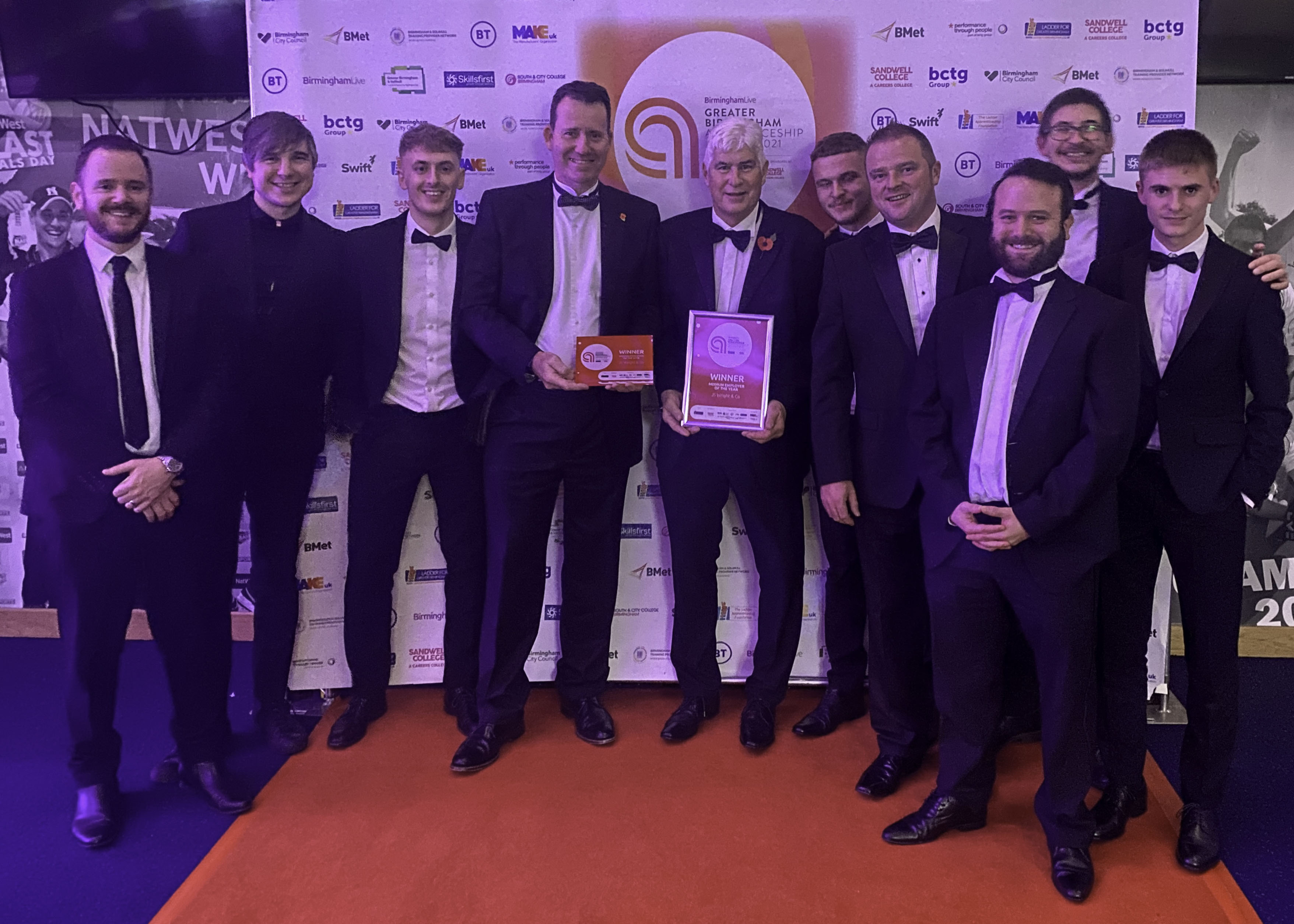
Mechanical and electrical services specialist J S Wright has been honoured with a top regional award for its apprentice training. The company, which is based in Birmingham and has an office in London, beat off stiff competition to be named as Best Medium Employer at the Greater Birmingham Apprenticeship Awards 2021, held at Edgbaston cricket stadium. J S Wright was chosen on the success of its academy which, since its launch in 2008, has taken on 55 apprentices on a range of craft and technical courses in which learning skills are also nurtured by existing employees. The judging panel was impressed with how the apprentices are given a complete understanding of the business and full support through on-site experience and individual mentoring – an approach that has seen no less than 33 of those 55 apprentices still with the company. Paul Millington, J S Wright Associate Director and Leader of the J S Wright Academy, comments: “I am delighted to have received this award on behalf of J S Wright. We started our Academy to help our young people develop their careers within the business and to help bridge the skills gap, with the result that we now have a sustainable and highly motivated workforce.” Phil Leech, Managing Director of J S Wright, adds: “We regard our apprentices as our leaders of tomorrow and invest heavily in instilling in them the leadership qualities and values which have sustained us through our history and are key to our continuing to expand and diversify as an M&E services provider.” The awards were run by BirminghamLive in partnership with the Ladder for Greater Birmingham campaign, and J S Wright’s award was sponsored by Greater Birmingham and Solihull LEP.

Bureau Veritas urges commercial buildings to ‘create an infrastructure for the future’
Bureau Veritas has cautiously welcomed new world-leading regulations for all new homes and buildings in England to have electric vehicle charging points installed as standard – stating that the move will help to drive uptake in electric vehicle (EV) adoption in England, although isn’t the whole solution to the challenge we face in the race to Zero Emissions Vehicles (ZEVs). The new regulations, which come into force from 2022, include supermarkets, workplaces and buildings undergoing major renovations, which – together with new homes – could result in up to 145,000 additional charge points each year over the next decade. England is the first country to mandate such building regulations and follows Transport Day at COP26, which focussed on the global transition to zero emission transport. Announced last month, the Government hopes that the new regulations will make charging EVs as easy as refuelling a petrol or diesel car today. However, according to Michael Kenyon – Head of Electrical Technical Development MIET at Bureau Veritas – much more needs to be done in terms of retrospectively equipping existing buildings with electric vehicle charging points if we’re to truly ensure ease of charging. He says: “The introduction of the new regulations is a really positive move in ensuring new properties, shops and workplaces are adequately equipped for an EV future. However, it doesn’t address the need to ensure existing buildings have the same requirement, meaning many commercial properties – such as supermarkets not planning ‘major refurbishments’ in the coming years – may well find themselves in greater competition with their newer counterparts, forcing consumers to make a choice based on available charging stations. “We would therefore urge those commercial buildings to seriously consider creating an infrastructure that supports the growing volume of EVs on our roads, but also to ensure they remain relevant compared to the competition coming down the line. This requires a best practice approach to installation, functionality and regular maintenance of charge points – which is where an independent third party such as Bureau Veritas can be vital.” In addition to the new regulations, a further announcement by Government detailed a multi-million-pound investment by National Highways for Energy Storage Systems; giant batteries for service stations where the grid supply is not enough for rapid charging infrastructure. These rapid chargers are part of the Government’s goal of introducing around 6,000 high powered chargers on the motorway network by 2035. Michael says: “National Highways’ plans to invest in energy storage systems is an excellent way to tackle ‘range anxiety’ amongst EV users, but also to combat energy usage and to alleviate the pressure on the grid in the supply of power. Having the choice on whether to charge slowly overnight at home or using rapid chargers at service stations provides the consumer with a full suite of charging options as we move towards the EV revolution.” Energy storage systems ‘store’ energy in quiet periods, which then provide rapid high-power charging at busy times. Using battery storage also paves the way for service stations to become ‘prosumers’ (both producers and consumers of energy) through the installation of solar technology, which could generate, store and utilise solar energy for EV charging, creating a more sustainable future. Michael adds: “Whilst the introduction of energy storage systems at service stations provides peace of mind for long-distance drivers, the option of increased rapid charging is also ideal for those living without access to personal charging points – for example residents of high-rise buildings, or those living in highly-populated urban areas. Having a range of charging options in multiple locations will go a long way in removing barriers to EV adoption in the coming decade and as we head towards a zero emission future.”

Cambridge to benefit from power project
Cambridge is set to benefit from a new £5million investment to upgrade the electricity network and cater for future growth. Work is underway to install new state-of-the-art electrical equipment at a UK Power Networks’ site in Histon, including a third grid transformer to help increase capacity. This will help to meet future demand of local power supplies in Cambridge and surrounding areas and follows on from a completed scheme in the Madingley Road area. A further investment is being made to upgrade switchgear equipment (existing technology which enables power cuts to be fixed remotely), reducing the time customers could be off supply. The project by UK Power Networks, which distributes electricity across the East of England, is scheduled to finish in 2023. During the scheme, the firm will minimise any noise or traffic disruption to local residents. Michael Falcone, project manager at UK Power Networks, says: “This significant investment is part of our ongoing investment in the network to maintain reliable power supplies. “Cambridge and the local area continues to grow and this new electrical equipment will help enable that expansion as the country transitions towards Net Zero. “We are constantly working to improve the performance of our network and to meet future needs.” This project is part of the company’s £600million investment in electricity networks this year, and will have lasting benefits for the local community, with thousands of homes and businesses knowing they have more robust power supplies as the country moves towards Net Zero.

AA reveals: how to make sure your boiler is ready for winter
You may not think about your central heating system too often, but you'll certainly notice if it goes wrong. The AA reveals tips on how to make sure your boiler is ready for winter. To help keep it in good shape, try to get your boiler serviced in the summer to ensure that it's working efficiently before the winter comes. It may be worth looking into boiler insurance. During the summer too, put the heating on for 15 minutes once a month. This will show the system is working properly and should help clear any debris from the boiler pump. Improve your energy efficiency • Insulating your loft will reduce heat loss from your home. • Use radiator insulation foil behind your radiators to direct heat into your rooms. • If you have a hot water cylinder in the airing cupboard, make sure it has a thick thermal jacket, and isn't set higher than 60 degrees. • If your radiators feel warmer at the bottom and cooler at the top when the heating is on, bleed them to improve efficiency. Common causes of heating problems • Is the boiler power light on? If not, check if a circuit protection device has tripped that you can reset. • If the boiler has a pilot flame, check it's alight. Follow the manufacturer's instructions if you need to re-ignite it. • Is there a problem with your gas supply? Ask a neighbour if they're having problems too. • Is your meter in a cupboard where the on-off switch may have been knocked? Check to see if it's in the right position. • Has your central heating programmer been set correctly? • If the room's thermostat is set too low, the heating will fail to start. • Is the boiler pressure correct? If not, there might be a leak in the system. Be careful when investigating as any escaping water may be very hot. Ideally call qualified engineer. Stay safe from carbon monoxide Carbon monoxide is a silent killer. So if you don't already have one, buying a carbon monoxide alarm is essential to alert you to the presence of the gas. And if you've got a gas boiler, an annual service by a Gas Safe registered engineer can help minimise the risk of carbon monoxide poisoning.

Power workers reach new heights
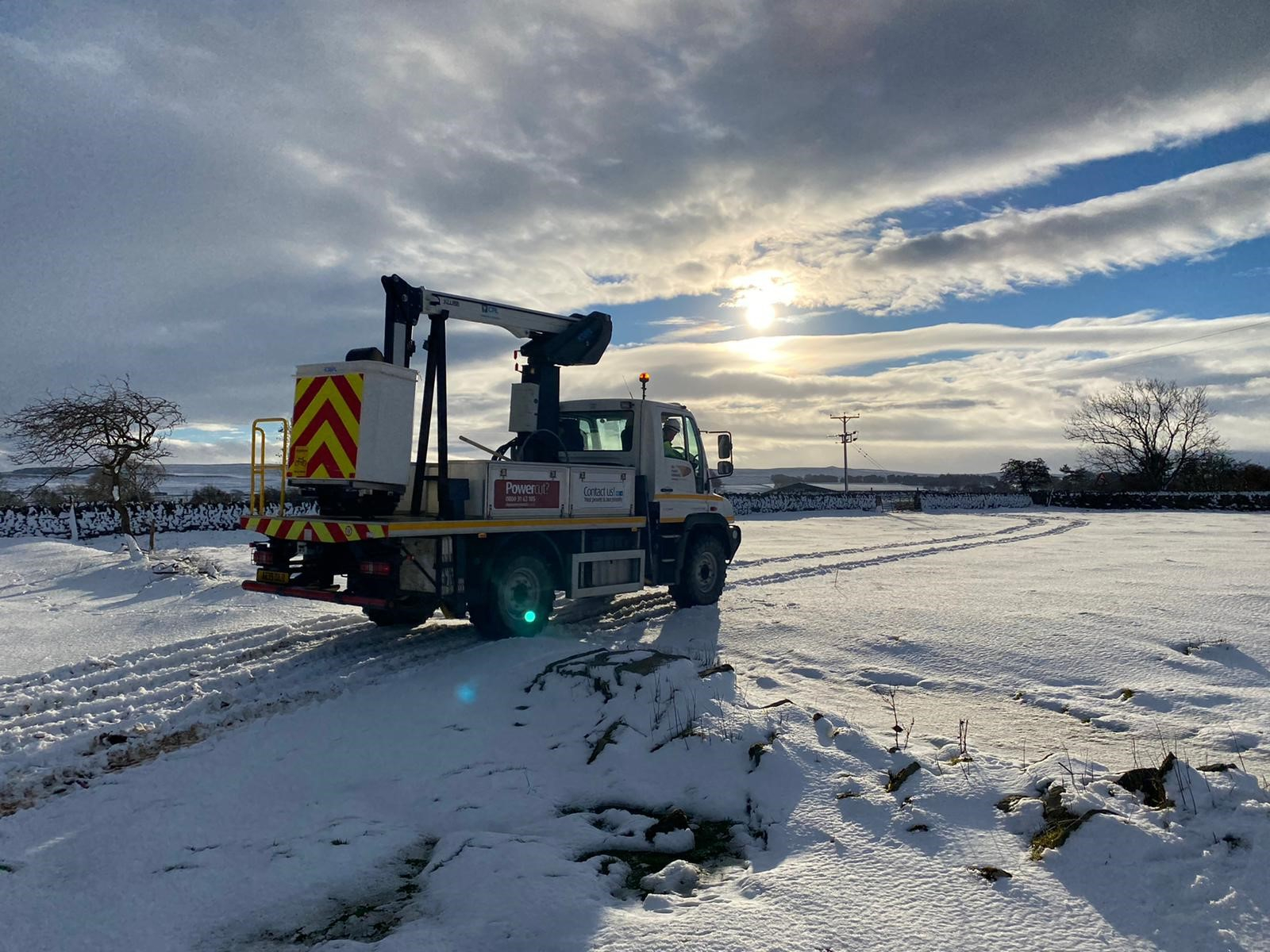
New all-terrain vehicles purchased by UK Power Networks proved their worth when they were sent to the snowy north to help reconnect power to homes cut off by Storm Arwen. They were put to work in remote areas of Yorkshire and Northumberland to give electricity teams access to fallen and broken poles in hard-to-reach areas. Normally the new vehicles are used in the fenlands of Cambridgeshire, the downs in Sussex and remote parts of East Anglia in all weathers. Electricity operator UK Power Networks commissioned six Mercedes-Benz Unimogs to cope with all ground conditions across the 29,000 square kilometres where it serves 8.3 million customers in the East, South East and London. The vehicles are used by highly-trained ‘hot glove’ teams working on live overhead power lines that carry up to 46,000 volts. They also have a two-person bucket for engineers working at heights of up to nearly 15 metres, unlike older versions which had two separate buckets. Staff from Network Operations and Transport teams at the company were consulted about key features that would be needed. The body of each vehicle has secure lockers, some of which are heated, as well as lights and beacons powered by a 1,000-watt inverter. The telescopic platform is fully insulated against electrical grounding and has the additional benefit of a powerful material-handling arm with a lifting capacity of 455kg. UK Power Networks’ vehicles are fitted with the biggest permissible agricultural tyres and equipped with optional inflation technology. This unique system allows drivers quickly and easily, and without leaving the cab, to lower tyre pressures, which creates a larger, flatter ‘contact patch’ and helps minimise damage to particularly soft ground. The hydraulic arms, buckets and bodywork were added by specialist supplier Versalift in Kettering, to vehicles supplied by dealer Arthur Ibbett, of St Neots, Cambridgeshire. UK Power Networks transport operations manager Cliff Allender says: “These vehicles are deployed daily across the area we serve, which stretches from East Anglia to the south coast, and are used to maintain overhead power cables supported by wood poles. “Many of our power lines are in remote and difficult-to-access locations but the fantastic off-road capability allows us to go anywhere, at any time, in all conditions. The extras lights and heated lockers that we included after consulting with our crews, will be a great help when they are called out at night or in severe weather.”

Aico’s Festive Fundraising in Support of Save The Children
The Christmas festivities for Aico continued on Friday 10th December with colleagues taking part in the annual Christmas Jumper Day. From glittery and glamourous to gaudy and garish, Aico donned their favourite festive jumper to raise over £335 for Save the Children. Children’s Charity Save The Children provides help and assistance to children in the UK and all over the world. Since its launch in 2012, the event has raised more than £27 million through the nation wearing their most festive jumpers for one Friday in December. Mental Health and Wellbeing at Aico is a key factor integrated into the company dynamic. Each month Mental Health First Aiders hold dedicated sessions discussing various topics to support all, from understanding stress to living with an illness/disability. December’s session was combined with Christmas Jumper Day with ‘Festive Wellbeing’ giving colleagues the opportunity to decorate cookies with a festive touch. The Christmas Spirit was shared all round with festive jumpers and jingles. Kelly Hodgetts, Sales Office Manager for Aico attended the Festive Wellbeing activity and was delighted that this could be incorporated into Christmas Jumper Day commenting “Christmas is well known for being a joyous, celebratory time of year, this isn’t always the case with some finding Christmas lonely, difficult or overwhelming. In these unpredictable times, Christmas can seem even more foreboding, and your mental health can really suffer. It was great to have some fun, down time with my colleagues today and we certainly got into the Christmas spirit, wearing our festive jumpers to raise money for Save the Children, decorating cookies and of course – eating mince pies!” Community Liaison, Jane Pritchard says “Christmas Jumper Day was great fun. As we all start to get into the festive spirit, it was fantastic to see so many colleagues supporting our December office fundraising day! As part of our mental health programme, colleagues also enjoyed our Cookie Decorating sessions. Just taking half an hour out of your day, getting creative and having a laugh, sent everyone home in good spirits for the weekend.”

JTL set to offer new Domestic Electrician Standard
JTL is proud to continue its work supporting the changing needs of electricians as it plans to offer the new Domestic Electrician Standard. Whilst the apprenticeship standard is still in development, JTL is planning to deliver the new Domestic Electrician Standard as soon as it becomes available, which is expected in late 2022/early 2023. Designed to take a minimum of three years to complete, the new Domestic Electrician Standard is intended to culminate in candidates receiving a Level 3 Electrotechnical in Dwellings Qualification as well as a Domestic Electrician’s Gold Card. The Domestic Electrician Apprenticeship Standard is intended to train domestic electricians in the best methods for the installation and maintenance of electrical services within domestic dwellings. As part of this course, it is hoped that participants will have the opportunity to explore the use of low carbon technology within the home, potentially including the installation and maintenance of electric vehicle charging points and Solar PV systems. Liam Sammon, Director of Learning and Innovation at JTL, says: “At JTL, we are looking forward to being able to offer this brand-new Domestic Electrician Standard once it’s available, which is expected in late 2022/early 2023. As a not-for-profit work-based learning provider, where all our funding is reinvested in apprenticeship training, we pride ourselves on being able to offer electricians and apprentices the most comprehensive and up to date training around – ultimately ensuring that safe working practices and high standards are upheld by our electricians. “Given the growing interest in green technologies, JTL is highly conscious of the need to train our electricians in the installation and maintenance of low carbon systems, and we hope that this new standard will prepare them for doing just that.”

Positive signs for the construction and electrical industries heading into 2022 
Using new ONS data, Dominick Sandford, Managing Director at IronmongeryDirect and ElectricalDirect, reviews 2021 for the construction and electrical industries and looks ahead into the new year. “It’s been another year of incredible challenges for both the country and the trade industries, but many of the most recent data releases show year-on-year (YOY) improvements, which hopefully suggest a positive start to 2022. “Overall, despite a slight drop towards the end of the year, the total number of people employed in UK construction has risen 3.5% YOY and now stands at 2.2m. “This has been supported by significant drops in the number of redundancies and unemployed workers. The amount of unemployed people in construction has fallen steadily over the last few months and now stands at 58,000, which is 22% less than the same period last year (74,000). “Likewise, the number of redundancies is also massively down YOY. The figure now stands at 6,000 (August to October), which is 77% less than the same section of 2020, when 26,000 workers sadly lost their job. “Despite falling a little in recent months, the amount of self-employed construction workers remains exactly the same as last year (248,000), having risen steadily over the summer. Similarly, in the electrical industry, recent drop offs have not been enough to prevent a YOY increase, with 4,000 more self-employed workers now (10,000) than a year ago. “Interestingly, the number of tradespeople working in the public sector has continued to fall. In fact, in 2021, only 34,000 construction workers were employed by the sector, which is the lowest total since records began over twenty years ago. For comparison, in 1999, there were 107,000 public sector construction employees. The industry’s sustained growth, however, can be attributed to a thriving private sector. “Positive signs are also found in the average number of hours worked each week, which has risen in consecutive months to reach 36.4. This figure peaked in May-July (36.6) but has been gradually rising all year, from 32.2 in December-February. The current average also compares favourably to 2020, as it is now 3.2 hours higher than last year. “This goes hand in hand with the YOY increase in construction weekly earnings. Unfortunately, income dropped between September (£685) and October (£673), but the most recent average is still the third highest of the year, and £20 up from 2020 – a 3% YOY increase. “The electricity, gas and water supply trade has seen an almost identical annual rise (3%), having grown from £719 in October 2020, to £740 in October this year. “It would be naïve to think that the industry has totally recovered from the pandemic, especially with the new Omicron variant potentially causing disruption in the new year, but it’s great to see that in many areas, the trades are making significant strides forward. “It’s admirable how well the industry and its workers have responded to continuous, stressful and unprecedented difficulties, and I wish them all the very best as we enter 2022.”

CICV Forum members reveal their Christmas wish-list for 2022 and beyond
After a year in which the construction industry in Scotland moved from crisis to recovery and rebuilding, members of the Construction Industry Coronavirus (CICV) Forum are looking forward to 2022 in a positive frame of mind. Asked about their wish-list for the sector for the coming year, its leading members expressed a strong desire for the continuation of the remarkable cooperation and collaboration which has been the organisation’s hallmark since its creation in March 2020. While supply chain, training and future skills issues were aired, the collective’s wish-list was predominantly focused on how it can consolidate and build on its many successes while making the necessary transformations to continue its momentum. Alan Wilson, CICV Forum Chair and Managing Director of electrical trade association SELECT, says: “The next 12 months will represent a new chapter and a new identity for the CICV Forum – more of which will be revealed in January. “Initially set up less than two years ago to deal with the impact of the COVID-19 outbreak, the Forum has quickly established itself as the representative voice of the trade and professional bodies who operate in Scotland and developed its work to deal with other issues, including the low carbon agenda, material shortages and skills. “It's great that everyone connected with the Forum wants to see it continue and flourish and my hope for 2022 is that it will go from strength to strength, representing the views of the thousands of businesses, large and small which make up the construction sector.” Fiona Hodgson, CEO of SNIPEF, echoed his sentiment, saying: “I am hopeful that 2022 will continue to see the CICV Forum collaborate and share constructive and meaningful conversations to further embrace the opportunities that the past two challenging years have brought to the construction sector. “With longer term strategic thinking and planning, rebuilding the way we work to be both creative and smarter will see us collectively benefit and provide the very best for our stakeholders and customers. Crisis events such as the pandemic can, and should, shape economic thinking and represent a rare but narrow window of opportunity to reflect, reimagine, and readjust priorities.” Asked for his hopes for the future, Gordon Nelson, Scotland Director of the Federation of Master Builders, comments: “Top of my wish-list is for buoyant workloads for the backbone of our construction industry – SMEs. I would like material prices to stabilise quickly and I would like to see the back of the elongated lead times for the likes of timber, bagged cement and insulation, which have been the bane of builders’ lives for much of 2021. These moves would boost confidence and allow the industry to continue to attract and train the apprentices needed to grow the workforce. For the Forum itself, I wish for a highly successful Green Home Festival in August that will build on the achievements of COP26.” Fiona Harper, The Secretary of the Scottish Joint Industry Board and Director of Employment & Skills at SELECT, adds: “We have all benefited from collaborating and working together since COVID-19 and I would very much like to see that continue. We all face essentially the same problems and issues, such as a shortage of people and an ageing workforce with an ever-growing workload. “The future talent pool is critical to the success and sustainability of the construction industry. With that in mind, we are surely stronger together as we address these issues and create the right training environments which are inclusive and train people in the right skills, making the businesses they work for truly competitive and diverse.” Iain McIlwee, Chief Executive of the Finishes and Interiors Sector, adds: “My New Year’s resolution is to find more time. Modernising methods of construction requires modern methods of procurement, and that means looking at how we allocate and use time more effectively and avoid repetition of mistakes. The Forum is a bastion of hope for me. It exemplifies collaboration and, as it evolves, I am confident it will help us to step out of the chaos of the project and find better ways of working.” Brett Amphlett, Policy & Public Affairs at the Builders Merchants’ Federation, says: “The past 18 months has cast light on the importance of the property repair, maintenance and improvement (RMI) market. With offices empty and many people working from home, a greater number of leaders can now see the extent of, and need to, repair, adapt and improve homes. My wish for 2022 is that this reaffirmation of the value of the RMI market offers businesses encouragement for future employment, productivity and prosperity in Scotland. “The work of the CICV Forum has been instrumental in bringing trade and professional bodies together and I'm glad that collaborative effort will be continuing for the benefit of all. BMF members are up to the challenge in 2022 and we can all look forward to better days ahead.” Iain Mason, Chair of the Forum’s Communications Sub-Group and Director of Communications at SELECT, comments: “It has been a remarkable year and the realisation that, as a sector, we are much stronger together is now firmly embedded as a foundation on which we can build with confidence. “There are great changes in store for the Forum in 2022 and we can look forward to the same spirit of collaboration and cooperation as we work towards a new, sustainable future for the construction industry in Scotland.”