2 November 2026
Product of the Month: Amari Floodlight range by Aurora Lighting
 
24 November 2026
JTL celebrates opening of new Tyneside training centre
 
24 November 2026
LiGHT 26 welcomes record number of visitors to fifth event
 
23 November 2026
Advanced acquires communications specialist Baldwin Boxall
 
23 November 2026
Trades face 'skills squeeze' as apprenticeship demand soars
 

Latest News


Freelance electricians earning nearly £50,000 a year
Average weekly earnings for freelance electrical contractors remained well above £1,000 in June, according to Hudson Contract’s latest analysis of pay trends in the construction industry. At £1,032 per week, the earnings for freelance workers are 5.2% higher than the same month last year, and equivalent to an annual salary of nearly £50,000. They have stayed above £1,000 a week every month since July last year, bar January when industry earnings decline in line with seasonal trends. Ian Anfield, Hudson Contract's Managing Director, says: “Electricians are reaping the rewards for gaining a valuable trade that remains in high demand. “The sector is still incredibly busy with housebuilding, renovation and infrastructure work and we don’t see any signs of activity slowing down.” Earnings declined by 3% between May and June, which was attributed to freelancers taking time off with their families during the half-term holiday. Hudson delivers the most accurate indication of subcontractor pay trends across the construction industry, publishing the average pay for a spectrum of 17 different trades split across 10 regions in England and Wales.

The industry's most prestigious awards dinner returns
Tickets are now available for the 2020/21 ECA Industry Awards Dinner, one of the top events on the industry calendar. Guests will enjoy an evening of entertainment including top TV personalities, a live band, a photo booth and more. The event, being held on Friday 22 October at the Hilton Bankside in London, will be hosted by leading TV personalities and presenters Steph McGovern and Alan Dedicoat, the ‘voice of The National Lottery’. ECA Director of Member Services Helen Atkinson says: “ECA is delighted to announce that tickets are now available for the 2020/21 Industry Awards Dinner, which promises to be one of the best nights on the industry calendar. “After a year-long hiatus, we can celebrate and recognise the achievements of our Members through a particularly difficult period for our industry.” The winners of the ECA Industry Awards 2020/21 will be announced on the evening. The awards, which recognise the top businesses and individuals within the industry, are open to entries until the 6th of August 2021. The ECA Industry Awards Dinner is supported by headline sponsors Ledvance and Electrium.

JTL encourages school leavers to 'Think Ahead'
JTL has launched a campaign to encourage school leavers to think ahead and consider an apprenticeship as they await GCSE and A-Level results. Building on the success of JTL’s previous campaigns, ‘Think Again’ and ‘Think Now’, ‘Think Ahead’ includes a short, animated film detailing how to get started with a JTL apprenticeship, with the aim of encouraging young people to think about getting a trade and having a career for life. Jon Graham, Chief Executive at JTL, says: “Waiting for GCSE and A-Level results, and considering post-school options, can be a very worrying and confusing time. Some will be considering university or college, while others may be thinking of going straight into the world of work. If, however, you’re worried about the cost of university and finding a good job afterwards, an apprenticeship could be a better option. “We’ve launched our ‘Think Ahead’ campaign to highlight the benefits and opportunities that come with doing an apprenticeship. They provide an established and proven route to a successful and rewarding vocation and offer a hands-on approach to learning and building a lifelong career. There is plenty of demand for new talent within the building services engineering sector, with huge potential to progress up the career ladder, so I’d urge school leavers, and parents and guardians to check out our latest campaign for more information.”

Sylvania embraces new lighting regulations and cuts plastic
New ground-breaking EU legislation is on track to shake up the lighting industry. A ten-year European government review will finally reach its destination in a major move to improve product efficiency, protect the environment and boost sustainability for the benefit of consumers. Sylvania, a 100-year-old company with a heritage stretching back to the dawn of electric light, has a legacy of introducing energy-saving light sources, like LED Filament lamps and the first true retrofit LED GU10 with like-for-like dimensions and the same light output, compared to a 50W Halogen GU10. In complying with the new regulations Sylvania has triggered a comprehensive overhaul of its products and packaging that is targeted to deliver clarity to customers and lower its environmental impact. The new Single Lighting Regulations (SLR) and Energy Label Regulations (ELR) will come into effect on 1st September 2021, which will effectively combine relevant past rules and encompasses all available lighting technologies. The legislation now simply classifies lighting products as ‘light sources' (lamps, sealed-for life luminaires and modules) and ‘containing products’ (luminaires with replaceable light source or control gear), as opposed to ‘lamps’ and ‘luminaires’. Therefore, the new energy label regulation is applicable only for light sources, and each light source will be given an energy rating between A and G. The product characteristics of each light source will be published on the EPREL (European Product Database for Energy Labelling) database, with an easy access QR code displayed on packaging that links the end-user to this data. In line with the higher performance threshold, certain existing lighting technologies no longer comply and will be banned. The environment and sustainability are at the core of the new Single Lighting Regulations and Energy Label Regulations. The most visible change is the recalibration of the energy rating scale that is displayed on the packaging. In an important adjustment, regulators have adopted a new scale to allow for a wider scope of efficiency performance. The current A++ classification will now score a mid-table ‘E’ within a revised A to G range. This will help companies strive for even greater efficiency and integrate the principle of circular economy into product development. Lighting products classified as ‘containing products’ will no longer require an energy label and are expected to have the features of replaceability and refurbishment, either by the end customer or a qualified electrician, where necessary. The implementation of SLR and ELR has been welcomed by Sylvania, a major brand within worldwide lighting. Strategically the company has coordinated existing projects that target improvements in product efficiency and sustainability with the new legislation, to trigger an important pivot towards a greener future. In response to the new EU regulations and changes to the display of the energy rating scale, a major redesign of the company’s product packaging was initiated reflecting feedback from both consumers and trade partners. “The new regulations have provided an ideal opportunity to roll out the company’s universal packaging strategy for lamps, by implementing customer feedback and legislative requirements to enable clear decisions at the point of purchase. We also embrace the opportunity to inspire even higher levels of product efficiency in the future,” comments Anuj Vasu, Segment Head, Consumer at Sylvania. “Along with our eco-friendly packaging we have reduced our carbon footprint by 25% by streamlining the supply chain and the number of SKUs in the range without compromising on the choices available to the customer”. Major environmental benefits have been driven by a move to a paper and card packaging solution, which uses no plastic. Additionally, this has entailed a move to abandon ‘blister packs’ that were used extensively, especially throughout continental Europe. Ingenious design has delivered all the benefits of Sylvania’s existing packaging using 100% recyclable materials and this will generate an annual reduction of over 1-tonne of plastic, reducing our carbon footprint even more. In keeping with the spirit of the new legislation to promote easy access to product information at the point of purchase, Sylvania has taken steps to make its LED lamp packaging more customer friendly. Colour temperature is displayed with an appropriate colour tab and a prominent ‘cap’ identifier is included to improve compatibility. Also, features like dimming functionality are clearly marked on the front of the pack. “As a lighting business, Sylvania is fully aligned with the new SLR and ELR regulations and welcome the focus on higher efficiency and sustainability that these measures will bring. This has also provided us with an opportunity to improve the processes across the business and provide better clarity of choice for customers and deliver tangible reductions in emissions across our logistic networks,” explains Simon Reed, Chief Executive Officer (EMEA) at Sylvania Lighting.

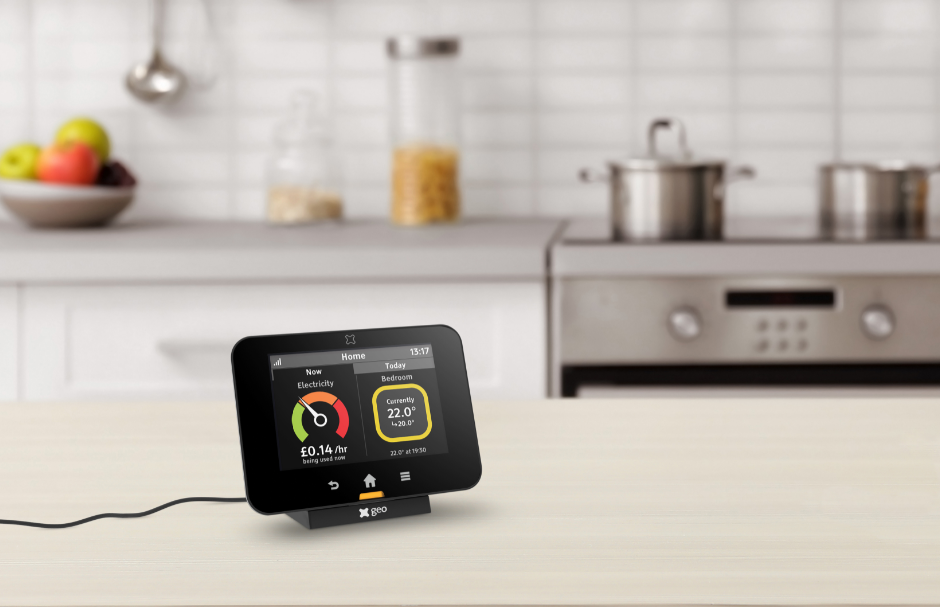
geo's Whole Home Optimisation trial shows energy and carbon savings
Households are saving an average of 49% on their annual energy bills and cutting their carbon footprint by 14% as part of a ground-breaking trial led by smart energy specialist, geo, to assess how real-time smart meter data enables Whole Home Optimisation of energy. Funded by the Department for Business Energy and Industrial Strategy (BEIS), the trial, known as Core4Grid2, uses geo’s Whole Home Optimisation solution and the data generated by an EDF smart meter, to manage the use of rooftop solar generation and home battery storage in 24 homes across the country. geo’s Whole Home Optimisation is central to the trial. Once users have opted in, it connects to the home’s smart meters and uses machine learning to assess how best to use the smart energy tariff supplied by the energy retailer and any energy the home is generating, to accurately calculate the homes’ energy needs. At the same time the system uses that knowledge to balance stored and self-generated energy to minimise waste, energy costs and household carbon emissions. “The Core4Grid trial is the clearest proof to date of the immense potential of Great Britain’s smart meter rollout to homes across the country,” says Steve Cunningham, Chief Executive Officer at geo. “Whole Home Optimisation is driven by real-time smart meter data, allowing us to predict and balance individual household energy usage to save consumers far more than UK Government had initially estimated for the rollout.” “This moves theory into practice and clearly shows how households can actively – and automatically – reduce their carbon footprint, reduce their bills and at the same time, play a critical part in the drive towards net zero.” “Whole Home Optimisation is also good news for energy retailers, energy generators and grid operators, helping to ensure Britain’s 26+ million homes use energy when it’s most abundant. It makes the most of domestic wind and solar generation at times when it is at its lowest wholesale price and minimises the use of dirtier, more expensive power in peak periods, creating a genuine win-win.” The geo Whole Home Optimisation technology used in the trial stores low cost/low carbon grid or rooftop-solar energy in a home battery and then predicts and manages the best use of that energy to meet the household’s daily demand. The system can rapidly and independently increase or reduce the amount of electricity drawn from the grid to mop up renewable energy when it is most abundant and to reduce stress on the grid during periods of peak demand. Camilla McCorkell, Head of Blue Lab Proposition Innovation at EDF says: “We’re very pleased to see such great results from the trial, showing how smart meters can enable whole house optimisation. This means customers can utilise cheaper, zero carbon off-peak energy through our GoElectric3 tariff, and store energy to heat and electrify their homes or electric vehicles throughout the day. This extracts significant value for both customers – as we can see from the savings – and the grid, as the data allows us to predict supply and demand, helping customers reduce their emissions in the UK’s transition towards Net Zero by 2050.” Energy Minister Lord Callanan comments: “Millions of households are already benefiting from smart meters that are putting them in charge of their energy use and cutting their bills. “Now, thanks to almost £1 million of government funding, the Core4Grid trial is showing how smart meters can link to other innovative technologies to further drive down costs for homeowners and help tackle climate change by effectively managing their energy needs.” The Core4Grid Whole Home Optimisation trial is funded by BEIS Energy Innovation Programme and involves partnerships with energy supplier EDF, electricity distribution network operator UK Power Networks, energy aggregators Upside Energy, consultancies Cambridge Energy and Everoze, and the Housing Associations’ Charitable Trust. The trial ran for a period of 24 months and concluded in February 2021.

Electrician pulls a pair of high-spec Sprinters from Mercedes-Benz
Electrical contractor Trig Hales hit upon a novel solution to the challenge of working and staying away from base during lockdowns – he commissioned a stunning Mercedes-Benz motorhome, as a COVID-secure alternative to staying in a hotel or B&B. So pleased is Trig with his new Sprinter that he has vowed to continue using it as a luxurious ‘home from home’, irrespective of any pandemic-related restrictions. The 519 CDI model was supplied by Mercedes-Benz Vans Dartford, together with a 516 CDI van in the livery of Essex Electrical Services, the Purfleet-based business that Trig established in 1993. Both vehicles have 5.0-tonne gross weights and employ rear-wheel drive – the Sprinter range also includes variants in which the front wheels are driven, as well as well-established 4x4s for off-road applications. The motorhome is powered by a 3.0-litre V6 that transmits its 190hp output to the road via a smooth-shifting, seven-speed 7G-TRONIC PLUS automatic transmission. The van’s fuel-efficient 2.1-litre four-cylinder engine produces 163hp and is paired with a six-speed manual gearbox. The extra-long L4 519 CDI underwent luxurious Sport Tourer conversion by leading specialist SC Sporthomes, of Torfaen, near Pontypool. Smartly finished in metallic silver-grey, it will sleep four and features living accommodation and a galley with oven, grill and fridge, as well as a shower and toilet. The vehicle’s exhaustive specification includes a solar panel and gel battery, air-conditioning, central heating, extended waste and water tanks, on board air compressor, jump start points, CCTV, a high-grade entertainment system with TVs in the living area and rear bedroom, and matching leather upholstery throughout. The medium-length L2, high-roofed H2 516 CDI is fitted out as a mobile workshop, complete with compressor, invertor power, split charging and work benches. It has been allocated to Fleet Maintenance Engineer, Steve Muggleton.

Consumers could save £160 a year on bills
A new smart system for controlling the use of electric heating and household appliances has the potential to save consumers £160 a year on bills. The system, which is still in the research phase, would allow people to take advantage of complex energy tariff structures by automating their use of electrical appliances and electric heat pumps to shift electricity usage to periods of low grid demand, when tariffs are cheaper. A two-year trial of the system, called the Optimised Forecasting for Switching Energy Tariffs project (OFfSET), found that consumers could save between £13-26 per year for each electrical appliance tested, while heat pumps could save up to £160 per year depending on the specifics of the home. The project, funded by Innovate UK, was a collaboration between Samsung, innovative smart energy platform Passiv UK, energy comparison site MyUtilityGenius, and built environment experts BRE. Samsung is responsible for the ‘SmartThings’ Internet of Things platform and offers household appliances and heat pump systems that can be controlled via SmartThings. Samsung worked with Passiv UK to incorporate Passiv’s home energy management solutions into SmartThings, while Passiv further developed its prediction and automation algorithms to allow optimised control of Samsung heat pumps and smart appliances in trial homes. Under the project, Passiv UK also developed a means of predicting heating demand for a home and determining when heating could operate to achieve the required comfort levels while avoiding traditional peak demand times. This fed into the MyUtilityGenius predictive tariff switching model to assess how this could bring savings via Time of Use tariffs. The automation and optimisation process was trialled in a selection of homes during the project, with feedback from households independently assessed by BRE’s social scientists. Pre-heating the home during periods of cheaper electricity (corresponding to less grid demand) allowed consumers to reduce the need for the heating to be on during times of traditionally high grid demand (morning and early evening peaks). User comfort was not impacted during the course of the heating optimisation trials, with users all happy to control their heating preferences via the OFfSET control app. The optimisations invariably resulted in the heating being activated more overnight, which was not traditionally the norm for most users. The next stage of the project will see further refinements to how electrical appliances are optimised to run at the lowest cost, while there will also be developments to allow the predictive tariff switching function to become part of the MyUtilityGenius tariff comparison service for customers. Kevin O’Leary, Business Manager for Heating Products at Samsung, says: “The actual cost of electricity can vary between 5p/kWh and 30p/kWh at different times of day. Shifting some usage away from expensive periods can help make the cost of running air-source heat pumps cheaper than gas-powered heating systems.”

JIB increases number of courses eligible for funding
The JIB Skills Development Fund, the charity providing courses and financial assistance for upskilling in the electrotechnical industry, has increased the number of courses eligible for funding following a record year of course grants. The Fund distributed £30,000 in course grants in the last funding year and has set about helping even more people with a renewed focus on low carbon technologies. This charity provides financial assistance for skills development and career progression, helping apprentices undertake additional training alongside their studies, those employed by JIB member companies and those who are unemployed and in need of financial assistance to re-enter the workforce. This year eligibility has been extended to additional occupations for qualified Electricians in areas such as solar photovoltaics, electric vehicle charging and heat pump installation and maintenance. Some of the recipients from previous years have explained how the Fund has assisted them finding new work where they were unemployed or with their career progression within JIB member companies: “The JIB grant is a massive help as it allows you to progress your career to the next step and takes away a lot of the financial burden that comes with it.” “I would just like to thank the JIB Skills Development Fund for their funding. Without this support, I wouldn’t have been able to do my course, better myself and gain better knowledge within the engineering sector.” Richard Clarke, Chair of the charity trustees board, said: “Last year saw more applications than ever before. Design and Verification was particularly popular as part of career progression to Technician grading. We are delighted that the Skills Development Fund continues to provide valuable financial help to people in the industry in areas where we are expecting to see the greatest demand for new skills and training. Ensuring the workforce is suitably qualified and competent raises the bar on standards, prevents a race to the bottom, and we are happy to continue supporting the industry in these crucial sectors.”  

Green vans and buying British- what makes an eco-friendly tradesperson?
In April, the Government set into law the world’s most ambitious climate change target, cutting emissions by 78% by 2035 and going green, hoping to bring the UK more than three-quarters of the way to net zero by 2050. From September, businesses will be required to commit to net zero by 2050 and publish clear carbon reduction plans before bidding on major government contracts, as well as reporting levels of carbon emissions for projects to clients. Companies will be required to report emissions on transportation, distribution, and waste from their operations. This includes suppliers too, which are often take up a large proportion of an organisation’s carbon footprint. To support this, the Construction Leadership Council – made up of leading, high profile industry figures - has confirmed a vast array of businesses, major contractors, top manufacturers and  distributors have committed to share their experience en-route to hitting net zero. Further to this, companies such as Galliford Try and Henry Boot have become the most recent additions of construction firms to set tangible targets for achieving net-zero greenhouse emissions across their own direct operations by 2030. Away from the commercial giants in the industry, SMEs within construction and the trades are witnessing an overhaul of the industry, placing a far greater emphasis on sustainability. Ranging from digitisation to a generation of green transportation, the field service management software Powered Now has given their top 3 tips that tradespeople can do today to make their business more eco-friendly. Green Vans: The White Van is symbolic of the UK's fleet of tradespeople, but with the Government banning the sale of almost all petrol and diesel vehicles from 2030, Britain's builders are in need of a transportation overhaul. Although electric vans are a relatively new fixture on the UK's roads, research from Confused.com found that the Iveco Daily Electric was the best model on the market right now, with a range of 174 miles on a full charge. Buying British: The recent materials shortage that has been so well documented has hastened builders' merchants to bring more of their supply chains to the UK. The implications of Brexit meant that the prices of supplies rose sharply, but a lack of materials due to the pandemic has compounded issues further. Therefore, not only is it financial prudent to bring supply chains back to the UK, but with reduced transportation involved, it makes for a more environmentally-friendly best practice too. Going Digital: Any tradesperson will tell you that sorting out paperwork ranging from invoices to certificates was the largest bugbear they had to deal with. Of course, record client demand and a scramble for resources since the pandemic has been ubiquitous, but the issue of vast paperwork still has tradespeople working into the night. Digitalising their paperwork so that admin work is completely organised not only saves vital time for tradespeople, but helps to cut down paper waste and sustaining natural resources. Ben Dyer, CEO of Powered Now, has commented on the importance of the trades becoming more environmentally friendly: "Because 15% of the UK’s total carbon emissions and two fifths of our total energy output come from the way we use and heat our homes, the importance of implementing sustainable renovations is more crucial now than ever. "Low carbon technologies and their deployment will go beyond simply designing new products, it needs a fully joined up strategy that delivers a low carbon heating revolution for the UK. It has to start now. "We are also encouraged that the UK government's Department for Business, Energy and Industrial Strategy (BEIS) has announced a cash boost of £44m towards its heat and buildings decarbonisation strategy, which is a great addition to the government's net zero construction techniques."

The Electrical Safety Roundtable reflects on virtual conference
The ESR Virtual Conference, entitled ‘Shining a Spotlight on Initiatives Impacting Electrical Safety in Homes and Workplaces’, took place in May this year and received just short of 200 registrants. The event appealed to many industry professionals with an interest in electrical safety, from local authorities, electrical contracting companies, estate and lettings agents, industry bodies, electrical equipment manufacturers, housing associations, government officials, insurance providers and more. The event had a schedule of high-profile professionals speaking throughout the day and the feedback received demonstrated its value to those who attended. The ESR is a leading industry forum, dedicated to providing innovative research and policy solutions to Government and industry, and expert, independent electrical and home safety guidance to consumers. With Clive Betts MP, Chair of the Housing Communities and Local Government Select Committee, starting the event and Lorna Stimpson, Chief Executive of LABC, both considering the Draft Building Safety Bill and the impact this Bill is likely to have on Building Safety, a reoccurring theme began: Qualifications do not automatically equate to Competence. This theme ran throughout the day and emphasised the need for consideration to be given as to how to verify the competence of those undertaking work without purely focusing on qualifications. This is a challenge for the industry to contemplate moving forward. NAPIT’s Chief Operating Officer, David Cowburn, considered the changes made by the electrical industry to enhance electrical safety standards over the past few years. Referring to recent iterations of the Electrotechnical Assessment Specification which introduced clear supervision requirements for those undertaking electrical work, changes to the evidence of competence for any employed persons under supervision and the changes to the qualification requirements for those applying to be registered. The following session focused on Electrical Safety in the Social Housing Sector and saw Lesley Rudd, Chief Executive of Electrical Safety First (ESF), provide an update on the industry campaign to enhance electrical safety in this area and give an overview of the recent report ESF published on this subject. This led on nicely to the expert social housing panellists whose main take away message was that access to undertake necessary electrical inspections and remedial work is the number one barrier to enhancing electrical safety in this sector. Paul Meenan, Chair of the ESR in the Workplace group, provided a thought provoking and insightful presentation in which he highlighted the importance of managing electrical safety in the workplace. Luke Spanton, MHCLG, closed the conference with an interesting update on the Electrical Safety Standards in the Private Rented Sector (England) Regulations 2020, and confirmed a review will be carried out into the impact of these regulations on electrical safety standards in the private rented sector. Looking ahead, The Electrical Safety Roundtable will continue to work hard to unite the industry and discuss the challenges facing the electrical sector with the aim of building consensus around potential solutions to improve electrical safety in the home and in the workplace.