2 November 2026
Product of the Month: Amari Floodlight range by Aurora Lighting
 
20 November 2026
Ovia: Delivering performance and flexibility across every sector
 
20 November 2026
Exclusive: how to prepare a building for future technology
 
20 November 2026
Smart Energy Training adds electrical apprentices to portfolio
 
19 November 2026
UK Power Networks awards £4m energy flexibility contracts
 

Latest News


LEW launches new lighting expertise service
LEW Electrical Distributors has announced the launch of LEW Lighting Solutions, a new full-service offering designed to provide lighting expertise for projects of all sizes and complexities. The service will guide clients from the initial concept stage through to final implementation, and LEW's dedicated team of lighting professionals will seek to make suggestions that harmoniously blend aesthetics, functionality, and energy efficiency. LEW's designers state that lighting transcends mere illumination, and believe that it plays a crucial role in creating environments that inspire, engage, and enhance the overall atmosphere of any space. Led by Jon Pearson, LEW's specialised team is ready to manage any lighting project as part of the enhanced LEW Customer Experience. Jon comments, "We’re really excited about this launch, and the team has been eager to get started. From lighting design to implementation, we can provide tailored commercial lighting solutions for offices, car parks, hospitals, and more." Scott Berry, LEW Sales Director, adds, "This is something customers have been asking us about for a while now, and we’re thrilled to implement this service. Jon and his team bring a wealth of experience in project management, and we are confident they will exceed customer expectations." Offering over 30 years' experience, LEW has 18 branches strategically located across Lincolnshire, Yorkshire, the north-east, north-west, and the Midlands. For more from LEW Electrical Distributors, click here.

Update to EAS Qualifications Guide: New standards and categories
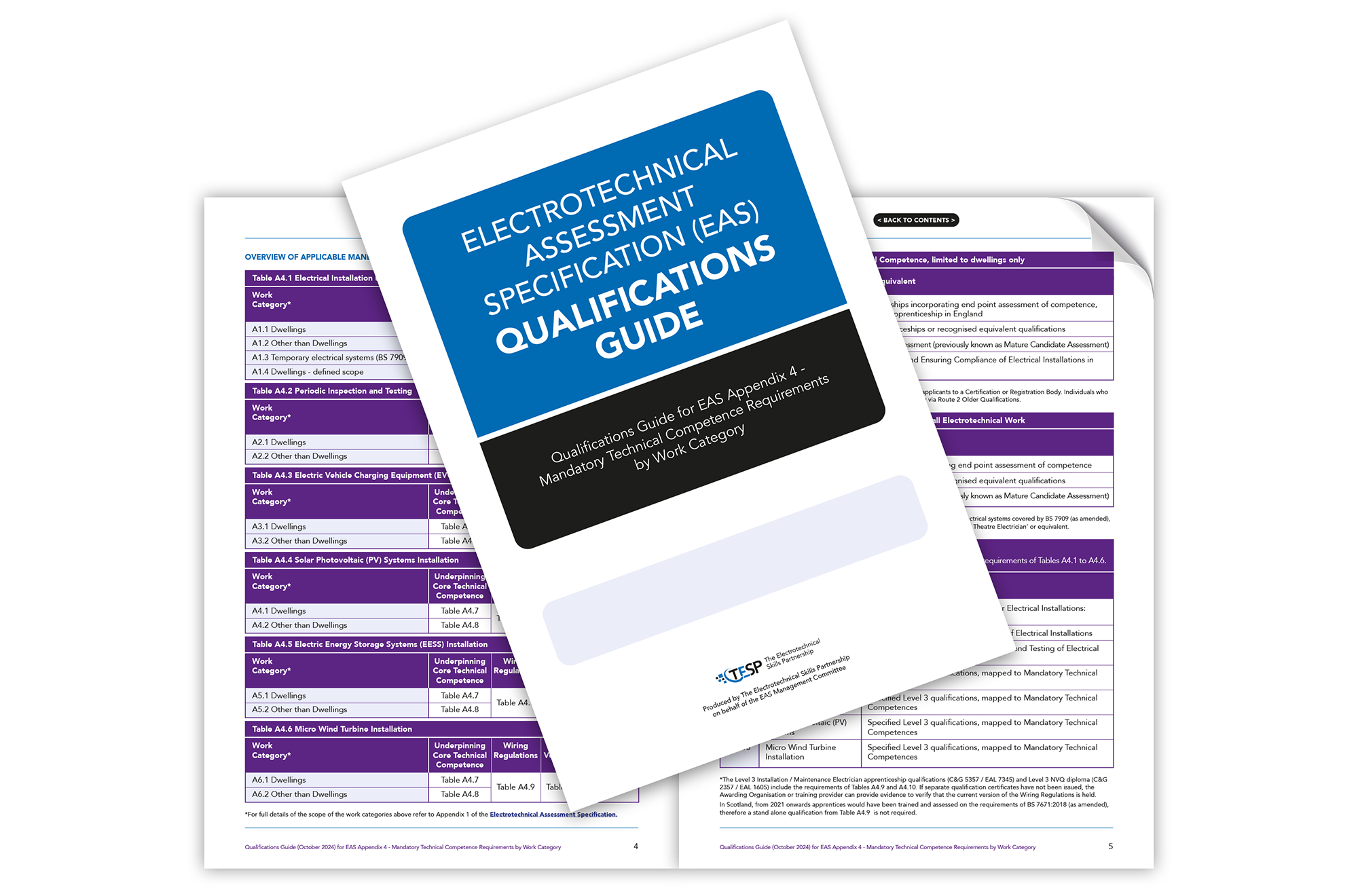
To support the release of the latest Electrotechnical Assessment Specification (October 2024), The Electrotechnical Skills Partnership (TESP) has worked with the EAS Management Committee to update the EAS Qualifications Guide. The guide reflects the changes made in the EAS to drive up standards and focus on competence and identifies the acceptable qualifications for each EAS work category. Following the addition of new work categories to cover electric vehicle charging equipment, solar photovoltaic and electrical energy storage system installations, the Qualifications Guide now lists the available qualifications that fall under these categories.  Some of these qualifications have also achieved the ‘Electrician Plus’ kitemark and these are listed on the TESP website as being industry approved in terms of suitable entry requirements, content and assessment, helping to ensure that installations are carried out competently and are safe, high-quality and effective. The TESP website will also host any new qualifications that are approved in the meantime, before the next edition of the EAS and Qualifications Guide is published.  The Level 3 Certificate in Installing, Testing and Ensuring Compliance of Electrical Installations in Dwellings qualification issued by LCL Awards will no longer be acceptable for new applicants to a Certification or Registration Body from 1 January 2026.  Anyone who gains this qualification before January 2026 will be eligible to apply via the EAS Route 4 Older Qualifications. However, TESP is urging any new learners to carefully consider whether they can complete this qualification in time and, if it becomes a rush to try to register on the qualification, they be unfairly disadvantaged as there will be no EAS extension if it is not completed before the 1 January deadline. Other updates made to the EAS Qualifications Guide include updated guidance around insufficient qualifications and qualifications obtained outside the UK. The Qualifications Guide is available on the Electrical Careers website so employers, learners and training providers can access it and receive guidance where required.

Surge protection: A gap in your knowledge is a good thing
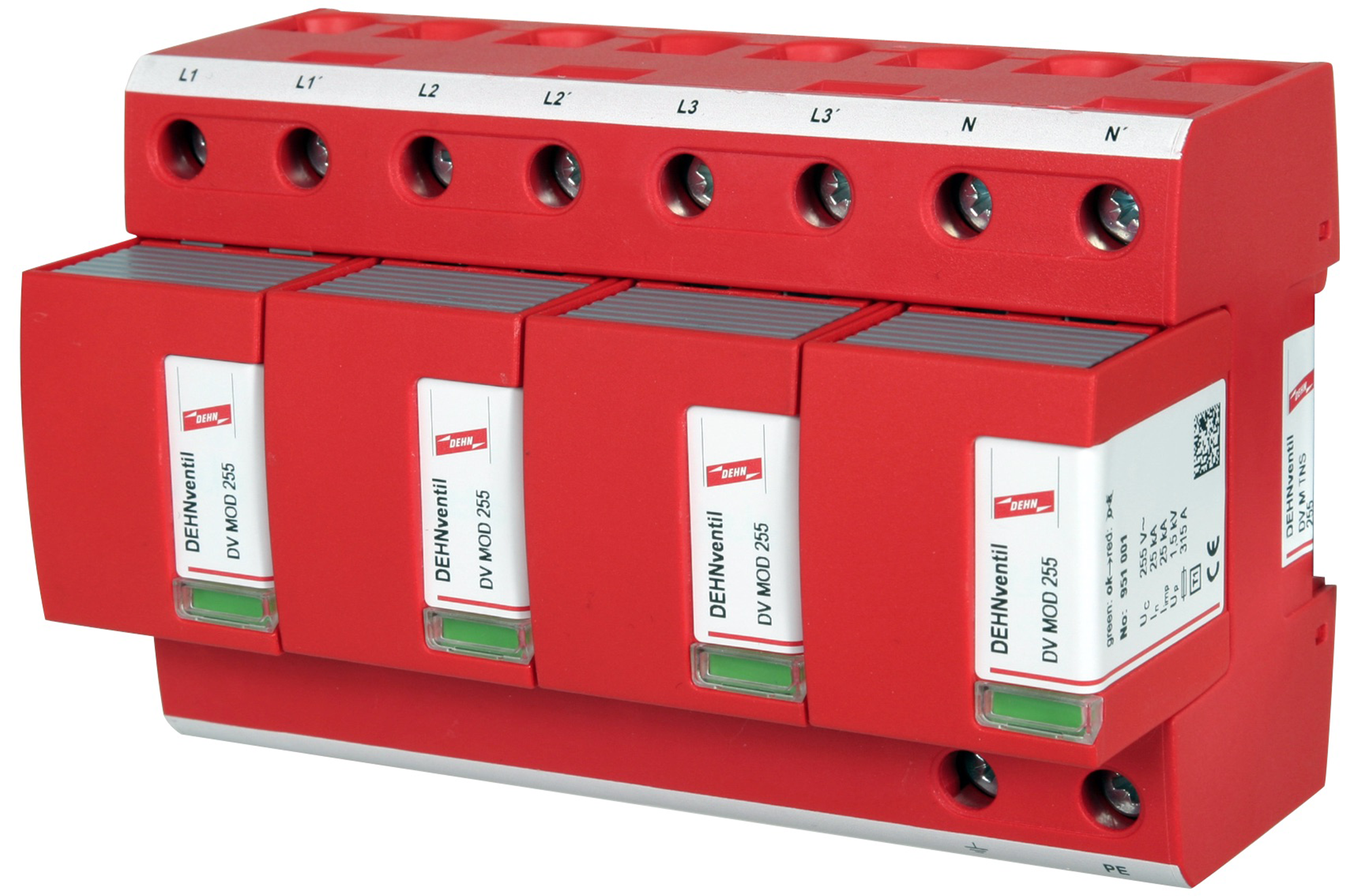
DEHN UK’s Robin Earl undertakes a comparison of type 1 surge protection devices and looks at the implications thereof. Not all surge protection devices are created equal – some are more equal than others! The whole purpose of fitting surge protection devices (SPDs) in an electrical installation is to limit the voltage that the sensitive equipment could see, to a level that will not damage the installed equipment. The SPD has a declared voltage protection level (Up) and this value must be below the withstand voltage (Uw) of the installed equipment or appliance. If Up is higher than Uw then damage can still occur, so the SPD needs to be changed or located closer to the end load as there is an additional inductive voltage that appears over cable lengths of 10m or more. 10m rule Referencing BS7671, in regulation 534.4.4.2, we find the 10m rule and this describes the effect of the surge device output voltage Up doubling over this distance, hence the requirements for additional SPDs to ‘knock’ the surge voltage down again to below the withstand level. This then brings up an interesting point about the energy coordination between the SPD and the end load, as it is not just about the voltage let through. There are two types of type 1 SPD, defined by the components within the device. There is the metal oxide varistor (MOV) and there is the spark gap. Let’s have a look at the make-up of each and how they function. First, MOVs are semiconductor devices made of zinc oxide with a ceramic-like structure. When the voltage across an MOV exceeds its rated threshold (clamping voltage), it starts conducting current, effectively diverting the surge current away from sensitive equipment and to the ground. They have a nonlinear voltage-current characteristic, meaning their resistance decreases as the voltage across them increases and are typically used in low to medium-energy surge situations, providing a quick response to transient surges. However, MOVs have limited capacity to handle large surge currents, especially when dealing with repeated or sustained surges. Over time, they may degrade due to the energy absorbed during surges, potentially requiring replacement. The alternative type 1 SPD relies on spark gap technology. These devices are simple, robust and reliable, consisting of two conductive electrodes separated by a small gap filled with a gas or air. When the voltage across the spark gap exceeds a certain threshold (sparkover voltage), the air or gas ionises, causing a spark to jump the gap and creating a low-resistance path for the surge current. Typically, spark gaps provide very fast response times and are capable of handling extremely high surge currents, including those generated by direct lightning strikes. Unlike MOVs, spark gaps have a wave breaking characteristic, meaning their resistance collapses as the voltage across them increases, and they present as a short circuit. Spark gaps are commonly used in high-energy surge situations where the surges are too large for MOVs to handle effectively. This is important as all equipment worth protecting already has an MOV inside as its inherent over voltage control measures. This appears in the standard BS EN 61000-4-5 to determine the voltage that equipment will withstand. As previously explained, all MOVs work in much the same way; they just get bigger to deal with higher energy and current values. The power supply for the screen on your PC has MOVs within it; they smooth over the peak of the surges that appear in the mains supply. All about coordination However, what is very difficult to predict is what happens when you install a MOV-based type 1 SPD with the small MOVs in the power supply. This becomes a coordination of energy issue, and this impacts all SPD installations. In BS7671 we find the following text in 534.4.4.5: ‘SPDs shall be selected and erected such as to provide coordination in operation by reference to the manufacturer’s data’. In, for example, the DEHNshield datasheet, a spark gap-based type 1 SPD in the 941 series family of products, we can see that the SPD offers type 1, type 2 and type 3 energy coordination up to 10m away. So, we could wire the display screen or any other end equipment into the SPD directly and be confident that the output of the DEHNshield will not be so high as to damage that equipment. Essentially, we have energy coordination. So, we declare this information and we also have type 1 SPDs for specific applications like EV charging points – the Emob SPDs – and those SPDs again have energy coordination to 10m but, in addition, less than half a joule of energy is let through. This is critical in those compact installations when short distances between the SPD and the equipment brings energy coordination issues. So, what of the type 1 MOV SPDs? Looking at the datasheets, we do not see either an energy coordination distance or a value of what energy is let through to the end equipment. It is not possible to determine a figure when coordinating the MOV of the SPD to the MOV in the end load. The smoothing action of the MOV does not limit the energy low enough to ensure protection within close cable distances in EV charging points, for example, or in switchgear that has measuring and metering equipment or monitoring devices. Graphic illustration In Fig 1 we see a blue line for the surge current entering the system going to the end equipment. The green line on the left-hand side shows the current through the type 1 MOV SPD, which has taken out the worst of the surge. The red line is the current that does get to the end load. Clearly this can be too much, and the end load can be damaged, especially if the cable distance is within that 10m as there is no energy coordination. Now to the spark gap type 1 SPD on the right-hand side. Again, we see the blue line showing the same surge current into the system and the green line is the current through the SPD; the difference is the red line that shows the current to the end load. This is a far lower current; in fact, so low that even equipment connected to the SPD directly will not see enough energy to damage it. The difference is that the spark gap acts like a binary switch – it is normally open circuit and then, in surge events, it’s a short for the surge current to earth. That small blip in the red line is the dwell time for the SPD turning on and that’s it. It is for this reason that DEHN does not produce MOV-based type 1 SPDs due to the inability to state that energy coordination is possible at all distances and that the number of joules that can be transmitted to the end loads could be way too high. Just to remove any doubt or perceived bias, the commentary above and the graphs are based on actual experiments conducted in a lab to compare the performance of the two types of type 1 SPDs. In both cases, the cable connections were very short and the lightning impulse value was 12.5kA. The outcomes were significantly different. In the MOV test, the varistor representing the end load was destroyed totally and in the spark gap test there was no damage at all to the varistor end load. In these tests, up to 99.4% of the impulse current is diverted to ground due to the action of the spark gap design. So, as previously mentioned, not all surge protection devices are created equal – some are more equal than others!

WISKA UK marks 25 years with Eden Project celebration
On Thursday 16 January 2025, WISKA UK marked a remarkable milestone – 25 years of delivering innovative electrical products to the UK market – with an unforgettable celebration at the world-renowned Eden Project in Cornwall. This event highlighted WISKA UK’s journey from its beginnings in January 2000 to becoming a market leader in the electrical industry. The event brought together colleagues, partners and customers in a vibrant celebration of success and collaboration. An unforgettable evening The festivities began in the Eden Project’s Mediterranean Biome, where guests were welcomed with drinks and canapés. The enchanting environment set the tone for the evening, offering a unique opportunity to explore the biome’s beauty before the main celebration. Attendees then gathered in the Gallery Room, a stunning venue overlooking the Eden Project’s breathtaking landscape. Guest enjoyed a lavish three-course meal, expertly prepared before the evening’s main highlight took the stage. The celebrated Cornish group, The Fisherman’s Friends, whose lively performance added a heartwarming touch to the evening and had guests clapping along to their sea shanties. A gathering of excellence The event was graced by notable attendees from across the WISKA family. Senior management from WISKA Germany, including the owners, the Hoppmann family (Tanja and Ronald Hoppmann) who joined the celebration, alongside representatives from WISKA subsidiaries in India, China, Iberica, Korea and Brazil. Suppliers, WISKA UK senior staff and valued customers also attended, showcasing the strong relationships that WISKA UK has built over the years. Ronald Hoppmann, WISKA Hoppamnn’s Owner praised the achievements of WISKA UK, “WISKA UK has truly embodied the spirit of our WISKA brand with their innovation, dedication and commitment to excellence. Their success over the past 25 years is nothing short of remarkable and we are proud to celebrate this milestone together.” Celebrating partnerships and people Throughout the evening, the focus remained on celebrating the people and partnerships that have defined WISKA UK’s success. Will Rich, WISKA UK’s Managing Director, took the opportunity to thank everyone who has contributed to the company’s journey. “This evening is about honouring the relationships that have brought us here – our incredible team, loyal customers and trusted suppliers. Thank you for being part of our story”, he said. WISKA's Eden Project event was part of a week-long series of celebrations, including the WISKA International Country Head Meeting and WISKA UK Sales Meeting, all held in Newquay, Cornwall. These gatherings underscored the global and collaborative spirit that drives WISKA UK forward. Looking ahead As the night drew to a close, guests left with fond memories of a celebration that perfectly captured the essence of WISKA UK – a company rooted in innovation, excellence and the power of people. With exciting plans for the future, including a new warehouse and innovative product launches, WISKA UK is poised for even greater success in the years to come. Here’s to the next chapter of WISKA UK’s remarkable journey and to many more celebrations of success and innovation!

Ansell reveals upgrades to Aztec lighting range
Designed with durability and performance in mind, Ansell Lighting has unveiled a series of new upgrades to its popular Aztec floodlighting range. Now manufactured from marine-grade aluminium as standard, every product in the Aztec range has been designed to deliver strong corrosion resistance, and it is ideal for use in swimming pool areas, chemical plants, coastal and other adverse weather environments. In addition to upgrading its robust construction, Ansell Lighting has made several other significant upgrades to the Aztec range, which features models with both asymmetrical and symmetrical beams. The first is that energy efficiency has been vastly improved, with all products now delivering 180 lm/W, making it one of the most efficient floodlights available on the market. All Aztec floodlights are now also CCT selectable as standard, providing users with the flexibility to change colour temperature as needed. This includes the addition of a 3000K option that offers a warm white hue which is kinder to the natural environment. Photocell functionality has also been integrated into every product as a standard feature, providing efficient and automatic control based on natural, ambient light levels. Ansell Lighting has also revised the design of all Aztec products to help streamline the installation process. Supplied pre-wired, it now features loop-in loop-out terminals and a hinged, screwless front, allowing easy access to internal wiring and switches for quicker installation in all applications. Mark Abbott, Managing Director at Ansell Lighting, says, "We are committed to delivering innovative solutions that meet the demands of our customers. With these upgrades to the Aztec range, we are ensuring that our products not only meet the highest standards of durability but also offer unparalleled efficiency and flexibility for application in a variety of different environments." For more from Ansell Lighting, click here.

Compliant emergency lighting
In this article, Chris Anderson, Technical Manager at Ansell Lighting, provides an update on recent changes to emergency lighting legislation and looks at new products that will support easier monitoring and maintenance for customers. Keeping up with evolving regulations and the latest technological advancements is critical for everyone involved in designing, installing and maintaining emergency lighting systems. These systems play a pivotal role in safeguarding lives during power outages and emergencies, and are a core element of safety regulations in public buildings. When it comes to emergency lighting, there are a number of laws and standards that govern its design, installation and maintenance in the UK. These include The Regulatory Reform (Fire Safety) Order 2005, The Health and Safety at Work Act, Building Regulations, The EU Workplace Directive and Fire Safety Regulations. The most recent changes to regulations that have been made include updates to the British Standard BS EN 50172:2004; now known as BS EN 50172:2024. According to BS EN 50172:2024, which applies to emergency escape lighting illumination specification and system testing, emergency lighting systems now require an additional bi-annual test of emergency luminaires on top of pre-existing monthly and annual tests. This revision is to ensure that luminaires are undamaged and that their intended function is not impaired due to the presence of dirt, dust or visible material degradation. With this added testing obligation in mind, now, more than ever, contractors should be focused on specifying products which have automated, self-test functionality, to ease the time burden this additional requirement will have on building operators and facilities managers. As a manufacturer, Ansell Lighting often hears from such groups that ongoing maintenance and compliance checks take up a significant amount of their time, so implementing self-test systems can greatly streamline these processes, reducing labour intensity, any margin for human error, and adding value to the client’s maintenance and operational efficiency. Easy to install and operate, products with intelligent self-test lighting features make the testing process much quicker and easier for users. These products perform tests automatically on a selected date each month and year as required and in compliance with legal regulations. They feature a small LED button on each fitting which indicates regular function or signals a fault, leading to a quicker and more cost-effective testing and maintenance process. Emergency exit signs, emergency exit boxes, emergency downlights, emergency twin spots and emergency bulkheads are all available with this innovative technology. Taking this intelligent testing one step further, light monitoring dashboards are a brand new technology which further ease the process of emergency lighting testing and monitoring. Suitable for use alongside smart lighting systems, they monitor all emergency lighting assets in real time, providing instant alerts if any component fails. This constant vigilance ensures that building occupants are protected, and safety standards are consistently met, whether in a single office or across an entire portfolio of buildings. They also provide a convenient hub from which all lighting data and reports can be accessed and stored, meaning that the status of every emergency lighting device at any time, past or present, within a building or across multiple sites can be viewed easily in one place. In another change to existing regulations, the British Standard BS EN 1838:2013 has also been revised, recommending that Adaptive Emergency Escape Lighting Systems (AEELS) should now be used in all types of buildings. AEELS are highly intuitive, advanced lighting systems that help guide building occupants to safety. Using sensors and monitoring devices, they can detect changes in the environment, harnessing intelligent control technology to automatically modify factors such as escape route direction, the visibility of emergency signage and lighting levels on escape routes dependent on changing conditions. This adaptability makes them particularly effective in complex or high-occupancy buildings, ensuring safe evacuation under dynamic circumstances. Emergency lighting is far more than a box-ticking exercise - it’s a lifesaving measure. As regulations evolve, it is important that everyone involved in the emergency lighting process stays informed and adaptive to new technologies to ensure installations are not only compliant, but also effective. Electrical contractors play a pivotal role in ensuring all lighting systems meet compliance standards while delivering reliable, long-lasting performance. Embracing innovations and staying ahead of the curve will not only improve safety outcomes but also position contractors as trusted, forward-thinking professionals in the industry.

Martindale unveils new ET6500 Multifunction Installation Tester
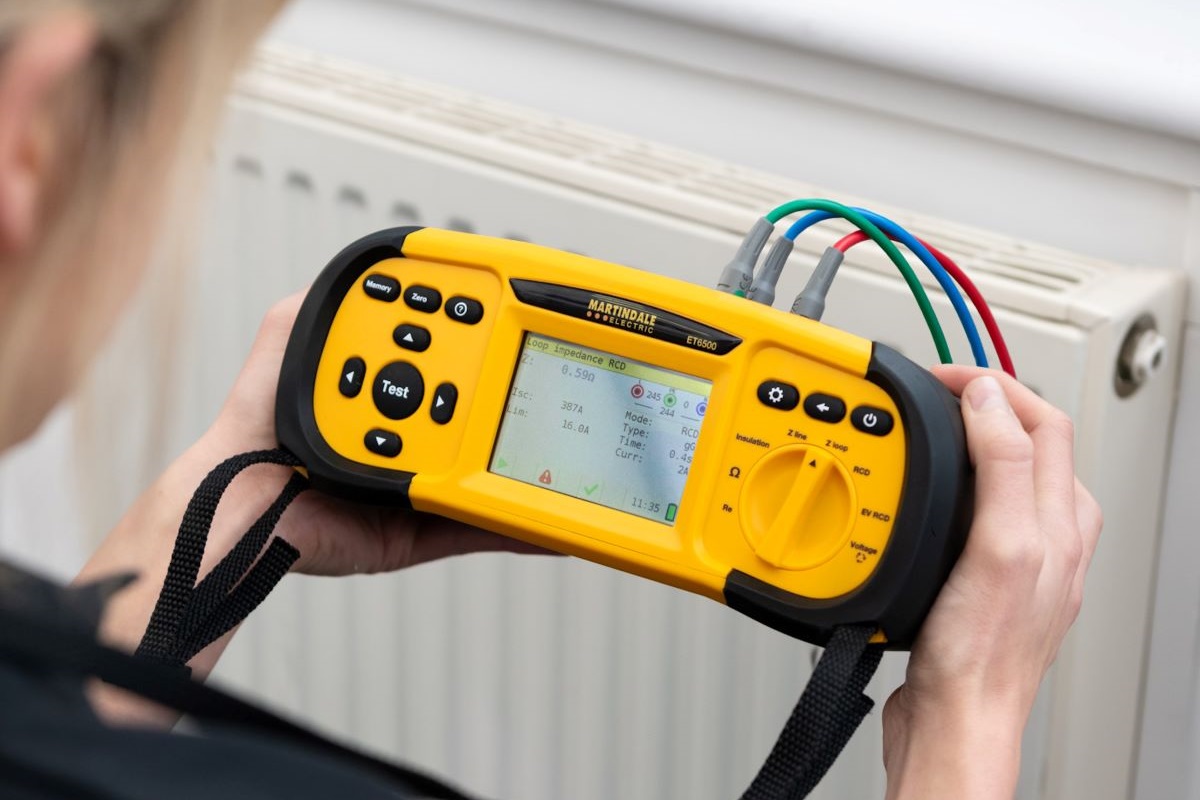
Martindale Electric has unveiled its new ET6500 Advanced Multifunction Installation Tester. Designed to set a new standard for electrical testing, and replacing the existing ET4500, the user-friendly ET6500 aims to meet the needs of electricians and contractors now and into the future. Everything about the ET6500 has been designed to save time and make testing easier, Martindale states. It has a high-quality colour TFT display that can present multiple results simultaneously on screen, and its context-sensitive help menus - accessible at the touch of a button - make it simple to navigate even the most complex tests. The ET6500 covers all the critical measurements needed to verify the safety of electrical installations to 18th Edition Wiring Regulations, including high-current and non-trip earth loop impedance testing and Auto RCD testing. The ET6500 is also EV ready. Supplied with the Martindale TL305EV adapter, the tester provides seamless connection to EVSE charging points (Type-2 connectors) and supports all key measurements for EV installations, including: • Voltage measurement and phase rotation • Various RCD tests and measurements • Insulation resistance • Low ohm measurements • Line and loop impedances For earth testing, the ET6500 is totally flexible, supporting both 3-wire and 4-wire tests using the optional ER2KIT/S (3-wire) and ER4KIT/S (4-wire) kits. The tester also has an onboard memory capable of storing up to 1,000 test results which can be quickly downloaded in Excel format via a free utility program available on Martindale’s website. With its advanced capabilities, durable construction and ease of use, Martindale believes that the ET6500 is set to become an essential tool for professionals looking to future-proof their testing capabilities. For more from Martindale Electric, click here.

New homes target to ramp up pressure on electrical networks
The UK’s push for decarbonisation combined with Government policy in other areas such as housing will increase demand on the country’s electrical network, according to VisNet from EA Technology, a UK-based real-time low voltage asset management expert. Dave A Roberts, Managing Director of VisNet Monitoring, says, “With Deputy Prime Minister and Secretary of State for Levelling Up, Housing and Communities, Angela Rayner, doubling down on Labour’s promise to build 1.5 million homes in the next five years with an annual of target of 370,000 new homes, it is imperative that we adapt to new technologies that will help ease the impact on the electricity of the added demand this will create. “These targets are an important step towards solving the UK’s housing shortage. However, such a rapid increase of new homes will have implications for owners and operators of the electrical network, with increased demand for new connections placing additional pressures on the grid.” The drive for house building follows a string of legislation to supports the country’s net zero obligations and facilitate the uptake of low-carbon technologies (LCTs). Dave continues, “Since June 2022, all new homes in the UK are required to have electric car charging points under Part S of the Building Regulations. Similarly, starting in 2025, gas boilers will be banned in all new build properties as part of the Future Homes Standard, which will favour the installation of more sustainable heating solutions such as heat pumps.” Initiatives for existing housing are also driving demand for new grid connections. Programmes such as the Boiler Upgrade Scheme (BUS) and the Energy Company Obligation (ECO4) offer grants to eligible homeowners to upgrade the energy performance of their properties, including the installation of appropriate renewable technologies. Dave adds, “Whether new build or retrofit, one thing is certain: the increase in homes and the growth of LCTs will mean more pressure on the owners and operators of the network. Monitoring existing networks and accurately modelling new connections will be essential to future-proof our electricity networks. “While it’s clear that the coming years present many challenges, there are numerous opportunities too, and we’re looking forward to helping our customers develop stronger, futureproofed networks as we take this next step on the journey towards net zero.”

NICEIC announces new series of The Wire
NICEIC, the certification and training body for the electrical industry, has announced the latest installment of its webinar series, The Wire. The new series kicks off on 30 January 2025, with the first episode set to look at domestic mechanical ventilation systems. The Wire webinars provide exclusive content to NICEIC-certified businesses and their employees. Covering topics ranging from technical explainers to regulatory changes and skills, the webinars enable NICEIC-certified businesses to stay ahead of the curve via coverage of the latest topics and trends, as well as delivering vital continuing professional development (CPD), a requirement of being certified by NICEIC. NICEIC Technical Director, Paul Collins, comments, “We're committed to sharing our expertise with NICEIC-certified businesses, to set them up for success, by ensuring they have the latest information on key topics. The Wire does just that, and with five new episodes announced in the upcoming series, we will be delivering important insights alongside Q&A sessions. “We are always looking to ensure The WIRE provides value to listeners, with topics discussed based on direct feedback from NICEIC-certified businesses. The first episode in the series on domestic mechanical ventilation systems is something we have heard there is significant demand for, so I would urge anyone who is interested to visit our website to register.” The Wire webinars feature talks from NICEIC’s technical experts, giving viewers the opportunity to pick up information and ask any questions they may have. Upcoming episodes 30 January 2025: Domestic mechanical ventilation systems: the fundamentals 6 February 2025: Managing mental health and wellbeing 13 February 2025: New opportunities: the future of electrical training 13 March 2025: EICR coding clinic: commercial and industrial installations 3 April 2025: Back to basics: automatic disconnection of supply (ADS) NICEIC-certified businesses can sign up for free at niceic.com/thewire. For more from NICEIC, click here.

Ideal Heating boosts its Expert Academy platform for installers
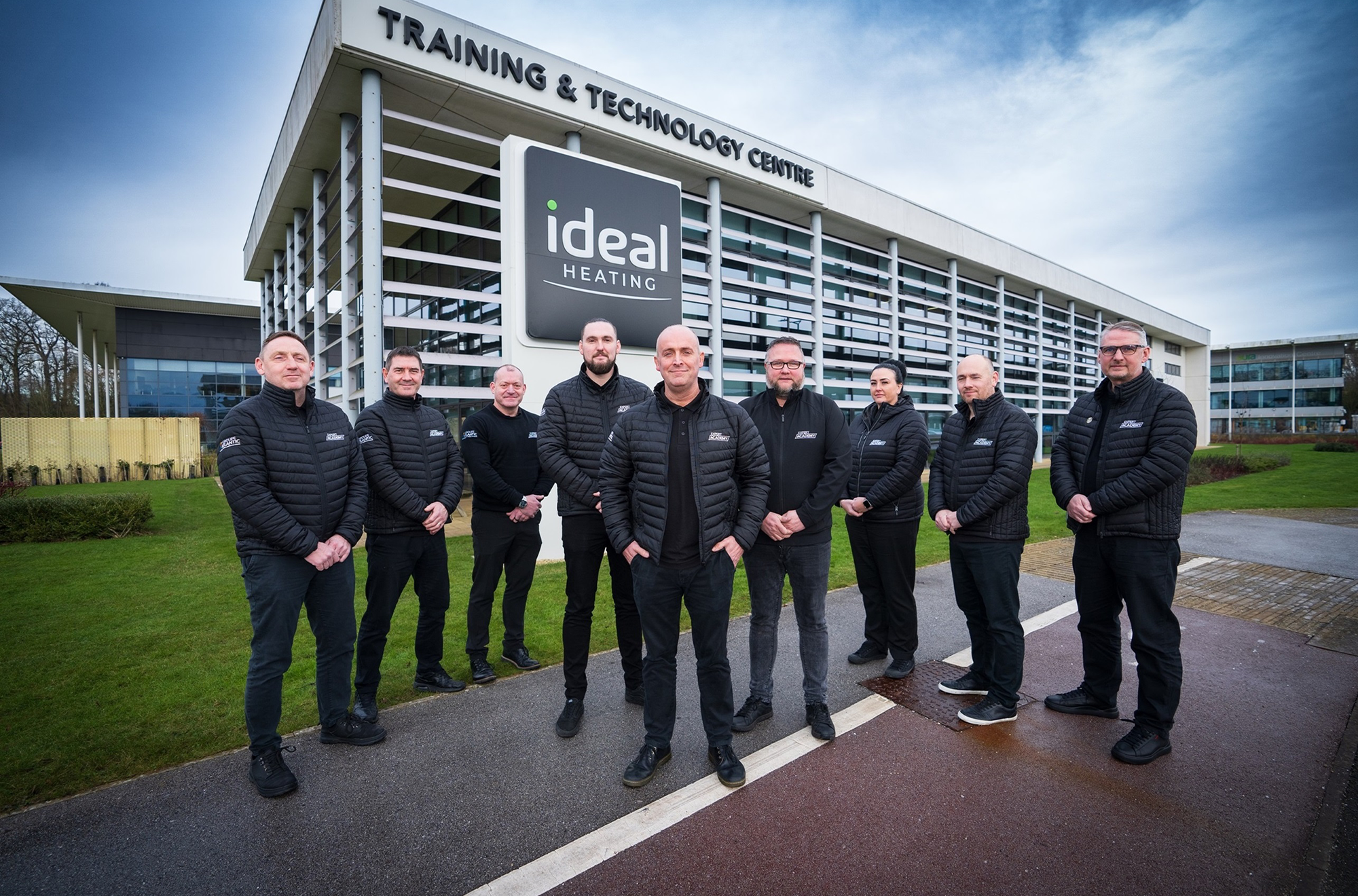
Ideal Heating has expanded its Expert Academy On-Demand platform, with the launch of new digital air source heat pump training courses. These new courses include comprehensive product training for both the Ideal Logic Air and HP290 air source heat pumps. Each course delivers detailed, step-by-step guidance on installation, commissioning and controls. With their modular format, installers can either complete the full training series or access specific chapters as an on-site reference guide. Complementing the product training, Expert Academy has also launched a new introductory F-Gas course. Through a series of concise videos, this course covers essential aspects of F-Gas regulations, available training pathways and qualification options, as well as key processes and tools specific to heat pump installation and maintenance. The expansion follows the recent success of Ideal’s Expert Academy training arm in its first Ofsted inspection, which highlighted its excellence in delivering comprehensive heat pump installation training and preparing installers for the growing demands of renewable heating technology. Each course has been specifically designed to provide installers with practical knowledge through bite-sized, accessible modules, completely free of charge. The three new courses launched by Expert Academy On-Demand are: An overview to F-Gas Logic Air Product Training HP290 Product Training This latest development builds upon the successful launch of the Introduction to Air Source Heat Pumps course in September 2024. The foundational course, developed in partnership with BPEC, has already helped numerous installers begin their journey into renewable heating technology through 11 comprehensive modules, covering everything from refrigerant operation to electrical considerations. The new digital courses are part of a broader collection being developed by Expert Academy, with further releases planned throughout 2025. The digital provision complements in-person courses delivered at Ideal Heating’s training centres, including its state-of-the-art facilities in Hessle, East Yorkshire and Dunstable, near Luton.