2 November 2026
Product of the Month: Amari Floodlight range by Aurora Lighting
 
20 November 2026
Ovia: Delivering performance and flexibility across every sector
 
20 November 2026
Exclusive: how to prepare a building for future technology
 
20 November 2026
Smart Energy Training adds electrical apprentices to portfolio
 
19 November 2026
UK Power Networks awards £4m energy flexibility contracts
 

Latest News


Aztec Solar designs and installs a PV panel system
Aztec Solar has designed and installed a huge photovoltaic system of over 3000 PV modules and 10 inverters for a new £230 million logistics hub located in the West Midlands. It will save almost 550t of carbon dioxide emissions per year which is the same as planting almost 21,500 trees.   The company designed the system to meet the hub’s kWh peak of 1260kWp within the available roof space. The power will generate electricity for the operation’s internal and office spaces.   The demand for electricity from the new unit means that it will need its own substation. The company wants to provide most of this from renewable self-generation.   With a roof space of 36,000m2 on the larger of the two buildings, Aztec Solar designed the PV system to provide maximum output while avoiding skylights and providing safe passage for future operations and maintenance and in case of an emergency.   David Ludlow, Construction Manager for Aztec Solar, says, “This was a complex installation where, unfortunately, the main contractor went bankrupt, and we had to work through variations to the original quotation to complete the job.   “Due to the speed of the installation, we also had to work alongside a number of other contractors at the same time, including behind the soffit manufacturer, which meant that there was no scaffold edge protection since they removed it as they worked. This meant that our team had to use mansafe harnesses and inertia reels. We also imported and stored the PV panels on-site ourselves and craned them up onto the roof space in just one week to minimise disruption.”   Aztec Solar specified 10 Solis three-phase inverters, which provide high-precision intelligent string monitoring to reduce future fault location time. For safety, the system is integrated into the main fire alarm systems with a manual stop button for firefighter safety in case of an emergency.   The new logistics hub is due to open in the summer.   To read more on Aztec Solar, click here.

Fergus’ guide to preparing for the new financial year
Fergus is encouraging the trade to prepare for the new financial year this coming April. As the financial and tax period approaches, tradespeople should look to enhance efficiency and ensure their businesses are set for success across 2024/5. "The transition into a new financial year is a crucial time for trade businesses to reflect, adjust and plan. It’s an opportunity to refocus, improve financial health and position your business for growth," says James Chillman, UK Country Manager. To help the trade, Fergus has put together a seven-step guide to preparing for the new financial year: Review and refresh your business plan The end of the financial year is an ideal time to review your business plan. Reflect on the past year’s achievements, challenges and the lessons learned - tradespeople will be amazed at how this will help focus and identify areas for growth and set realistic, measurable goals for the upcoming year. Consider how market trends, new regulations and technological advancements can impact the business and adjust the business plan accordingly. Financial health check A thorough review of financials is essential. Analyse profit and loss statements, balance sheets and cash flow statements to understand your financial position. Identify any areas where costs can be reduced and where investment is needed. This is also the perfect time to chase up outstanding invoices and tidy up accounts. Embrace technology Leveraging technology is key to staying competitive. Fergus' job management software is designed to simplify and automate many of the administrative tasks that tradespeople face daily. From scheduling and dispatching to invoicing and payments, Fergus says it provides a comprehensive solution that saves time, reduces errors and improves cash flow. Skills and compliance update Ensure you and your team’s certifications are up to date and plan any necessary training for the new financial year. Staying compliant with industry regulations is not just about legal compliance; it’s about providing quality service that protects your reputation and clients’. Plan for tax Organising finances for tax purposes doesn’t have to be daunting. Utilise Fergus to streamline the process of bringing financial records up to date and ensuring they are accurate so it is easy to manage finances and prepare for tax season. Consider seeking advice from a tax professional to make sure you’re taking advantage of any available deductions and credits. Invest in marketing A new financial year is a great time to review and adjust marketing strategies. Digital marketing, including SEO and social media, can be particularly effective for reaching new clients and building brand awareness. Consider how Fergus’ software can showcase professionalism to potential clients with seamless job booking and communication. Get set up for scalability As you plan for growth, it's important to ensure business operations can scale accordingly. Fergus’ software is designed to grow with the business, offering features that accommodate an expanding client base and workforce. To read more on Fergus, click here.

blip partners with BoB to provide insurance to tradespeople
blip, a small business insurance provider, has announced Band of Builders (BoB) as its charity partner, offering affordable insurance and support to its network of tradespeople from less than £10 a month. blip is built on community, providing affordable, tailored and easy-to-understand insurance with a model where members share in the profits collectively. BoB, a registered charity helping members of the UK construction industry and their families battling illness or injury, was an obvious choice for a partner. blip and BoB share a common mission for the new partnership, which is removing the stress and worry in times of crisis for tradespeople and offering peace of mind when starting or running a business. The partnership will see blip support BoB through charitable sponsorship and by providing blip members the opportunity to donate the value of up to 10% of their premium to BoB through its profit-share model. Gary Ross, Founder and CEO of blip, says, “We are delighted to be partnering with BoB to deliver life-changing support to tradespeople going through tough times. They put real people first and that’s exactly what we do at blip. “Growing up with family working in the trades, I know firsthand the toll it can take mentally and physically - blip and BoB are working to alleviate this pressure. We are supporting the people who keep our communities running by ensuring they have the protection they need and a community around them.” Gavin Crane, CEO of BoB, says, “Teaming up with blip, who share our passion for giving back, marks a significant step forward in enhancing the well-being of our community. In the construction industry, when life poses challenges, decision-making can be difficult for small business owners. blip's business toolkits provide practical templates and guidance, easing stress and enabling businesses to grow. This collaboration is a positive step in tackling the challenges faced by tradespeople, offering actionable support for our community members.” To read more on BoB, click here.

Aico launches bespoke training for electrical distributors
Since 2019, Aico has supported over 40,900 electricians and contractors through its Expert Installer Training. This Fire Industry Association (FIA) CPD-certified training course ensures attendees have a full understanding of Domestic Fire and Carbon Monoxide Alarms and how to install them. After the dramatic success of this course, Aico has now launched its Expert Distributor Training. This bespoke course is made specifically for electrical distributors and aims to provide an in-depth understanding of industry standards, regulations and legislation as well as relevant products and technology. This new course is completely free and open to all Electrical Distributor Association (EDA) members, giving attendees 30 minutes of FIA-accredited CPD time. It provides an overview of legislation and grading, alarms and sensor types, and a detailed look into Aico’s full product range, assisting in promoting best practices within the industry. It explores examples of the diverse housing stock in the UK and the possible product specification needs of different end users. With industry technology and products constantly evolving, it is vital that distributors are up to date with the latest legislation, products and devices, providing consumers with the best possible advice and recommendations. This type of training is unique to Aico and ensures distributors are committed to promoting the current best practices and procedures for domestic alarm and sensor installations. This collaboration promotes knowledgeable industry professionals working together to create safer, healthier and more sustainable homes. To read more on Aico, click here.

Enact updates its Solar Design software for installers
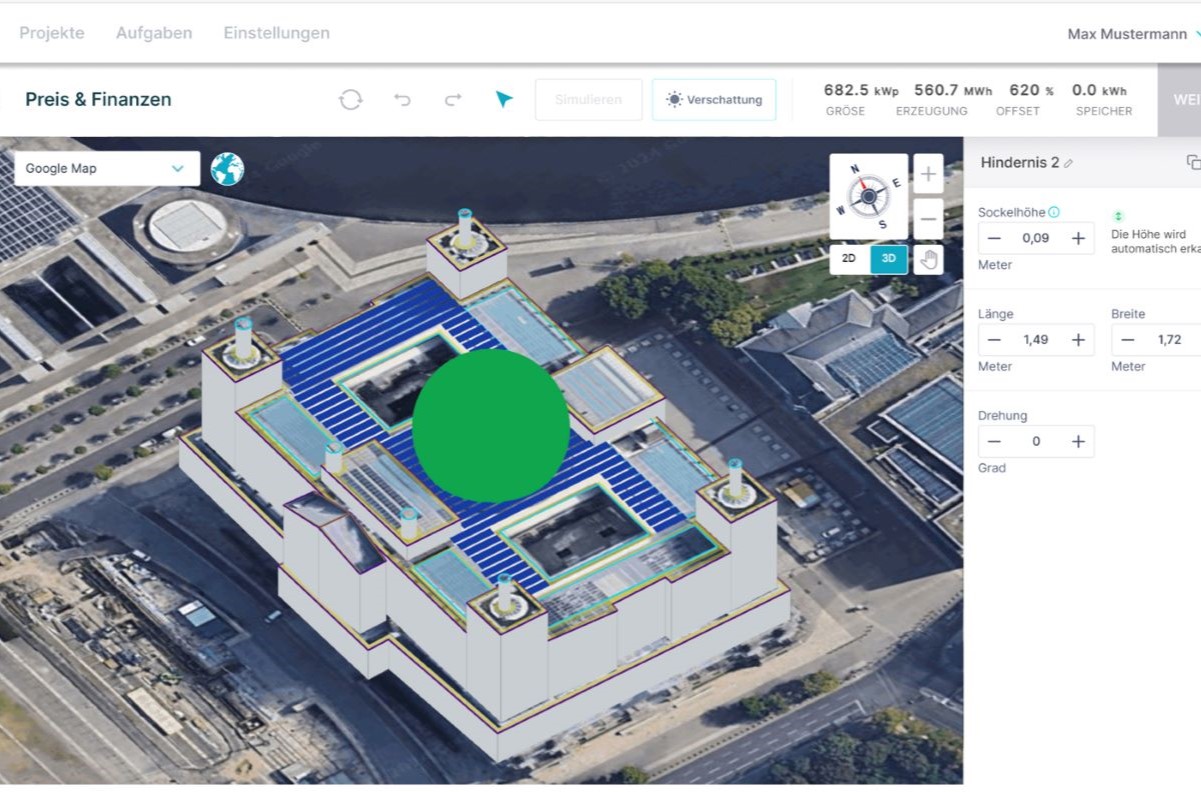
Enact, an all-in-one cloud platform, offers remote solar design using high-resolution satellite imagery and generates rapid proposals with detailed pricing, energy and finance analytics.   The company has announced an update to its Solar Design software, aimed at optimising the installer experience. The new software allows auto height detection of roof height and obstacles such as surrounding trees. This streamlines the planning process, making it smoother and more precise, and helps installers optimise shading analysis by identifying roof panels with poor solar-access values. Moreover, Enact proposals equip installers with hourly simulations of solar and storage charging cycles and strategies. Enact also accelerates the contract signing process through custom contracts with e-signatures and dynamic pricing data.   “Our newly enhanced Solar Design software for solar installers transforms how solar and storage projects are planned and executed. By harnessing cutting-edge data-driven analytics, installers can now discuss design plans with homeowners and businesses confidently, minimising errors. This means faster, more accurate implementation for installers and greater transparency for customers,” says Manasij Kar, Co-Founder and Head of Product at Enact.   The new software comes with a planning option to include east-west facing PV panels. This is especially important for European key markets such as Germany and the commercial and industrial (C&I) customer segment. The new version also comes with other features tailored to the needs of European markets, such as the addition of components used in Europe. For example, the German language interface and special financing options.

Rules of the EV road part ways in the UK and EU
Electric vehicle drivers in the UK and EU can expect to see a divergence in how they pay for public charging sessions. The fork in the road is being generated by the different rules in the UK’s Public Charge Point Regulations 2023 and the EU’s alternative fuels infrastructure regulations (AFIR). Both sets of regulations were approved last year and their impacts will be felt in 2024 and beyond. In the UK, it appears that the contactless bank card is going to be the dominant tool at all charge points at or above 8kW.  Apps will still be available as a method but with every new public charge point at 8kW+ needing to offer contactless (either at each charge point unit itself or close by at a card reader shared by several charge points), the bank card or its digital equivalent becomes the default. Meanwhile, on the EU’s roads, contactless payment will also be allowed - in fact, it will be a mandatory option required at 50kW+ charge points. Below 50kW, operators may have the option of using a unique QR code for each charging session, although this is still somewhat undecided. Charge point manufacturers, therefore, have some decisions to make. Include a digital screen capable of displaying the unique QR code and/or a payment terminal capable of communicating with a contactless bank card. Throw in the added complication of potentially having to manufacture different units for the EU and UK markets (an unwelcome complication) and the additional costs begin to mount up. The downside to extra cost and complexity is the potential impact on the roll-out of charging infrastructure. Anything putting brakes on more public charge points diminishes the EV driver experience and risks a knock-on effect on non-EV drivers’ appetites for their transition to electric mobility. For charge point operators (CPOs), the new regulations stipulate an additional series of ‘must haves’ including reliability targets, reporting, e-roaming, 24/7 helplines, data availability and price visibility. Existing UK rapid charge points have a year to be retrofitted with contactless card payment readers. A big question lurking in the background is whether those hundreds of thousands of card readers (and, potentially, QR screens in the EU) will rapidly become redundant with the rise of ‘plug and charge’. The ISO15118 standard primes new charge points for the upcoming V2G (Vehicle to Grid) and V2X (Vehicle to Everything) revolutions, including Vehicle to Grid bidirectional charging and ‘plug and charge’ automatic vehicle identification. As more public charge points and more EVs are capable of ‘plug and charge’, with the charging costs billed to the account linked to the EV, it is likely to become the payment method of choice, thanks to its convenience for the driver. It offers both simplicity and speed. It’s tempting to wonder if we should just leap forward to ‘plug and charge', but the early generations of EVs now on the road cannot play that way and will still need one or more of the old ways to pay for public charging. Daniel Forsberg, CTEK’s Marketing Manager EVSE, says, “In the face of these regulatory shifts, it's imperative for all stakeholders in the EV sector to embrace adaptability. We encourage consumers to stay informed about these changes and how they will impact their charging experiences. “For CPOs and manufacturers, this is a call to action to ensure compliance while innovating for future needs, particularly in embracing technologies like 'plug and charge'. “As we transition to a more electrified future, collaborative efforts and open dialogue across the industry will be key to navigating these changes effectively and ensuring a seamless EVSE experience for all.” To read more on CTEK, click here.

Luceco launches Climate and Luxpack lighting batten ranges
Luceco has launched its two new LED lighting batten ranges, Climate and Luxpack Essence, designed for industrial lighting applications.   The two ranges have been designed to meet the differing needs of the industrial lighting market. Rugged Climate, being IP65 rated, is ideal for outdoor settings such as warehouses and car parks, whilst the Luxpack, with its white aesthetic and IP20 rating, is suitable for indoor spaces such as offices and garages.   Conceived with sustainability at its heart, both Climate and Luxpack are designed to be serviceable, with the LED board and driver units being easily replaced without the need for tools. This modular feature dispenses with the need to replace the entire unit, saving not only time whilst on-site but also reducing the amount of waste ending up in landfills.   Inbuilt power and colour change switches add further flexibility for both ranges with two simple Plug and Play options allowing for configuration on-site and eliminating the need to make decisions ahead of time. Each model or length has the ability to add Microwave Sensor or Emergency packs that simply click into place, providing a host of customisable options.   Both the Climate and Luxpack ranges make the installation process faster and more accurate, thanks to the inclusion of colour-matched connectors and flexible first-fix brackets, whilst the built-in power and colour change options make these LED lights adaptable for any industrial lighting project or space.   Commenting on the new ranges, Simon Shenton, Head of LED Product Development at Luceco, says, ''Our new Climate and Luxpack ranges provide installers with great solutions for industrial lighting applications. Not only are the innovative LED lights quicker and easier to install but they provide multiple lighting options to suit every project. The clever design has been thoughtfully considered to make sure it packs a punch when it comes to sustainability. With Luceco’s Climate and Luxpack ranges, thanks to the quick, tool-free replacement of the LED board and driver units, there is no need to replace the entire fitting at the end of life.   ''In addition, our Climate and Luxpack lighting systems are stringently tested, CE/IP approved and are backed by a five-year warranty to give installers peace of mind.''   To read more on Luceco, click here.

Domus Ventilation attends select Specifi events
Domus Ventilation will be sharing its extensive knowledge with visitors to select Specifi Mechanical Services events this year, enabling them to implement effective ventilation solutions for their projects. Starting on 28 May in Nottingham, Domus Ventilation will also attend Specifi events in Glasgow on 10 June and Newcastle on 17 September. Domus Ventilation personnel who specialise in supporting specifications will be on the stand, ready to impart knowledge on the latest, cost-effective ventilation solutions available for residential and light commercial applications that enable compliance with Building Regulations Part F (ventilation). These solutions, predominantly designed for the new build market, include whole house ventilation in the form of HRXE Mechanical Ventilation with Heat Recovery (MVHR) and CMX Mechanical Extract Ventilation (MEV) systems, alongside mechanical fans, Domus ducting systems and an extensive array of accessories. The latter includes the award-winning non-combustible Solis Air Brick that enables compliance with the revised Building Regulations Fire Safety Approved Document B and the NOX-FILT filter, which prevents up to 99.5% of NO² pollution from entering a home. Visitors to Specifi will also be encouraged to sign up for one of Domus Ventilation’s CIBSE CPD-accredited courses on residential ventilation, which have proven very popular amongst specifiers. To read more on Domus Ventilation, click here.

Tungsten Training Centre earns a ‘Good’ Ofsted report
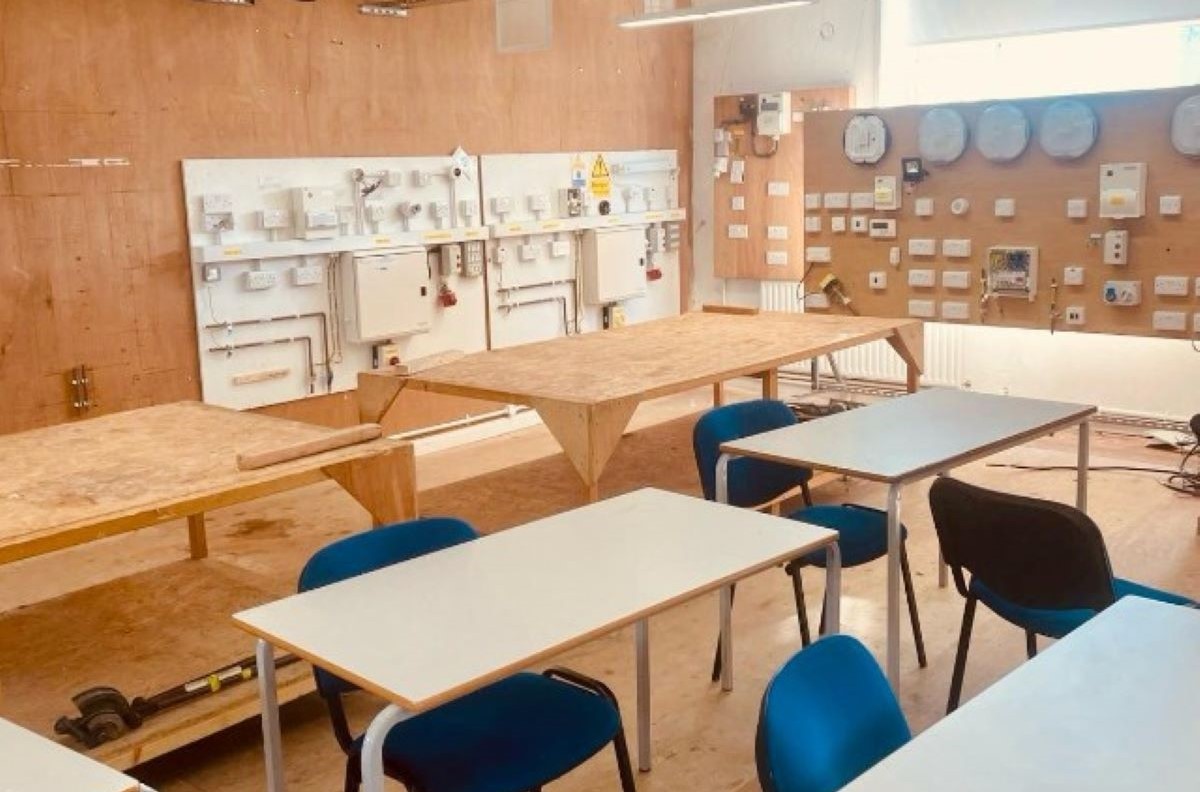
Brighton’s Tungsten Training Centre says that its recent 'Good' Ofsted report goes beyond institutional acclaim; it reflects a deep commitment to fostering excellence and student success in vocational education across three apprenticeship standards: Installation and Maintenace Electrician, Plumbing and Heating and Gas Engineering.  At Tungsten, according to Ofsted, the care of its apprentices is paramount, and its progression within the chosen sector has incurred “an industrious attitude to learning”. Ofsted says that Tungsten has successfully built “an ambitious curriculum” surrounding education quality, student behaviour, personal development, leadership and management. “Employers value the interactions with the provider,” says the report, conveying the institution's commitment to continuous communication and improvement. The quality of learning experiences is actively enhanced by the support and knowledge provided by tutors who strive to “adapt learning to meet individual needs…to overcome barriers and challenges.” ''What sets Tungsten Training Centre apart is its industry-focused training approach, prioritisation of holistic student development, and strong partnerships with local employers," says Managing Director, Dayna Barlow. "The centre prepares learners for successful careers through apprenticeships in highly regulated sectors like installation and maintenance electricians, plumbing and heating technicians and gas engineering operations." According to Tungsten Training Centre, the apprenticeships it offers are bespoke and provide learners with opportunities that can escalate their careers within the construction industry. Whether apprentices are learning the skills for the electrical, plumbing or gas engineering provision, apprentices are taught how to apply their knowledge and skills appropriately within the workplace. For example, “Apprentices studying electrical installations learn the fundamental principles of working safely and the use of hand tools to wire basic circuits before completing more challenging tasks such as fault finding and testing and inspecting their work prior to making it live. Apprentices develop the specialist skills required within the building services sectors,” says Ofsted. "Receiving a 'Good' rating from Ofsted underscores our commitment to excellence and student success," says Dayna. "We are dedicated to providing high-quality vocational education and preparing our learners for rewarding careers in the building services sector."

Innovators to collaborate with UK Power Networks
UK Power Networks has underlined its commitment to innovating for the future by securing funding for a dozen new projects. The projects will enter their initial discovery phase through Ofgem and Innovate UK’s Strategic Innovation Fund (SIF). If successful, they will help customers and the wider electricity sector accelerate their net zero plans, build network resilience, access lower costs and streamline maintenance activities. Building on the 13 projects already underway from SIF’s 2023 funding round, UK Power Networks now runs nearly a quarter of the electricity and gas sector’s SIF projects. The funding allows electricity and gas firms to work in partnership with independent innovators. The 12 newly funded projects will see more than 20 innovators partner with UK Power Networks. The projects include: Electric Thames: Exploring the viability of electric-powered boats on the River Thames and the possibility of boat power feeding the electricity grid to increase energy flexibility and reduce peak electricity demand. KnowMyFlex: A proposal to create Energy Flexibility Certificates, similar to energy performance certificate (or EPC) ratings, to show the existing and future flexibility potential of homes and buildings, helping customers engage with flexibility to reduce their bills. WASH: An advanced study into the ways heat can be efficiently captured from wastewater and used to help district heat networks decarbonise. Luca Grella, Head of Innovation at UK Power Networks, says, “We’ve made remarkable strides during our first year with the SIF programme and are excited to be heading into a second with a new wave of projects which have exciting potential to make a real impact on both our communities and the way we work. “This funding is allowing us to continue building strong bonds with some of the brightest minds in the sector. Our project collaborators play a key role in helping us deliver tangible benefits for our customers, and we can’t wait to reap the rewards of these partnerships.” Currently, the company has successfully transitioned 58 innovation projects to its business-as-usual workflow, saving customers more than £425 million over the past eight years. Launched in 2021, the SIF fund is expected to invest £450 million by 2026. To read more on UK Power Networks, click here.