2 November 2026
Product of the Month: Amari Floodlight range by Aurora Lighting
 
23 November 2026
Advanced acquires communications specialist Baldwin Boxall
 
23 November 2026
Trades face 'skills squeeze' as apprenticeship demand soars
 
20 November 2026
Ovia: Delivering performance and flexibility across every sector
 
20 November 2026
Exclusive: how to prepare a building for future technology
 

Latest News


Managing the Issue of Digital Age Business Continuity
Business Continuity Made Easy Any interruption to business continuity represents high risk. In this new digitisation era, equipment downtime equates to information systems network downtime. The immediate expense of disruptions to business continuity (unplanned downtime) is significant. Revisiting the state of infrastructure and facility management resiliency across the enterprise plays an important role in assuring business continuity. A continuous and stable supply of clean power is essential. Power protection has never been more important than in the current environment, with companies trying to increase the pace of business in order to meet challenges and take advantage of opportunities in the cloud/Internet of Things era. They count on not just their IT systems, but office computer systems, manufacturing plant machinery, retail point of sale systems and other work environment equipment to be fully functional at all times. Schneider Electric has designed an easy solution for you! It offers first-class power protection, and now comes with smart battery modules included. Galaxy VS UPS is the EcoStruxure Ready, three-phase, compact backup that innovates against downtime. It is now available with internal smart battery modules or external batteries. The Galaxy family of UPSs delivers highly efficient, simple-to-deploy, compact three-phase UPS power protection. With innovative ECOnversion mode, Li-ion options and a range of 10 kW to 1500 kW, the Galaxy UPS seamlessly integrates into the electrical, physical and monitoring environment of customers operating data centres, industrial applications or facilities. Power protection as innovative as your business • Double conversion mode delivers up to 97% efficiency. • 99% efficient with ECOnversion mod. • The UPS you can rely on, with durable Lithium-ion batteries and our expert Digital Services offer. • Modular architecture for maximum availability. • Cloud -based, open platform allows for seamless integration and future-proof adaptability. Learn more by clicking here.

Construction Bodies Call For Urgent Action During Coronavirus Crisis
A group of construction industry bodies, who between them represent the majority of contractor business in Scotland, have suggested a number of simple actions which the Scottish Government could introduce immediately to help with cash flow and protect jobs against the background of coronavirus. SELECT, the Scottish and Northern Ireland Plumbers’ Federation (SNIPEF), the Civil Engineering Contractors Association (CECA Scotland) and the Scottish Building Federation (SBF) are among the 10 organisations who have sent a joint letter to Fiona Hyslop, Secretary for Economy, Fair Work and Culture, urging her to support the Scottish construction sector. The group, which also includes the Federation of Master Builders (FMB), the Lift and Escalator Industry Association (LEIA), the Building Engineering Services Association (BESA), the Scaffolding Association, the Stone Federation and the National Federation of Roofing Contractors (NFRC), said that without immediate action, the industry would face “business closures and loss of jobs and skills”. In its letter, the group – which calls itself the Construction Industry Coronavirus (CICV) Forum – says: “Most of Scotland’s economy is made up of micro and small businesses, many of whom are already facing the closure of construction sites and a reduction in domestic work. This will undoubtedly lead to business closures, loss of jobs and skills at a time that Scotland can least afford and would seriously dent Scotland’s future economic growth. “However, what we would need the Scottish Government to do, in this unprecedented time, is to use its influence with clients to ask that payments are accelerated as quickly as possible to ensure that the flow of cash will continue. “It is also vital that clients ensure that payment must be cascaded down the supply chain to ensure that everyone who is legitimately due cash is paid more quickly. We would also request that all public sector clients immediately release any retentions due to boost cash flow in the sector.” The CICV Forum is also asking the government to allow public sector clients to:            Suspend the use of open tenders           Use the Quick Quote method of tendering where possible           Ask public sector clients to provide clarity on existing contracts and on the contractual position regarding delays           Keep the momentum going to ensure the industry survives. Alan Wilson, Managing Director of SELECT, the electrical contractors’ trade association, said: “We are at the beginning of what is likely to be a prolonged and very difficult time for a sector which has already been struggling during recent years. “If the Scottish construction industry is to survive this crisis, it is absolutely vital that the Scottish Government and public sector clients continue to procure a steady pipeline of work. “Given the unprecedented challenges ahead, we would urge the Scottish Government to relax current procurement rules and procedures, in the short term, to help industry and public sector clients overcome the inevitable staffing issues all employers will face over the coming months. “We’re also requesting that the government adopt a light touch, because the private sector may not have the staff to compile large specifications and the public sector won’t have the staff to mark it.” Vaughan Hart, Managing Director of the SBF, added: “We are already seeing a significant impact on the way the industry is having to alter its mode of operations and we are sure there will be many more issues to be dealt with as things develop. “Cashflow has always been a major factor for companies operating within the construction sector and this is even more important now, as work streams are restricted and the potential impact on future workload is unknown. “Any measure which improves cash flow and easies the route to future work opportunities has to be looked at seriously in these times, otherwise we may not have the industry we will need to grow the economy, once the worst of the impact of the coronavirus is over.” Fiona Hodgson, Chief Executive of SNIPEF, said: “These are desperate times for everyone. If we go into lockdown, firms will simply not be able to afford to keep staff on and with redundancies comes a loss of a skilled workforce which is already in short supply. “The new CICV Forum will now share views weekly and feed into the Scottish Government. It is vital therefore that members keep us abreast of the issues they are facing as they develop.” The move comes after Aileen Campbell, Cabinet Secretary for Communities and Local Government, this week announced a package of measures to help Scotland’s communities cope with the “worldwide public health emergency”. This included an additional £350 million for local hardship funds, £45 million for the Scottish Welfare Fund and a £20 million Third Sector Resilience Fund to help organisations cope with cash flow. Ms Campbell also urged the UK Government to reconsider its approach to welfare and increase levels of Universal Credit, statutory sick pay and reverse its cap on children, saying these were “not normal times”. Mr Wilson said: “We have now set up an online advisory group where CICV Forum members will share intelligence, advice and information across the whole sector. We will also use it to keep the government informed. “These are not normal times, which is why it is vital that the construction industry is helped with these vital issues, just as other areas are being assisted. “Now is the right time for Scottish Government to show leadership and take bold and decisive actions as quickly as possible to keep the industry afloat.”    

Working From Home Due To Coronavirus Means Wellbeing Must Be Considered
Employers’ concern for staff wellbeing must now go well beyond the traditional workplace, says Tamlite Lighting. Tamlite Lighting believes that the rapid increase in the number of people working from home as a result of coronavirus (Covid-19) means employers now need to consider the home environment their staff are working in – and in particular their access to appropriate lighting. A long-time champion of the benefits of more ‘human centric’ approaches to building services, Tamlite Lighting is leading the call for greater awareness of this issue.   Debbie-Sue Farrell, the company’s Head of Wellbeing, comments, “We are living through unprecedented times. With more and more people now working from their own homes, we believe there needs to be a new shift in thinking about how employers can support and maintain their health and wellbeing of their staff. “Specifically, there is no getting away from the fact that the lighting in our homes was designed for everyday life and is therefore unsuitable for creating a functional working environment. As a result, many home-based workers could well find themselves suffering from eye strain, poor posture and headaches, and in some cases lack of motivation as a direct result of insufficient or gloomy lighting. In order to remain healthy and productive, it is absolutely vital that workers have access to the right lighting, as it is proven to offer a way to enhance their daily experiences.” Tamlite says there are simple measures that can be taken, such as providing employees with simple, tunable solutions such as its Starlite Connect. This technology – which is ideally suited to the domestic office, or makeshift working environment - allows users to choose the right light for the right activity. It is an intuitive, easy-to-install and flexible lighting system that is backed up by the latest connected lighting technology from WiZ Connected. “At Tamlite, we stand ready to support and advise any businesses concerned about lighting for their home-based workforce. Even small improvements can make a massive difference to personal performance, creativity, mood and function. These are extraordinary times we want to support companies in any way we can – we’re all in the same situation.” For more information, visit https://starlite.co.uk/.

BS 7671 -722 Amendment 1: RCDs & RDC-DDs
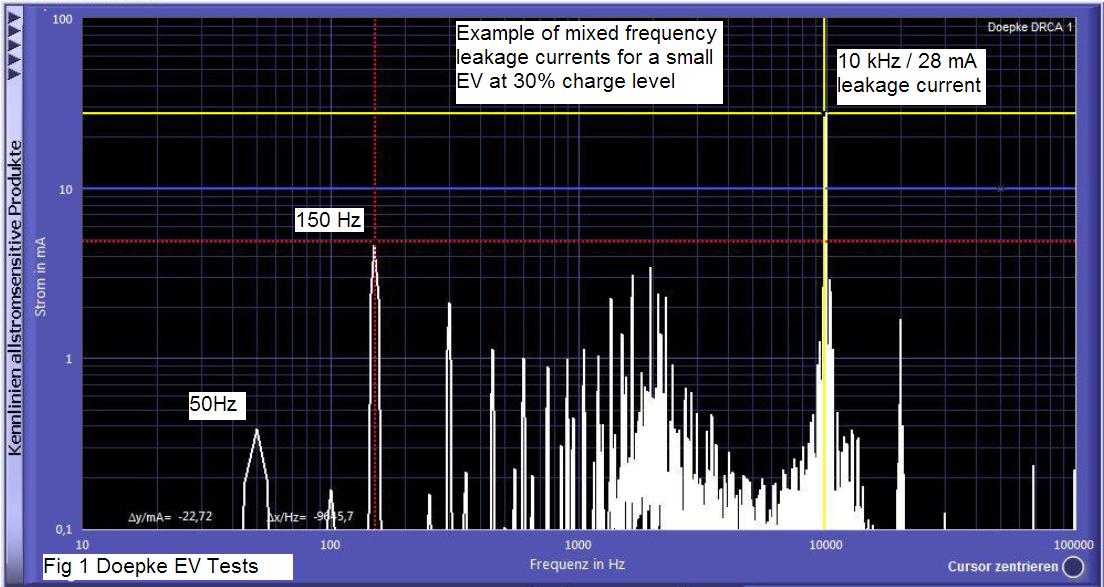
By Chaz Andrews, Technical Manager of Doepke UK Effective RCD protection for electric vehicle (EV) sockets relies on the correct specification of the associated EV charging equipment and the RCD. Don’t leave it until the installation is being tested to understand the revised requirements. Amendment 1 - 722.531.3.101 relates to Mode 2 and 3 charging equipment standards. For Mode 4 charging equipment, refer to the manufacturer’s recommendations for RCD selection. Background Product Standards Product reference standards for Mode 2 and Mode 3 charging equipment covering 6mA DC fault current detection, enabling the safe use of Type A or F RCDs upstream, changed in 2018. When selecting charging equipment, check that the appropriate standard / edition applies to the product you are purchasing. IEC 62752:  In-Cable Control and Protection Devices (IC-CPD) for Mode 2 charging cables. Updated in 2018, to include a 6mA DC detection and switching feature within the IC-CPD. IEC 62955:  Residual Direct Current Detecting Devices  (RDC-DD)* for Mode 3 charging. New standard published 2018 defining product formats and performance requirements. *Doepke Technical Publication 18, dated October 2018 (available online), gives further detail. Amendment 1 clause 722.531.3.101 RDC-DDs & IEC 62196: Are generally associated with Mode 3 charging. However, there are instances where this feature may have to be provided separately for Mode 2 charging cables, if they do not include 6mA DC detection – see Mode 2 charging below. Type F RCDs: Refer to (ii) and Note 3 under 722.531.3.101. Certain designs of EV battery charging technology, produce mixed frequency leakage currents – see Figure 1 (at the top of this page) to see Leakage current tests performed on a small EV. In this example, the majority of the leakage current is generated at frequencies greater than 50Hz. High frequency leakage currents can saturate Type A RCD magnetic circuits, resulting in a change to the tripping characteristics. Refer to the EV manufacture for advice on RCD selection. Mode 3 Charging Manufacturers of Mode 3 charge points can include an RDC-DD in the charge point, or recommend an alternative solution, external to the charge point -see (ii) and Note 3. For example, Tesla specify the use of an AEV RCCB for use with their Mode 3 chargers. RDC-DDs manufactured to IEC 62955, for use with separate RCDs, must operate within 10s at 6mA DC. They must not operate when subjected to an AC residual current of 30mA. In the event of someone touching a live conductor and earth, the associated 30mA RDC must operate first and electrically isolate the circuit i.e. an RCD-DD operating a standard contactor in a Mode 3 charge point, does not provide electrical isolation. Doepke’s Type A-EV has been independently certified by VDE to IEC 62955 and provides 30mA protection for use in Mode 3 applications, providing effective isolation. Mode 2 Charging IC-CPDs used in mode 2 charging cables, manufactured to IEC 62752 – 2018, should include a 6mA smooth DC detection / disconnection feature. Refer to the labelling on IC-CPD or the manufacturer’s information to check that the cable includes this feature. A single Mode 2 charging cable incorporating 6mA smooth DC detection can be safely connected to a circuit protected by a Type A or F RCD. For Mode 2 charging cables that do not include this feature, a Type AEV or Type FEV RCCB can be used to provide the required level of protection – as per clause 722.531.3.101 (ii). Understand → Check → Specify → Purchase → Install → Test → Sign off Effective RCD protection for an EV socket relies on the correct specification of the associated EV charging equipment and the RCD - see BS7671 clause 133.1.1 , 2 and 3. If you specify and purchase incompatible equipment, it may not become apparent until the testing and sign-off phase. Testing a 30mA RCD to verify the tripping characteristic is common practice. There are conflicting views relating to the need to test the RCD-DD feature. It may be appropriate and reasonable to test / verify this feature during commissioning, as it has a direct impact on the ability of the associated RCD to perform its safety function. The 6mA test feature included in test instruments suitable for testing / commissioning EV installations is a simple test, and if the RCD-DD is working correctly, should only add minutes to the time to test. Conclusion The selection of any associated RCD 'Type' should take the following into account. Certain EVs may have specific charging requirements – for private installations, refer to the EV manufacturer’s information before you quote for the job. Charging Mode 2 or 3? Check that the features you expect to get in the charging equipment are provided in that version and the associated RCD is the correct type. Equipment that fails to meet the revised regulations creates a hidden danger, as it will not provide the expected level of protection. Check before you purchase and install. For more information, visit www.doepke.co.uk or email sales@doepke.co.uk

Over 90% Of Engineering Services Businesses Fear Impact Of Coronavirus
Over nine in 10 engineering services businesses (93%) say they are ‘concerned’ or ‘very concerned’ about the impact of coronavirus on their business over the next six months, according to initial responses to a major new ECA / BESA / SELECT engineering services survey. Over 60% of respondents are ‘very concerned’ about coronavirus while 1%t of respondents suggested they were ‘unconcerned’. Half of the engineering services respondents (51%) said that they have already encountered ‘delays and disruptions to current projects’, with 61% of larger businesses reporting current disruption.  Around half of respondents already report ‘delays and disruption to future work’. Over half of respondents (53%) said they were now ‘preparing business contingency plans’ as a result of developments, a figure which rose to 71% in larger businesses. The most commonly cited business activity in response to coronavirus to date is ‘reducing business travel’ and ‘asking or allowing staff to work from home,’ followed by ‘business contingency planning.’  However, around 10% of businesses say they have ‘shut down at certain premises or sites’, and over 10% of respondents also say they are ‘updating their contracts’ and ‘looking into alternative suppliers’. “Coronavirus is already having a significant impact across our industry and wider society. ECA is aware that many businesses are already encountering work delays, site access issues and cancellations,” says ECA CEO, Steve Bratt. “We are actively working with industry bodies and Government to represent the concerns and interests of the industry. Key to this is ensuring that Government understands that early, significant and practically useful support is needed to help our industry with cashflow, but also to provide as much certainty as possible.” “Though these are just preliminary findings, the sheer scale of the disruption to the sector is alarming,” adds BESA Director of Legal and Commercial, Debbie Petford. “We will be working around the clock to provide as much guidance as possible to our members, and calling on the government to keep providing additional stimulus and support as the situation evolves, to ensure businesses make it to the other side of this crisis in one piece.” “This is clearly an extremely worrying time for SELECT Members and the wider industry,” says SELECT Managing Director, Alan Wilson. “Each day brings fresh concerns, with the threat of shutdown still looming large. “Like ECA and BESA, we are taking proactive measures to help electrical professionals address their concerns at this unprecedented moment in history. The knock-on effects of this pandemic could be catastrophic for the industry, particularly when it comes to payments, so it’s essential that vital cash flow continues.” The survey, which is still live, has already received over 600 responses from across the industry, including nearly 180 from larger businesses in the sector. The coronavirus situation is fast moving and further survey responses are expected to show increasing impact on the industry in the days ahead. Engineering services play a critical role in developing and maintaining the UK’s built environment - which includes businesses, housing, hospitals and care homes, and the UK’s wider infrastructure, and is fundamental to employment and keeping the UK economy moving. The survey is live and closes on Friday March 27 2020 at 4pm.

J S Wright Awarded £11M Castle Park View Contract
J S Wright has secured a contract of approximately £11 million to fit out a new energy efficient housing development in Bristol. The Birmingham-based company, which has an office in London, will install all the mechanical and electrical services for Castle Park View, the first private housing scheme to be connected to Bristol City Council’s heat network. The commission from Bouygues UK involves providing the services for 375 new homes and communal areas across the 180,000 sq ft development, which is being built in the city centre on the site of a former ambulance station. Bookended by buildings of 26 storeys and 10 storeys, the scheme will comprise 300 private rented apartments managed by M&G Real Estate and 75 affordable apartments owned by Yarlington Housing Group, as part of a four-way partnership with Homes England and Bristol City Council. The mechanical works to be carried out by J S Wright will include providing each apartment with low-pressure underfloor hot water heating fed via a heat interface unit in a system connected to the Bristol heat network. The company will also provide boosted cold water from a cold-water plant room. J S Wright will make use of its in-house prefabrication facility to deliver the heat interface units on easy to fit utility cupboards, saving construction time and reducing the number of trades on site.  In addition, J S Wright will equip the development with mechanical ventilation heat recovery and mechanical extract ventilation systems that will reduce energy costs. The company will also supply and install sanitaryware as well as fit an internal rainwater system and above ground drainage. The brief also includes installing domestic sprinklers, smoke and environmental ventilation, and wet and dry risers in all areas including underground parking.  J S Wright will also carry out the electrical installations, including lighting, fire alarm, power and TV infrastructure in each apartment. The company will also install solar photovoltaic panels, security and access control systems, and M-Bus credit metering to record energy usage in individual apartments. The company has already begun initial internal work on site with completion scheduled for December 2021.  “We are delighted to have been awarded this ground-breaking project by such a prestigious company,” says Phil Leech, Managing Director of J S Wright. “Our work will result in Bristol   

HUBER+SUHNER Take The Wheel, Sparking Electric Vehicle Innovation
With increasing consumer demand for Electric Vehicles (EVs), manufacturers face the challenge of creating high-performing vehicles on mass scale. While high-power charging infrastructure is essential, there is also a vital demand on the performance of high voltage (HV) distribution within the EV in order to efficiently conduct, hold, distribute and use electric power after charging. HUBER+SUHNER has years of experience in addressing the challenges of powering EVs and delivering high voltage solutions to EV customers worldwide. Addressing several EV requirements, HUBER+SUHNER appreciates that a co-ordinated system of integrated solutions is the way forward for electric vehicles. Resisting current issues The number of EVs on the road is increasing as businesses work towards a more fuel-efficient workforce to reduce costs and maintain sustainable values. However, as consumer demand rises and enterprises roll out more EV fleets to meet targets, EV technology faces the challenge of delivering resilient performance. To withstand the high voltage nature of the vehicle, EV operating systems are known to deteriorate rapidly, leaving transport susceptible to damages. Such issues are especially prevalent under harsh conditions such as mechanical abrasion, weather, moisture and temperature when travelling; elements that are unavoidable in transit. The inefficiencies that failures such as this cause in EVs is disruptive to travel and has become a salient issue across industry sectors as they struggle to sustain satisfactory performance levels. Damages inflicted by poor EV cabling across entire fleets can prove costly, and the reduction of the vehicle’s running and charging performance can interrupt business operations, losing businesses time and money. This is a rising issue, and manufacturers must combat this by implementing performance-enhancing innovations to their models. This is the only way to deliver efficient and reliable EV vehicles in order to stay competitive on the market. Technical innovations that effectively and evenly distribute the HV through all EV components, means the vehicle can run more safely and with stronger resilience. The RADOX modular High Voltage Distribution Unit 2nd Generation (mHDVU Gen.2), developed by HUBER+SUHNER, offers just this; a specialised solution to increase the longevity of EVs in the commercial sector.  The driving force of the solution  The implementation of end-to-end interconnected systems which use high voltage cables can eliminate the concerns surrounding shortage and failure in entire EV fleets. In the development of the RADOX system, HUBER+SUHNER has combined cutting-edge technology to ensure consistent performance levels over the lifespan of the vehicle. By utilising their High Voltage Distribution Unit (HDVU), safety and efficiency can be guaranteed with the ability to withstand heavy duty application. With the average HDVU technology being able to manage 400-650 Volts DC, the RADOX mHDVU can carry up to 800 Volts DC. The increased capability roll-out will be housed in lightweight aluminium, making the solution even more cost effective for customers. This makes the HUBER+SUHNER HDVU the leading solution in the industry, and the most effective one in extreme cases of heavy usage in harsh environments, e.g., EMC protection, etc. By eliminating the likelihood of cable damage, the RADOX HDVU can better serve customer needs, saving companies significant amounts in repair and delay costs. The RADOX mHDVU Gen.2 is quality assured. Its in-built weight and space saving solution makes for compact installation without contributing to increased fuel consumption, whilst its housing is certified with the International Protection (IP) marking, guaranteeing its effectiveness in protecting against dust, moisture and accidental contact intrusions. Such features are invaluable to any large-scale business with a high EV demand, ensuring that reliable and sturdy operating systems are in place to allow for uninterrupted journeys. The HDVU is available in two versions for different uses. 500 Volts DC covering all voltage levels up to 500 Volts DC and the 800 Volts DC variant covering the voltage level between 500 and 800 Volts. The flexibility offered by HUBER+SUHNER puts them at the forefront of the industry and exemplifies their dedication to customer satisfaction. Their engineering service allows for solutions to be provided to customers rapidly and with exact precision, and the communication between their engineers and customers ensures that the solution is suitable and correct. Powering EVs with the combination of three Being in such high demand and receiving positive feedback, the RADOX mHDVU Gen.2 is proven to be a resilient solution for the requirements of EVs. The configurable nature of this modular technology is a great benefit and contributor to this, with the box being able to fit among any existing systems due to its Original Equipment Manufacturer (OEM) compatibility and complete interoperability. In case additional functions and components are required, HVDUs can also be designed to the exact needs and dimensions a customer would need, resulting in a fully customized HVDU. Though not exclusive to the HUBER+SUHNER brand, optimum performance is achieved by using the RADOX HDVUs alongside the latest innovation by HUBER+SUHNER in cable systems; RADOX EV-C. The high voltage cable system compliments the HDVU, being able to withstand its superior voltage capability, whilst the EV-C ensures a very reliable operation over lifetime.  By investing in the complete HUBER+SUHNER RADOX EV system, customers will benefit from shortened installation time and flexibility of lead time to provide a single, finalised solution. Another major benefit of combining all three RADOX components is the HUBER+SUHNER certification guarantee. This assures that the appropriate operation qualifications are readily provided by the system as it comes, with no further action necessary to officiate its certification status. When used with other outsourced components, clients will have to certify the technology again as the use of the HDVU with OEMs may need to be qualified to different standards. This can be costly in terms of money, time and effort as clients would have to fund the certification process themselves to ensure the appropriate EMC protection and resistance levels are met. The HUBER+SUNER promises pre-certified compatibility in the form of the RADOX system offers reassurance and convenience for every customer without limiting customization capability.  EV technology is ever advancing, and innovation is needed to help the industry sustain high performance under high demand. HUBER+SUHNER offers this by way of their RADOX HDVUs and its other systems, providing complete solutions to overcome industry challenges and improve overall performance to benefit businesses worldwide. Committed to developing high-quality, consistent products and providing rapid, flexible and reliable customer service worldwide, their focus on meeting specialised demands puts them at the forefront of the industry.  By Malte Frohberg, Head of Automotive Product Management, Low Frequency division at HUBER+SUHNER.

Engineering Services Bodies Launch Coronavirus Impact Survey
Given the developing situation regarding coronavirus, a new engineering services industry survey has been launched by ECA, BESA and SELECT. The survey comes as Build UK and CECA have stated that construction sites 'may have to close’ due to coronavirus. The two bodies will be asking the Government to ‘identify safety critical work on the infrastructure network that is essential and must be continued’. The survey aims to obtain an early picture of the current and anticipated business impact in the engineering services sector and its supply chain, to enable effective representation and advice on important issues. The survey can be completed here.  “Coronavirus is a fast-moving situation with significant social and economic implications,” says ECA Director of CSR, Paul Reeve. “It is vital that we understand the key problems being faced by companies and how to both represent and practically support our industry in what is fast becoming a changeable and challenging near future.” “Our biggest challenge is ensuring our members have certainty in this extraordinary and evolving situation – especially when we do not yet know how long it will last or what extent the economic impact will be,” says BESA Director of Legal and Commercial, Debbie Petford. “We have already provided guidance on a range of topics on our website but this survey is necessary to ensure nothing is overlooked.” The survey, which is completely confidential, should take around three minutes complete. The initial deadline for responses is Friday March 27 2020 at 4pm. ECA is monitoring the situation closely and has created an employer advice portal at www.eca.co.uk/coronavirus. Likewise all updates and advice about the Coronavirus from BESA are available here.

EI Live! 2020 Postponed To October 19-20
Statement from David Kitchener, MD of ATM, owners of EI Live! Following developments over the weekend, the decision has been made to move EI Live! 2020 to the new dates of October 19-20. All other aspects of the show will remain the same, and the Smart Building Awards will also take place on October 19. Here follows a statement from David Kitchener, MD of ATM, owners of EI Live! As you will have seen recently, I’ve been quite robust in my response to the Coronavirus regarding EI Live! 2020, but I have to admit that events are overtaking us with the government statement late last week whereby they are predicting that the virus will peak in four weeks, and the pending government statement regarding the banning of larger events due to be made this week, I believe. As you will imagine, I have resembled a sponge of late, absorbing everything I can about the Coronavirus; and in light of all of this, and now having assessed everything, I firmly believe that as a responsible event organiser it is best to postpone EI Live! 2020 until October 19-20 (with October 17-18 as the build days). You will also appreciate that whilst I have been advocating that the exhibition should continue in April, I have also been working behind the scenes to put a plan B in place, hence the dates above with Farnborough. These October dates were given to us by Farnborough as they have many shows in the same situation, which in fact work better than September given that the CEDIA Tech Summit has postponed to the September 4 and the CEDIA US expo dates are September 8 – 12.  So, September is a busy month for our industry. Frankly, even if the all exhibitors had agreed to the original April dates, it is our responsibility to provide the footfall worthy of a national CI show. Our visitor pre-registrations are actually up on last year, but I would question if we could provide the footfall due to Coronavirus with visitors not turning up on the show days. The good news is that moving the show to October this year gives us more time to increase the size and footprint of EI Live! even further, it gives us more time to put more visitor attractions in place and also increase the visitor offering across the show. In the meantime, and as a spin off, we are launching our ‘AV Tech Talks’ with the presentations that were taking place in the EI Live! Technical Theatre, to be released on video with many of the tech talk speakers and the original content that we were going to present in April. This will be a whole new series that will continue on as a brand in its own right under the banner of EI Live!. We will of course still have the Technical Theatre at the show in October with even more original content. Of course, this also means that we will have to postpone the Smart Building Awards that traditionally take place on the first evening of the show - they are now set to be October 19. I would add that there is an additional cost from Farnborough to move the show to us as organisers, but I can assure you that this additional cost will not be passed on to the exhibitors, such is our commitment to the industry and maintaining the UK’s national CI exhibition for us all to grow! Let’s all get behind the UK’s national CI exhibition in October, so that the industry grows and we all grow together! Visitors or exhibitors with any questions can call the organisers office on 01634 673 163 for more information.

House-Builders Use Wondrwall Smart Home Tech To Reach Carbon Neutral Targets
In order to meet the UK’s net zero target for greenhouse gas emissions by 2050, the government have issued ambitious plans in their latest Future Homes Standard review, including a ban on gas heating in new homes by 2025.  Existing house-builders will now have to decide whether to go beyond the government’s standards to try to futureproof their investments, avoiding the need for costly retrofitting given that it seems inevitable that standards will only be set higher in the future.  Building the foundations for greener housing has some significant economic benefits to developers too, beyond meeting lower emission targets. By omitting the need for gas, complicated piping does not need to be laid which makes the building process cheaper and faster. Choosing an energy efficient electric heating and hot water solution over heat pumps can further reduce the need for complicated groundwork, as well as the complexities and costs of wet heating systems.  It has been well publicised that energy efficient homes powered by solar energy have a much broader market appeal, making these new homes easier to sell and let by highlighting the benefits of incredibly low household bills. The coveted nature of an eco-friendly home also means they’re likely to possess a higher resale value in the future, standing the test of time.  “We’re seeing a real shift in consciousness of people wanting to do something for the planet, so this is a crucial time for the future of new housing,” says Daniel Burton, Chief Executive and founder of home automation company, Wondrwall. “Growing up in an eco-conscious society, those in their 20s and 30s who are buying houses today are asking developers whether solar is installed, how efficient their future home is and how much energy bills will be. The more developers know about green technology that’s on offer, the better they can assist customers in advising and assessing their needs. Green millennials are our future and we should be tapping into that demand, as well as us all taking responsibility to safeguard our environment from climate change.” Burton’s company supplies intelligent electric heating and hot water solutions that can cut home energy use for heating and hot water by 50%, making a significant contribution to tackling the climate emergency by being completely gas-free. Cost-effective to install, it is an ideal solution for housebuilders, as well as landlords and homeowners looking for affordable, energy efficient and environmentally friendly heating solutions for their homes. It works by combining whole-home smart technology that intuitively adapts to how occupants live and use the home, as well as its environmental performance to avoid wasting energy, with efficient infrared panel heating and an intelligent hot water cylinder all powered by solar panels.  Wondrwall’s solution is a light switch that houses 13 different sensors covering temperature, humidity, power, motion, luminosity and sound. Replacing standard light switches throughout the home with Wondrwall switches creates a network of over 100 sensors with predictive modelling and machine learning, automating habitational patterns, as well as the home’s overall efficiency and performance. According to a study by the Fraunhofer Institute for Building Physics, smart thermostats like Wondrwall can reduce energy consumption and costs by up to 31% by not heating empty homes. Wondrwall takes this a step further by detecting when a room is empty, automatically reducing energy consumption and lowering the overall cost for heating by up to 50% without sacrificing comfort. Wondrwall infrared heater panels are also more efficient as they heat the occupants and objects in the home such as carpets, ceilings and furniture. Every 1°C reduction in a home’s air temperature can save as much as 10% on its heating bills. Since the infrared panels heat the occupants and objects in the home rather than the air, they keep the occupants warm at a lower air temperature than standard heating. Conventional hot water tanks heat all the water in the tank, regardless of how much is needed. The Wondrwall hot water cylinder monitors and learns how much hot water is used and only heats as much as needed, significantly reducing energy consumption. Around 14% of UK greenhouse gas emissions come from our homes, and a ban on gas heating in new homes by 2025 has already been announced to help cut carbon emissions caused by traditional gas boilers.  Wondrwall now offers a smart alternative to both gas boilers and more expensive and less effective alternatives such as heat pumps. The Wondrwall solution costs the same to install in new homes as current gas heating and hot water solutions and considerably less than alternative electric heating solutions. One of the worries about the government clamp-down on gas and other fossil-fuel boilers is that electric alternatives are generally more expensive to run. Research conducted on behalf of the National Infrastructure Commission estimated that the ban on gas heating would cost families up to £300 extra a year on energy bills. Wondrwall’s smart energy generating technology, however, ensures that the system is used optimally to provide a comfortable living environment, cut energy usage and keep bills down. It’s not only new-build housing schemes that can benefit from the Wondrwall solution. The system can be retrofitted to a three-bedroom house from £4,990, bringing those same advantages within reach of every householder. Burton has seen demand for his product increase tenfold in the past 18 months:  “The network of partners we are working with is expanding rapidly, our latest being Keepmoat, Sigma, Tailored Living Solutions, Sassy, McCulloch and Shanly Homes. By combining clean energy generation, storage and AI powered home automation in one unique streamlined system, they can create a USP for their buyers and it’s paying off. “Our mission with our system has been to give the home a brain and the intelligence to control itself to help improve people’s lives. I never built this company to make a huge amount of money. I built it to make a difference to the world - to build homes that create their own energy, store it and use it.” Craig Murphy, regional managing director of Keepmoat Homes, adds: “Climate change is a key challenge facing everyone and that’s why we’re not only proud to support a zero carbon future, but also help find practical solutions that tackle the rising energy costs of our customers.” Robert Cox, recently purchased a Watkin Jones house in Macclesfield with his partner, that has Wondrwall technology installed throughout.  “When we purchased our new home and the sales advisor took us through Wondrwall, it really intrigued us,” said Cox. “We had Alexa before, and could instantly see the appeal. It helps save money on energy bills, but the real impact is just the ease of having everything on autopilot. We live busy lives and the time saving ability is huge. If I had two houses like for like, the Wondrwall system would be the deal maker.”